Artwork
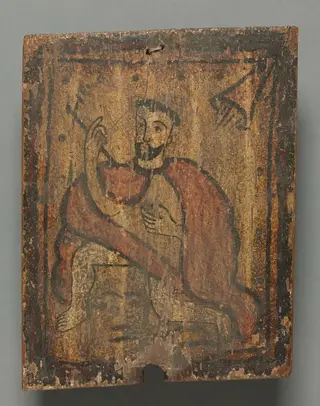
San Geronimo: santo de retablo
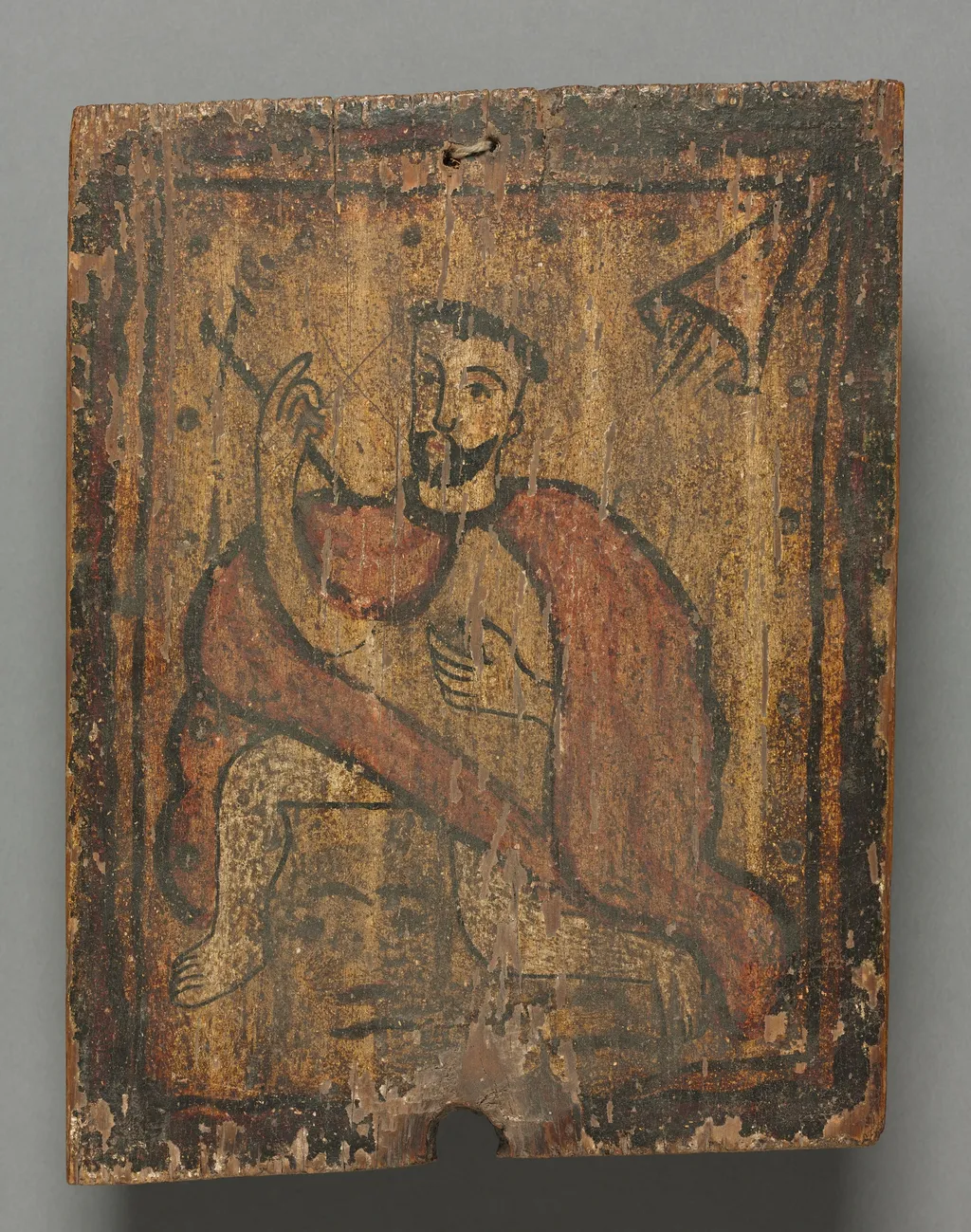
San Geronimo: santo de retablo is an oil painting. It dates from 1700 and is held in the collection of the Cleveland Museum of Art.
About this work
History & Provenance
The San Geronimo: santo de retablo is dated to circa 1700 based on stylistic and technical analysis of the work.
The painting entered the Cleveland Museum of Art in 1933 as part of an acquisition of colonial-era Latin American art, where it has been held since. Its prior provenance and ownership history prior to 1933 are not documented in available sources.
Legacy
It is classified as a retablo-style depiction of San Geronimo, reflecting Spanish colonial devotional art traditions in the Americas.
The painting is held in the Cleveland Museum of Art collection and is documented in its Wikidata entry, which records its creation circa 1700 and identifies it as an oil paint work on panel. It is classified as a retablo-style depiction of San Geronimo, reflecting Spanish colonial devotional art traditions in the Americas. Its attribution to an unknown artist and survival in a museum collection underscore its significance as a rare example of early colonial religious painting, contributing to scholarly understanding of transatlantic artistic exchange in the 18th century.
Overview
The work titled San Geronimo: santo de retablo is an oil painting that portrays a solitary figure seated on the ground. He raises his right hand in a gesture that suggests blessing or prayer, and is dressed in a vivid red robe with a matching red cloth around his neck. The background is rendered in a warm, golden hue that frames the figure.
Subject & Meaning
The seated individual is identified as Saint Jerome, a prominent figure in Christian tradition known for his scholarly translations of biblical texts. His raised hand and contemplative posture convey a sense of devotion and instruction, aligning with the saint’s role as a teacher and hermit.
Technique & Style
Executed in oil on canvas, the painting displays a thick, tactile application of pigment that enhances the richness of the reds and the luminous gold of the backdrop. The handling of light and color reflects a devotional aesthetic typical of retablo panels, emphasizing the sanctity of the subject.
Context
Retablo paintings were commonly employed in Spanish colonial churches to provide visual focus for worshippers. The use of vivid red garments and a golden background aligns with the visual language of 17th‑century ecclesiastical art, intended to draw the eye and inspire reverence.
Artist & collection

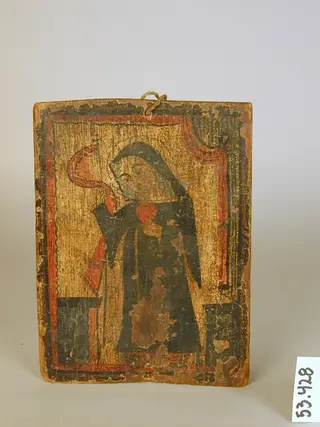 Saint Gertrude
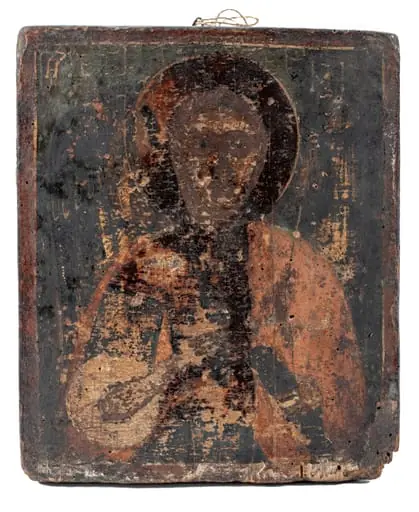 Arhanghelul Mihail
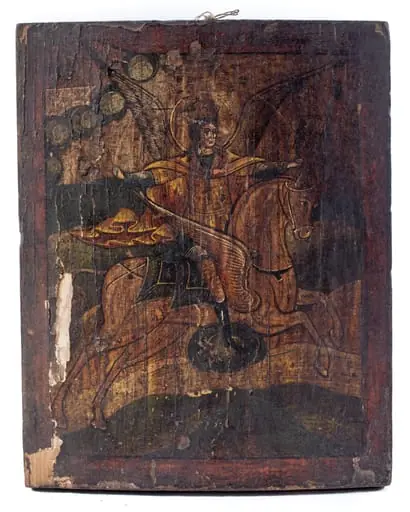 Un sfânt ecvestru
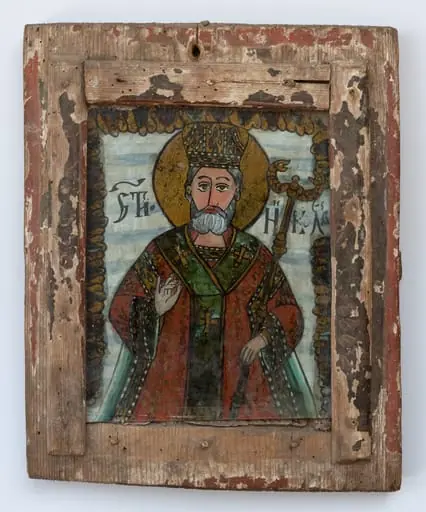 Sfântul Nicolae
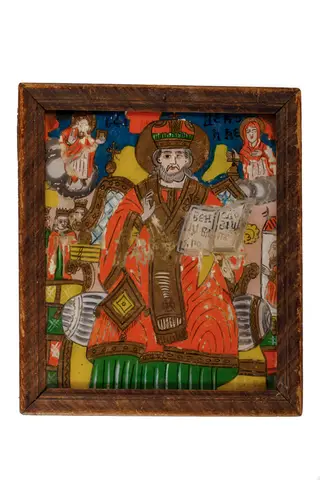 Icoană pictată pe sticlă reprezentând pe Sf. Nicolae. Sfântul este prezentat pe tron, față, bărbat tânăr, plete, barbă scurtă, cu dreapta binecuvântând, iar în stânga ține Evanghelia. Sus este încadrat de Iisus și Maria care îi oferă Evanghelia și omoforul. Stânga, la nivelul brațului, trei personaje în picioare și în dreapta o clădire și o mână (?) întinsă. Omoforul auriu cu cruci se evidențiază pe haina roșie cu linii ce marchează anatomia corpului. Icoana este înrămată.
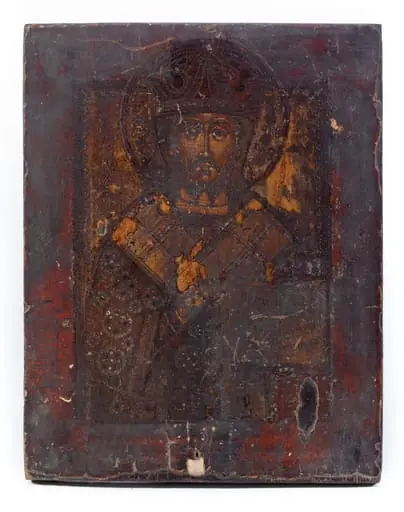 Sfântul Nicolae
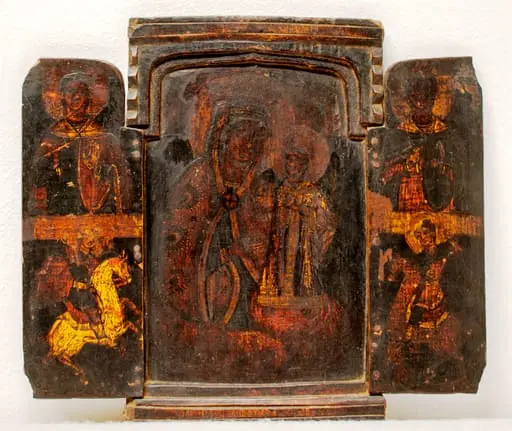 Pe panoul central este reprezentată Maica Domnului Hodighitria(Călăuzitoarea). Pruncul stă în picioare, amândoi fiind înveșmântați în straie împărătești. Maica ține Pruncul cu mâna stângă, cu dreapta arată către El. Voleul stâng, jumătatea inferioară - Sfântul Gheorghe călare pe cal alb. Înveșmântat în costum românesc de oștean medieval, mantie roșie. Calul cu picioarele din față ridicate, harnașament de culoare roșie. Deasupra e posibil să fie tot sfântul Gheorghe, în stânga ținând crucea, cu dreapta face gestul păcii, al liniștii.(prin analogie cu 34530). Simetric, pe latura dreaptă a tripticului se află jos, Sf. Dumitru, călare pe cal roșu, în poziție asemănătoare cu a SF. Gheorghe, iar sus probabil tot el, în altă ipostază iconografică(analogie) . Veșmintele au culorile inversate(tunica roșie -dreapta, albastru-stânga, mantie roșu -stânga, albastru - dreapta), la fel la sfinții războinici, probabil în legătură cu reprezentarea populară a timpului. Inițial, tripticul se închidea, dovadă inscripția care se continuă pe cele două uși. Ulterior a fost fixat cu cuie de fier, iar prinderea se făcea cu o sfoară legată de două cuie bătute pe cant.