Artwork
Enthroned Virgin and Child
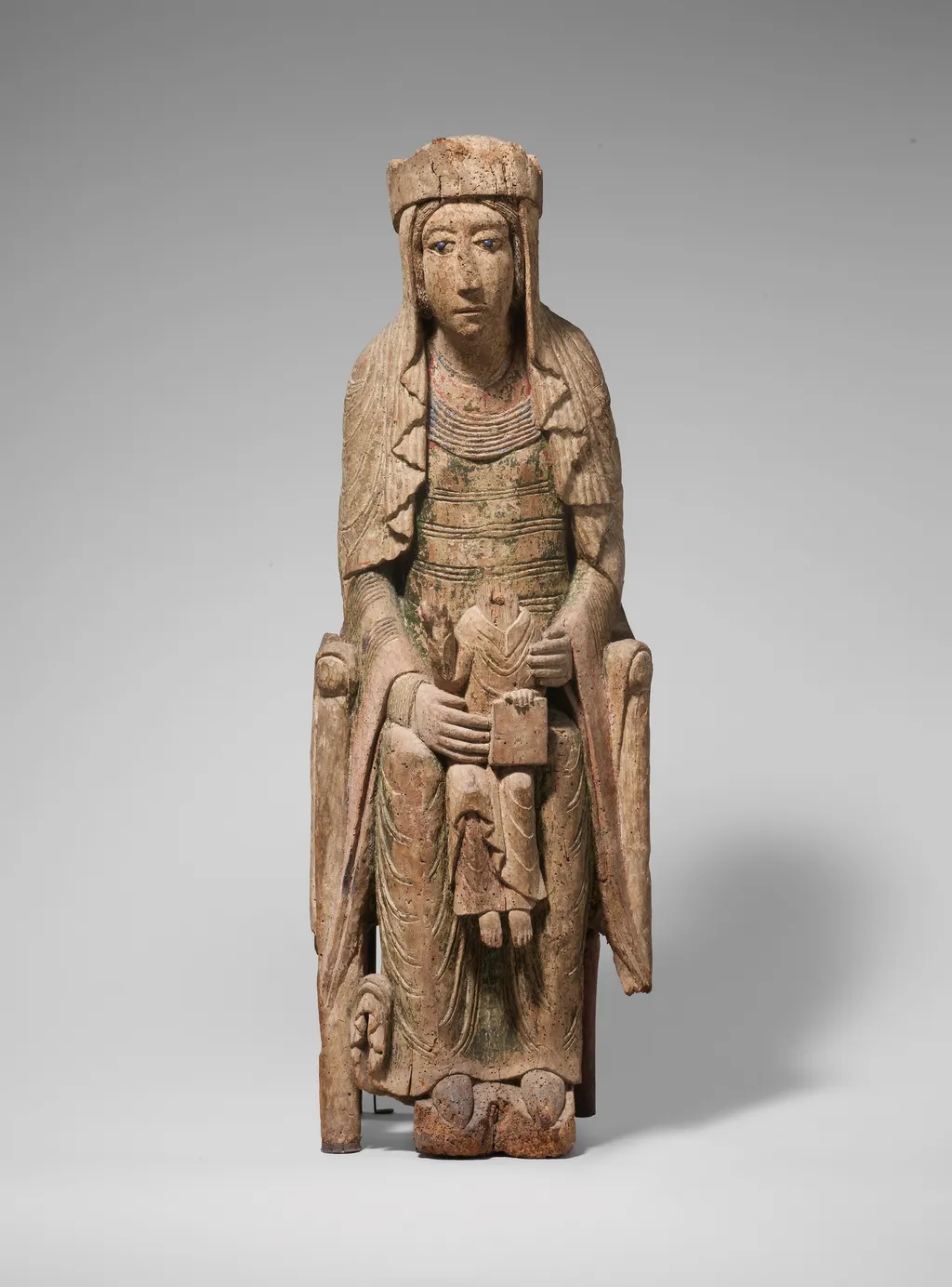
Enthroned Virgin and Child is an unspecified painting. It dates from 1135 and is held in the collection of the Metropolitan Museum of Art.
About this work
Subject & Meaning
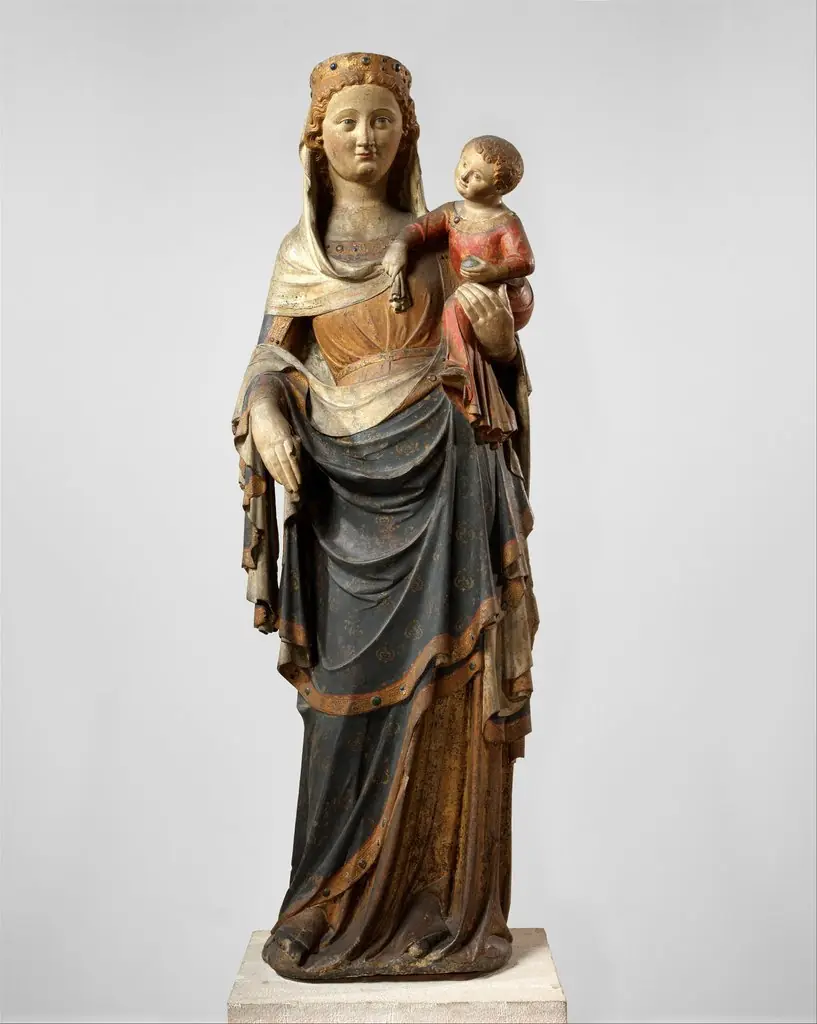
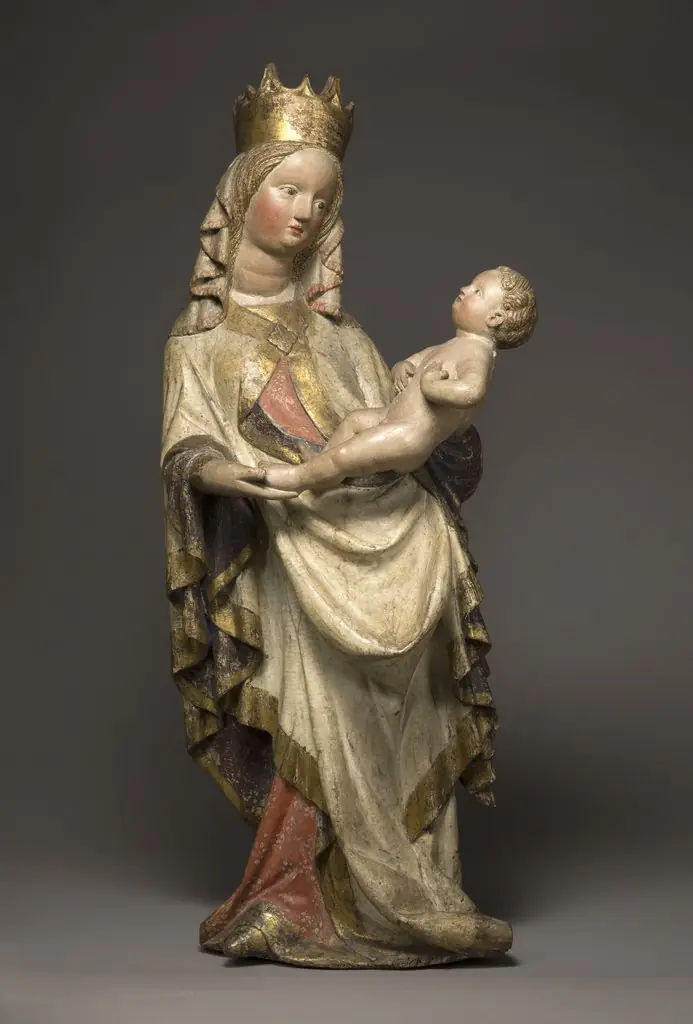
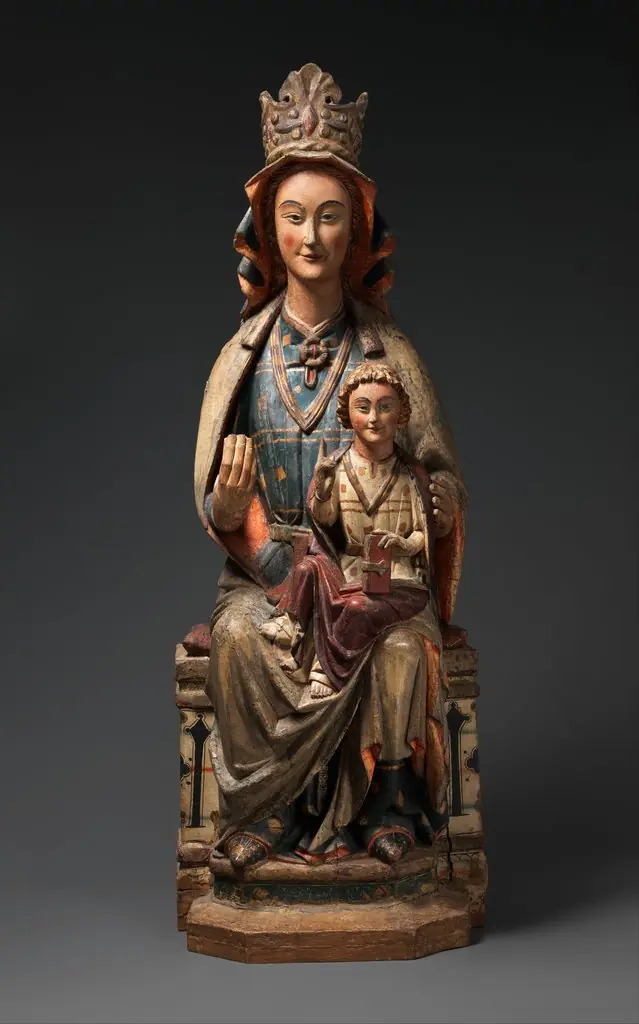
The composition presents the Virgin Mary enthroned with the infant Jesus, establishing her role as the Queen of Heaven and the divine mother.
Created around 1135, this anonymous religious work depicts the Madonna and Child, a central theme in Christian art. The composition presents the Virgin Mary enthroned with the infant Jesus, establishing her role as the Queen of Heaven and the divine mother. By placing Mary on a throne, the work emphasizes her elevated status within the celestial hierarchy, while the presence of the child signifies the incarnation of God.
The imagery serves as a focal point for devotion, representing the theological connection between the human and the divine through the figures of Mary and Jesus.
History & Provenance
Created around 1135, the Enthroned Virgin and Child is an anonymous religious work depicting the Virgin Mary and the infant Jesus in the traditional Madonna and Child subject. The specific commission and early ownership chain are not documented, though the work's inception is dated to 1135. It is held in the collection of the Metropolitan Museum of Art. No accession number or exhibition history is recorded in the available sources.
Overview
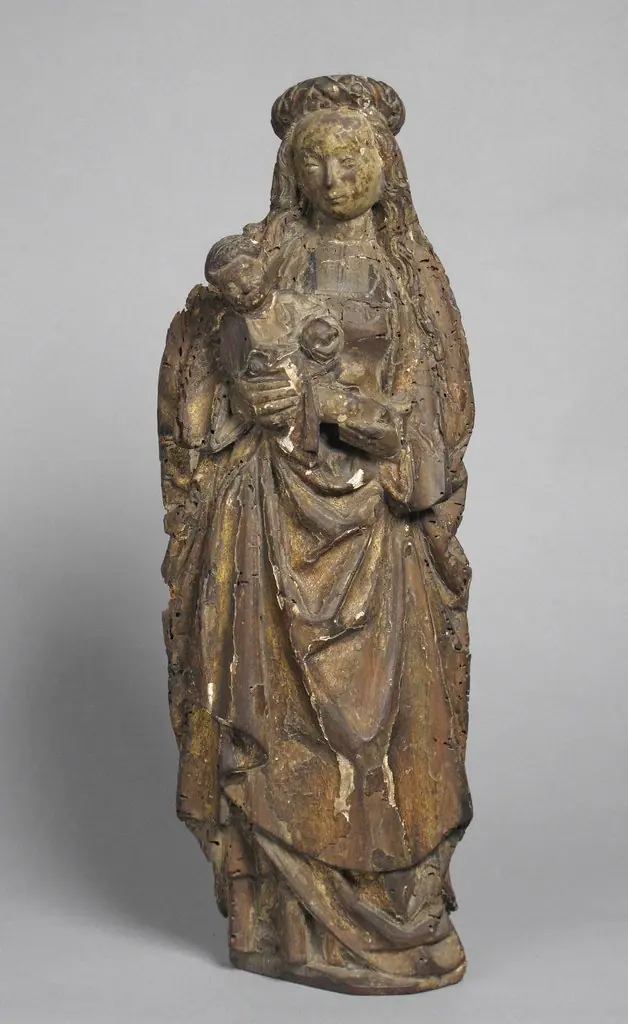
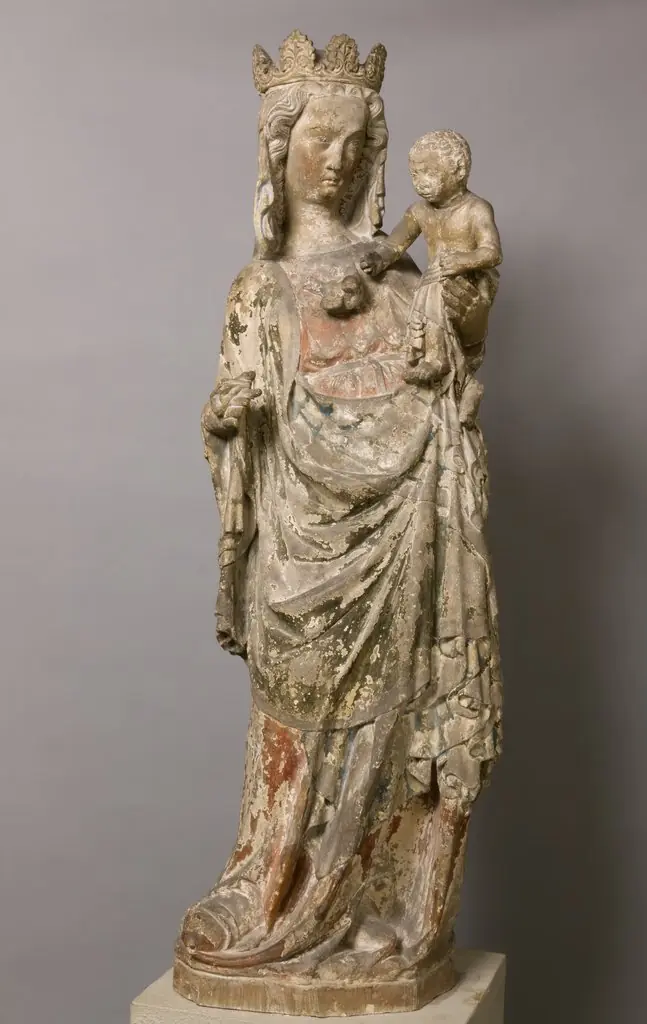
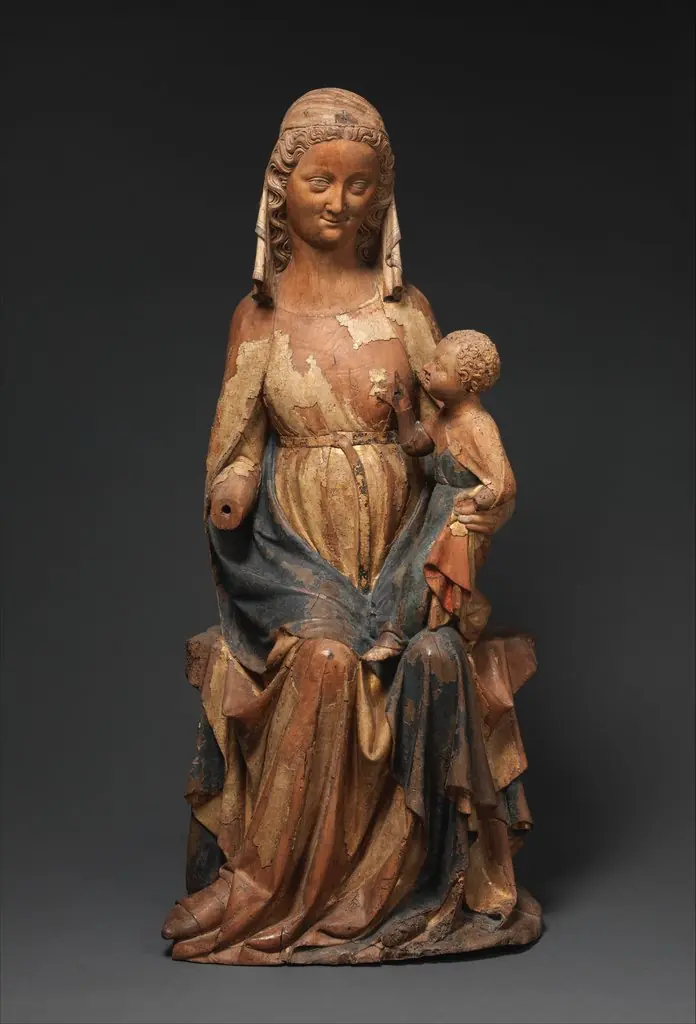
This sculpture, titled Enthroned Virgin and Child, depicts a seated female figure holding an infant on her lap. Crafted from wood, the work presents a formal religious scene, characteristic of devotional art. The figures exhibit a stylized rigidity, reflecting artistic conventions of its period, and the piece shows visible signs of age and use, including worn surfaces and faded pigments. It embodies a common representation within Christian art.
Technique & Style
The carving features figures rendered with a distinct stiffness and stylization. Both the Virgin and Child wear long, flowing robes, and their faces are simplified, contributing to a sense of solemnity rather than naturalism. The formal composition emphasizes their sacred roles.
Over time, the wooden surface has acquired a worn patina, and any original painted details have largely faded, revealing the underlying material and the passage of centuries.
Artist & collection