Artwork
Enthroned Virgin and Child
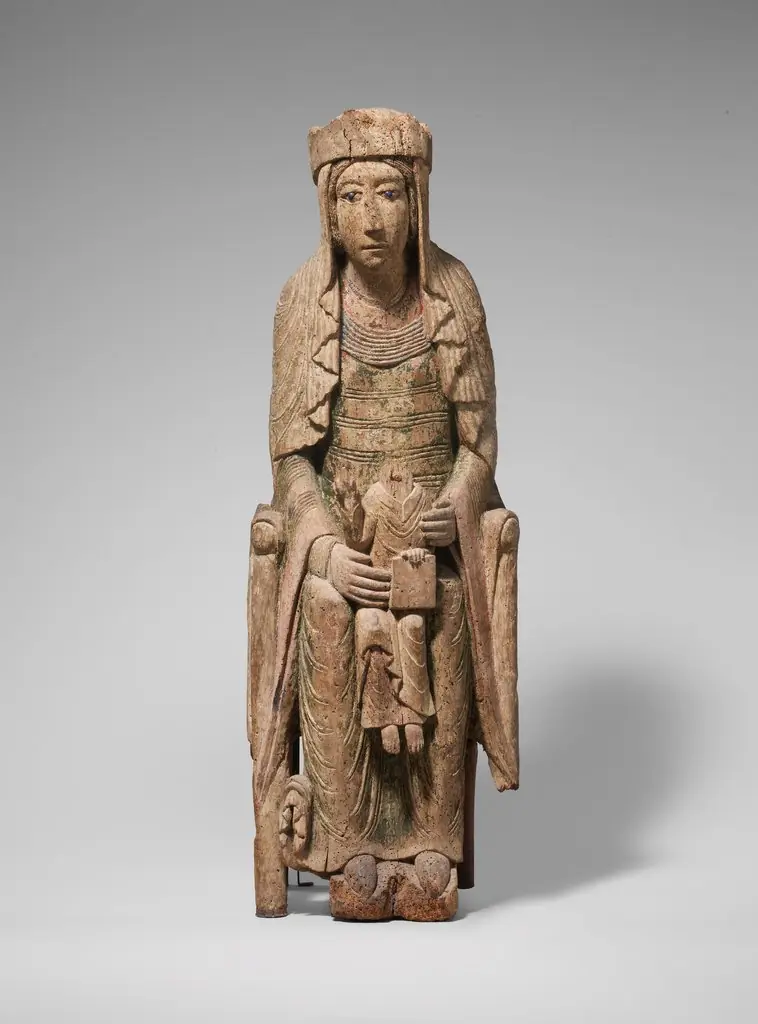
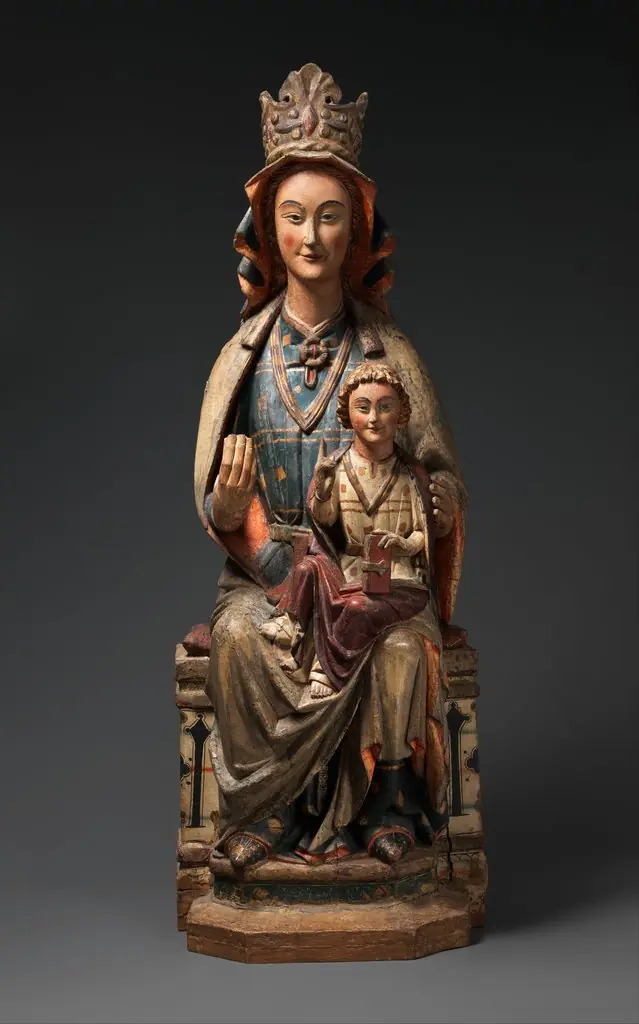
Enthroned Virgin and Child is an unspecified painting. It dates from 1220 and is held in the collection of the Metropolitan Museum of Art. This wooden sculpture depicts the Virgin Mary seated on a throne, cradling the Christ Child on her lap.
About this work
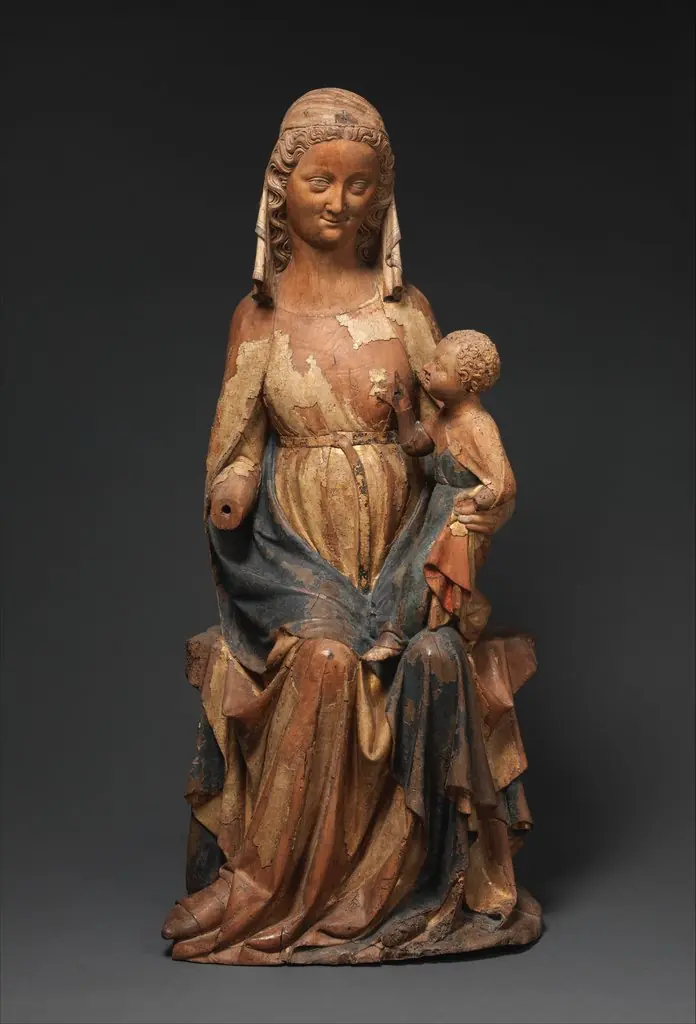
A wooden sculpture of a crowned woman holding a small child on her lap, both seated on a simple curved-back throne. Faded red and blue paint clings to the faces and hands, and the wood shows its age. Small round carvings, maybe flowers or jewels, dot the throne; the figures sit calm and stiff. 1220.
Subject & Meaning
The imagery is consistent with early thirteenth-century traditions where the enthronement of Mary signifies her role as the Queen of Heaven.
The work depicts the Madonna and Child, a central subject in religious art representing the Virgin Mary seated with the infant Jesus. As a religious painting created around 1220, the iconography focuses on the figures of Mary and the Christ Child, establishing a visual narrative of divine motherhood. The composition presents the enthroned Virgin holding her son, a standard representation in medieval devotional imagery that emphasizes the theological significance of the Incarnation.
This specific depiction aligns with the genre of religious art, serving as an object of veneration that highlights the relationship between the mother and the divine child. The imagery is consistent with early thirteenth-century traditions where the enthronement of Mary signifies her role as the Queen of Heaven.
History & Provenance
The Enthroned Virgin and Child is a religious painting created circa 1220. The work was executed by an anonymous artist, with no specific master identified in available records. Currently, the painting is held in the collection of the Metropolitan Museum of Art, where it is cataloged under the accession number 2002.285.
The museum serves as both the current owner and the location where the piece is housed. While the exact circumstances of its original commission and its ownership history prior to entering the Metropolitan Museum are not detailed in the provided data, the work's inception is firmly placed in the early thirteenth century.
The painting Enthroned Virgin and Child, created circa 1220 by an anonymous artist, is held in the collection of the Metropolitan Museum of Art. Within the museum's holdings, the work is identified by the accession number 2002.285. The available records confirm its location at this institution and its classification as a religious artwork depicting the Madonna and Child, but do not provide further details regarding specific past exhibitions or a detailed provenance history prior to its acquisition.
Overview
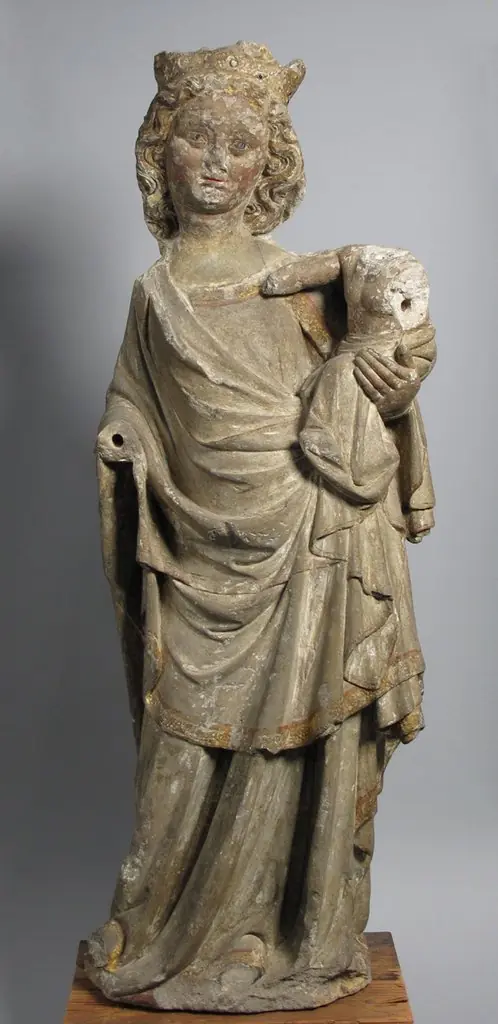
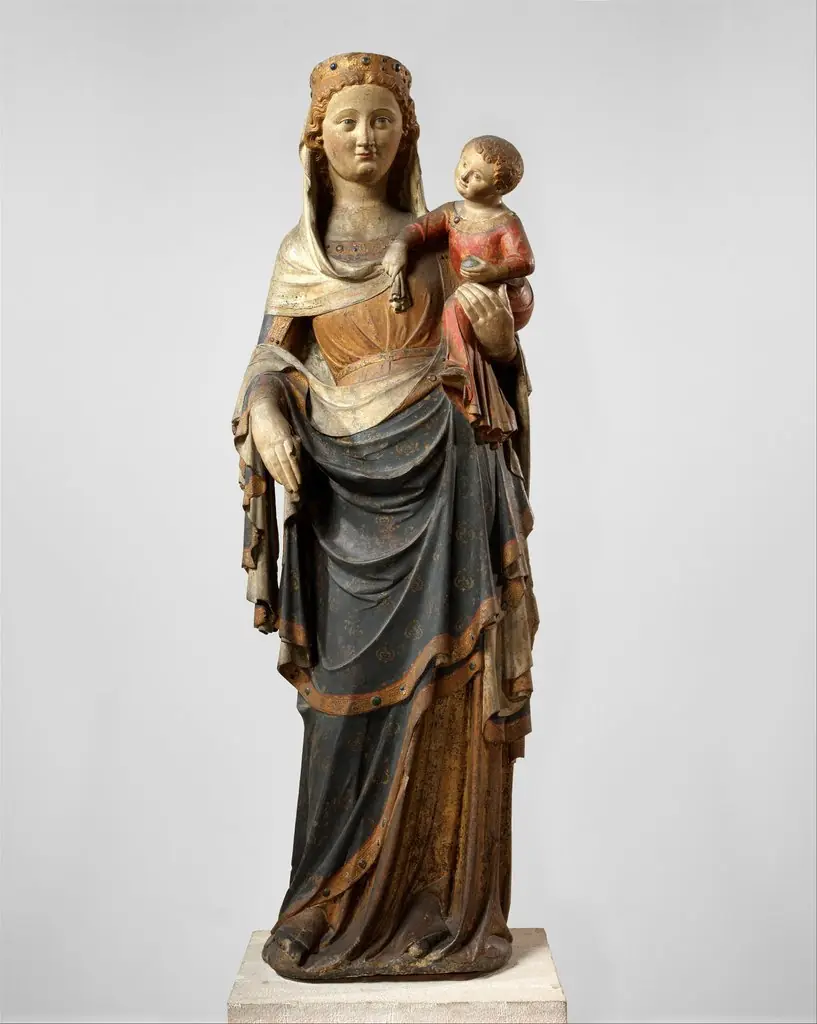
This wooden sculpture depicts the Virgin Mary seated on a throne, cradling the Christ Child on her lap. The figures are presented in a formal, static manner, characteristic of devotional art. The Virgin wears a crown and a long robe, while the child sits upright, gazing forward.
Traces of original paint, particularly red and blue, are visible on their faces and hands, hinting at the sculpture's original polychrome appearance.
Technique & Style
Carved from wood, the sculpture exhibits a simplified, rigid form, typical of early devotional imagery. The figures' poses are stiff, contributing to their solemn and formal presence. Details such as the throne's curved backrest and the small, round carvings, possibly stylized flowers or jewels, add decorative elements.
The remaining pigment on the faces and hands indicates that the sculpture was originally painted, a common practice to enhance realism and visual impact.
Context
Over time, the sculpture has acquired a visible patina of age. The original painted surfaces, once vibrant, have significantly faded, revealing the underlying wood. This wear is evident across the figures and the throne, suggesting a long history of display and perhaps devotional handling.
The natural aging of the wood and the loss of pigment contribute to the artwork's current subdued aesthetic.
Artist & collection