Artwork
Seated Virgin and Child
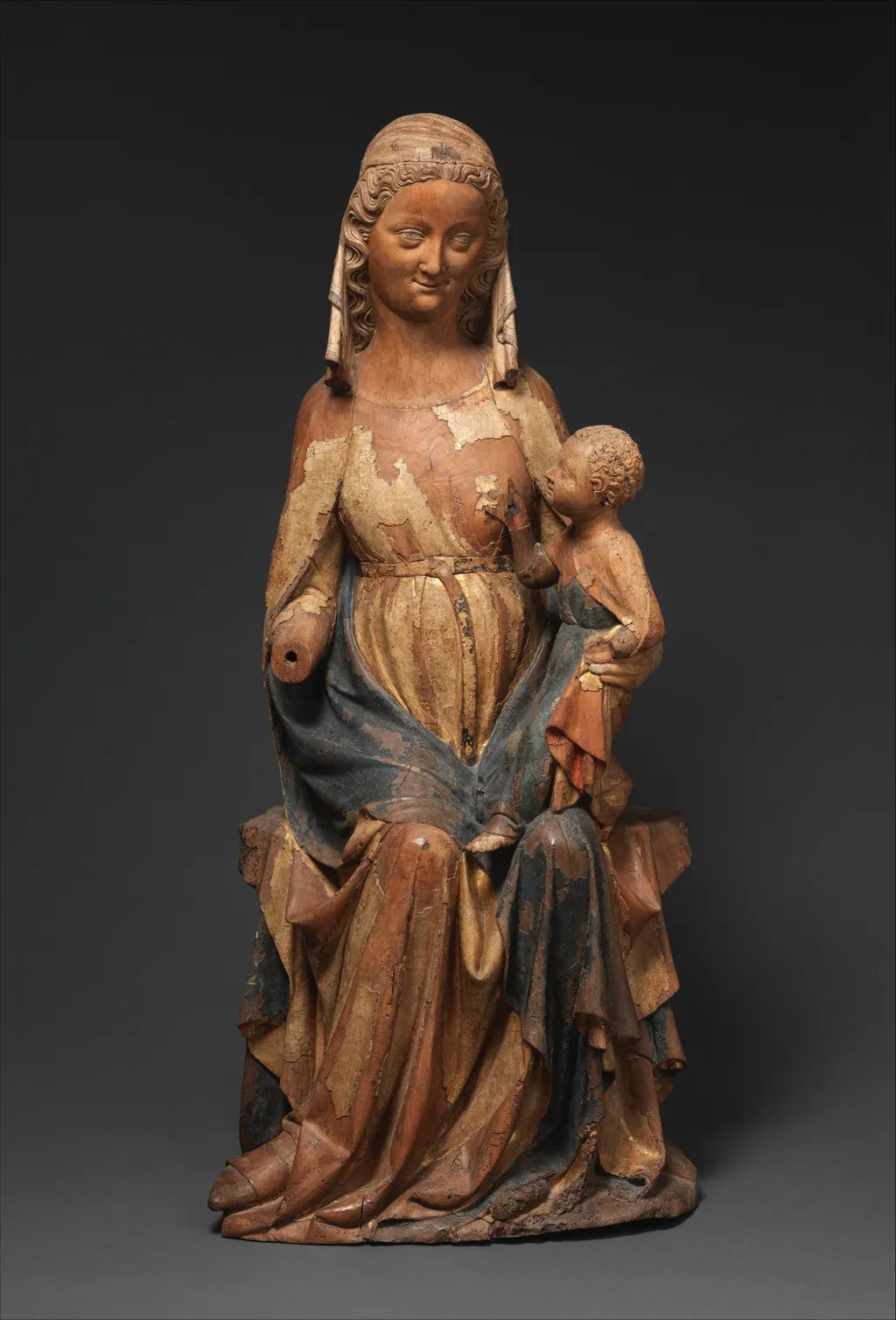
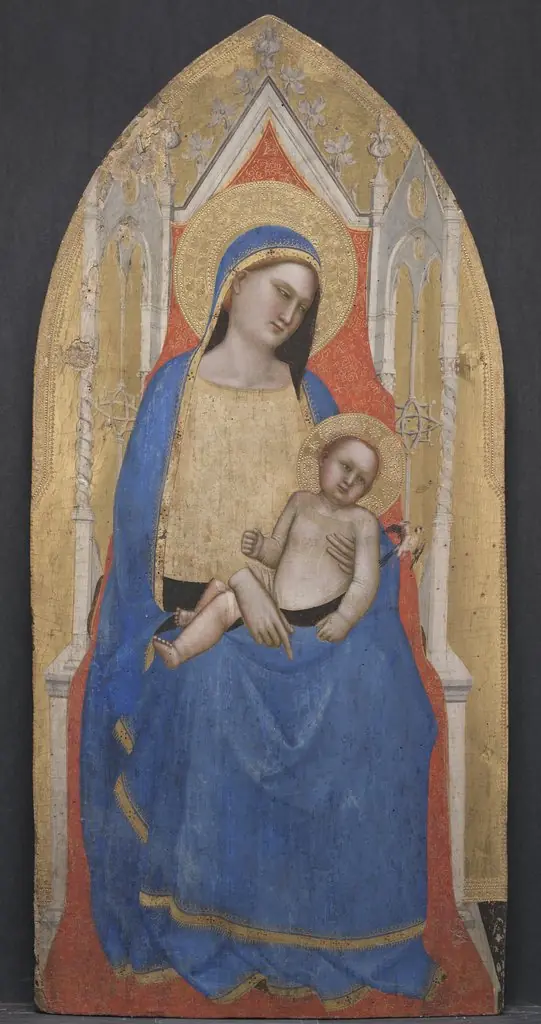
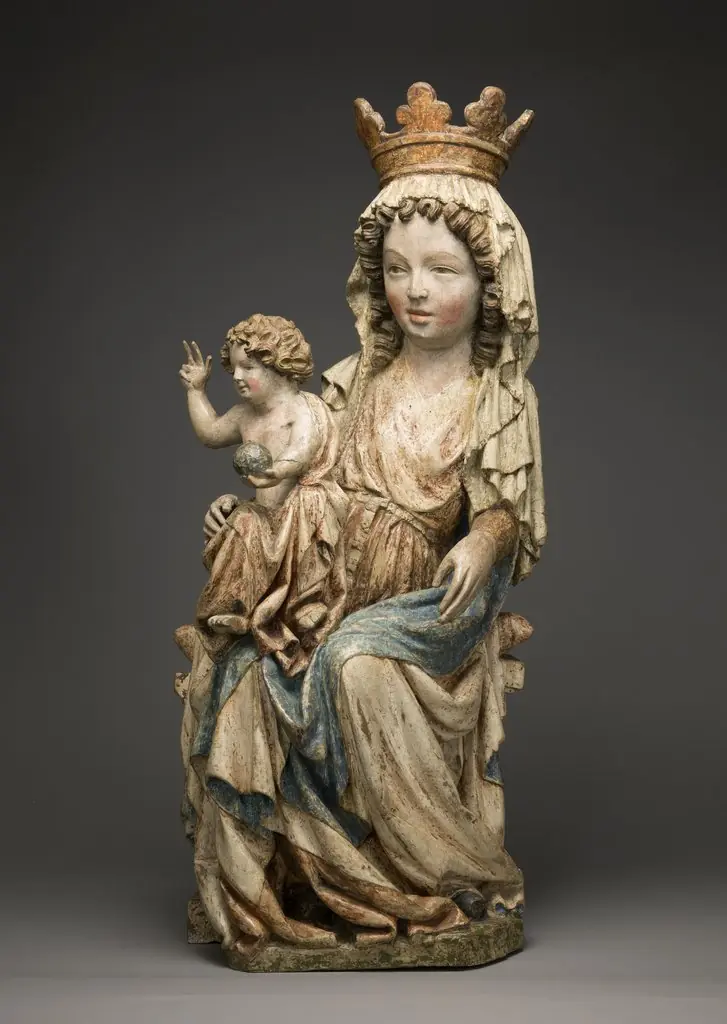
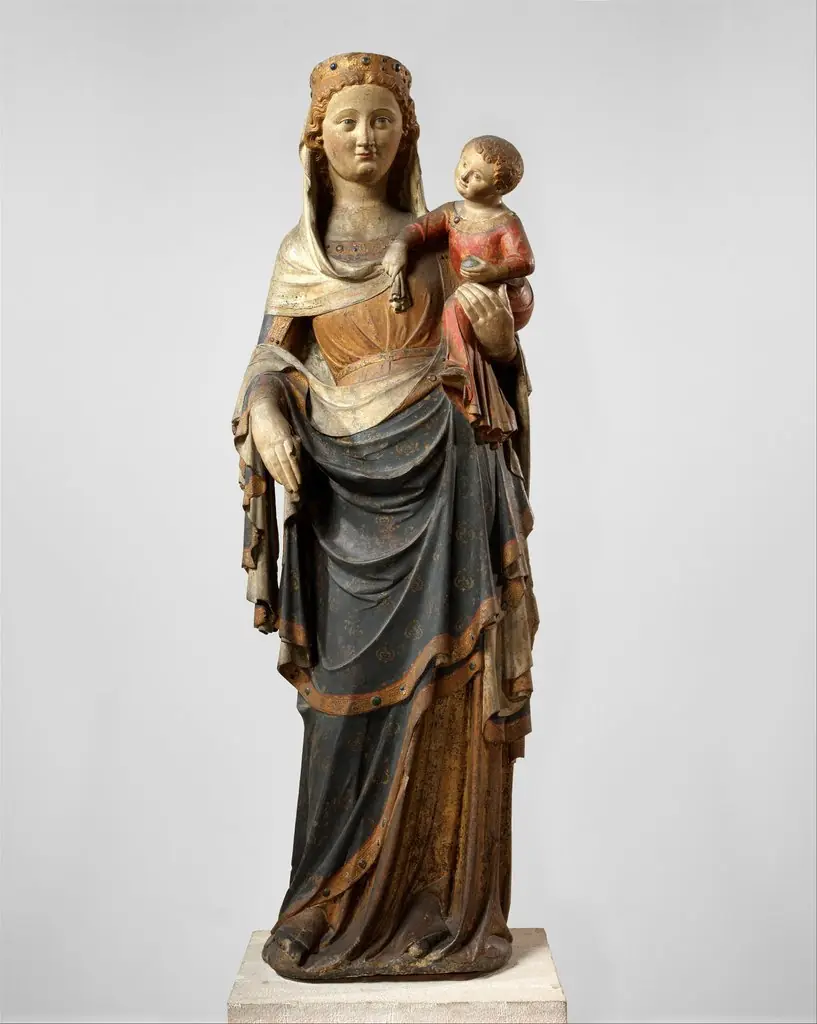
Seated Virgin and Child is an unspecified painting. It dates from 1300 and is held in the collection of the Metropolitan Museum of Art. This sculpture depicts a seated Virgin Mary holding the Christ Child.
About this work
Subject & Meaning
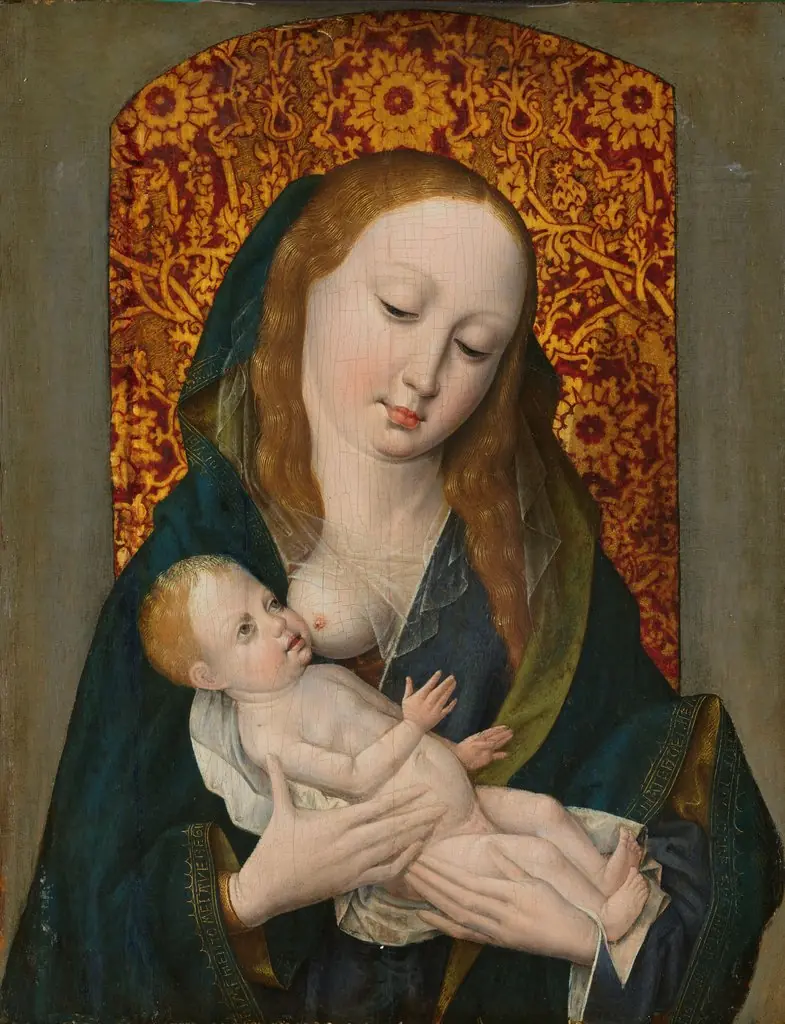
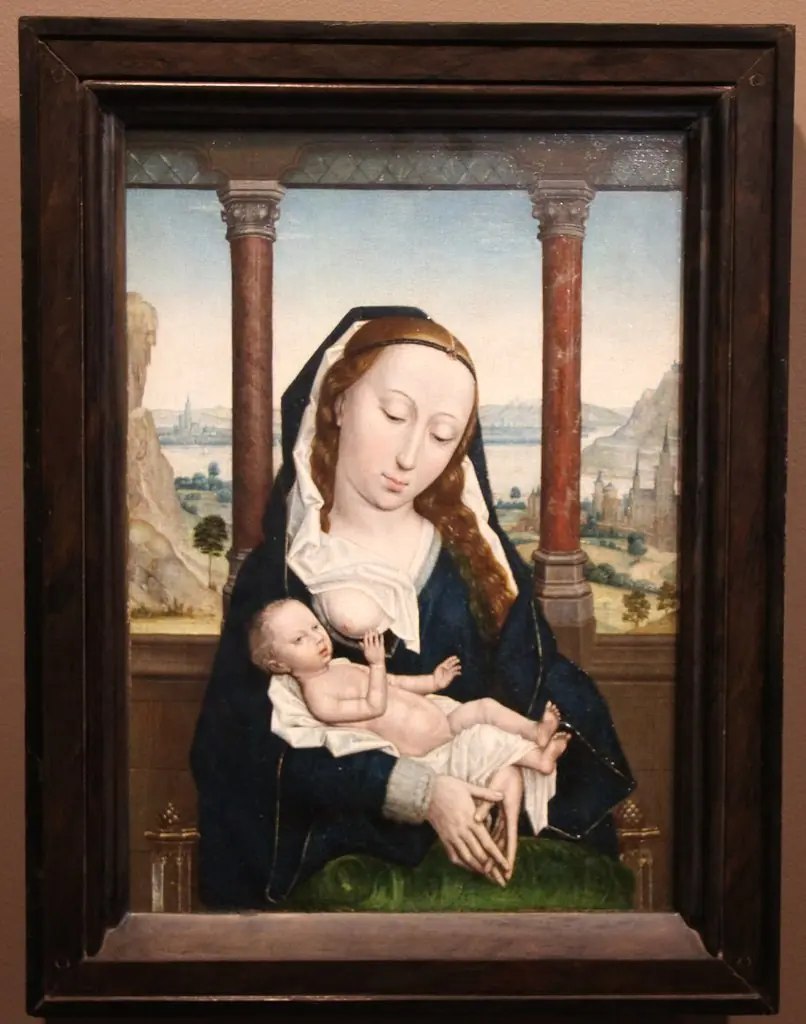
The panel presents the Madonna and Child, a devotional subject in which the Virgin Mary holds the Christ Child, a theme central to medieval religious art.
The panel presents the Madonna and Child, a devotional subject in which the Virgin Mary holds the Christ Child, a theme central to medieval religious art. The work is classified as a religious painting and is dated to 1300, situating it within the late medieval tradition of Marian devotion. Within this iconographic framework, Mary functions as both mother and intercessor, while the Christ Child signifies the Incarnation and the promise of salvation, themes that shaped devotional practice and visual culture of the period.
The image belongs to the broader category of Madonna and Child imagery that proliferated across Europe during the late thirteenth and early fourteenth centuries, serving as a focus for both private contemplation and public veneration.
Context
The Seated Virgin and Child is a c. 1300 panel painting attributed to an anonymous Italian master, documented in the Metropolitan Museum of Art collection. Its iconography, Mary holding the infant Christ, places it within the devotional practices of early fourteenth‑century Italy, where such images functioned as focal points for private prayer. Scholars have identified the work as characteristic of the anonymous workshop production that dominated religious painting before the rise of named masters, using it to trace stylistic continuities in composition and color handling.
The painting’s placement in the Met’s European paintings wing underscores its significance as a representative example of early Italian religious art.
Overview
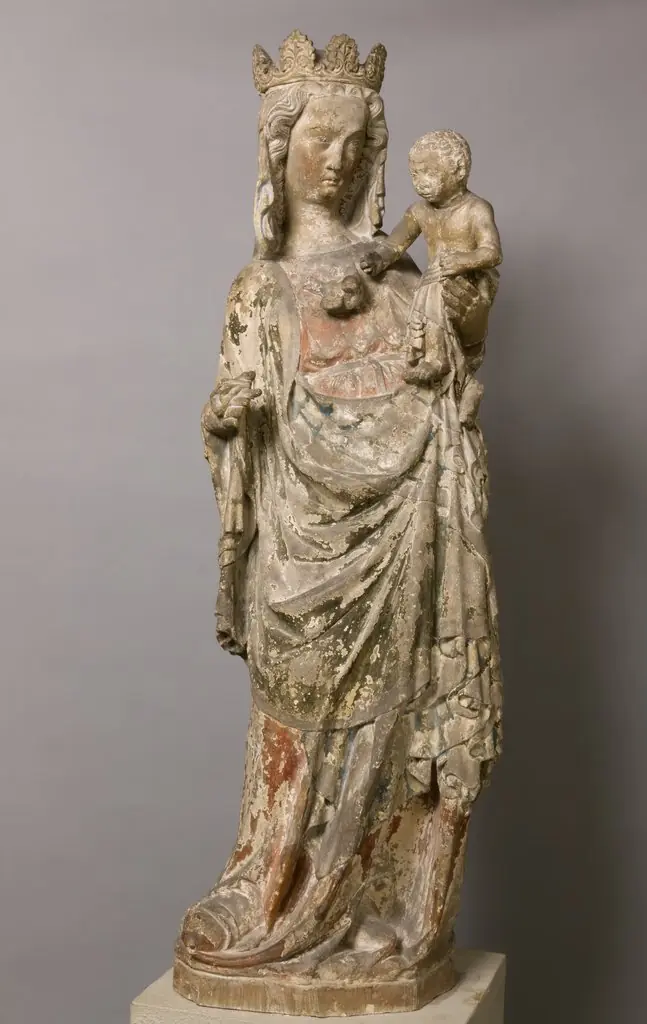
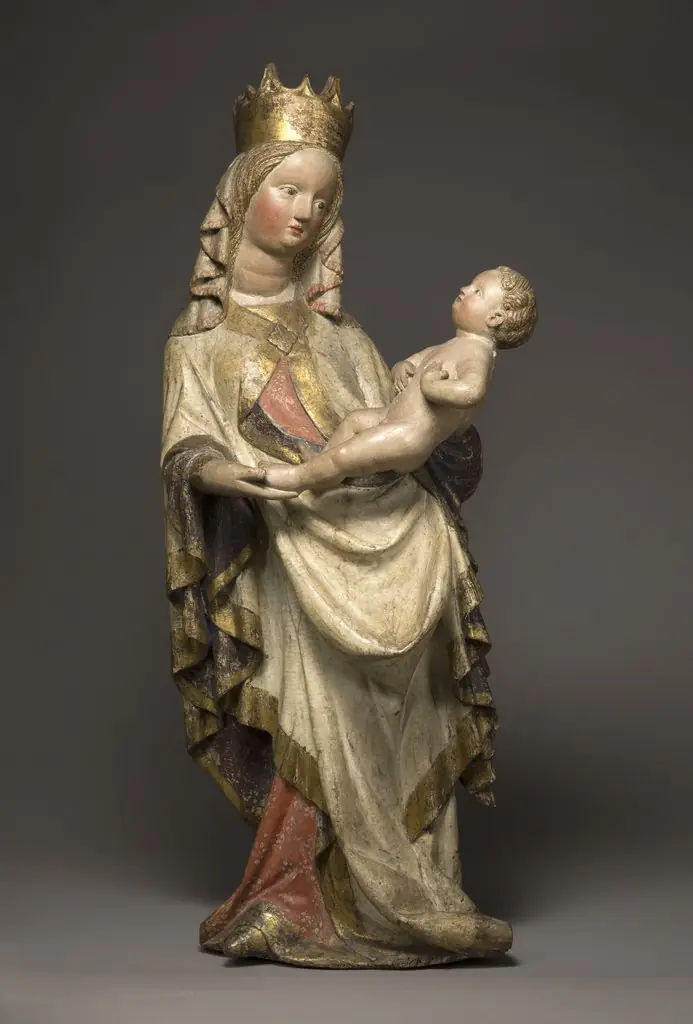
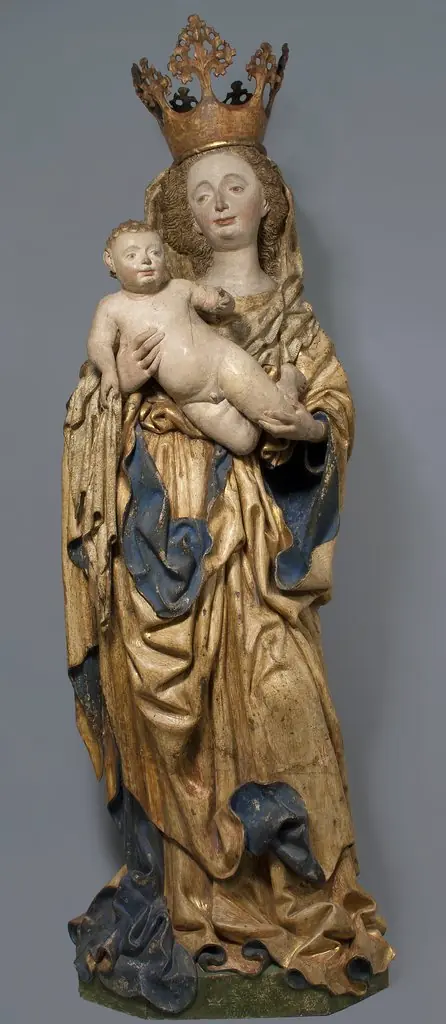
This sculpture depicts a seated Virgin Mary holding the Christ Child. The figures are rendered with a serene demeanor, though the surface shows considerable age. Traces of original polychromy, including gold, blue, and brown, are visible through the cracks, indicating a once vibrant appearance. The work exemplifies a prevalent theme in Christian art, representing the tender bond between mother and son.
Technique & Style
The artwork's surface reveals the passage of time, with significant wear and damage. The original painted and gilded layers have largely faded, exposing the underlying material and creating a textured appearance. The Virgin's flowing robe and veil suggest a sculptural tradition focused on drapery and form.
The calm expression on Mary's face and the child's gesture contribute to the overall devotional character of the piece.
Artist & collection