Artwork
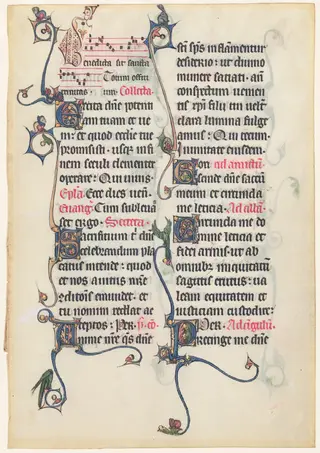
Floor Plan of the Tabernacle, one of six illustrated leaves from the Postilla Litteralis (Literal Commentary) of Nicholas of Lyra
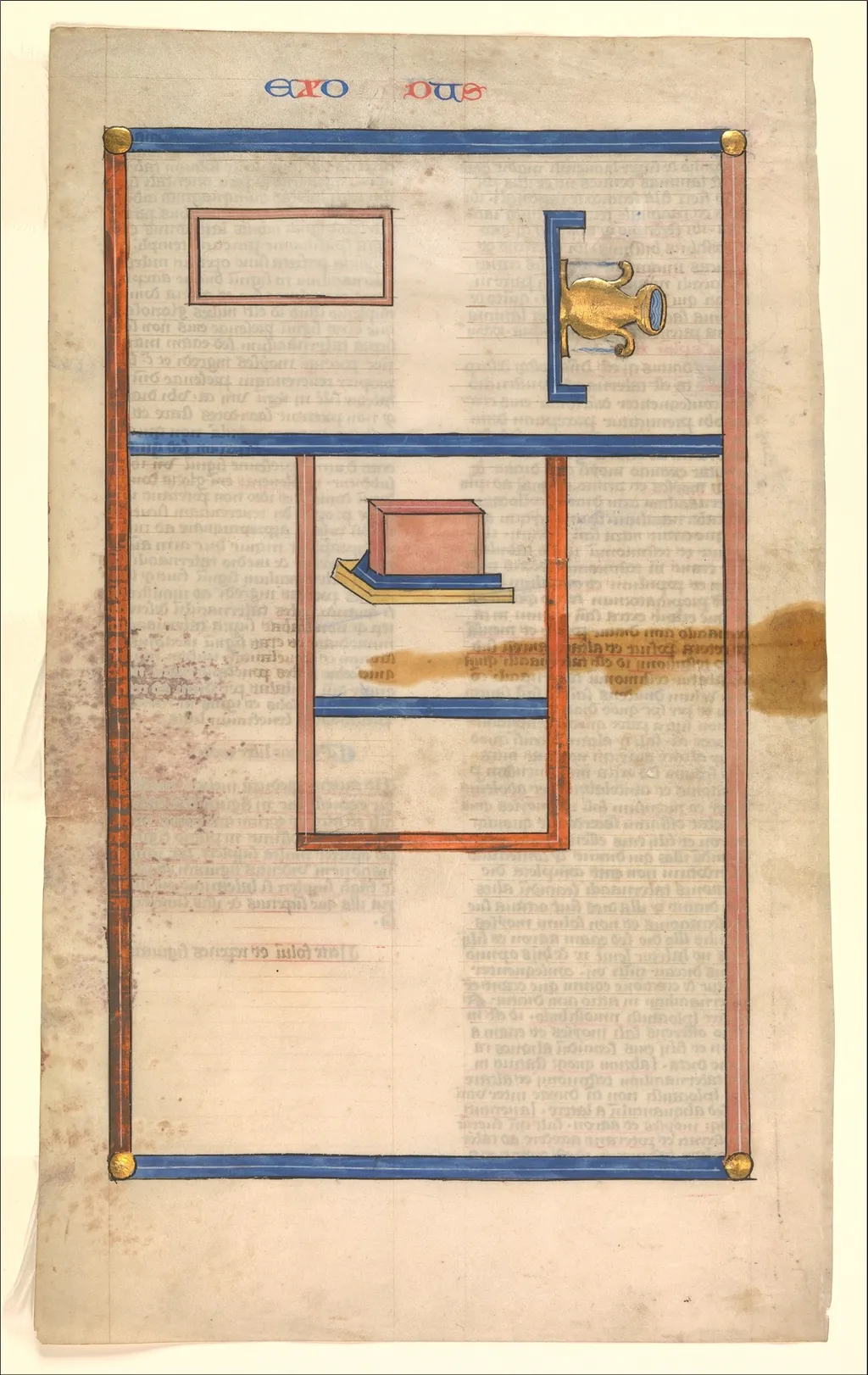
Floor Plan of the Tabernacle, one of six illustrated leaves from the Postilla Litteralis (Literal Commentary) of Nicholas of Lyra is an unspecified painting. It dates from 1360 and is held in the collection of the Metropolitan Museum of Art.
About this work
Overview
This illuminated leaf presents a schematic floor plan of the biblical Tabernacle, rendered in vivid, flat colors typical of medieval diagrammatic art.
This illuminated leaf presents a schematic floor plan of the biblical Tabernacle, rendered in vivid, flat colors typical of medieval diagrammatic art. A wide blue border encloses two rectangular zones; the larger is empty, while the smaller contains a red box topped with a yellow lid. A gold pitcher is depicted on the right side, all set against a background densely filled with tiny handwritten commentary.
Subject & Meaning
The drawing visualizes the layout of the portable sanctuary described in the Hebrew Bible, likely intended to aid readers of Nicholas of Lyra’s literal commentary in understanding the spatial relationships of sacred objects. The empty rectangle may signify an unoccupied sacred space, while the colored boxes represent specific furnishings within the Tabernacle.
Technique & Style
Executed with tempera on parchment, the illustration employs a limited palette of bold primary hues and gold leaf accents, characteristic of early 14th‑century manuscript illumination. The flat, graphic treatment and precise line work reflect a didactic purpose rather than decorative excess.
History & Provenance
The leaf is one of six illustrated pages from the Postilla Litteralis, a literal commentary on the Bible by the medieval exegete Nicholas of Lyra (c. 1270–1349). The manuscript was produced in a workshop serving a monastic or scholarly community and later entered the collection of the Metropolitan Museum of Art, where it is currently held.
Context
Nicholas of Lyra’s commentaries were widely used throughout the Middle Ages for biblical study, and illuminated diagrams such as this floor plan were incorporated to clarify complex theological and liturgical concepts. The work exemplifies the intersection of scholarly exegesis and visual pedagogy in medieval manuscript culture.
Artist & collection

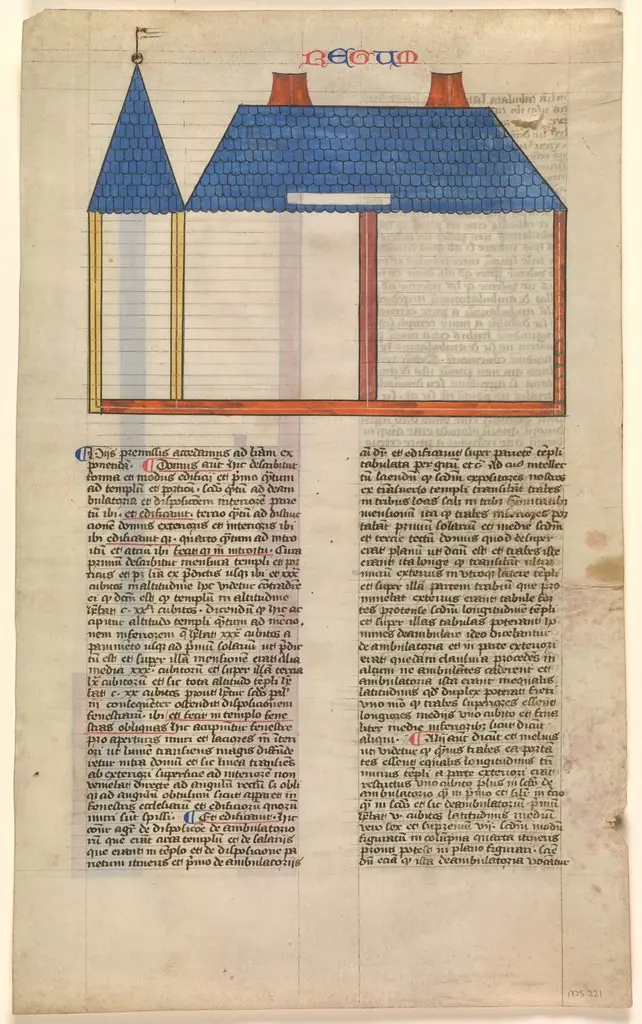
- Elevation of Solomon's Temple, one of six illustrated leaves from the Postilla Litteralis (Literal Commentary) of Nicholas of Lyra
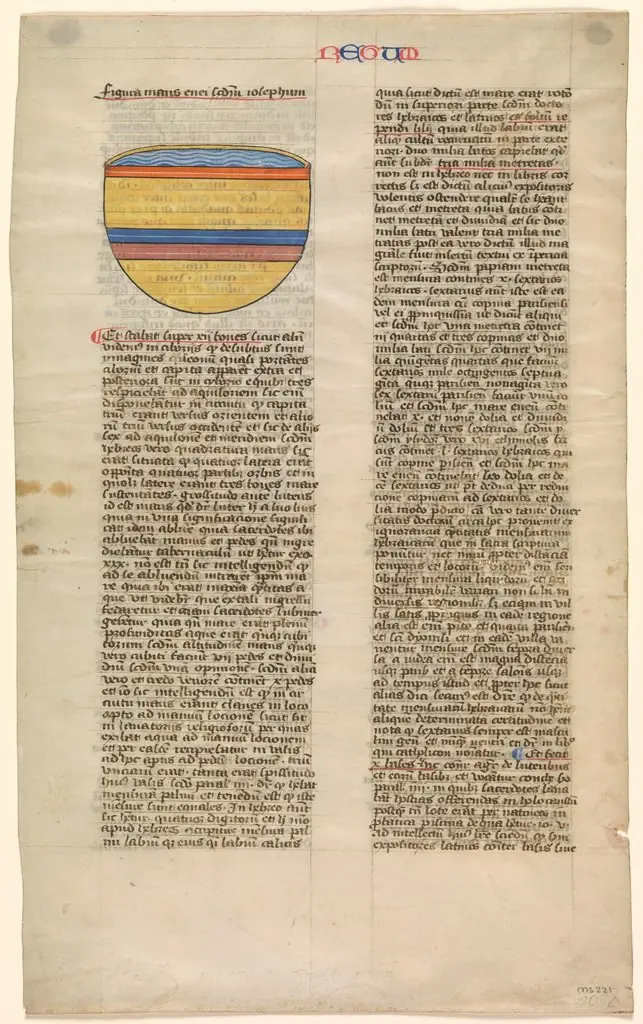 Brazen Sea, one of six illustrated leaves from the Postilla Litteralis (Literal Commentary) of Nicholas of Lyra
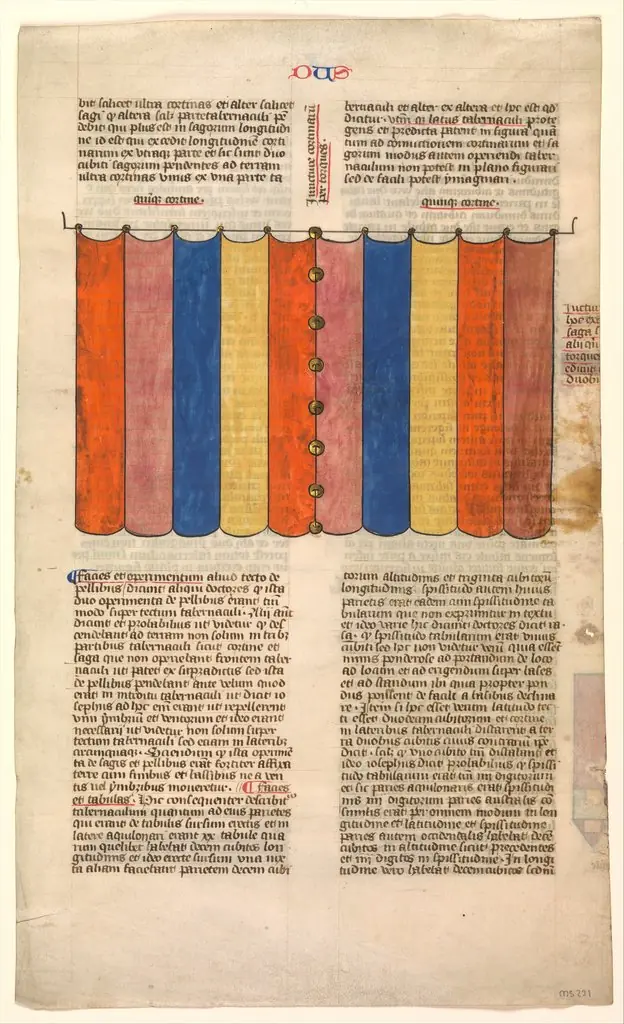 Curtain of the Tabernacle, one of six illustrated leaves from the Postilla Litteralis (Literal Commentary) of Nicholas of Lyra
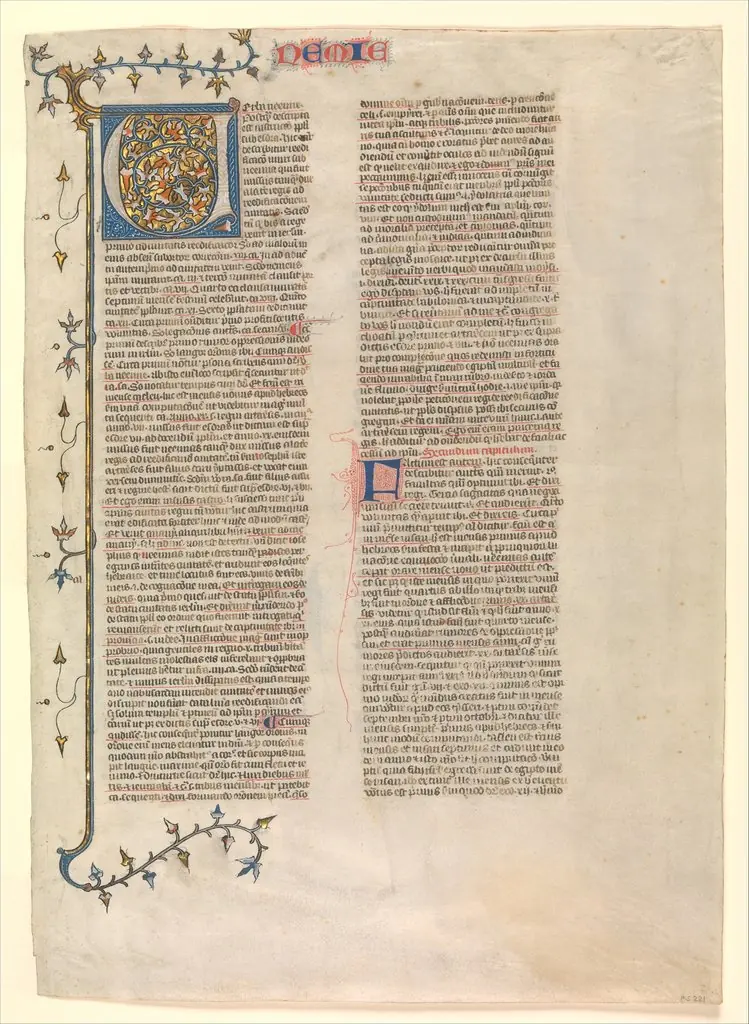 Initial "V" from the commentary of Nehemiah, one of six illustrated leaves from the Postilla Litteralis (Literal Commentary) of Nicholas of Lyra
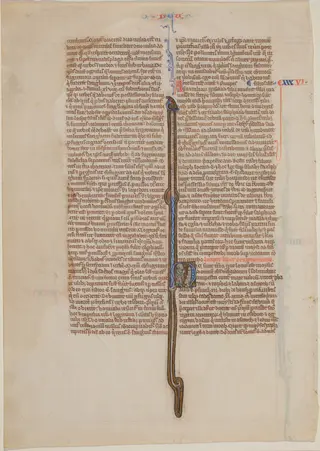 Manuscript Leaf from a Bible (Deuteronomy)
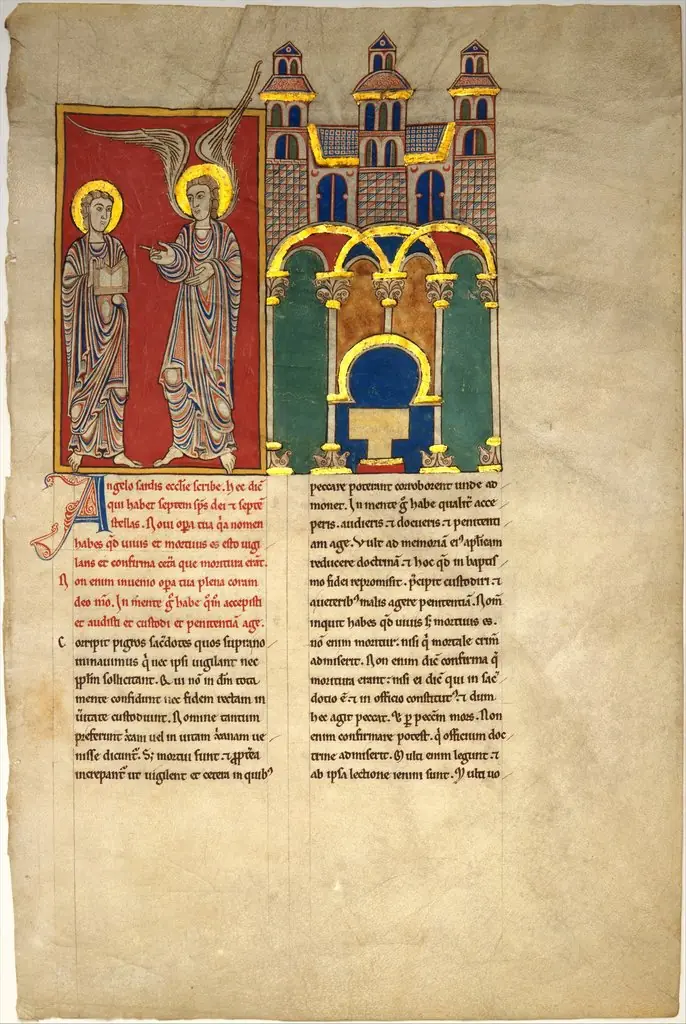 Leaf from a Beatus Manuscript: the Angel of the Church of Sardis with Saint John
 Manuscript Leaf from the Beauvais Missal