Artwork
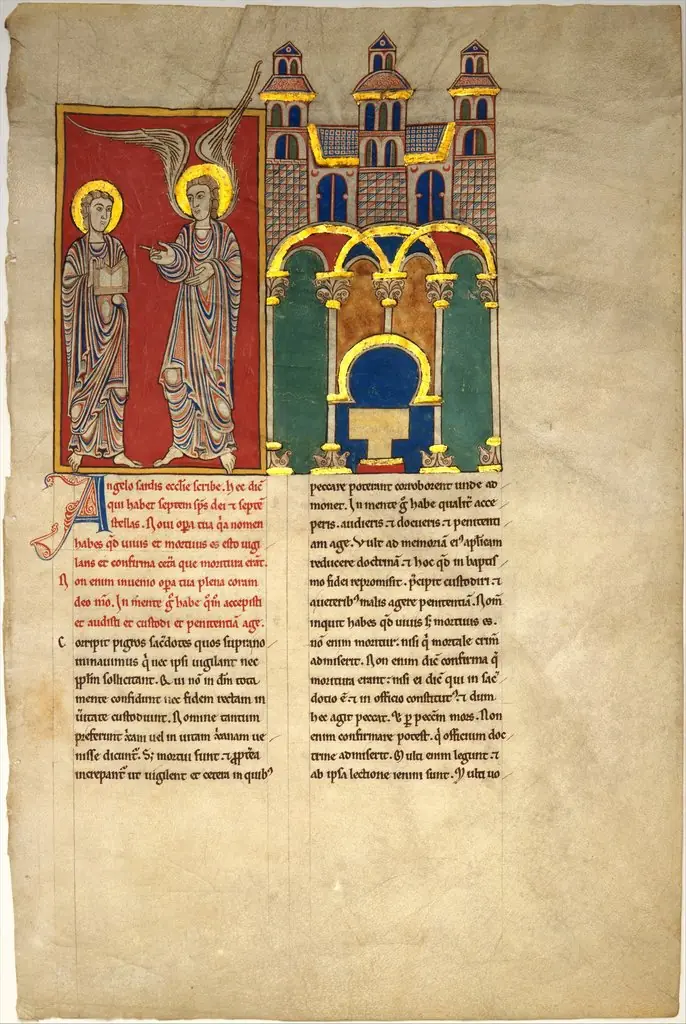
Elevation of Solomon's Temple, one of six illustrated leaves from the Postilla Litteralis (Literal Commentary) of Nicholas of Lyra
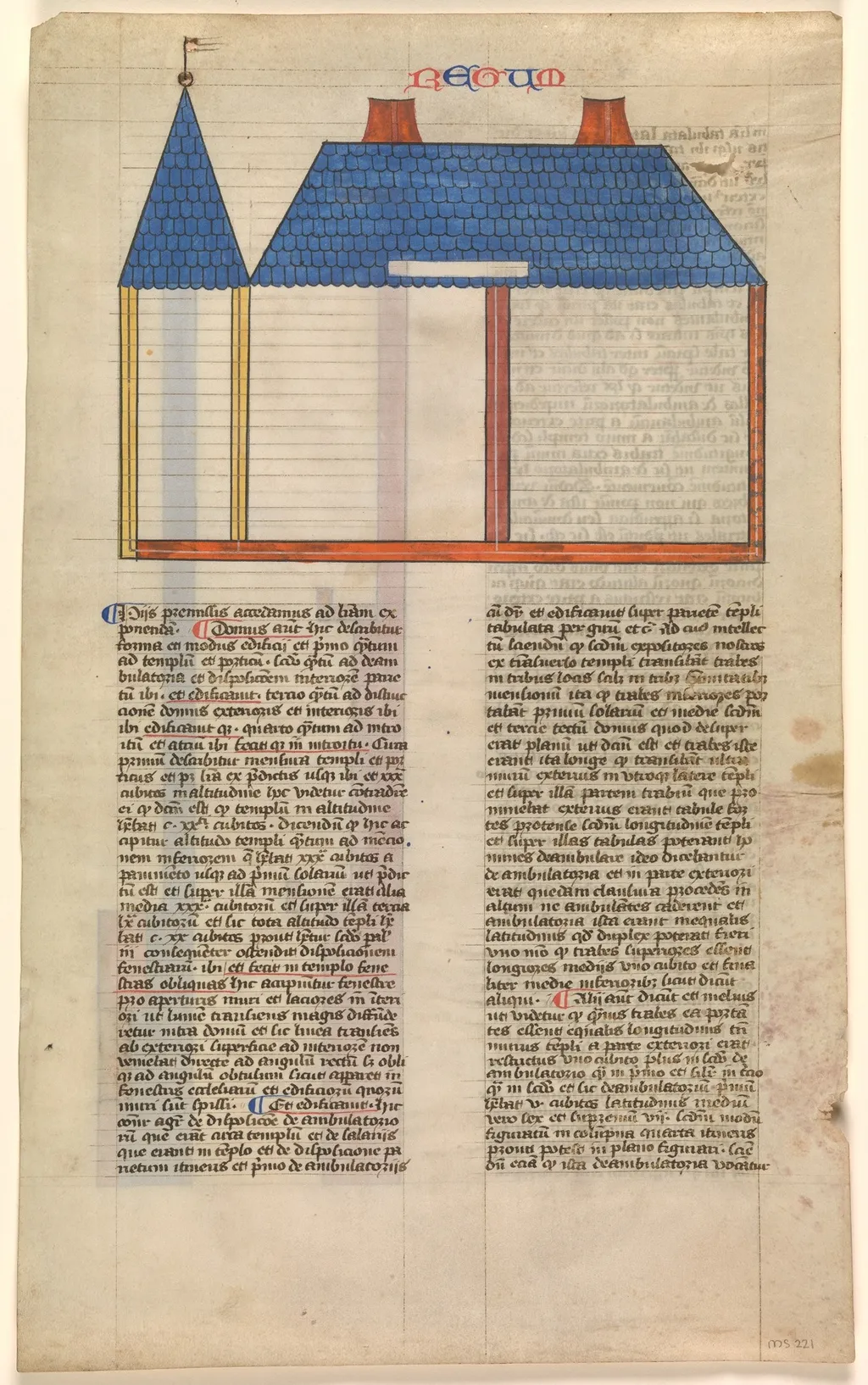
Elevation of Solomon's Temple, one of six illustrated leaves from the Postilla Litteralis (Literal Commentary) of Nicholas of Lyra is an unspecified painting. It dates from 1360 and is held in the collection of the Metropolitan Museum of Art.
About this work
History & Provenance
Executed as one of six illustrated leaves accompanying the commentary, the work is attributed to an anonymous painter active in the 14th century.
The illuminated leaf titled Elevation of Solomon's Temple was created in 1360 as part of the Postilla Litteralis, a literal commentary on the Bible attributed to the French Dominican theologian Nicholas of Lyra. Executed as one of six illustrated leaves accompanying the commentary, the work is attributed to an anonymous painter active in the 14th century. It measures 41.9 cm in height by 24.8 cm in width and is currently housed in the collection of the Metropolitan Museum of Art in New York.
The leaf entered the museum’s holdings as part of a group of illuminated fragments from the Postilla Litteralis, preserving its medieval provenance as a devotional and scholarly illustration.
The work reflects the Gothic artistic tradition of manuscript illumination, combining textual exegesis with visual narrative to support biblical interpretation in the late medieval period.
Elevation of Solomon's Temple is part of the Metropolitan Museum of Art's collection, listed under its accession number 1986.271. The work has been displayed in exhibitions focused on medieval illumination, including the 1990 exhibition "The Art of Nicholas of Lyra," where it was featured as a key example of 14th-century biblical illustration.
The painting measures 41.9 cm in height and 24.8 cm in width, reflecting its scale within the illuminated manuscript tradition.
It was created in 1360 as part of the Postilla Litteralis, a literal commentary on the Bible authored by Nicholas of Lyra, a 14th-century French Dominican friar known for his biblical scholarship.
Context
The elevation view of Solomon's Temple, created as one of six illustrated leaves for Nicholas of Lyra's Postilla Litteralis, reflects the medieval Dominican theologian's biblical exegesis rendered in visual form. Its composition and iconography align with 14th-century Dominican scriptural interpretation, situating it within the broader tradition of illuminated biblical commentaries produced in the Council of Vienne era. The work's stylistic elements, including its gold leaf background and flattened spatial perspective, demonstrate the transitional Gothic-Renaissance visual language characteristic of late medieval Dominican artistic workshops.
As a devotional aid for scriptural study, it functioned within the Order's emphasis on contemplative engagement with biblical narratives.
Overview
The work titled “Elevation of Solomon’s Temple” is an illuminated leaf from the Postilla Litteralis, a biblical commentary attributed to the medieval scholar Nicholas of Lyra. It forms part of a six‑panel series that visually interprets passages from the commentary, combining a painted architectural scene with marginal text on the same folio.
Subject & Meaning
The illustration depicts the construction of Solomon’s Temple, emphasizing its vertical ascent and sacred purpose. By pairing the architectural rendering with a textual excerpt, the leaf underscores the theological significance of the temple as a focal point of divine presence and covenant, reflecting Lyra’s exegetical emphasis on literal and moral interpretation.
Technique & Style
Executed in tempera on parchment, the image employs a limited palette dominated by blues and earth tones. Linear perspective is suggested through the building’s stepped form, while decorative borders and a faint watermark on the accompanying text page reveal the manuscript’s layered production process typical of late medieval illumination.
Artist & collection

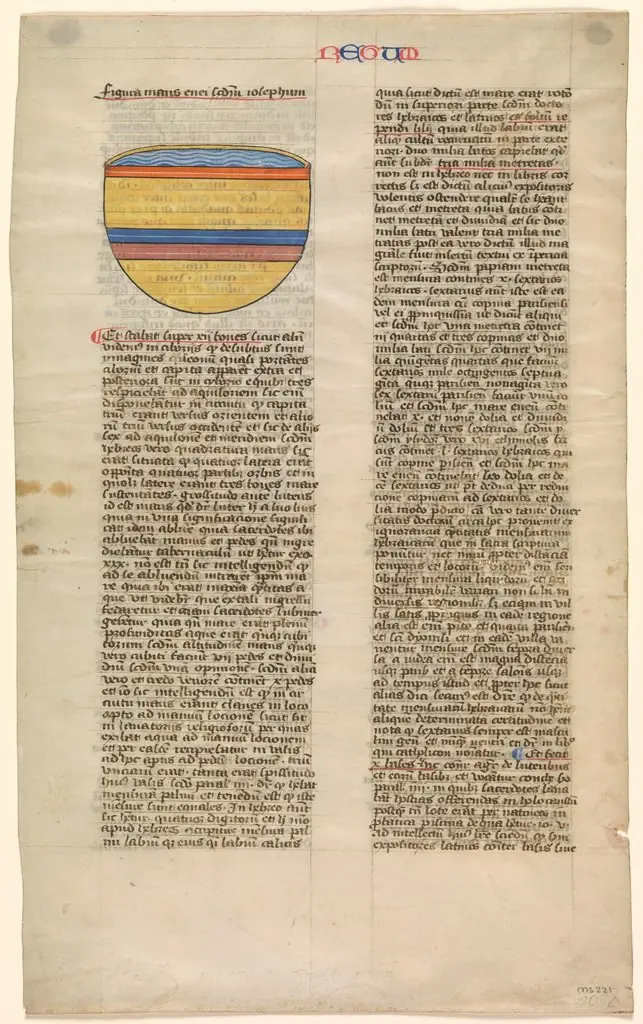
- Brazen Sea, one of six illustrated leaves from the Postilla Litteralis (Literal Commentary) of Nicholas of Lyra
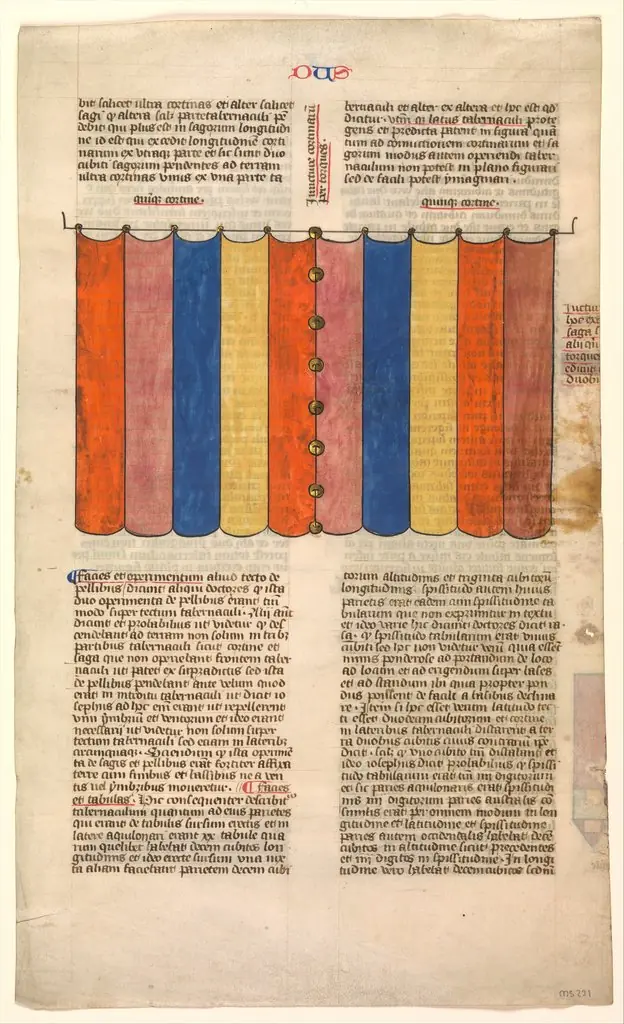 Curtain of the Tabernacle, one of six illustrated leaves from the Postilla Litteralis (Literal Commentary) of Nicholas of Lyra
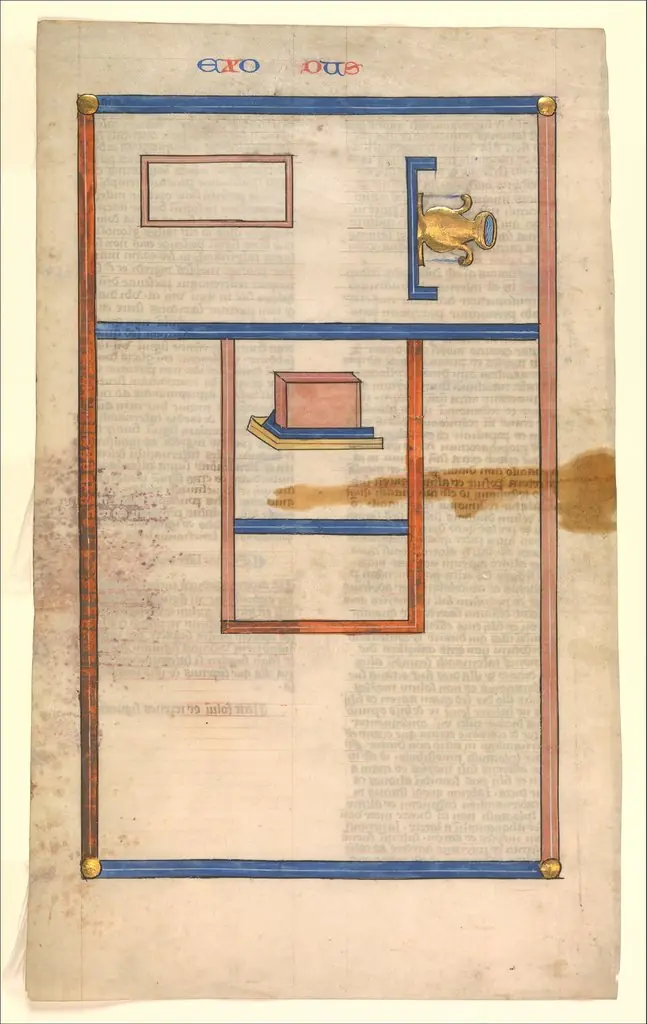 Floor Plan of the Tabernacle, one of six illustrated leaves from the Postilla Litteralis (Literal Commentary) of Nicholas of Lyra
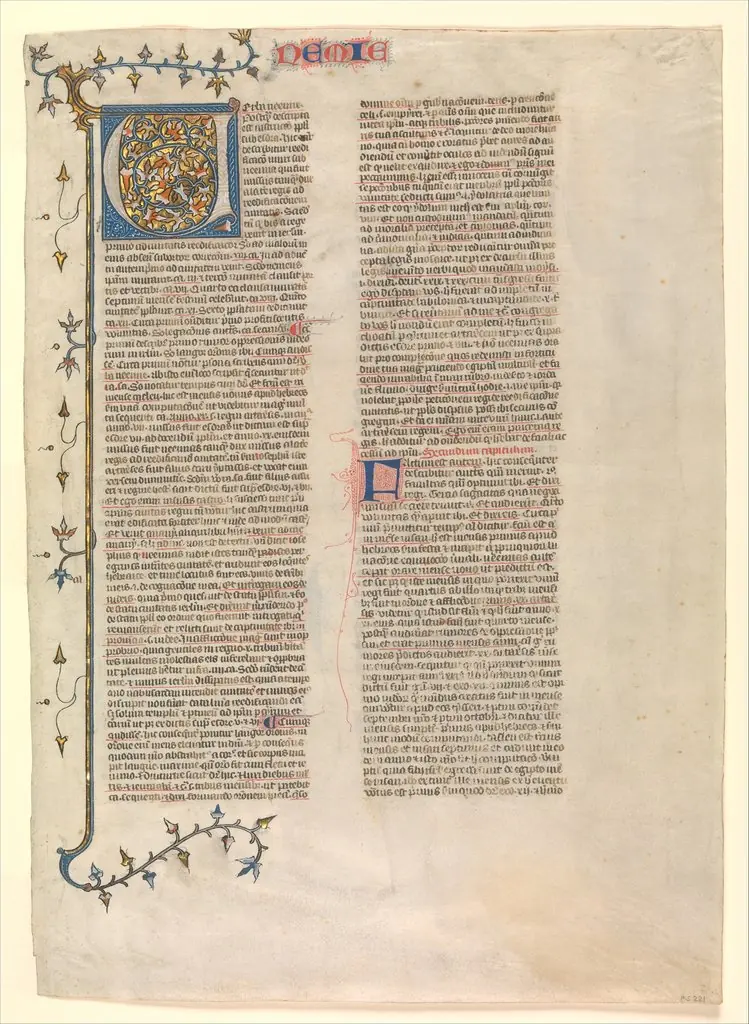 Initial "V" from the commentary of Nehemiah, one of six illustrated leaves from the Postilla Litteralis (Literal Commentary) of Nicholas of Lyra
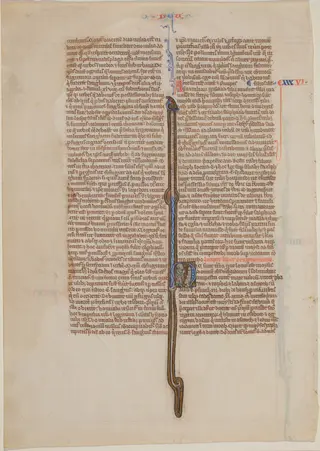 Manuscript Leaf from a Bible (Deuteronomy)
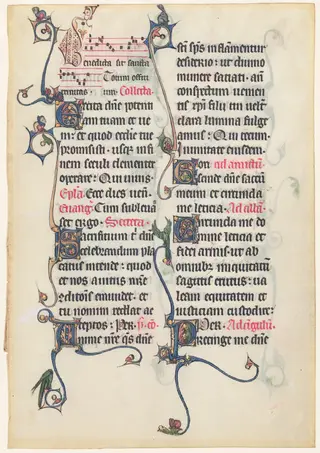 Manuscript Leaf from the Beauvais Missal
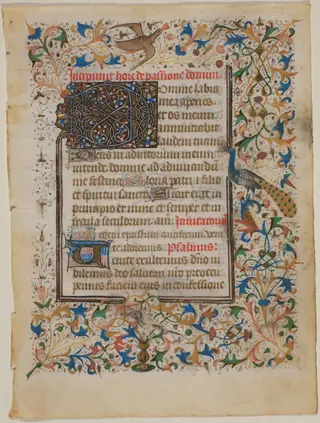 Manuscript Leaf from a Book of Hours (incip. Passionis)
 Leaf from a Beatus Manuscript: the Angel of the Church of Sardis with Saint John