Artwork
Brazen Sea, one of six illustrated leaves from the Postilla Litteralis (Literal Commentary) of Nicholas of Lyra
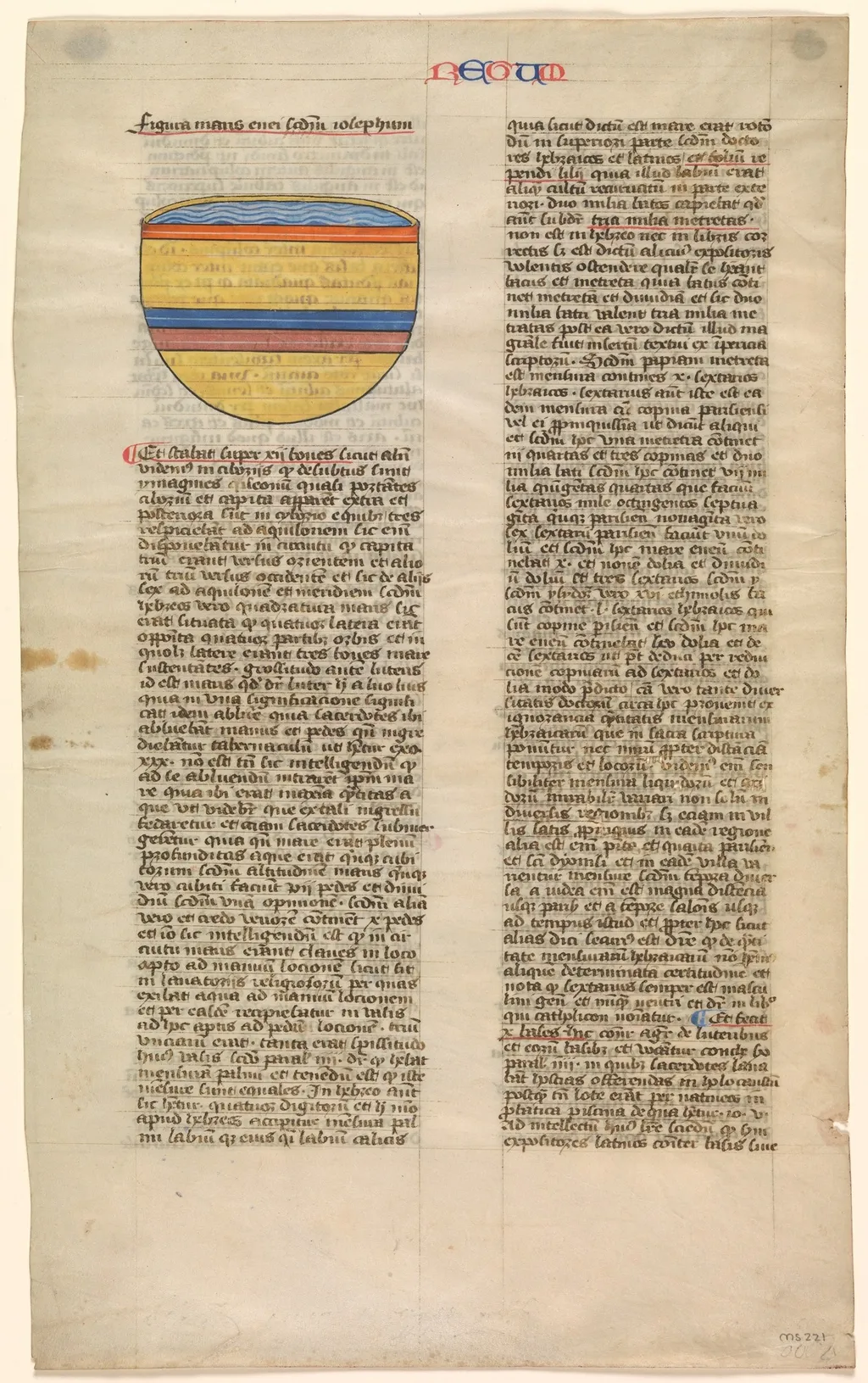
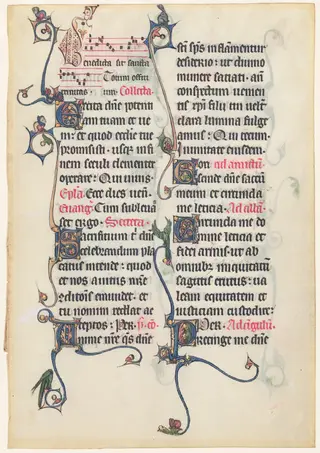
Brazen Sea, one of six illustrated leaves from the Postilla Litteralis (Literal Commentary) of Nicholas of Lyra is an unspecified painting. It dates from 1360 and is held in the collection of the Metropolitan Museum of Art.
About this work
Technique & Style
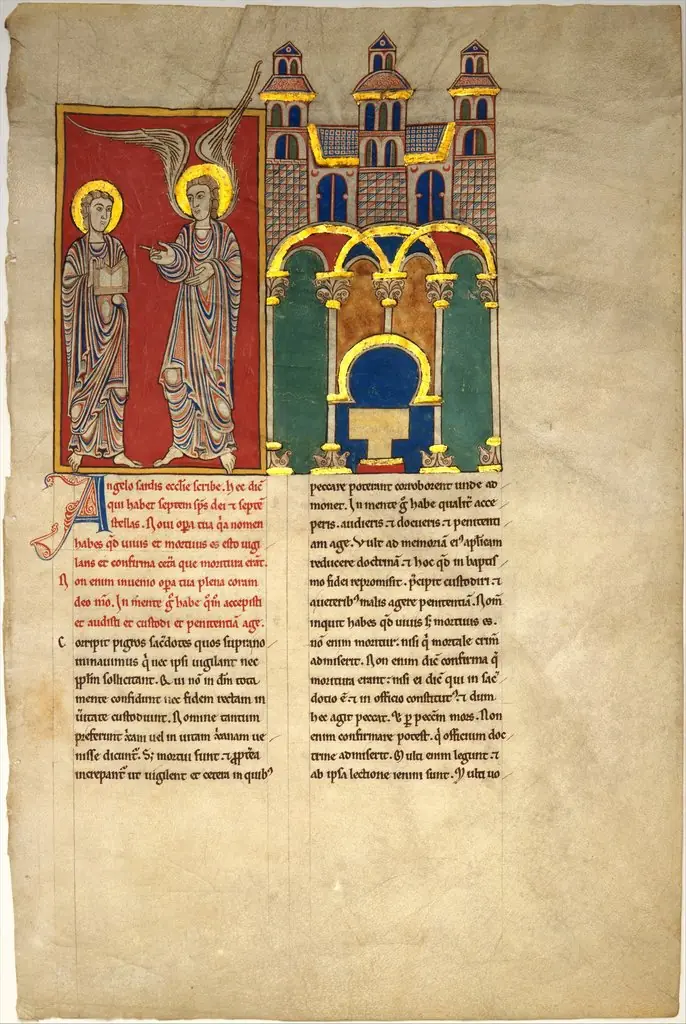
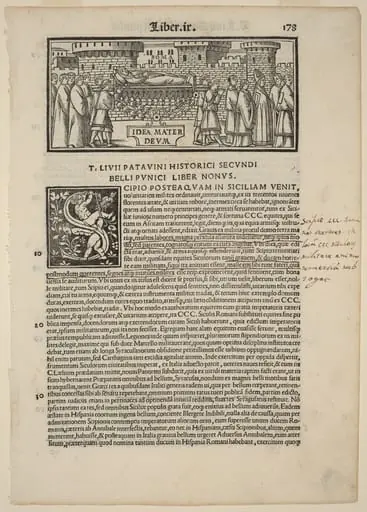
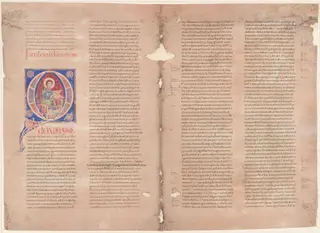
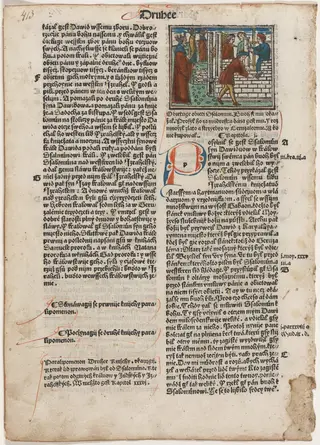
The composition features a central basin surrounded by intricate borders, rendered with precision that emphasizes both narrative clarity and decorative rhythm.
The leaf was painted on parchment using tempera and ink. The surface shows fine brushwork and careful handling, with pigments applied in thin washes to achieve translucent effects. The composition features a central basin surrounded by intricate borders, rendered with precision that emphasizes both narrative clarity and decorative rhythm.
These stylistic choices reflect the influence of 14th-century manuscript illumination traditions while adapting them to a painted format.
The work measures 41.9 cm in height and 24.8 cm in width, indicating a small-scale format suited for intimate study.
History & Provenance
The work known as Brazen Sea is one of six illustrated leaves from Nicholas of Lyra’s Postilla Litteralis, created in 1360. It is attributed to an anonymous painter and is part of the Metropolitan Museum of Art’s collection, which records its inception as 1360 and measures 41.9 cm by 24.8 cm.
The Brazen Sea leaf is held by the Metropolitan Museum of Art, which is recorded as both its collection and its location. No inventory or accession number is provided in the available sources.
No exhibition history is documented in the available sources.
Overview
This illuminated leaf is one of six decorative pages from the medieval commentary known as the Postilla Litteralis, authored by the biblical exegete Nicholas of Lyra. Executed as a painted illustration rather than a full manuscript page, the leaf functions as a visual supplement to the surrounding Latin text.
Subject & Meaning
The central motif is a flat, circular disc divided into three concentric bands of red, yellow and blue, reminiscent of a stained‑glass window. Scholars interpret the disc as a representation of the biblical "brazen sea," a large metal basin described in the Old Testament and used in temple rites, symbolising purification and divine presence.
Context
Nicholas of Lyra’s Postilla Litteralis was a widely circulated biblical commentary in the late Middle Ages, used by scholars and clergy across Europe. This particular leaf, now part of a museum collection, illustrates the integration of visual and textual exegesis that characterized medieval scholarly practice.
Artist & collection

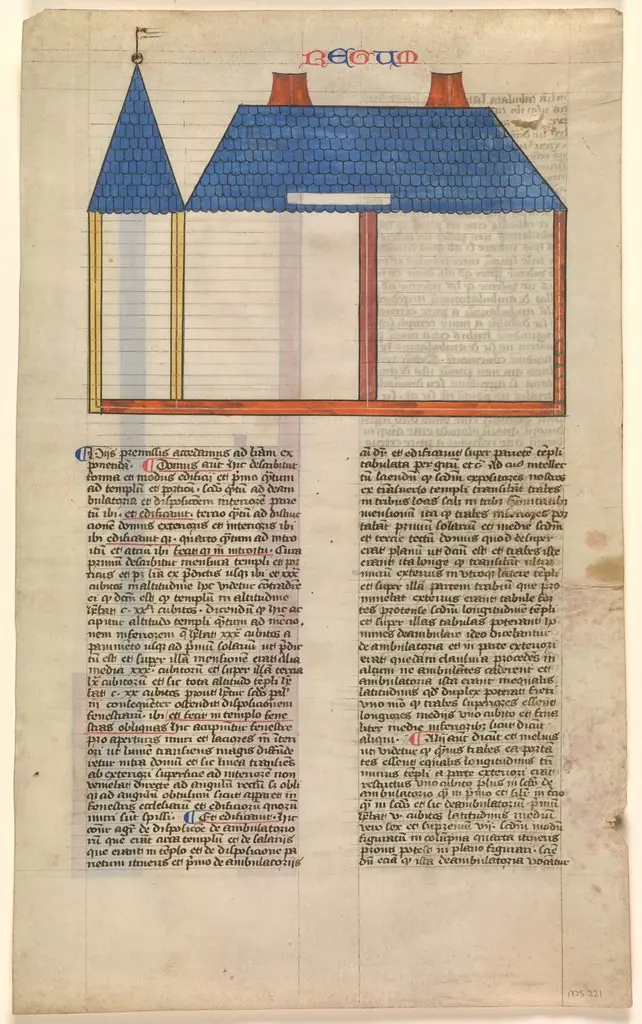
- Elevation of Solomon's Temple, one of six illustrated leaves from the Postilla Litteralis (Literal Commentary) of Nicholas of Lyra
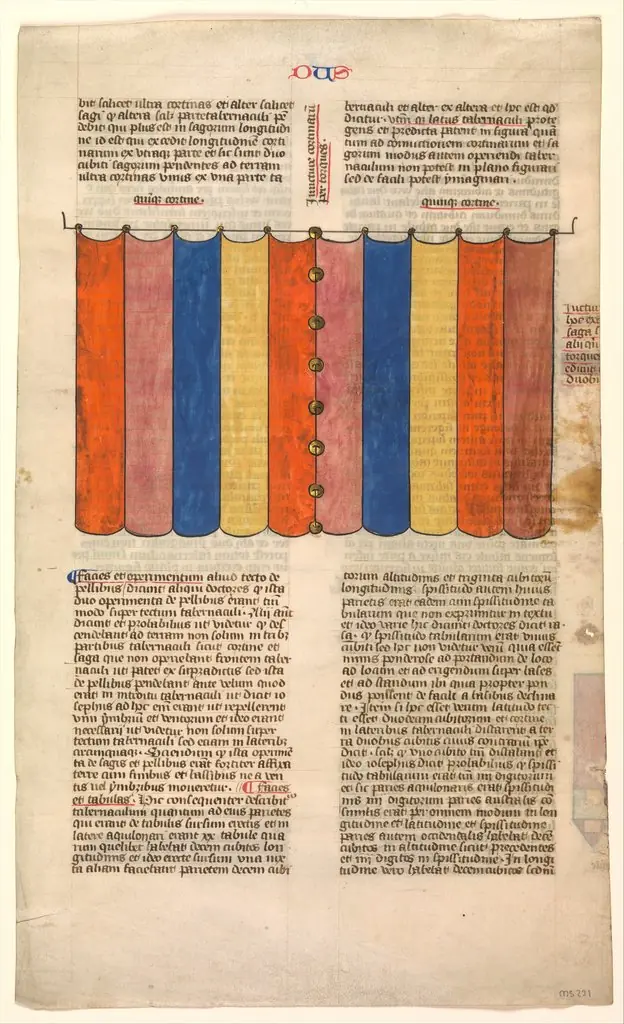 Curtain of the Tabernacle, one of six illustrated leaves from the Postilla Litteralis (Literal Commentary) of Nicholas of Lyra
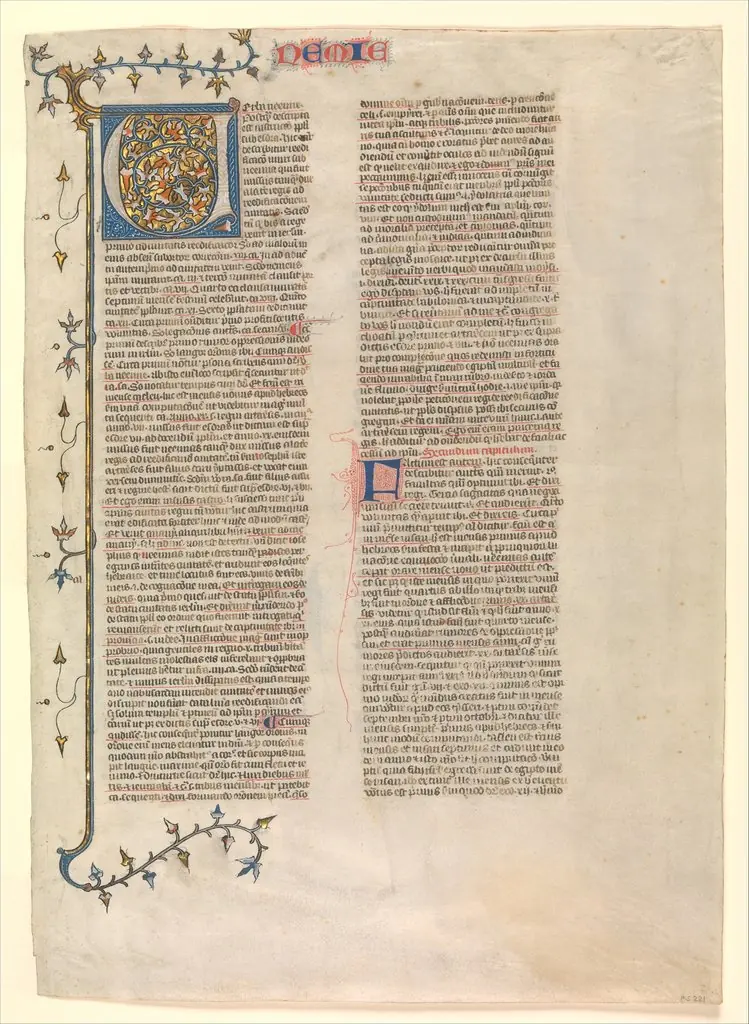 Initial "V" from the commentary of Nehemiah, one of six illustrated leaves from the Postilla Litteralis (Literal Commentary) of Nicholas of Lyra
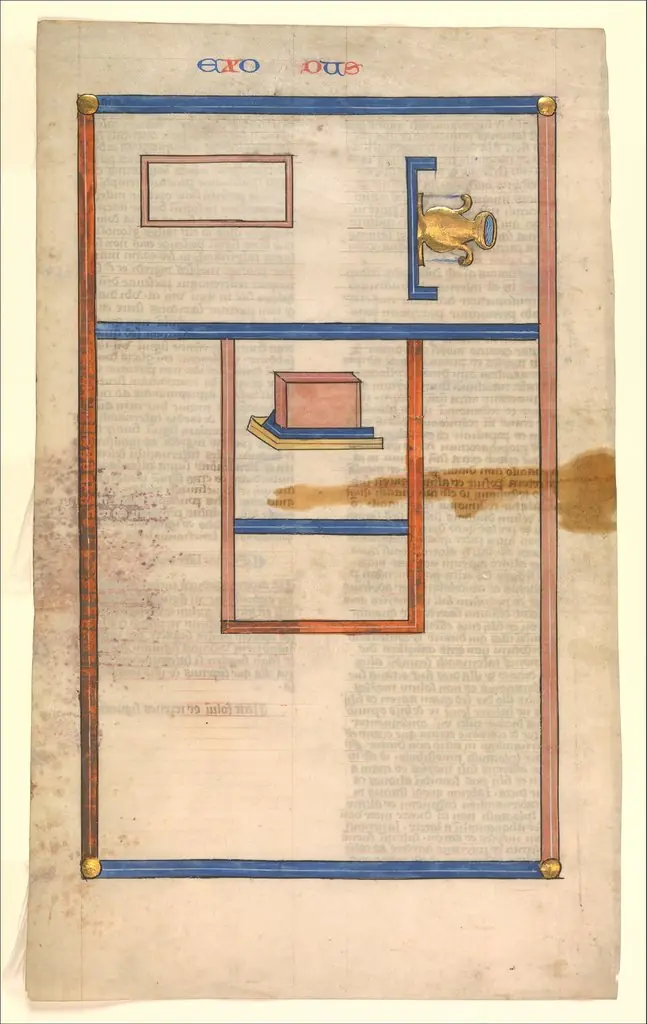 Floor Plan of the Tabernacle, one of six illustrated leaves from the Postilla Litteralis (Literal Commentary) of Nicholas of Lyra
 Manuscript Leaf from a Bible (Deuteronomy)
 Manuscript Leaf from a Book of Hours (incip. Passionis)
 Manuscript Leaf from the Beauvais Missal