Artwork
Four-armed Maitreya
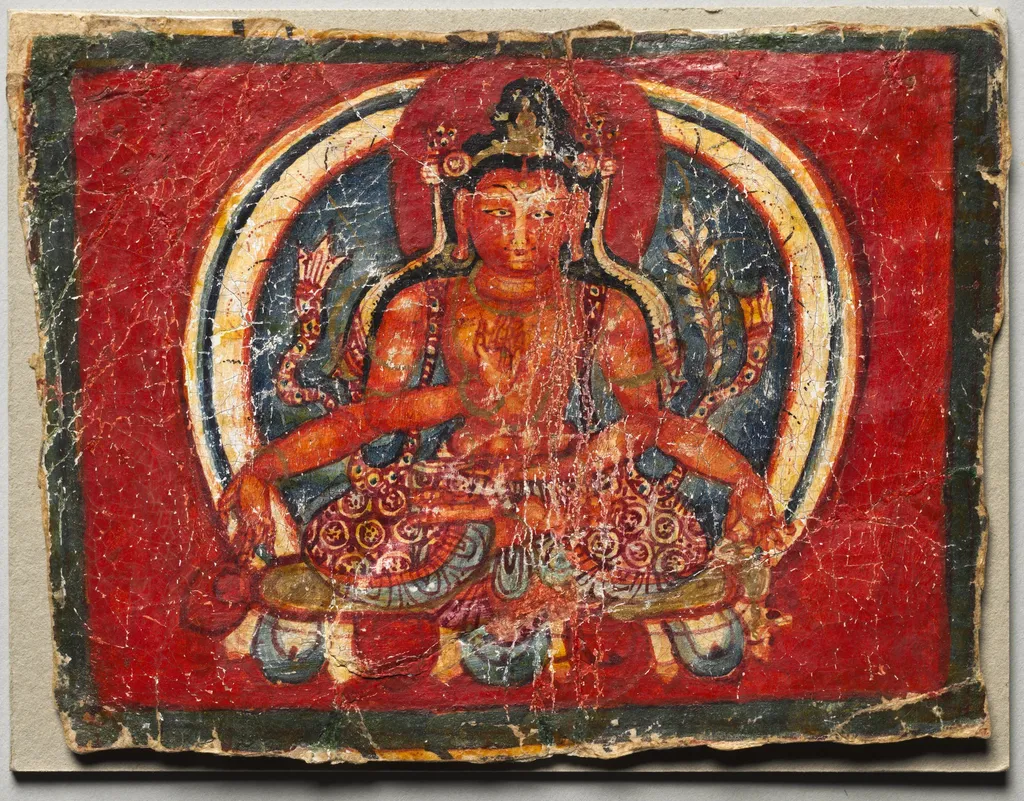
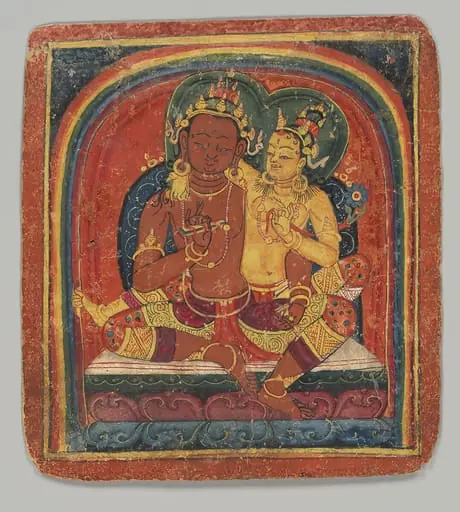
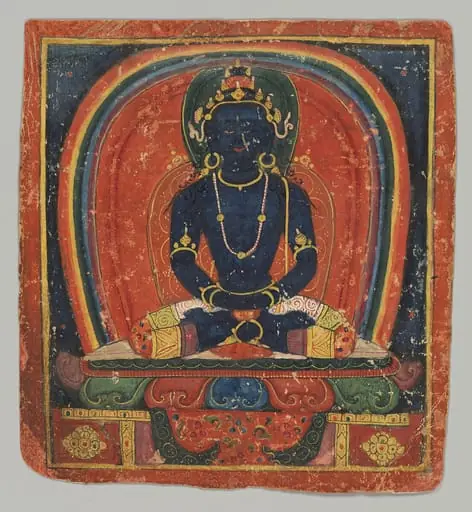
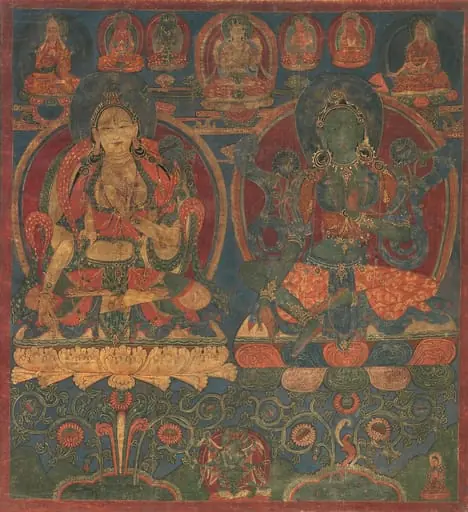
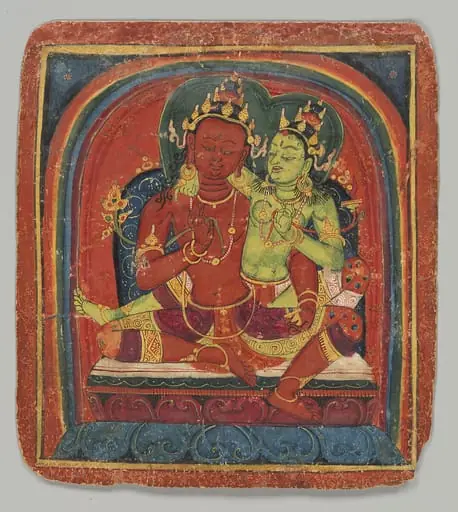
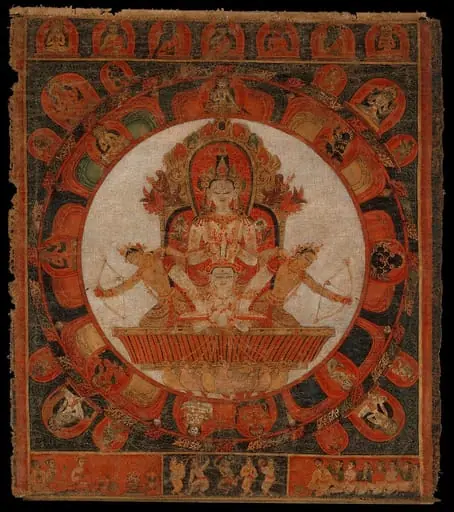
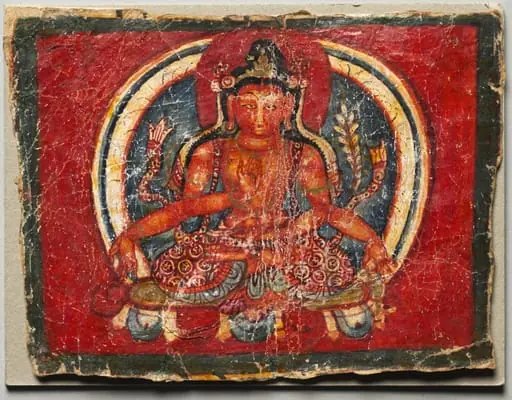
Four-armed Maitreya is an unspecified painting. It dates from 1200 and is held in the collection of the Cleveland Museum of Art. The work depicts a seated figure with four arms, rendered against a red field and framed by a thin black border.
About this work
Technique & Style
Executed in paint, it has been part of the Cleveland Museum of Art's collection since its mid-twentieth-century acquisition.
The work is an Indian painting created circa 1200 and classified as religious art. It depicts the bodhisattva Maitreya, the future Buddha, in a four-armed form. Executed in paint, it has been part of the Cleveland Museum of Art's collection since its mid-twentieth-century acquisition. Its formal qualities reflect the traditional religious iconography and compositional balance characteristic of the period.
History & Provenance
The Four-armed Maitreya is held in the collection of the Cleveland Museum of Art under accession number 1958.475. While the painting dates to approximately 1200, it entered the museum's holdings in the mid-twentieth century. The provided sources do not list specific exhibitions in which the piece has appeared.
Overview
The work depicts a seated figure with four arms, rendered against a red field and framed by a thin black border. The central figure is enclosed within a circular motif, its expression calm and slightly smiling, conveying a sense of inner peace.
Subject & Meaning
The four‑armed deity is identified as a representation of Maitreya, the future Buddha, whose multiple arms symbolize various aspects of compassion and spiritual power. The meditative posture and gentle smile reinforce the theme of serene enlightenment.
Artist & collection