Artwork
Seated Amitabha with Attendants
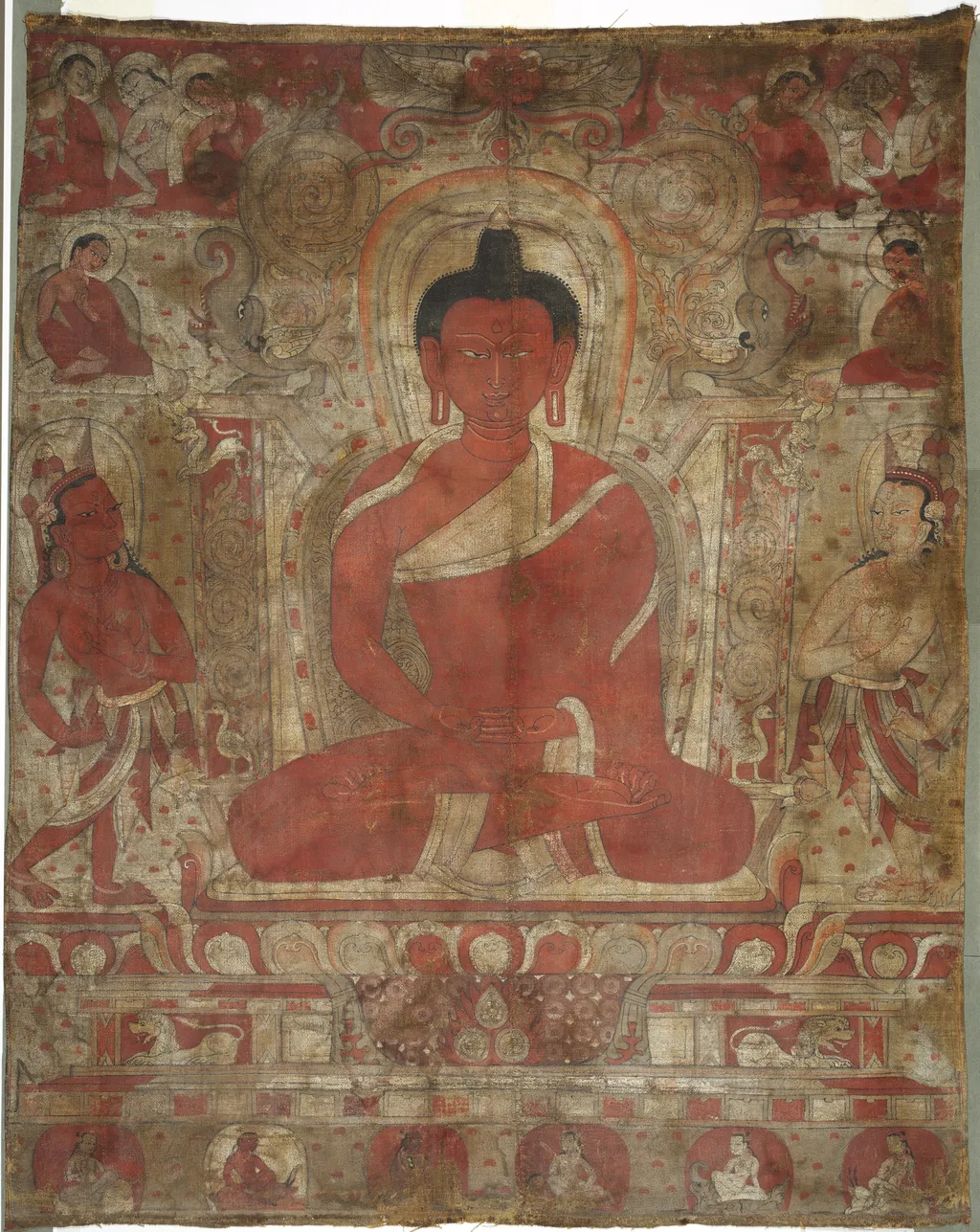
Seated Amitabha with Attendants is an unspecified painting. It dates from 1150 and is held in the collection of the Cleveland Museum of Art.
About this work
Subject & Meaning
Executed circa 1150, the work belongs to the religious painting genre and was created for a Buddhist community, likely in a Himalayan cultural setting.
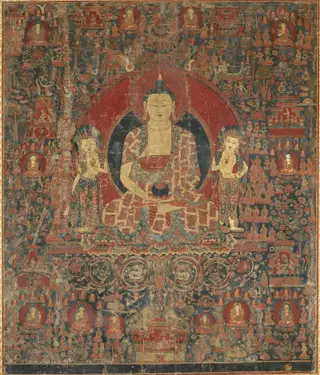
The painting shows Amitabha Buddha seated in a meditative pose, flanked by two attendant figures. In Buddhist iconography Amitabha embodies the concept of infinite light and the promise of rebirth in the Pure Land, a realm of bliss. The attendants, often identified as bodhisattvas, reinforce the devotional context by offering homage.
Executed circa 1150, the work belongs to the religious painting genre and was created for a Buddhist community, likely in a Himalayan cultural setting. Its composition and symbolism reflect the spread of Mahayana devotional art into East Asia during the 12th century.
History & Provenance
The painting titled Seated Amitabha with Attendants is dated to the mid‑12th century, with an inception recorded as 1150‑01‑01. It is classified as a religious painting and was created by an unknown artist. The work entered the collection of the Cleveland Museum of Art, where it remains on display.
Its creation is noted as part of the religious art tradition of the period, and the dating is taken from contemporary records. The piece is recorded as a painting in contemporary categorisation.
The painting Seated Amitabha with Attendants is held in the collection of the Cleveland Museum of Art. It is cataloged under the accession number 2000.68. The work dates to approximately 1150 and is classified as a religious painting created by an unknown artist. No specific exhibition history for this piece is provided in the available records.
Context
Seated Amitabha with Attendants is a 12th‑century Buddhist painting housed in the Cleveland Museum of Art. The work, dated to 1150, depicts the Buddha Amitabha flanked by attendants and is classified as religious art. Its creator remains unidentified, reflecting the anonymous production of devotional images in this period.
As part of the museum’s collection, the piece contributes to understanding of early Buddhist visual culture and its integration into Western museum narratives.
Overview
Seated Amitabha with Attendants, dated to 1150, is a religious painting depicting the Buddha Amitabha as the central figure. The composition features a large, red-skinned Amitabha seated in a cross-legged meditative posture at the center of the frame. He is surrounded by a retinue of smaller attendant figures, some standing and others kneeling, all adorned in red and gold robes that echo the central deity's coloration.
The background is densely populated with intricate swirling patterns and miniature narrative scenes, rendered primarily in a palette of red, gold, and earthy tones. Created during the mid-12th century, this work exemplifies the devotional iconography of the period, emphasizing the celestial splendor of the Pure Land. The arrangement of the figures and the detailed, patterned background serve to focus the viewer's attention on the serene countenance of the Buddha while illustrating the complexity of the Buddhist cosmological realm.
This piece represents a significant example of religious art from its specific historical context, showcasing the artistic conventions used to visualize spiritual hierarchy and divine presence.
Technique & Style
The artwork employs a striking contrast between the serene expression of the Buddha and the dynamic, intricate background. A golden halo frames the Buddha's head, drawing attention to his tranquil face amidst a dense tapestry of swirling motifs and small narrative elements rendered in reds, golds, and earthy pigments. Although parts of the original palette have softened with age, the intensity of the reds and golds remains a prominent feature.
Artist & collection

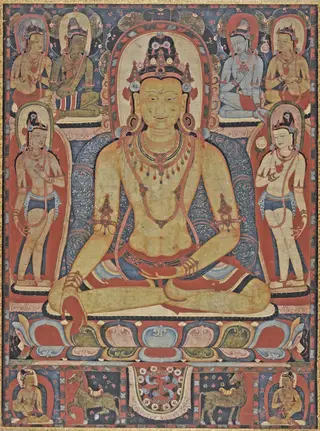 The Jina Buddha Ratnasambhava
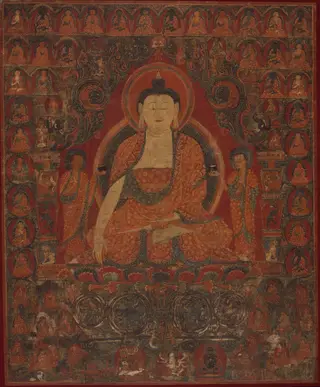 Shakyamuni with the Thirty-Five Buddhas of the Confession of Sins and the Eighteen Arhats
 The Jina Buddha of Infinite Light (Amitabha) in His Pure Land Paradise (Sukhavati)
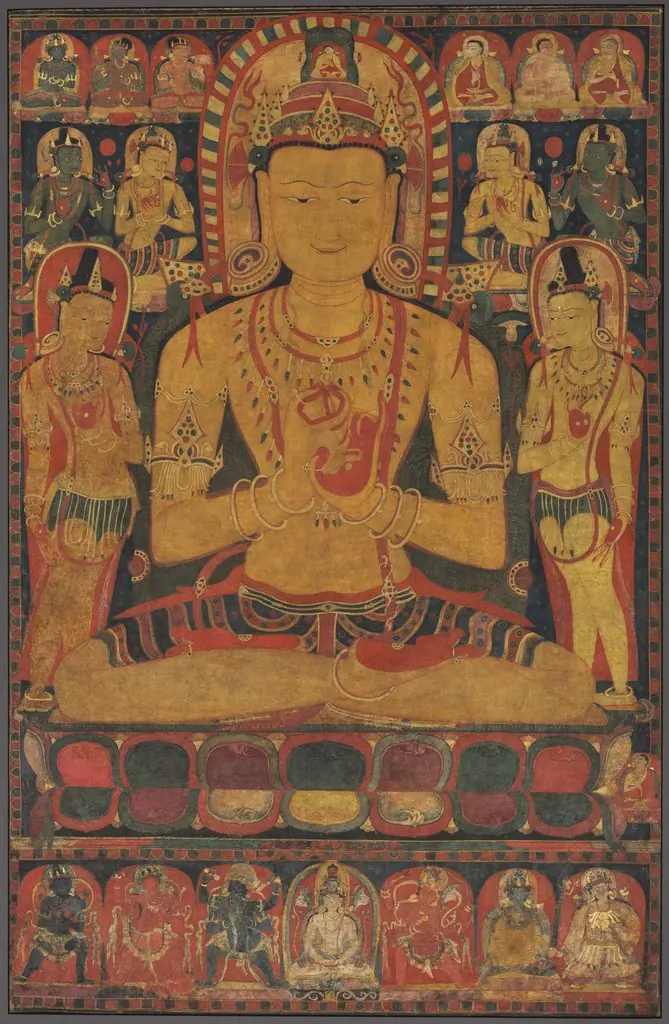 Tantric Buddha Vairochana as Vajrasattva
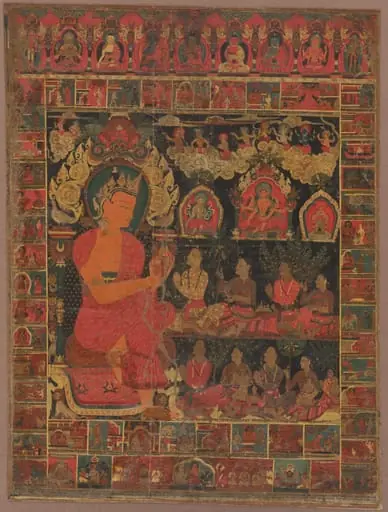 Bejeweled Buddha Preaching
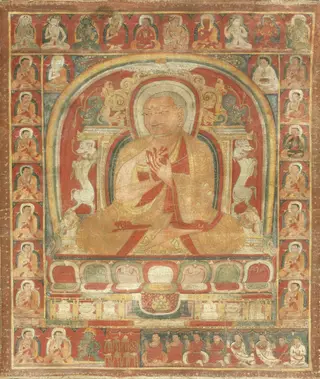 An Abbot and His Lineage
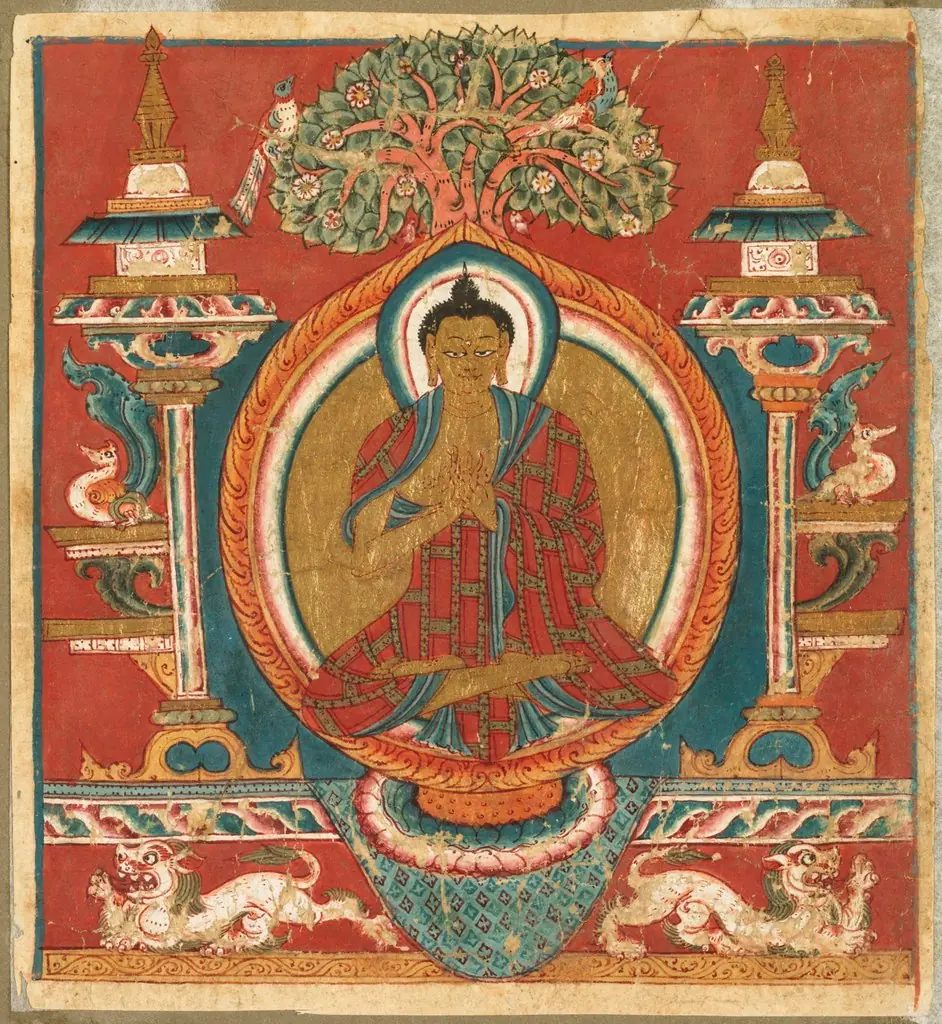 Preaching Sakyamuni
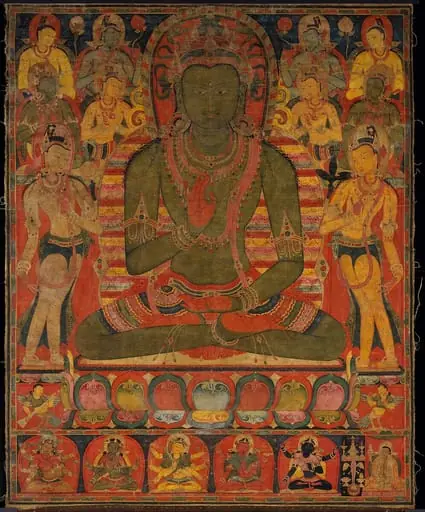 Untitled
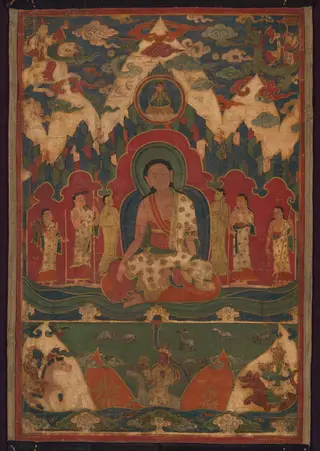 Milarepa on Mount Kailash
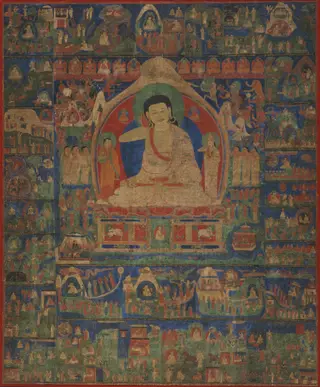 The Life of Milarepa (1040-1123)