Artwork
Untitled
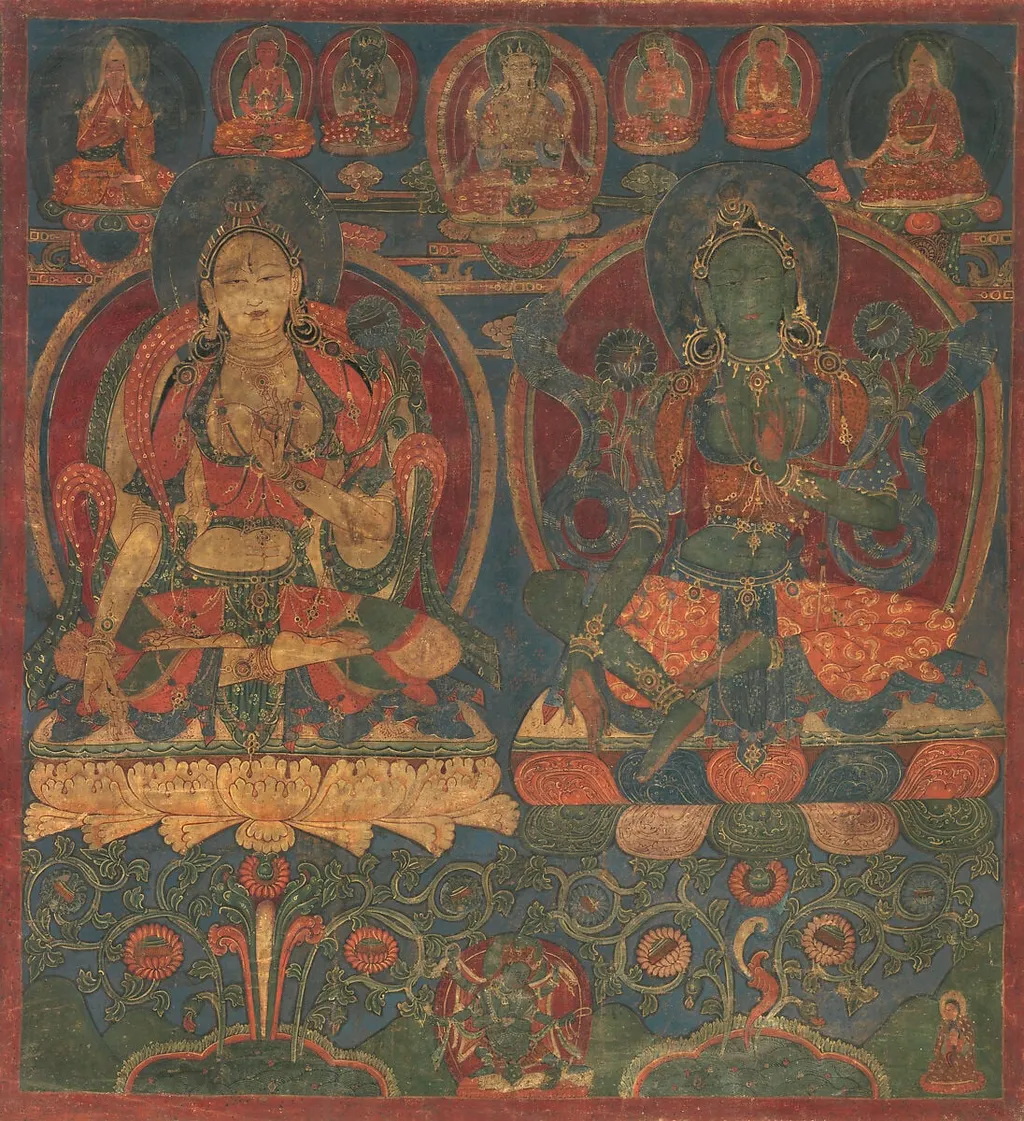
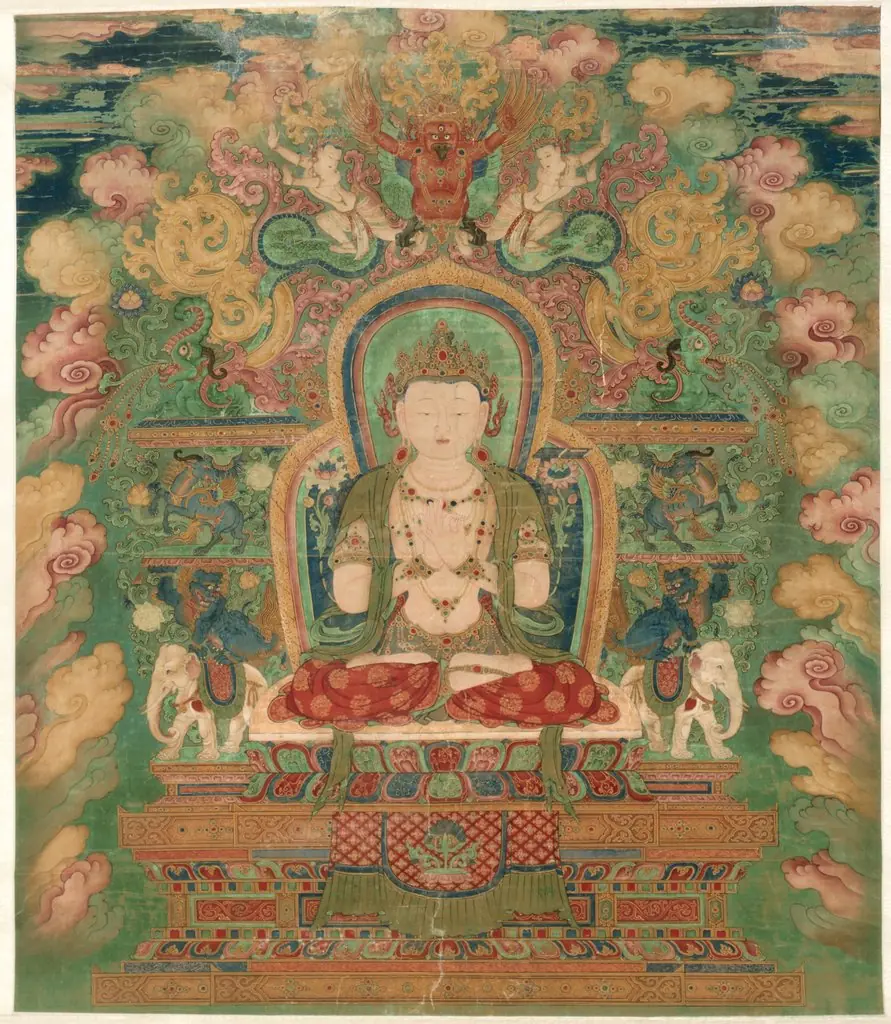
Untitled is a distemper painting. It dates from 1475 and is held in the collection of the Metropolitan Museum of Art.
About this work
Subject & Meaning
The depiction aligns with broader Buddhist artistic conventions that emphasize enlightened beings who aid sentient beings on the path to liberation.
The painting, dated to 1475 and executed in distemper on cloth, portrays a Bodhisattva, a Buddhist deity embodying compassion and wisdom. As an anonymous work within the religious genre, its iconography centers on the serene figure's attributes, suggesting a symbolic representation of spiritual guidance and mercy. The depiction aligns with broader Buddhist artistic conventions that emphasize enlightened beings who aid sentient beings on the path to liberation.
The piece is housed in the Metropolitan Museum of Art, underscoring its significance as a 15th‑century example of devotional art.
Technique & Style
The work is executed in distemper, a water-based paint medium bound with a glue or casein-type adhesive, applied to cloth as the support. This technique is consistent with devotional painting traditions of the mid-fifteenth century, where pigments were brushed onto a sized textile ground rather than a rigid panel or prepared canvas. The modest format, measuring 51.4 by 50.8 centimeters, suggests an object intended for intimate ritual viewing or domestic veneration rather than large-scale display.
The cloth support would have required careful handling to prevent flexing, moisture damage, and pigment loss, and the matte, low-reflective surface typical of distemper would have produced a soft, absorbent appearance. Stylistically, the image belongs to a religious genre, depicting a bodhisattva and a deity, with the iconography rendered in the flattened, devotional manner characteristic of late-fifteenth-century devotional painting. No specific condition report is documented in the available records.
History & Provenance
The work titled Untitled is an anonymous painting dating to 1475, executed in distemper on cloth and classified as a religious artwork depicting a Bodhisattva. Its creation is attributed to an unknown painter, with no record of a specific commission. The piece has been part of the Metropolitan Museum of Art’s collection since at least the time of the documented entry, indicating its modern ownership history.
Provenance prior to museum acquisition is not detailed in the available records, but the museum’s catalog confirms its presence in the institution’s holdings.
The anonymous 1475 religious painting titled Untitled, executed in distemper on cloth, is held in the collection of the Metropolitan Museum of Art. While the source material identifies the work's current location and its creation date, it does not provide a specific inventory or accession number for the piece. Furthermore, the available records do not contain details regarding the artwork's exhibition history or specific display dates within the museum.
The work is cataloged as a painting depicting a Bodhisattva or deity, with physical dimensions recorded as 51.4 cm in height and 50.8 cm in width. As no further provenance or exhibition data is present in the provided documentation, the historical record for this facet remains limited to its institutional holding and basic physical attributes.
Legacy
The 1475 Untitled painting, recorded as a distemper on cloth work portraying a Bodhisattva, entered the Metropolitan Museum of Art’s collection, where its designation as religious art has informed scholarly discussions of anonymous masters and early Buddhist iconography; its presence in a premier museum has cemented its reputation as a key example for studying 15th‑century devotional imagery and the transmission of stylistic motifs across regions, influencing subsequent research on anonymous painted works and the historiography of South Asian religious art.
Overview
This untitled painting, rendered in distemper on a thin cloth support, depicts a serene golden figure seated on a lotus. Its primary function was devotional, intended for display within a temple setting. The artwork originates from the Guge region of Western Tibet, a center for monastic art production, where artists crafted such pieces for spiritual contemplation rather than secular adornment.
Context
This painting emerged from the artistic traditions of Western Tibet, specifically the ancient kingdom of Guge. Within this remote, mountainous region, artists typically worked in monastic environments, creating sacred images for religious institutions rather than royal courts. The artwork's intended placement in a temple underscores its role as an object of devotion and a visual aid for meditation and spiritual practice within the Buddhist faith.
Artist & collection

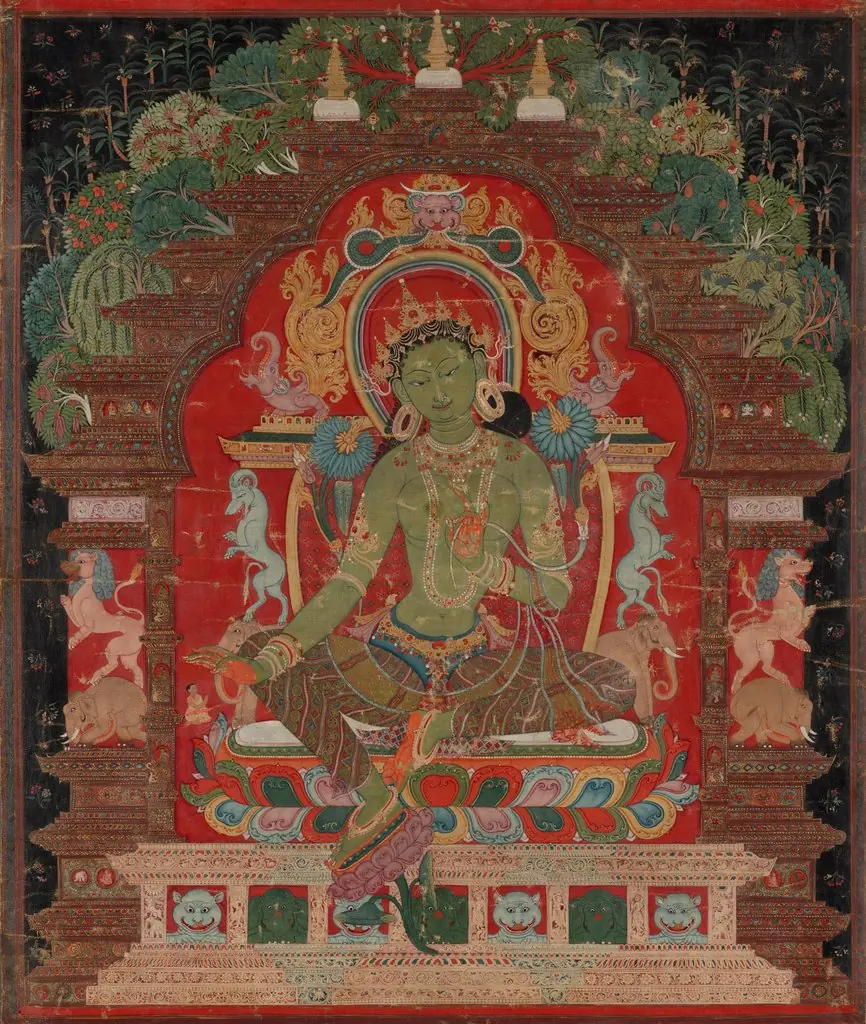
- Green Tara
 Green Tara
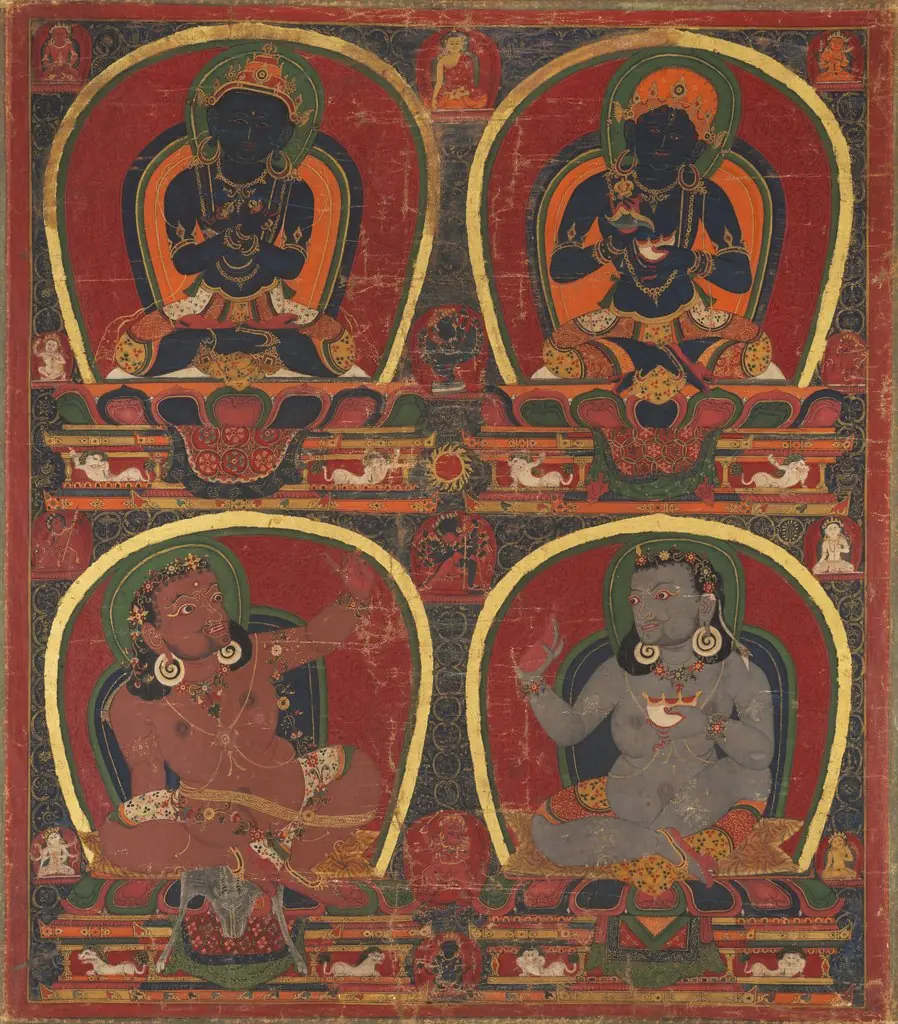 Vajradhara, Nairatmya, and Mahasiddhas Virupa and Kanha
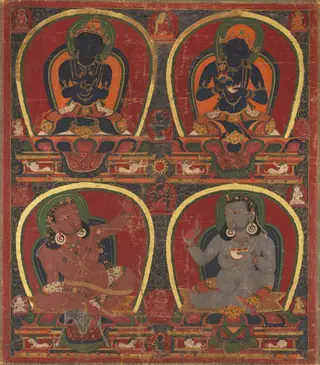 Vajradhara, Nairatmya, and mahasiddhas Virupa and Kanha
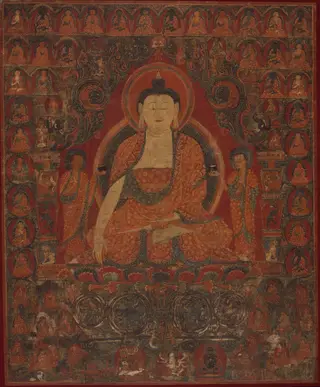 Shakyamuni with the Thirty-Five Buddhas of the Confession of Sins and the Eighteen Arhats
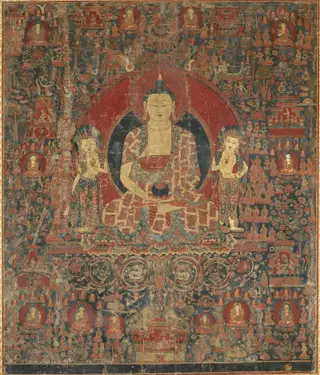 The Jina Buddha of Infinite Light (Amitabha) in His Pure Land Paradise (Sukhavati)
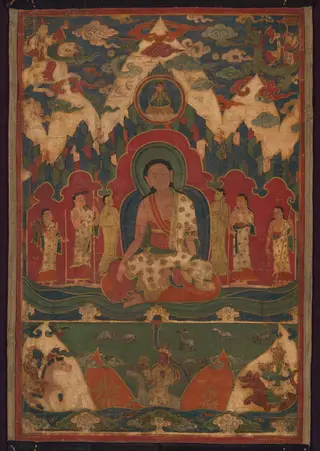 Milarepa on Mount Kailash
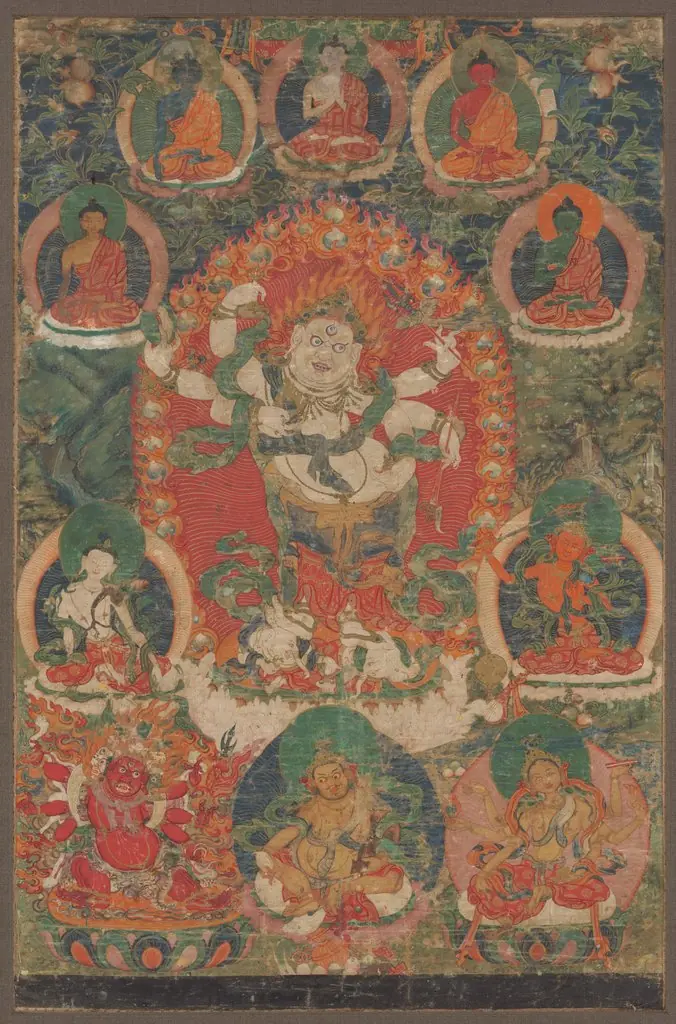 White Mahakala
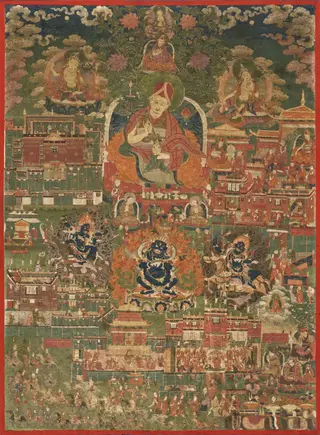 Kunga Tashi and Incidents from His Life (Abbot of Sakya Monastery, 1688-1711)
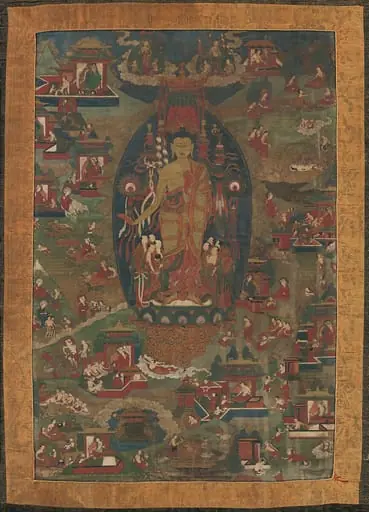 Untitled
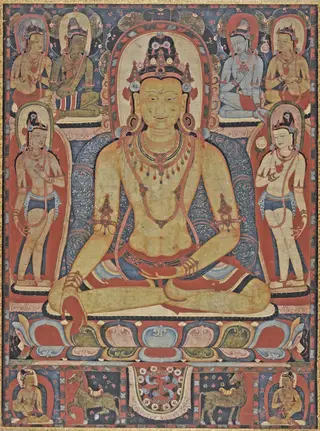 The Jina Buddha Ratnasambhava
 Manjushri