Artwork
Vasudhara Mandala
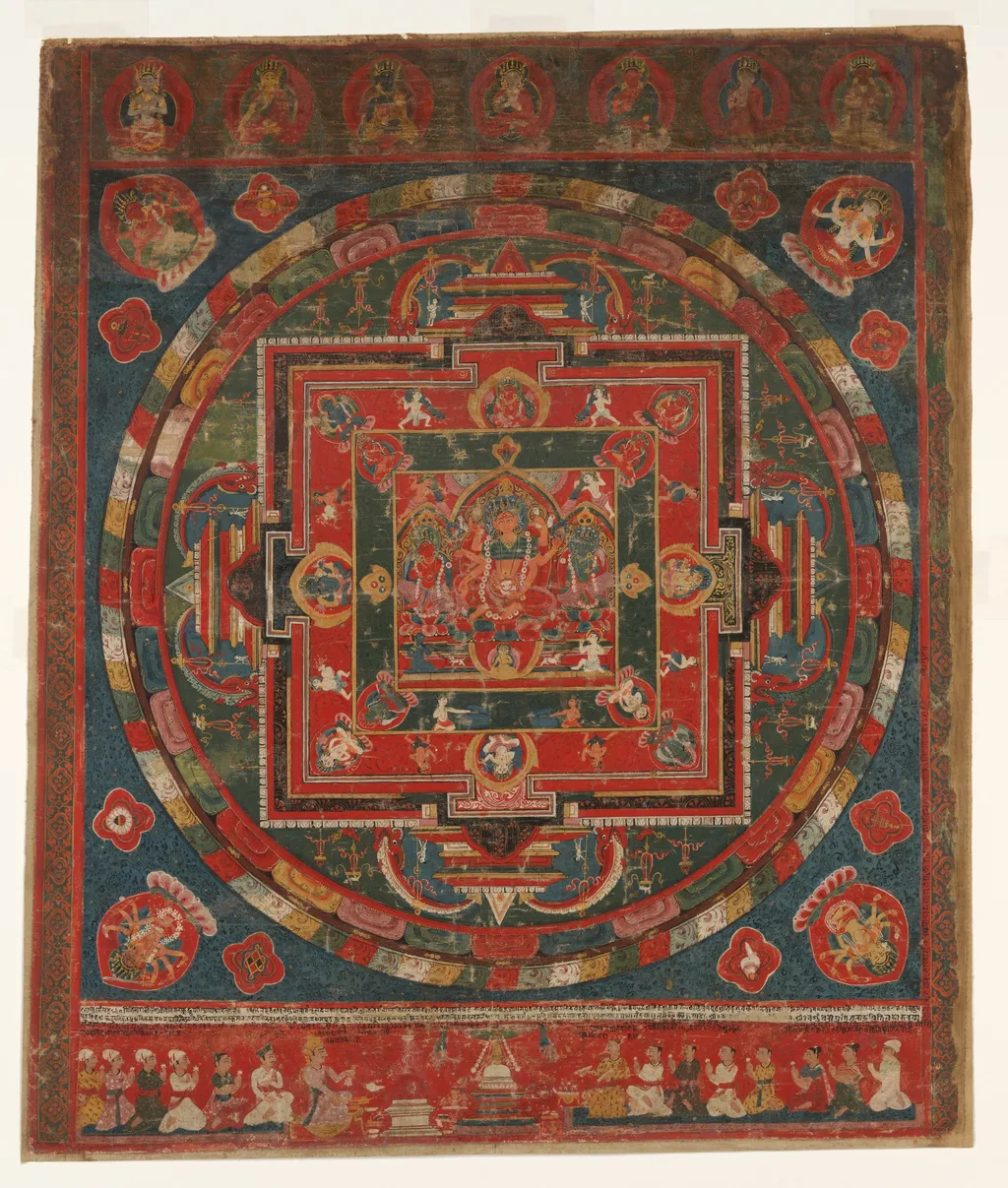
Vasudhara Mandala is an unspecified painting. It dates from 1789 and is held in the collection of the Metropolitan Museum of Art.
About this work
Subject & Meaning
The composition follows traditional Himalayan iconography, with the central figure bestowing blessings and the surrounding deities signifying spiritual support.
The Vasudhara Mandala is a 1789 Nepali painting now housed in the Metropolitan Museum of Art. Executed by an anonymous hand, it portrays a Buddhist goddess within a mandala framework, accompanied by a bodhisattva and the protector Vajrapani. The composition follows traditional Himalayan iconography, with the central figure bestowing blessings and the surrounding deities signifying spiritual support.
As a mandala, the work functions as a visual aid for meditation, embodying themes of divine protection and auspiciousness. Its presence in a major museum highlights its importance as a representative example of 18th-century Nepalese Buddhist art.
History & Provenance
Created in Nepal in 1789, this painting depicts the goddess Vasudhara alongside figures such as Vajrapani. The work was executed by an anonymous artist, with no specific individual named in available records. While the precise original commission and early ownership history remain undocumented in the provided sources, the artwork eventually entered the collection of the Metropolitan Museum of Art, where it is currently held. The piece is classified as a painting and represents an eighteenth-century example of Nepalese religious art.
Overview
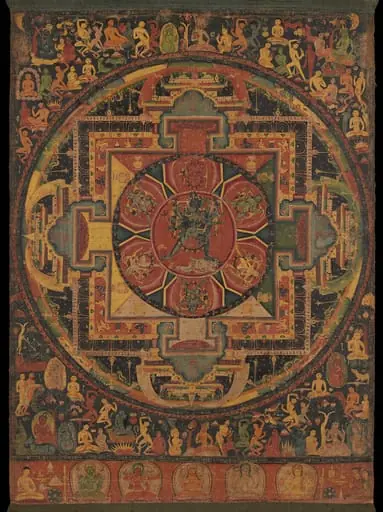
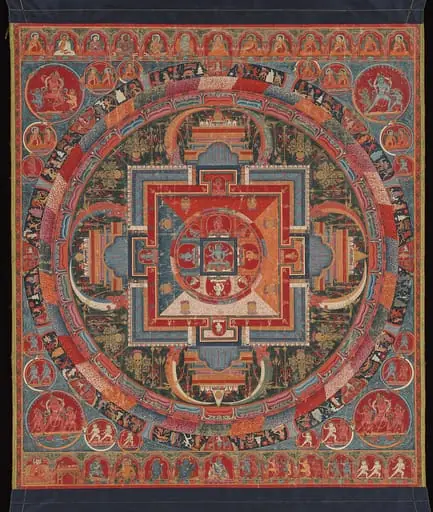
This painting, titled Vasudhara Mandala, presents a vibrant, circular composition densely filled with numerous figures and symbolic elements. Its intricate design suggests a cosmic diagram or a sacred map. The artwork is characterized by its layered structure and the meticulous arrangement of its many components, creating a complex visual narrative within a defined geometric framework.
Technique & Style
The artwork adheres to precise iconographic patterns, creating an ordered and intricate visual system. Its aesthetic is defined by a striking palette of deep reds, blues, and rich golds, which vividly contrast with a darker background. The outermost section of the mandala incorporates recurring motifs, such as wheel-like or floral forms, which frame the entire sacred scene.
Artist & collection

- Mandala of Vasudhara
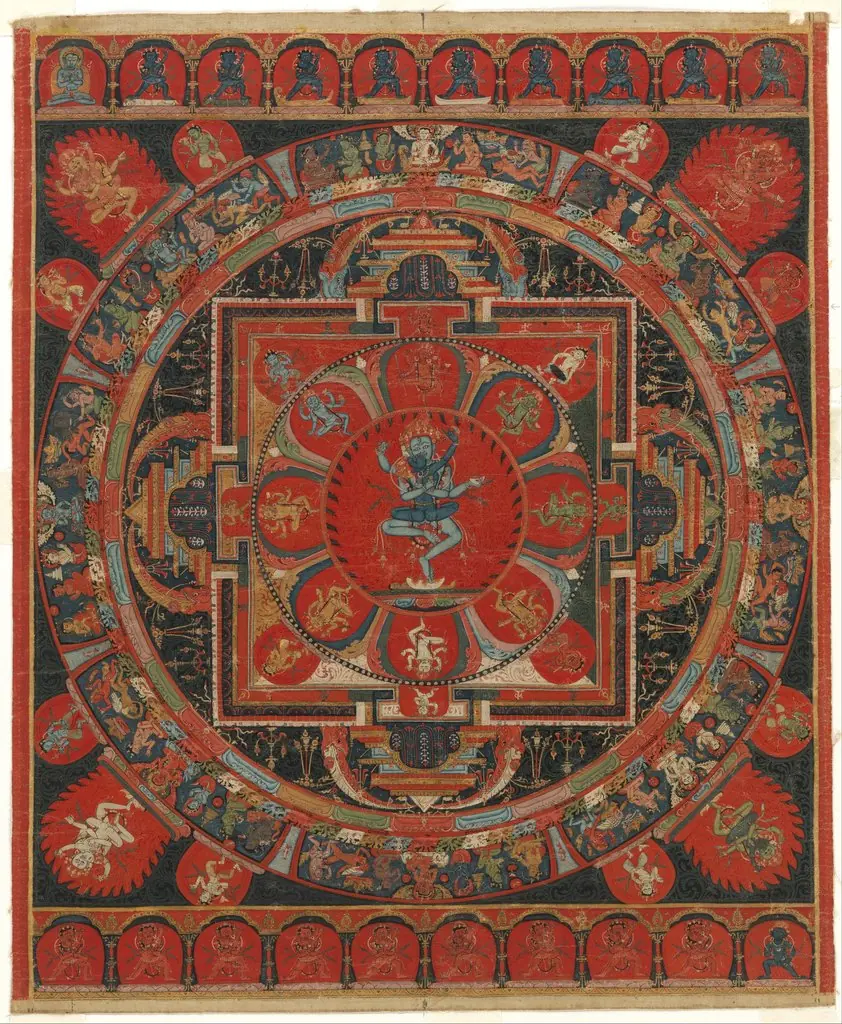 Hevajra Mandala
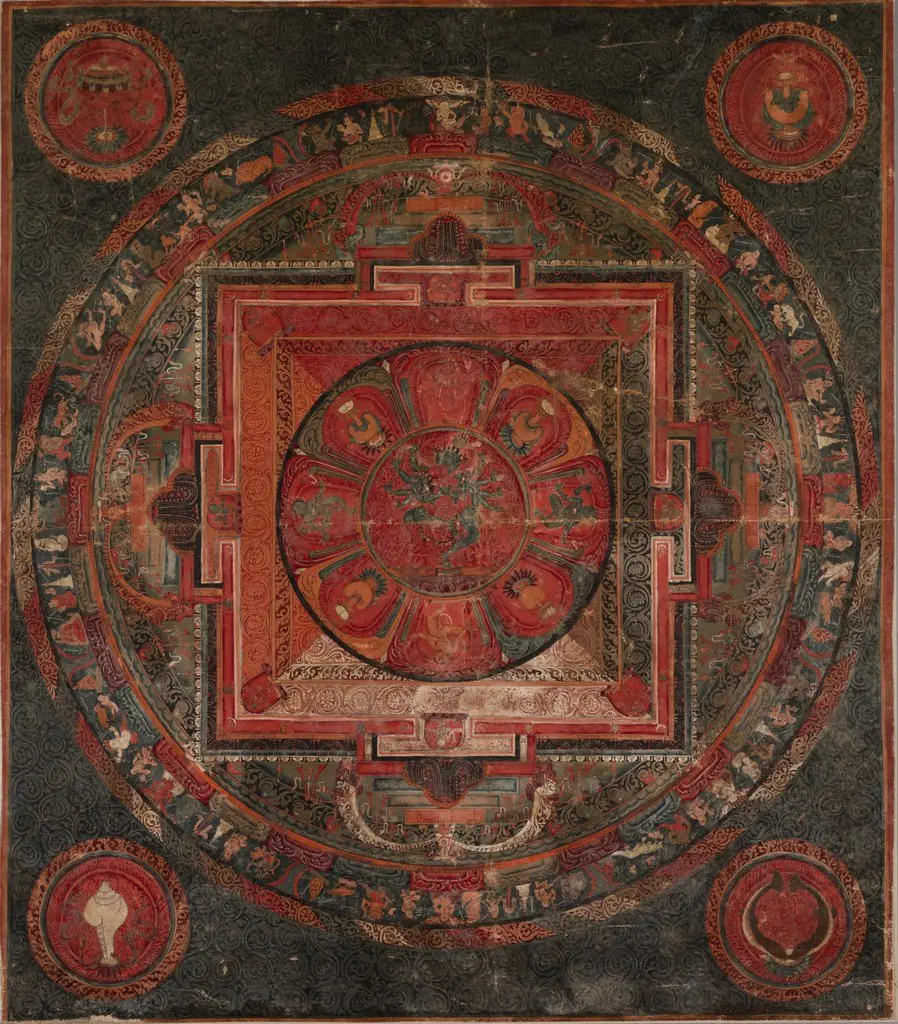 Mandala of Chakrasamvara and Vajravarahi
 Mandala
 Mandala
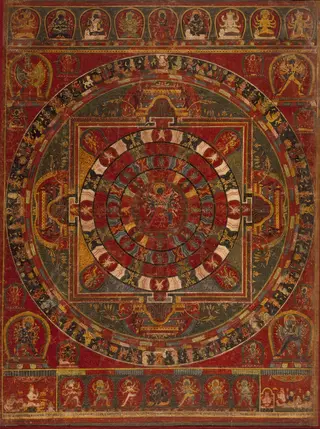 Mandala of the Buddhist Deity Chakrasamvara
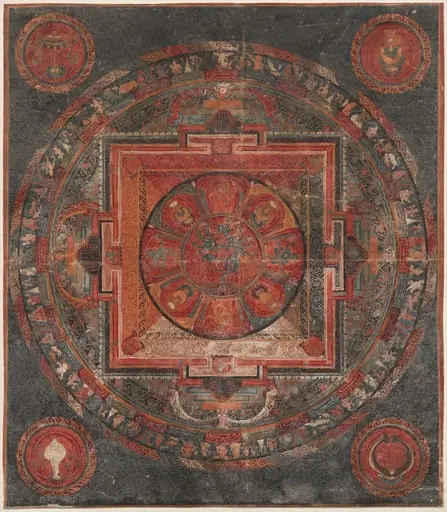 Mandala of Chakrasamvara and Vajravarahi
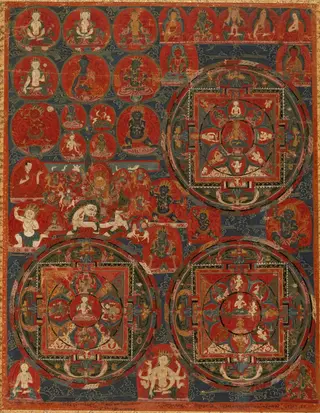 Three Mandalas
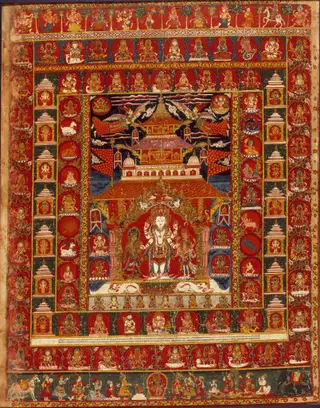 Mandala of Vishnu
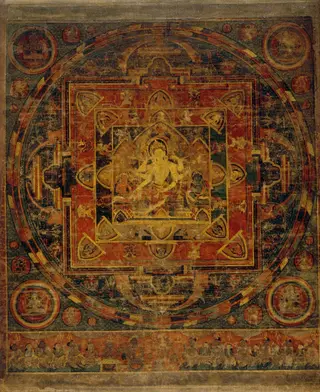 Mandala of Vasudhara
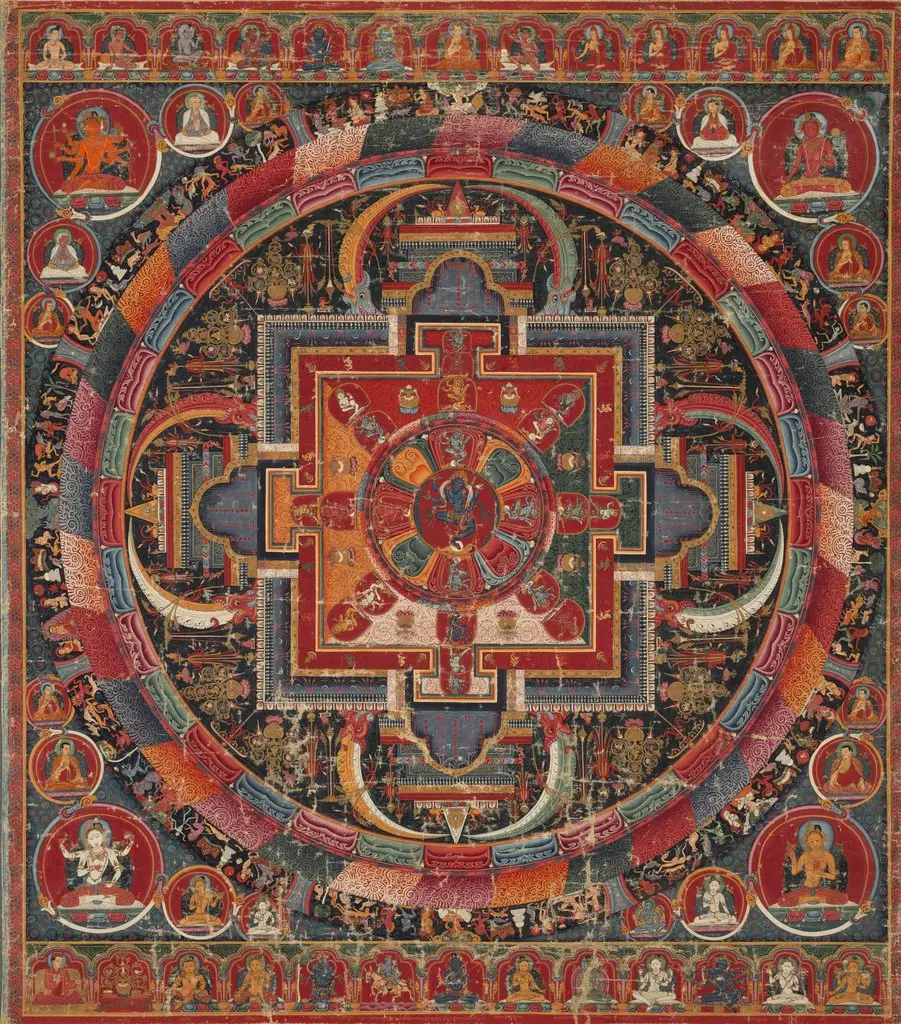 Twenty-three Deity Nairatma Mandala
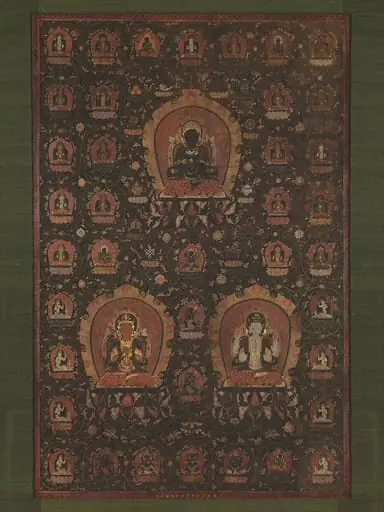 明 佚名 釋教三尊曼陀羅圖 軸|Mandala of Vajradhara, Manjushri and Sadakshari -Lokeshvara