Artwork
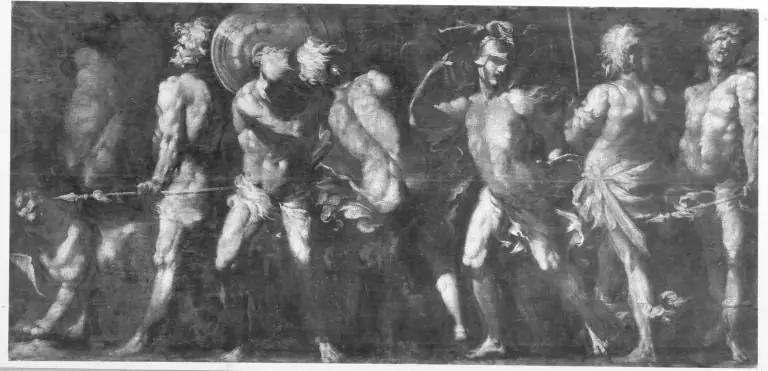
Frieze with Male Figures and Two Horses
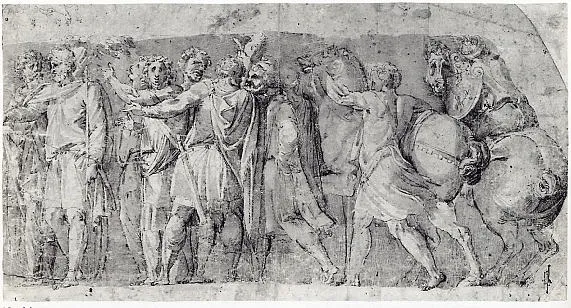
Frieze with Male Figures and Two Horses is an unspecified painting. It dates from 1550 and is held in the collection of the Metropolitan Museum of Art.
About this work
Technique & Style
Created in 1550, the work is classified as a painting and depicts male figures alongside two horses. The piece measures 19.7 cm in height and 38.1 cm in width. It is held in the collection of the Metropolitan Museum of Art, having previously been owned by Robert Lehman. The work is attributed to an artist working after Polidoro da Caravaggio.
History & Provenance
It was previously owned by Robert Lehman, whose collection formed the basis for the Metropolitan Museum of Art's Lehman Wing, where the work is now held.
Created in 1550, this painting is attributed to a follower of Polidoro da Caravaggio and depicts male figures alongside two horses. It was previously owned by Robert Lehman, whose collection formed the basis for the Metropolitan Museum of Art's Lehman Wing, where the work is now held. The available sources do not specify a unique accession number for the object, nor do they list any exhibition history.
Context
The frieze, created in 1550, reflects the compositional style of Polidoro da Caravaggio, whose decorative friezes were widely influential. The work later entered the Metropolitan Museum of Art with the Robert Lehman collection, whose holdings highlight twentieth-century interest in Renaissance decorative painting.
Overview
This painting, titled "Frieze with Male Figures and Two Horses", presents a dynamic composition of human and animal forms. It depicts a procession-like arrangement of robed men alongside two horses, rendered in a continuous band reminiscent of ancient sculptural reliefs. The work is part of the collection at The Metropolitan Museum of Art, where it offers a glimpse into a vigorous narrative scene.
Subject & Meaning
The artwork portrays several male figures, draped in robes, engaged in active movement. One individual prominently carries a spear, suggesting a martial or ceremonial context. Accompanying these figures are two horses, also depicted in motion, with one dramatically rearing on its hind legs.
The collective energy of the figures and animals implies a narrative of procession, conflict, or a ritualistic event, inviting viewers to interpret the unfolding drama.
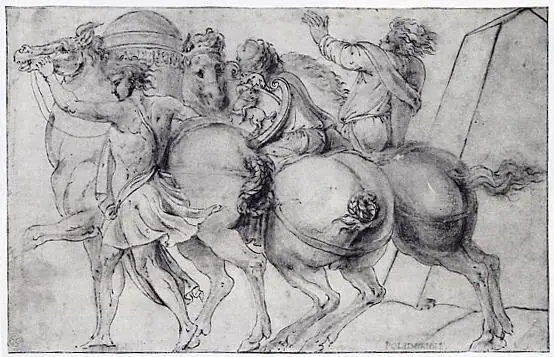
Artist & collection

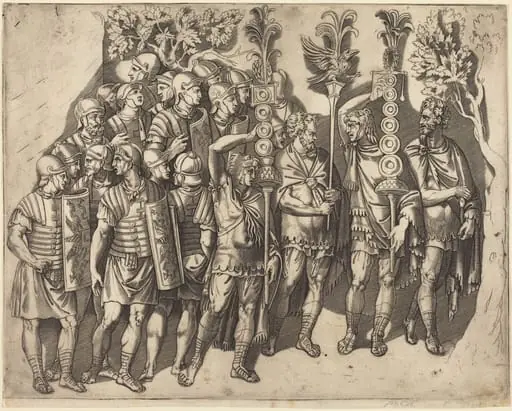 A Roman Legion
 Beuteträger mit Tiger
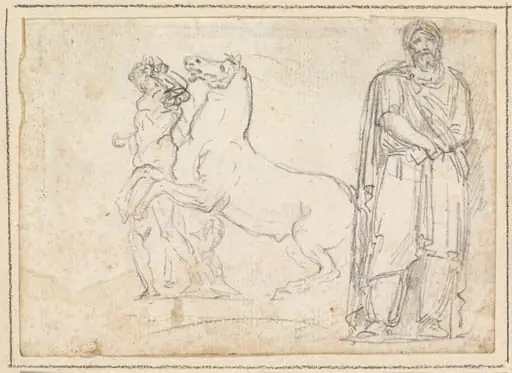 One of the "Dioscuri" and a Barbarian Prisoner
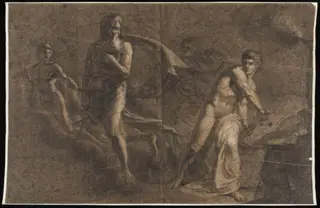 Drawing on Brown Paper
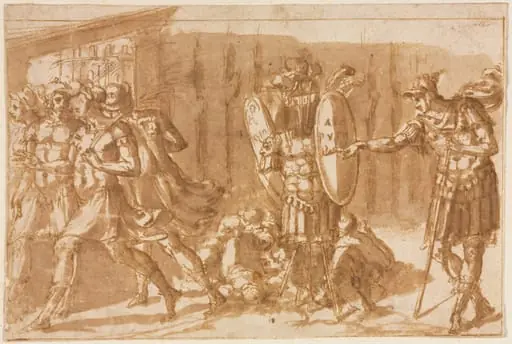 Victorious Soldiers with Trophy
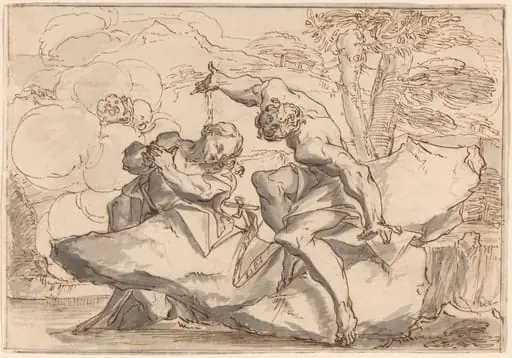 The Baptism of Christ
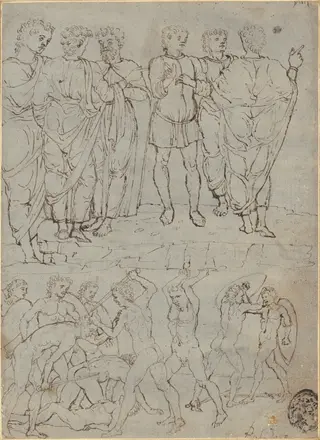 Six Conversing Men and Ten Battling Nudes
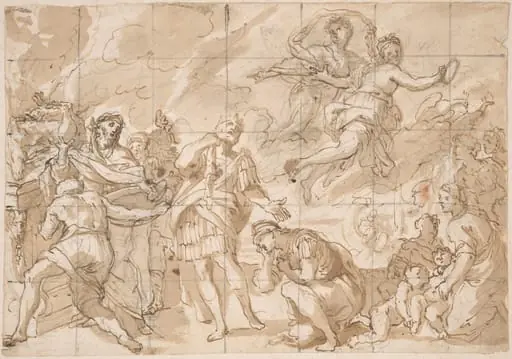 The Sacrifice of Iphigenia
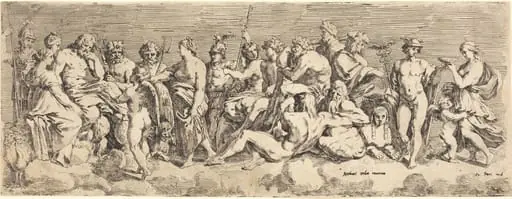 The Admission of Psyche to Olympia
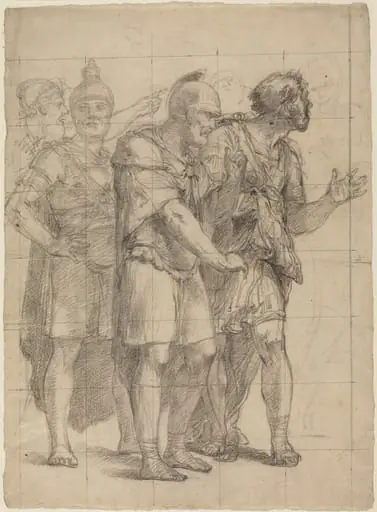 Four Standing Warriors
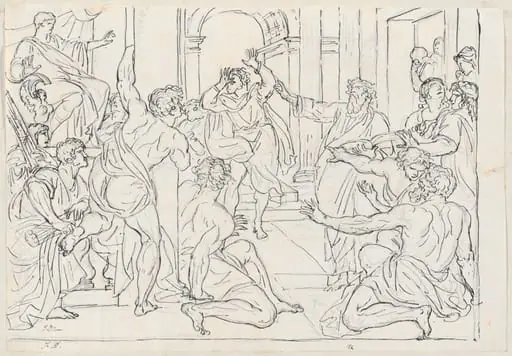 The Blinding of Elymas
- Frieze with Three Horsemen