Artwork
Golgatha
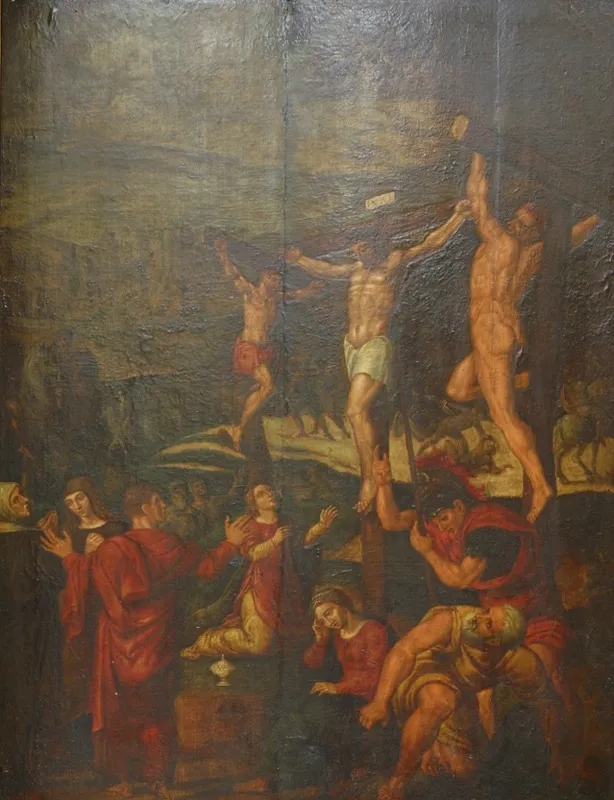
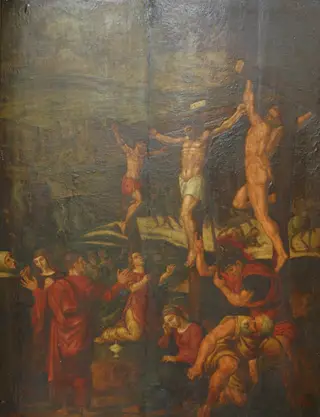
Golgatha is an unspecified painting. It dates from 1600 and is held in the collection of the Statens Museum for Kunst.
About this work
Subject & Meaning
The title "Golgatha" refers to the hill outside Jerusalem, also known as Golgotha or Calvary, traditionally identified as the site of the Crucifixion.
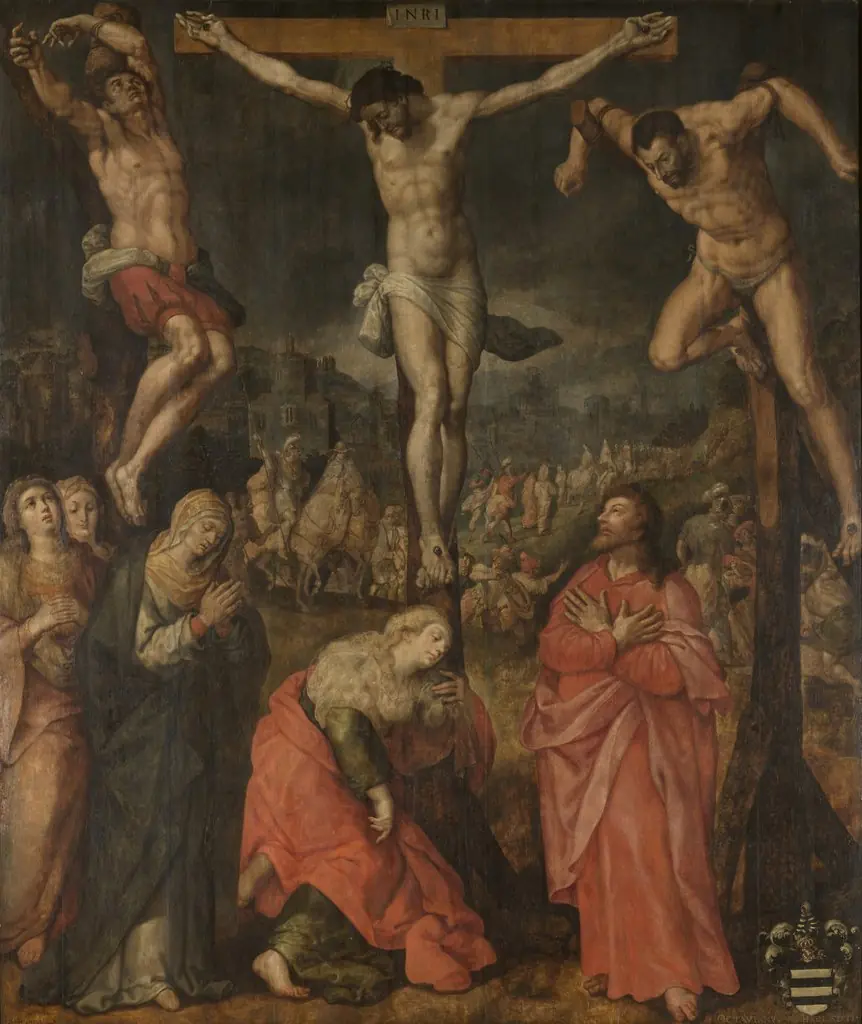
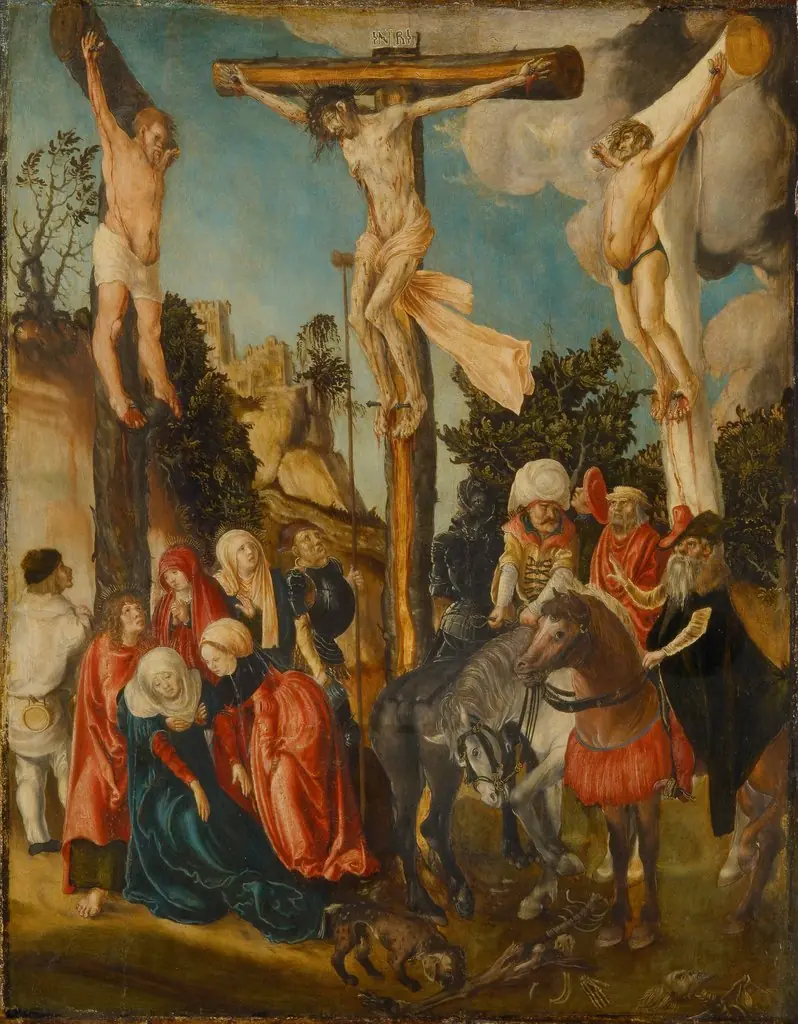
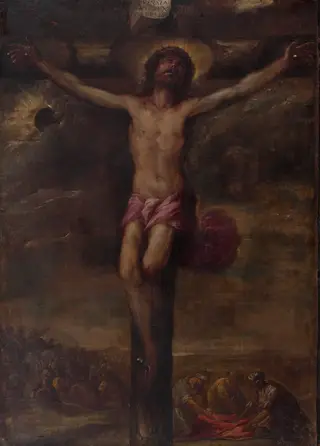
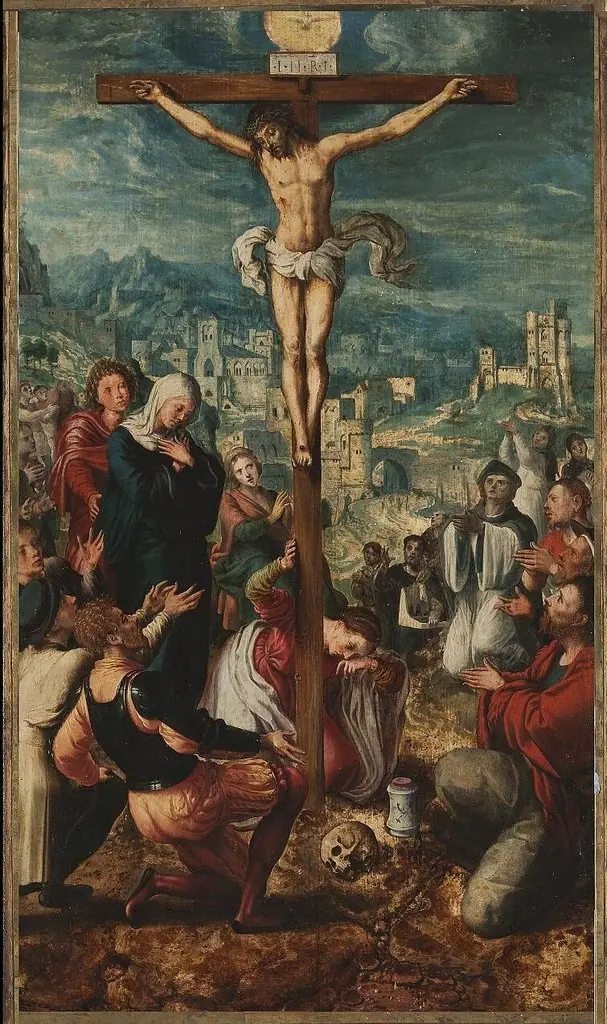
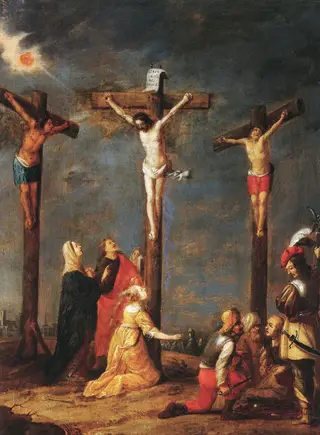
Golgatha is a religious painting whose central subject is the crucifixion of Jesus Christ. The work belongs to the genre of religious art and treats the Passion as its main theme, presenting the moment of Christ's death on the cross as the focal iconographic event.
The title "Golgatha" refers to the hill outside Jerusalem, also known as Golgotha or Calvary, traditionally identified as the site of the Crucifixion. By naming the place rather than the act itself, the painting frames the scene within its sacred geography, drawing on the Gospel accounts that locate the Crucifixion there.
As a devotional image, the work embodies the Christian symbolism of sacrifice and redemption associated with the Crucifixion, presenting the event as both a historical occurrence and a theological statement central to Christian belief.
Technique & Style
The work is an oil painting on canvas, as indicated by its classification as a painting and the recorded dimensions of 650.0 cm by 500.0 cm. It depicts the crucifixion of Jesus, reflecting religious subject matter typical of its genre. The formal qualities align with early‑Baroque composition, emphasizing dramatic chiaroscuro and a centralized, vertically oriented arrangement of figures. The support is canvas, a common medium for large‑scale religious works of the period, and the handling suggests careful preservation within a museum setting.
History & Provenance
Dating to 1600, this religious painting depicts the crucifixion of Jesus and was created in the early seventeenth century. It is attributed to Ubekendt, an artist active between 1550 and 1650. The work is part of the collection at the Statens Museum for Kunst, where it remains on display. Its dimensions are 650.0 cm in height and 500.0 cm in width.
Golgatha, dated to 1600, is held in the collection of the Statens Museum for Kunst in Denmark. The work is catalogued as a religious painting depicting the crucifixion of Jesus Christ.
No specific accession number is recorded in the available sources, and no exhibition history is documented.
Overview
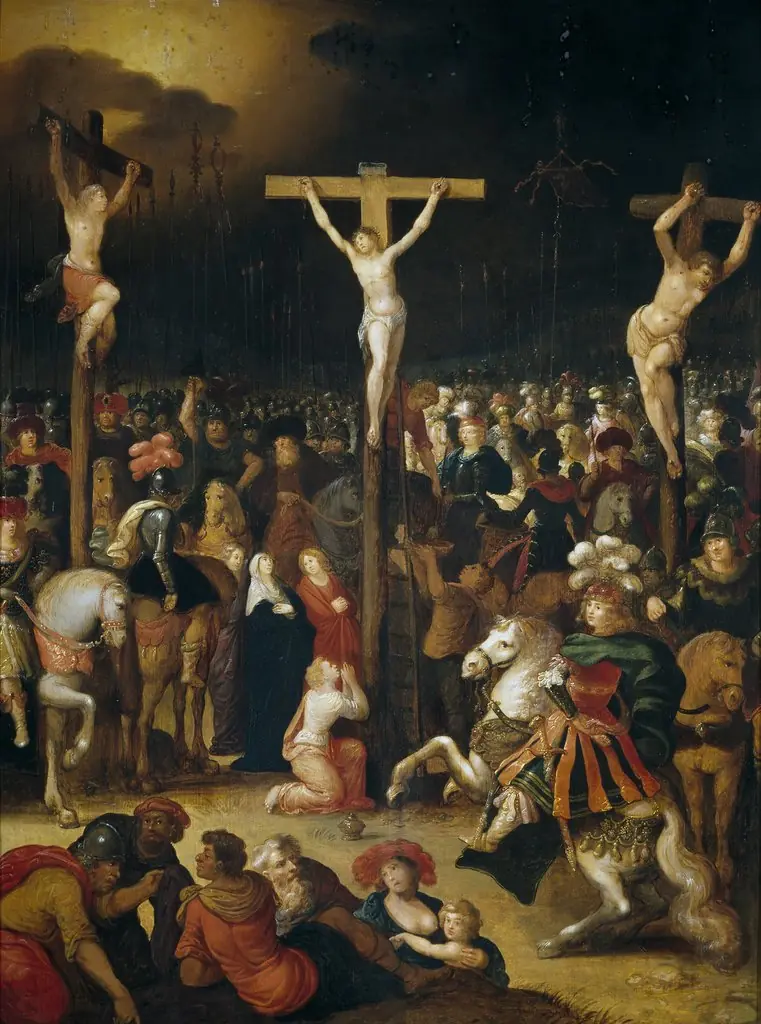
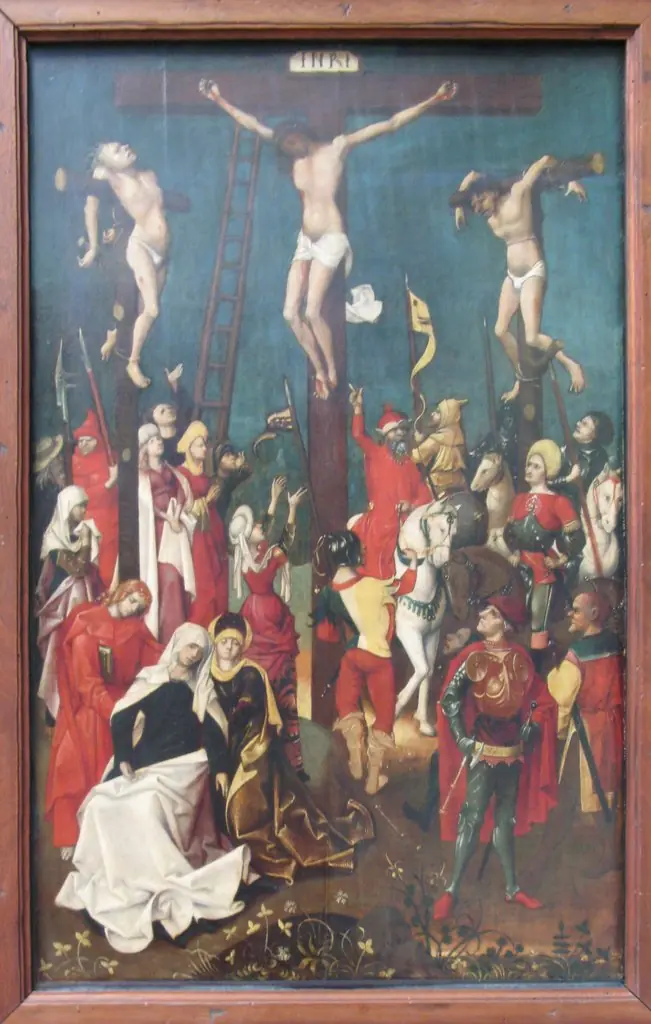
Golgatha depicts a crucifixion scene with three figures suspended on crosses at the composition’s centre. Their outstretched arms dominate the vertical space, while a gathering of onlookers below, dressed in red robes and plain garments, watches or kneels in varied poses. The setting is a bleak, rocky landscape beneath a storm‑laden sky, rendered with stark contrasts of light and shadow.
Context
Set within the tradition of Passion imagery, the painting aligns with Baroque sensibilities that favour theatrical composition and emotional immediacy. The use of red robes for certain figures may reference contemporary liturgical dress or symbolize martyrdom, while the stark landscape reflects the bleakness associated with Golgotha, the site of the crucifixion.
Legacy
Golgatha exemplifies the enduring visual language of crucifixion scenes, influencing later depictions that emphasize dramatic lighting and expressive crowds. Its stark chiaroscuro and emotive composition continue to inform studies of religious art and the portrayal of collective sorrow in visual culture.
Artist & collection