Artwork
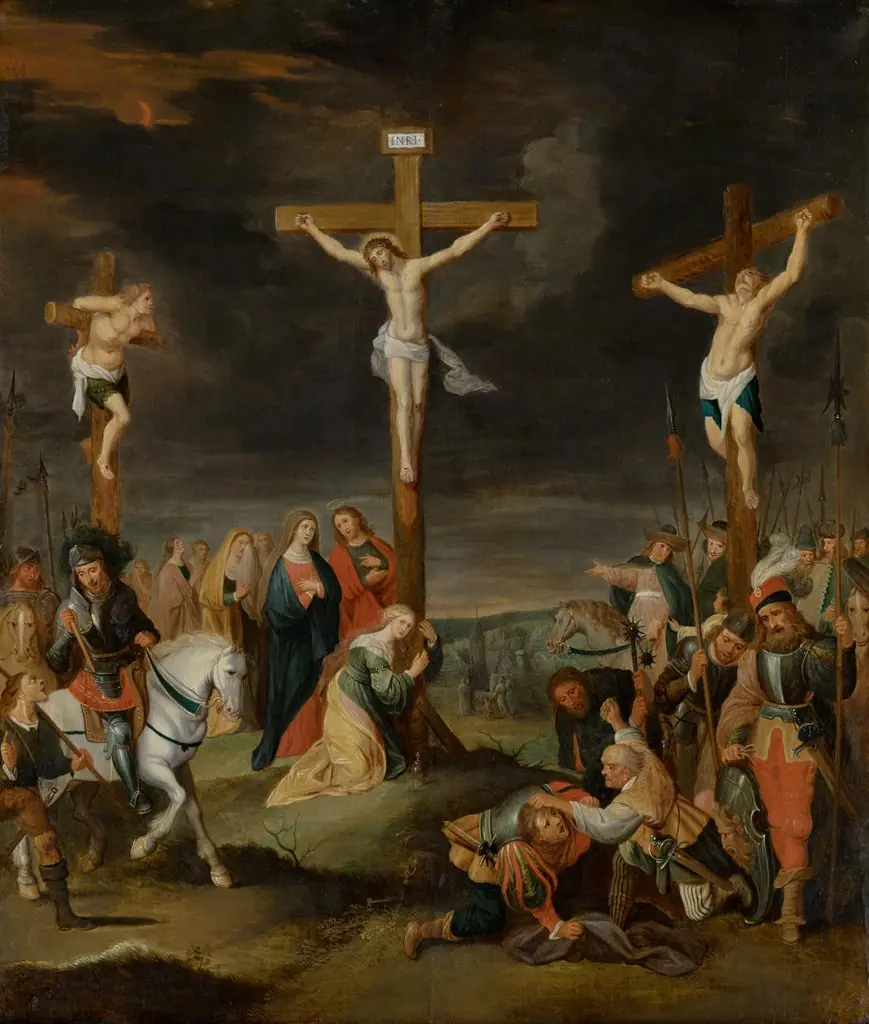
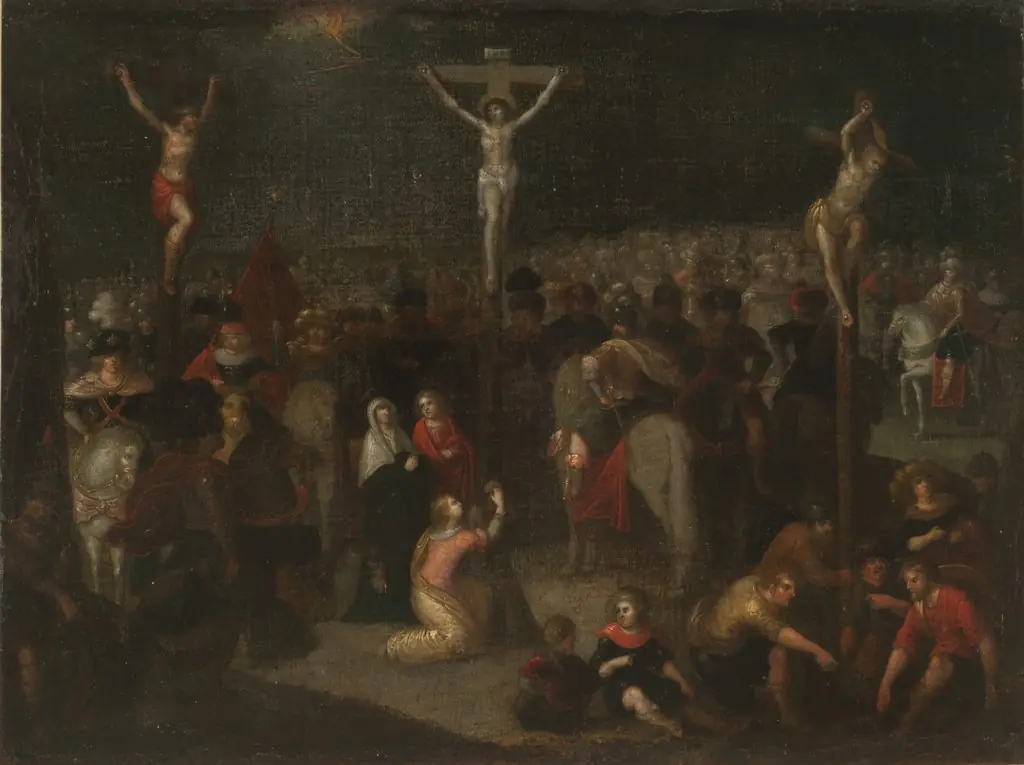
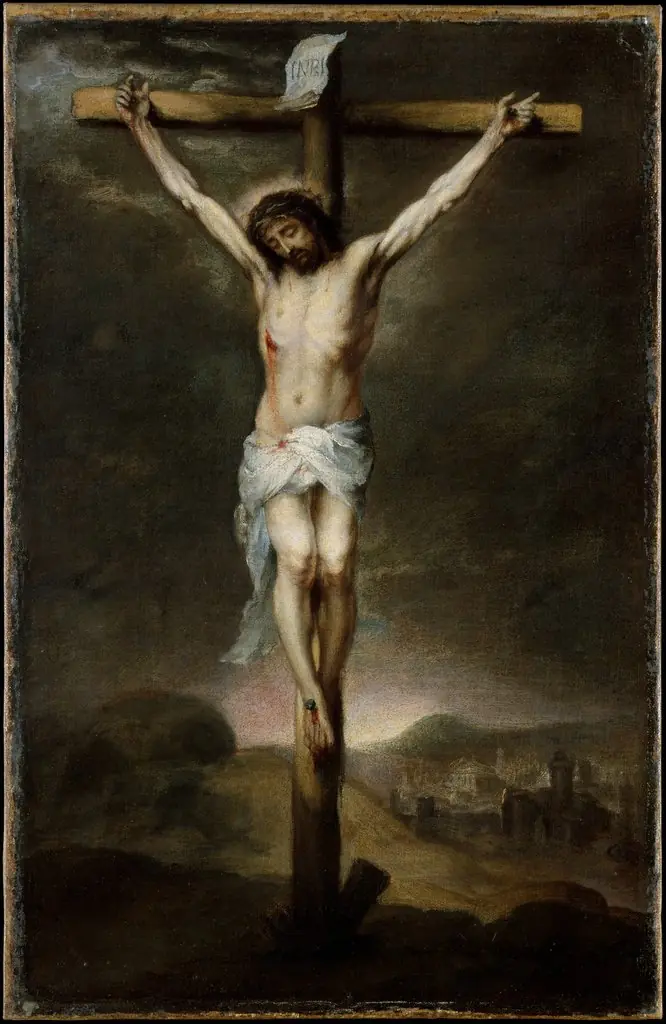
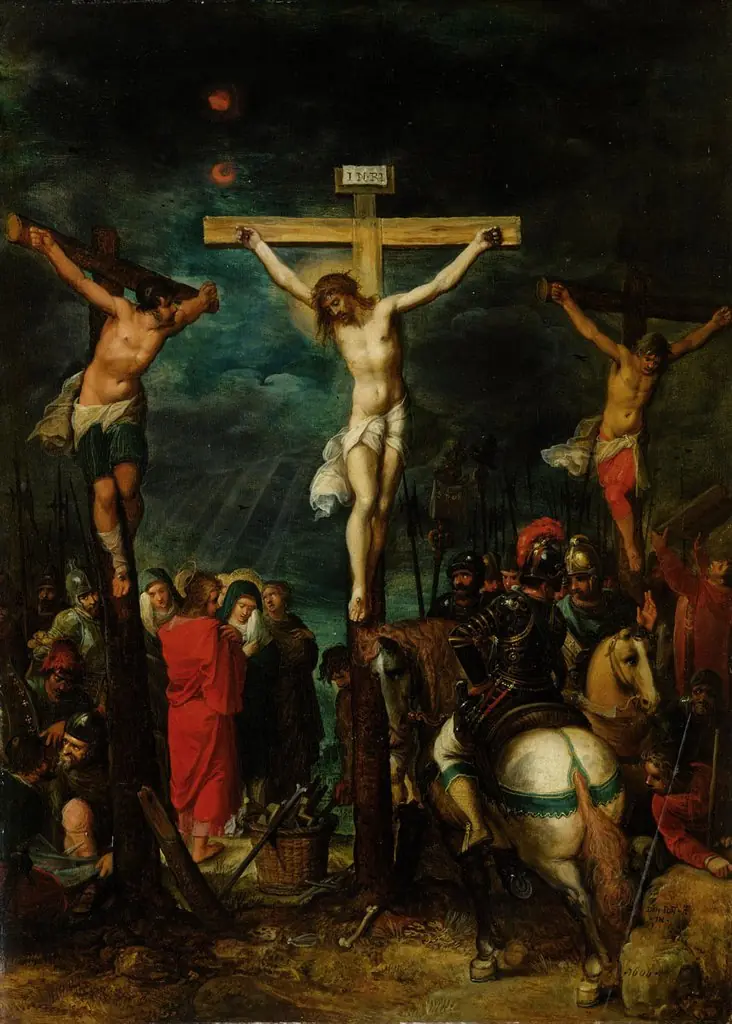
La Crucifixión
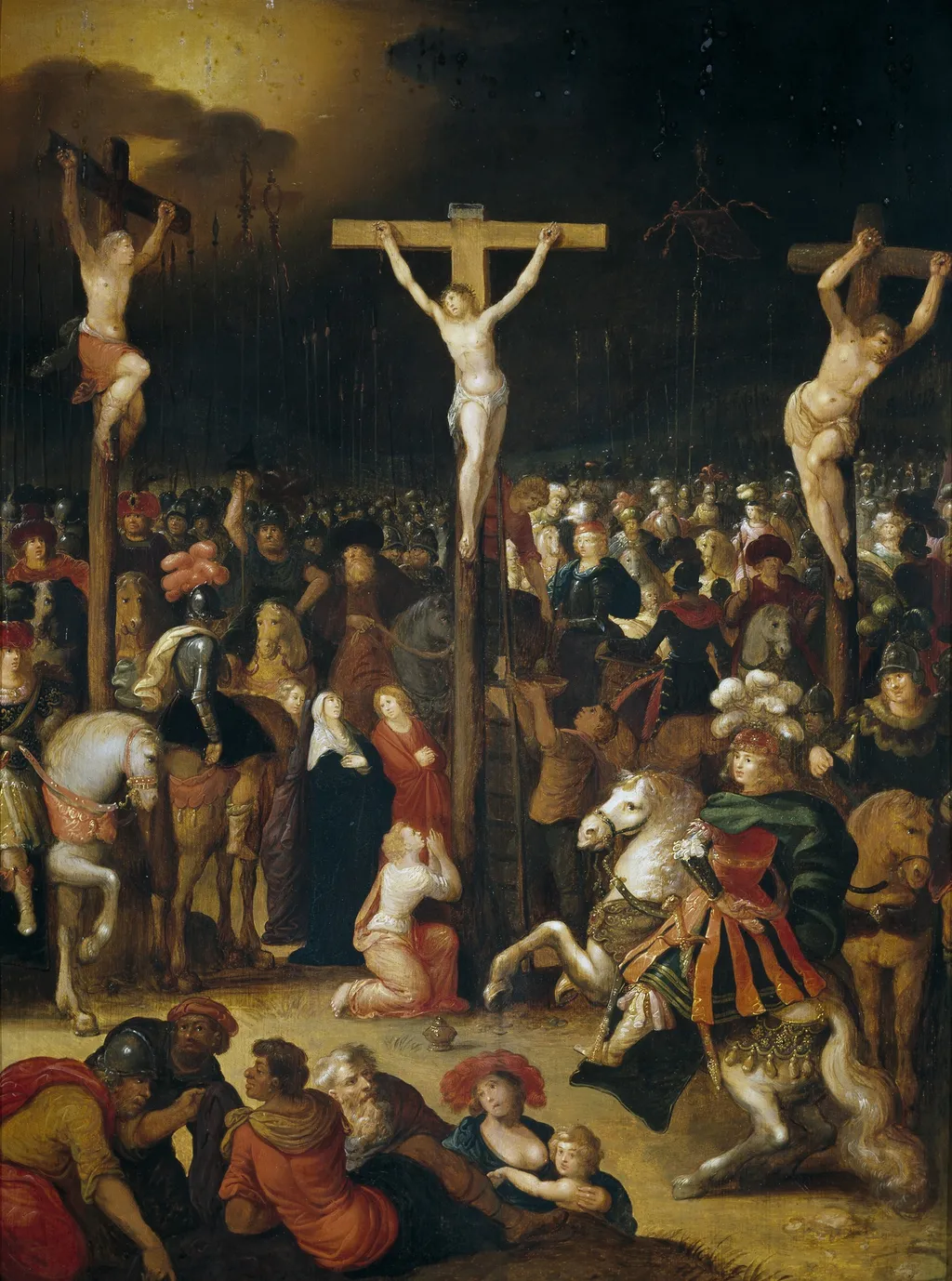
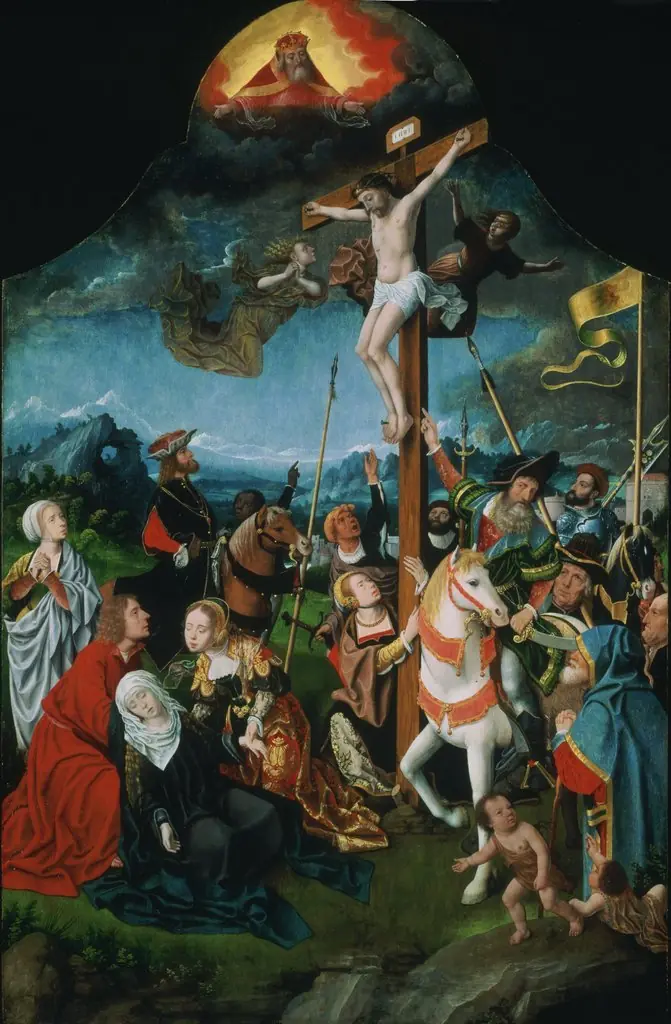
La Crucifixión is an oil painting by the Early Baroque Italian artist Louis de Caullery. It dates from 1601 and is held in the collection of the Museo del Prado.
About this work
Subject & Meaning
The figure of Jesus Christ embodies the subject of divine sacrifice, a theme that defined devotional imagery of the period.
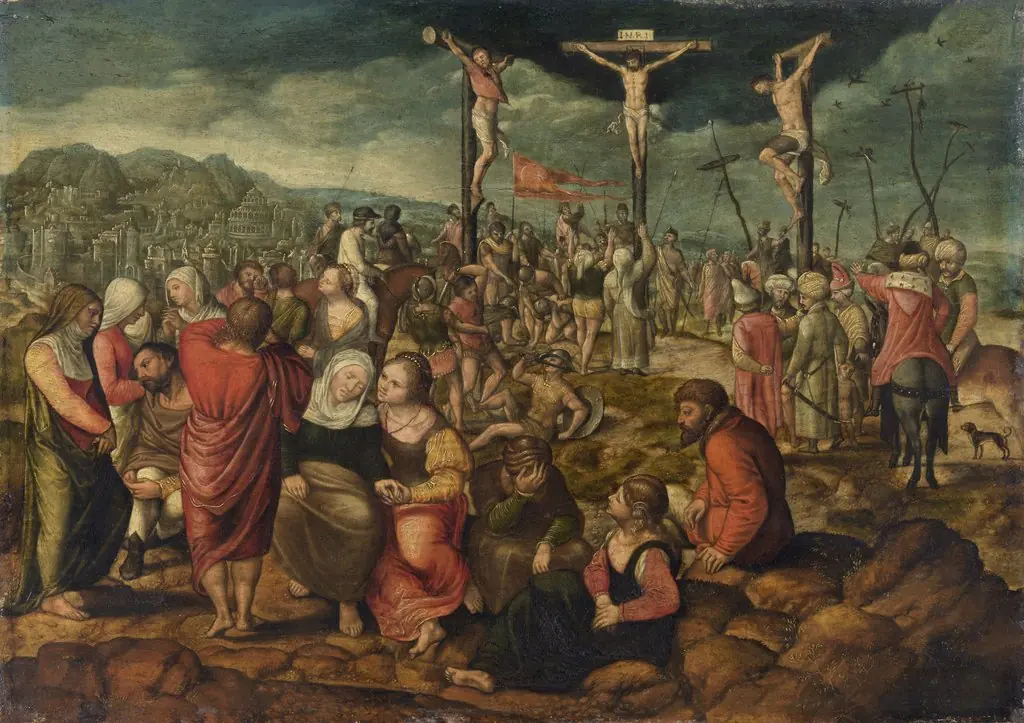
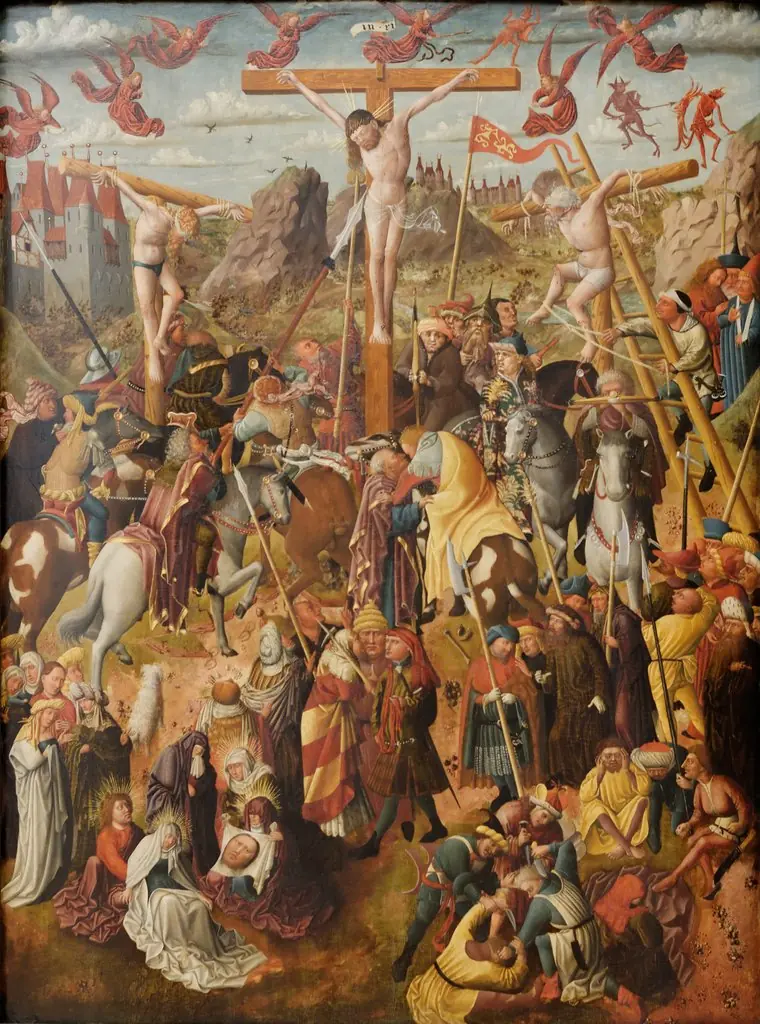
The painting depicts the Crucifixion of Jesus Christ, showing him nailed to the cross. As a work of religious art, it treats the central event of the Christian Passion, in which Christ's death on Calvary is understood as the sacrificial act at the heart of Christian theology. The image of the cross functions as the dominant symbolic element, signifying both the instrument of martyrdom and, in Christian iconography, redemption and salvation.
The figure of Jesus Christ embodies the subject of divine sacrifice, a theme that defined devotional imagery of the period.
The work belongs to the long tradition of crucifixion imagery in European painting, in which the suffering body of Christ serves as a focal point for meditation on faith, mortality, and atonement. By isolating the crucifixion as its main subject, the painting invites viewers to contemplate the theological meaning of the event rather than its narrative context.
Technique & Style
La Crucifixión is executed in oil paint on panel, a support typical of early seventeenth-century Flemish cabinet pictures. The composition measures 75 cm in height by 56 cm in width, a vertical format suited to its devotional and religious subject matter centered on the crucifixion of Jesus. The work is classified as a painting within the religious genre, consistent with Louis de Caullery's small-scale devotional output produced around 1601.
The handling reflects the oil-on-panel tradition associated with Caullery's practice, allowing for the fine detail and luminous color characteristic of his religious scenes. The vertical panel format supports a tightly organized figural arrangement focused on the cross, with the medium enabling the layered glazes typical of Flemish panel painting of the period.
History & Provenance
La Crucifixión is an oil painting by Louis de Caullery dated 1601. The work is held in the collection of the Museo del Prado, where it remains located. A Wikidata entry also lists an inception date of 1650 alongside the 1601 date attributed to the artist.
No information is available regarding the original commission, earlier owners, or the chain of custody prior to the painting's acquisition by the museum.
The sources do not document when or how the work entered the Prado's holdings, nor do they identify any intermediate collectors, dealers, or institutional transfers. Details of the creation history, such as the circumstances of the commission or the patron for whom the panel was originally produced, are likewise absent from the available records.
Louis de Caullery's La Crucifixión, dated 1601, is held in the collection of the Museo del Prado. The work is cataloged within the museum's inventory as a religious painting executed in oil on panel. While the entity record lists an inception date of 1601, a secondary entry notes a date of 1650, though the specific accession number is not provided in the available records.
The painting measures 75 cm in height and 56 cm in width. No specific exhibition history is detailed in the provided sources.
Overview
Created in 1601 by the Flemish painter Louis de Caullery, this oil on canvas presents a dramatic interpretation of the crucifixion. Executed in the early Baroque manner that was then prevalent in Italy, the work belongs to the religious genre and is presently part of the Museo del Prado’s collection.
Own this work as a print
Artist & collection
Artist
Louis de Caullery, Caulery or Coulery (ca.1580–1621) was a Flemish painter who is known for his architectural scenes, city views, genre scenes, allegorical compositions, religious and history paintings.