Artwork
Crucifixion
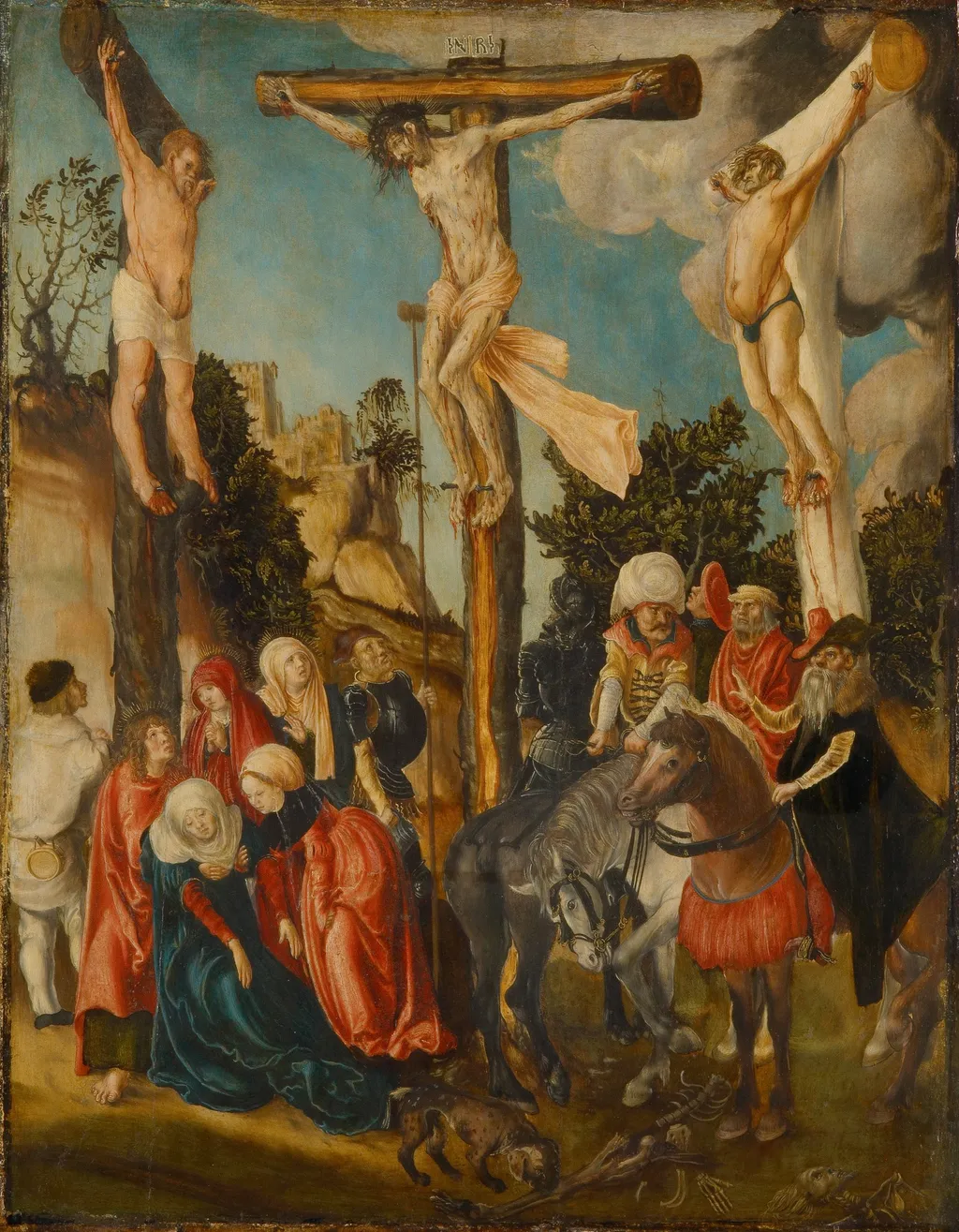
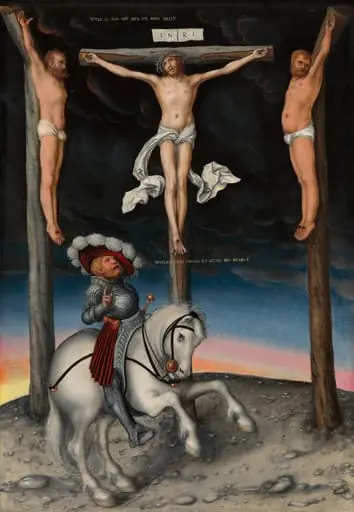
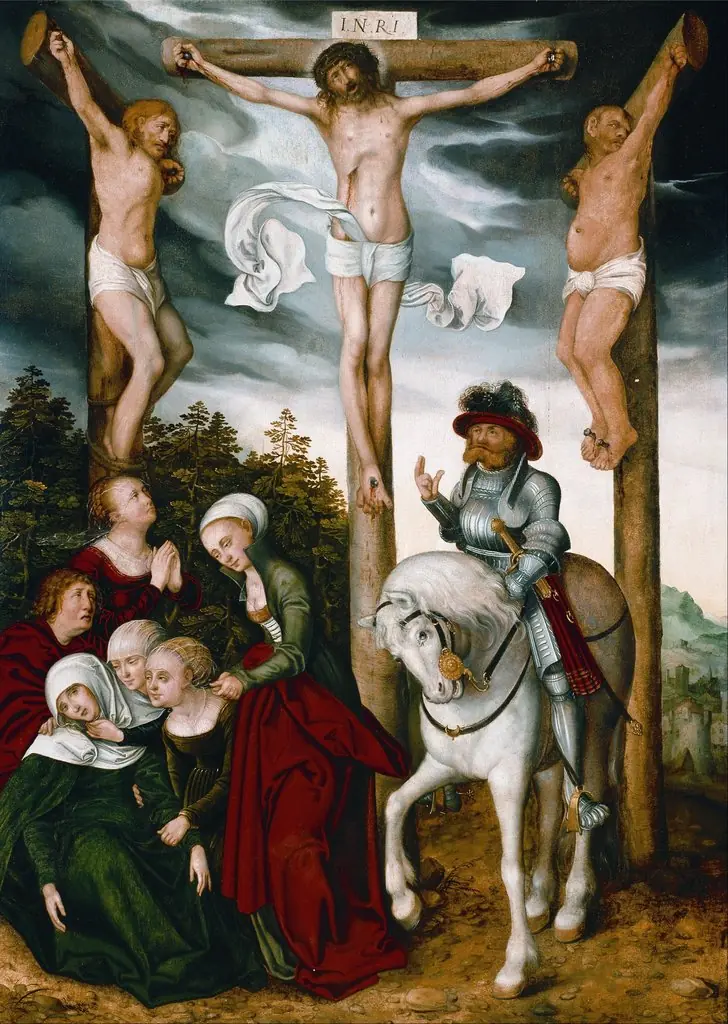
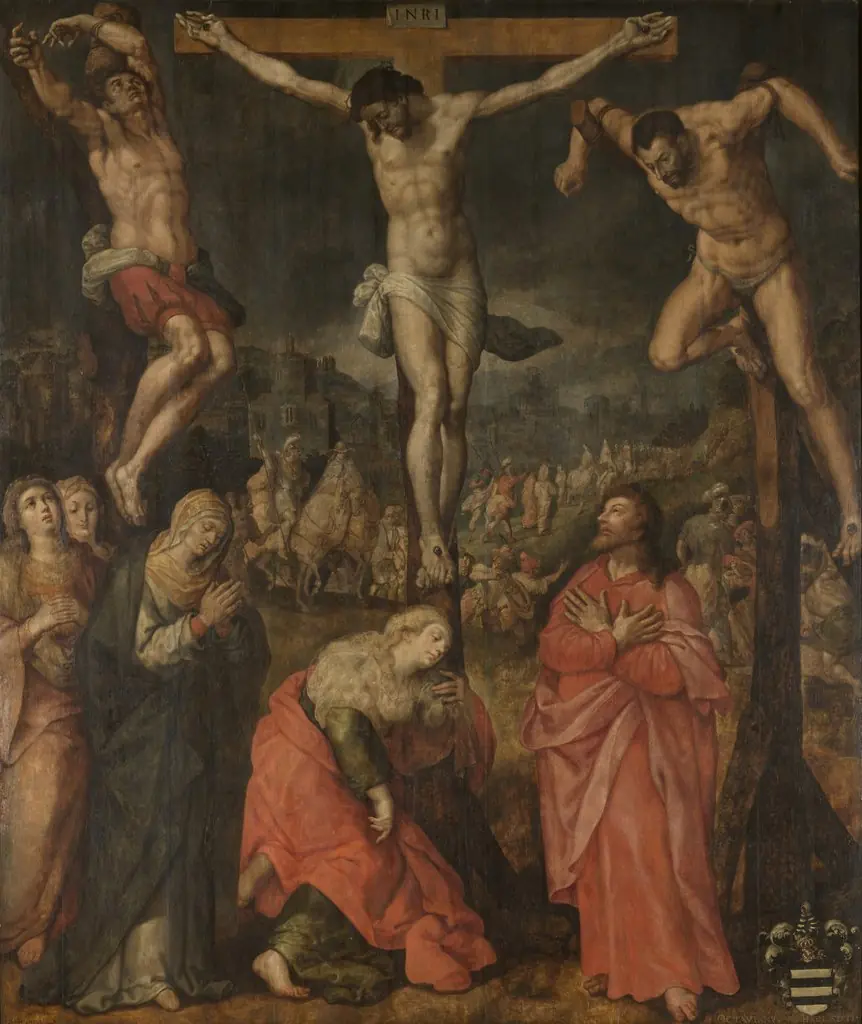
Crucifixion is an unspecified painting by the Northern Renaissance artist Lucas Cranach the Elder. It dates from 1500 and is held in the collection of the Kunsthistorisches Museum.
About this work
Subject & Meaning
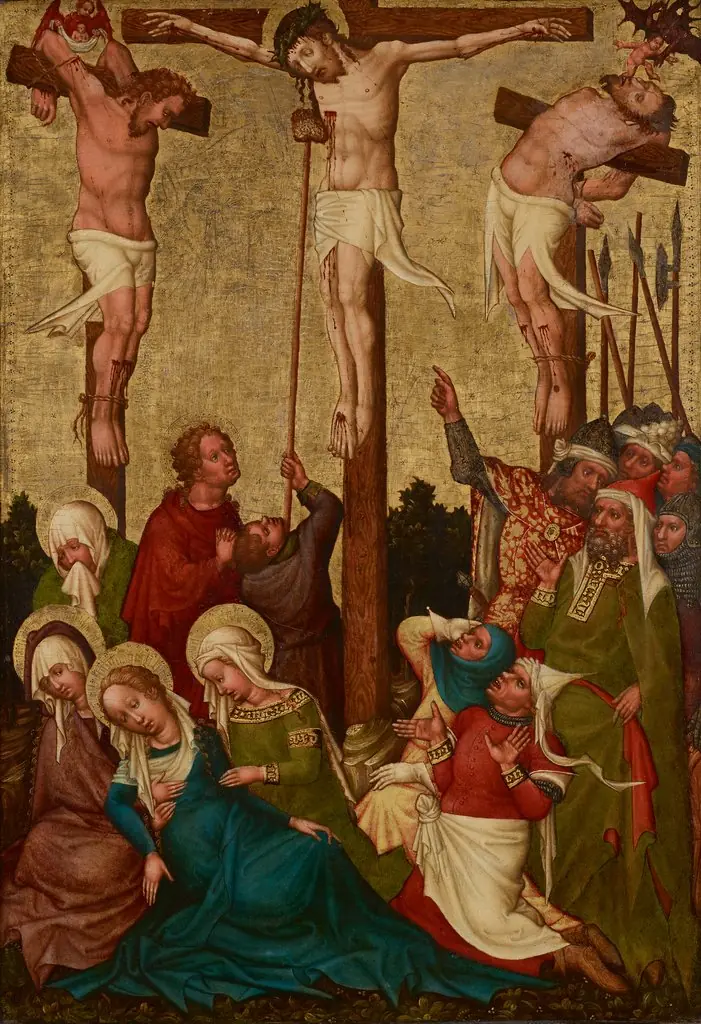
The composition includes specific narrative elements such as three noble spectators on horseback conversing and the Virgin Mary fainting.
The painting depicts the crucifixion of Jesus Christ, adhering to a traditional iconographic approach to the Passion narrative. While maintaining this conventional focus, the work introduces expressive movement characteristic of late Gothic Franconian realism. The composition includes specific narrative elements such as three noble spectators on horseback conversing and the Virgin Mary fainting.
These figures suggest an attempt to break from static traditional patterns by adding dynamic interaction to the scene. The inclusion of such moving elements may reflect the influence of Jan Polack on the artist during his Viennese period. As the artist's earliest surviving work, the piece serves as a foundational representation of the subject before the creator adopted different stylistic approaches in later years.
Technique & Style
Executed in 1500, this religious painting by Lucas Cranach the Elder is rendered on a lime wood panel. The work measures 58.5 cm in height and 45 cm in width. Stylistically, the piece exhibits elements of Franconian expressive realism characteristic of the Late Gothic period.
While maintaining traditional iconography for the Passion scene, Cranach introduces dynamic movement to the composition, notably through three noblemen on horseback engaged in conversation and the depiction of the Virgin Mary fainting. These compositional innovations suggest an attempt to break from established patterns, potentially reflecting the influence of Jan Polack during the artist's time in Vienna.
Context
The Crucifixion (1500) is recognized as the earliest surviving work by Lucas Cranach the Elder, painted on lime panel for the Scottish Abbey in Vienna and now housed in the Kunsthistorisches Museum. Critical reception has focused on its departure from traditional Passion iconography, evident in the inclusion of three mounted noble spectators and a swooning Virgin, gestures that signal an emerging expressive realism characteristic of late‑gothic Viennese art. Scholarship situates the painting within Cranach’s Viennese period, noting its stylistic affinities with Jan Polack and its role as a precursor to later, more radical treatments of the subject.
Its placement in art history marks a transitional moment where Northern European religious painting begins to experiment with narrative dynamism while retaining conventional devotional content.
Legacy
The Crucifixion of 1500 was acquired by the Kunsthistorisches Museum in Vienna and remained in its collection for centuries, shaping the reception of Cranach's oeuvre. Contemporary accounts praised its expressive realism, and later art historians such as Heinz Lüdeke highlighted its role in bridging late Gothic and Renaissance visual language. The work's iconography, particularly the dynamic composition with noble spectators and the depiction of Mary’s faint, was noted for introducing narrative movement into a traditionally static subject, a shift attributed to influences from artists like Jan Polack.
This painting is frequently cited as a precedent for later depictions of the Passion in Northern European art, influencing both stylistic developments and scholarly discourse on Cranach's innovative approach.
Overview
Lucas Cranach the Elder’s early‑sixteenth‑century work, titled Crucifixion, is executed on a lime‑panel and measures a modest size typical of devotional panels. The composition presents a dramatic biblical episode, with three nailed figures dominating the central space and a varied crowd gathered beneath them. The painting resides in the collection of the Kunsthistorisches Museum in Vienna.
History & Provenance
Created around 1500, the panel entered the Kunsthistorisches Museum’s holdings at an unspecified later date, becoming part of the museum’s extensive collection of Northern Renaissance art. Its provenance reflects the typical trajectory of religious panels that moved from private devotional contexts to public institutions during the nineteenth and twentieth centuries.
Own this work as a print
Artist & collection
Artist
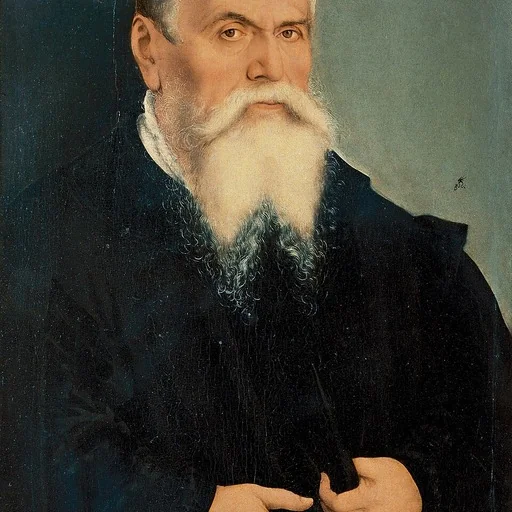
Lucas Cranach the Elder was a German Renaissance painter and printmaker in woodcut and engraving.