Artwork
Krishna and Gopis
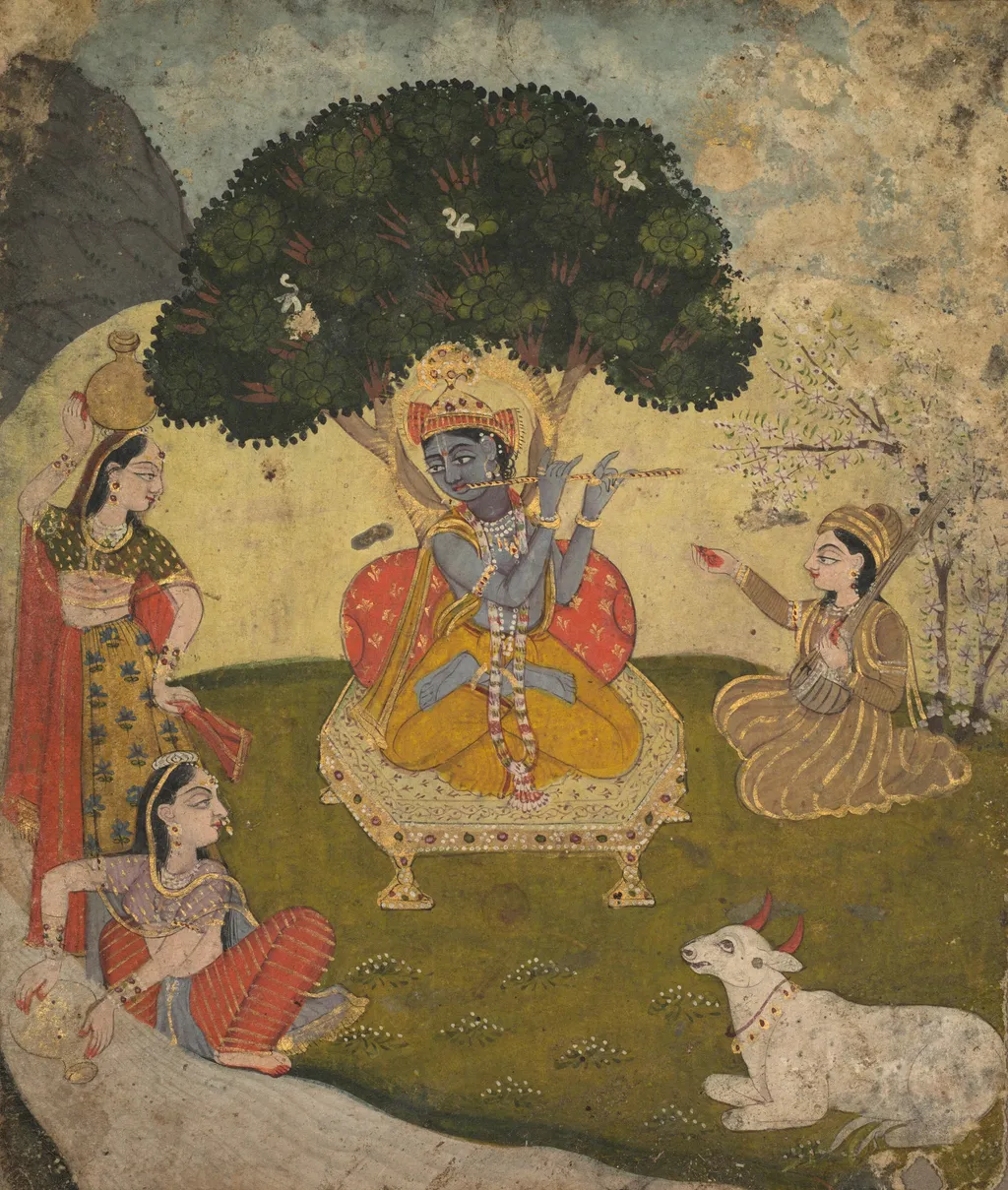
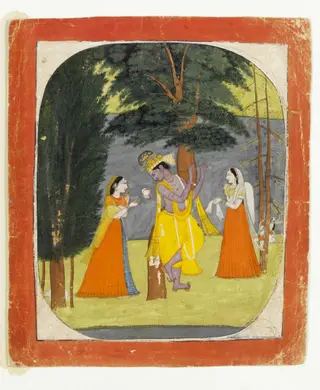
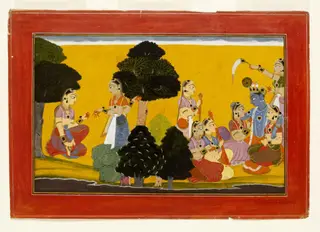
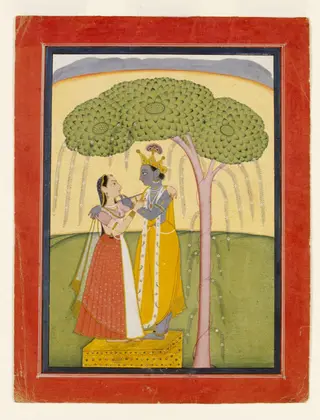
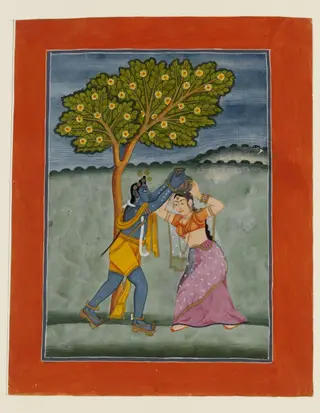
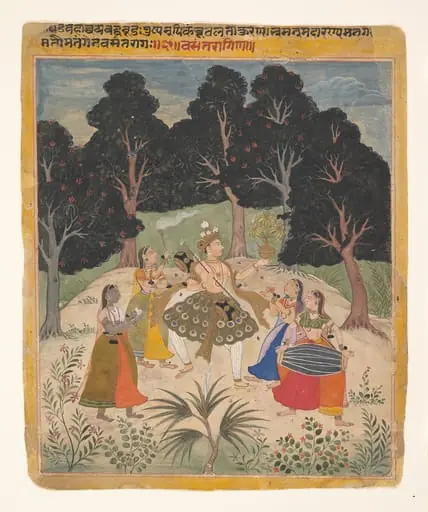
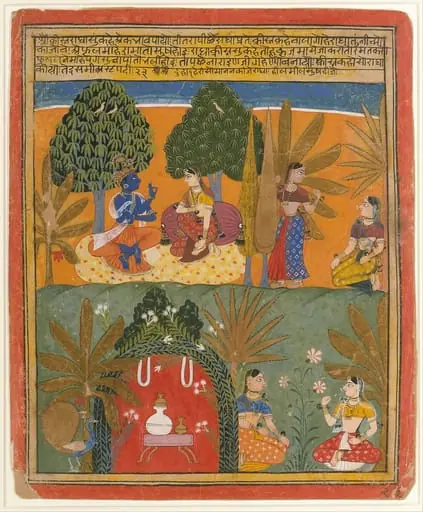
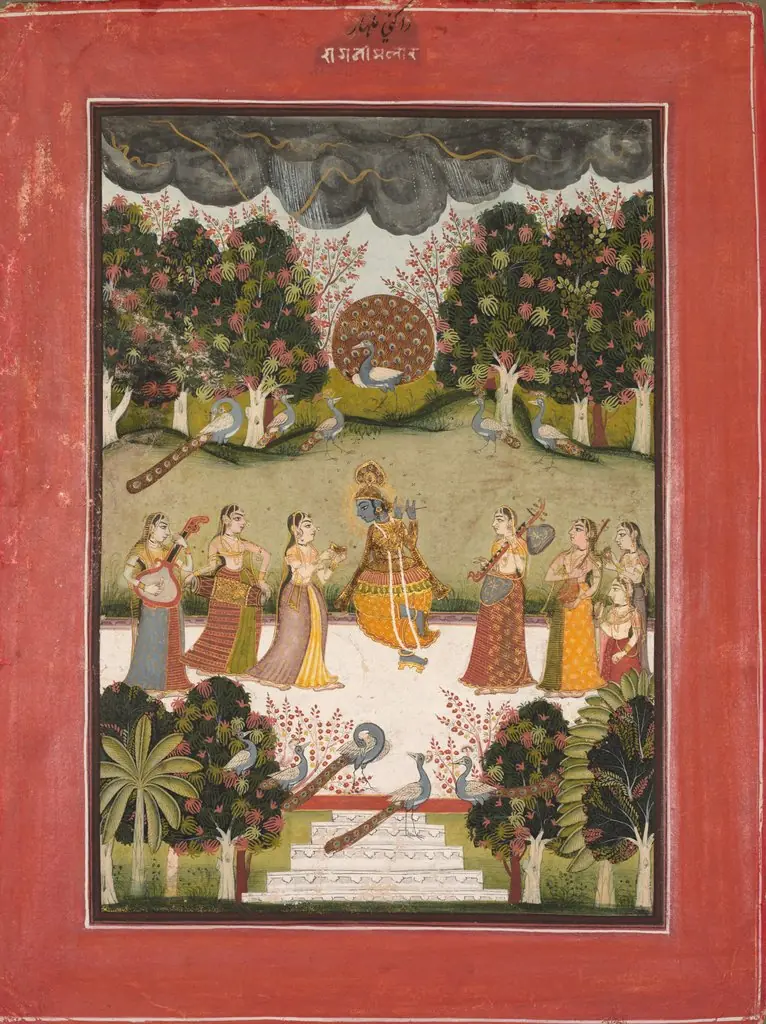
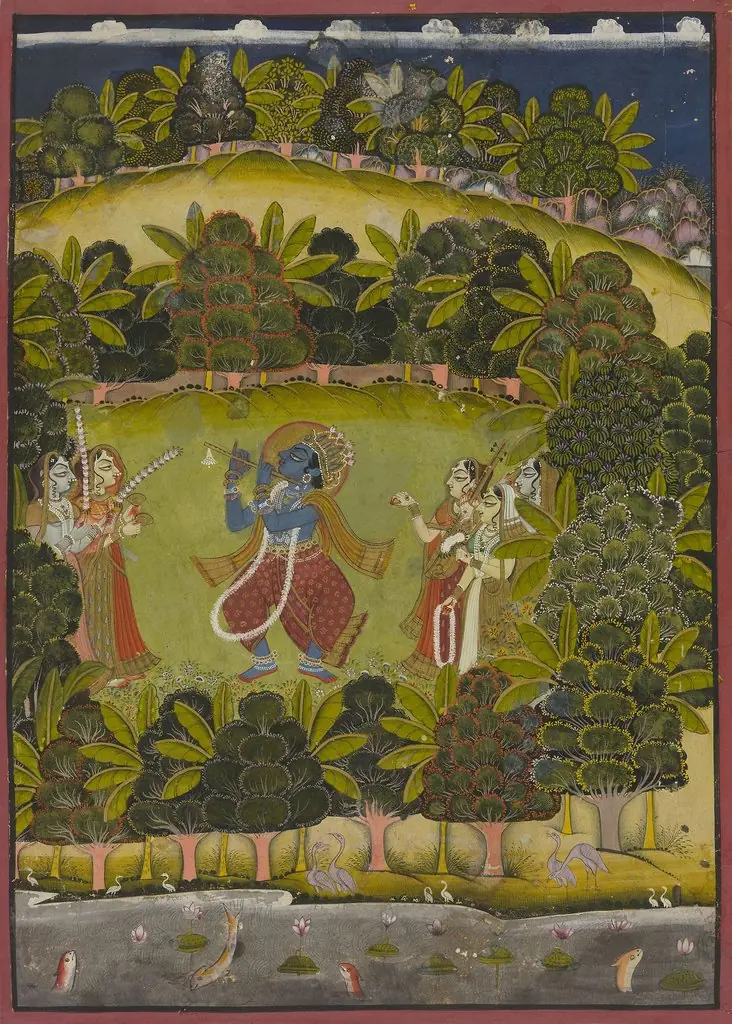
Krishna and Gopis is an unspecified painting. It dates from 1850 and is held in the collection of the Cleveland Museum of Art. The work depicts a blue‑skinned deity seated on an ornate throne beneath a tree, playing a flute.
About this work
Subject & Meaning
This scene embodies divine love and spiritual intimacy in Vaishnava tradition, where Krishna's playful interactions represent the soul's union with the divine.
The painting portrays Krishna, a central Hindu deity, surrounded by gopis, cowherd women symbolizing devoted followers. This scene embodies divine love and spiritual intimacy in Vaishnava tradition, where Krishna's playful interactions represent the soul's union with the divine. The composition draws from devotional poetry and temple art, emphasizing Krishna's role as a charmer and protector.
As a 19th-century work held at the Cleveland Museum of Art, it reflects European artistic engagement with Indian religious themes during the colonial period.
The depiction aligns with iconographic conventions of Krishna's pastoral pastoral scenes, where his flute and the presence of gopis signify divine music and ecstatic devotion.
Technique & Style
The work is an oil on canvas painting executed circa 1850. It depicts the Hindu deity Krishna alongside gopis, rendered with fine brushwork and delicate modeling characteristic of 19th‑century academic figurative art. The composition emphasizes graceful poses and subtle color harmonies, while the handling of light and texture reflects a conventional approach to religious subject matter of the period.
History & Provenance
The painting titled Krishna and Gopis was created in 1850 and is attributed to an unknown artist. It entered the collection of the Cleveland Museum of Art, where it remains on display.
The work was commissioned by an unidentified patron during the mid-19th century and has been part of the museum's permanent holdings since its acquisition.
The painting's creation history is documented through its inclusion in the museum's catalog, which records its inception date as 1850-01-01.
The painting Krishna and Gopis is held in the collection of the Cleveland Museum of Art, where it bears the accession number 1946.359. The internal catalog entry for the work does not list any exhibitions, loans, or public displays, and the associated Wikidata record likewise contains no exhibition history. Consequently, no museum shows, traveling exhibitions, or gallery presentations are documented in the sources consulted.
This absence of recorded exhibition information means that the work’s public viewing history cannot be derived from the material provided.
Overview
The work depicts a blue‑skinned deity seated on an ornate throne beneath a tree, playing a flute. He is surrounded by three women dressed in vivid red and gold garments; one holds a pot, another is seated on the ground, and the third strikes a drum. A white cow with red horns lies nearby on the grass, completing the composition.
Context
Krishna’s flute‑playing scenes are common motifs in Hindu iconography, symbolizing divine love and the spiritual allure of the deity. The inclusion of gopis and a cow aligns with pastoral settings drawn from mythic episodes of Krishna’s youth in the region of Vrindavan.
Artist & collection