Artwork
Untitled
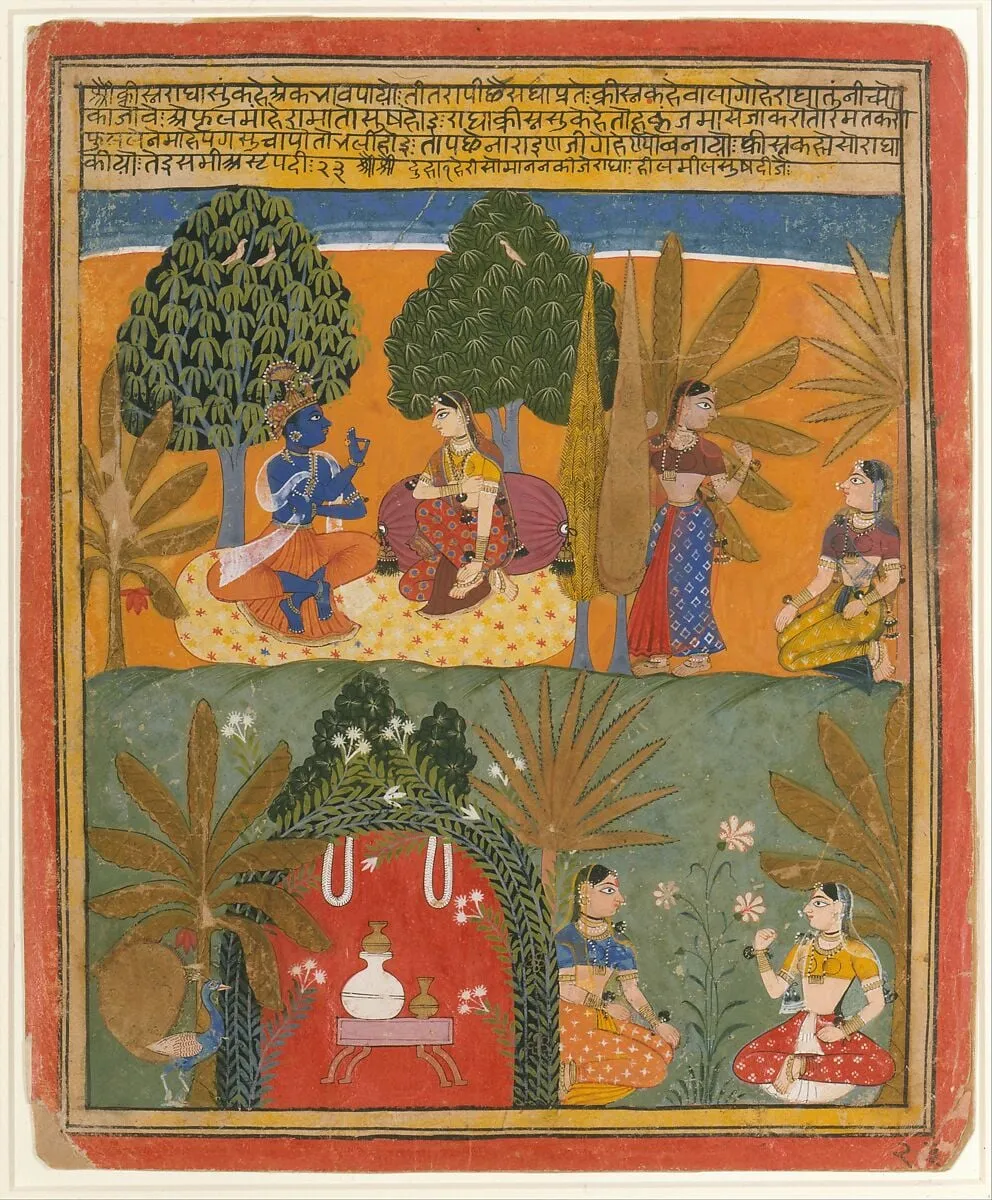
Untitled is a watercolor painting by the Baroque artist Manohar. It dates from 1658 and is held in the collection of the Metropolitan Museum of Art.
About this work
Subject & Meaning
Together these elements convey both the mythological narrative and its spiritual symbolism of union between the human soul and the divine.
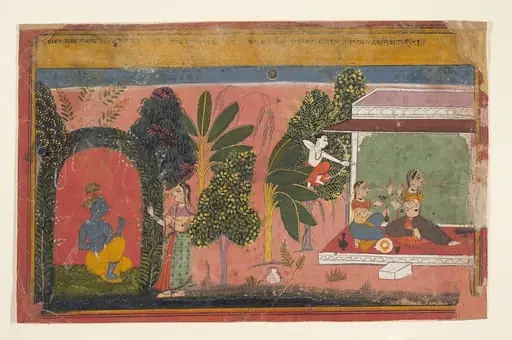
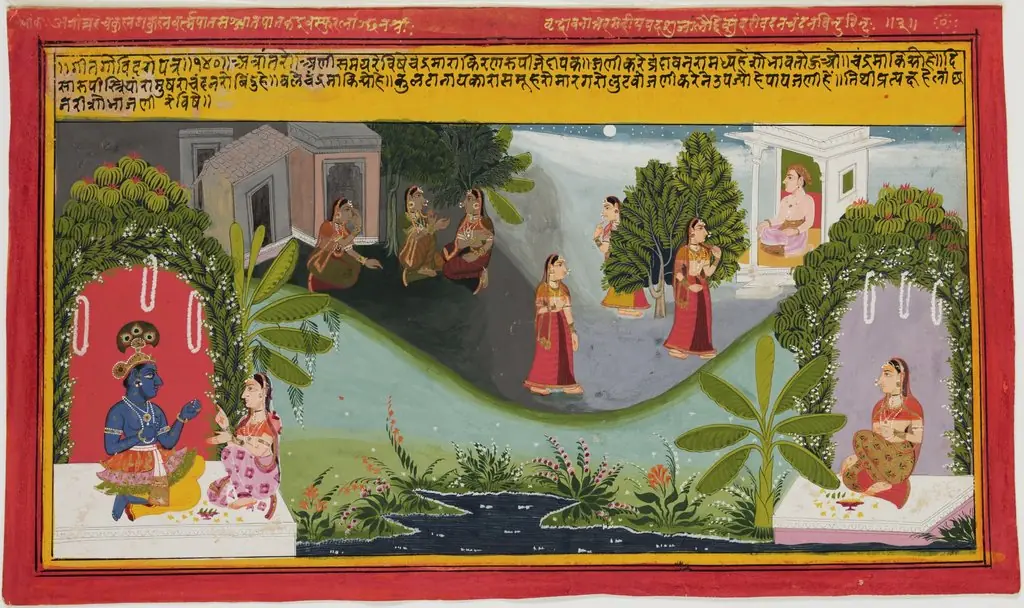
This untitled work by Manohar belongs to the genre of mythology and centers on the divine couple Krishna and Rādhā, a recurring subject in Indian devotional painting. The composition depicts the two figures together with a tree and a woman, situating the scene within a natural setting typical of Krishna-Rādhā iconography, where the surrounding landscape often functions as a symbolic extension of the lovers' pastoral environment. The pairing of Krishna and Rādhā represents the devotional theology of bhakti, expressing divine love through humanized, romantic imagery, while the tree and female attendant reinforce the forest or grove setting associated with their legendary encounters.
Together these elements convey both the mythological narrative and its spiritual symbolism of union between the human soul and the divine.
Technique & Style
The work is executed on a paper support using ink combined with opaque watercolor, a technique typical of 17th‑century Indian miniature painting. The artist Manohar applies the ink outlines first, then layers translucent washes of watercolor to achieve depth and luminosity, while the opaque portions provide solid, flat areas of color. The composition illustrates a mythological narrative featuring Krishna and Rādhā beneath a tree, with an additional female figure, arranged in a balanced, rhythmic layout that emphasizes decorative patterning and delicate line work.
The surface remains intact, showing no signs of damage, and the handling of the medium yields a vivid yet restrained palette characteristic of the period.
History & Provenance
Manohar produced Untitled in 1657 while working in India, employing ink and opaque watercolor on paper to render a mythological scene of Krishna, Rādhā, a tree and a woman. The work is catalogued as a painting within the genre of mythology and was later acquired by the Metropolitan Museum of Art, where it remains in the museum’s collection. Its inception is recorded as 1657, and the piece is recognized as originating from the Indian subcontinent. No earlier ownership records or commissioning details are documented in the available sources.
Untitled (1657) by Manohar is part of the Metropolitan Museum of Art’s collection in New York. The museum’s catalogue places the work within its Indian miniature painting holdings, but no explicit accession or inventory number is provided in the available documentation. The painting portrays Krishna and Rādhā together with a tree and a woman, reflecting a mythological theme typical of 17th‑century Indian art.
Exhibition records consulted do not mention a separate showing of this specific work, indicating it has not been featured in distinct temporary exhibitions and remains in the museum’s permanent collection galleries.
Overview
Created in 1658 by the artist Manohar, this untitled work is a fine example of 17th-century Rajput painting, executed in ink and opaque watercolor on paper. The composition depicts the divine lovers Radha and Krishna in a nocturnal setting, a central theme in Hindu mythology. Radha, distinguished by her red sari, leans against a tree in the foreground, observing Krishna as he plays the flute beneath a full moon.
The artist employs a palette of soft blues and greens to evoke the atmospheric quality of moonlight filtering through foliage, creating a luminous and intimate mood. This piece reflects the devotional aesthetics of the Rajasthan court during the Mughal era, where artists began to blend indigenous stylistic traditions with Persian influences in technique and composition. Manohar, known for his refined execution and emotional depth, captures the spiritual longing associated with the Radha-Krishna narrative.
The work stands as a significant representation of the period's shift toward more personal, lyrical depictions of mythological subjects, moving away from rigid court formalities to emphasize the emotional connection between the divine figures and the natural world.
Context
The depiction of Radha and Krishna is a recurring and significant theme across various schools of Indian painting. This particular work contributes to a rich tradition of visual storytelling that interprets the divine romance of these figures. Such paintings served not only as aesthetic objects but also as aids for devotion and meditation, reflecting the widespread cultural and religious importance of their narrative.
Artist & collection


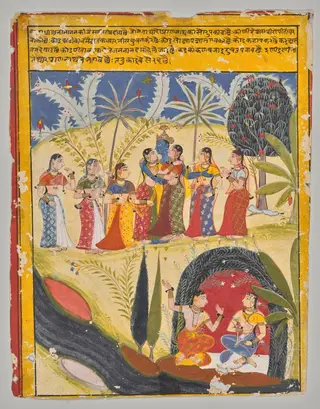
- Krishna and Gopis
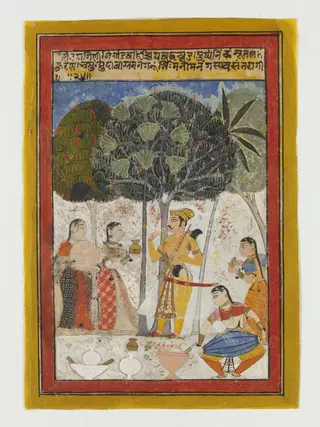 Vasant Ragini
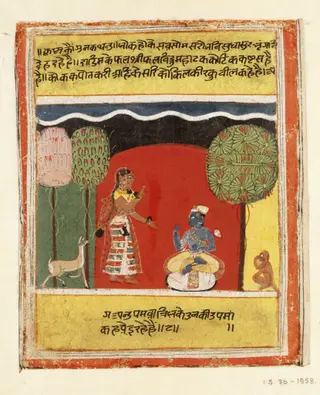 Radha and Krishna
 Ragini Kakubha, Page from a Jaipur Ragamala Set
 The Sentiment of Peace: Sama Rasa, from a Rasikapriya
 Untitled
 The Sentiment of Peace: Sama Rasa, from a Rasikapriya
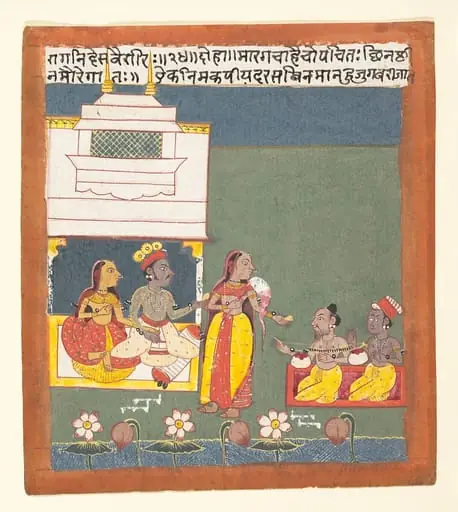 Untitled
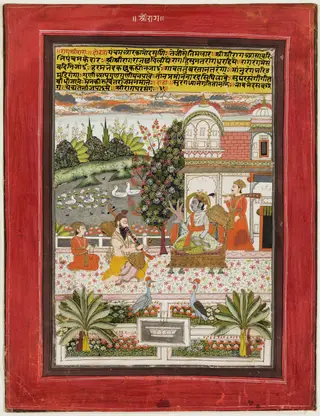 Krishna with Guru in Palace Scene
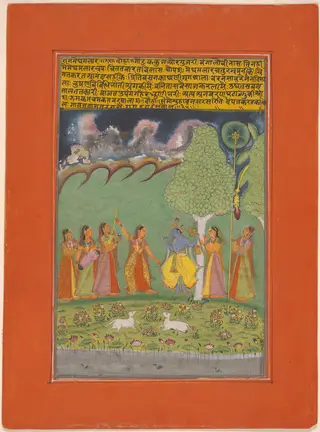 Rag Megh Malar, Page from a Jaipur Ragamala Set
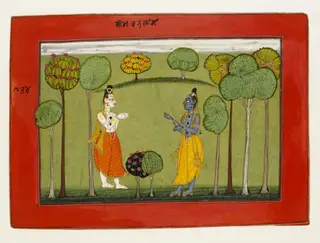 Rama and Lakshman
 Radha's Attendant Converses with Krishna and Woman Travels By Moonlight to Meet her Lover (page from the Gita Govinda)