Artwork
Krishna and Gopis
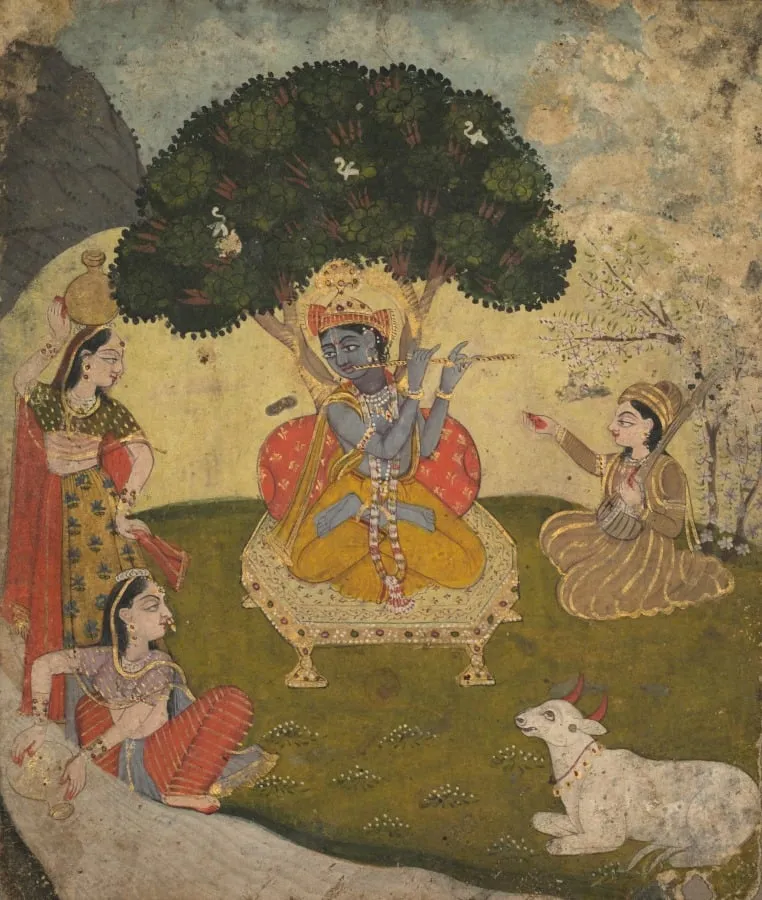
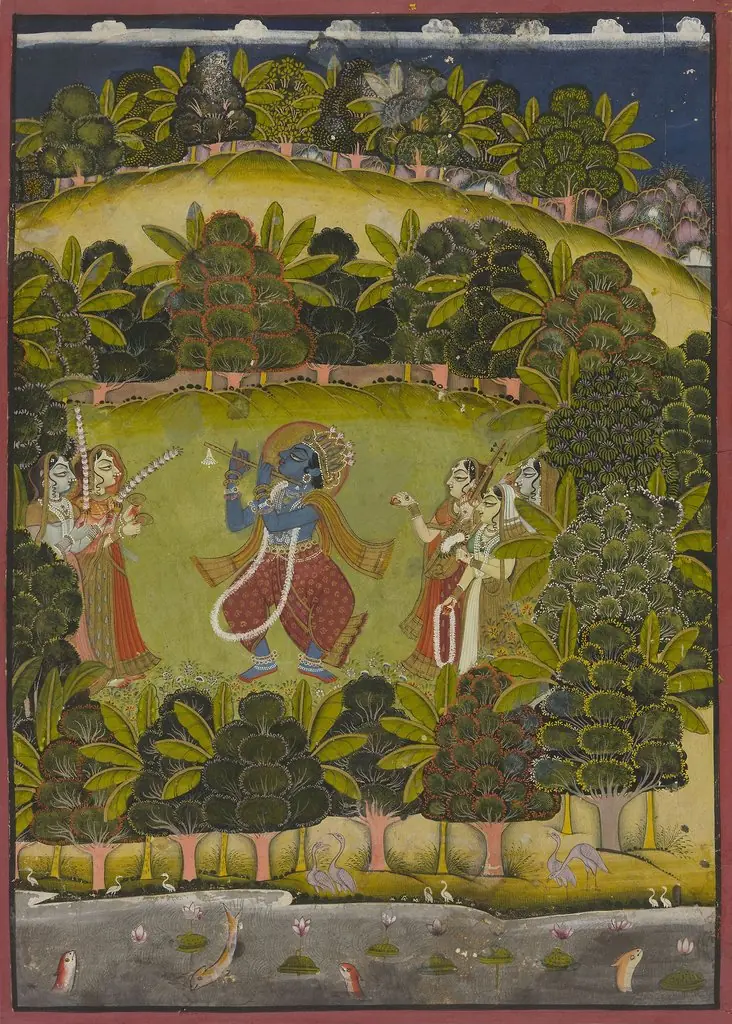
Krishna and Gopis is an unspecified painting by the Rajput painting artist Unknown. It dates from 1804 and is held in the collection of the Cleveland Museum of Art. The work depicts a blue‑skinned male figure seated on an elaborately carved bench beneath a tree, playing a flute attached to a long strap.
- Accession no.
- 1946.359
- Credit line
- Gift of Mr. and Mrs. Arthur D. Brooks
About this work
Overview
The work depicts a blue‑skinned male figure seated on an elaborately carved bench beneath a tree, playing a flute attached to a long strap.
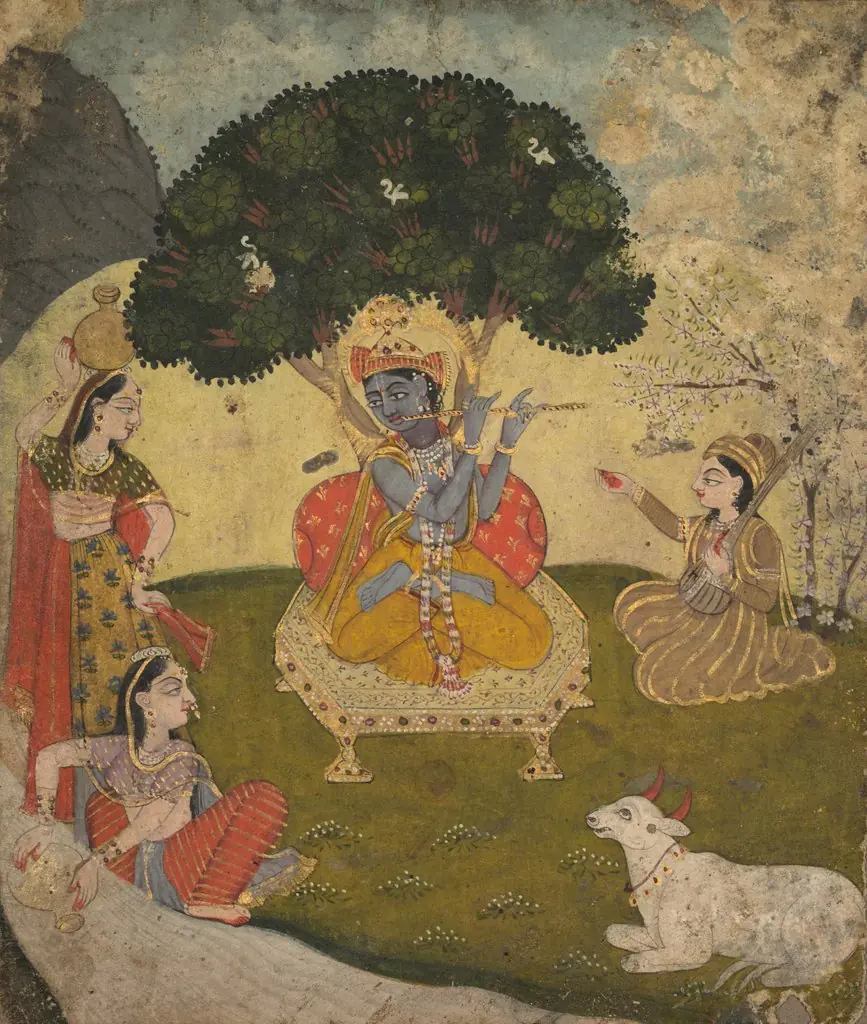
The work depicts a blue‑skinned male figure seated on an elaborately carved bench beneath a tree, playing a flute attached to a long strap. Three women surround him, one seated, one standing with a pot balanced on her head, and another holding a flower, while a white cow with red horns grazes nearby. The setting includes a grassy plain, scattered trees, and a cloudy sky rendered in vivid, saturated hues.
Subject & Meaning
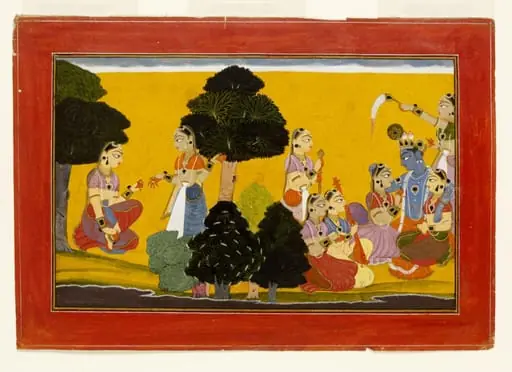
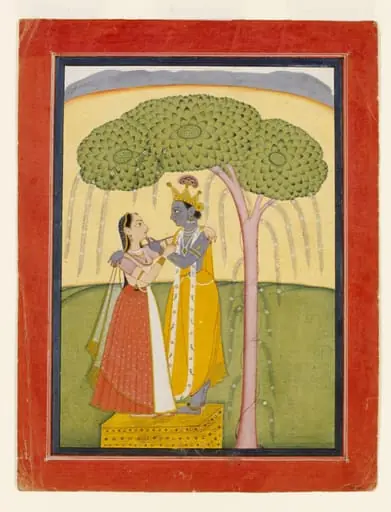
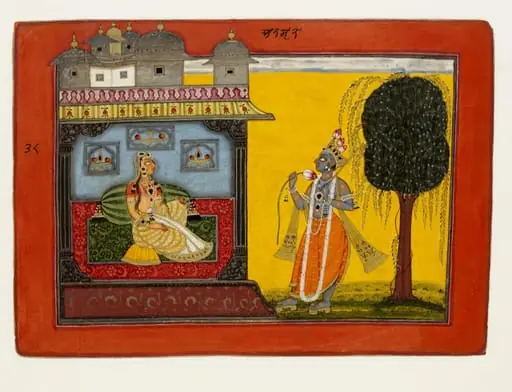
The central figure is identified as Krishna, a deity traditionally shown with blue skin and a flute, symbolising divine love and pastoral bliss. The accompanying women represent gopis, the cowherd maidens who are mythologically enamoured of Krishna, their gestures and accessories suggesting devotion and courtship within a bucolic landscape.
Technique & Style
Executed in a richly colored palette, the painting emphasizes gold and red accents on the figures' garments and jewelry. Intricate patterns decorate the bench and the flute strap, while the animal and foliage are rendered with a decorative, almost ornamental quality that aligns with the visual exuberance typical of Romantic-era interpretations of Indian myth.
History & Provenance
The piece is catalogued as a painting titled “Krishna and Gopis.” No further details about its creator, date, or ownership history are provided in the source material.
Context
The composition draws on Hindu iconography, placing the divine lover in a natural setting that reflects the pastoral narratives of the Bhagavata Purana. The inclusion of opulent attire and ornamental detail mirrors the 19th‑century fascination with exotic subjects that characterized many Romantic artworks.
Artist & collection