Artwork
Krishna and Radha Under Mt. Govardhan
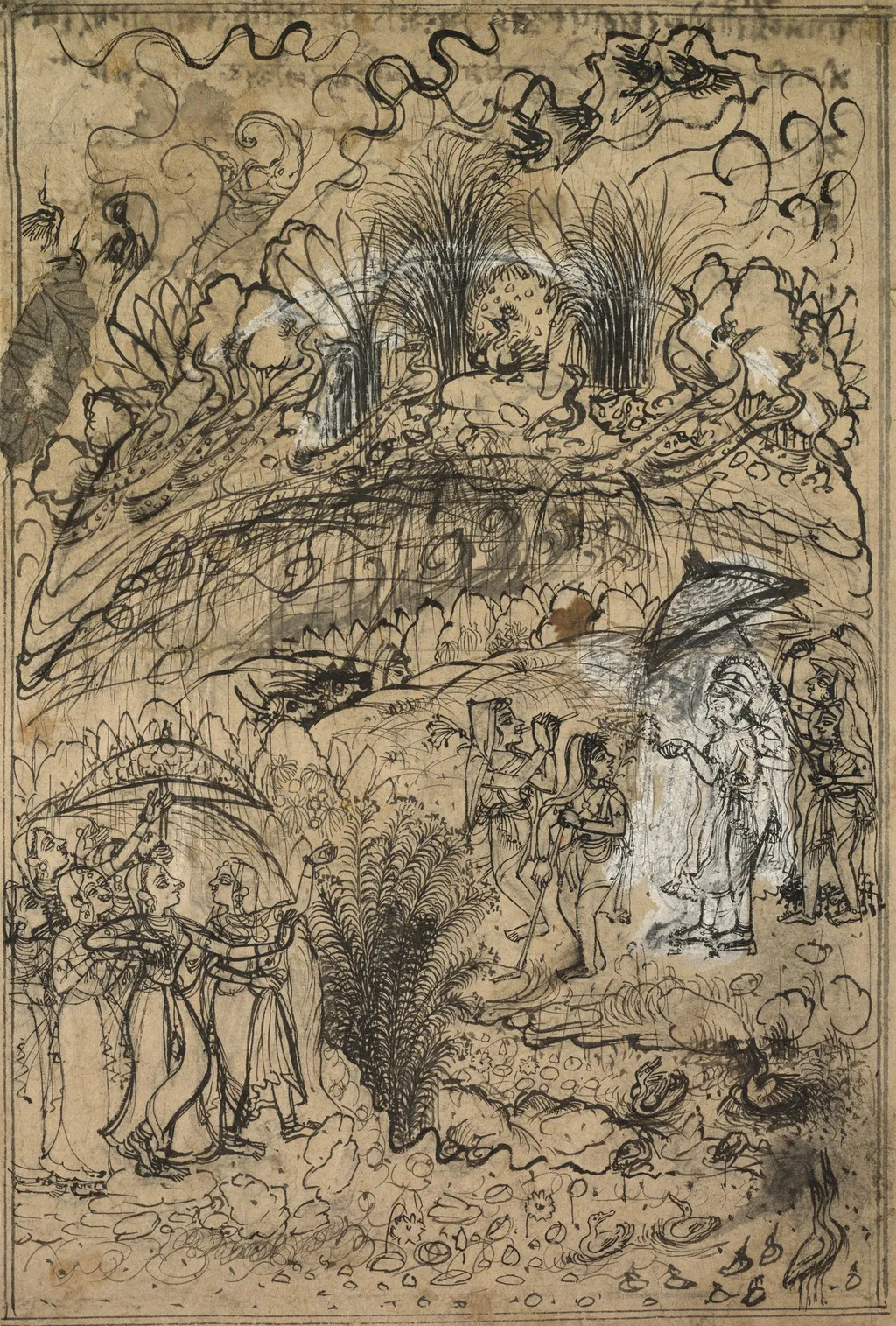
Krishna and Radha Under Mt. Govardhan is an unspecified painting. It dates from 1720 and is held in the collection of the Cleveland Museum of Art. This painting, titled Krishna and Radha Under Mt.
About this work
History & Provenance
The work entered the collection of the Cleveland Museum of Art, where it is held under the accession number 1964.
The painting Krishna and Radha Under Mt. Govardhan was created in 1720 by an unknown artist. The work entered the collection of the Cleveland Museum of Art, where it is held under the accession number 1964.389.
While the specific circumstances of its commission and the details of its ownership prior to 1964 are not recorded in the available sources, its inception is firmly established as occurring in the early 18th century.
The painting Krishna and Radha Under Mt. Govardhan is held in the collection of the Cleveland Museum of Art. It is cataloged under the accession number 1964.389. The work dates to 1720 and is attributed to an unknown artist. No specific exhibition history for this piece is provided in the available sources.
Overview
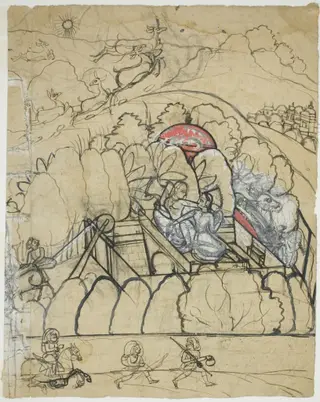
This painting, titled Krishna and Radha Under Mt. Govardhan, presents a dynamic and densely populated scene. At its center, two prominent figures, likely Krishna and Radha, are distinguishable amidst a multitude of smaller forms.
The composition is characterized by a sense of movement and intricate detail, with the background filled by natural elements such as trees, clouds, and a towering mountain. The overall palette is subdued, dominated by dark tones.
Subject & Meaning
The artwork illustrates a narrative from Hindu mythology, focusing on Krishna and Radha. Krishna is likely depicted lifting Mount Govardhan, an act performed to protect the villagers of Vrindavan from the wrath of the god Indra. Radha, his consort, appears alongside him, perhaps offering support or witnessing the divine feat.
The surrounding figures contribute to the dramatic retelling of this significant event, emphasizing the protective power of Krishna.
Technique & Style
The painting employs a complex visual language, featuring numerous small figures interwoven with flowing lines and shapes. The composition creates a swirling, active impression, suggesting continuous motion throughout the scene. The artist utilizes a palette primarily of faded browns and blacks, punctuated by lighter areas that may indicate wear or intentional highlights. The extensive use of ink-like lines defines forms and textures, contributing to an aged and intricate aesthetic.
Artist & collection

 Untitled
 Umed Singh of Kota Hunting Lions
 Untitled
 Umed Singh of Kota Hunting Lions
 The Tomb of Nero
 Untitled
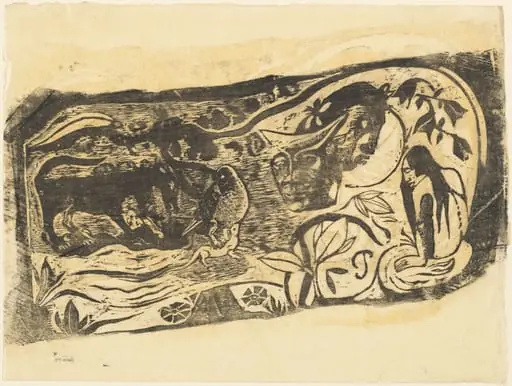 Plate with the Head of a Horned Devil (Planche au diable cornu)
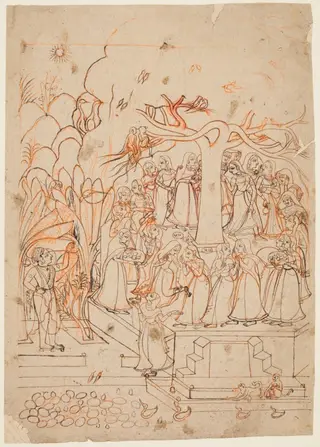 Krishna watches the milkmaids circumambulating a sacred tree: The month of Jyestha (May–June), from a Barahmasa (The Twelve Months)
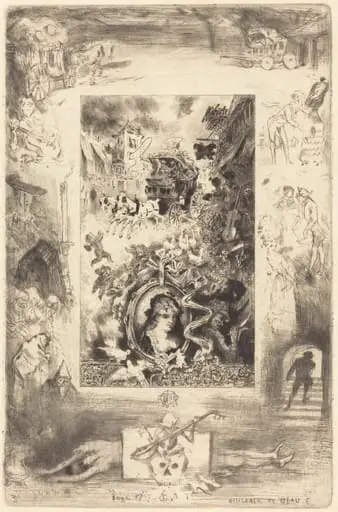 La Diligence de Beaucaire (The Diligence of Beaucaire)
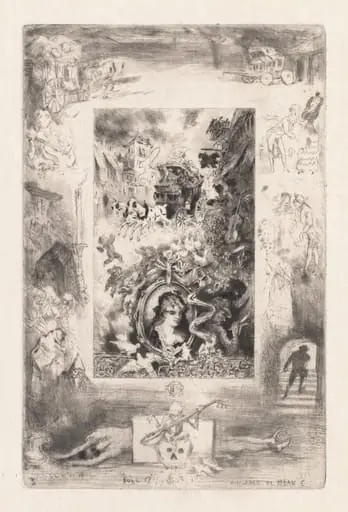 Letters from My Windmill:The Diligence of Beaucaire
 Two Ladies Converse at a Step-Well (Baoli) in a Walled Garden
- Krishna and Radha Under Mt. Govardhan