Artwork
La Diligence de Beaucaire (The Diligence of Beaucaire)
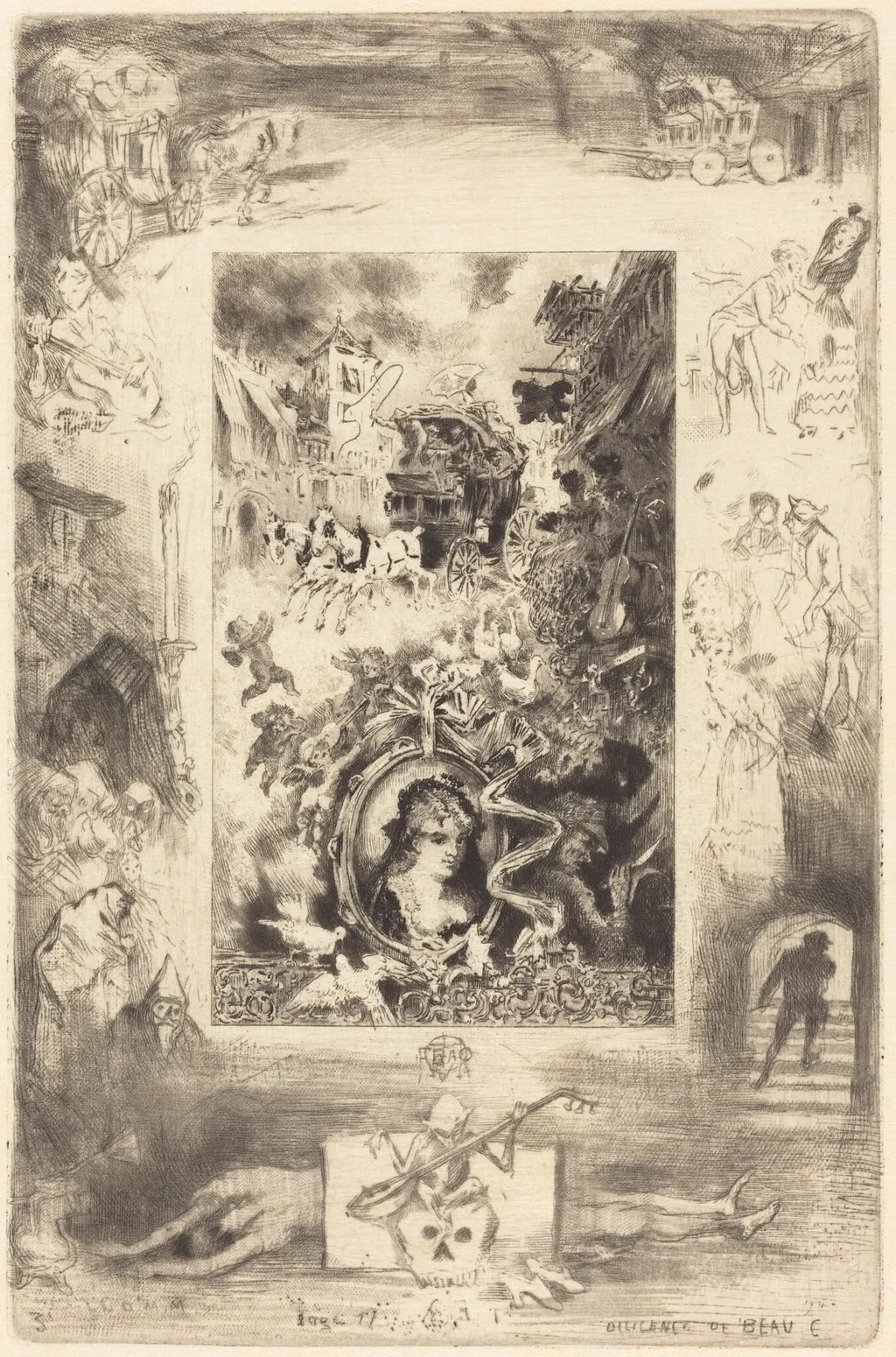
La Diligence de Beaucaire (The Diligence of Beaucaire) is an ink print by the Impressionist artist Félix-Hilaire Buhot. It dates from 1885 and is held in the collection of the National Gallery of Art.
- Inscription
- Inscribed:lower center in margin in plate: FBAQ (monogram); lower left in plate: 3 L L D M . M; lower center in plate: page 17; lower right in plate: DILIGENCE DE BEAU C; by later hand, lower left in graphite: 2; by later hand, lower left verso in graphite: APG 10798/5
About this work
Overview
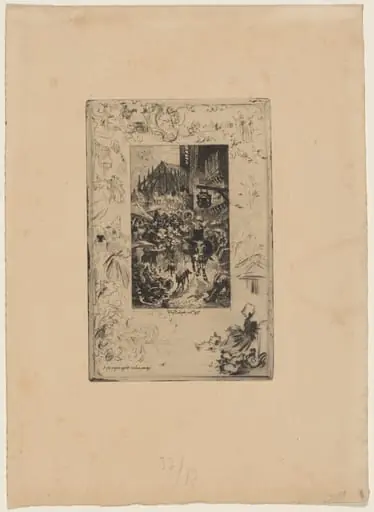
A distinctive and symbolic detail anchors the lower corner: a skull holding a violin, introducing a memento mori element to the narrative of travel and peril.
La Diligence de Beaucaire (1885) is a complex print by French artist Félix-Hilaire Buhot, executed in etching, drypoint, roulette, and aquatint on Japanese paper. The work depicts a stagecoach stranded amidst a rugged, rocky landscape, surrounded by a chaotic scattering of figures and animals in various states of distress. Buhot constructs the scene with a dynamic, almost disorienting composition where the dark, heavy sky contrasts with the frantic movement below.
A distinctive and symbolic detail anchors the lower corner: a skull holding a violin, introducing a memento mori element to the narrative of travel and peril. Created in 1885, this piece exemplifies Buhot's mature experimentation with mixed intaglio techniques and his interest in literary and theatrical themes. The work reflects his departure from strict realism toward a more expressive, mood-driven style that influenced the Symbolist movement.
By layering textures and manipulating light through aquatint and roulette, Buhot achieves a sense of atmospheric turbulence that elevates the scene from a simple genre depiction to a psychological study of chaos and mortality.
Subject & Meaning
The composition depicts a chaotic scene in which a large wagon is trapped in a rocky, wooded landscape. Passengers and livestock appear disoriented, some fleeing, others stumbling, while a skull clutching a violin adds a macabre, perhaps allegorical element, suggesting themes of mortality amid travel and disorder.
Technique & Style
Buhot employs a mixture of intaglio processes: fine lines from drypoint convey immediacy, while the roulette and aquatint create tonal depth and atmospheric shadows. The contrast between sharply rendered edges and softer, grainy areas generates a sense of both detail and abstraction, enhancing the dream‑like quality of the scene.
History & Provenance
Created in the mid‑1880s, the print reflects the period’s interest in experimental printmaking on Japanese paper, a material prized for its smooth surface and durability. While specific ownership records are limited, the work is catalogued among Buhot’s late‑career prints that explore dynamic, narrative subjects.
Context
During the 1880s, French artists increasingly experimented with hybrid print techniques, merging traditional etching with newer methods such as aquatint to achieve richer tonal ranges. Buhot’s choice of a chaotic, almost surreal subject aligns with contemporary Symbolist tendencies that favored evocative, emotionally charged imagery.
Own this work as a print
Artist & collection

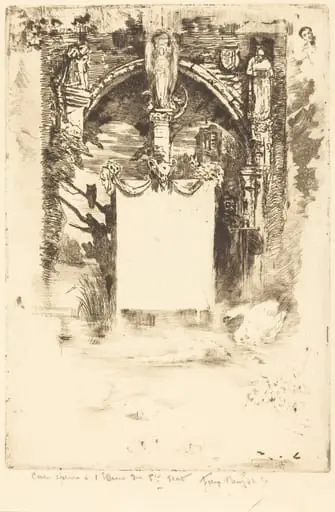 Ex-Libris pour "L'Ensorcelée" (Bookplate for "L'Ensorcelée")
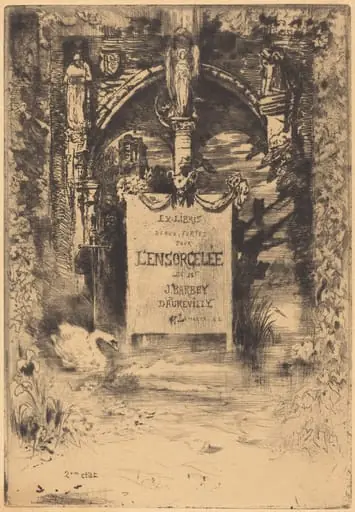 Ex-Libris pour "L'Ensorcelée" (Bookplate for "L'Ensorcelée")
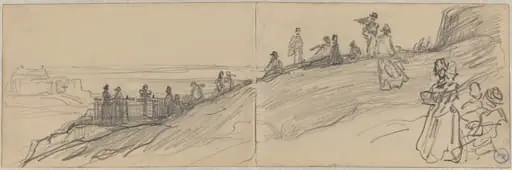 Figures on Top of a Hill, Overlooking the Sea
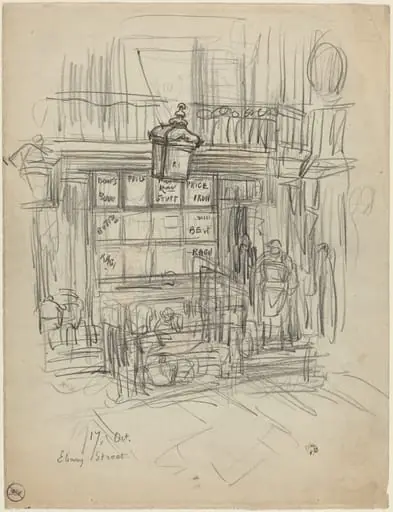 Ebury Street
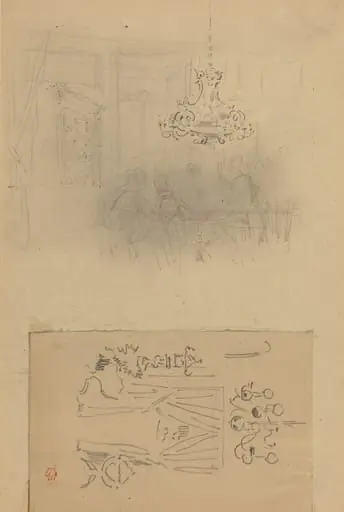 A Gathering in an Interior; A Curtained Doorway
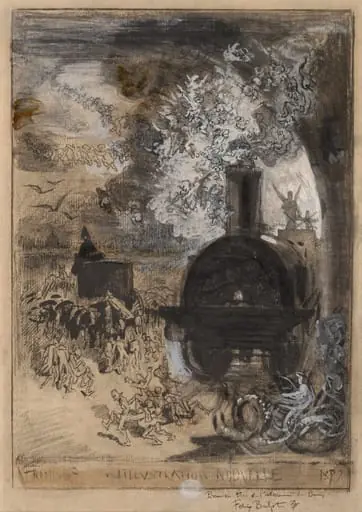 Frontispiece for L'Illustration Nouvelle: The Burial of the Burin
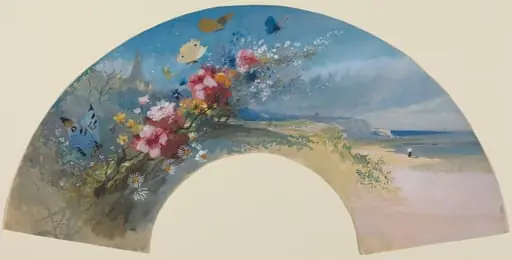 Fan with Wildflowers and Butterflies against the Norman Coast
![Gillingham Pier, London [verso], by Félix-Hilaire Buhot](https://artifactworldgallery.com/img/felix-hilaire-buhot--gillingham-pier-london-verso--641e03dd7de8217b-w320.webp) Gillingham Pier, London [verso]
Gillingham Pier, London [verso]