Artwork
Krishna and the Cowherds Dive into the River, from a Rasikapriya
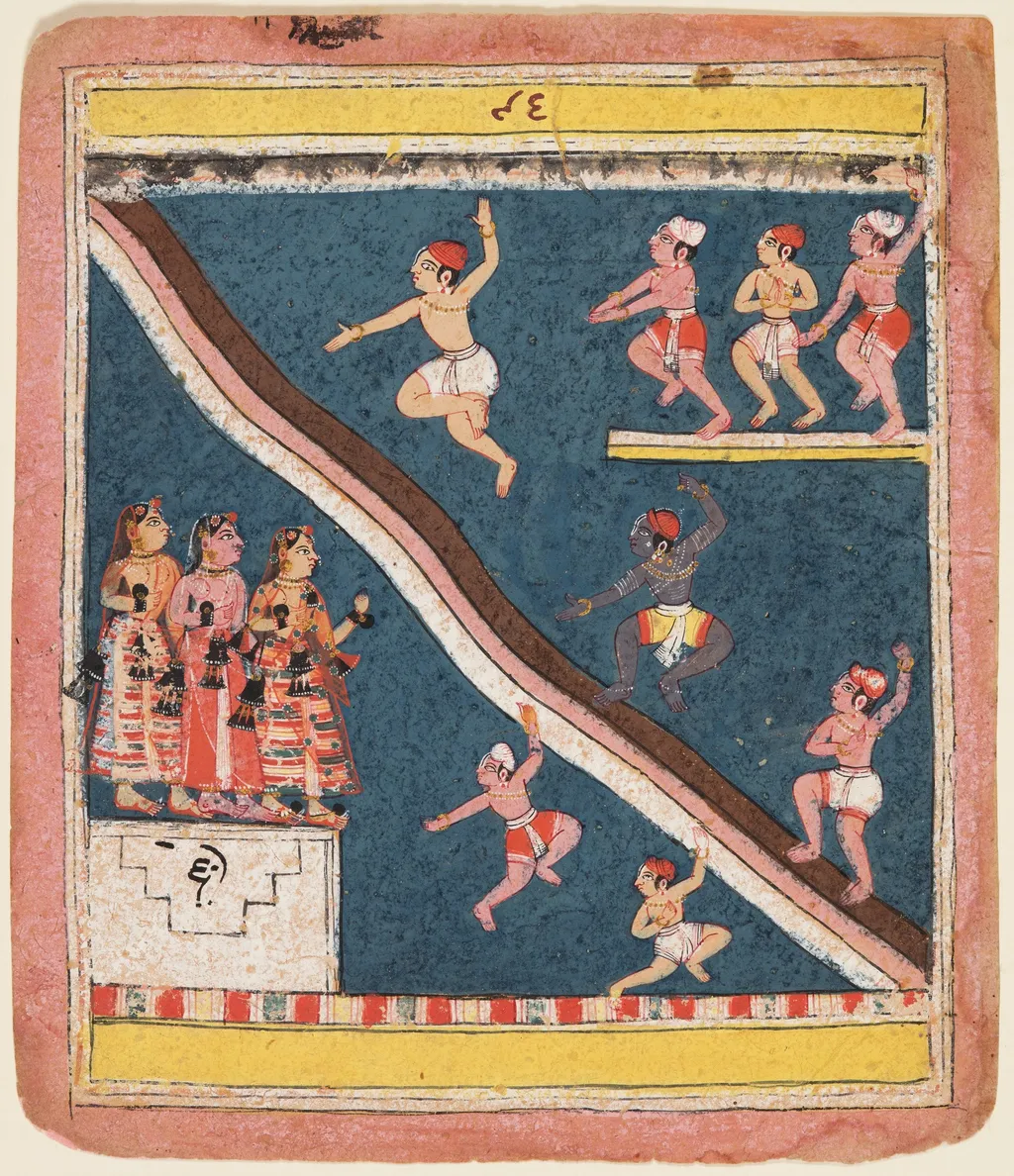
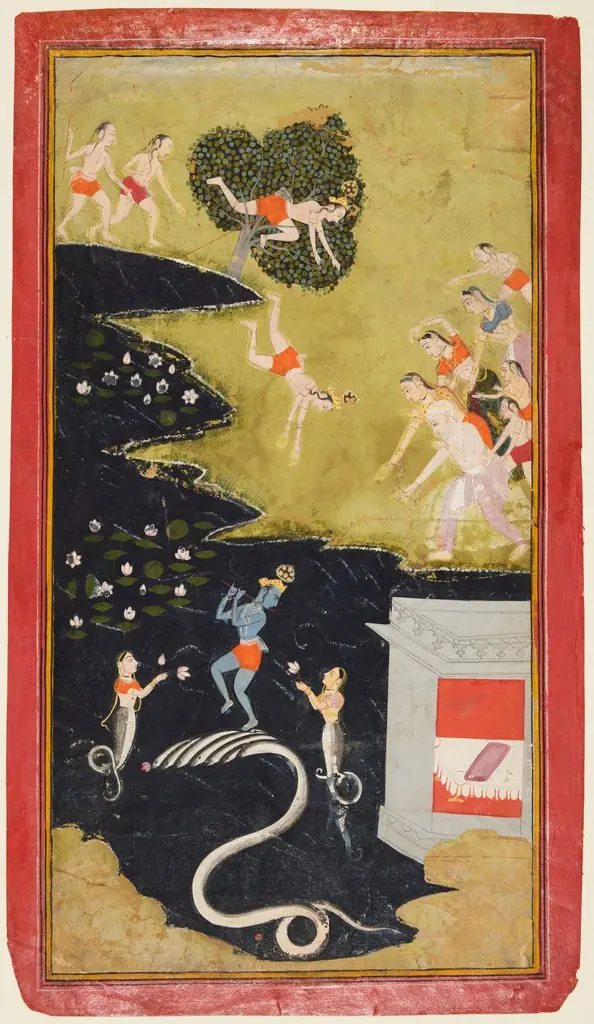
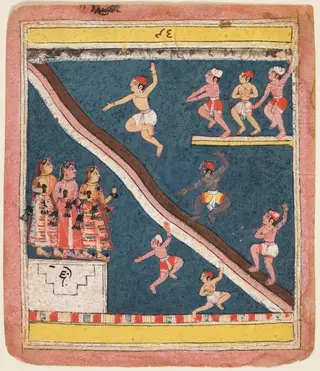
Krishna and the Cowherds Dive into the River, from a Rasikapriya is an unspecified painting. It dates from 1640 and is held in the collection of the Cleveland Museum of Art. This painting, titled "Krishna and the Cowherds Dive into the River," captures a dynamic scene of youthful activity.
About this work
Subject & Meaning
The composition reflects the literary and devotional context of the source text, linking visual art to the poetic narratives of early modern Indian culture.
The painting illustrates a scene from the Rasikapriya in which Krishna joins cowherds as they plunge into a river, emphasizing his role as a playful divine lover within a pastoral setting. By portraying Krishna in this dynamic moment, the work conveys themes of divine intimacy and the joyous communion between the god and his devotees. The composition reflects the literary and devotional context of the source text, linking visual art to the poetic narratives of early modern Indian culture.
Executed in 1640 in the Malwa region, the piece is part of the Cleveland Museum of Art's collection.
History & Provenance
Krishna and the Cowherds Dive into the River, from a Rasikapriya, was created in 1640 in the Malwa region of India. It is classified as a painting and is now part of the collection of the Cleveland Museum of Art, where it is catalogued under the accession number 2018.126. The artist responsible for the work is not identified in the available sources.
No information is provided regarding the original commission, early ownership, or chain of custody prior to the painting's acquisition by the Cleveland Museum of Art.
Overview
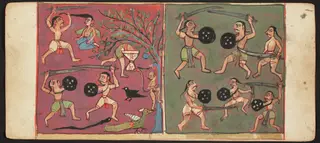
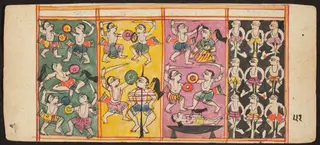
This painting, titled "Krishna and the Cowherds Dive into the River," captures a dynamic scene of youthful activity. It depicts several children, identified as Krishna and his cowherd companions, engaged in various forms of play within a river. The artwork is characterized by its vibrant palette and energetic composition, framed by a distinctive yellow border. The overall impression is one of joyful movement and detailed observation.
Technique & Style
The artist employs a vivid color scheme, notably bright reds and whites for the figures' clothing, set against a blue background representing the river. This choice, combined with playful imagery, generates a sense of vitality and cheerfulness. Intricate patterns adorn the foreground platform, demonstrating a meticulous approach to detail. The deliberate application of texture further enhances the scene, contributing to its perceived depth and three-dimensionality.
Artist & collection