Artwork
Krishna and the Gopis Gather for Rasamandala
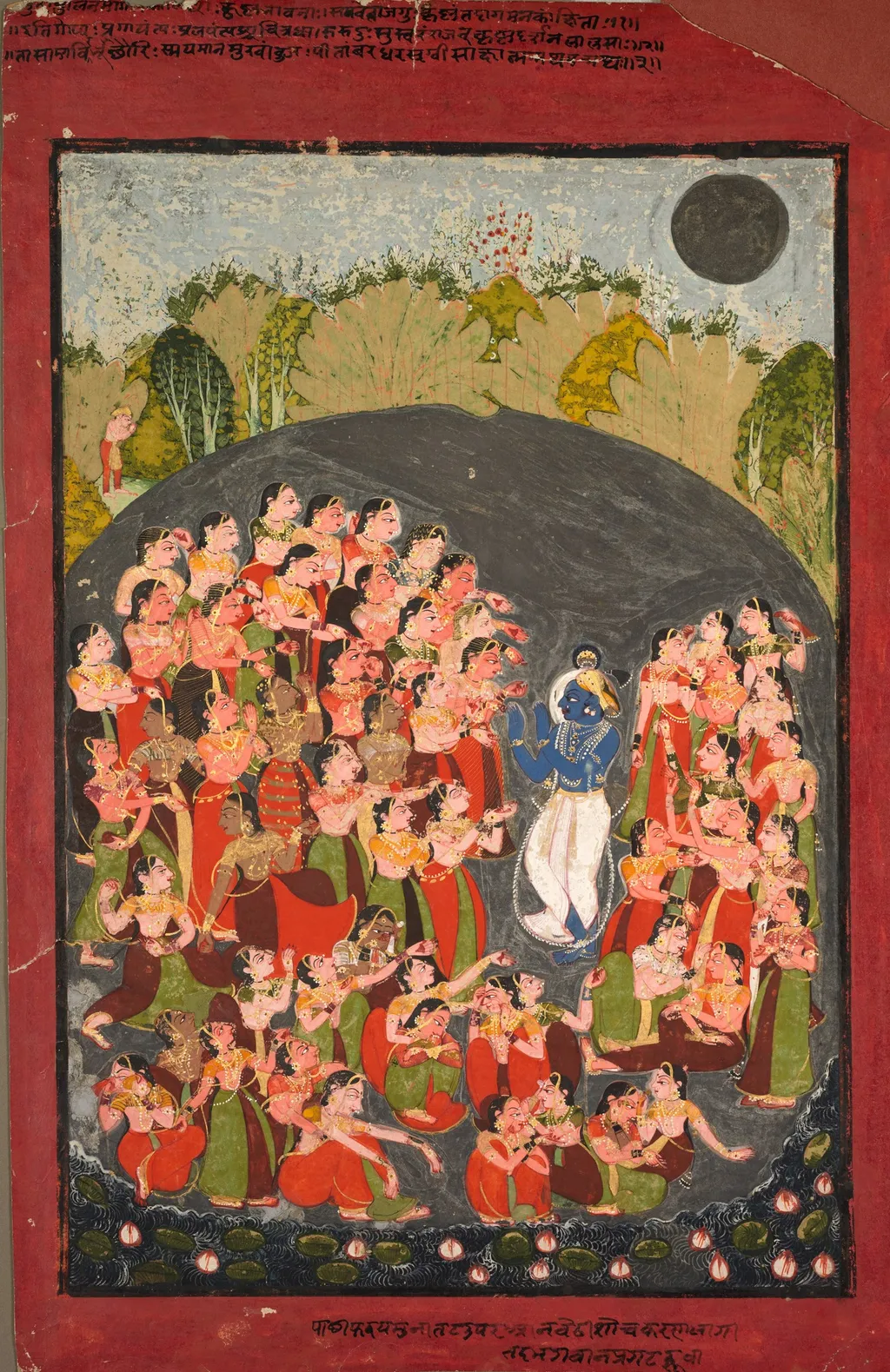
Krishna and the Gopis Gather for Rasamandala is an unspecified painting. It dates from 1725 and is held in the collection of the Cleveland Museum of Art.
About this work
Subject & Meaning
This formation symbolizes eternity, the cyclical nature of creation, and the union of the individual soul with the divine through bhakti devotion.
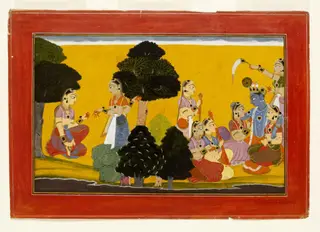
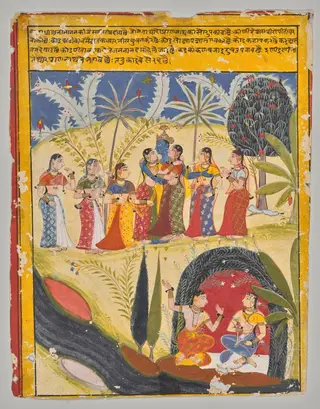
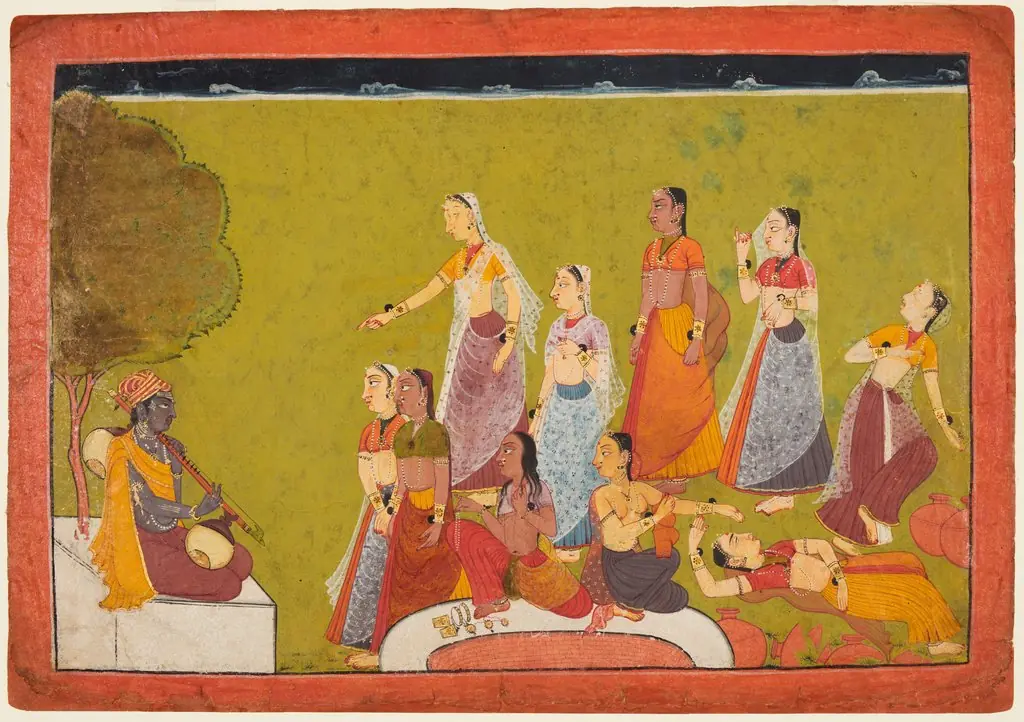
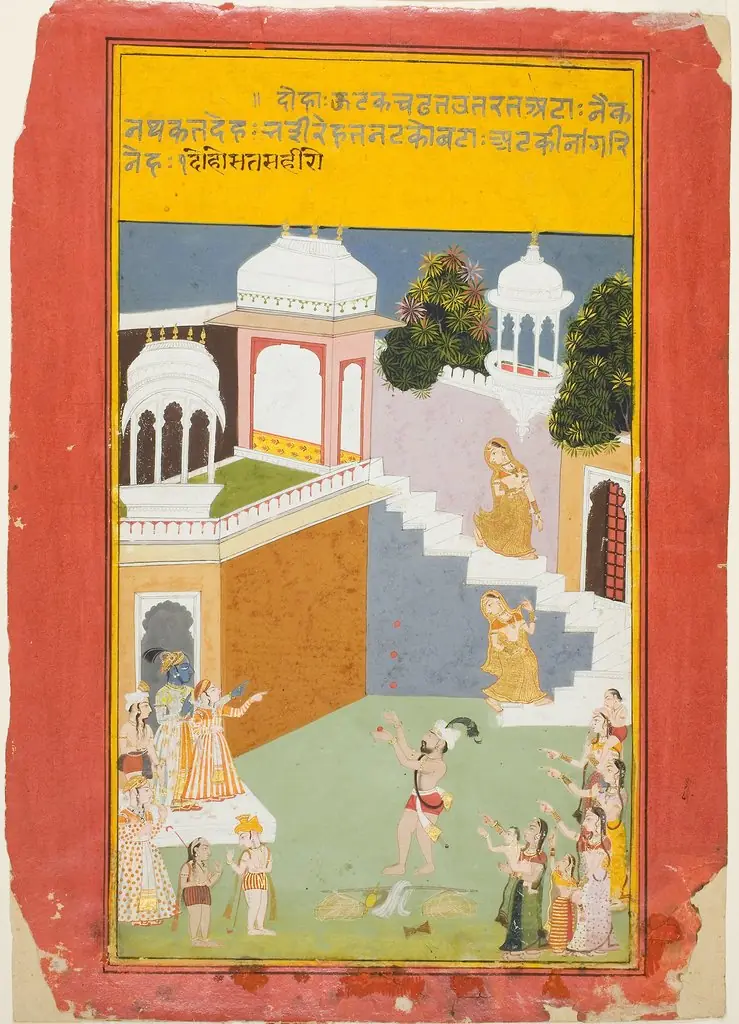
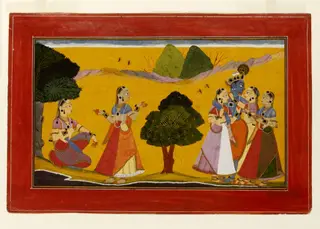
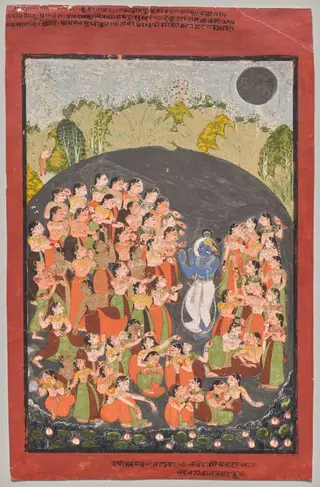
The painting shows Krishna surrounded by the gopis as they gather for the rasamandala, a circular dance of divine love. The title identifies the scene as Krishna and the Gopis Gather for Rasamandala, indicating a depiction of the sacred lila where the devotees join Krishna in a harmonious ring. This formation symbolizes eternity, the cyclical nature of creation, and the union of the individual soul with the divine through bhakti devotion. The work thus represents the essence of devotional ecstasy and cosmic unity embodied in the rasamandala.
History & Provenance
The painting Krishna and the Gopis Gather for Rasamandala dates to 1725, as indicated by internal documentation and the Cleveland Museum of Art’s record.
It entered the Cleveland Museum of Art in 1960 as accession number 1960.45, where it remains in the permanent collection. The artist is recorded as unknown in the museum’s holdings, and the work is classified as a painting depicting the Hindu deity Krishna with the gopis in the context of the Rasamandala dance.
The painting Krishna and the Gopis Gather for Rasamandala is held in the collection of the Cleveland Museum of Art in Cleveland. The work is cataloged under the accession number 1960.45. Created in 1725 by an unknown artist, the piece depicts the deity Krishna and has been maintained within the museum's holdings since its acquisition.
Context
The painting titled "Krishna and the Gopis Gather for Rasamandala" dates to 1725 and is classified as a painting in the collection of the Cleveland Museum of Art. It portrays the Hindu deity Krishna, and the artist is recorded as unknown. Its presence in a major institutional collection allows examination of 18th‑century Indian miniature traditions, where narrative scenes of divine subjects were common.
The work’s provenance and date provide a reference point for studies of court‑supported artistic production in the period.
Legacy
Krishna and the Gopis Gather for Rasamandala, painted circa 1725, entered the collection of the Cleveland Museum of Art, where it is displayed as part of the institution’s Indian miniature holdings. Its presence in a prominent public museum has contributed to renewed scholarly attention and public interest in 18th‑century devotional painting, positioning the work as an illustrative example of the Rasamanjari theme in regional artistic traditions. The painting’s attribution to an unknown master is noted in catalog records, and its inclusion in exhibition histories underscores its role in contemporary surveys of Indian miniature art.
Overview
This painting, titled Krishna and the Gopis Gather for Rasamandala, depicts a vibrant nocturnal gathering. A central figure, identified as Krishna, stands amidst a multitude of women, known as gopis, who are engaged in various states of dance and repose. The composition is dynamic, filled with figures under a luminous full moon, creating an impression of festive activity.
Technique & Style
The artist employs a dense composition, populating the canvas with numerous figures. Krishna's singular standing pose provides a focal point, contrasting with the varied movements of the surrounding gopis. Bright reds and golds dominate their clothing, contributing to the painting's vivid palette.
The dark hill in the background, illuminated by a prominent full moon, establishes a nocturnal setting, enhancing the festive atmosphere of the gathering.
Artist & collection