Artwork
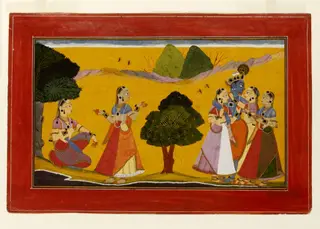
A Group of Women in Ecstasy Before Madhava, from a Madhavanala Kamakandala
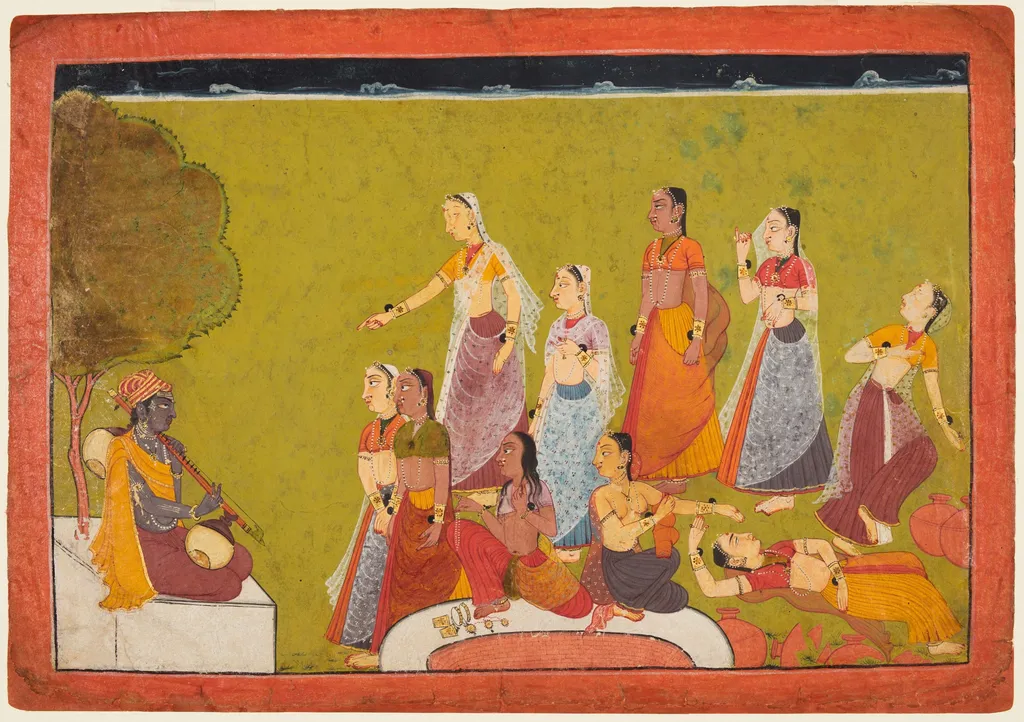
A Group of Women in Ecstasy Before Madhava, from a Madhavanala Kamakandala is an unspecified painting. It dates from 1720 and is held in the collection of the Cleveland Museum of Art.
About this work
History & Provenance
Currently, the artwork is held in the collection of the Cleveland Museum of Art, where it is cataloged under the accession number 2018.
Created in 1720, this painting originates from an illustrated manuscript of the Madhavanala Kamakandala. The work was produced by an unidentified artist, as no specific creator has been attributed to the piece in available records. Currently, the artwork is held in the collection of the Cleveland Museum of Art, where it is cataloged under the accession number 2018.91.
The museum serves as both the current owner and the location where the painting is preserved. No further details regarding its commission, earlier ownership history, or the specific circumstances of its creation prior to its acquisition by the Cleveland institution are provided in the current documentation.
The painting A Group of Women in Ecstasy Before Madhava, created in 1720, is held in the collection of the Cleveland Museum of Art. The institution identifies the work under the accession number 2018.91. While the artwork's creation date and current location are documented, the provided records do not contain specific details regarding its exhibition history or prior provenance.
Overview
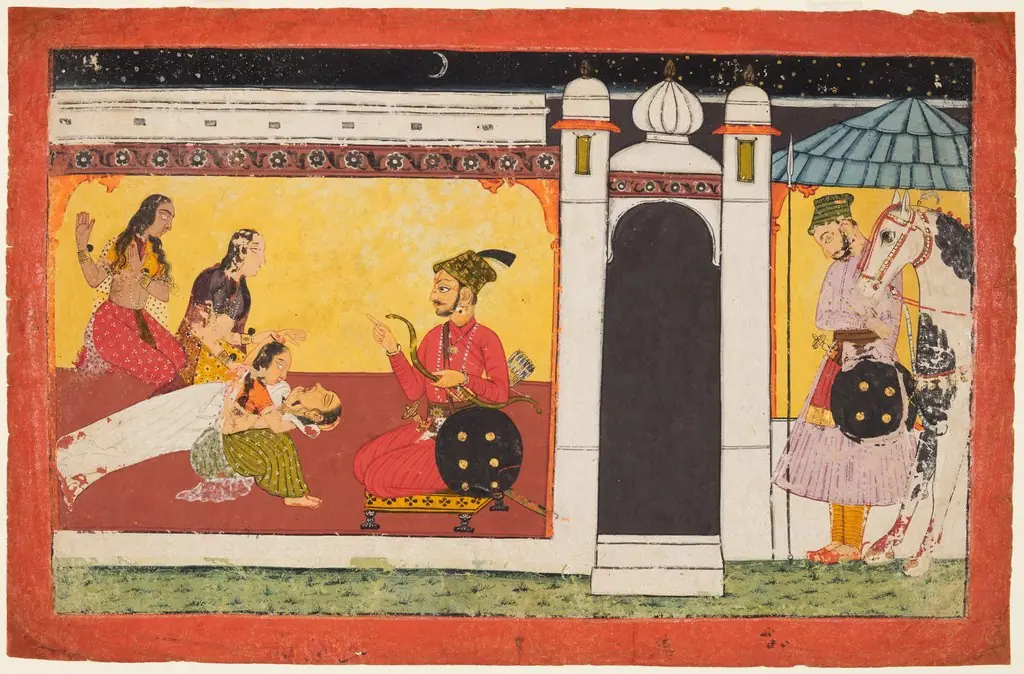
The work titled A Group of Women in Ecstasy Before Madhava, from a Madhavanala Kamakandala presents a lively gathering of women arranged in varied postures, standing, seated, and reclined, against a verdant landscape. A male figure on a white platform plays an instrument, drawing the women's attention. The scene conveys a festive atmosphere through its vibrant palette and dynamic composition.
Subject & Meaning
The painting captures a moment of collective rapture, with the women expressing joy through upward gazes and gestures that suggest spiritual or celebratory ecstasy. The central male musician, likely representing Madhava, serves as the focal point of their admiration, indicating the cultural importance of music and devotion within the depicted narrative.
Technique & Style
Employing bright, saturated colors, the artist delineates figures with clear outlines and decorative detailing on clothing, veils, and jewelry. The composition balances foreground activity with a background that includes a green field, a solitary tree, and distant water, creating depth while maintaining the energetic movement of the participants.
Context
The scene derives from a Madhavanala Kamakandala, a textual source that celebrates the deity Madhava. Such visual interpretations were common in regional artistic traditions, where narrative episodes from religious literature were rendered to reinforce devotional themes and communal identity.
Legacy
Works of this type contribute to the visual record of ritual performance and gendered expressions of devotion in South Asian art. By portraying collective emotional states, the painting offers insight into historical conceptions of ecstatic worship and the role of music in communal celebrations.
Artist & collection

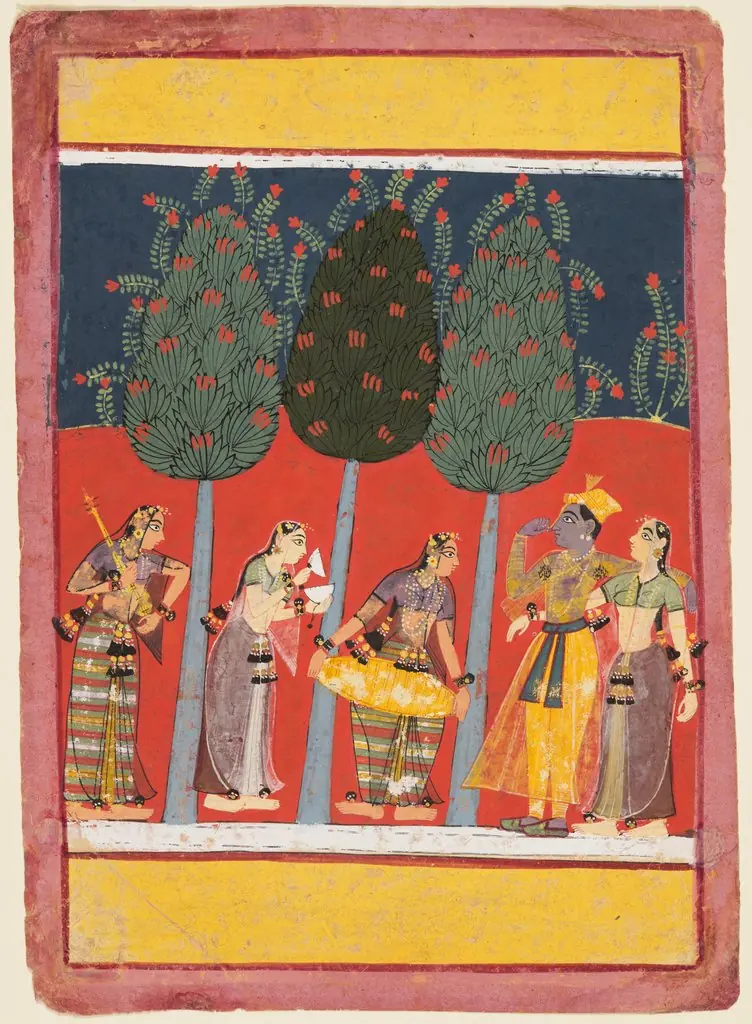 Women Play Music for Radha and Krishna: Chitrini Nayika, from a Rasikapriya
 Radha and Krishna
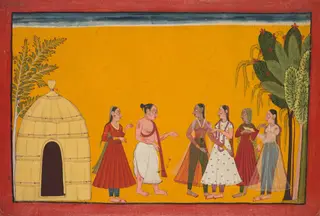 The royal priest Shatananda confirms that the four princesses of Mithila should marry the sons of King Dasharatha, from Chapter 70 of the Bala Kanda (Book of Childhood), folio 13 from a “Shangri” Ramayana (Rama’s Journey)
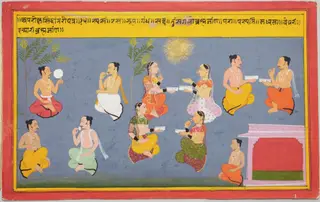 Worship of Hindu Deities (1 of 18)
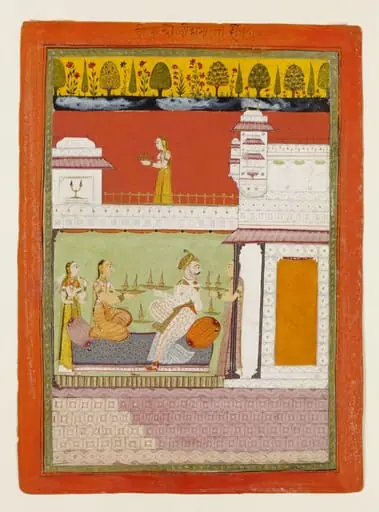 Dipak ragini
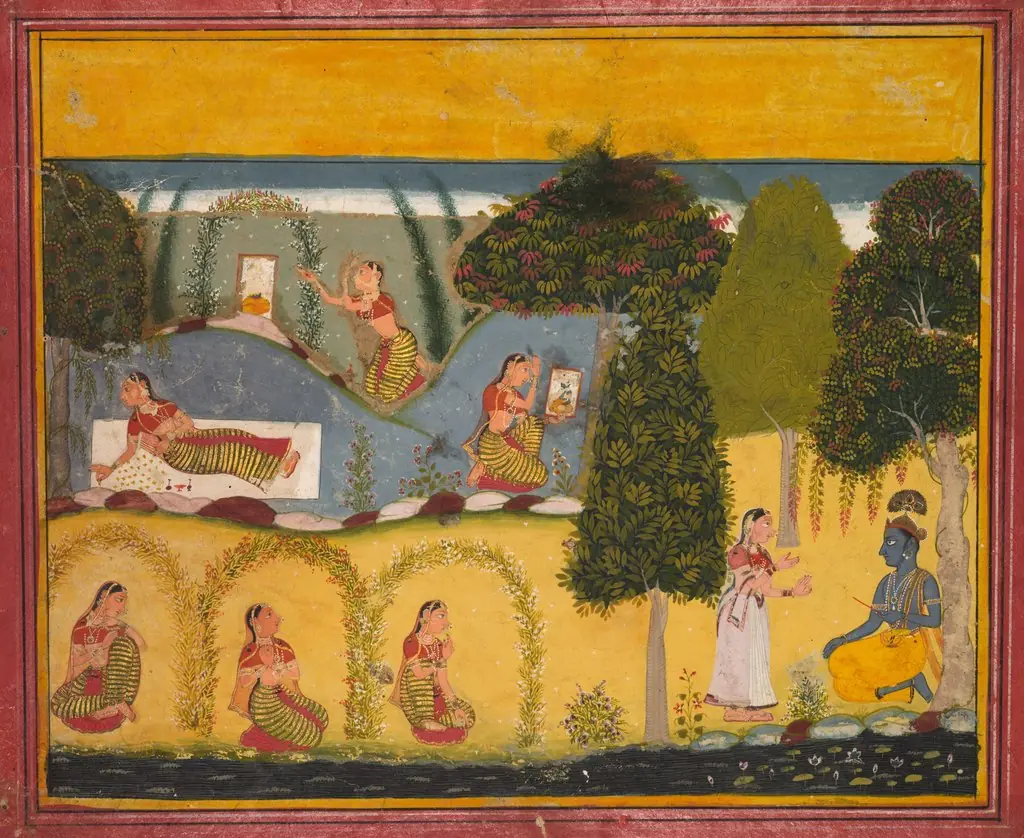 Radha Awaiting Reconciliation with Krishna, from a Gita Govinda of Jayadeva
 Radha and Krishna
- A group of women in ecstasy before Madhava, folio 4 from a Madhavanala-Kamakandala
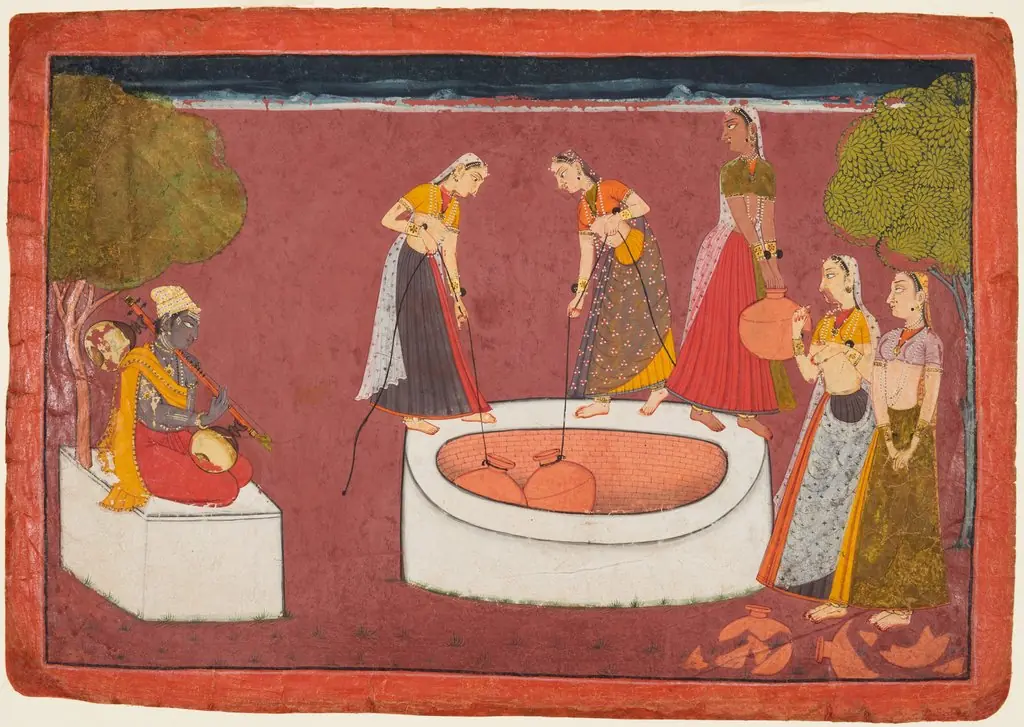 Madhava Plays his Vina before Five Women Drawing Water from a Well, from a Madhavanala Kamakandala
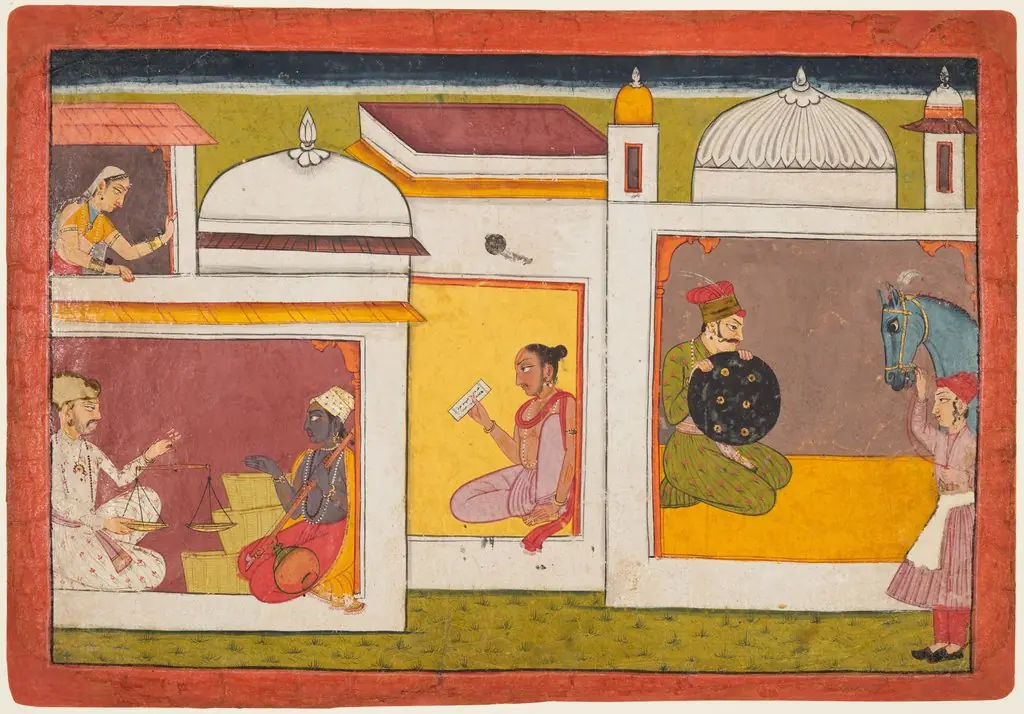 Madhava Faces a Man Holding a Scale, from a Madhavanala Kamakandala
 Madhava plays his vina before five women drawing water from a well, folio 3 from a Madhavanala-Kamakandala
 Kandala Dies on Hearing the News of Madhava’s Death, from a Madhavanala Kamakandala