Artwork
Krishna and Gopis
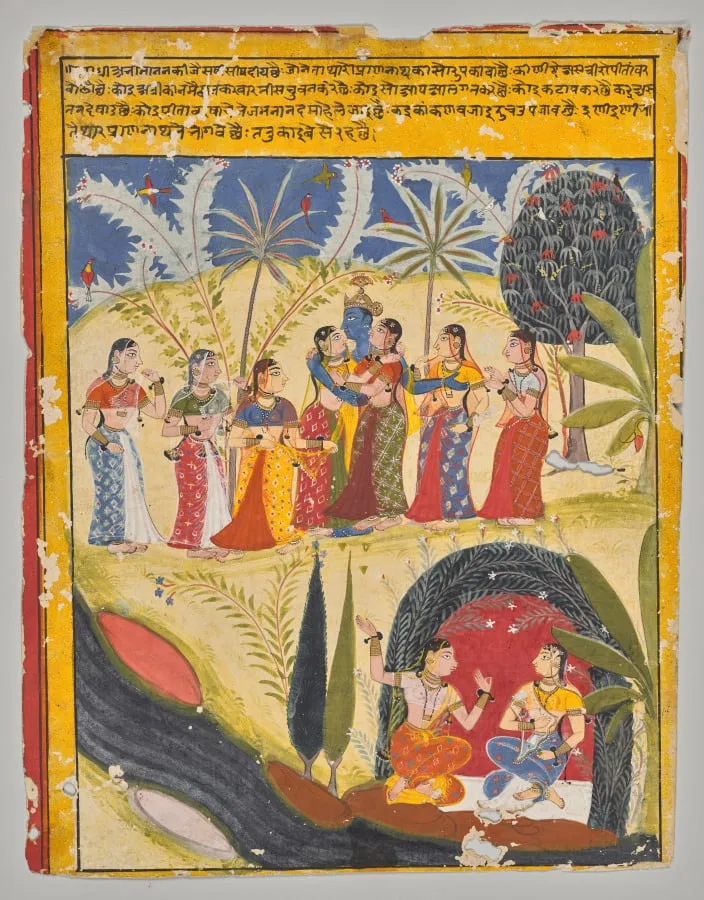
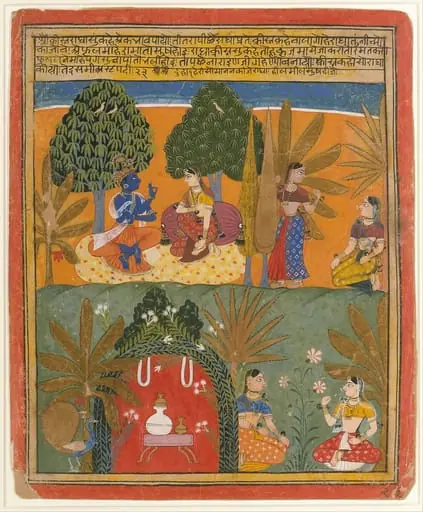
Krishna and Gopis is an unspecified painting by the Baroque artist Unknown. It dates from 1660 and is held in the collection of the Cleveland Museum of Art.
- Accession no.
- 2003.343
- Credit line
- Gift of Dr. Norman Zaworski
About this work
Overview
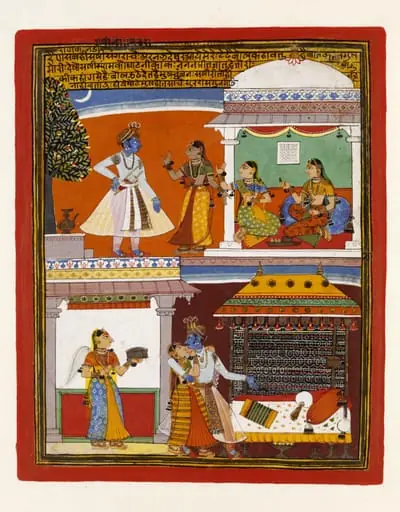
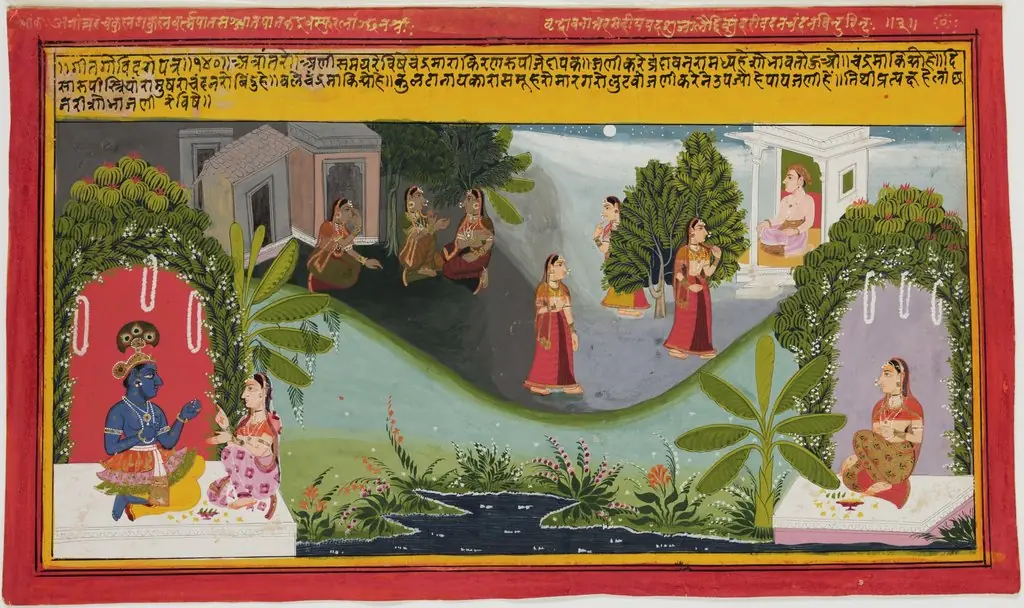
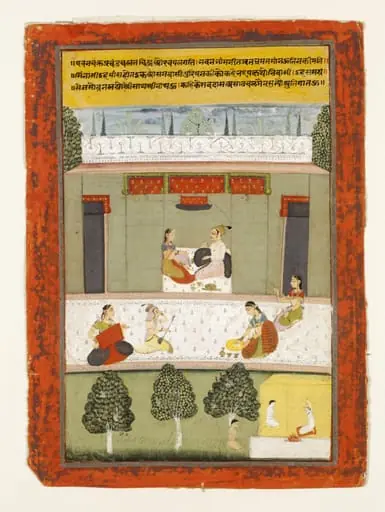
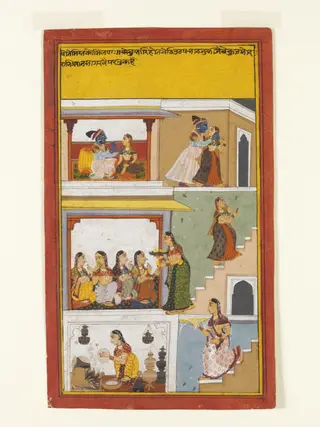
The canvas portrays a lively tableau from Hindu mythology, centering on the blue‑skinned deity Krishna as he dances amid a gathering of women dressed in vivid garments and ornate gold ornaments. A solitary figure, identified as Radha, stands apart with crossed arms, her gaze directed elsewhere, while the surrounding foliage and blossoms frame the scene.
Subject & Meaning
The composition reflects the devotional narrative in which Krishna’s playful interactions with the cowherd maidens contrast with Radha’s patient longing. The painting captures the tension between divine flirtation and the devotee’s yearning, suggesting that the god’s attention may shift, offering blessings to some while leaving others in quiet anticipation.
Technique & Style
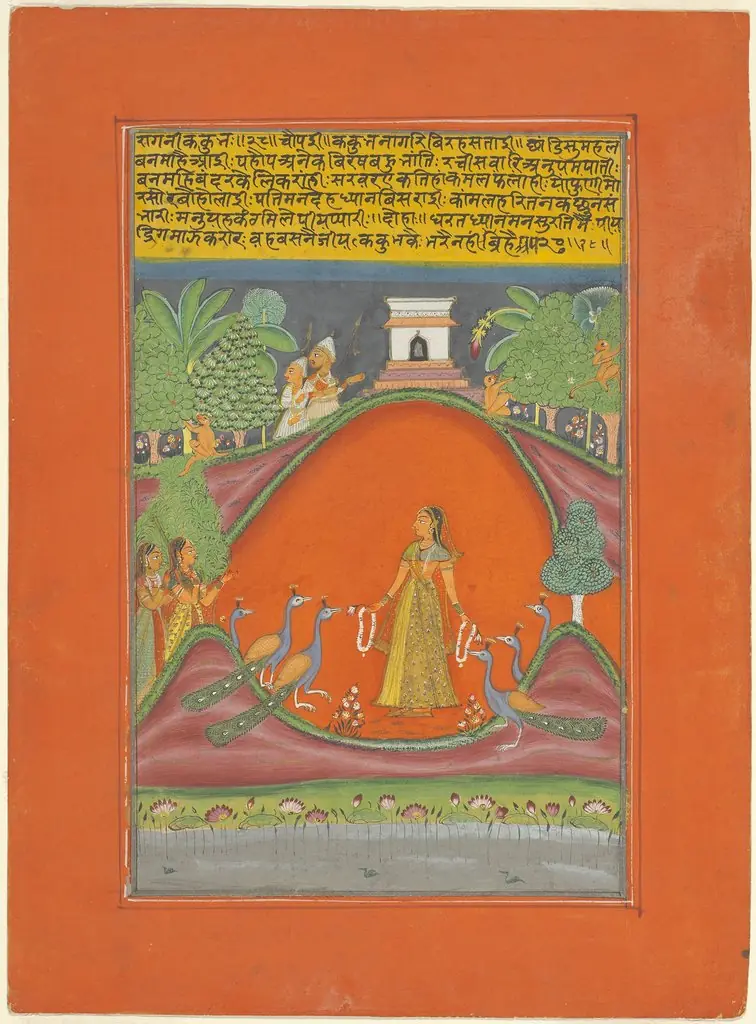
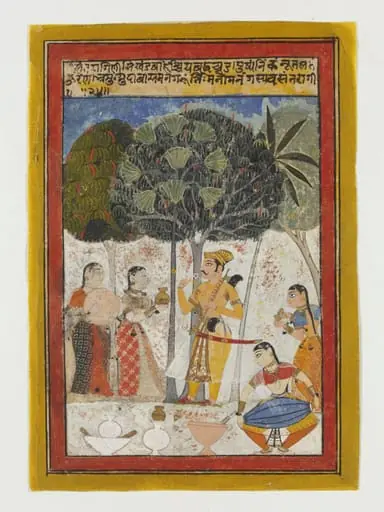
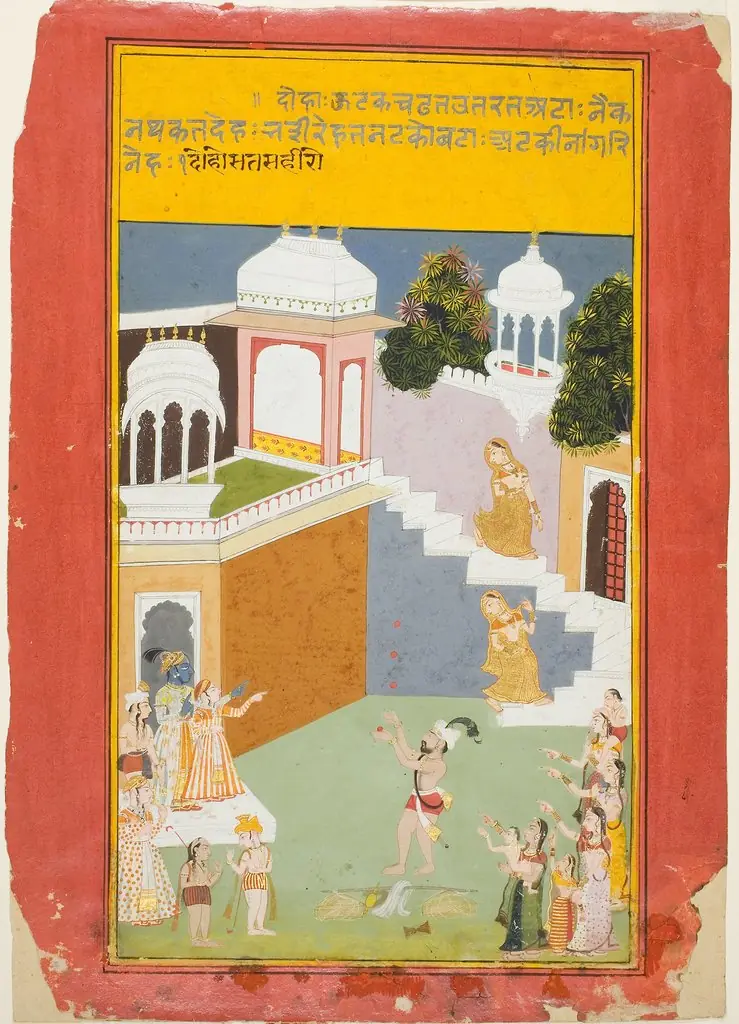
Executed in the Rajasthani tradition, the work employs saturated pigments and intricate detailing to convey movement and emotion. The figures are rendered with expressive faces that convey a range of feelings, joy, envy, sorrow, while the dense foliage and decorative elements create a bustling visual rhythm characteristic of courtly storytelling art.
Context
Created during a period when artists of the Mewar region depicted mythological love stories with bold coloration and elaborate composition, the painting exemplifies the regional aesthetic that merged narrative depth with ornamental richness. Its focus on Krishna’s amorous exploits aligns with the broader cultural emphasis on divine love as both personal devotion and communal spectacle.
Artist & collection