Artwork
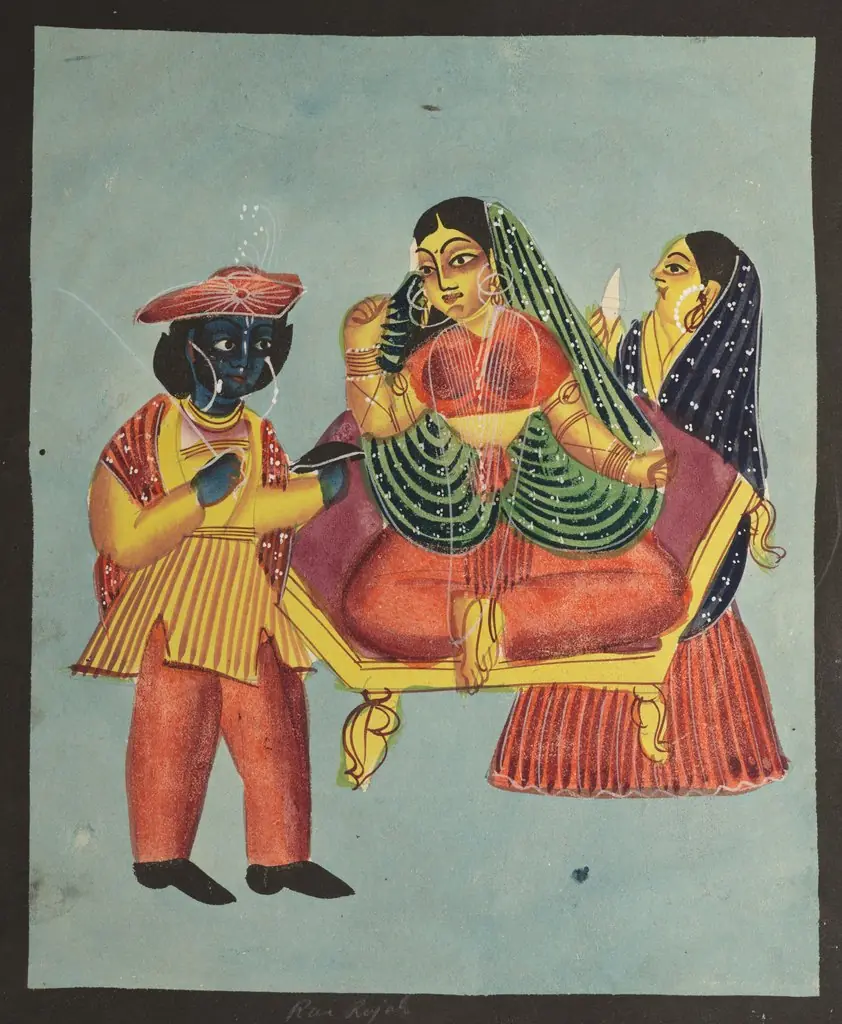
Baby Krishna Asking for Butter from Yashoda, from a Kalighat album
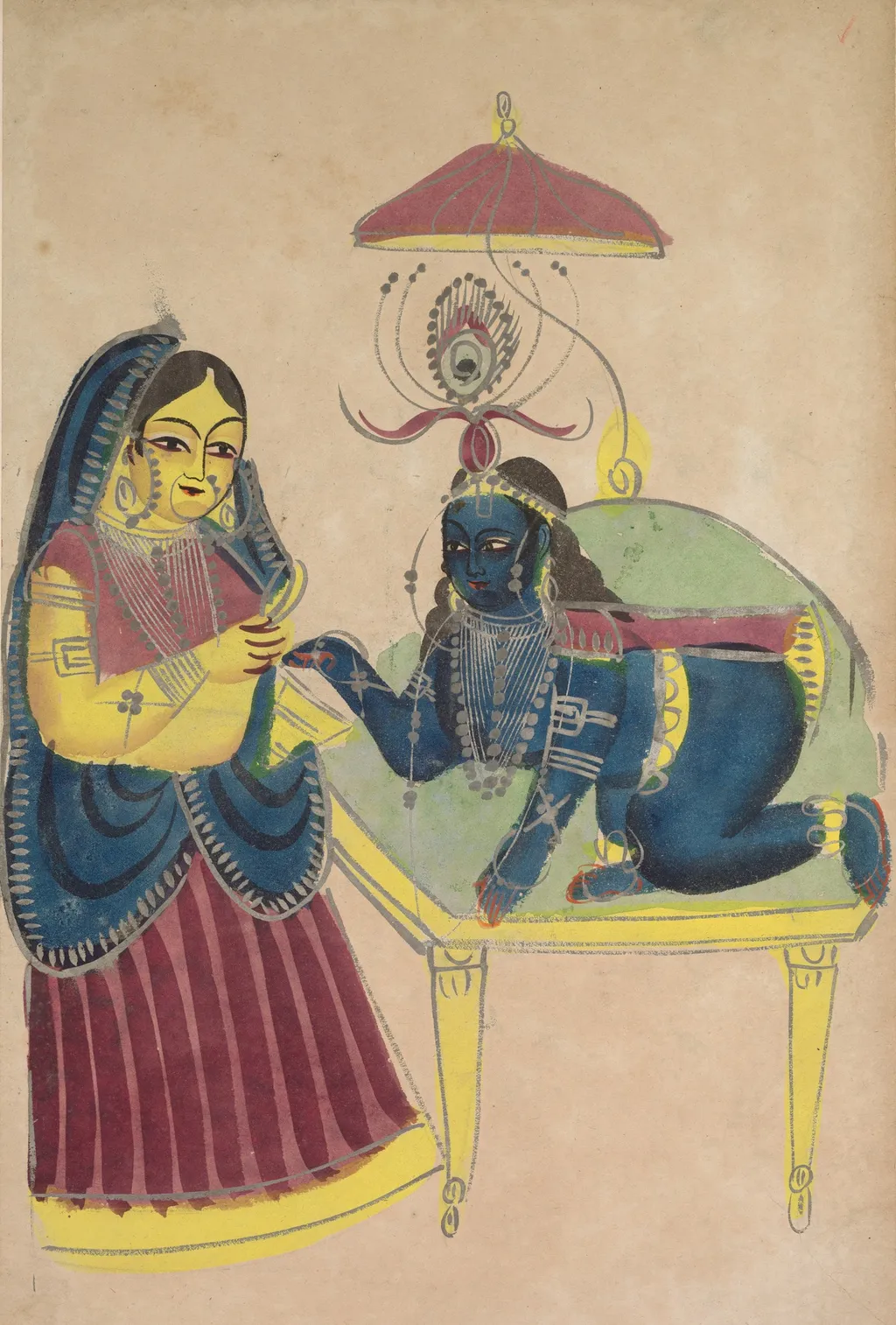
Baby Krishna Asking for Butter from Yashoda, from a Kalighat album is an unspecified painting. It dates from 1896 and is held in the collection of the Cleveland Museum of Art. This painting, titled Baby Krishna Asking for Butter from Yashoda, is part of a Kalighat album.
About this work
Subject & Meaning
The painting depicts the Hindu deity Krishna as a child, shown in the act of asking his foster mother Yashoda for butter, a beloved narrative from the early life of Krishna in Vaishnava tradition. The scene belongs to a popular cycle of "butter thief" (Makhan Chor) stories in which the mischievous infant raids pots of butter and curds, an episode used to evoke Krishna's playful, endearing nature and his divine charm.
Produced in Kolkata in 1896 as part of a Kalighat album, the work adapts this devotional subject into the bold, simplified visual language associated with Kalighat painting, a nineteenth-century Bengali folk style that often treated religious themes in an accessible, everyday manner. The subject reflects the widespread popularity of Krishna imagery in late-nineteenth-century Bengal, where domestic devotional narratives circulated widely through inexpensive painted albums intended for a broad audience.
History & Provenance
It entered the collection of the Cleveland Museum of Art, where it is recorded under accession number 2003.
Baby Krishna Asking for Butter from Yashoda, from a Kalighat album is a painting produced in 1896 in Kolkata, India, by an unknown artist working within the Kalighat tradition. The work was created as part of the popular devotional art market of the period and reflects the stylistic conventions of nineteenth-century Bengali popular art. It entered the collection of the Cleveland Museum of Art, where it is recorded under accession number 2003.112.
Overview
This painting, titled Baby Krishna Asking for Butter from Yashoda, is part of a Kalighat album. It portrays an intimate domestic moment between a woman and an infant. The composition features a muted color scheme, with vibrant accents provided by the figures' clothing and a decorative canopy.
The scene captures a common narrative from Hindu mythology, rendered with a directness characteristic of the Kalighat tradition.
Technique & Style
The painting employs a restrained color palette, primarily featuring a beige background that highlights the figures. The woman's red and blue sari, along with the baby's blue garments and the red canopy overhead, introduce distinct areas of color. The composition places the figures prominently, with the woman on the left and the child on the right, creating a balanced yet dynamic interaction. This visual simplicity and directness are hallmarks of the Kalighat painting style.
Artist & collection

- Baby Krishna Asking for Butter from Yashoda, from a Kalighat album
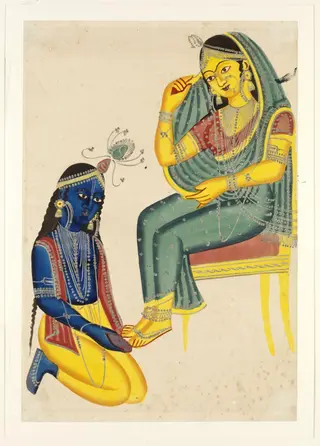
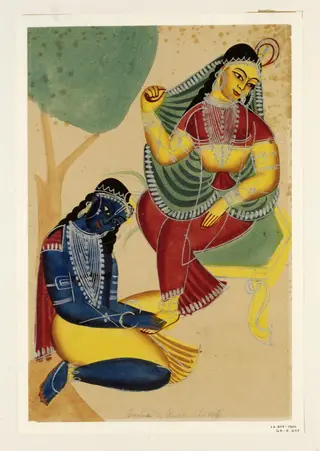
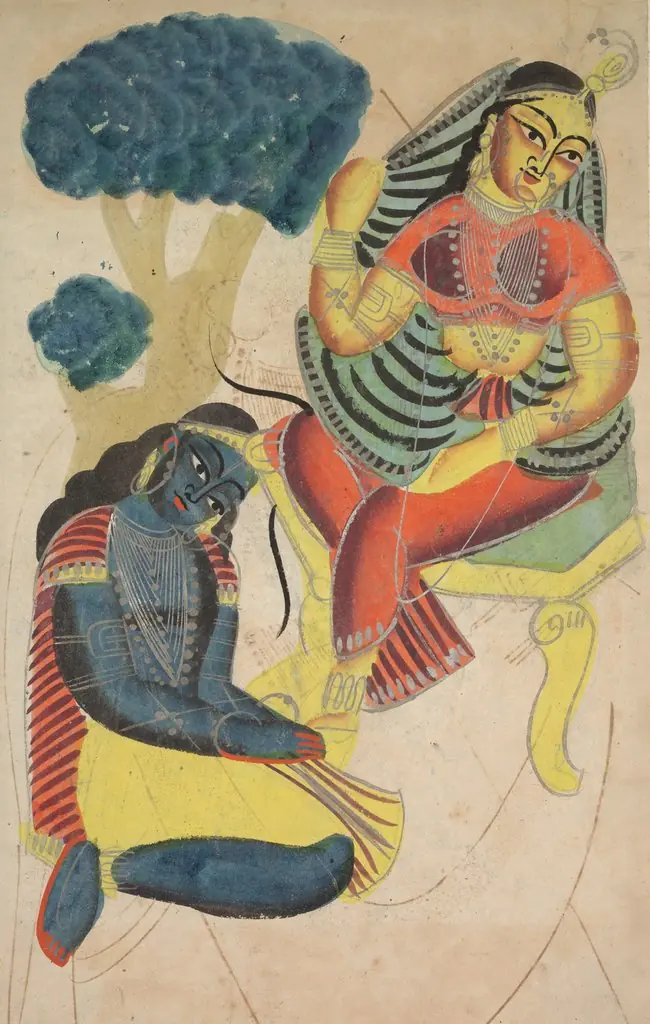 Krishna Stroking Radha's Feet (verso), from a Kalighat album
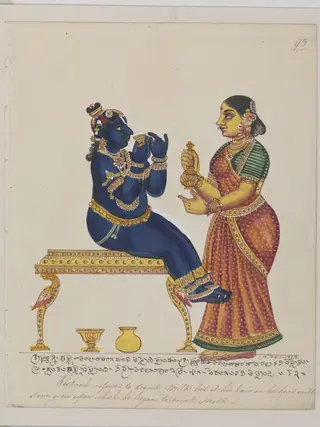 The infant Krishna
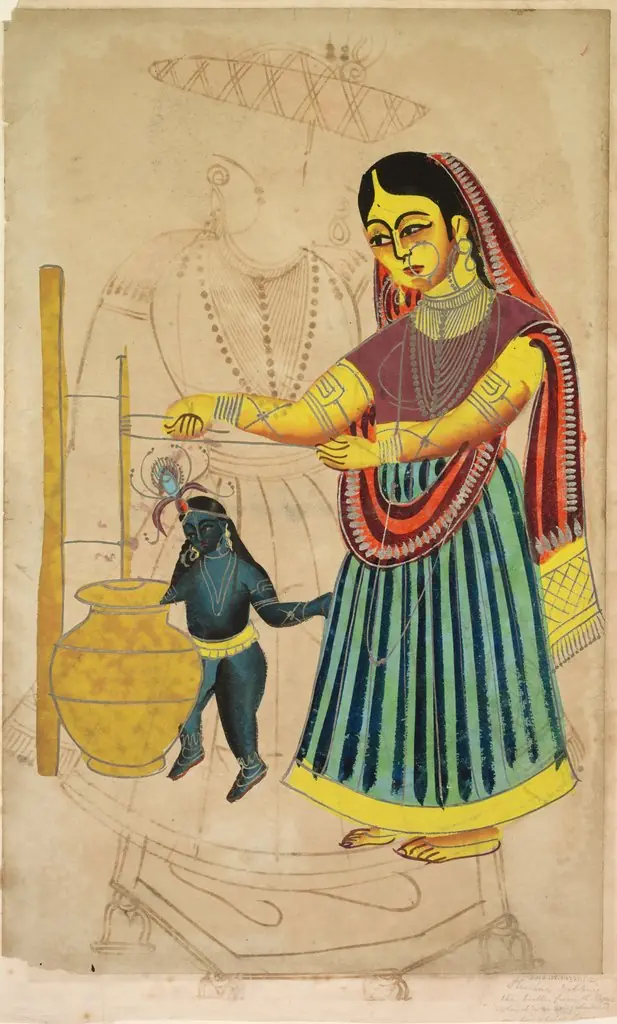 Yasoda Churning Butter (verso), from a Kalighat album
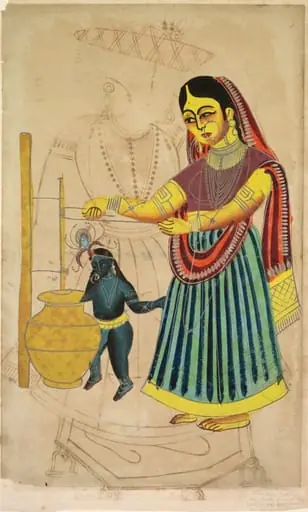 Yasoda Churning Butter (verso), from a Kalighat album
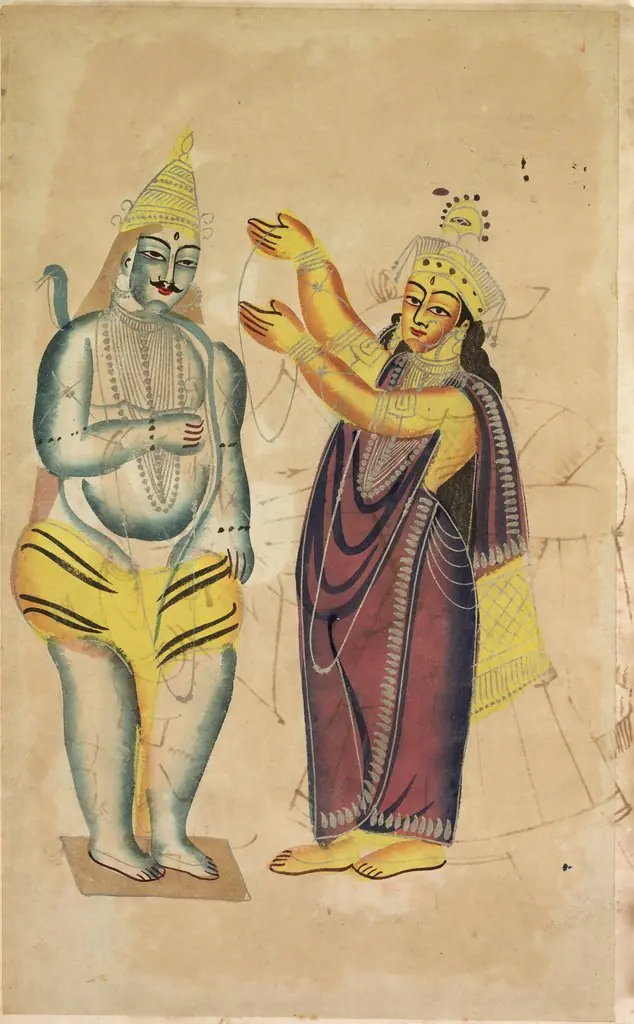
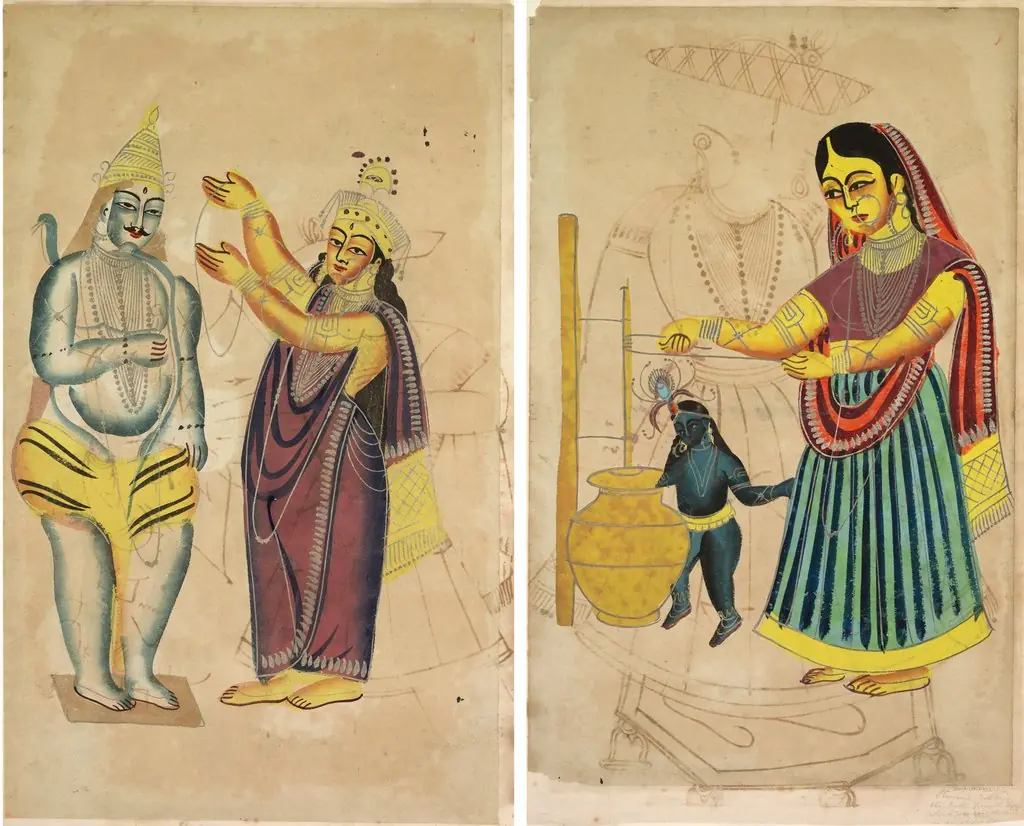 Leaf from a Kalighat album: Parvati Placing a Wedding Garland on Shiva (recto); Yasoda Churning Butter (verso)
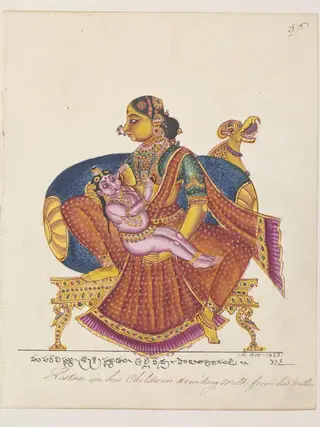 Yasoda suckling Krishna.