Artwork
Krishna Stroking Radha's Feet (verso), from a Kalighat album
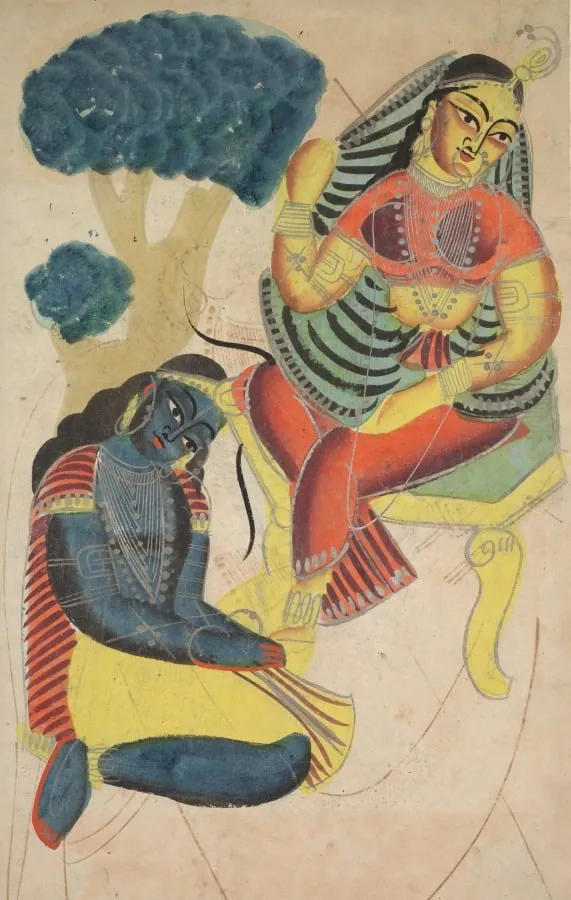
Krishna Stroking Radha's Feet (verso), from a Kalighat album is an unspecified painting by the Bengal School artist Unknown. It dates from 1890 and is held in the collection of the Cleveland Museum of Art.
- Accession no.
- 2003.133.b
About this work
Overview
Krishna Stroking Radha's Feet (verso) is a painting from a Kalighat album, depicting a poignant moment in the Hindu legend of Krishna and Radha. Characterized by bold lines, flat colors, and a minimalist background, this work originates from Kalighat, Kolkata, where artists produced vibrant, affordable images for pilgrims.
Subject & Meaning
The painting illustrates Krishna's plea for forgiveness from Radha, following his infidelities with other gopis. Radha, seated and veiled, embodies restrained emotion, while Krishna, kneeling, gently strokes her feet in a gesture of atonement, capturing a narrative of love, longing, and reconciliation.
Technique & Style
Executed in the distinctive Kalighat style, the painting features bold, expressive lines and flat, unmixed colors. The absence of a detailed background focuses attention on the central figures and their emotional interaction, reflecting the region's traditional yet simplified aesthetic for mass-produced religious art.
History & Provenance
Originating from Kalighat, Kolkata, this painting was part of an album designed for pilgrims seeking affordable, colorful religious imagery. Specific details about its creation date, artist, or original ownership are not provided, highlighting the often-anonymous nature of Kalighat productions.
Context
This work is set within the broader context of Hindu mythology, specifically the legends of Krishna and Radha, which explore themes of divine and human love. The painting's production in Kalighat situates it within a 19th-century artisanal practice catering to religious tourism in the area.
Legacy
As part of the Kalighat painting tradition, this work contributes to the preservation of Hindu mythological narratives through art. Its style, characterized by simplicity and directness, has influenced later folk and popular art forms in India, ensuring its relevance beyond its original religious and commercial purposes.
Artist & collection









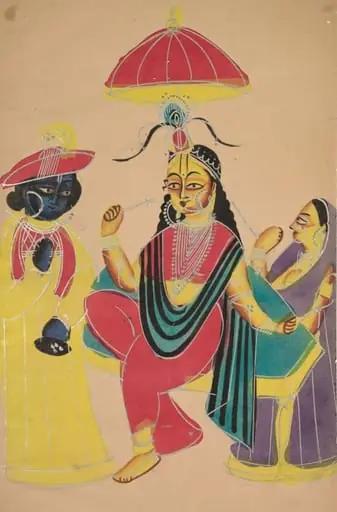
- Krishna Standing by Radha who is Seated on a Chair
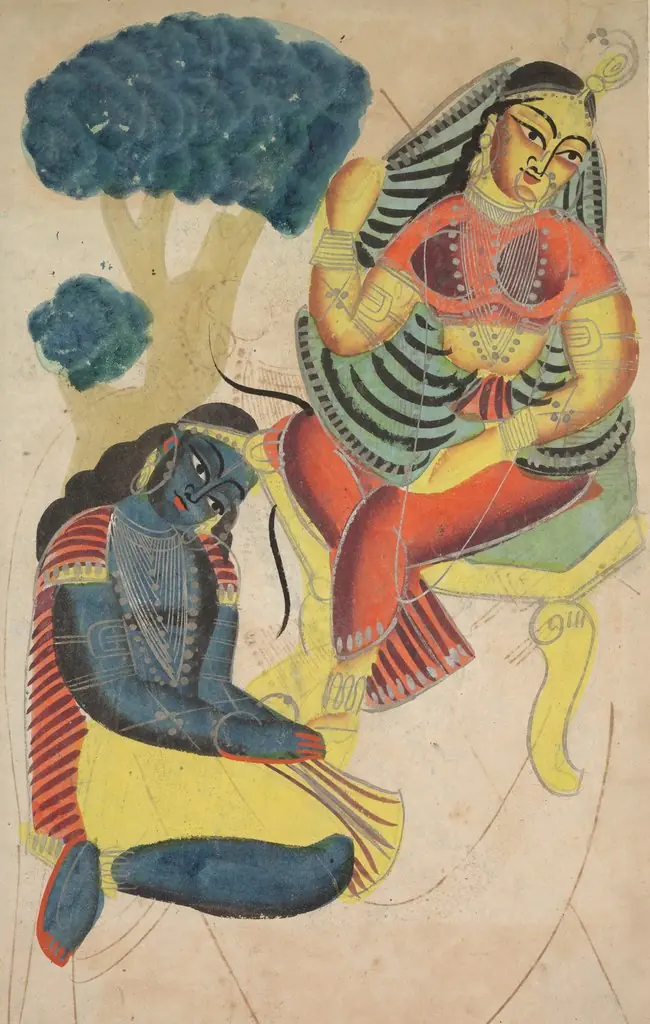 Krishna Stroking Radha's Feet (verso), from a Kalighat album
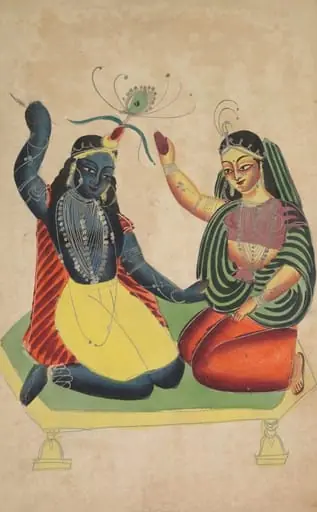 Radha and Krishna (verso), from a Kalighat album
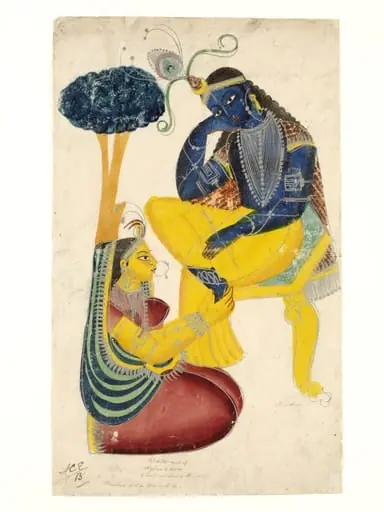 Radha and Krishna
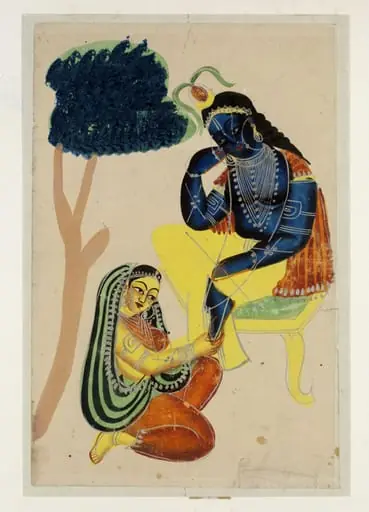 Radha and Krishna
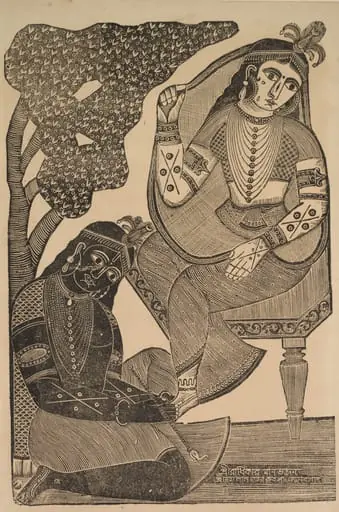 Krishna Stroking Radha's Feet
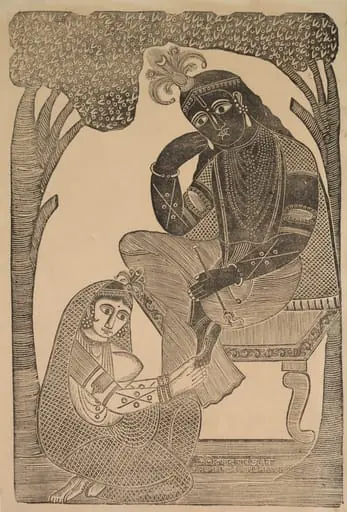 Radha Stroking Krishna's Feet
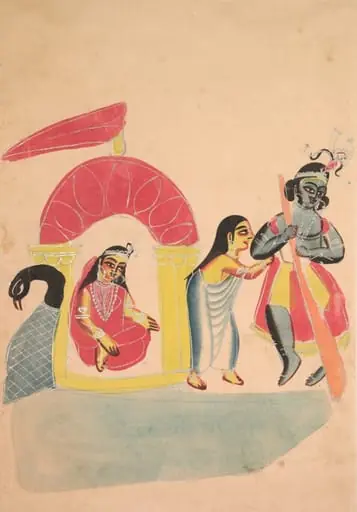 Krishna Ferrying Radha Across the Yamuna River
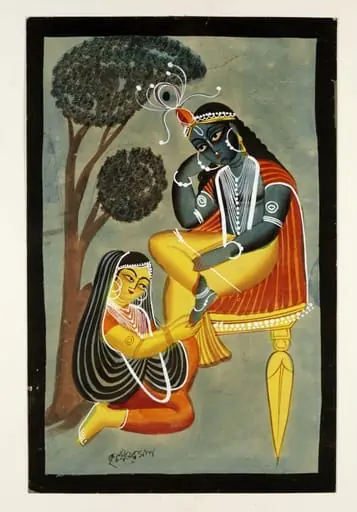 Radha and Krishna