Artwork
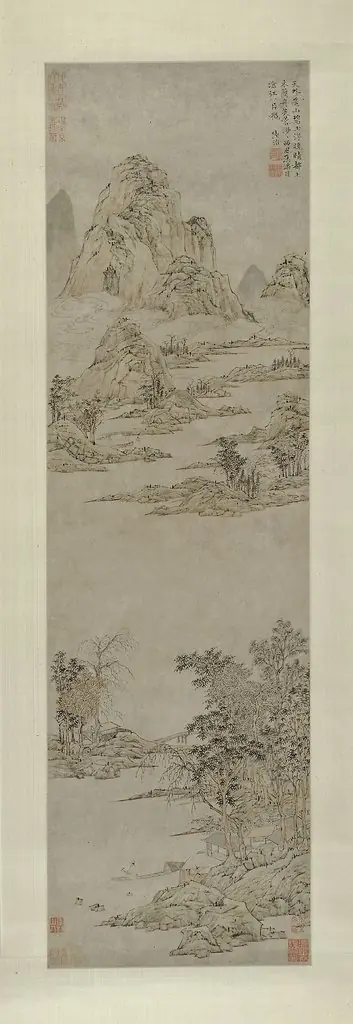
Lonely Temple and Towering Cliff
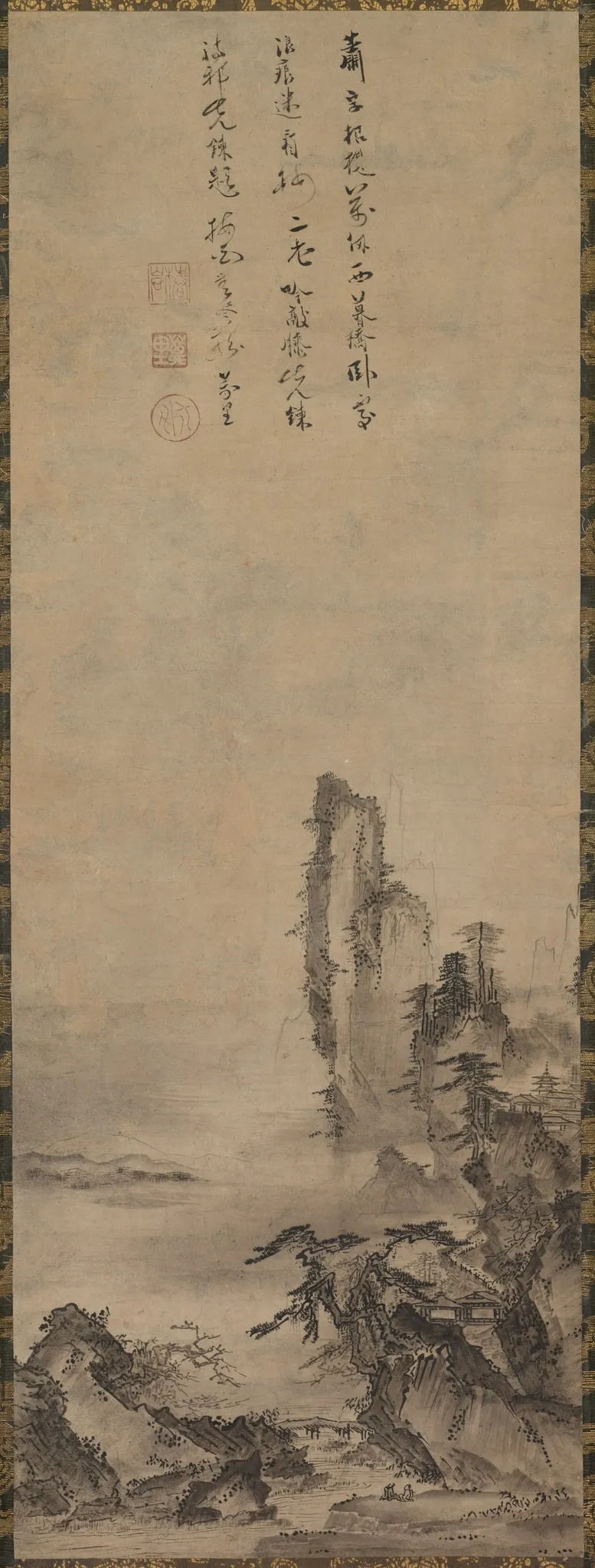
Lonely Temple and Towering Cliff is an unspecified painting. It dates from 1490 and is held in the collection of the Cleveland Museum of Art.
About this work
Technique & Style
Spatial recession is achieved through graded ink tones and overlapping planes rather than linear perspective, creating a contemplative, layered depth.
Lonely Temple and Towering Cliff is executed in ink on paper, a hallmark of Japanese Muromachi-period monochrome painting. The support is a hanging scroll, allowing the vertical composition to unfold without interruption. Brushwork ranges from dilute, translucent washes that define mist and distant forms to bold, dry strokes for rock textures and architectural edges, techniques associated with the suiboku-ga (ink wash) tradition.
Stylistically, the work adheres to the shigajiku (poem-painting scroll) conventions, integrating calligraphic elements with landscape imagery. Spatial recession is achieved through graded ink tones and overlapping planes rather than linear perspective, creating a contemplative, layered depth. The scroll’s condition remains stable, with no major losses or restorations documented in the Cleveland Museum of Art’s records.
History & Provenance
Created in 1480 in Japan, this painting is attributed to the artist Kenkō Shōkei, who was active between 1478 and 1506. While one record lists the creator as unknown, authoritative data identifies Shōkei as the maker of the work currently held by the Cleveland Museum of Art. The piece entered the museum's collection under the accession number 1955.45, indicating its acquisition occurred in 1955.
No specific details regarding the original commission or the intermediate ownership chain prior to its museum acquisition are provided in the available records.
The painting is part of the Cleveland Museum of Art collection and is cataloged under accession number 1955.45. It was created in Japan in 1480 and has been exhibited at the Cleveland Museum of Art, including a display in the Japanese Art Galleries in 1960.
Overview
The work presents a stark, vertical cliff that dominates the composition, its jagged silhouette rising sharply from the lower edge of the canvas. A winding path snakes upward toward a modest temple nestled among trees at the cliff’s base, suggesting a secluded sanctuary within a rugged landscape.
Subject & Meaning
The solitary temple, partially concealed by foliage and rock, conveys a sense of quiet retreat amid a harsh environment. The juxtaposition of the tranquil structure against the imposing cliff may allude to themes of spiritual refuge, perseverance, or the human quest for calm within nature’s formidable forces.
Context
The piece aligns with traditions that emphasize dramatic natural settings to highlight human modesty, echoing aesthetic concerns found in East Asian landscape painting and Western Romanticism. Its emphasis on chiaroscuro, strong contrasts of light and shadow, underscores the tension between illumination and the encroaching darkness of the rock face.
Artist & collection

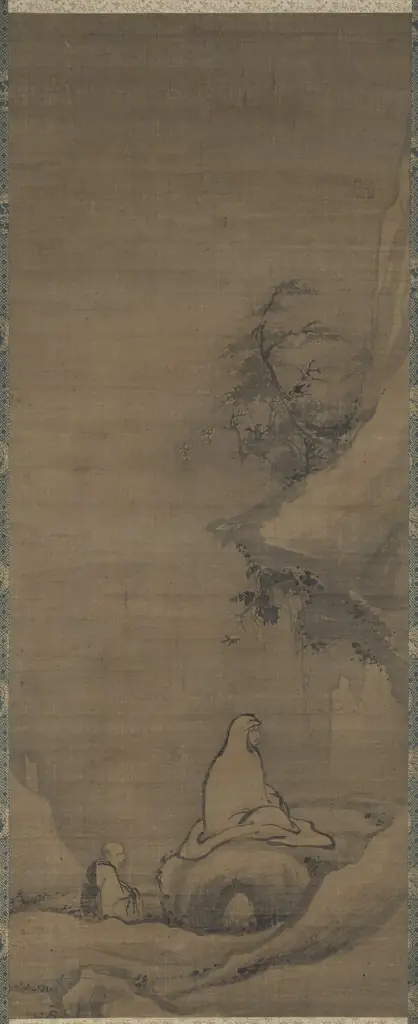 Bodhidharma Meditating Facing a Cliff
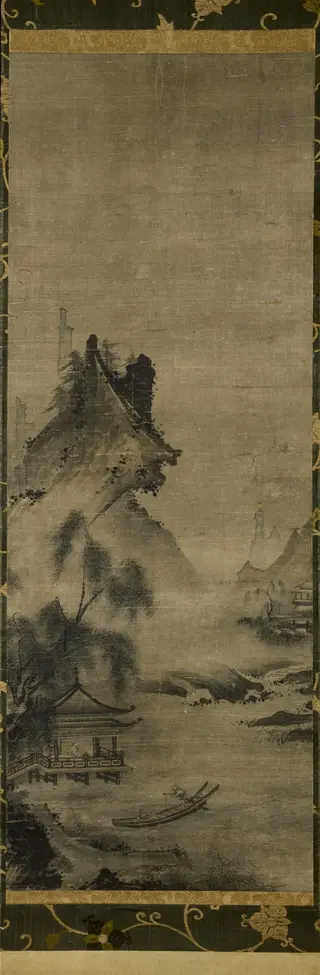 Lakeside Retreat
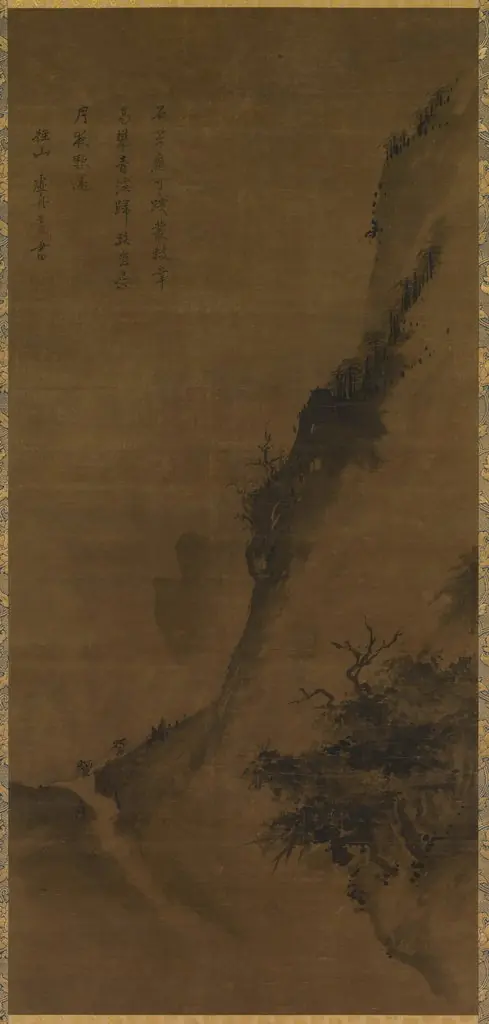 Landscape with Woodcutters Returning Home
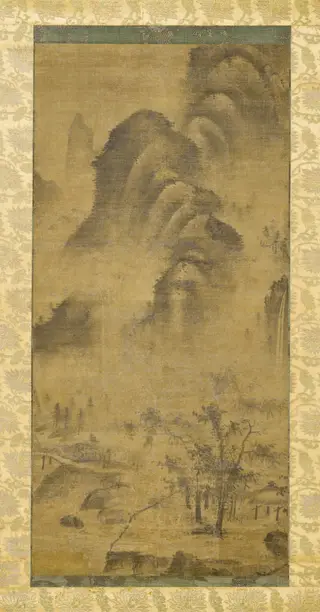 Landscape
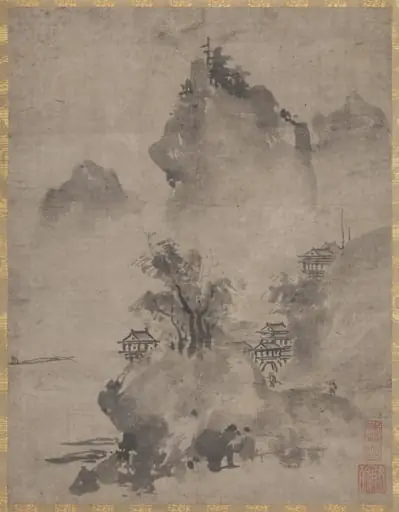 Coastal Landscape in the Haboku Style
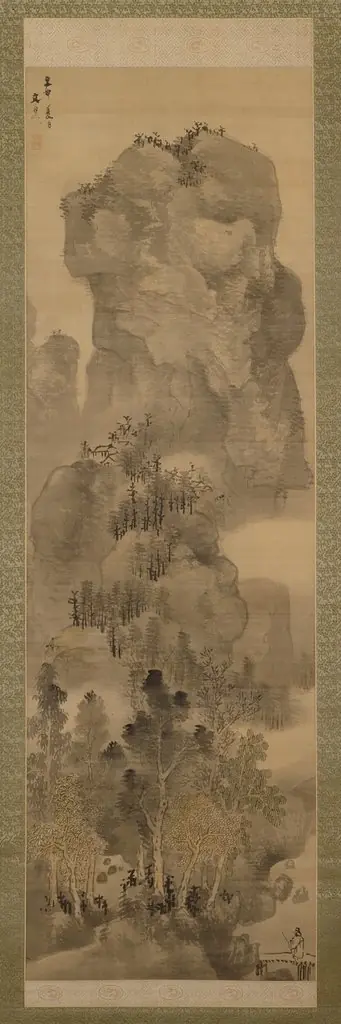 Summer Landscape
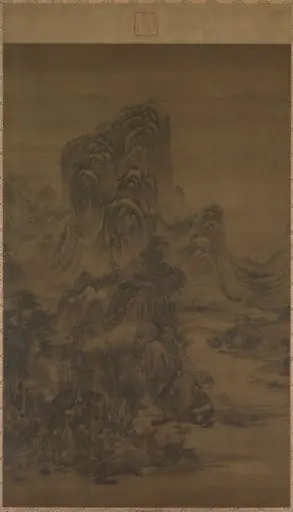 Landscape in the Style of Juran
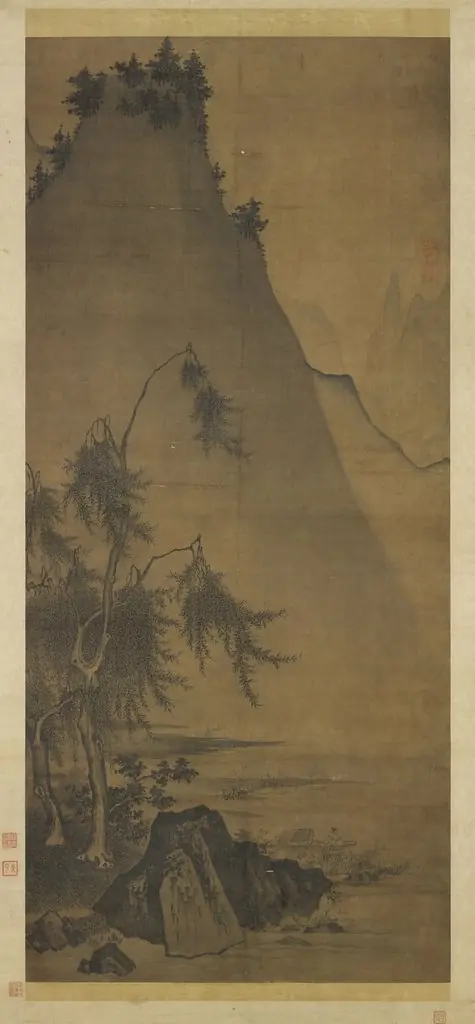 Returning Boat
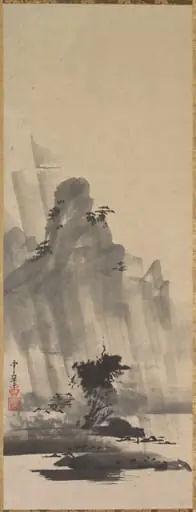 Mountain and River in Storm
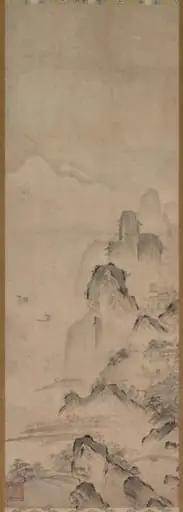 Landscape
 Pulling Oars under Clearing Autumn Skies (Distant Mountains)
- Lonely Temple and Towering Cliff