Artwork
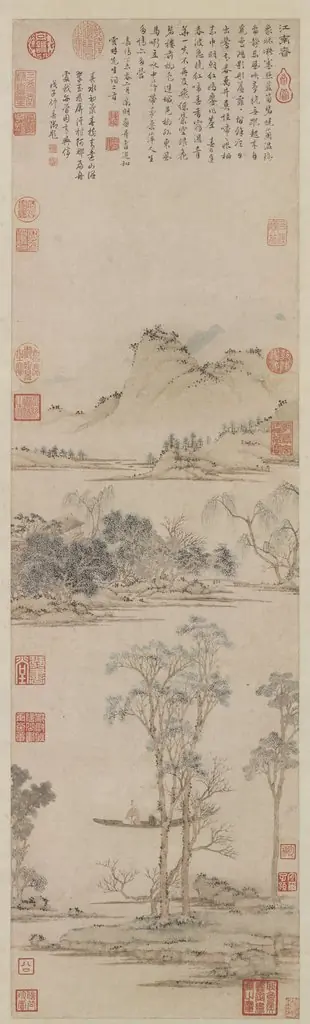
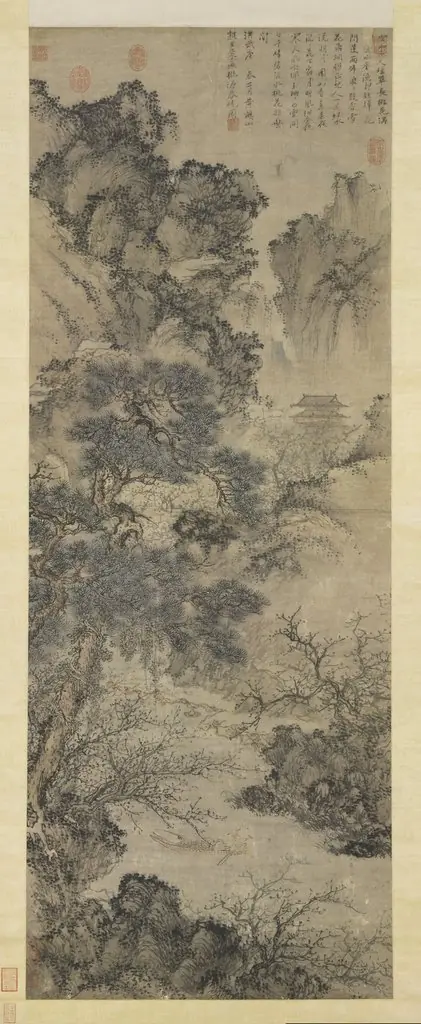
Pulling Oars under Clearing Autumn Skies (Distant Mountains)
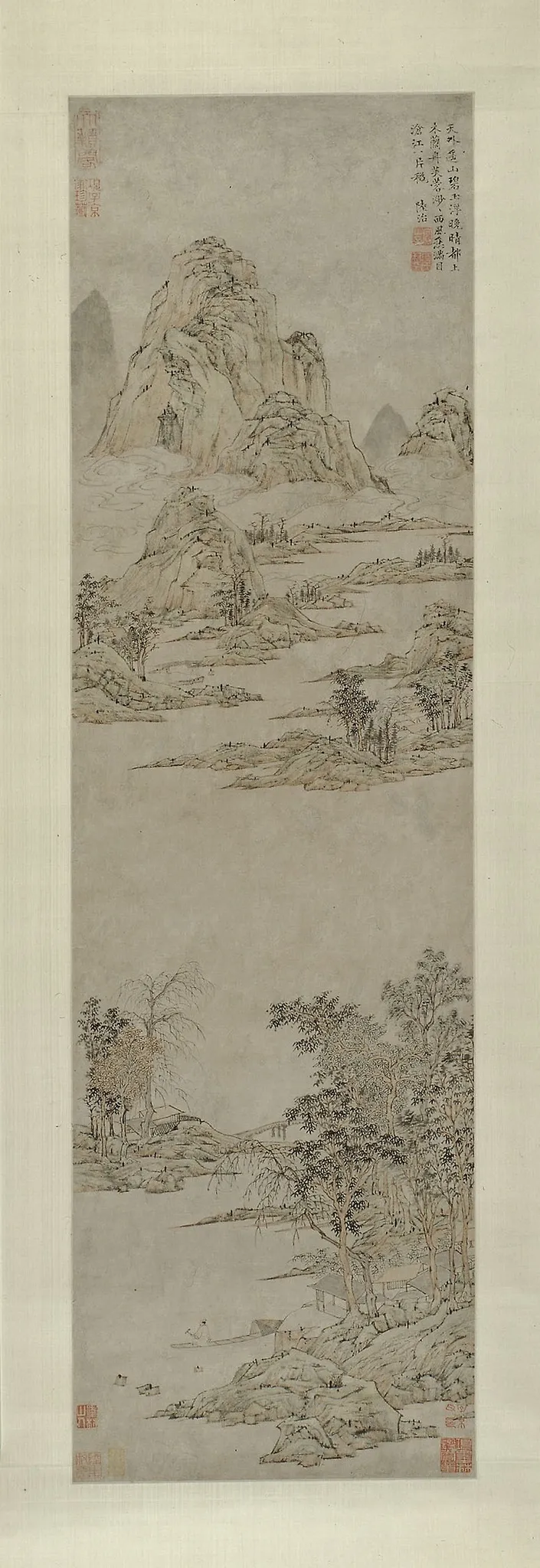
Pulling Oars under Clearing Autumn Skies (Distant Mountains) is an unspecified painting by the Chinese Orthodox School artist Lu Zhi. It dates from 1545 and is held in the collection of the Art Institute of Chicago.
About this work
Overview
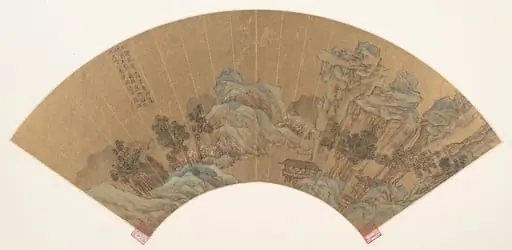
Painted in 1545 by Lu Zhi, this ink-and-color landscape depicts a quiet riverside scene beneath a pale autumn sky. The composition unfolds in layered planes: foreground rocks and trees recede into distant hills, suggesting depth without dramatic perspective. The work’s subdued palette and gentle brushwork convey stillness, aligning with Ming dynasty literati ideals of contemplative nature.
Subject & Meaning
A small group of figures row a boat near the water’s edge, their presence minimal and unobtrusive. They are not the focus but rather participants in a larger, tranquil environment. The scene evokes solitude and harmony with nature, reflecting the literati preference for understated human presence within expansive, serene landscapes, suggesting retreat from worldly concerns.
Technique & Style
Lu Zhi employs soft, dry brushstrokes and layered washes to model forms with subtle tonal shifts. The sky is rendered in faint gradients, while rocks and trees are suggested rather than sharply defined. This restrained technique, rooted in Song and Yuan traditions, emphasizes atmosphere over detail, creating a hazy, meditative quality that invites quiet reflection.
History & Provenance
The painting entered the Art Institute of Chicago’s collection in the 20th century, though its earlier ownership history remains undocumented. It is one of few surviving works by Lu Zhi, a lesser-known painter of the Wu school, whose output was overshadowed by contemporaries like Wen Zhengming. Its preservation reflects late Ming appreciation for refined, introspective landscape painting.
Context
Created during the mid-Ming period, the work reflects the cultural dominance of literati painting in southern China. Artists like Lu Zhi, often scholar-officials, valued personal expression over courtly grandeur. This piece aligns with a broader trend of evoking emotional resonance through minimalism, poetic suggestion, and a deliberate avoidance of overt narrative or spectacle.
Legacy
Though Lu Zhi’s reputation faded after his lifetime, this painting endures as an example of the Wu school’s quiet aesthetic. It contributes to the understanding of how Ming literati used landscape to express inner calm and philosophical detachment. Its preservation in a major Western institution ensures continued study of understated Chinese painting traditions beyond more celebrated names.
Artist & collection


![Daoist Retreat in Mountain and Stream (Landscape after Ni Zan [1301–1374]), by Lu Zhi](https://artifactworldgallery.com/img/lu-zhi--daoist-retreat-in-mountain-and-stream-landscape-after-ni-zan--766e576a4810a8bc-w320.webp)