Artwork
Looting of a village
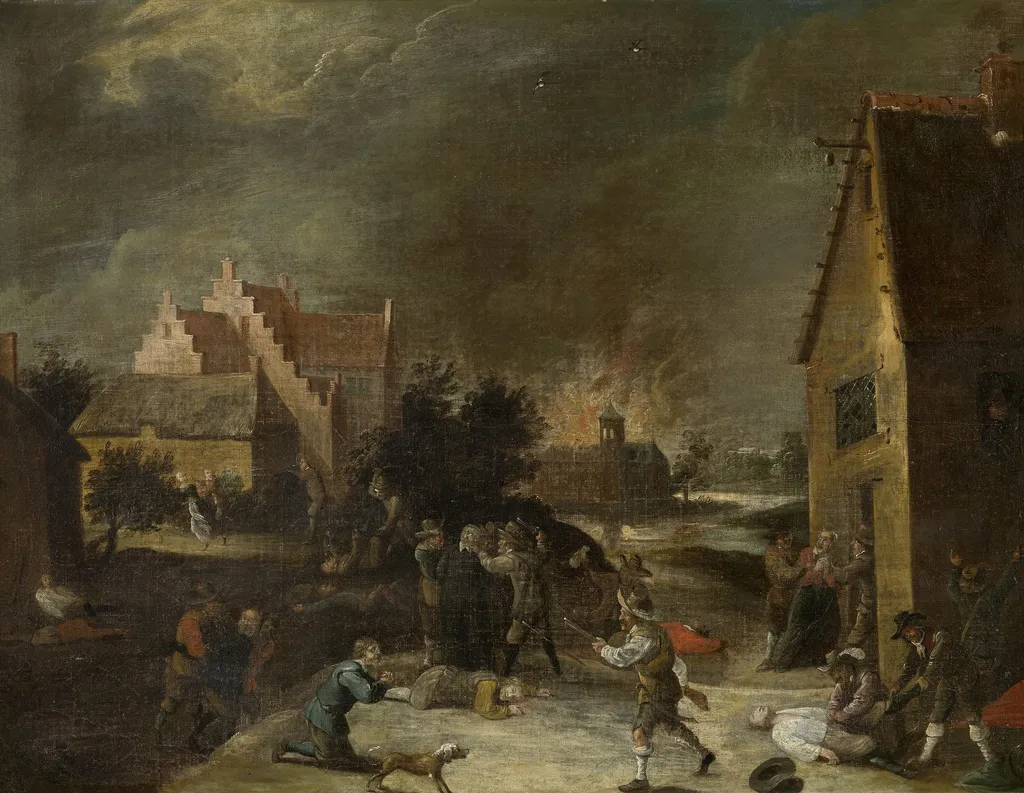
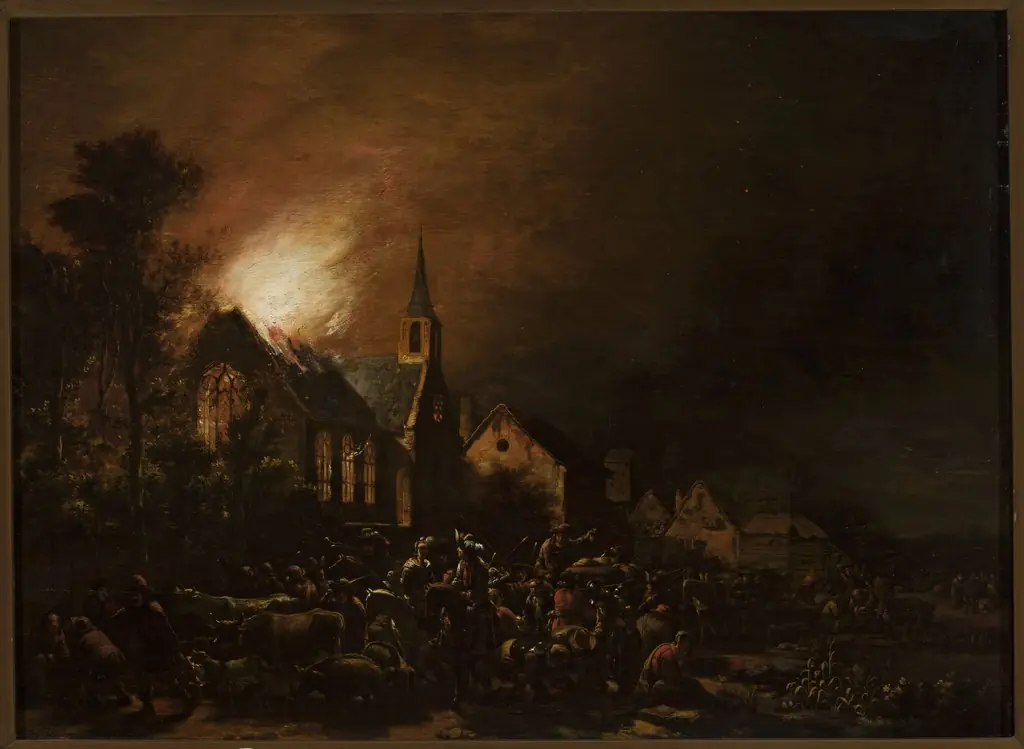
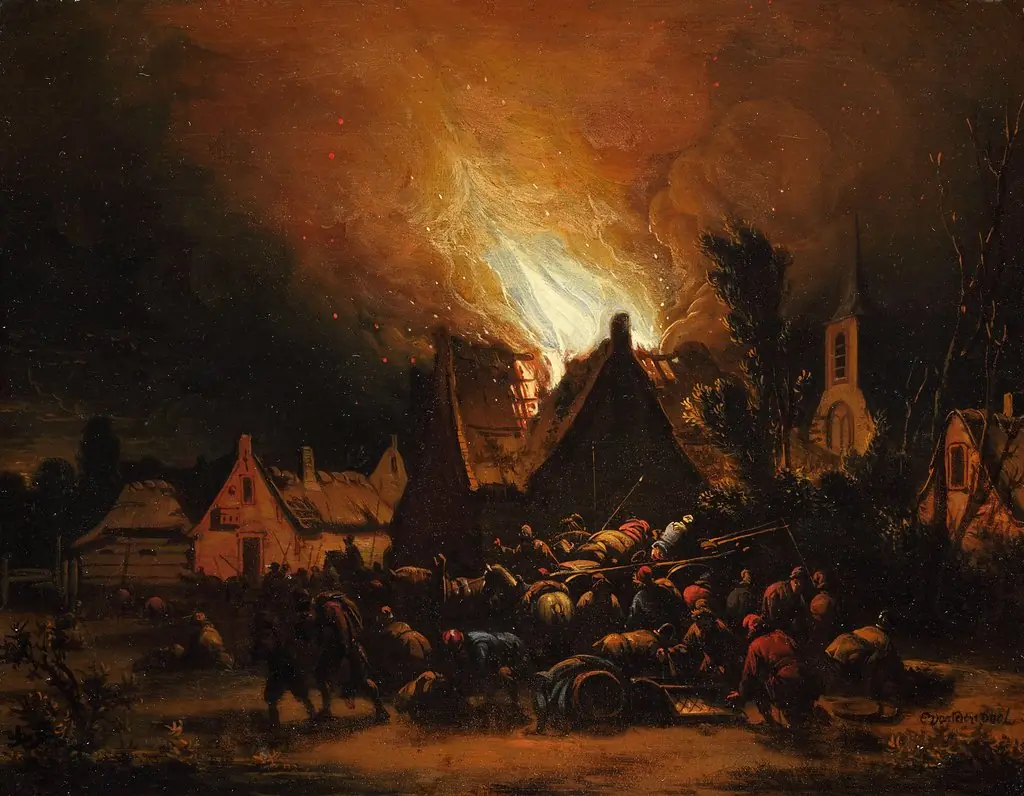
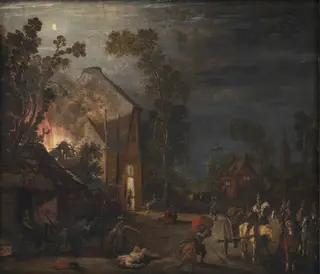
Looting of a village is an oil painting. It dates from 1610 and is held in the collection of the Groeningemuseum. The oil painting depicts a nocturnal raid on a village, with thatched houses and a church tower silhouetted against a dark sky.
About this work
Subject & Meaning
A dog watches the disorder, a tree stands beside a burning church, and a monk and soldier among the participants underscore the moral turbulence of the moment.
The painting shows a chaotic village scene where figures plunder a dwelling while flames rise nearby. A dog watches the disorder, a tree stands beside a burning church, and a monk and soldier among the participants underscore the moral turbulence of the moment. The composition is rendered in oil on canvas, measuring 79.8 cm by 103.7 cm, and was created in 1610 by a follower of David Teniers the Younger for the Groeningemuseum in Bruges.
Technique & Style
The work is an oil painting executed on a wooden support, reflecting 17th‑century techniques of the Flemish school. The composition depicts a chaotic village scene with looting figures, a dog, a tree, a burning church, and various individuals such as a monk, soldier, and woman in a hat, all rendered in oil paint. Measured dimensions are 79.8 cm in height and 103.7 cm in width, confirming its scale within the Groeningemuseum’s collection. Formal analysis notes the dynamic handling of brushwork and chiaroscuro that emphasize movement and narrative intensity.
History & Provenance
Looting of a village is an oil painting dated to 1610 and attributed to a follower of David Teniers II. The work measures approximately 79.8 cm in height and 79.8 cm by 103.7 cm in width, and depicts a village scene of looting that includes a house, church building, fire, trees, a dog, and figures such as a man, woman, monk, soldier and rifle. It is presently held in the Groeningemuseum, which lists the painting as part of its collection; no earlier provenance or commission details are recorded in the available sources.
Context
The painting was created in 1610 by a follower of David (II) Teniers and is housed in the Groeningemuseum, where it has been part of the collection since its acquisition. Its depiction of a chaotic village scene with figures such as looters, soldiers, and monks reflects the dramatic narrative style characteristic of the period and situates it within the broader context of Baroque genre scenes. Scholars have examined its composition and iconography to understand how it engages with contemporary themes of disorder and moral allegory.
The work measures 79.8 cm in height and 103.7 cm in width, executed in oil paint on canvas, and was produced during the early phase of the artist’s activity as recorded in archival inventories.
Legacy
According to its entry in the Groeningemuseum collection, the painting was attributed to a follower of David (II) Teniers and has been part of the museum's holdings since its acquisition. The work, depicting a chaotic village scene with figures such as a monk, soldier, and woman amid fire and looting, measures 79.8 cm in height and 103.7 cm in width. Its composition, featuring a dog, tree, and burning church, reflects early 17th‑century narrative painting practices. The attribution to a follower of Teniers has shaped scholarly discussions of the period’s genre scenes.
Overview
The oil painting depicts a nocturnal raid on a village, with thatched houses and a church tower silhouetted against a dark sky. Figures are shown fleeing or engaged in combat, while a blaze on the right side emits smoke. Scattered items, including hats and dogs, litter the ground, and a man brandishes a sword, emphasizing the turmoil.
Artist & collection