Artwork
Church on fire
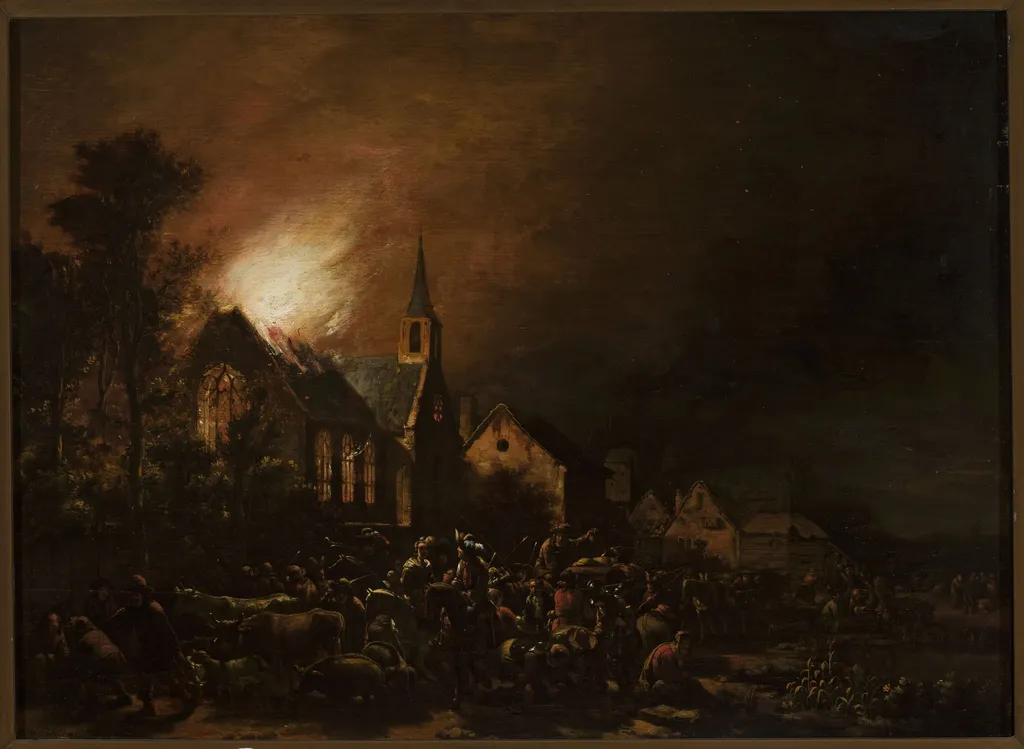
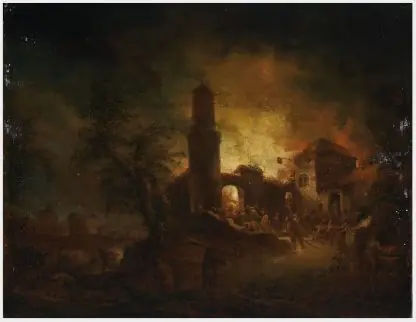
Church on fire is an oil painting by the Dutch Golden Age artist Egbert van der Poel. It dates from 1658 and is held in the collection of the National Museum in Warsaw.
About this work
Overview
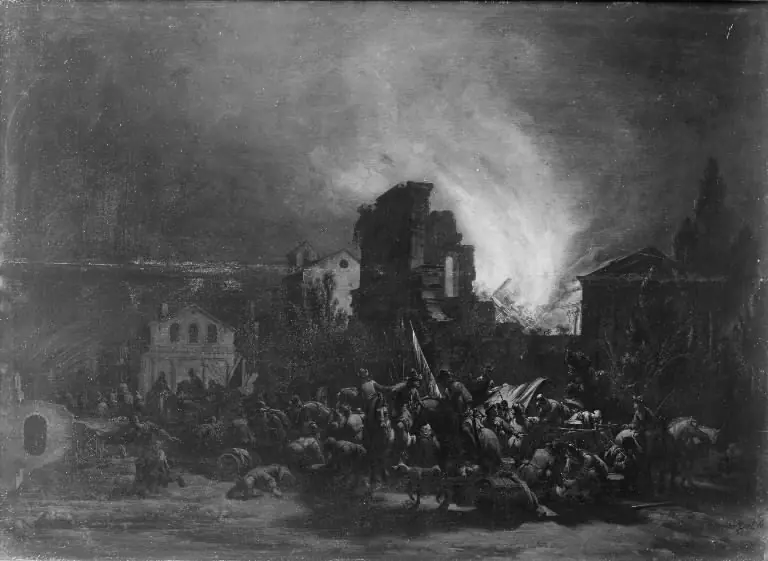
In the foreground, a crowd of figures gathers; their postures and gestures suggest a mix of panic, observation, and attempts to extinguish the fire.
Painted in 1658 by Egbert van der Poel, a Dutch Golden Age artist renowned for his nocturnal fire scenes, this oil on canvas depicts a church engulfed in flames. The composition centers on the burning structure, which dominates the middle ground, its architecture partially obscured by the intense blaze. The fire serves as the primary light source, casting a dramatic, warm glow against the dark night sky and illuminating the surrounding landscape.
In the foreground, a crowd of figures gathers; their postures and gestures suggest a mix of panic, observation, and attempts to extinguish the fire. Van der Poel utilizes the contrast between the bright orange and red hues of the fire and the deep blues and blacks of the night to create a sense of immediacy and drama. This work exemplifies the artist's specialization in fire paintings, a genre that gained popularity in the Netherlands during the mid-17th century, often reflecting contemporary anxieties about urban fires.
The painting demonstrates Van der Poel's skill in rendering atmospheric effects and capturing the chaotic energy of such disasters, contributing to his reputation as a master of this specific subject matter within the Dutch Golden Age.
Subject & Meaning
The canvas captures a moment of communal crisis: a crowd gathers at the foot of the burning sanctuary, some attempting to quell the fire, others observing the devastation. The juxtaposition of human activity with the uncontrolled blaze suggests themes of vulnerability, collective response, and the transient nature of religious edifices in the face of disaster.
Technique & Style
Van der Poel employs a pronounced chiaroscuro, allowing the fire’s orange‑yellow glow to dominate the composition and carve deep shadows across the surrounding landscape. The handling of oil paint renders the flickering light with a tactile quality, while the detailed rendering of architectural elements and foliage grounds the dramatic illumination in a realistic setting.
History & Provenance
Created in the mid‑seventeenth century, the painting entered the holdings of Warsaw’s National Museum, where it remains on display. Its provenance prior to acquisition by the museum is not extensively documented, but the work reflects van der Poel’s broader interest in disaster scenes that were popular among Dutch artists of the period.
Own this work as a print
Artist & collection


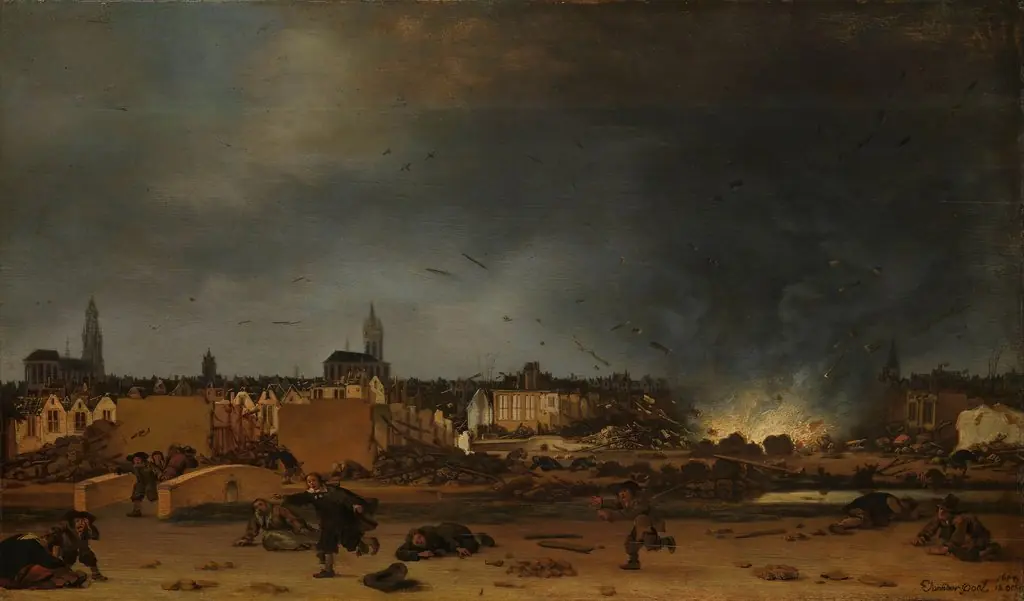 The explosion of the powder magazine in Delft, 12 October 1654
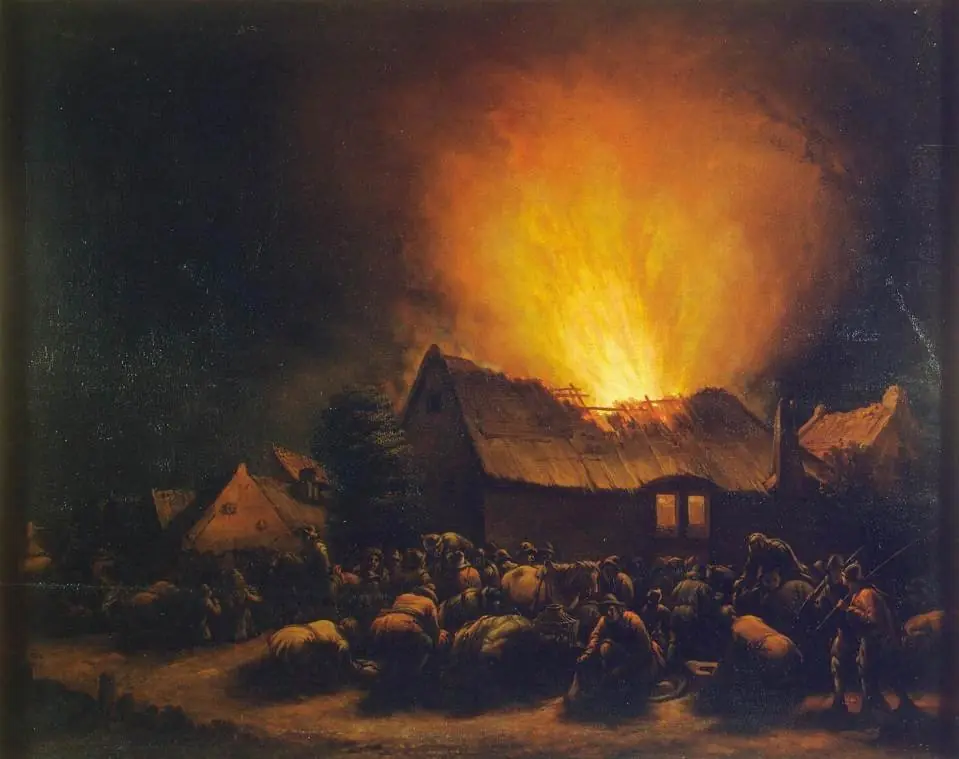 Fire in a Village
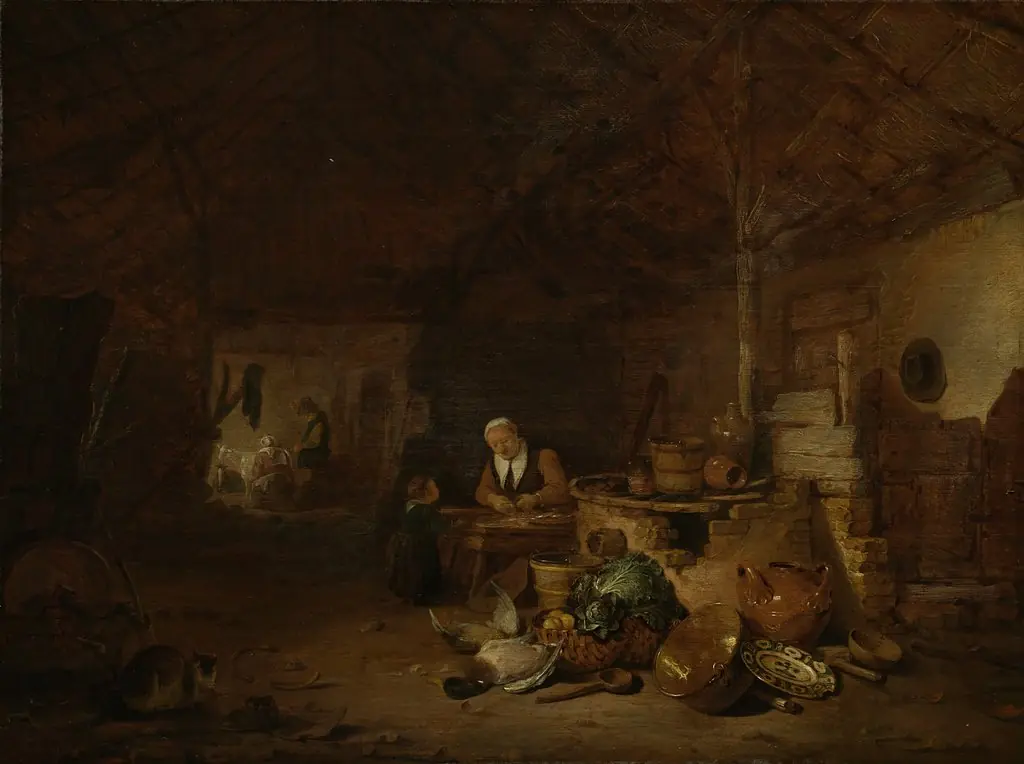 Interior of a barn
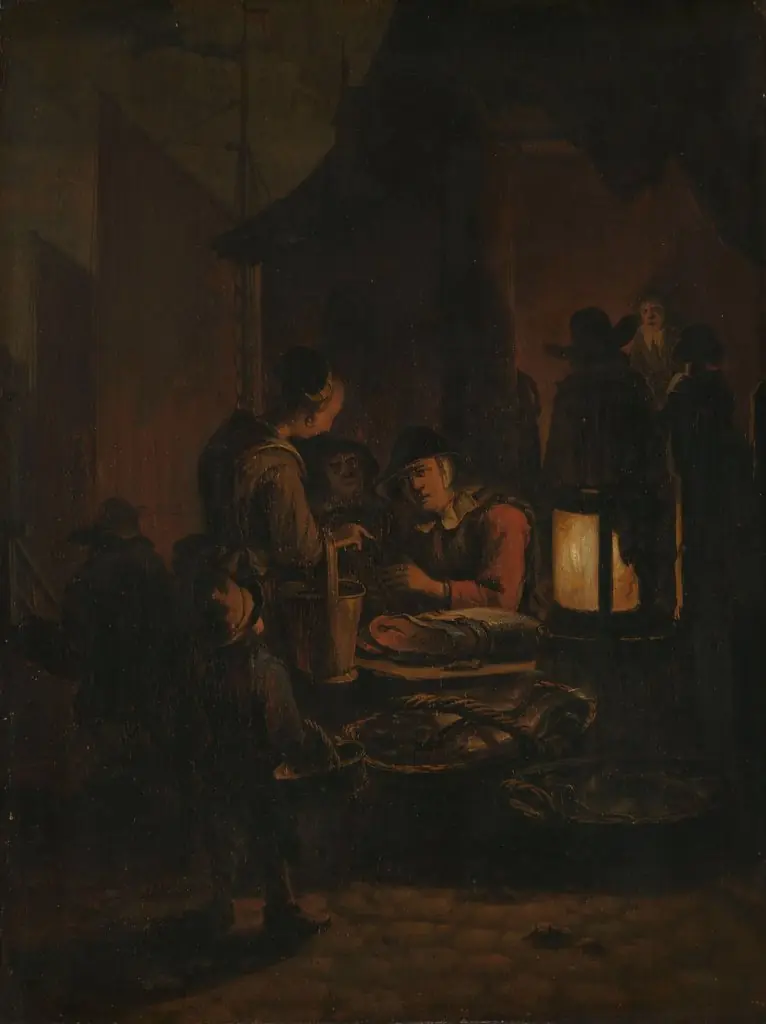 Fish market at night
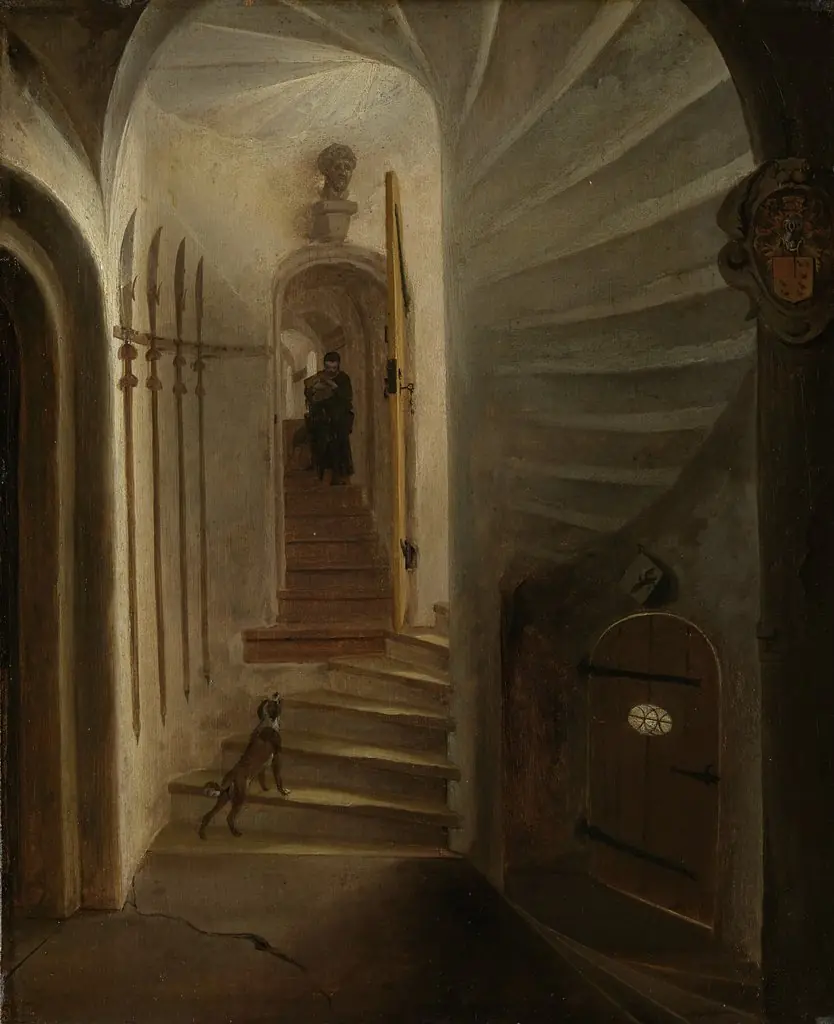 Portal of a stairway tower, with a man descending the stairs: presumably the moment before the assassination of William the Silent in the Ptinsenhof, Delft
 Nocturnal Fire and Looting in a Town
 Landscape with farm at a river
 Interior of a barn