Artwork
Mariana of Austria (1634–1696), Queen of Spain
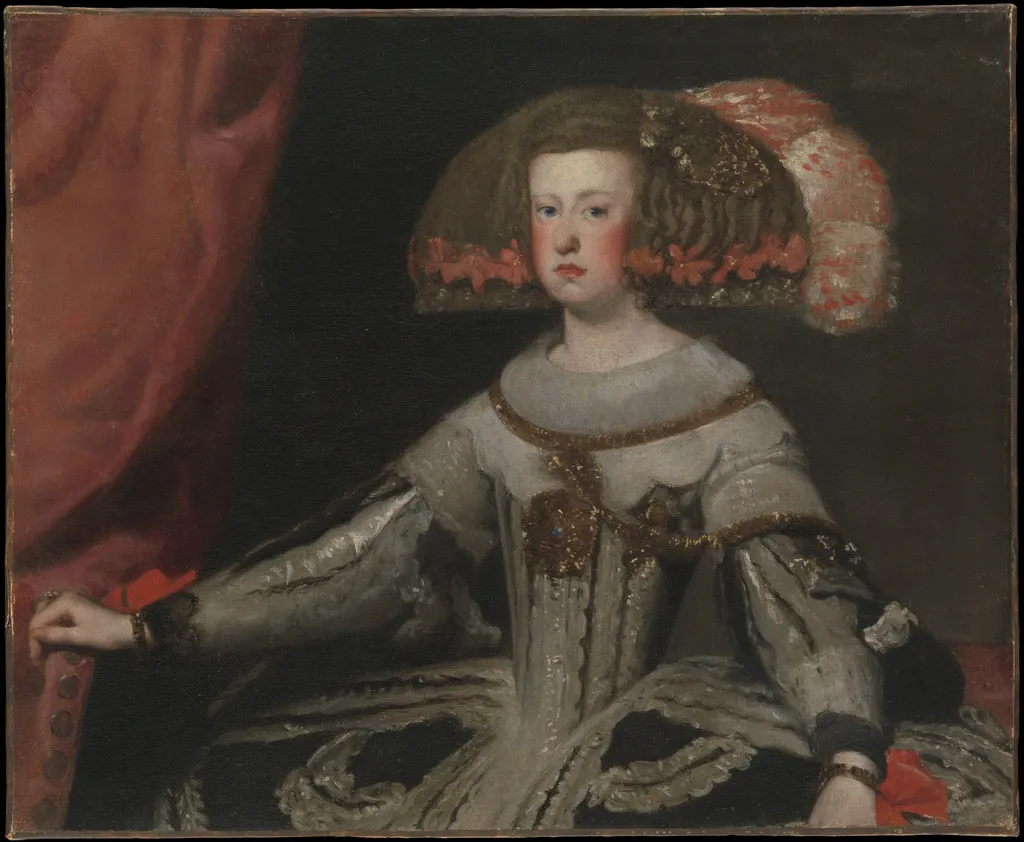
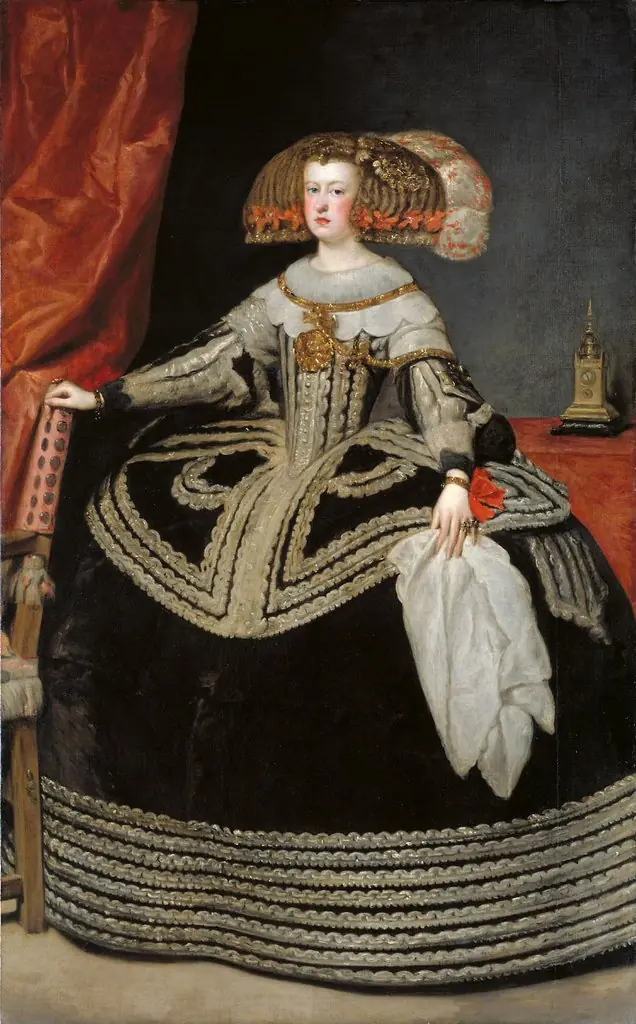
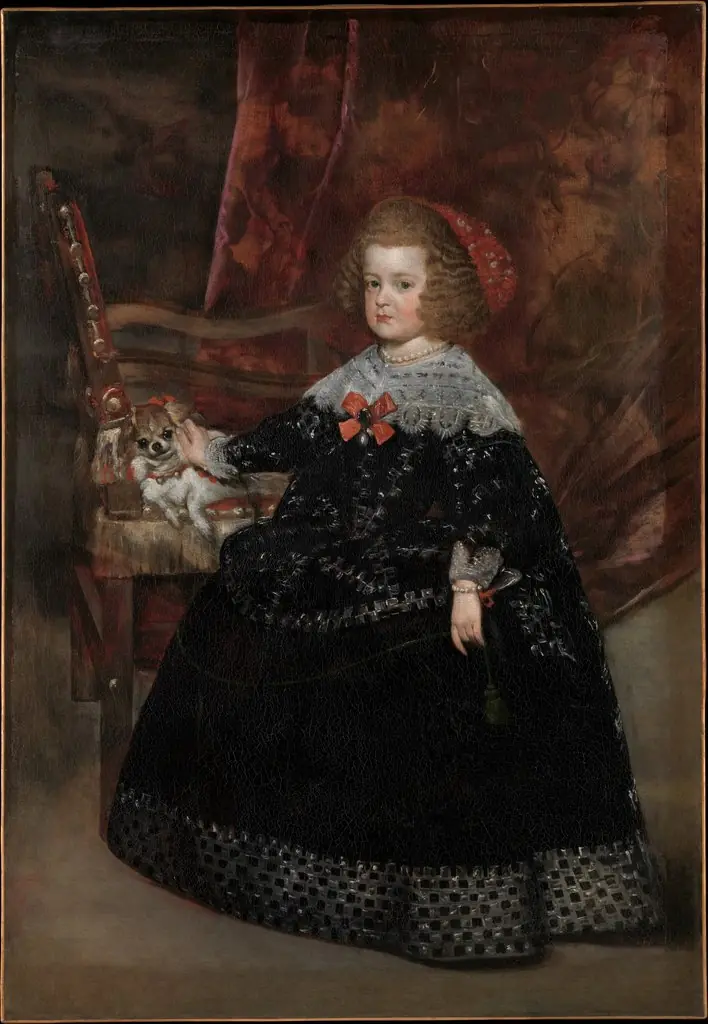
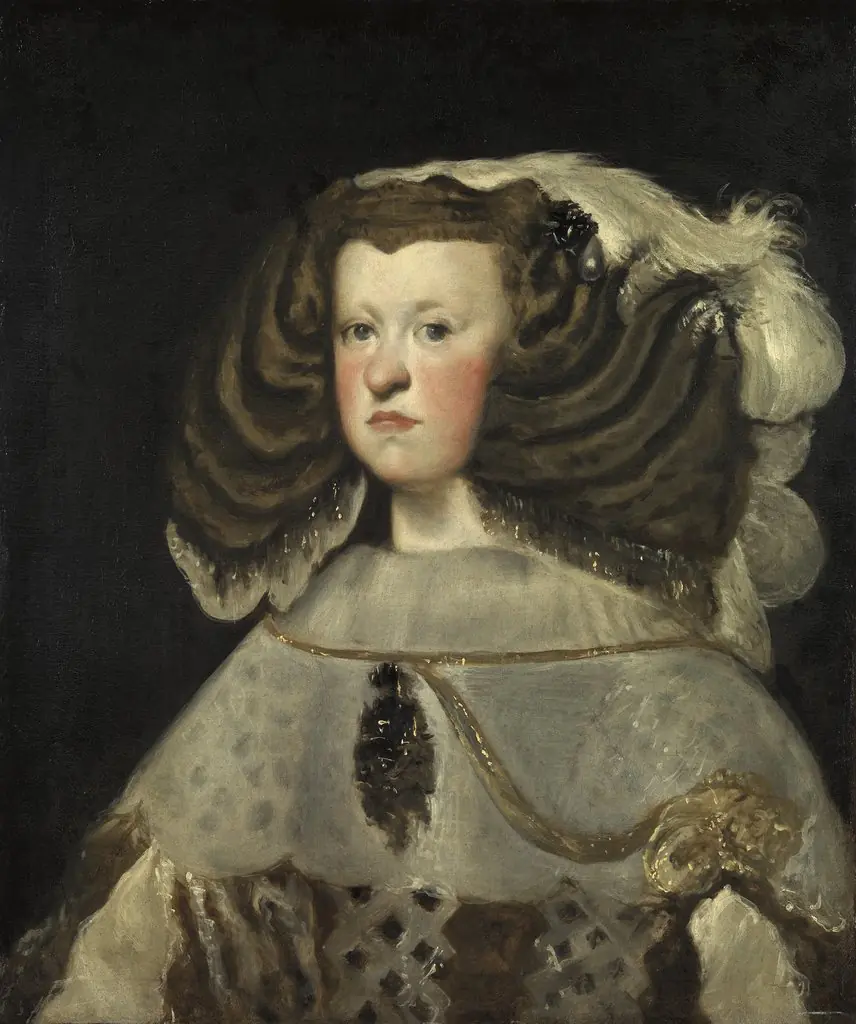
Mariana of Austria (1634–1696), Queen of Spain is an oil painting. It dates from 1655 and is held in the collection of the Metropolitan Museum of Art. This oil painting depicts Mariana of Austria, Queen of Spain, in a formal portrait.
About this work
Subject & Meaning
The painting portrays Mariana of Austria (1634–1696), who served as Queen of Spain, rendered in oil on canvas in 1655.
The painting portrays Mariana of Austria (1634–1696), who served as Queen of Spain, rendered in oil on canvas in 1655. Classified as a portrait, the work belongs to the genre tradition of royal representation, depicting the queen as a woman and as a sitter for a formal painted likeness. The composition is based on a prior Portrait of Mariana of Austria, indicating that the image circulated through replicated or workshop-derived versions of an established royal prototype.
As a portrait of a reigning consort, the work functions as an image of dynastic identity, presenting Mariana in the visual conventions associated with European queenship during the mid-seventeenth century. The painting's identification with the Metropolitan Museum of Art collection and its inclusion in exhibitions of Spanish art further situate it within the broader tradition of Habsburg royal portraiture, where likenesses of queens served both commemorative and representational purposes at the Spanish court.
Technique & Style
The portrait of Mariana of Austria is executed in oil paint on canvas, a medium characteristic of mid-17th-century Spanish court portraiture. The work is attributed to the workshop of Diego Velázquez, whose practice favored the use of oil paint for its luminous depth and subtle gradations of tone, essential for rendering the textures of silk, lace, and flesh. The canvas support measures approximately 81.9 cm in height by 100.3 cm in width, consistent with the scale of elite portraiture intended for display in royal or aristocratic settings.
The handling reflects Velázquez’s influence, employing delicate glazing to achieve the soft transitions of light on the queen’s face and the intricate detailing of her costume, particularly the stiff lace collar and embroidered bodice. The formal qualities emphasize regal presence through controlled composition, muted yet refined coloration, and a restrained yet commanding gaze, aligning with the conventions of Habsburg dynastic portraiture.
History & Provenance
Created in 1655, this oil-on-canvas portrait of Mariana of Austria is attributed to the Workshop of Velázquez. The work serves as a derivative piece based on an earlier original portrait of the queen. It was acquired by the Metropolitan Museum of Art, where it remains part of the permanent collection.
The painting measures 81.9 cm in height and 100.3 cm in width. While the specific commissioning details are not explicitly recorded in the available data, the dating aligns with the mid-17th-century period of Velázquez's activity in the Spanish court. The artwork has appeared in several significant exhibitions, including the 1888–89 Exhibition of Old Masters from the Metropolitan and later shows dedicated to Spanish painting and European masters of the 17th and 18th centuries.
The painting is held in the collection of the Metropolitan Museum of Art, where it is also located. While specific inventory or accession numbers are not provided in the available records, the work has a documented exhibition history at the institution. It was featured in several shows, including the Exhibition of 1888–89, Old Masters from the Metropolitan, European Masters of the XVII and XVIII Centuries, and The Metropolitan Museum of Art Loan Exhibit. Later presentations included Spanish Painting, 5 Centuries of Spanish Art, and Spanish Art: Fifteenth Century to Modern.
Context
The painting is a 1655 portrait by the workshop of Diego Velázquez, depicting Mariana of Austria, queen consort of Spain. It resides in the Metropolitan Museum of Art, forming part of the museum's collection of European Old Master portraits. As a product of the Spanish Baroque workshop, it reflects the court's emphasis on dynastic legitimacy and the influence of Velázquez's stylistic innovations on contemporary assistants.
Scholars have noted its role in documenting Habsburg visual propaganda and its technical execution as an example of workshop replication. Its exhibition history, including 19th‑century displays of Spanish masters, underscores its recognized significance within the trajectory of Spanish portraiture.
Overview
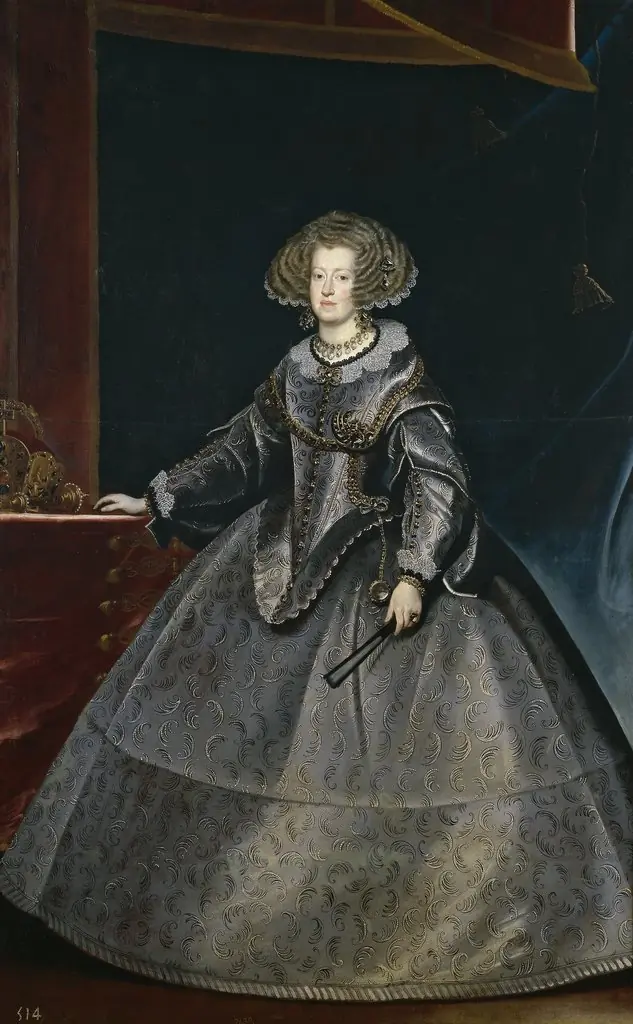
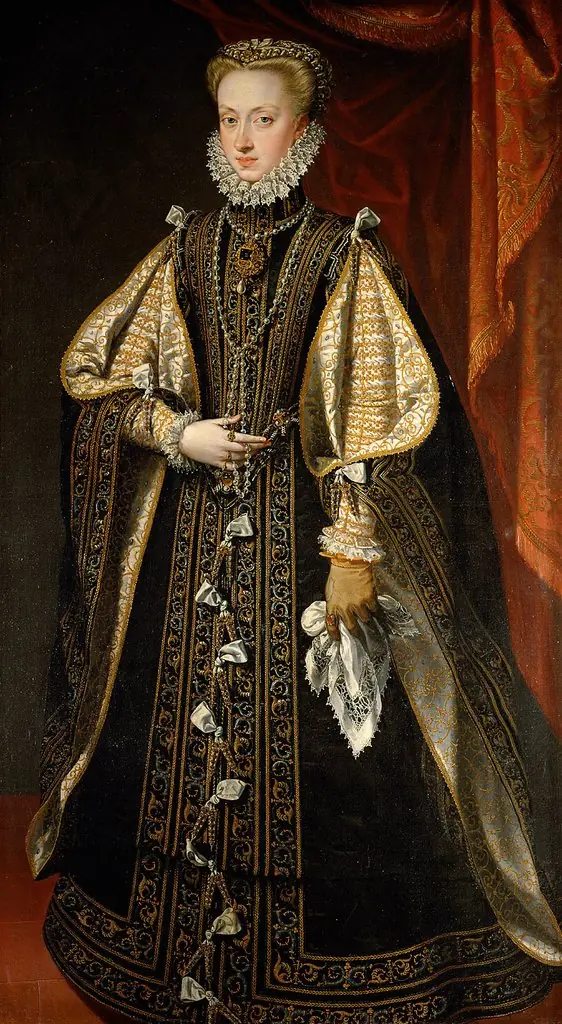
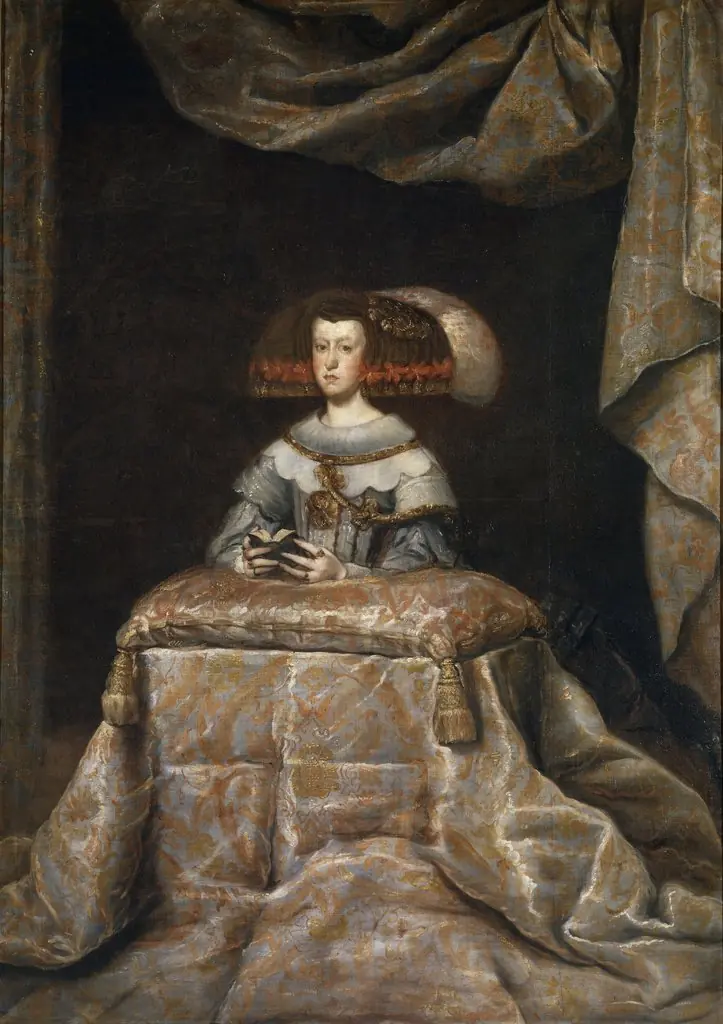
This oil painting depicts Mariana of Austria, Queen of Spain, in a formal portrait. She is presented seated, adorned in elaborate silver-gray robes with gold embellishments, and a decorative hat featuring red flowers. The figure is positioned against a dark, shadowed backdrop, creating a sense of solemnity and emphasizing her presence within the confined space. Her composed demeanor and the rich textures of her attire are central to the work's visual impact.
Artist & collection