Artwork
María Teresa (1638–1683), Infanta of Spain
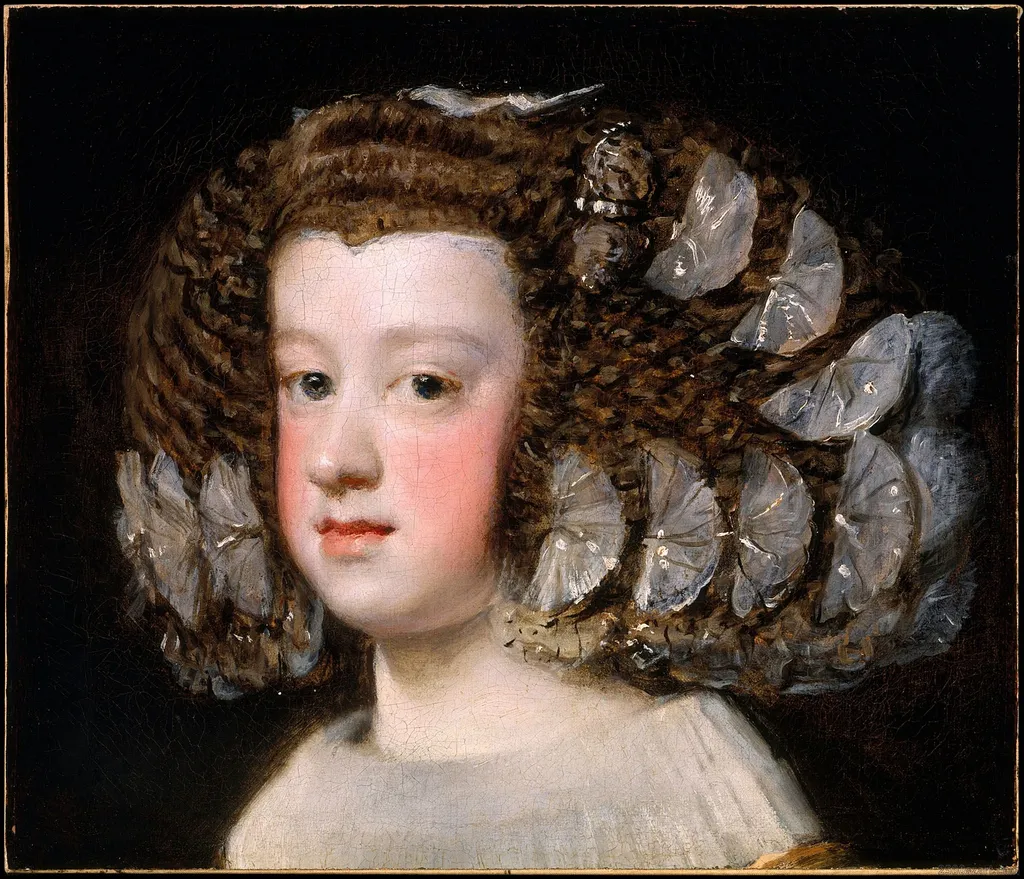
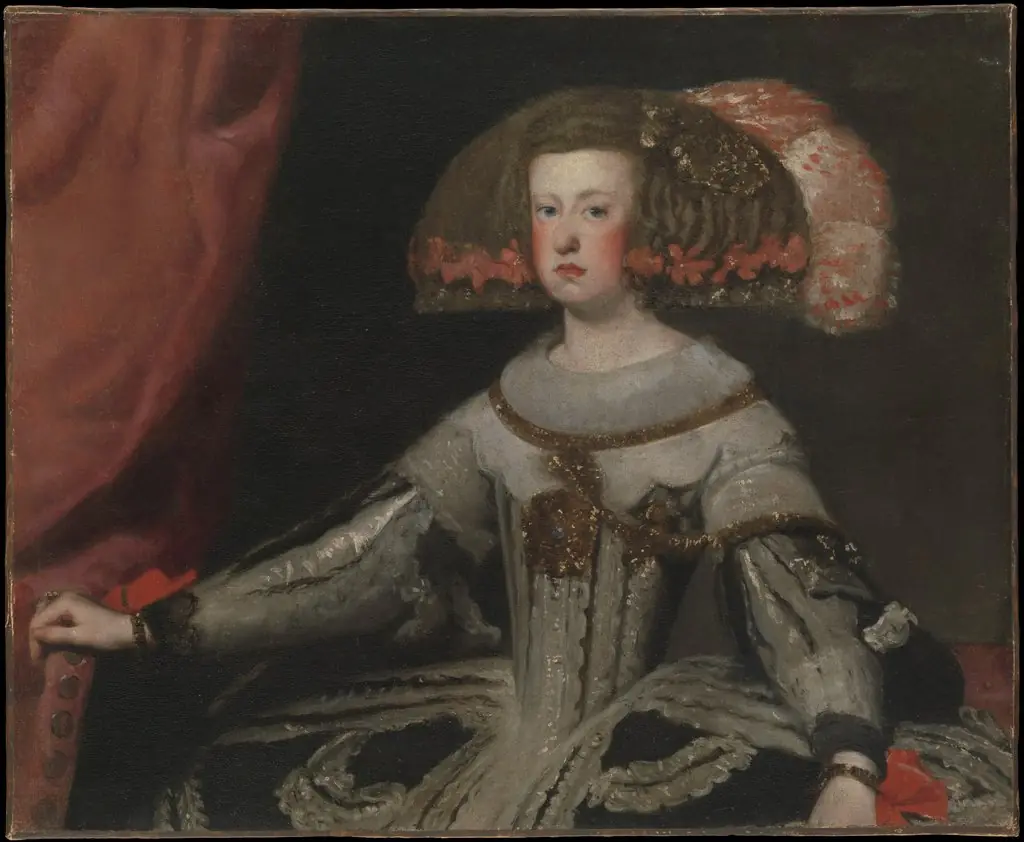
María Teresa (1638–1683), Infanta of Spain is an oil painting by the Spanish Baroque Tenebrist artist Diego Velázquez. It dates from 1651 and is held in the collection of the Metropolitan Museum of Art.
About this work
Subject & Meaning
This specific inclusion functions as a symbol of metamorphosis, representing the subject's transitional state from childhood into adolescence.
This 1651 oil portrait depicts María Teresa, the eldest daughter of King Philip IV of Spain. At the time of painting, she was approximately fourteen years old and had become the heir presumptive to the Spanish throne following the death of her brother, Prince Baltasar Carlos, in 1646. The work likely served as a workshop model for subsequent official portraits, evidenced by its reduced dimensions.
Iconographically, the Infanta's hair is adorned with fabric butterflies alongside a single real butterfly. This specific inclusion functions as a symbol of metamorphosis, representing the subject's transitional state from childhood into adolescence. The image captures the future Queen of France prior to her 1660 marriage to Louis XIV, emphasizing her dynastic significance during a pivotal period of her youth.
Technique & Style
The portrait is executed in oil paint on canvas, consistent with Velázquez’s practice for formal court portraits. The handling shows the artist’s characteristic loose, fluid brushwork, particularly in the rendering of the sitter’s hair and costume, while the face is modeled with subtle glazes to convey delicate features and a restrained, contemplative expression. The composition is framed tightly, focusing attention on the Infanta’s poised yet youthful presence.
A notable stylistic detail is the decorative arrangement of fabric butterflies in her hair, combined with a real butterfly motif, symbolizing transition and adolescence. The work’s restrained palette and luminous flesh tones exemplify Velázquez’s mature court style, emphasizing naturalism and psychological depth.
History & Provenance
The portrait of Infanta María Teresa was executed by Diego Velázquez in 1651–1652 as a likeness of the Spanish princess, then aged fourteen. Painted in oil on canvas, it originally entered the collection of French philanthropist Jules Bache, who later bequeathed the work to the Metropolitan Museum of Art, where it remains on public view. Contemporary accounts note that the Infanta’s hair is adorned with silk butterflies and a genuine butterfly, motifs that may have informed later official depictions of her.
The painting has been exhibited in major Velázquez retrospectives and is catalogued as a portrait within the museum’s collection.
The portrait is held in the collection of the Metropolitan Museum of Art in New York. Previously, the work was owned by Jules Bache before entering the museum's holdings. While specific inventory or accession numbers are not detailed in the available records, the institution maintains external resources dedicated to the piece.
The painting has been featured in exhibitions focusing on the artist Velázquez. Historical analysis suggests the canvas was significantly cut down from its original dimensions, likely serving as a studio model for subsequent official portraits of the Infanta.
Context
The painting, an oil on canvas portrait dated 1651–1652, shows Infanta Maria Theresa of Spain, daughter of Philip IV, at the age of fourteen. It is housed in the Metropolitan Museum of Art and was previously owned by Jules Bache; its inclusion in the exhibition titled ‘Velázquez’ underscores its significance within the artist’s court portraiture. Contemporary scholarship highlights the butterfly motifs embroidered in the sitter’s hair as symbols of metamorphosis, reflecting both the diplomatic alliance between Spain and France and Velázquez’s innovative use of symbolic detail.
Art historical analyses therefore regard the work as a representative example of Baroque portraiture and a key document of 17th‑century Iberian visual culture.
Overview
Diego Velázquez completed this oil portrait of María Teresa, Infanta of Spain, in 1651. The painting captures the young royal figure and is now part of the collection at The Metropolitan Museum of Art. It serves as a significant example of the artist's work during the mid-17th century, depicting a prominent member of the Spanish court.
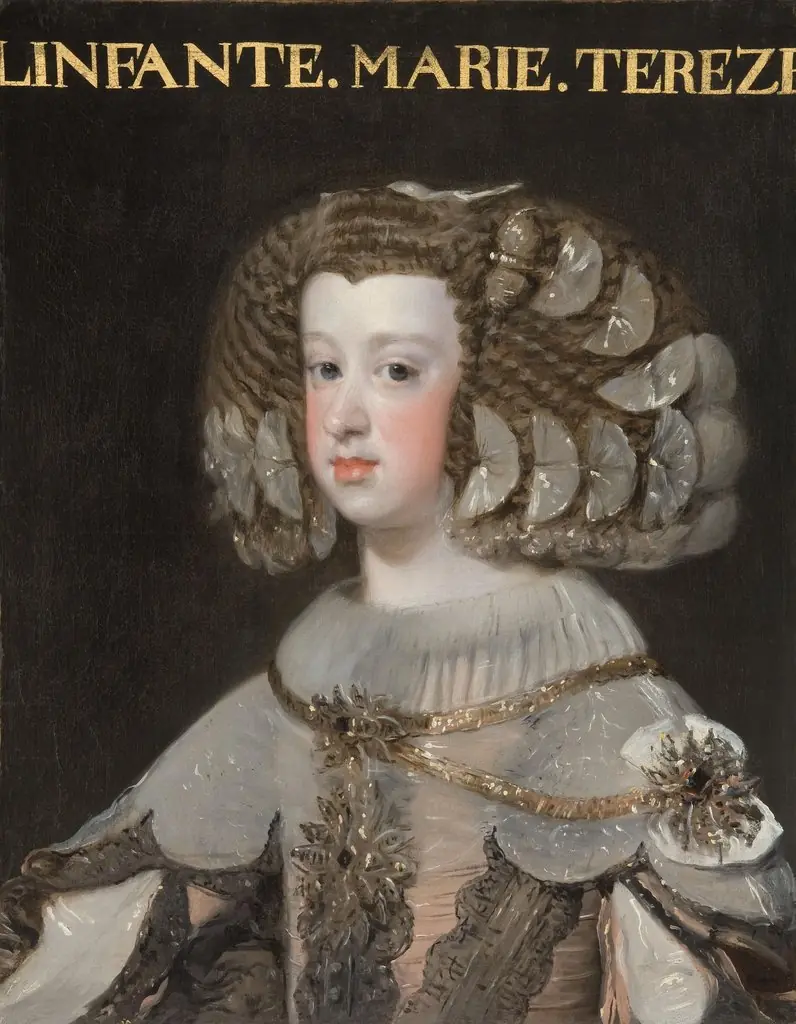
Own this work as a print
Artist & collection

Artist
Diego Rodríguez de Silva y Velázquez was a Spanish Baroque painter, the leading artist in the court of King Philip IV of Spain and Portugal, and of the Spanish Golden Age.

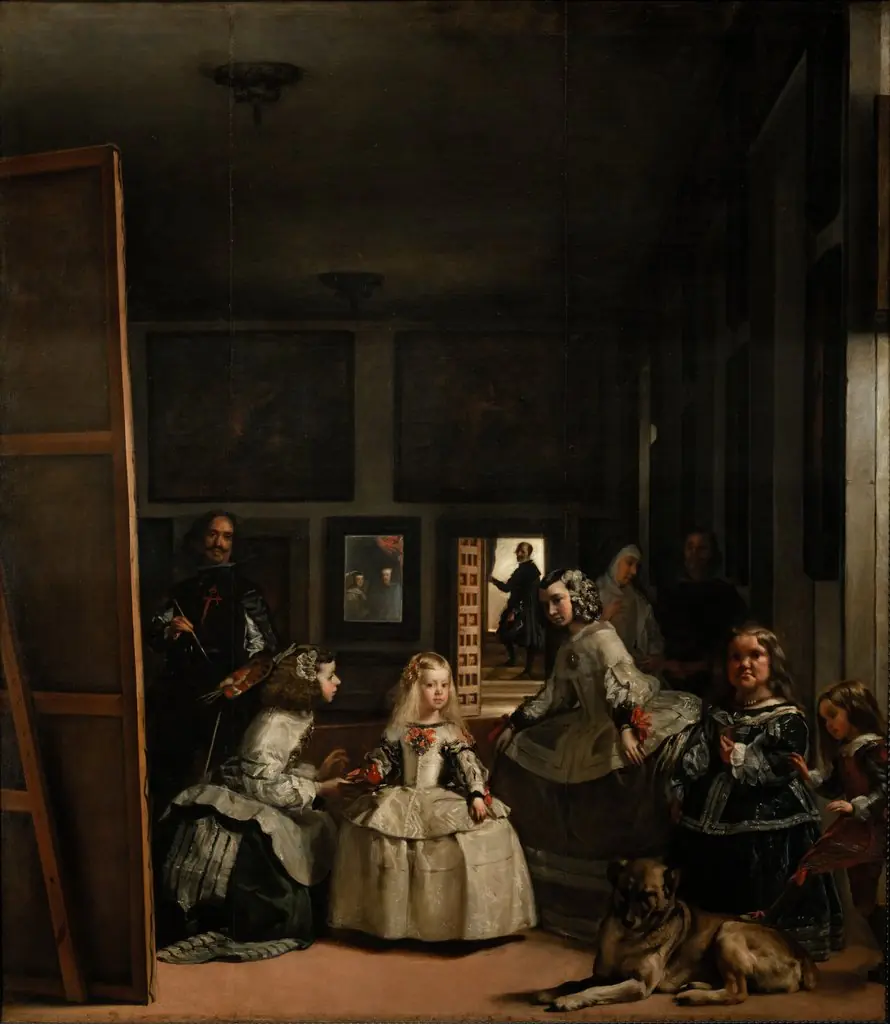
- Portrait of the Infanta Maria Teresa
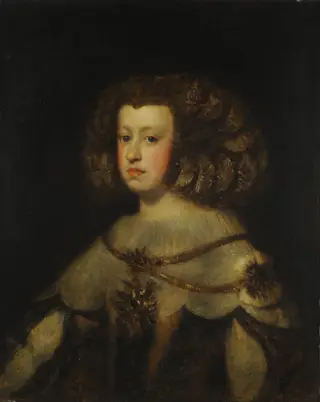 Retrato de la infanta María Teresa de España
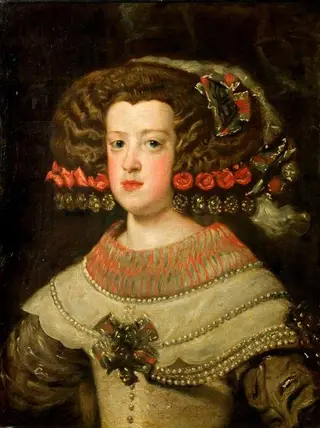 The Infanta Maria Teresa (1638–1683)
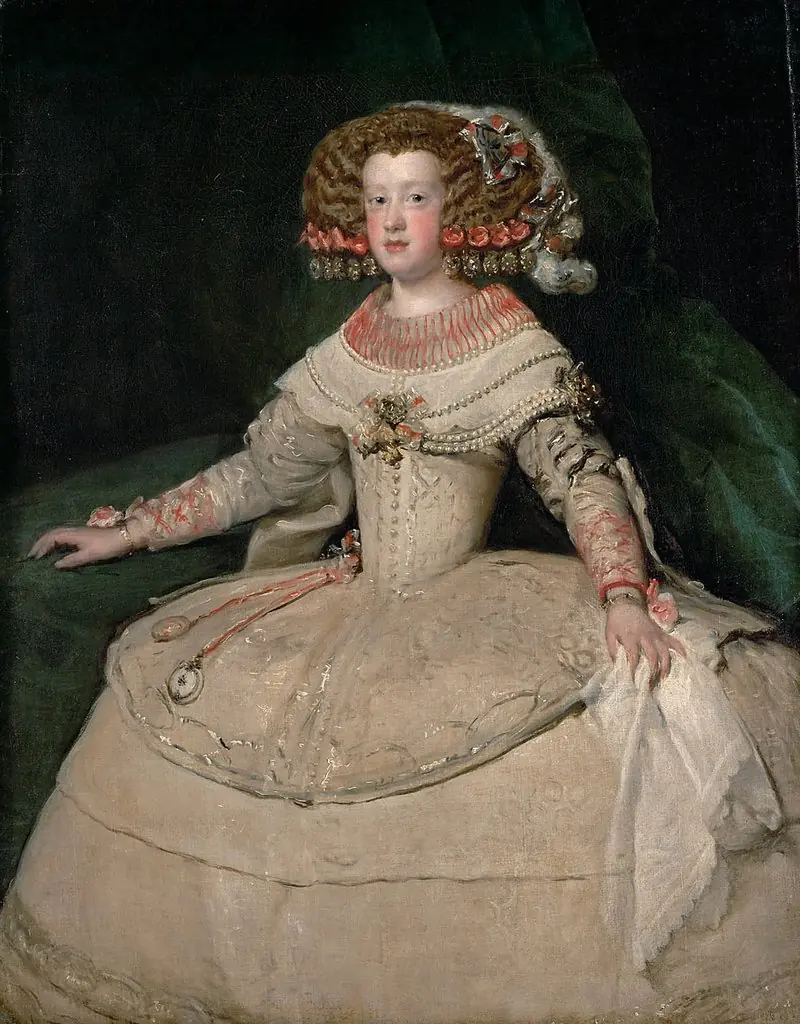 Portrait of the Infanta Maria Theresa of Spain
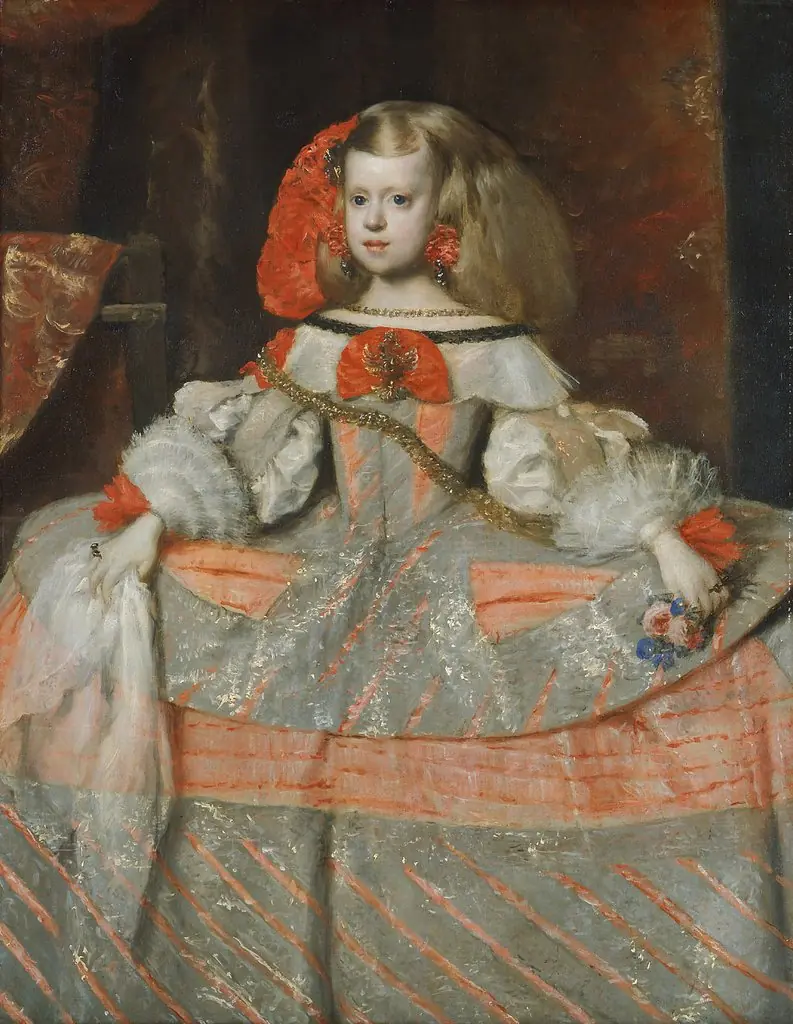 Infanta Margarita Teresa (1651-1673)
 Infanta Maria Theresa
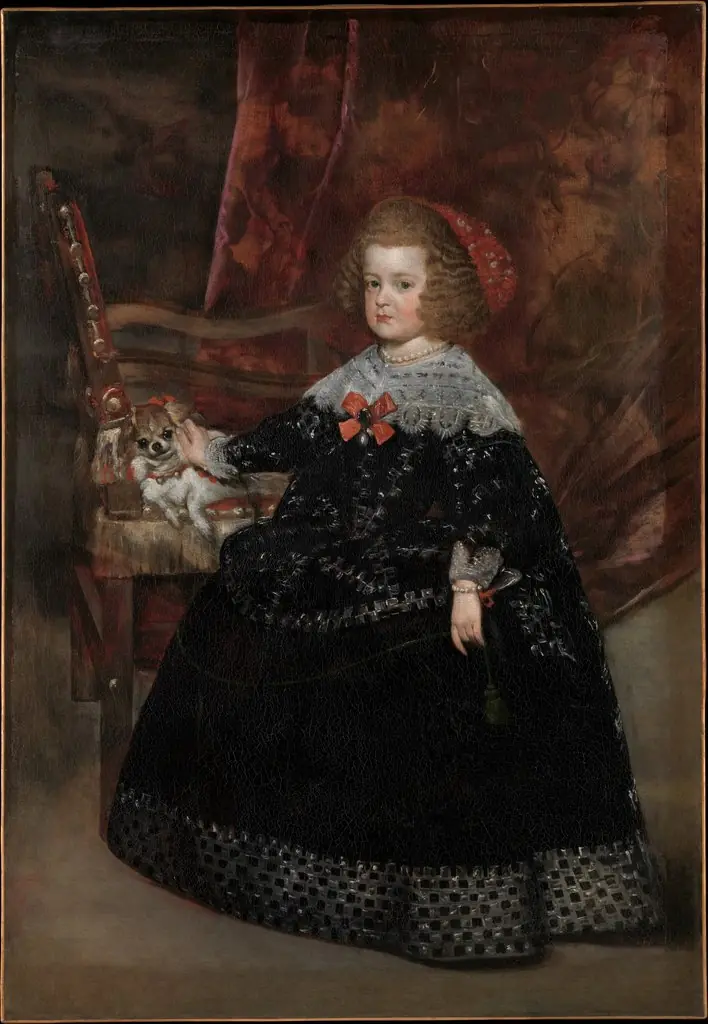 María Teresa (1638–1683), Infanta of Spain
 Mariana of Austria (1634–1696), Queen of Spain
 Maria Anna, Queen of Spain