Artwork
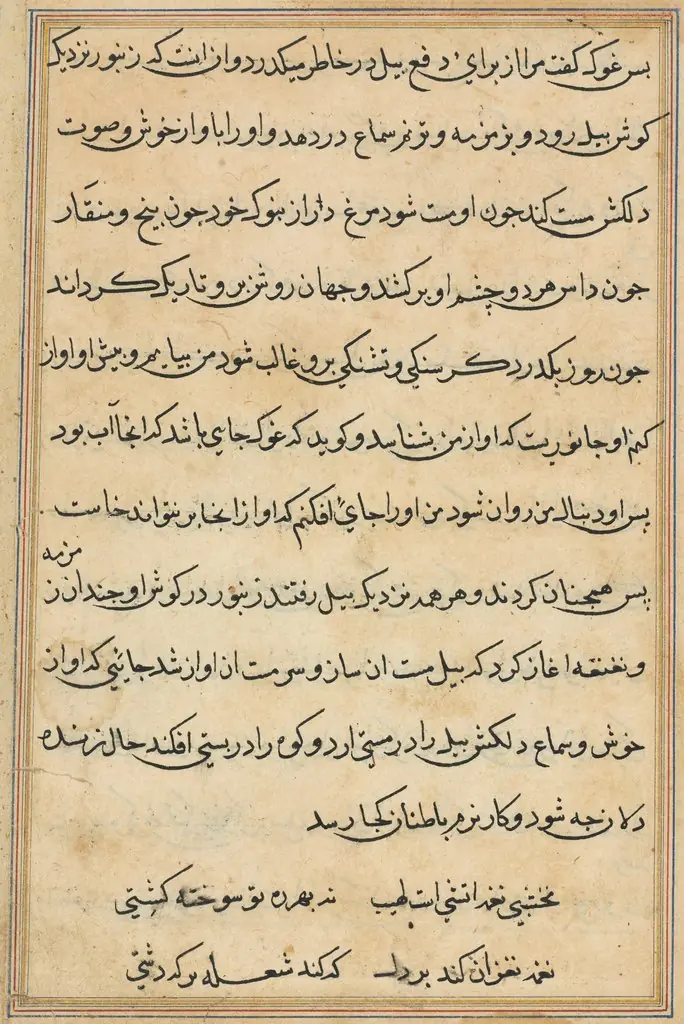
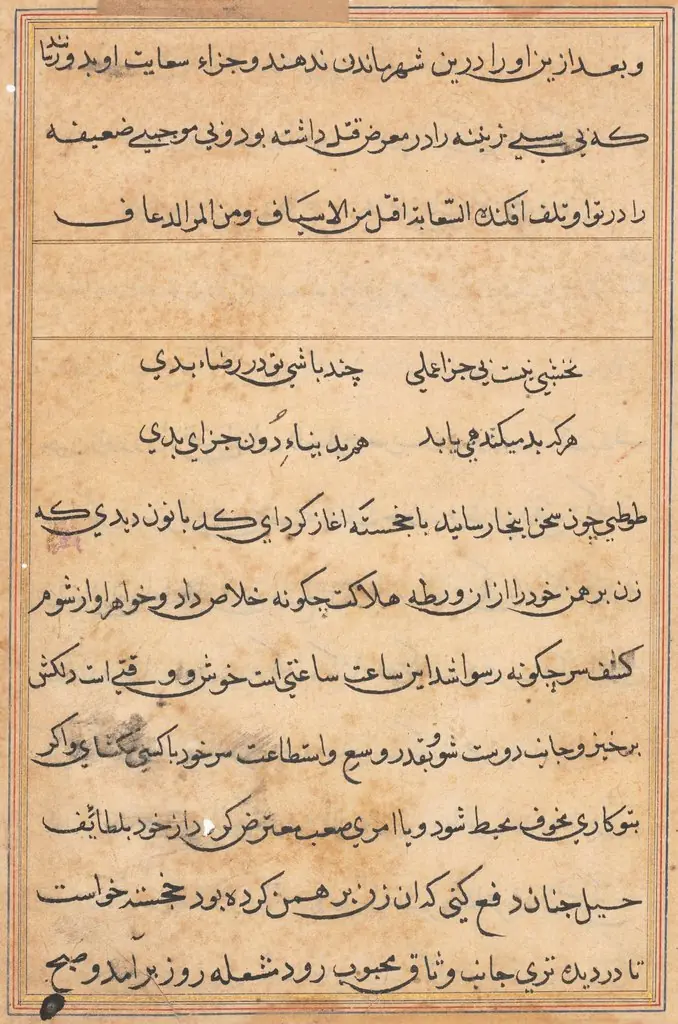
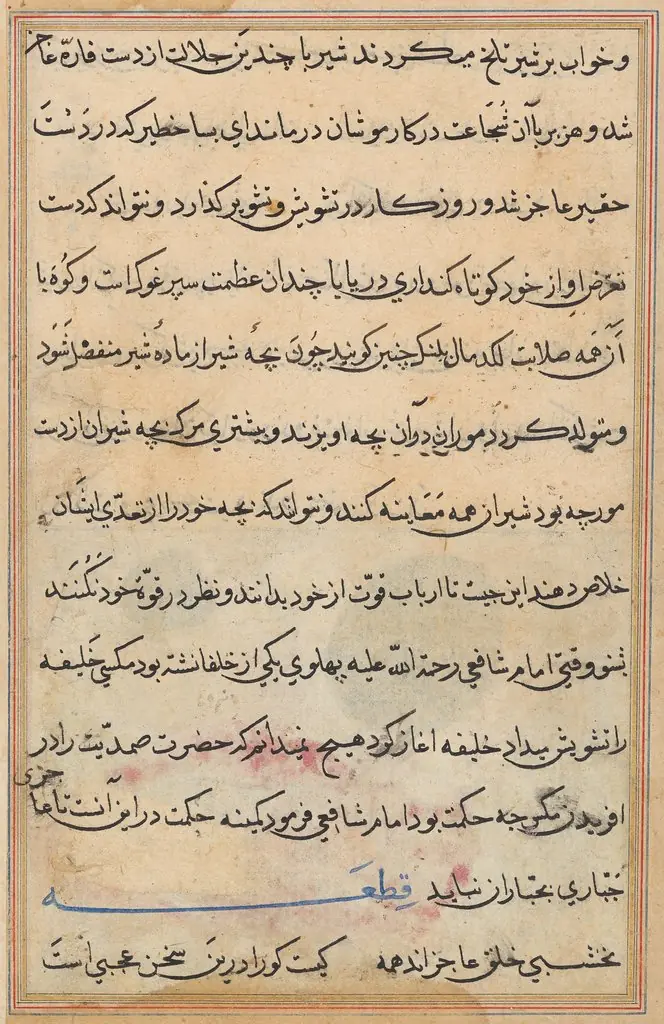
Page from Tales of a Parrot (Tuti-nama): text page
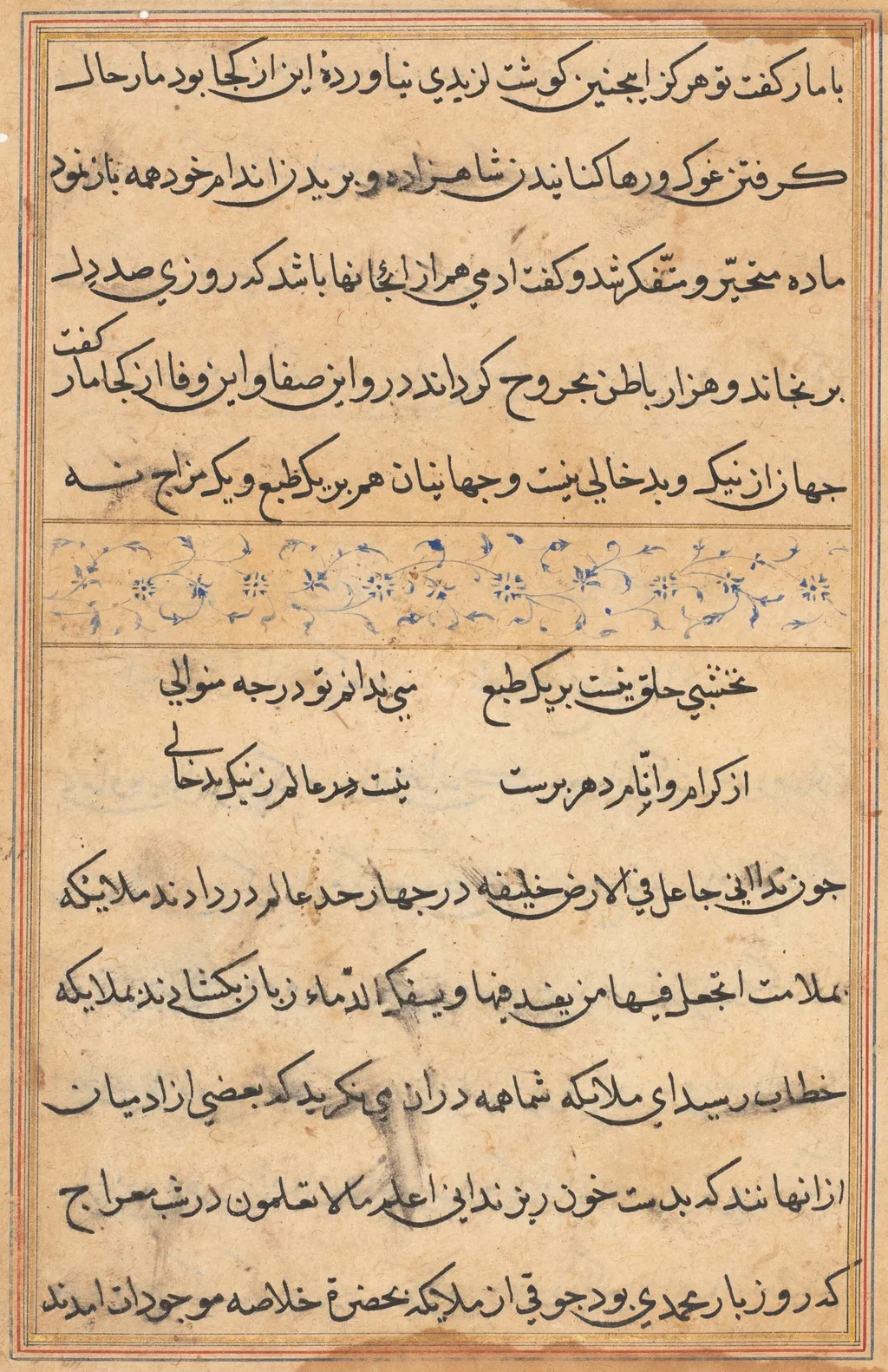
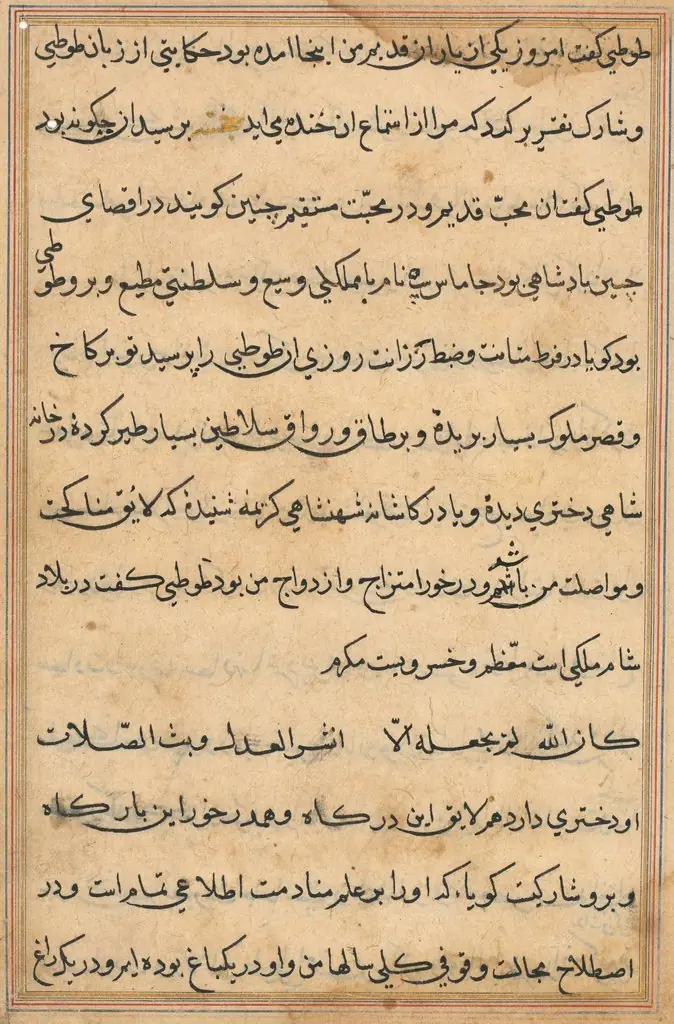
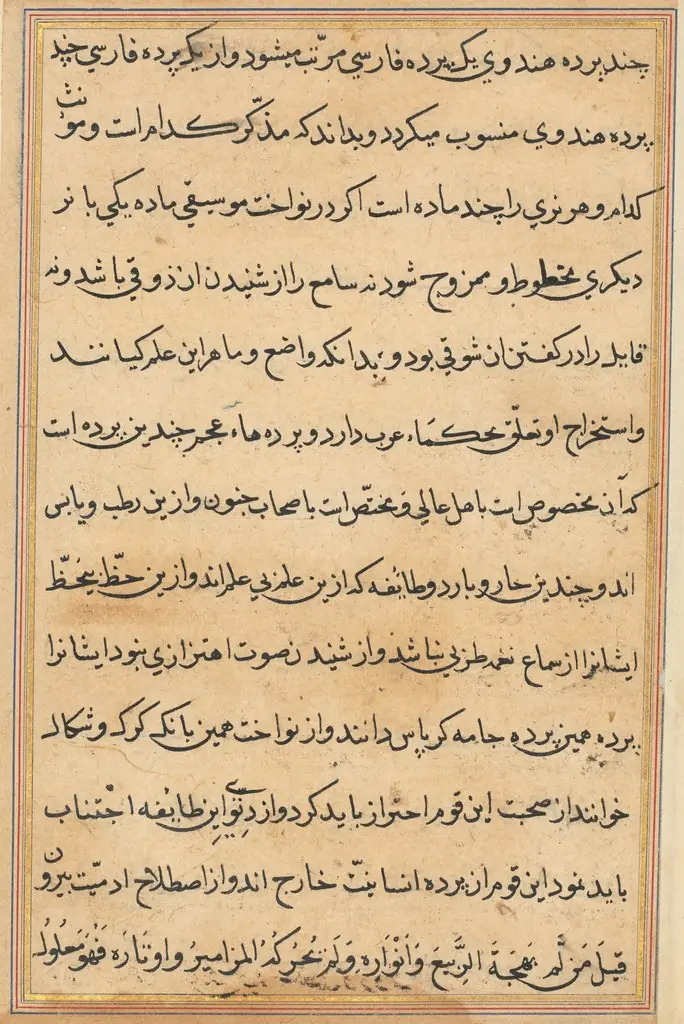
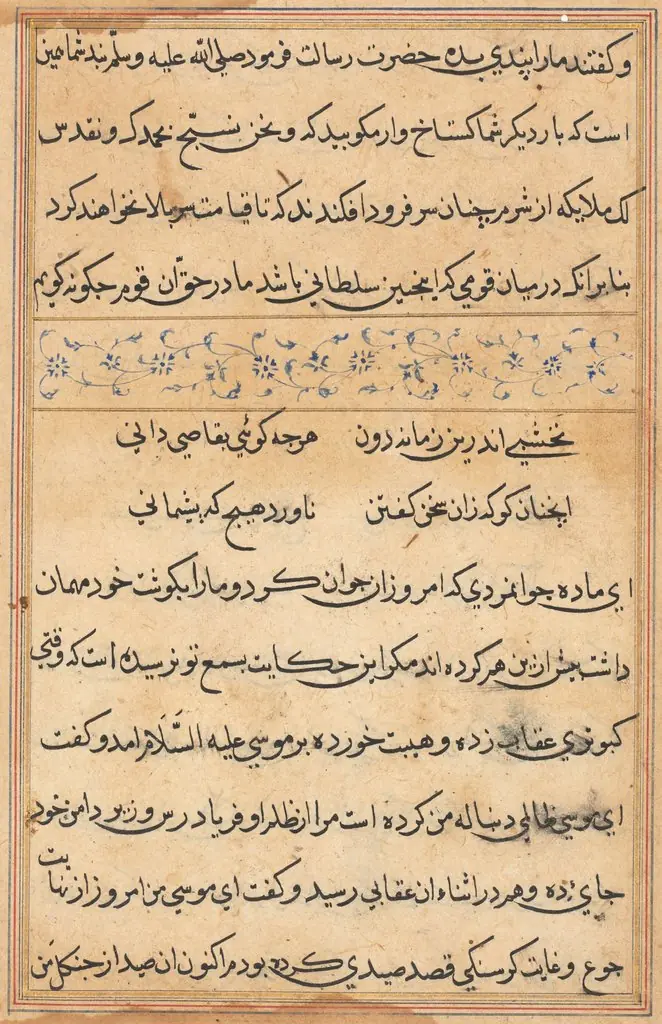
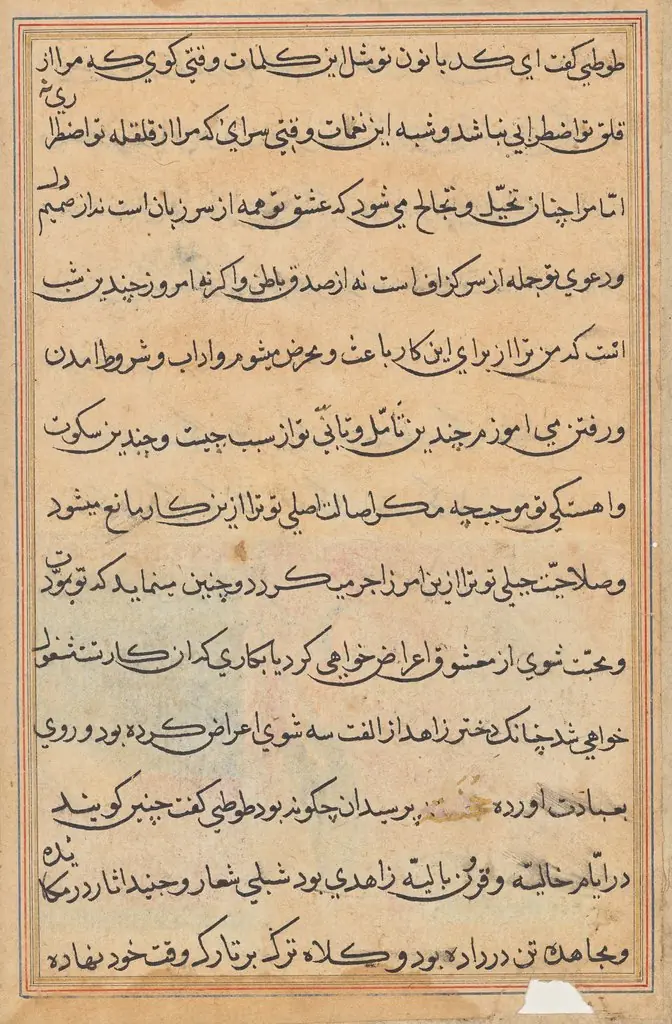
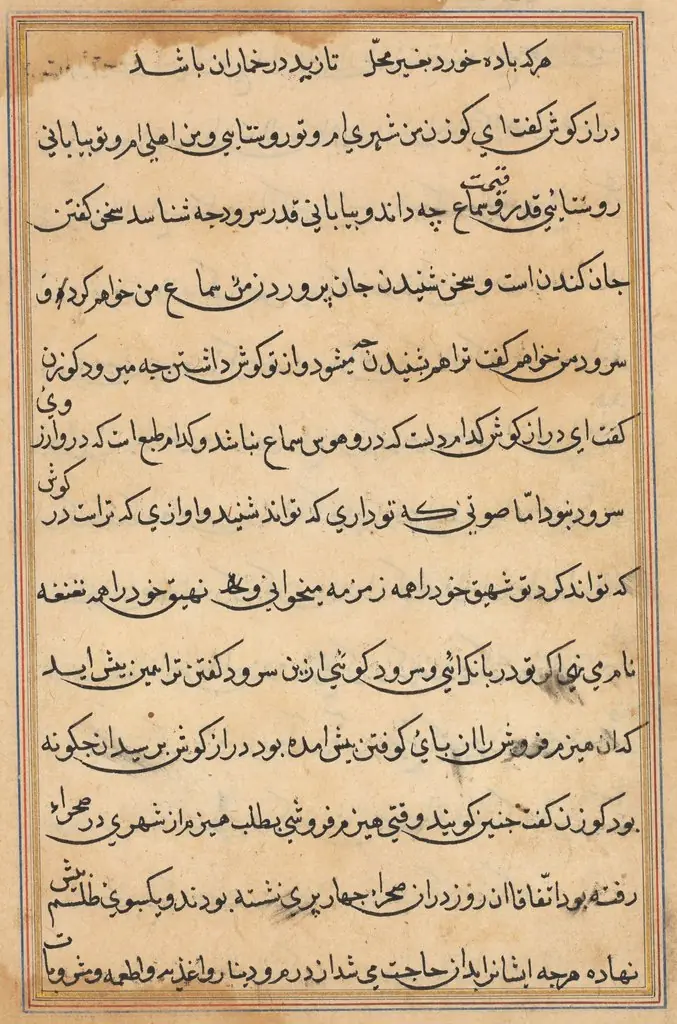
Page from Tales of a Parrot (Tuti-nama): text page is an unspecified painting. It dates from 1560 and is held in the collection of the Cleveland Museum of Art. The object is a painted page from the Persian manuscript known as Tuti‑nama (Tales of a Parrot).
About this work
Subject & Meaning
Symbolic elements include the parrot as a messenger of divine knowledge and the miniature setting that frames the narrative within courtly aesthetics.
The page depicts a textual episode from the Persian illustrated manuscript Tuti-nama, portraying a parrot recounting moral tales. The subject functions as a didactic allegory, using the bird's speech to convey lessons about wisdom, courtship, and worldly folly within the Mughal cultural context. Symbolic elements include the parrot as a messenger of divine knowledge and the miniature setting that frames the narrative within courtly aesthetics.
This work reflects the Mughal patronage of Persian literary traditions and illustrates how text and image combine to teach ethical principles through visual storytelling.
Technique & Style
The text page is a miniature painting created in 1560 using ink and pigment on paper within the Mughal Empire. It exemplifies the Mughal manuscript tradition through its fine brushwork, restrained palette, and integration of calligraphic text with decorative borders. The Cleveland Museum of Art holds this work (accession 1962.279.133.a), where it remains on view in the Indian and Persian Art galleries.
History & Provenance
This text page from the Tales of a Parrot (Tuti-nama) was created in 1560 within the Mughal Empire. The specific artist responsible for the work remains unidentified in historical records. The manuscript was commissioned during the mid-sixteenth century, a period of significant artistic production under Mughal patronage.
The Cleveland Museum of Art currently holds the work, having acquired it as part of its collection of Mughal paintings.
The text page from the Tales of a Parrot (Tuti-nama) is held in the collection of the Cleveland Museum of Art. The institution identifies the work with the accession number 1962.279.133.a. Created in 1560 within the Mughal Empire, the piece is classified as a painting by an unknown artist.
The provided sources confirm its location and inventory details but do not list specific exhibitions where the work has been displayed.
Overview
The object is a painted page from the Persian manuscript known as Tuti‑nama (Tales of a Parrot). Executed on paper, the surface is dominated by dense black ink calligraphy arranged in fluid, curved lines that occupy most of the layout, all set against a light ground. A narrow red band borders the page, while a row of small blue floral motifs runs along the bottom edge, providing a subtle chromatic accent.
Context
Tuti‑nama belongs to a genre of Persian literature that uses animal protagonists to convey moral and philosophical lessons. The manuscript’s lavish presentation reflects the importance of literary culture in courtly settings, where texts were often embellished with decorative borders and miniature motifs to enhance their prestige.
Artist & collection

- Page from Tales of a Parrot (Tuti-nama): text page
 Page from Tales of a Parrot (Tuti-nama): text page
 Page from Tales of a Parrot (Tuti-nama): text page
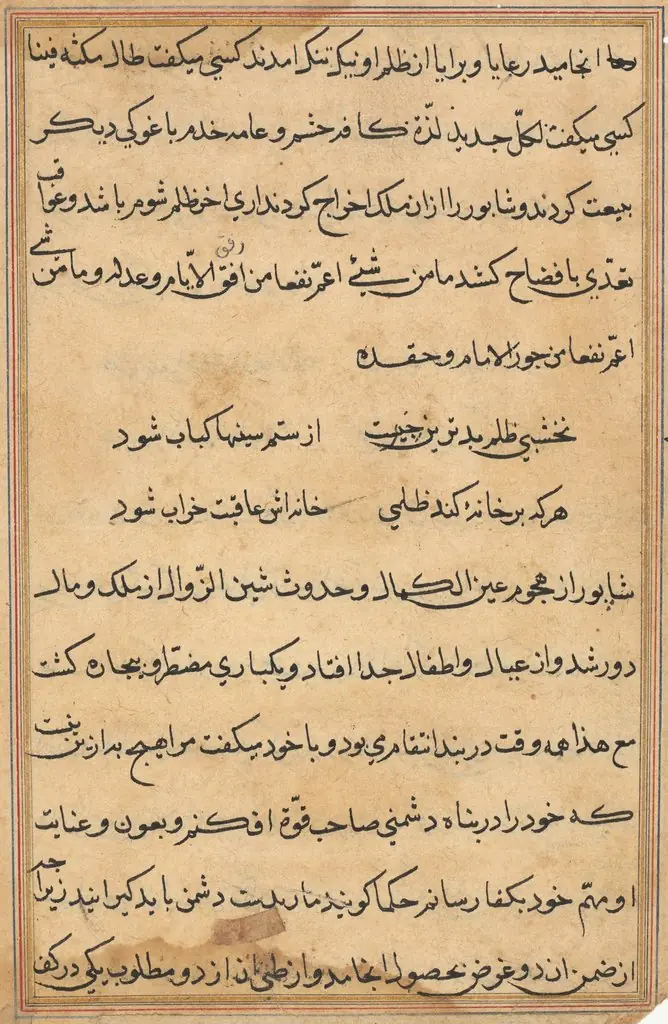 Page from Tales of a Parrot (Tuti-nama): text page
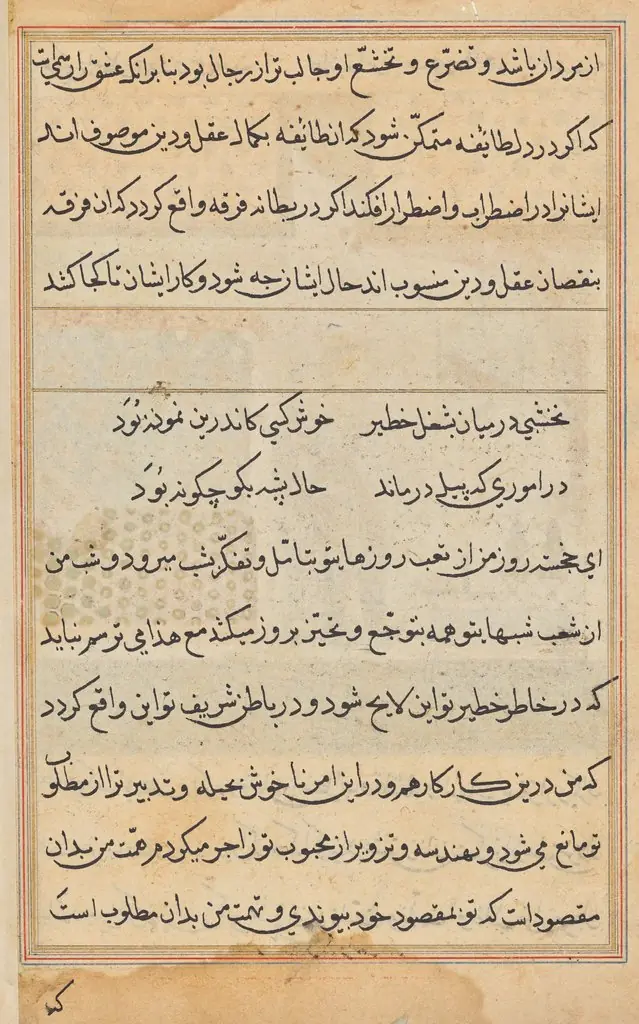 Page from Tales of a Parrot (Tuti-nama): text page
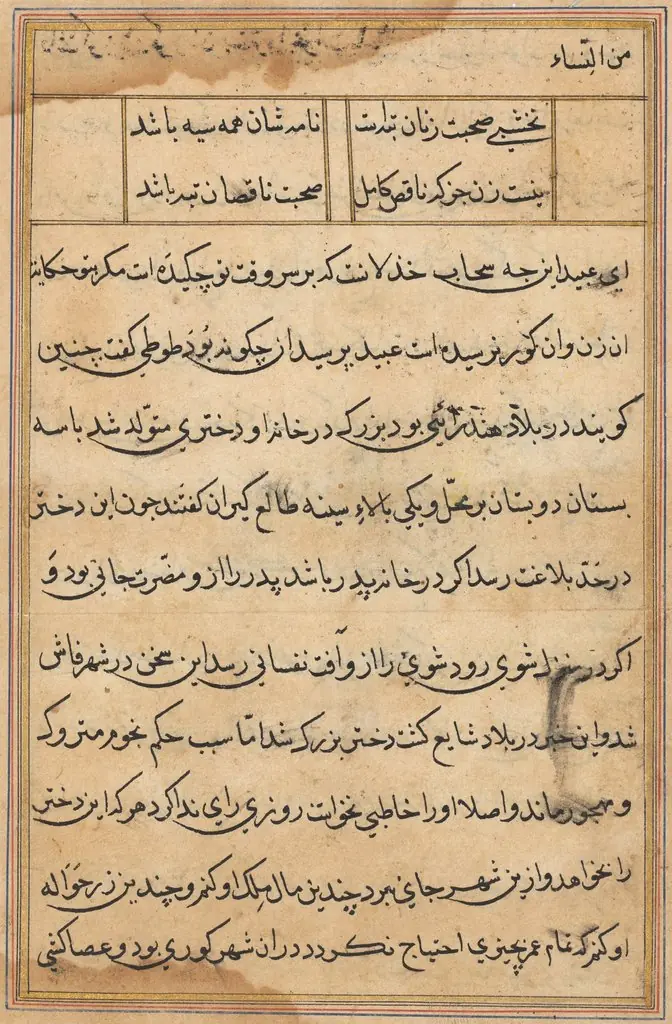 Page from Tales of a Parrot (Tuti-nama): text page
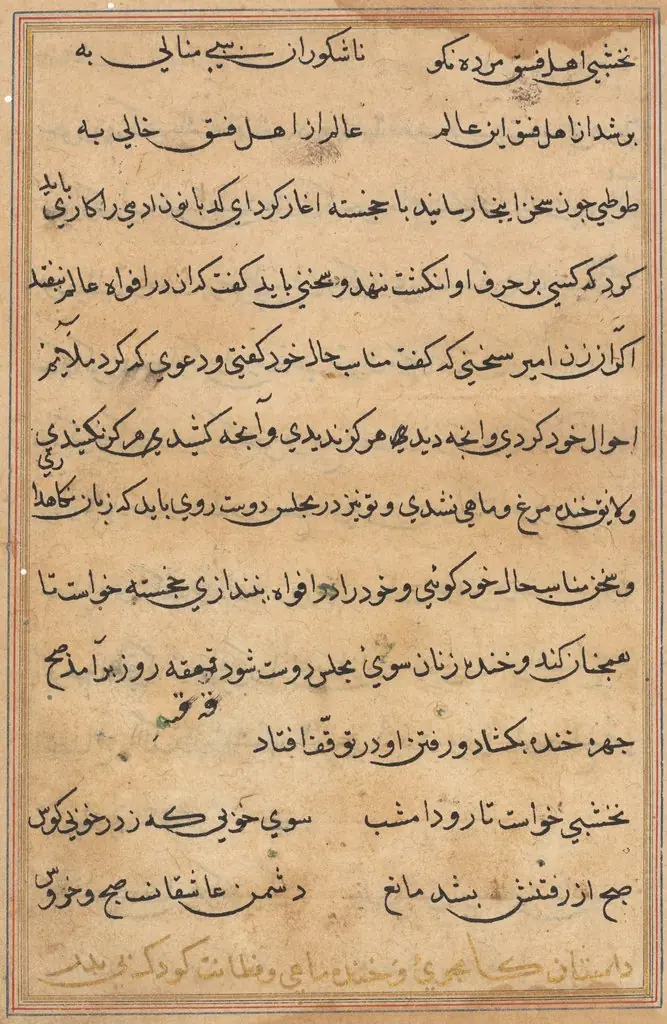 Page from Tales of a Parrot (Tuti-nama): text page
 Page from Tales of a Parrot (Tuti-nama): text page
 Page from Tales of a Parrot (Tuti-nama): text page
 Page from Tales of a Parrot (Tuti-nama): text page
 Page from Tales of a Parrot (Tuti-nama): text page
 Page from Tales of a Parrot (Tuti-nama): text page