Artwork
Page from Tales of a Parrot (Tuti-nama): text page
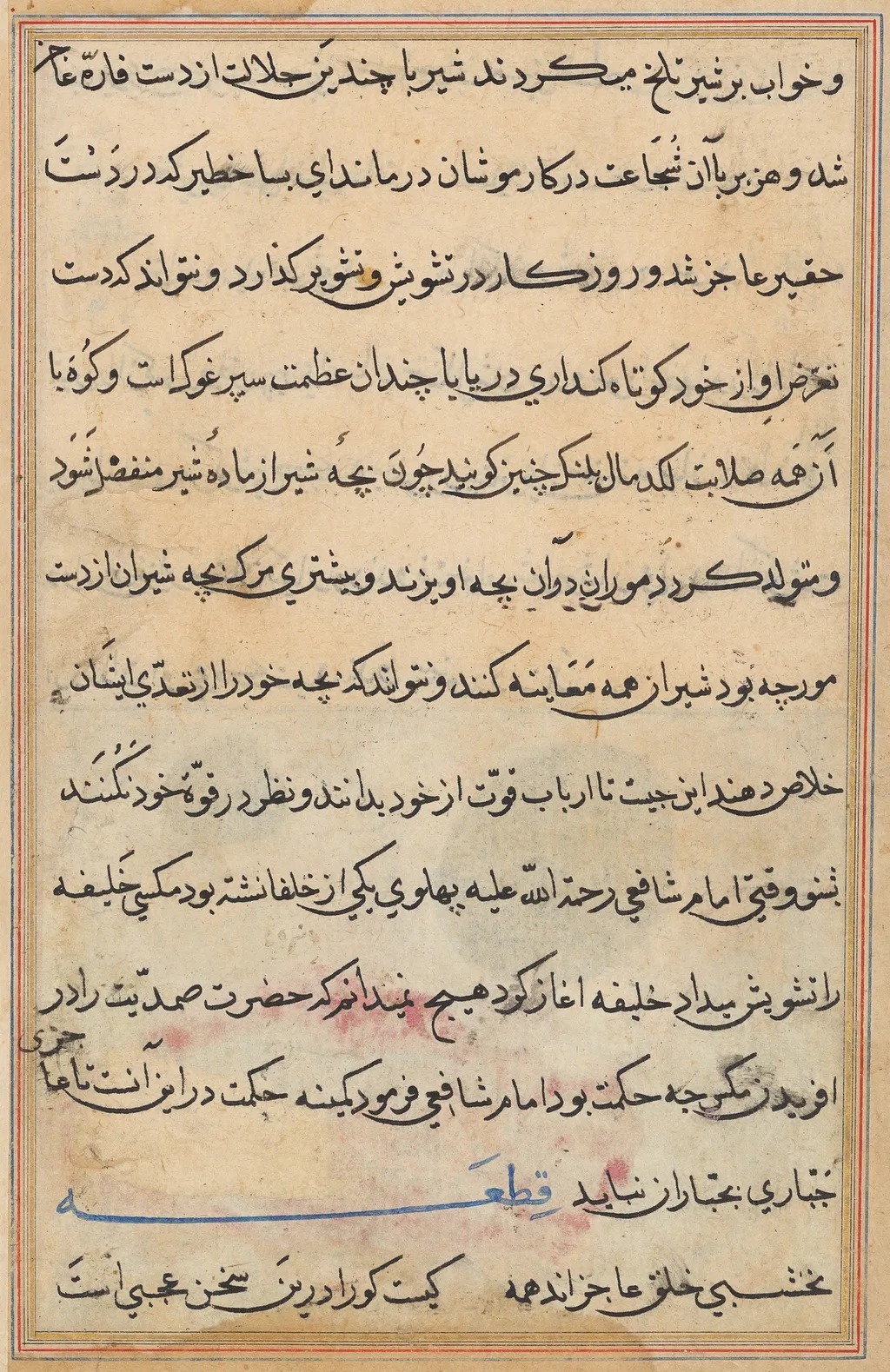
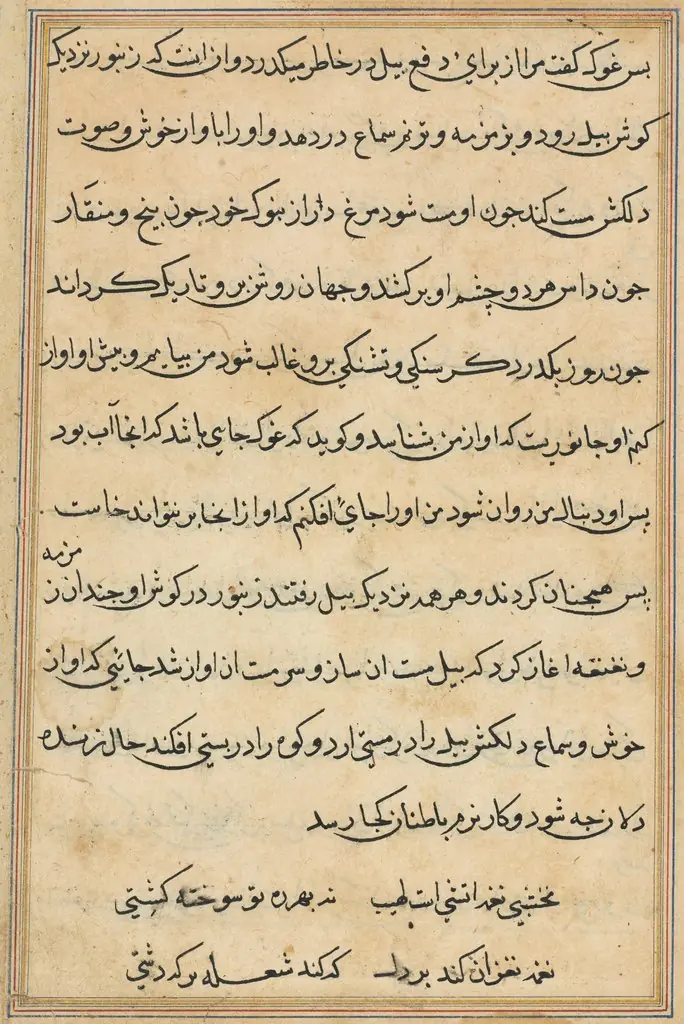
Page from Tales of a Parrot (Tuti-nama): text page is an unspecified painting. It dates from 1560 and is held in the collection of the Cleveland Museum of Art. This object is a single leaf from the medieval manuscript known as Tales of a Parrot (Tuti‑nama).
About this work
History & Provenance
Created in 1560 within the Mughal Empire, this text page from the Tales of a Parrot (Tuti-nama) is the work of an unidentified artist.
Created in 1560 within the Mughal Empire, this text page from the Tales of a Parrot (Tuti-nama) is the work of an unidentified artist. It belongs to the larger illustrated manuscript produced in the imperial workshops during the early reign of Emperor Akbar, though the specific patron or atelier director is not recorded in available documentation. The page is held in the Cleveland Museum of Art under the accession number 1962.279.113.b, having entered the collection in 1962. No major traveling-exhibition history is documented in the museum's published records.
Overview
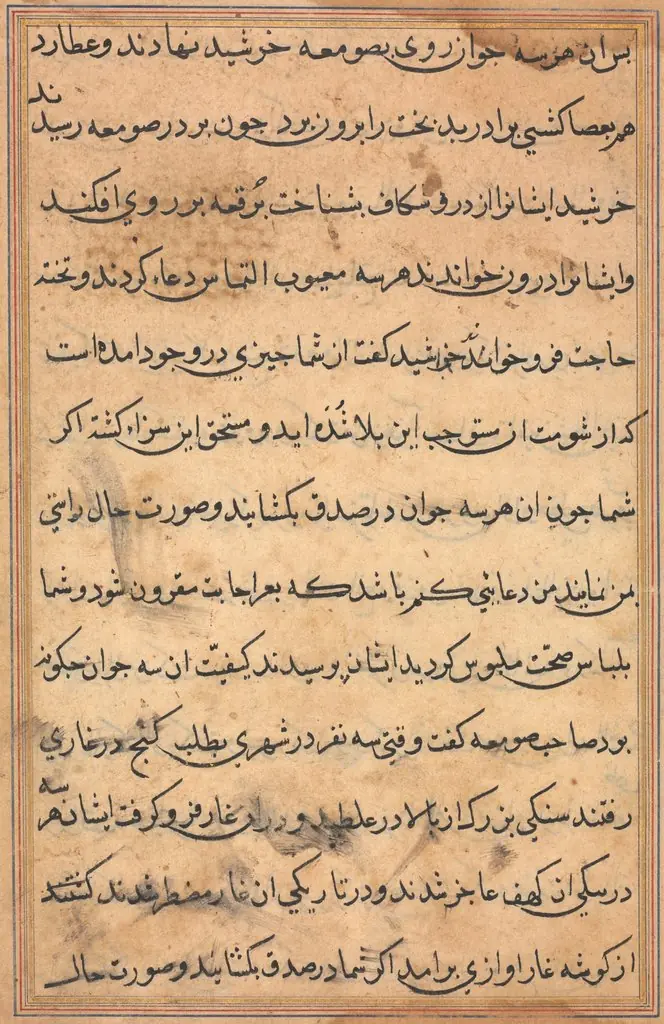
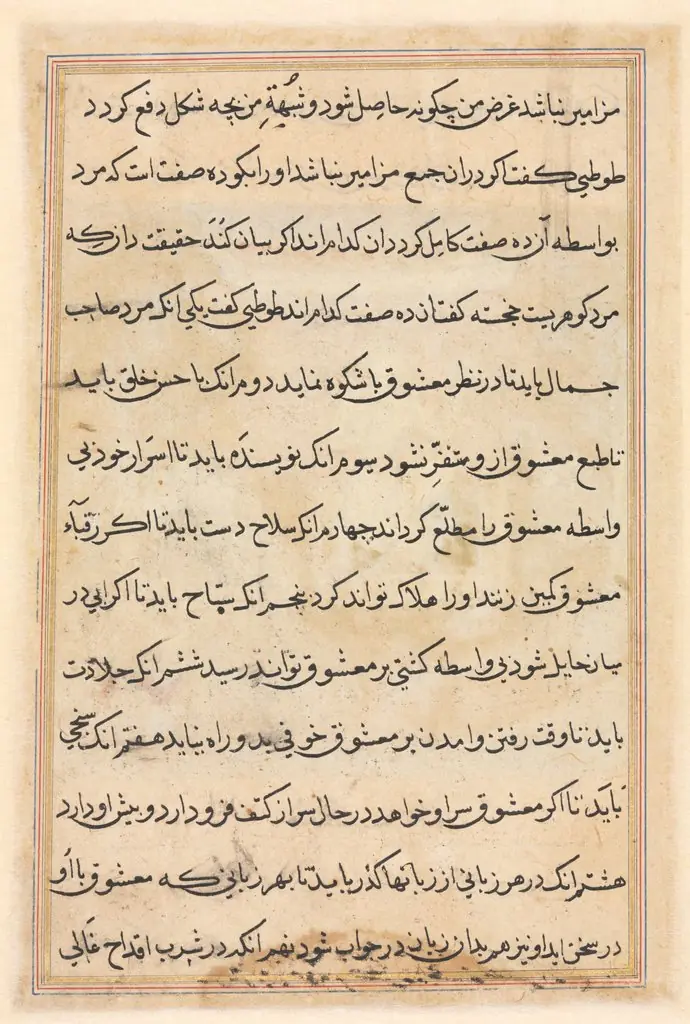
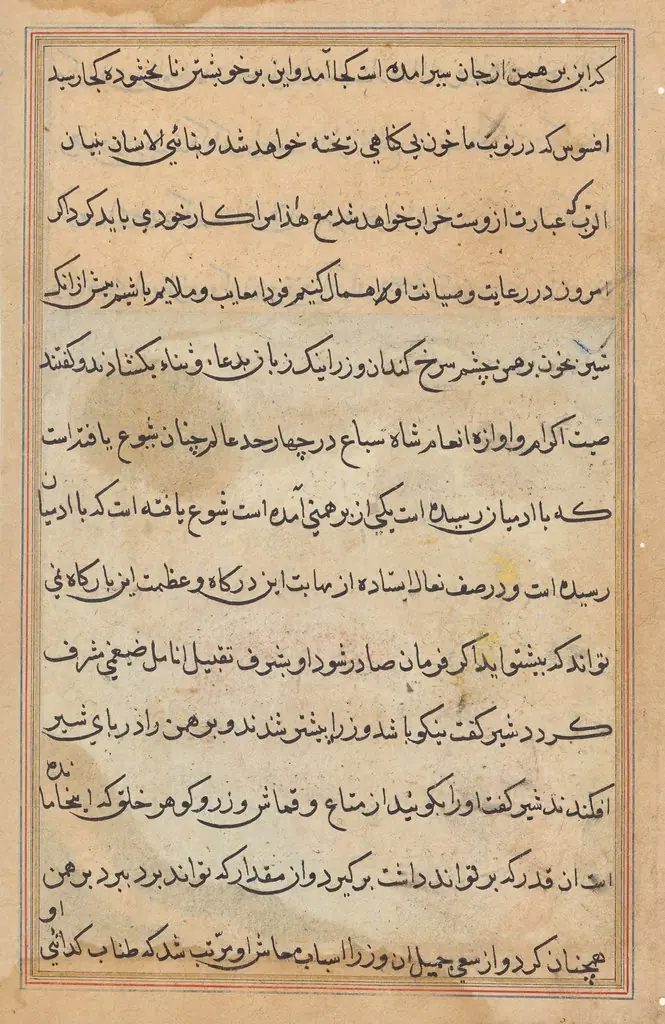
This object is a single leaf from the medieval manuscript known as Tales of a Parrot (Tuti‑nama). The page measures roughly the size of a hand‑held codex sheet and is composed of a yellowed parchment base on which black ink text is set. A decorative border in red and blue frames the central field, indicating a formal, possibly liturgical, purpose.
Subject & Meaning
The central block of text is rendered in a flowing, highly stylized script whose language has not been definitively identified. The elaborate letterforms and ornamental flourishes suggest a narrative or didactic work, while the presence of a colored frame points to a ceremonial or religious context common in medieval storytelling traditions.
Technique & Style
The manuscript page demonstrates the use of iron‑gall ink applied with a fine brush or quill, producing deep black strokes against the aged parchment. The border employs mineral pigments, likely vermilion for red and azurite for blue, applied in a linear, geometric pattern that frames the script without overwhelming it, reflecting a balance between decoration and readability.
Context
Manuscripts such as Tales of a Parrot were commonly used to transmit moral stories, religious teachings, or courtly literature across the Silk Road. The combination of a formal script with vivid border colors reflects the aesthetic preferences of elite patrons who valued both the visual appeal and the spiritual authority of the written word.
Artist & collection

- Page from Tales of a Parrot (Tuti-nama): text page
 Page from Tales of a Parrot (Tuti-nama): text page
 Page from Tales of a Parrot (Tuti-nama): text page
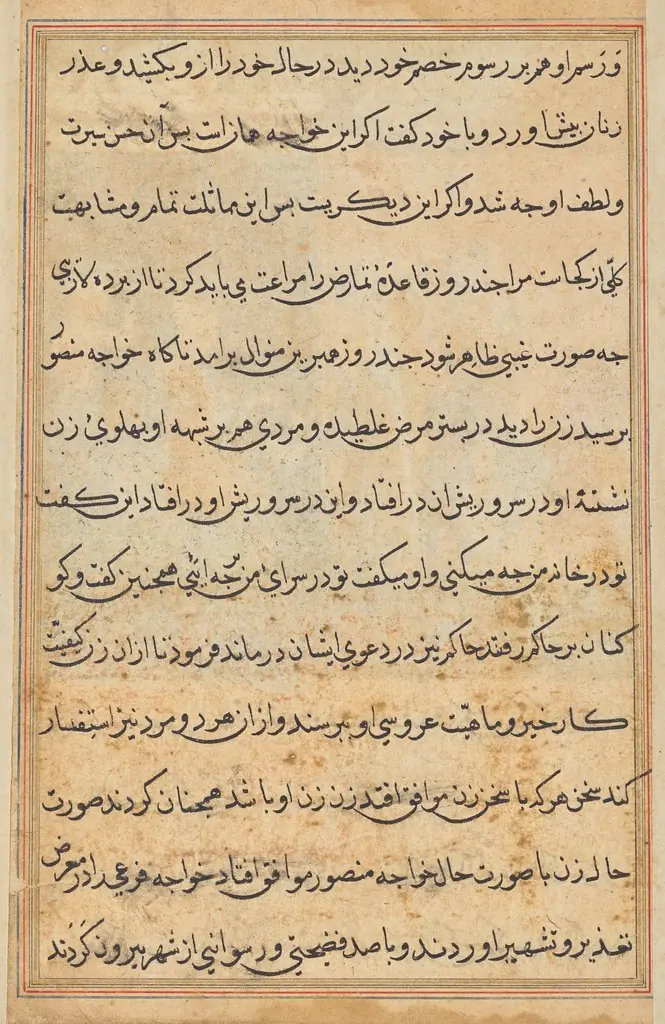 Page from Tales of a Parrot (Tuti-nama): text page
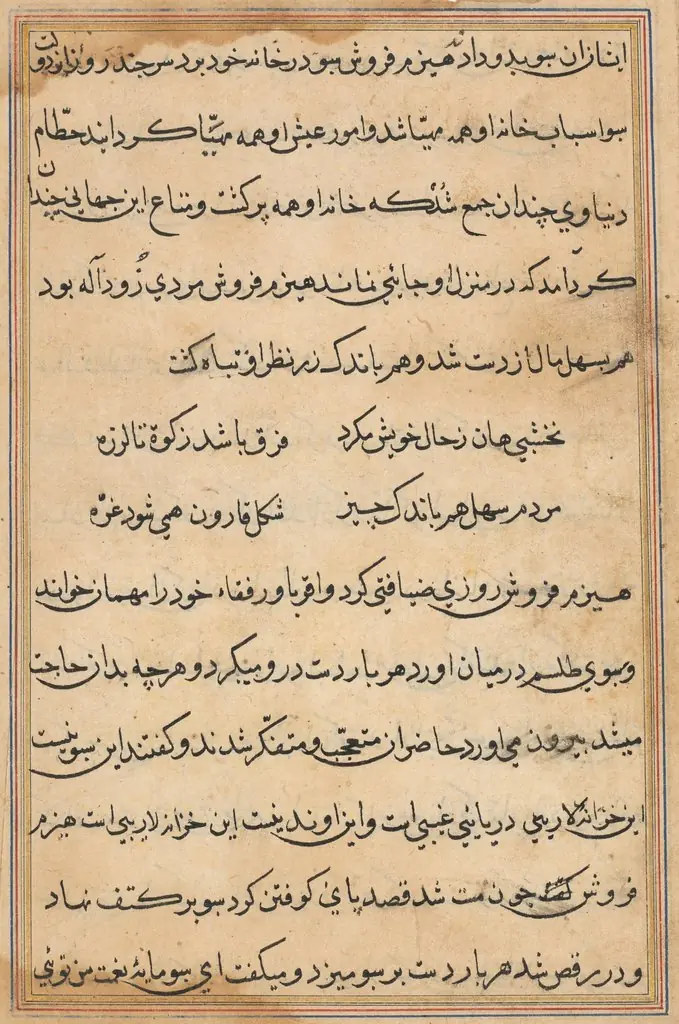 Page from Tales of a Parrot (Tuti-nama): text page
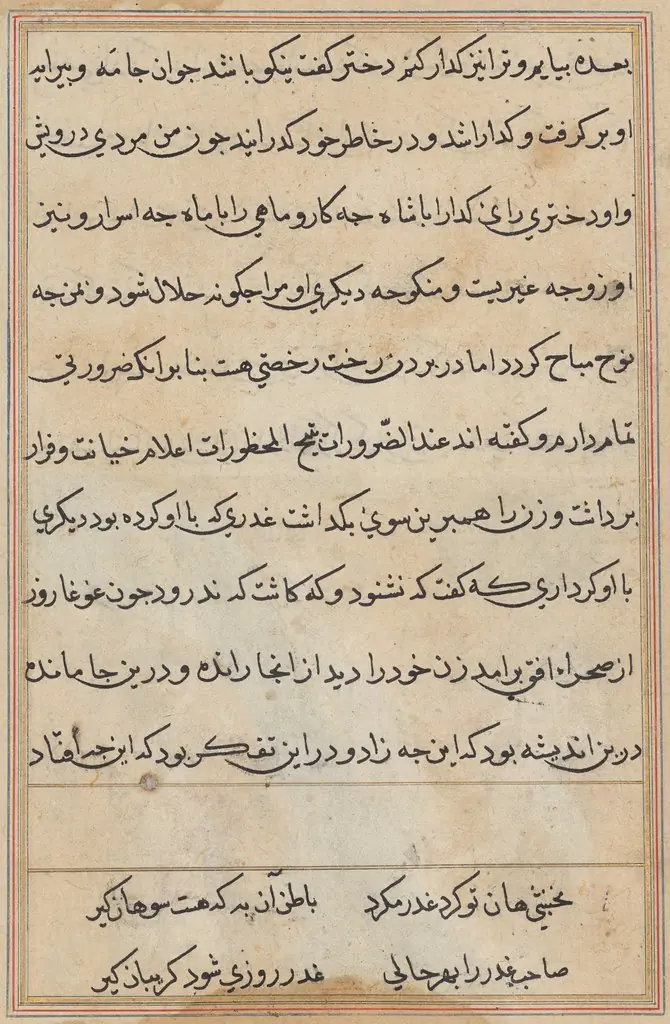 Page from Tales of a Parrot (Tuti-nama): text page
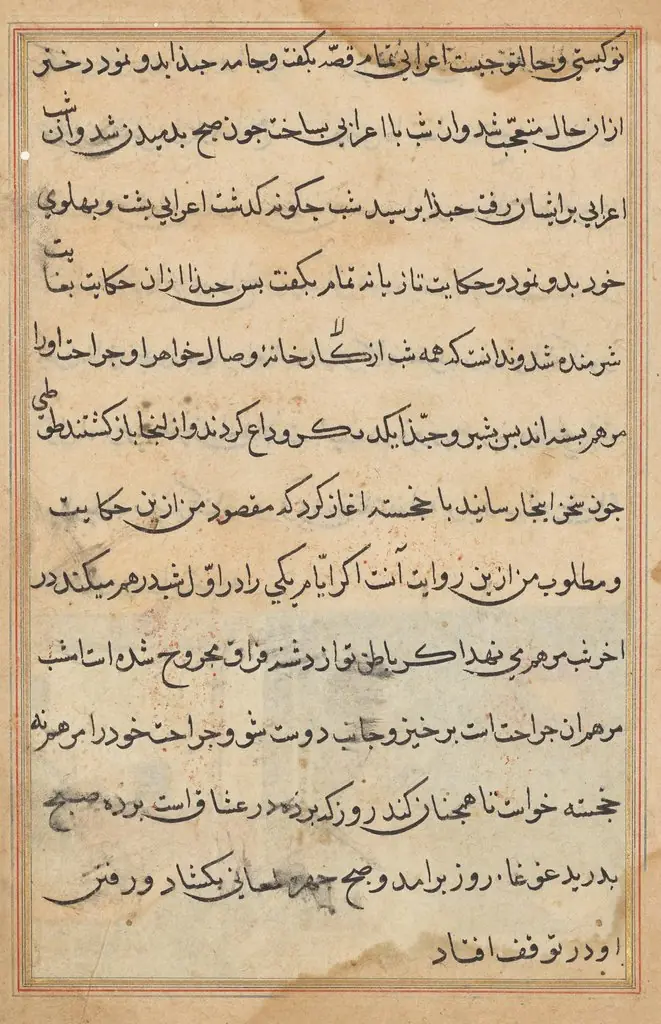 Page from Tales of a Parrot (Tuti-nama): text page
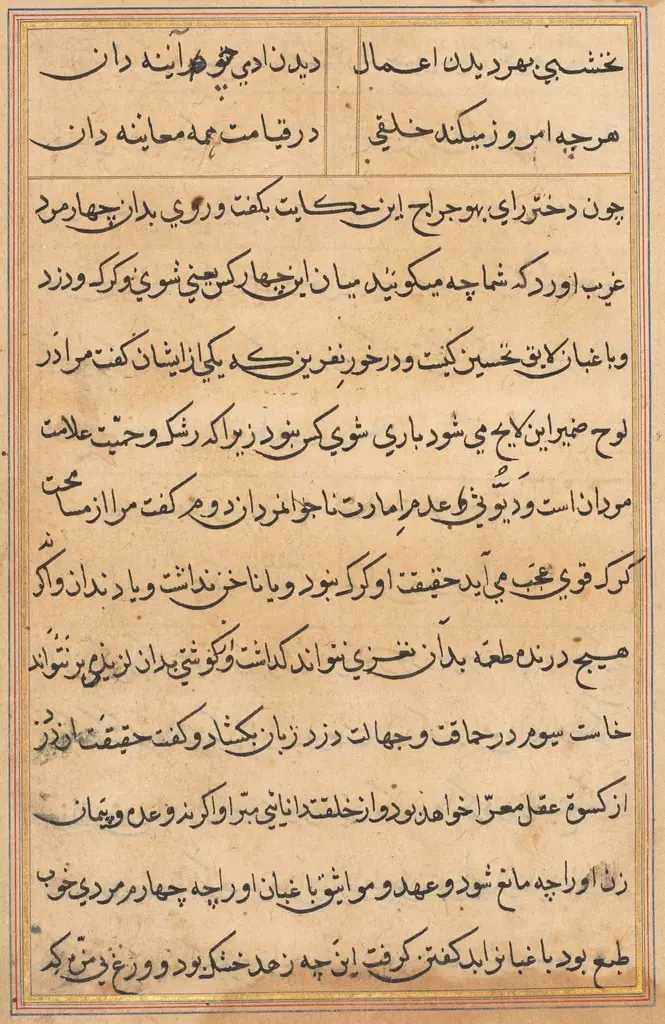 Page from Tales of a Parrot (Tuti-nama): text page
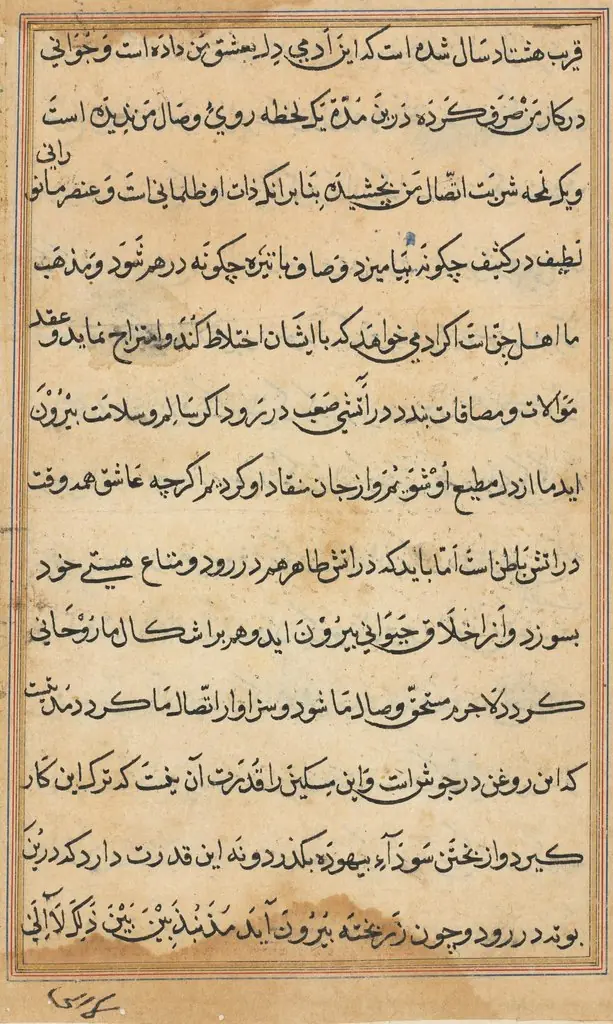 Page from Tales of a Parrot (Tuti-nama): text page
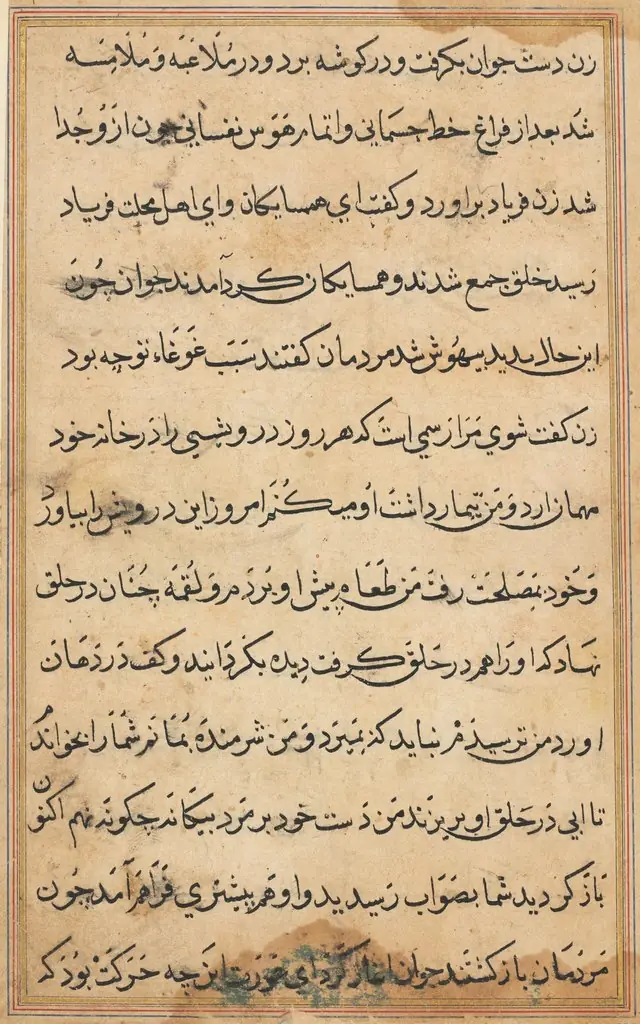 Page from Tales of a Parrot (Tuti-nama): text page
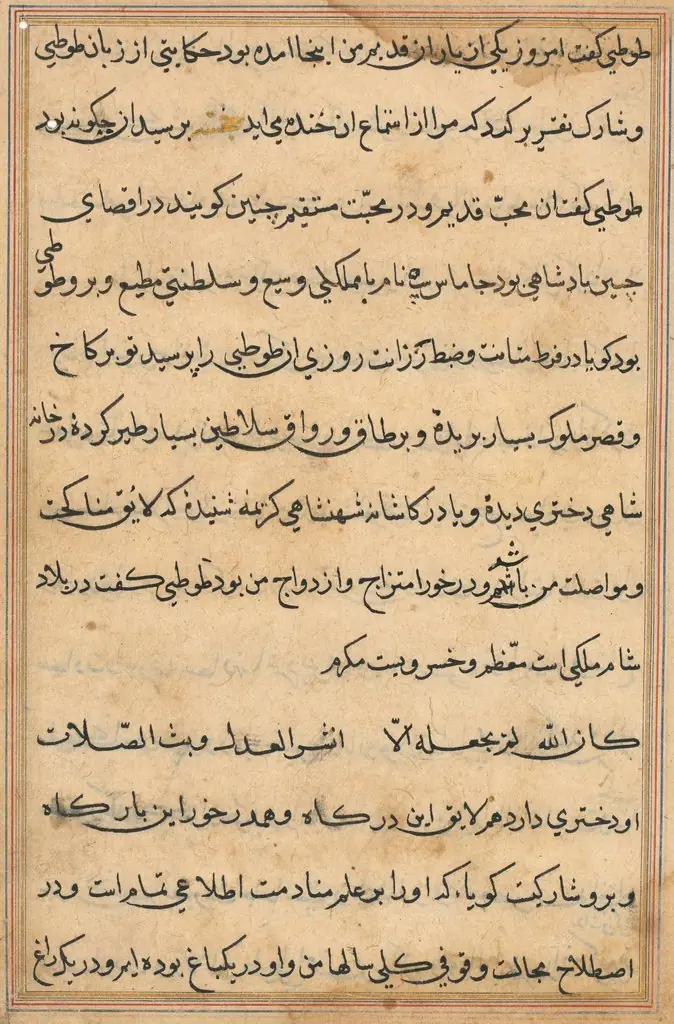 Page from Tales of a Parrot (Tuti-nama): text page
 Page from Tales of a Parrot (Tuti-nama): text page