Artwork
Page from Tales of a Parrot (Tuti-nama): text page
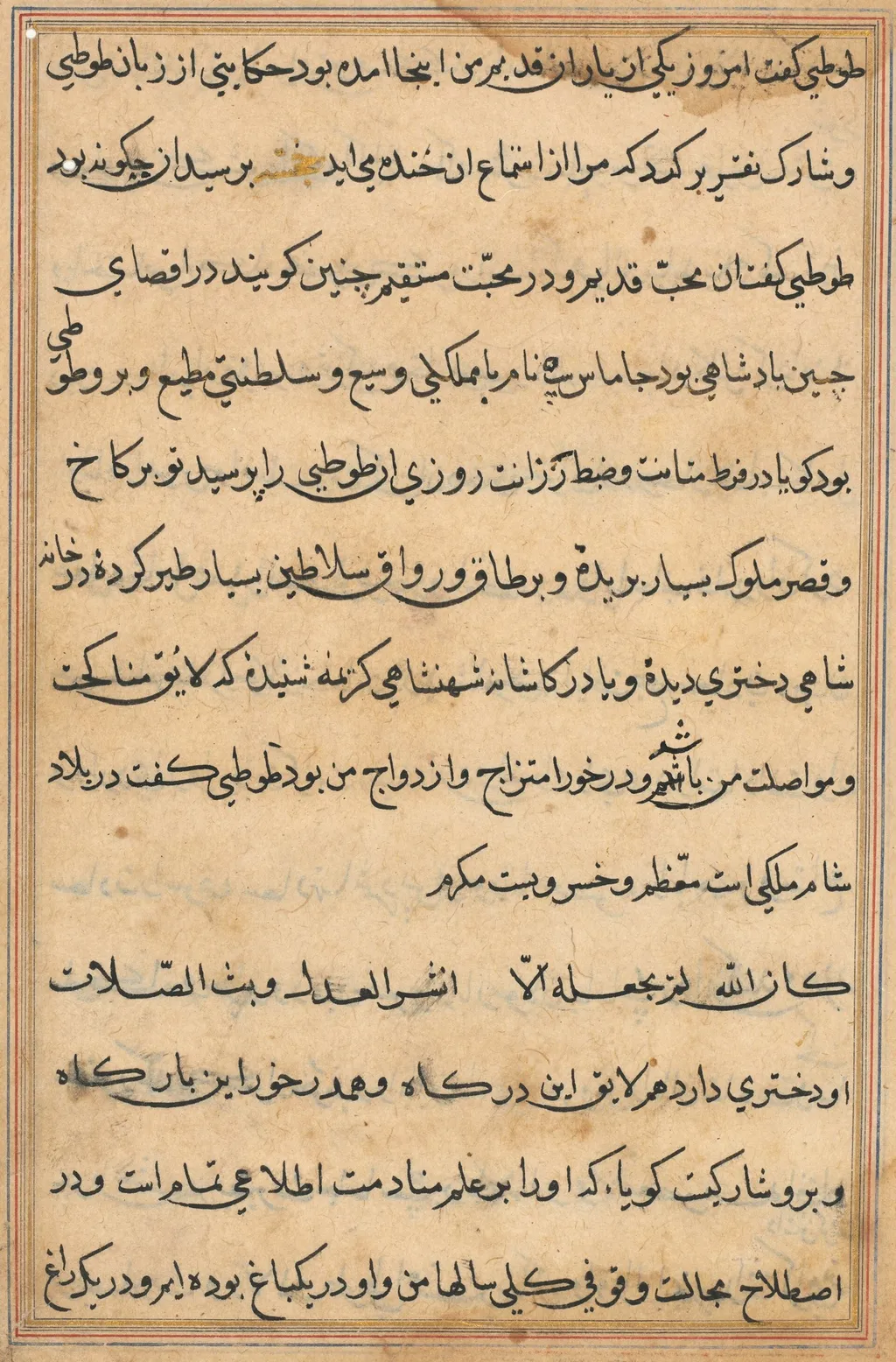
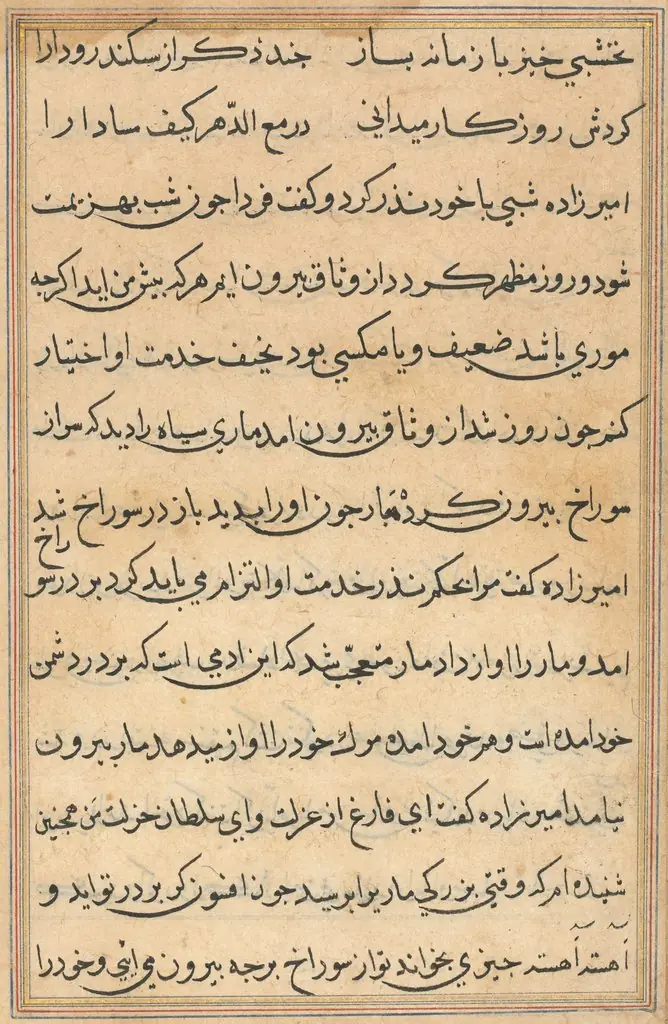
Page from Tales of a Parrot (Tuti-nama): text page is an unspecified painting. It dates from 1560 and is held in the collection of the Cleveland Museum of Art. This illuminated page originates from the Persian manuscript Tales of a Parrot (Tuti‑nama), a narrative composed for Prince Salim.
About this work
Technique & Style
The page is executed as a miniature painting on paper, using pigments applied in thin washes characteristic of Mughal manuscript illumination.
The page is executed as a miniature painting on paper, using pigments applied in thin washes characteristic of Mughal manuscript illumination. The drawing employs fine outlines and restrained color to support the accompanying text, reflecting the stylized naturalism and narrative clarity typical of 16th‑century Persianate book art. The support is paper, and the work bears the wear and minor abrasion expected of a century‑old manuscript leaf, though no extensive conservation treatment is recorded.
The formal composition centers the illuminated text block, with decorative borders that frame the passage, emphasizing hierarchical visual hierarchy and balanced symmetry.
History & Provenance
This text page from the Tales of a Parrot (Tuti-nama) was created in 1560 within the Mughal Empire, as documented by its inception date. The work is attributed to an unknown artist active during this period.
The painting has been part of the Cleveland Museum of Art’s collection since at least the mid-20th century, where it is cataloged under accession number 1962.279.172.a. No earlier ownership history or commissioning details are recorded in available sources.
The work is held at the Cleveland Museum of Art, where it is cataloged under the accession number 1962.279.172.a. It was made in the Mughal Empire in 1560 and forms part of the manuscript known as Tales of a Parrot, specifically a text page from the Tuti-nama section. The painting has been exhibited at the museum as part of displays focusing on Mughal manuscript painting.
Context
The miniature from the Tuti-nama, produced in the Mughal Empire around 1560, exemplifies the synthesis of Persian narrative tradition and Indian court aesthetics that defined 16th-century manuscript painting. Its composition, featuring a text page from the didactic fable collection, reflects contemporary scholarly engagement with moralistic literature among elite patrons, as documented in museum records. The work's attribution to an anonymous artist working within the imperial workshop underscores the anonymity of many court painters, situating it firmly within the broader trajectory of Indo-Persian artistic exchange that influenced later Mughal miniatures and subsequent European interpretations of manuscript illumination.
Legacy
The manuscript page from the Tuti-nama, produced in the mid-16th century during the Mughal period, has been cited in scholarship on Indo-Persian narrative painting and the diffusion of Persian literary motifs into Indian artistic traditions. Its presence in the Cleveland Museum of Art collection has enabled detailed technical studies of pigments and brushwork characteristic of Mughal manuscript illumination. The work is frequently referenced in surveys of Persianate manuscript culture and in discussions of how illustrated texts circulated across Central and South Asian courts. Its influence is noted in later Indian miniatures that adopt similar compositional devices and didactic storytelling formats.
Overview
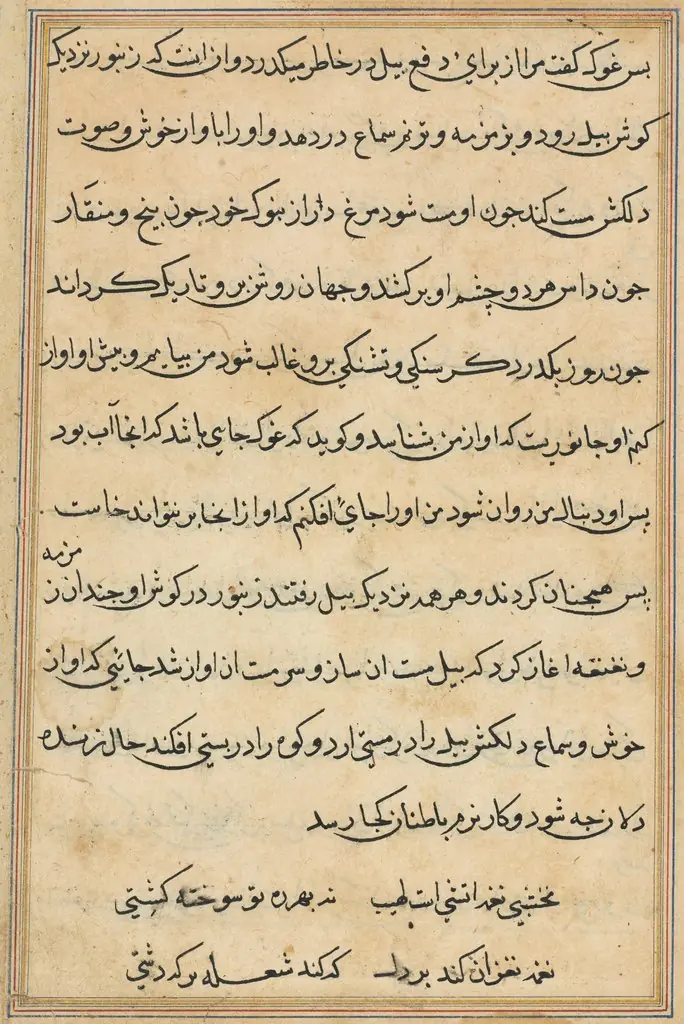
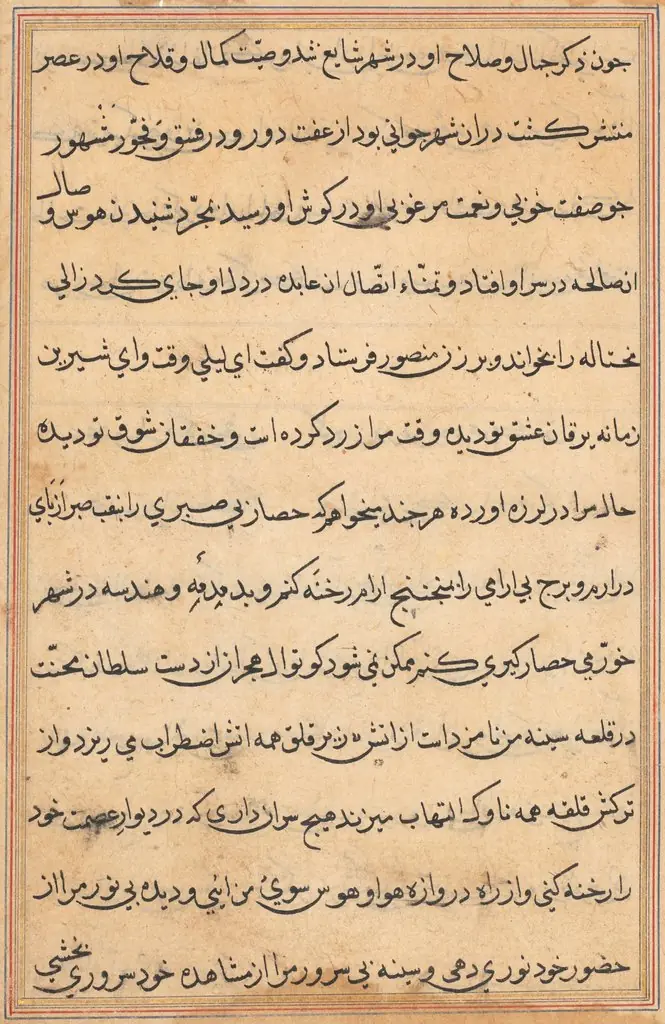
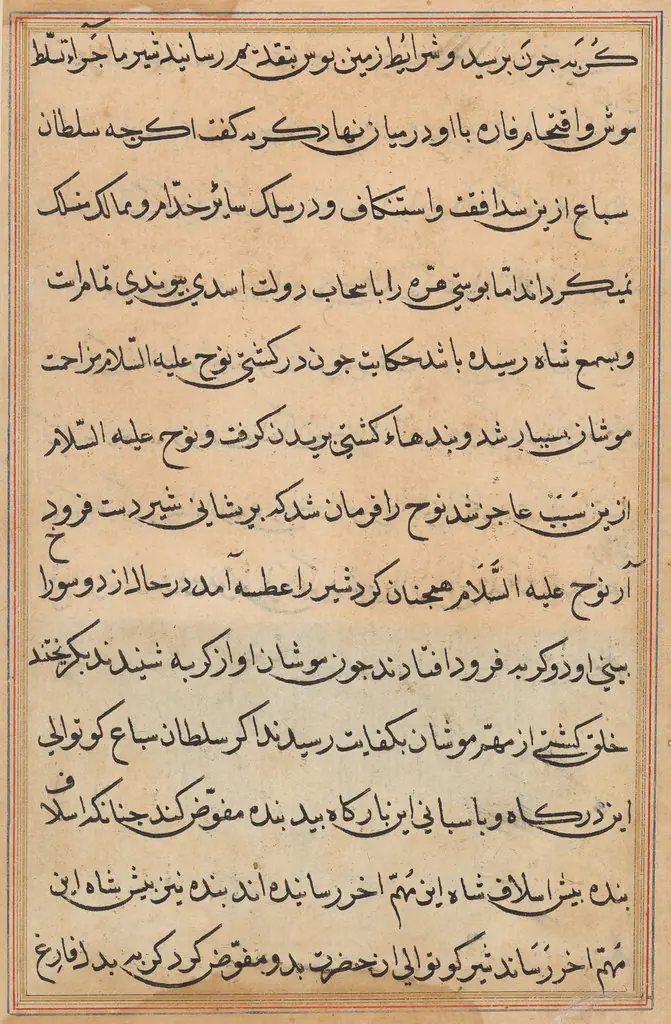
This illuminated page originates from the Persian manuscript Tales of a Parrot (Tuti‑nama), a narrative composed for Prince Salim. The sheet is a single folio of text, densely filled with black calligraphic script that runs from margin to margin, bordered by a slender red line. The paper exhibits a warm, slightly yellowed tone, indicating age and careful preservation.
Subject & Meaning
The written passage forms part of a larger literary work recounting the adventures of a talking parrot, a popular motif in Persian courtly storytelling. Intended for a princely audience, the text reflects the patron’s taste for sophisticated, moralizing tales that blend entertainment with ethical instruction.
Artist & collection

- Page from Tales of a Parrot (Tuti-nama): text page
 Page from Tales of a Parrot (Tuti-nama): text page
 Page from Tales of a Parrot (Tuti-nama): text page
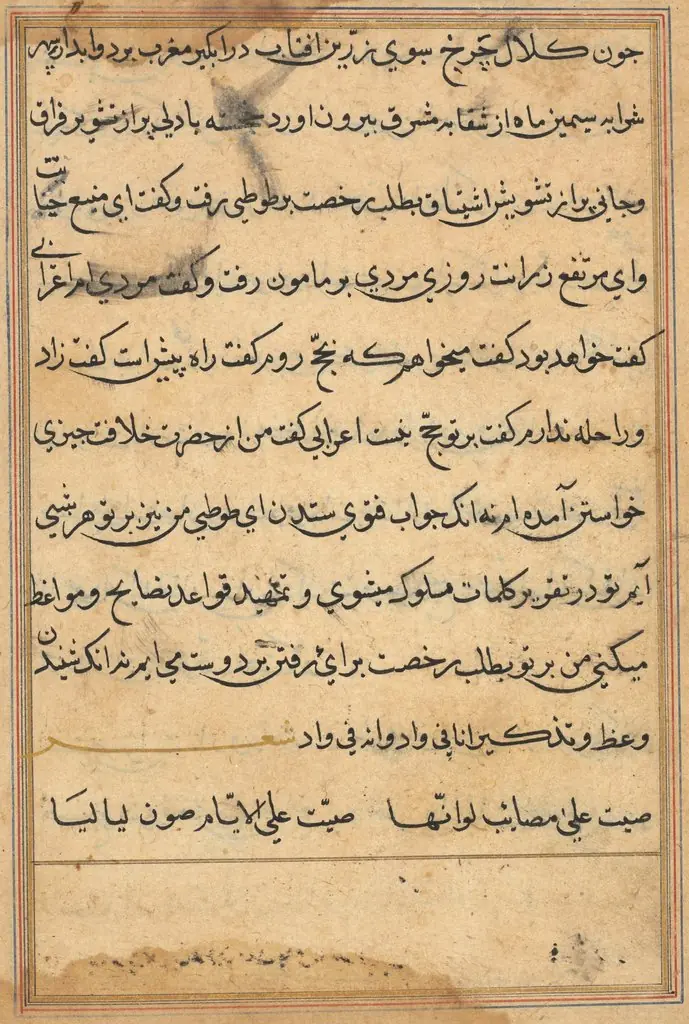 Page from Tales of a Parrot (Tuti-nama): text page
 Page from Tales of a Parrot (Tuti-nama): text page
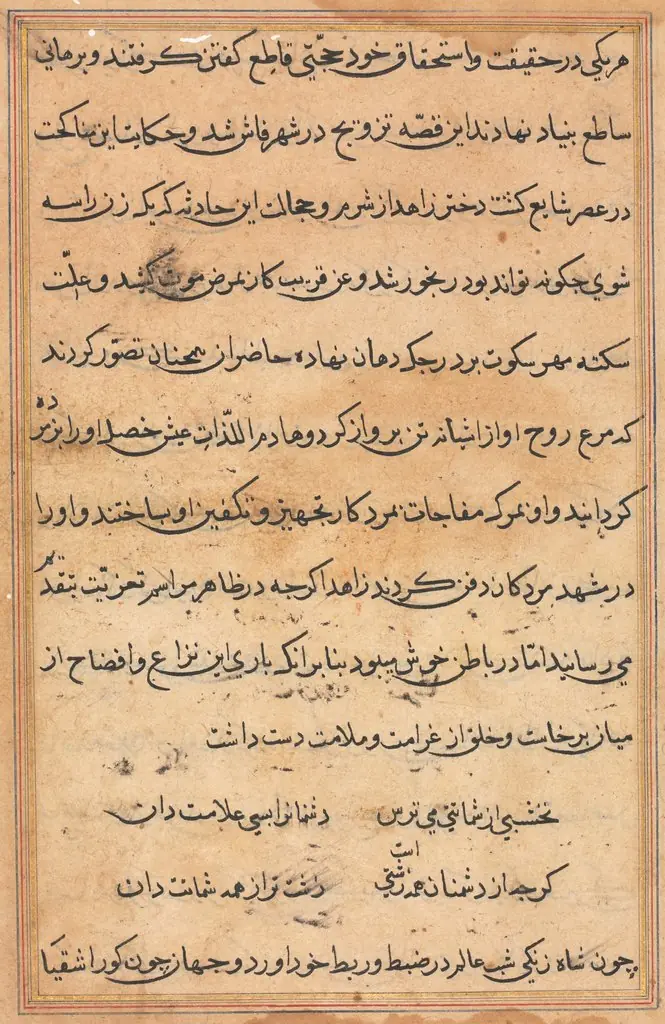 Page from Tales of a Parrot (Tuti-nama): text page
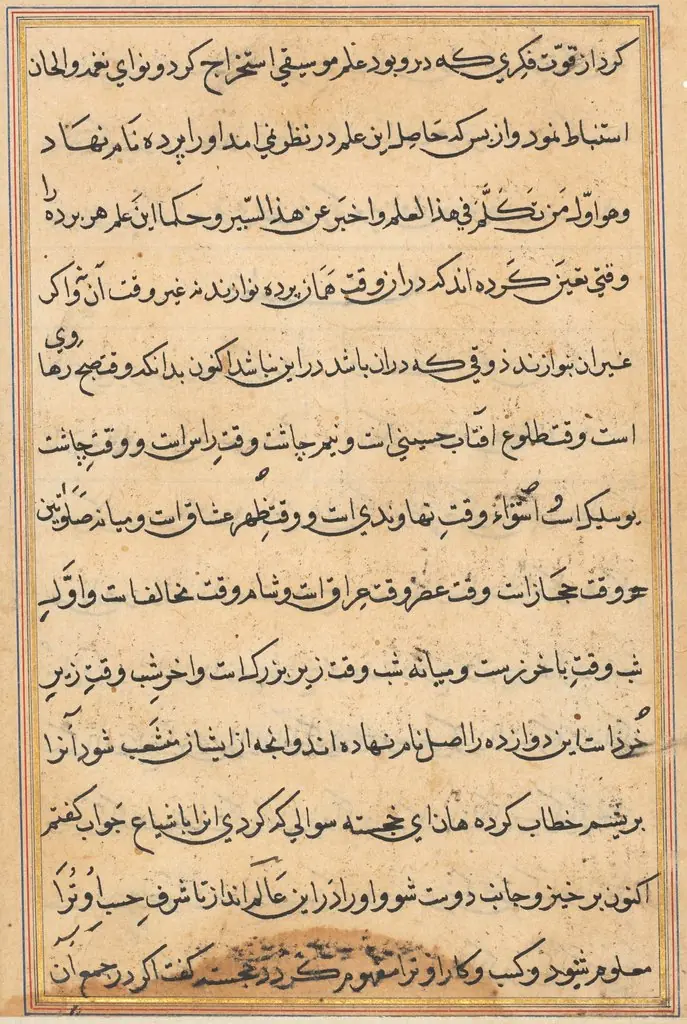 Page from Tales of a Parrot (Tuti-nama): text page
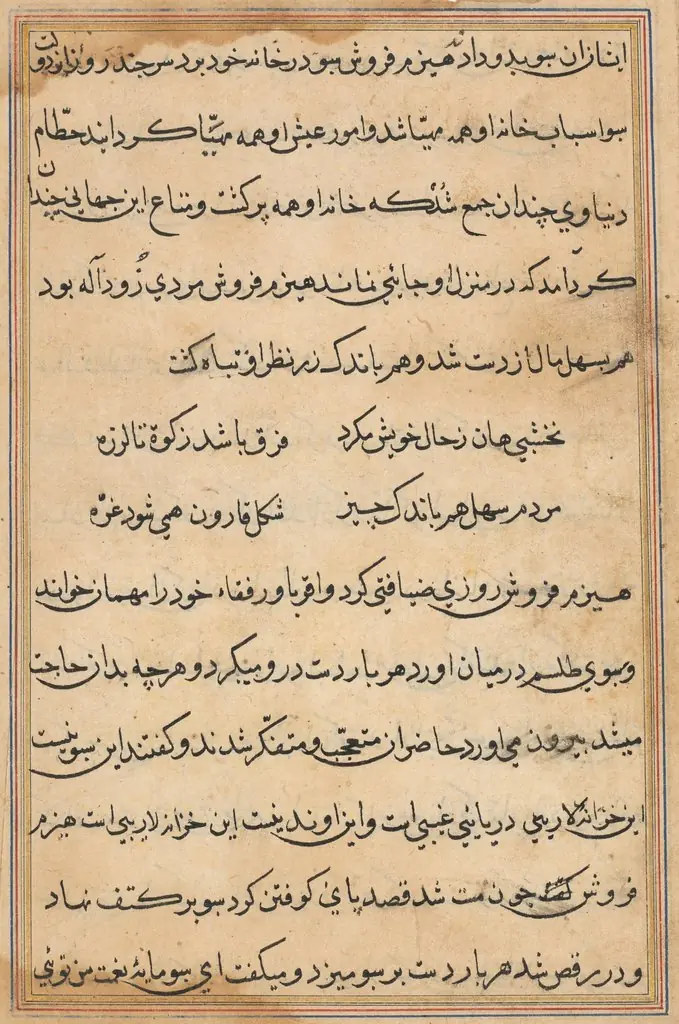 Page from Tales of a Parrot (Tuti-nama): text page
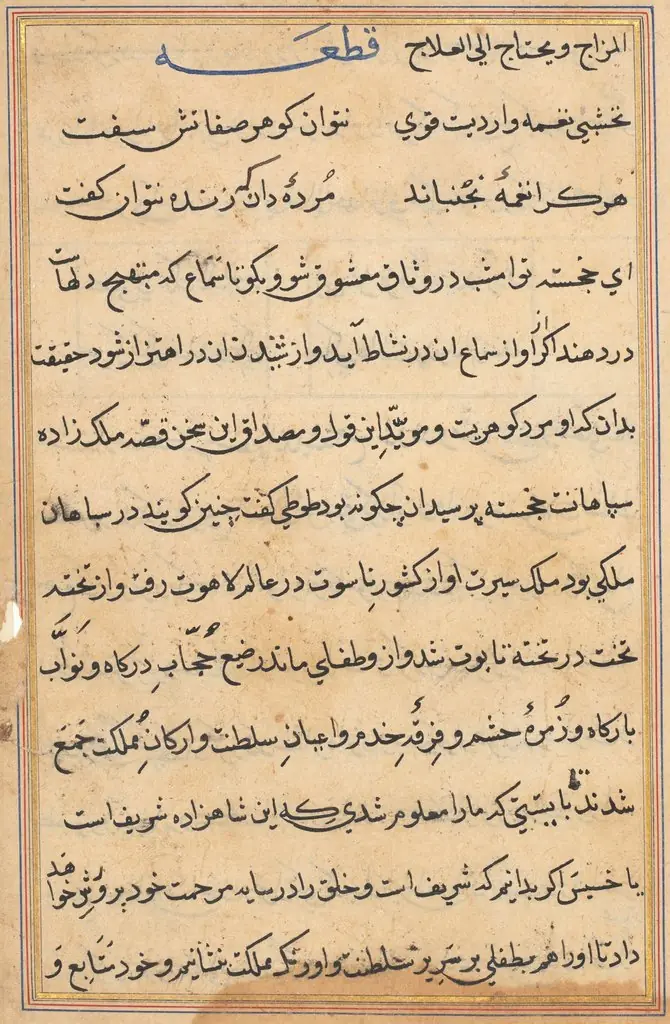 Page from Tales of a Parrot (Tuti-nama): text page
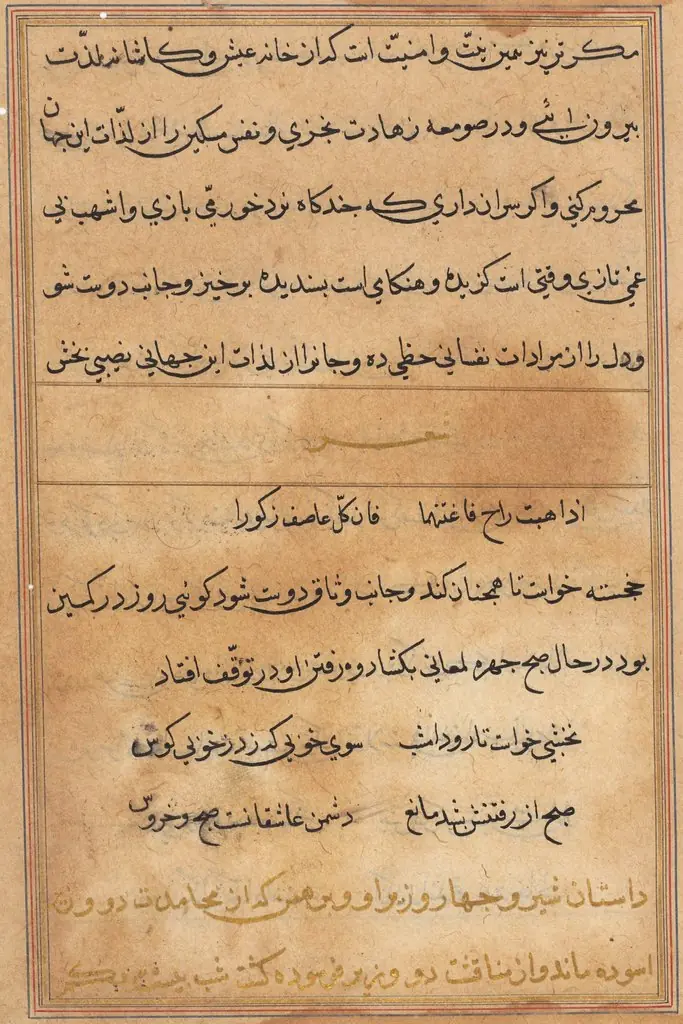 Page from Tales of a Parrot (Tuti-nama): text page
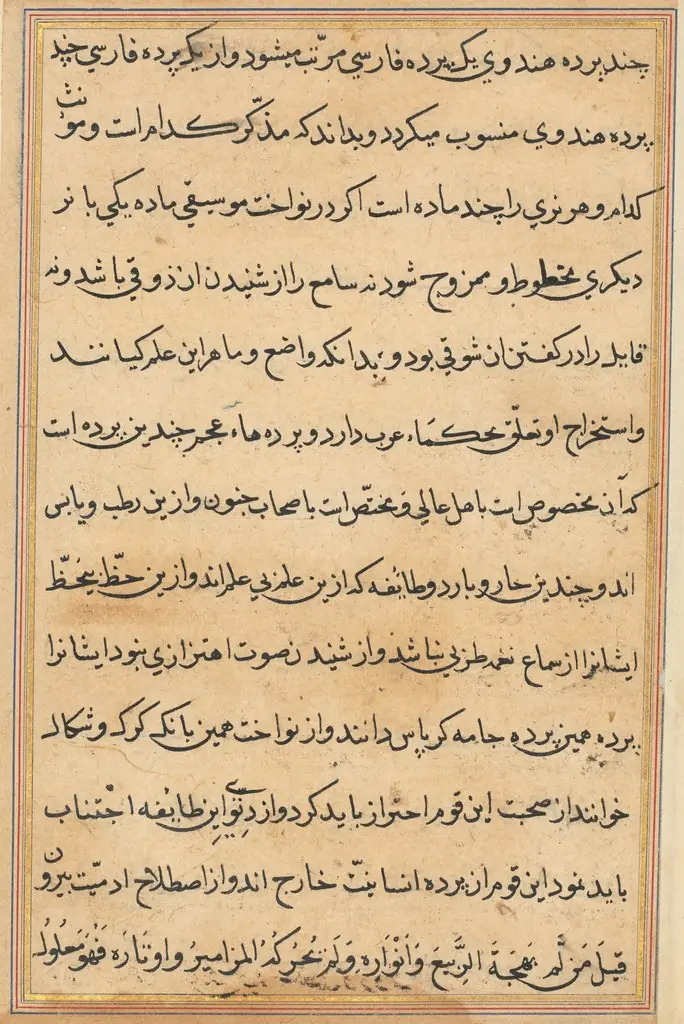 Page from Tales of a Parrot (Tuti-nama): text page
 Page from Tales of a Parrot (Tuti-nama): text page