Artwork
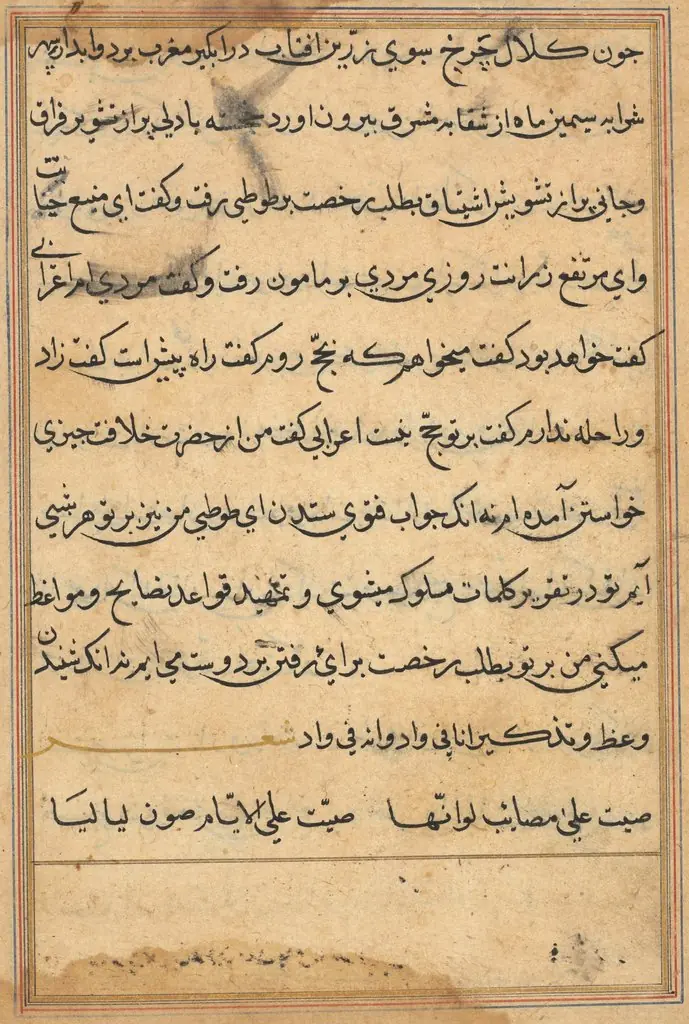
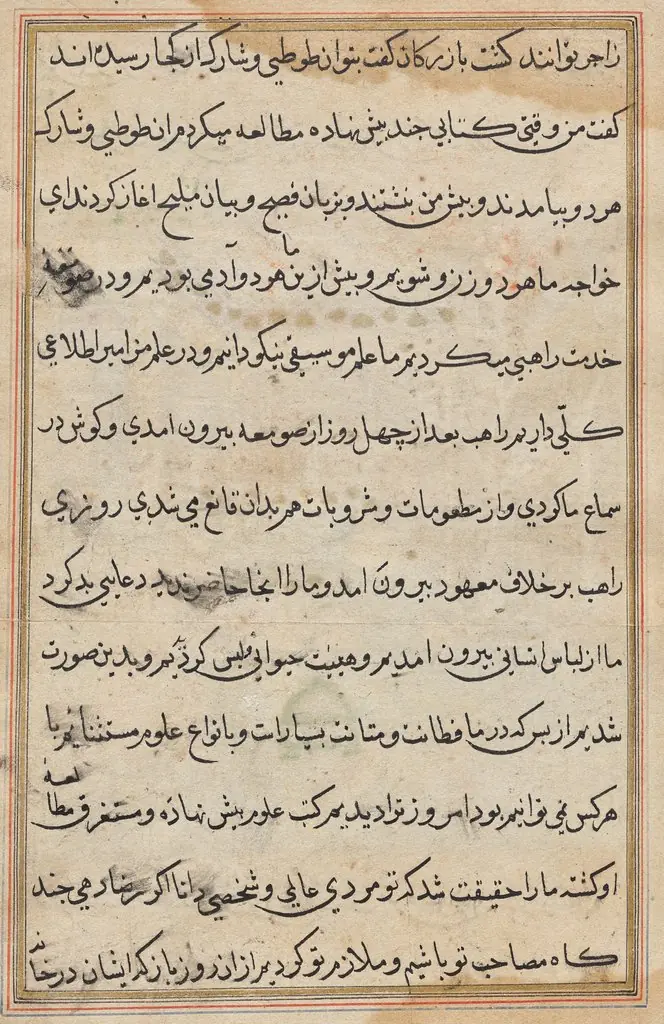
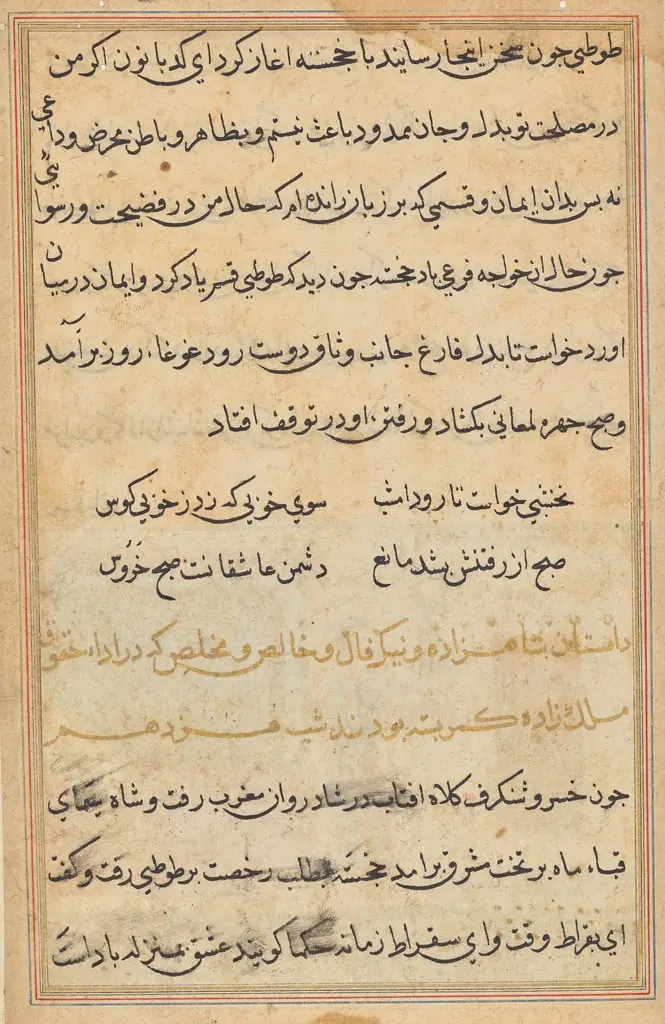
Page from Tales of a Parrot (Tuti-nama): text page
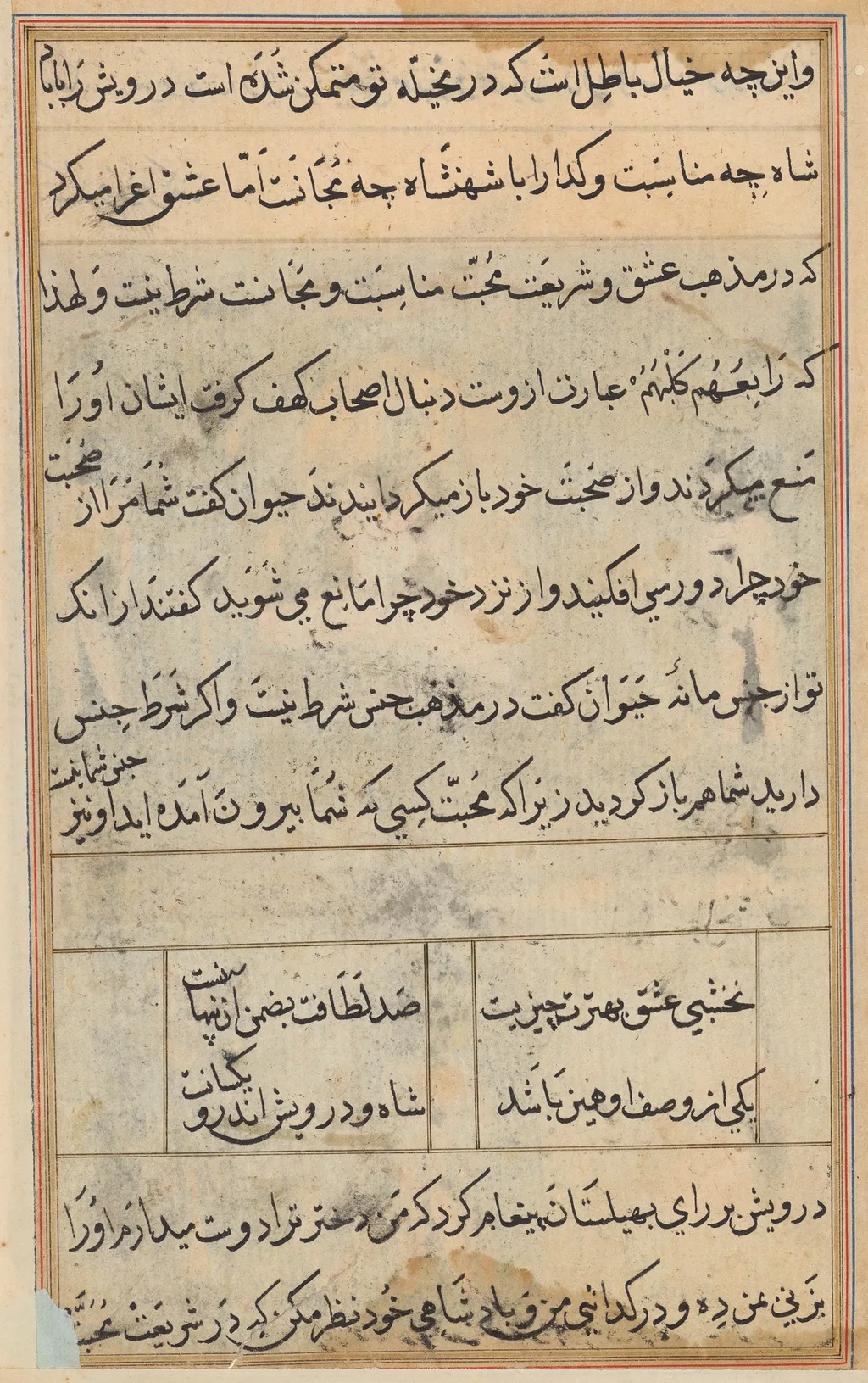
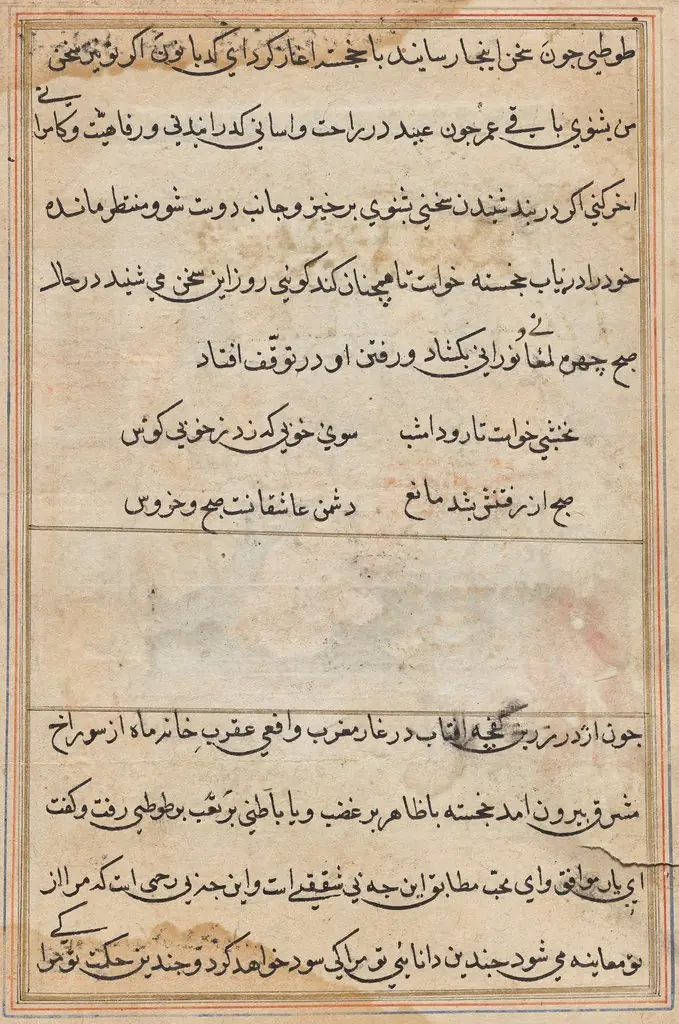
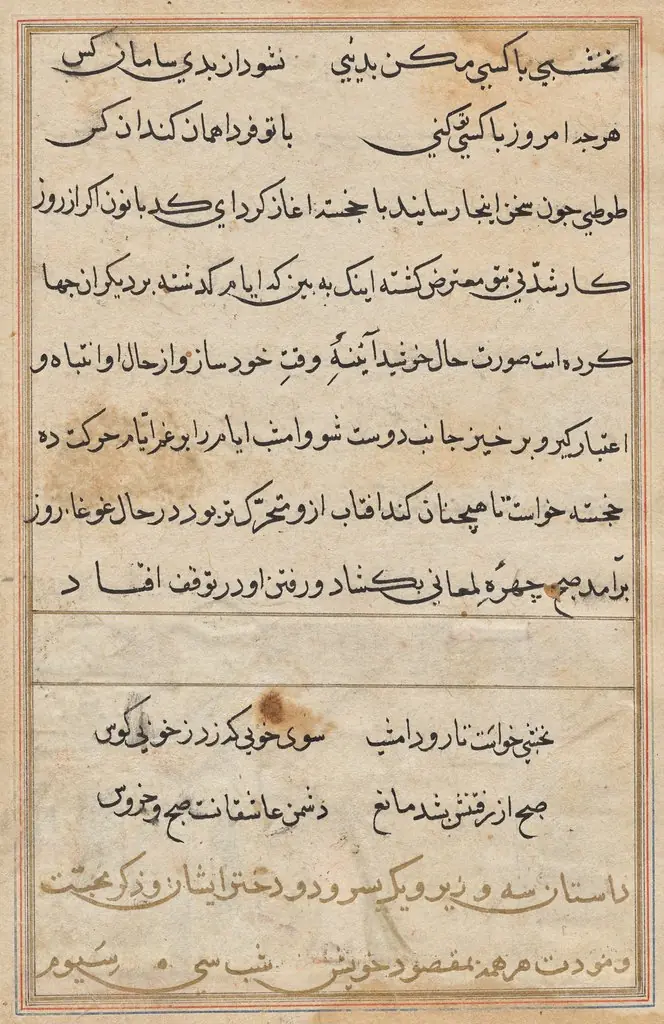
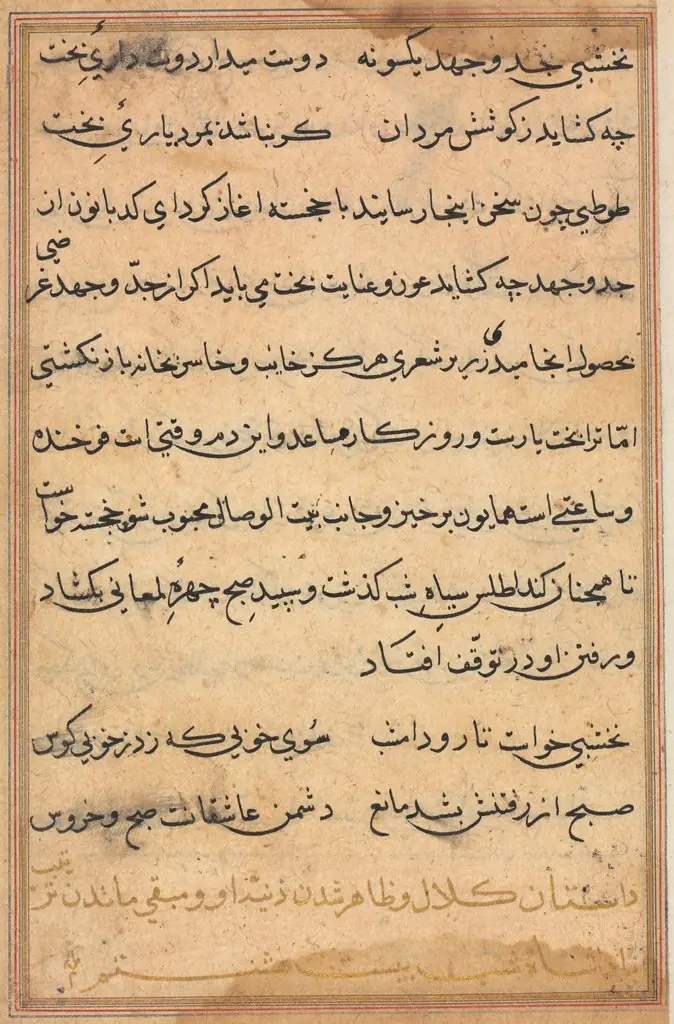
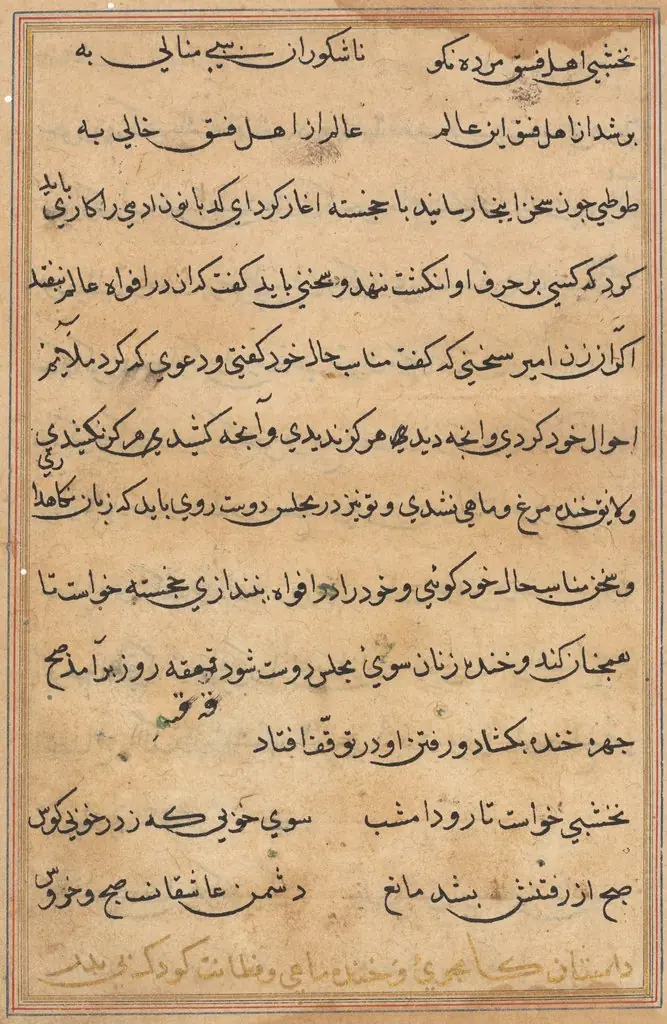
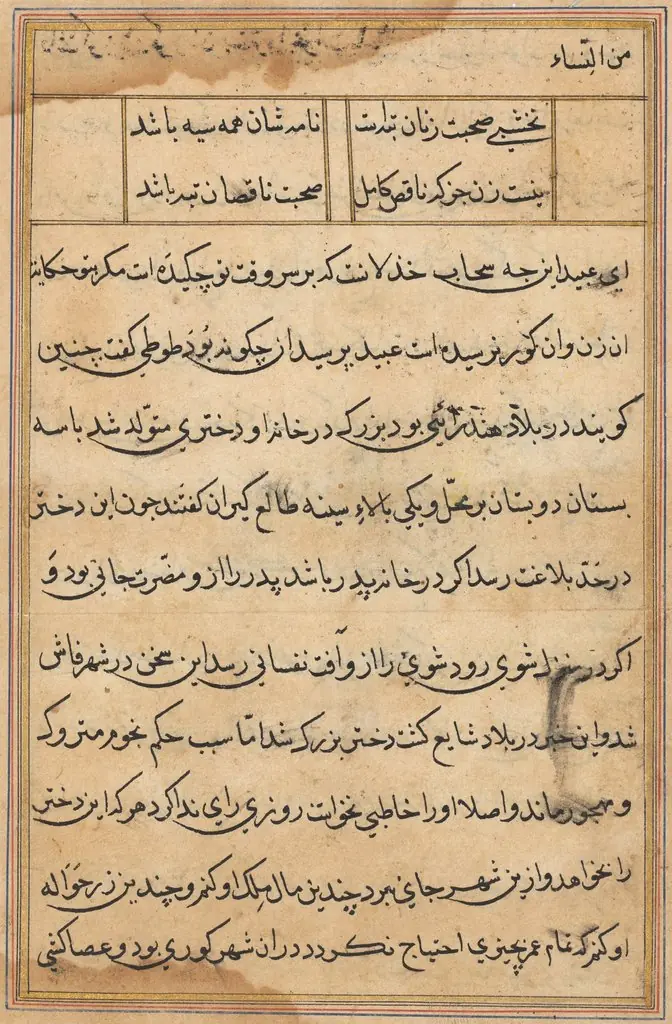
Page from Tales of a Parrot (Tuti-nama): text page is an unspecified painting. It dates from 1560 and is held in the collection of the Cleveland Museum of Art. The object is a single leaf from the 16th‑century Persian manuscript known as the Tales of a Parrot (Tuti‑nama).
About this work
The text is written in a flowing script, with some words and phrases underlined or highlighted in a different color.
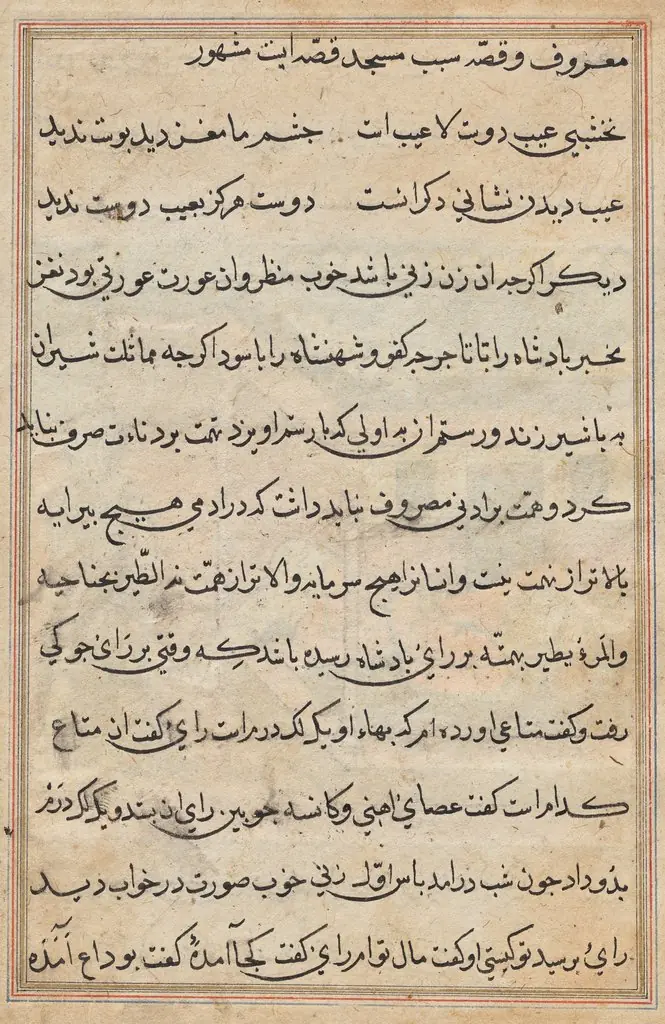
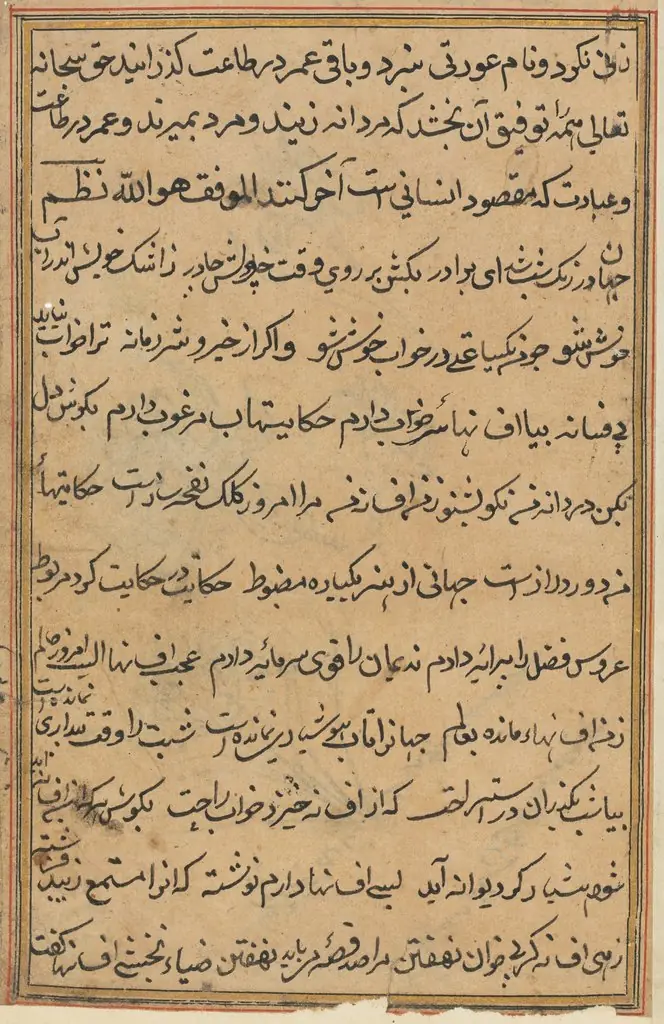
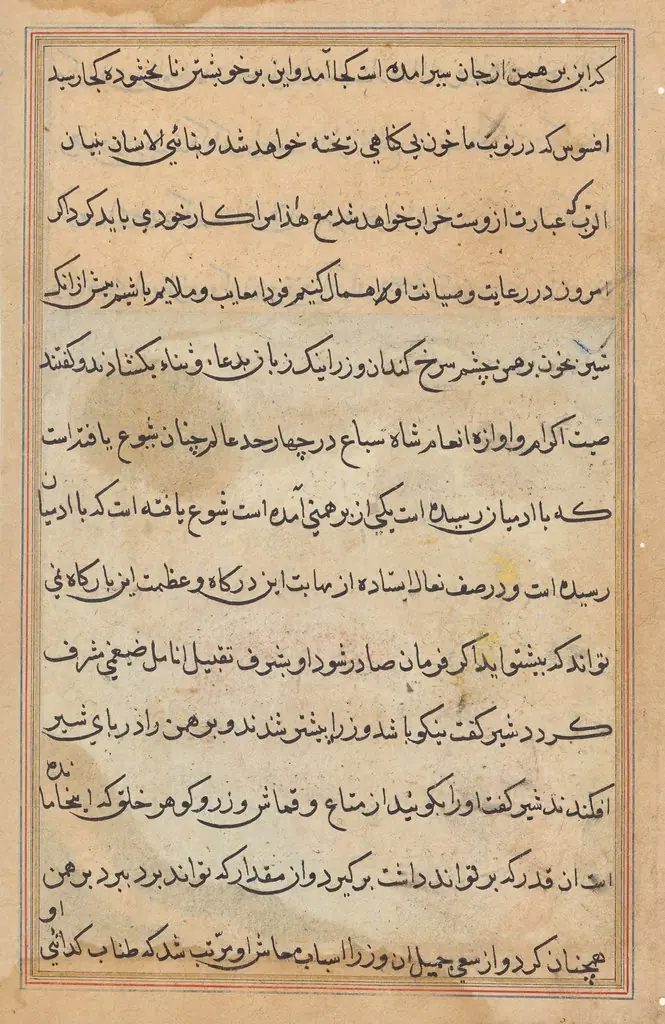
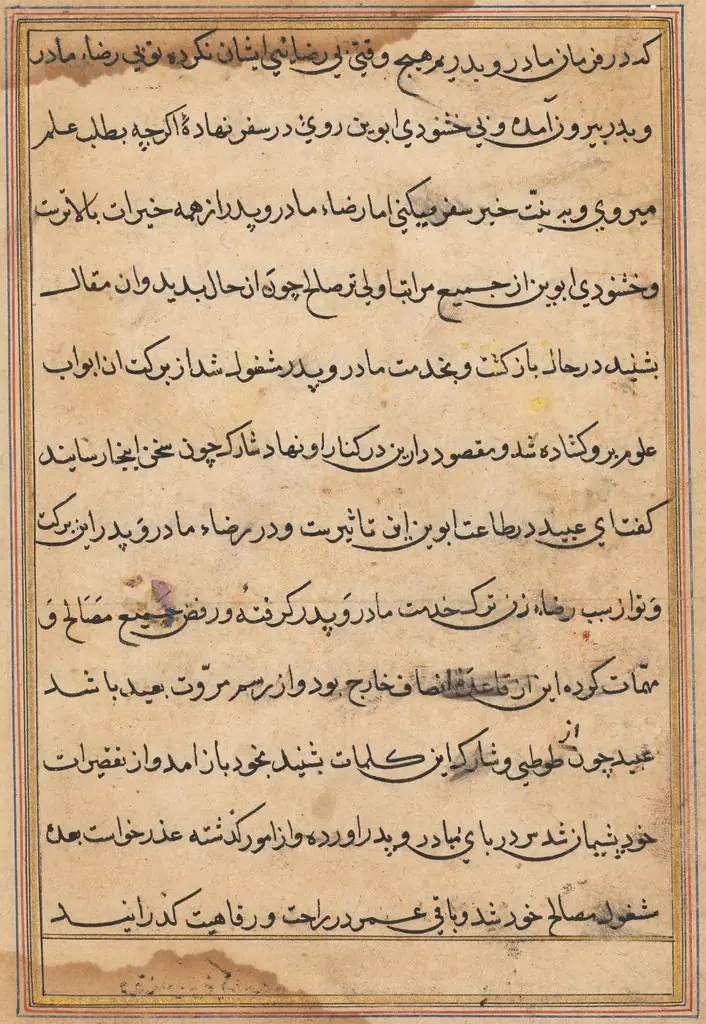
This painting is a page from the Tales of a Parrot (Tuti-nama), dated 1560. The image shows a text page, but the medium used to create it is unknown. The page is written in an unknown script, with black ink on a beige background.
There are no visible images or illustrations on the page. The text is written in a flowing script, with some words and phrases underlined or highlighted in a different color. The page appears to be a manuscript or a handwritten copy of the text. The Cleveland Museum of Art holds this page from the Tales of a Parrot (Tuti-nama).
Subject & Meaning
The miniature depicts a narrative scene from the Tuti-nama, a Persian collection of animal fables composed in the twelfth century. In this text page the protagonist is shown listening to a parrot’s moral tale, a motif that symbolizes wisdom and the transmission of ethical instruction. The work belongs to the Mughal artistic tradition that flourished in the sixteenth century, reflecting the courtly patronage of Persianate storytelling in India.
Technique & Style
Created in 1560 within the Mughal Empire, this text page from the Tales of a Parrot (Tuti-nama) is classified as a painting. The work functions as a manuscript page, serving as a carrier for the narrative text of the Tuti-nama cycle. Although the specific pigments, binding medium, and support material are not detailed in the available records, the piece is identified as a painted object from the mid-sixteenth century.
Its formal qualities are defined by its role as an illustrated text page, integrating calligraphy and illumination within the Mughal artistic tradition.
History & Provenance
The miniature page originates from a 1560 manuscript produced in the Mughal Empire. It was created for a patron commissioning a Persian-language illustrated narrative, though the patron's identity remains unspecified. The work entered the collection of the Cleveland Museum of Art, where it has been catalogued as part of their Asian art holdings since at least 1962. Its attribution to an anonymous artist reflects the collaborative workshop practices typical of Mughal manuscript production.
The painting is held in the collection of the Cleveland Museum of Art, where it is catalogued under the inventory designation 1962.279.44.a. It was produced in 1560 within the Mughal Empire and entered the museum's holdings as part of a folio from the Tales of a Parrot (Tuti-nama). No exhibition history is documented in the available sources.
The accession number 1962.279.44.a indicates the work was accessioned by the Cleveland Museum of Art in 1962, consistent with the museum's broader holdings of illustrated Mughal manuscripts from the period.
Overview
The object is a single leaf from the 16th‑century Persian manuscript known as the Tales of a Parrot (Tuti‑nama). Dated to roughly 1560, the page consists of black ink text set against a light‑colored paper support. No decorative images accompany the writing, and the script appears in a fluid hand with occasional words emphasized by a contrasting hue.
Context
During the Safavid period, illustrated manuscripts such as the Tuti‑nama were produced for both courtly and private audiences, serving educational and entertainment purposes. Although this leaf lacks illustrations, its textual presentation aligns with the era's emphasis on literary refinement and the transmission of moral instruction through elegant calligraphy.
Artist & collection

- Page from Tales of a Parrot (Tuti-nama): text page
 Page from Tales of a Parrot (Tuti-nama): text page
 Page from Tales of a Parrot (Tuti-nama): text page
 Page from Tales of a Parrot (Tuti-nama): text page
 Page from Tales of a Parrot (Tuti-nama): text page
 Page from Tales of a Parrot (Tuti-nama): text page
 Page from Tales of a Parrot (Tuti-nama): text page
 Page from Tales of a Parrot (Tuti-nama): text page
 Page from Tales of a Parrot (Tuti-nama): text page
 Page from Tales of a Parrot (Tuti-nama): text page
 Page from Tales of a Parrot (Tuti-nama): text page
 Page from Tales of a Parrot (Tuti-nama): text page