Artwork
Page from Tales of a Parrot (Tuti-nama): text page
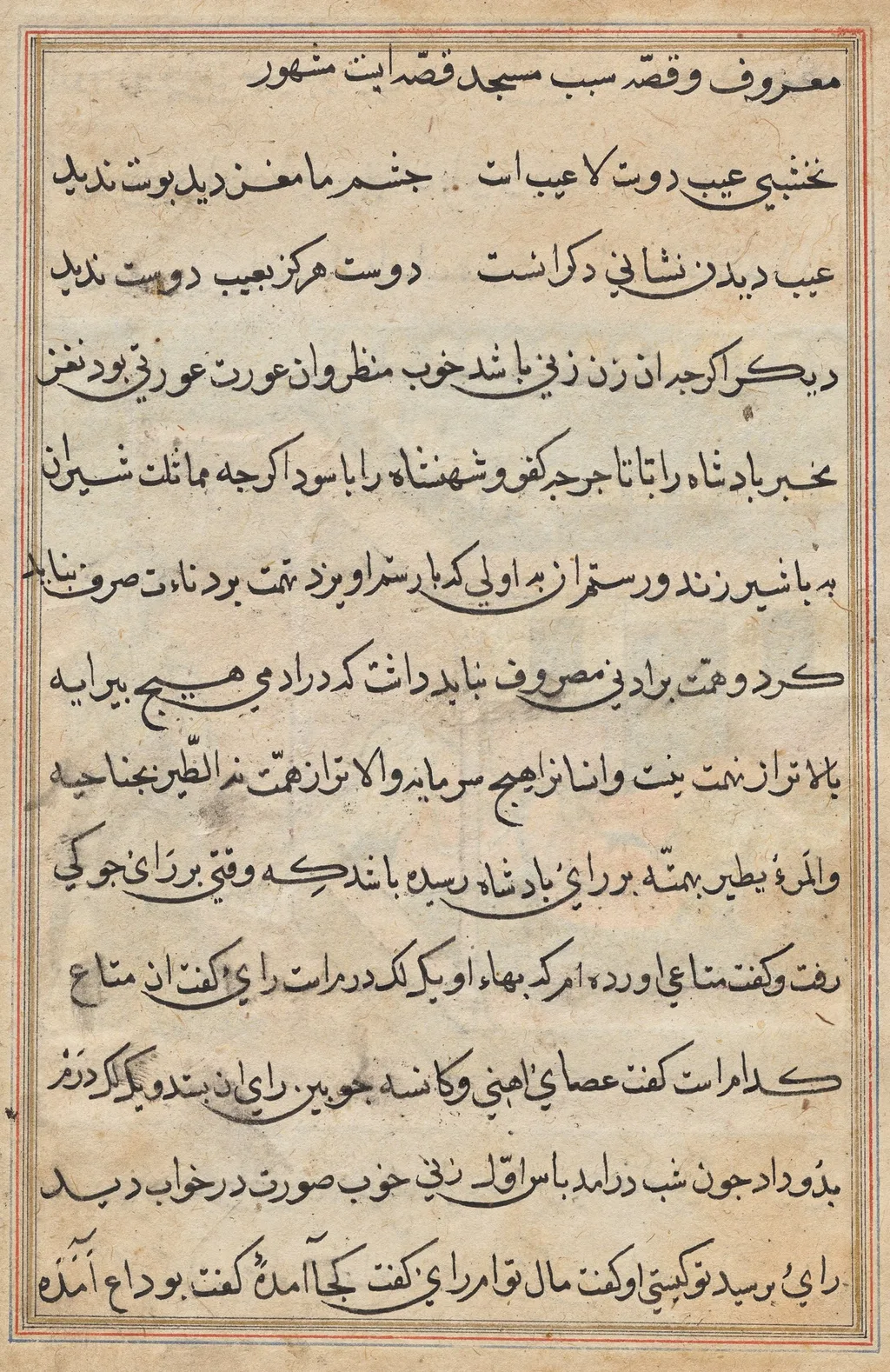
Page from Tales of a Parrot (Tuti-nama): text page is an unspecified painting. It dates from 1560 and is held in the collection of the Cleveland Museum of Art. The object is a single leaf from the medieval Persian manuscript known as the Tuti‑nama or Tales of a Parrot.
About this work
Subject & Meaning
The bird serves as a symbol of vigilance and the transmission of hidden wisdom within the narrative tradition.
The page depicts a parrot in a garden scene illustrating a Sufi moral tale about discretion and fidelity. The bird serves as a symbol of vigilance and the transmission of hidden wisdom within the narrative tradition. Iconographically the foliage and blossoms reference paradisiacal settings common in Persian miniature cycles while the textual frame emphasizes didactic storytelling characteristic of the Tuti-nama genre.
History & Provenance
Created in 1560 within the Mughal Empire, this text page from the Tuti-nama (Tales of a Parrot) was produced by an artist whose specific identity remains unrecorded. The work eventually entered the collection of the Cleveland Museum of Art, where it is cataloged under the accession number 1962.279.239.a. While the exact chain of ownership prior to its museum acquisition is not detailed in the available records, its inception date and geographic origin are firmly established as mid-16th century India.
The work is held in the Cleveland Museum of Art, where it forms part of the museum’s permanent collection. It is catalogued under the accession number 1962.279.239.a, reflecting its inclusion in the 1962 acquisition of the Tuti-nama manuscript.
No documented exhibition history for this specific text page is recorded in the available sources.
Context
The miniature originates from a 1560 manuscript page produced in the Mughal Empire, reflecting the stylistic transition from Persian manuscript traditions to indigenous Indian artistic expression. Scholarship identifies its creation within the broader context of 16th-century Persianate painting, where text and image intertwine to illustrate narrative cycles such as the Tuti-nama. Its presence in the Cleveland Museum of Art's collection underscores ongoing scholarly interest in cross-cultural artistic exchanges during the early modern period.
The work's significance lies in its role as evidence of evolving visual storytelling techniques within Islamic manuscript culture.
Overview
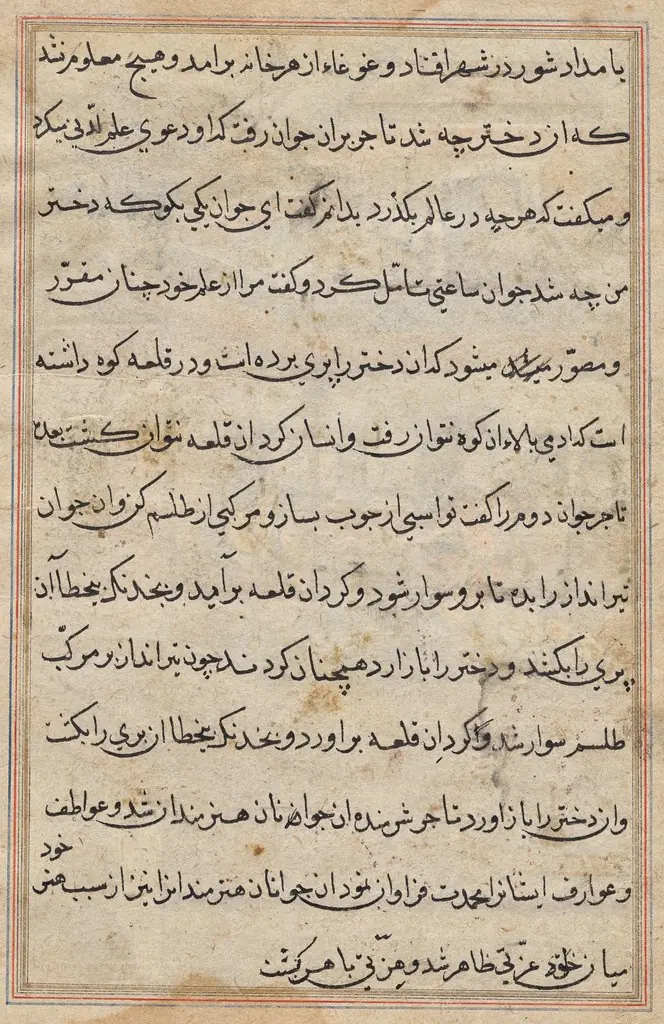
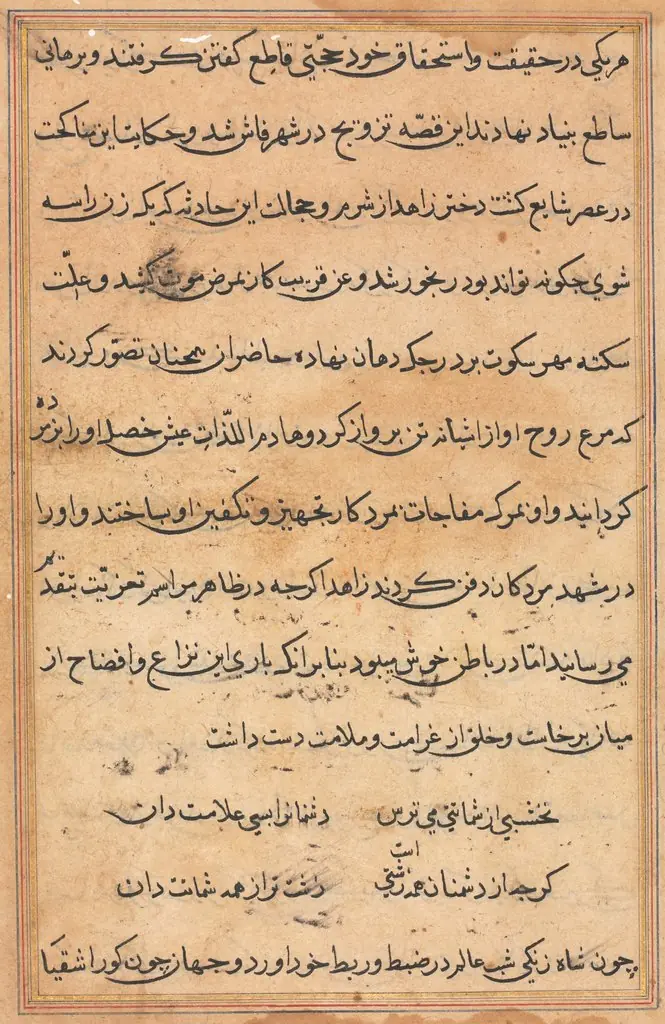
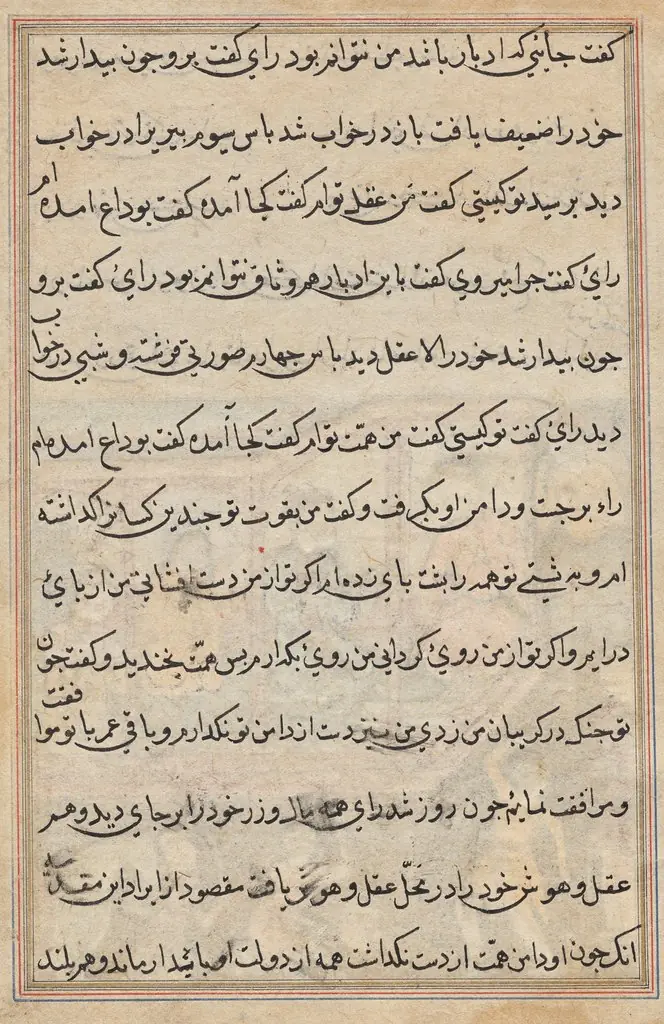
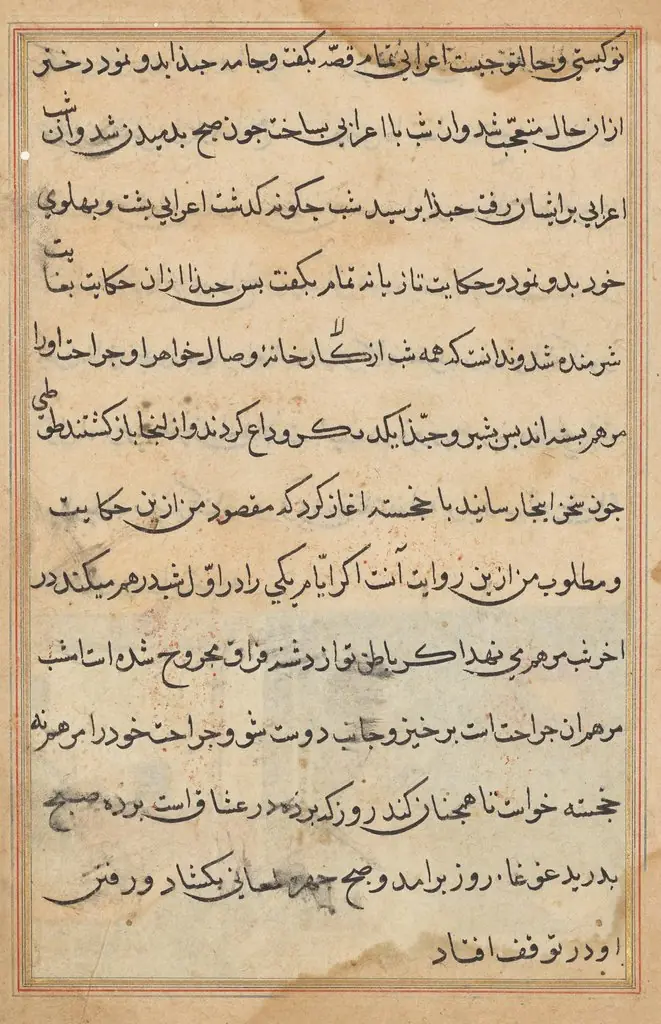
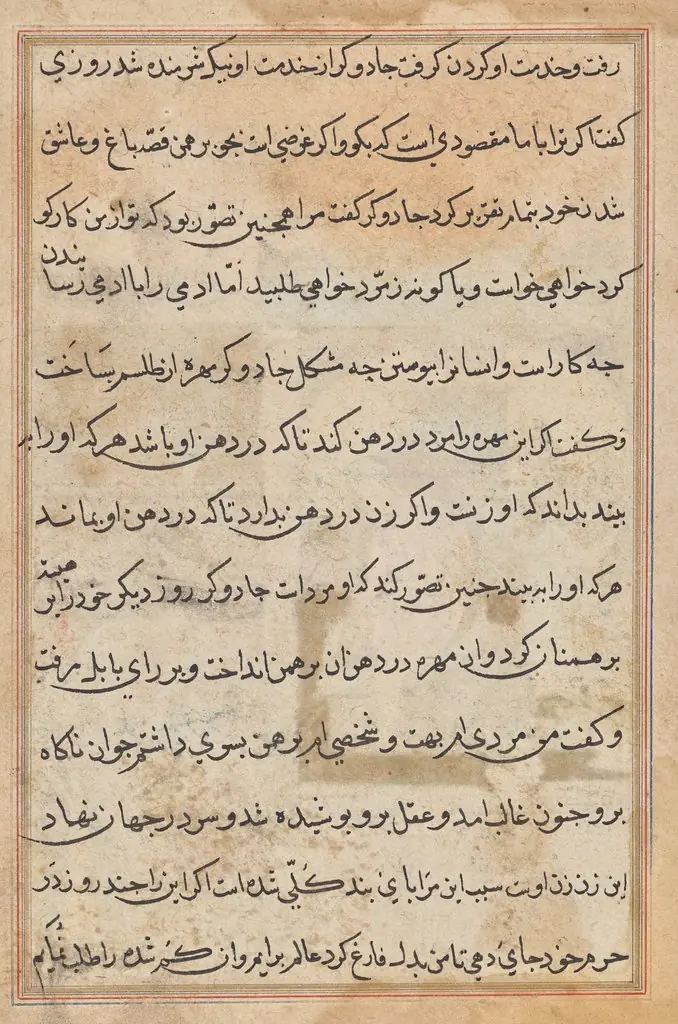
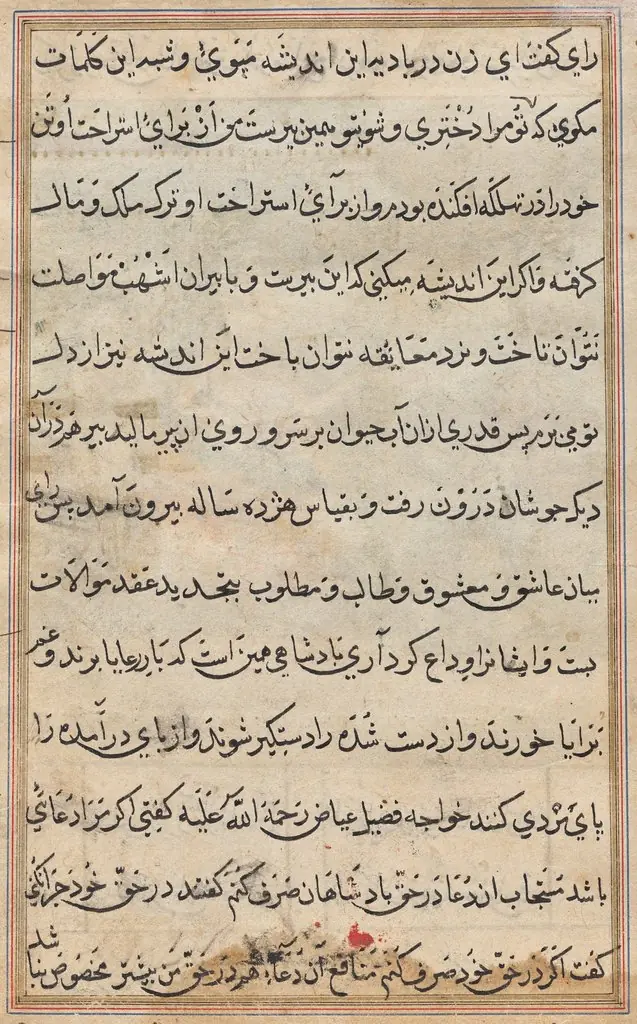
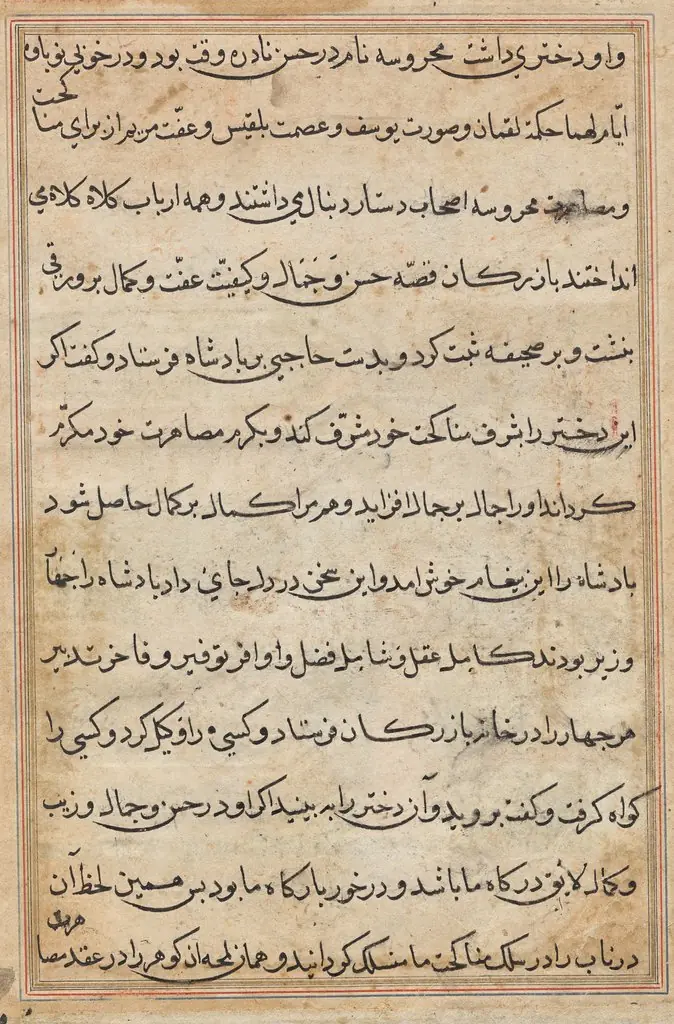
The object is a single leaf from the medieval Persian manuscript known as the Tuti‑nama or Tales of a Parrot. Rendered on a light‑coloured parchment, the page bears continuous black calligraphy framed by a thin red border. The surface shows signs of age, tears, stains and wear, indicating prolonged use or handling over centuries.
Technique & Style
Ink is applied with a fine reed pen, producing a uniform, elegant line characteristic of 14th‑century Persian calligraphy. The red border, likely added with mineral pigment, frames the composition and underscores the page’s ceremonial quality. The parchment’s beige tone and subtle texture reflect traditional preparation methods for high‑status books.
Artist & collection

- Page from Tales of a Parrot (Tuti-nama): text page
 Page from Tales of a Parrot (Tuti-nama): text page
 Page from Tales of a Parrot (Tuti-nama): text page
 Page from Tales of a Parrot (Tuti-nama): text page
 Page from Tales of a Parrot (Tuti-nama): text page
 Page from Tales of a Parrot (Tuti-nama): text page
 Page from Tales of a Parrot (Tuti-nama): text page
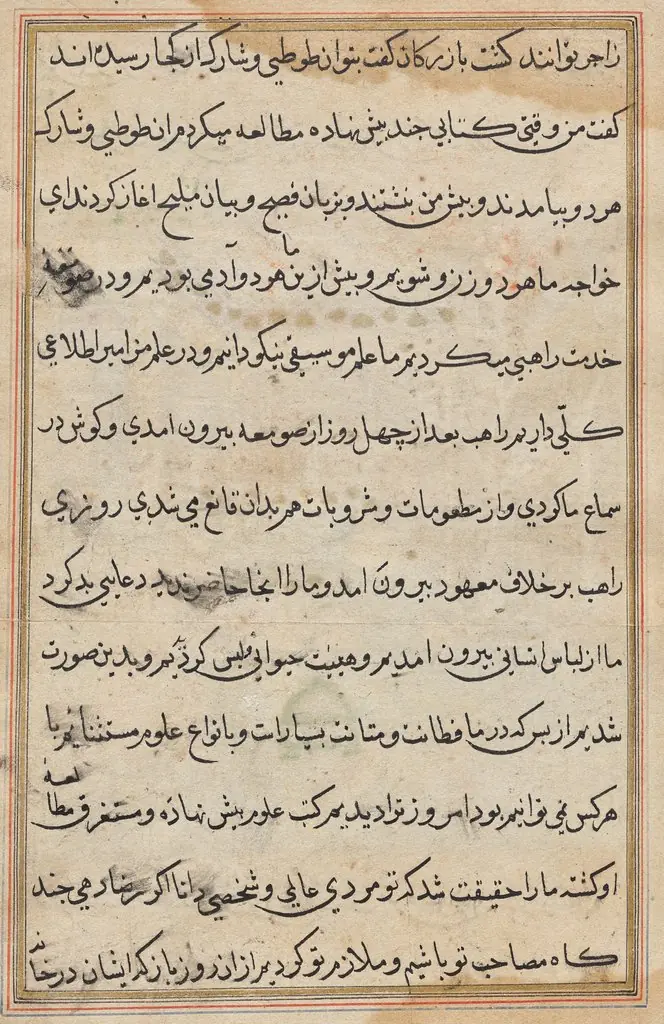 Page from Tales of a Parrot (Tuti-nama): text page
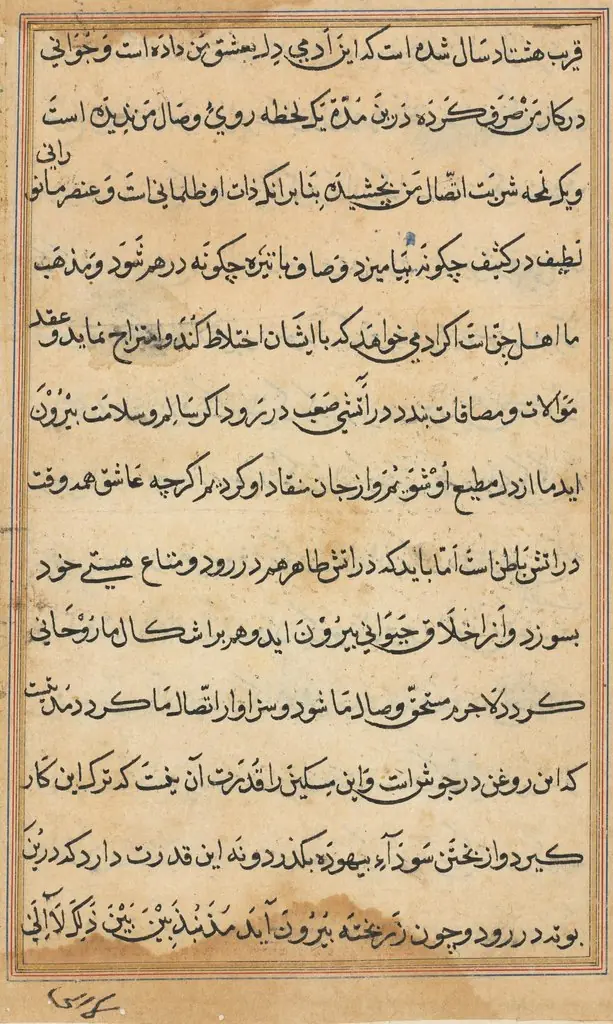 Page from Tales of a Parrot (Tuti-nama): text page
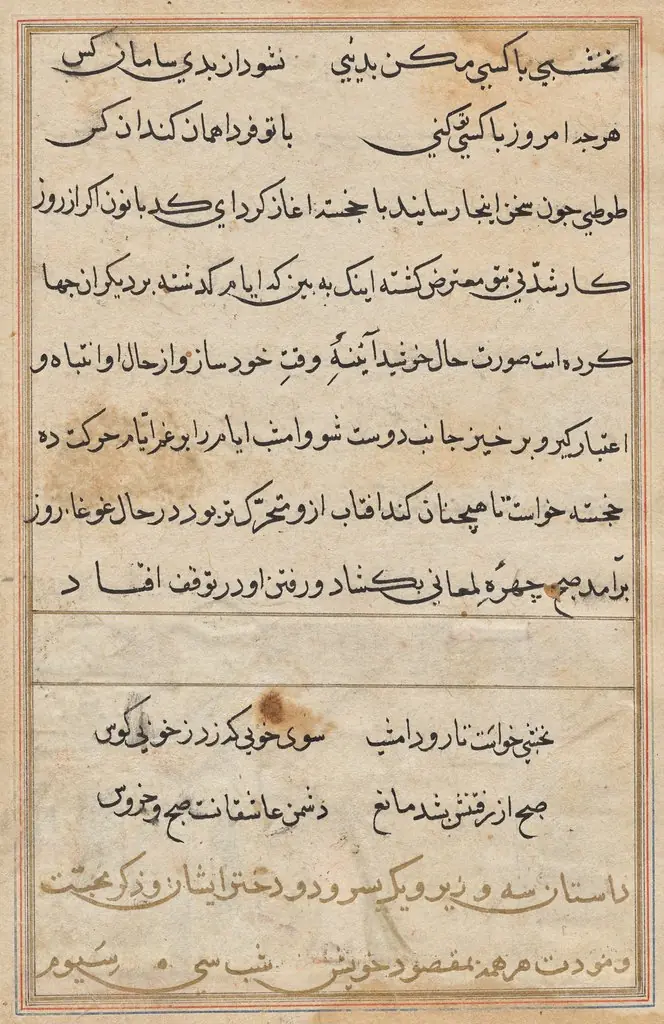 Page from Tales of a Parrot (Tuti-nama): text page