Artwork
Page from Tales of a Parrot (Tuti-nama): text page
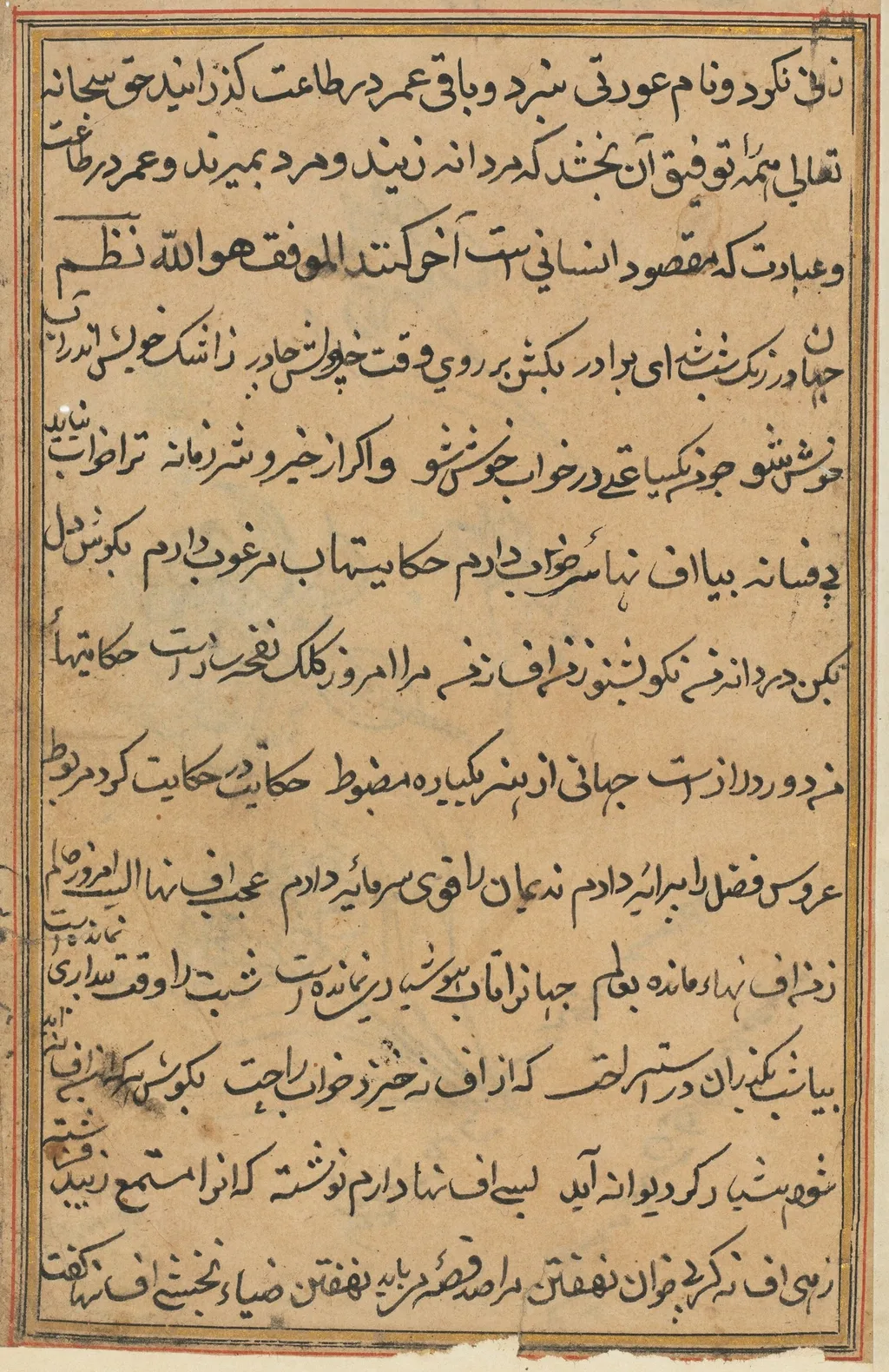
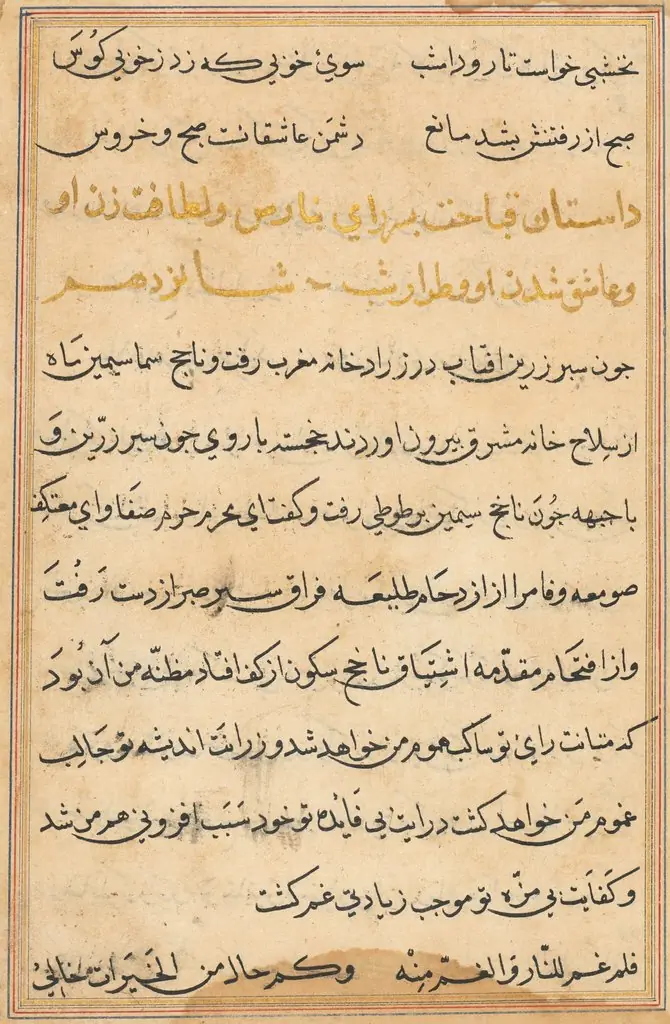
Page from Tales of a Parrot (Tuti-nama): text page is an unspecified painting. It dates from 1560 and is held in the collection of the Cleveland Museum of Art. The object is a single folio from the Persian manuscript known as Tales of a Parrot (Tuti‑nama).
About this work
Subject & Meaning
The passage illustrates a parrot’s lesson about loyalty and wisdom, reflecting Sufi themes of divine love and moral instruction.
The page shows text from the Tuti-nama, a 16th-century Persian moral tale translated into Hindi under Mughal patronage. The passage illustrates a parrot’s lesson about loyalty and wisdom, reflecting Sufi themes of divine love and moral instruction. Its presence in a richly illustrated manuscript underscores the cultural exchange between Persian literary traditions and Indian court aesthetics during Akbar’s reign, symbolizing the integration of storytelling into spiritual education.
History & Provenance
The text page is dated to 1560 and was produced in the Mughal Empire, as indicated by its inception date and place of manufacture. It forms part of a manuscript of the Tales of a Parrot (Tuti‑nama) and bears the accession number 1962.279.341.a. Prior to entering the Cleveland Museum of Art, its ownership history is not documented in the available sources; the work was acquired by the museum in 1962 and has remained in its collection since. No specific commission is recorded in the sources.
The text page from the Tales of a Parrot (Tuti-nama) is held in the collection of the Cleveland Museum of Art. The institution identifies the work with the accession number 1962.279.341.a. Created in 1560 within the Mughal Empire, this painting forms part of the museum's permanent holdings.
Context
The miniature comes from a 1560 manuscript produced in the Mughal imperial workshop, reflecting the era's synthesis of Persian narrative tradition and Indian artistic sensibility. Its presence in the Cleveland Museum of Art collection underscores scholarly interest in cross-cultural manuscript production, though attribution remains uncertain due to the anonymous workshop context.
Overview
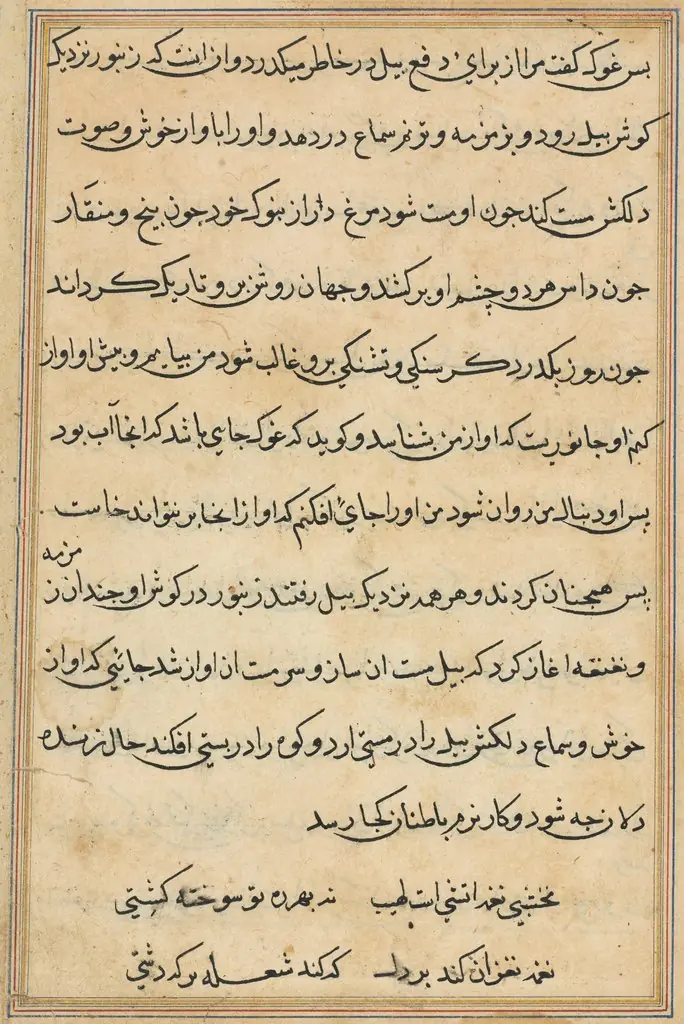
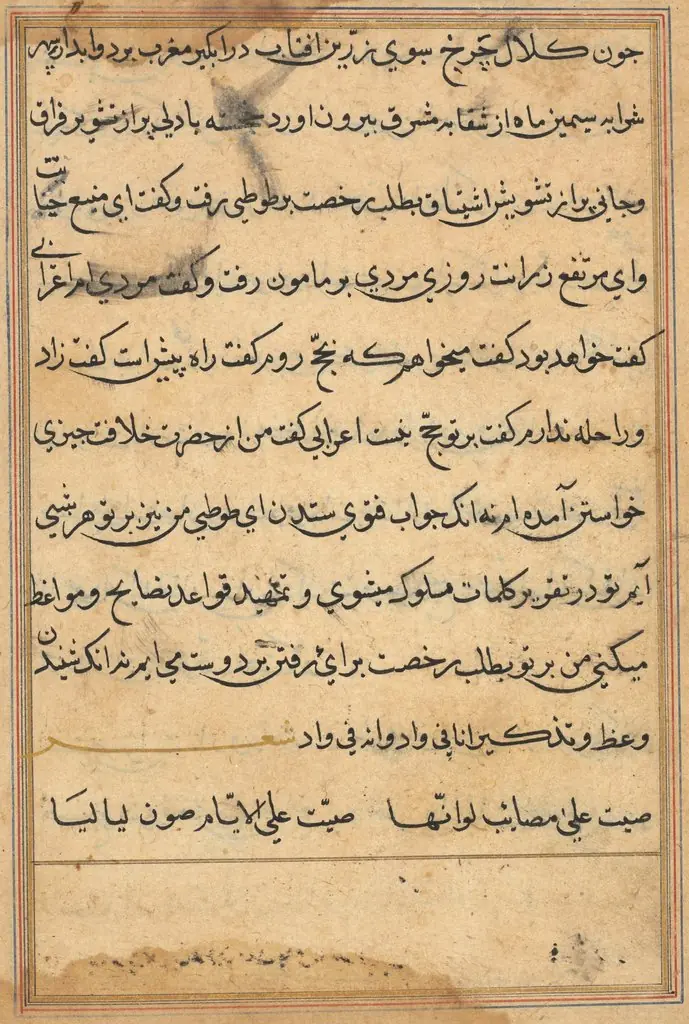
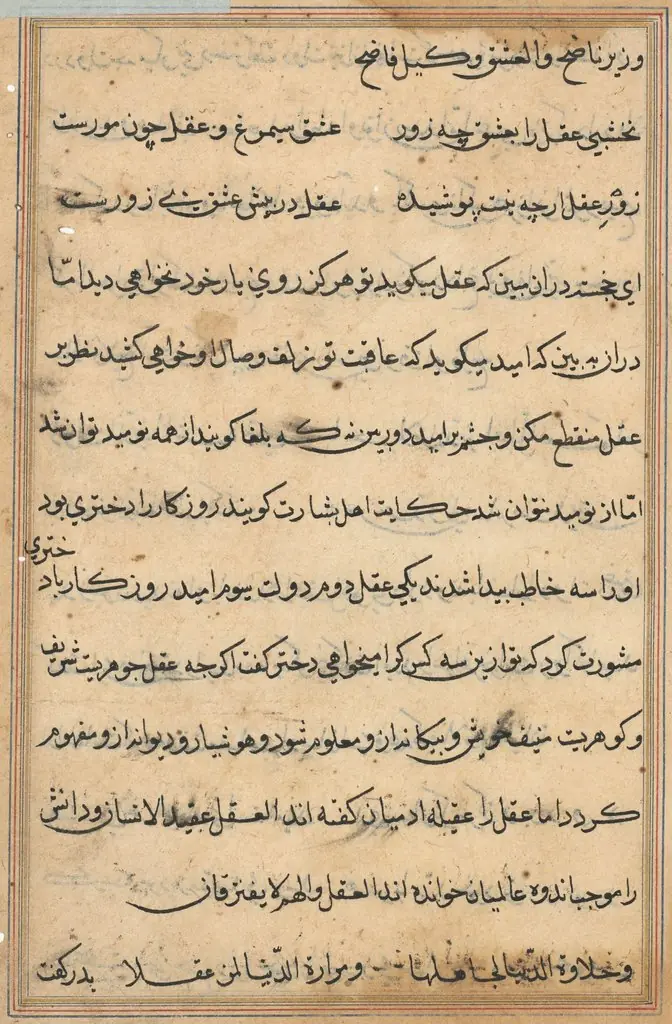
The object is a single folio from the Persian manuscript known as Tales of a Parrot (Tuti‑nama). Rendered entirely in black ink on a light, yellowed sheet, the page is densely covered with flowing Arabic calligraphy and bordered by a narrow red line. No decorative images accompany the text, emphasizing the written narrative.
Technique & Style
The calligrapher employed a refined, cursive Arabic script, characterized by tight spacing and intricate ligatures. The precision of the hand, evident in the minute details of each letter, demonstrates a high level of training and the aesthetic values of Persian manuscript production.
Legacy
Although the page lacks illustrative illumination, its calligraphic quality offers insight into the standards of manuscript production in Persian courts. The folio continues to serve as a reference for scholars studying Persian literature, calligraphy, and the material culture of early modern Iran.
Artist & collection

- Page from Tales of a Parrot (Tuti-nama): text page
 Page from Tales of a Parrot (Tuti-nama): text page
 Page from Tales of a Parrot (Tuti-nama): text page
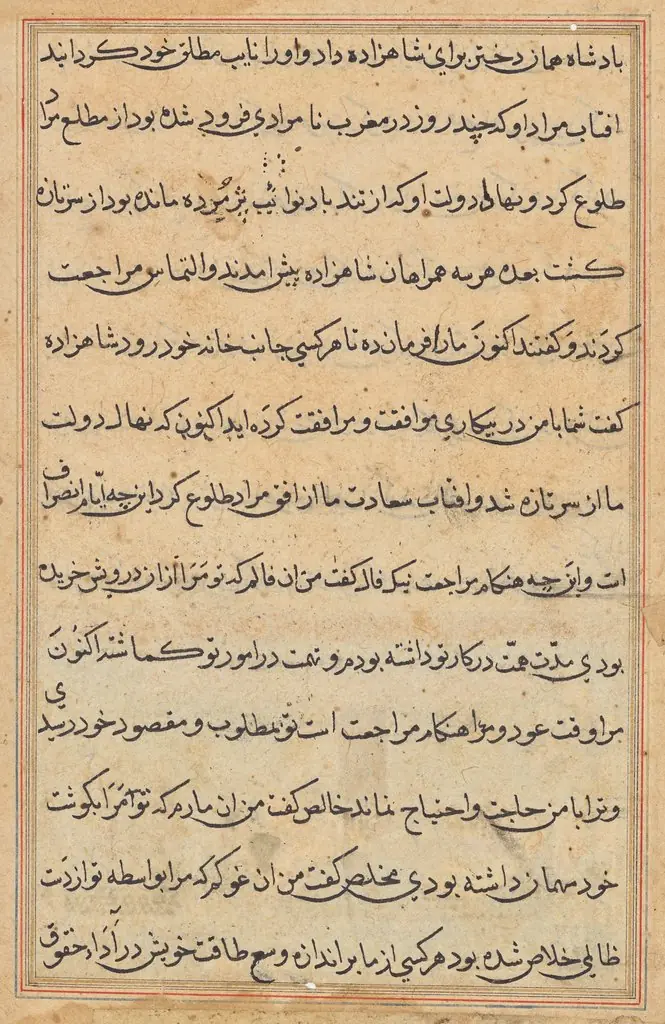 Page from Tales of a Parrot (Tuti-nama): text page
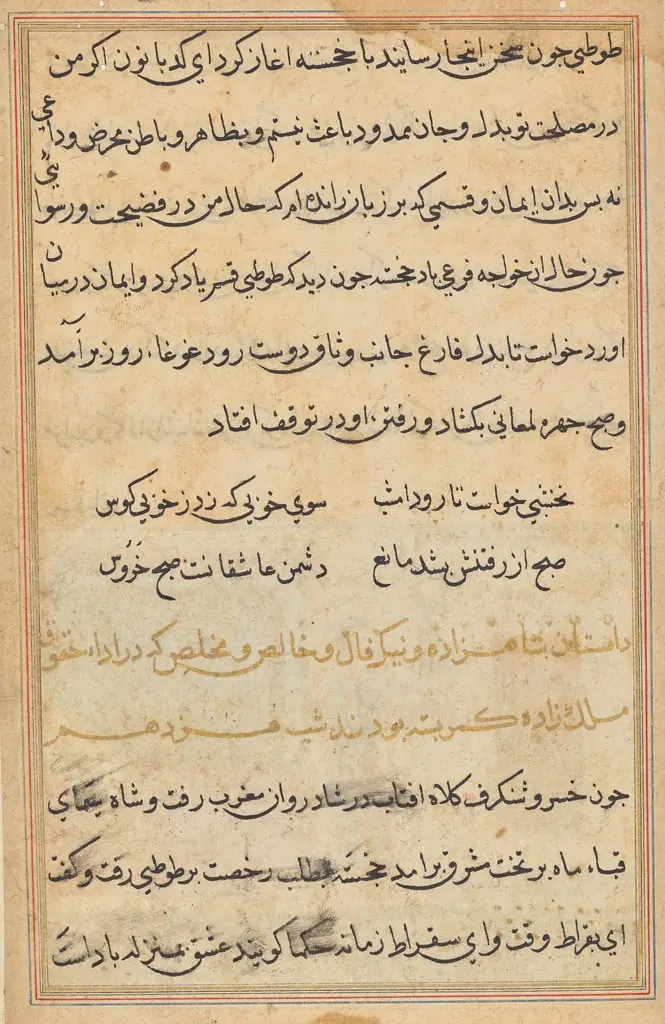 Page from Tales of a Parrot (Tuti-nama): text page
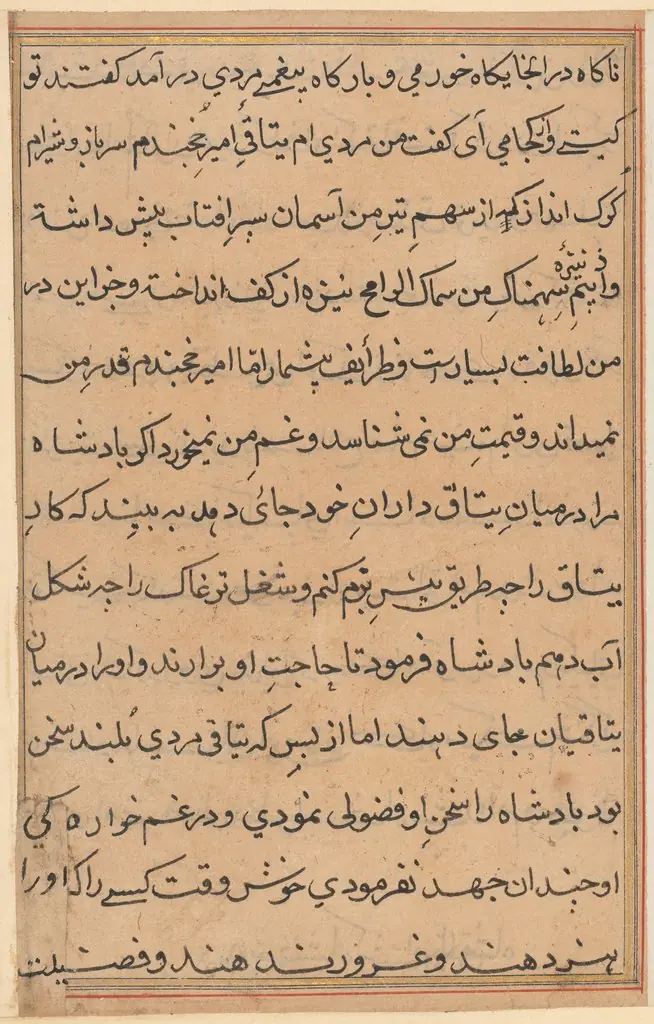 Page from Tales of a Parrot (Tuti-nama): text page
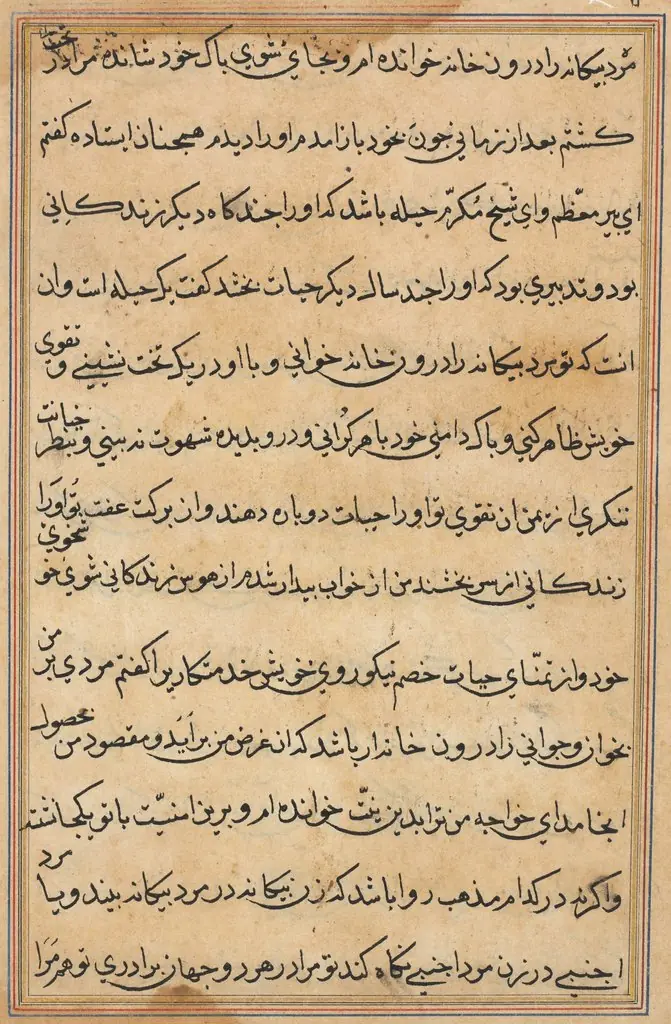 Page from Tales of a Parrot (Tuti-nama): text page
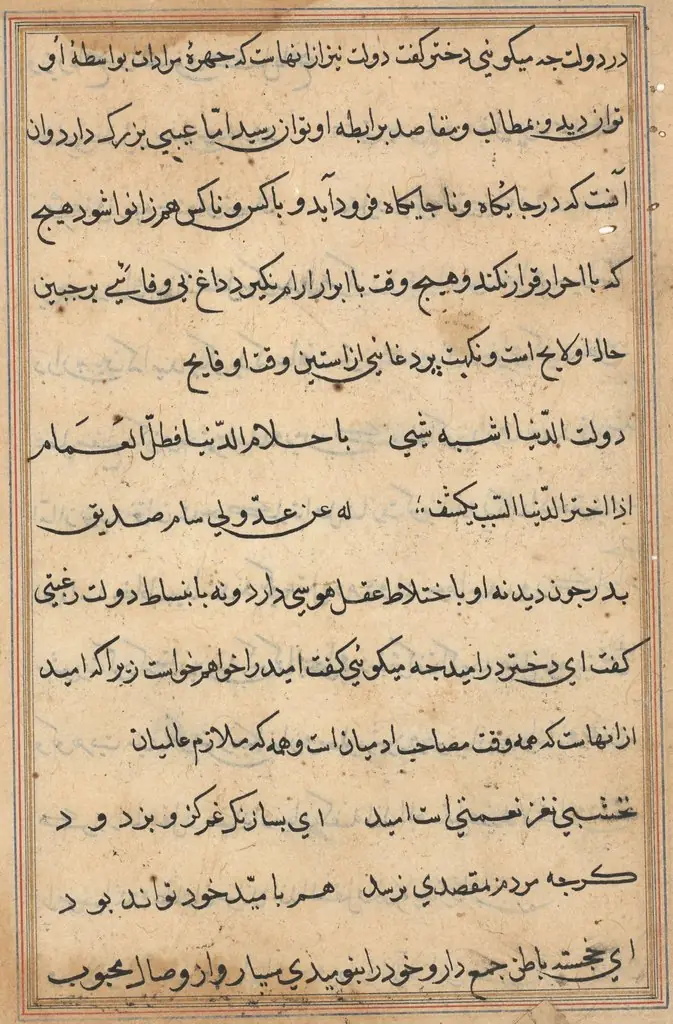 Page from Tales of a Parrot (Tuti-nama): text page
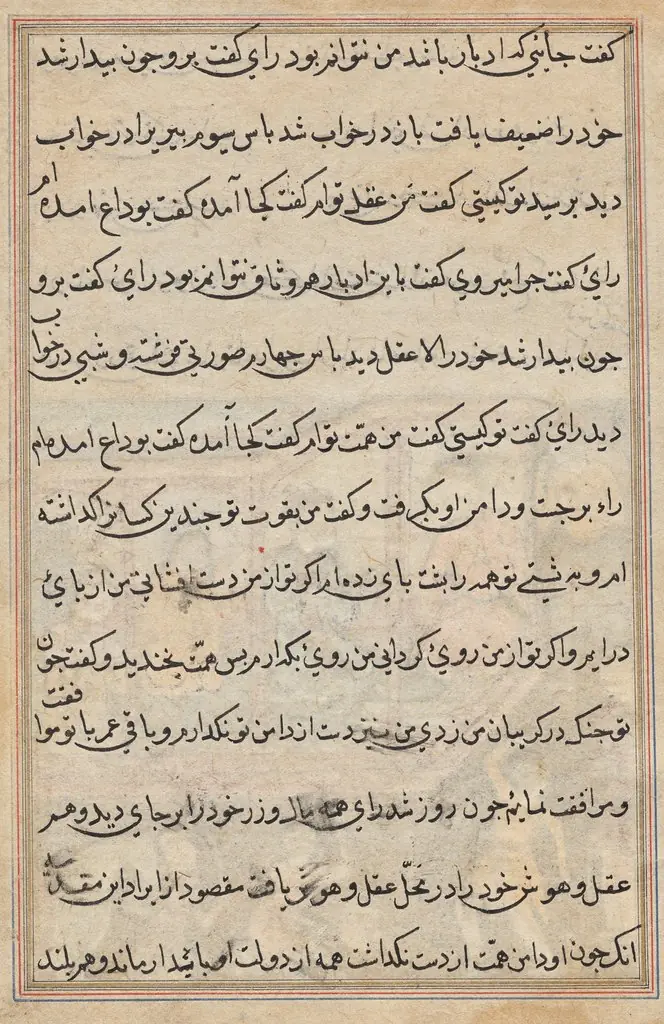 Page from Tales of a Parrot (Tuti-nama): text page
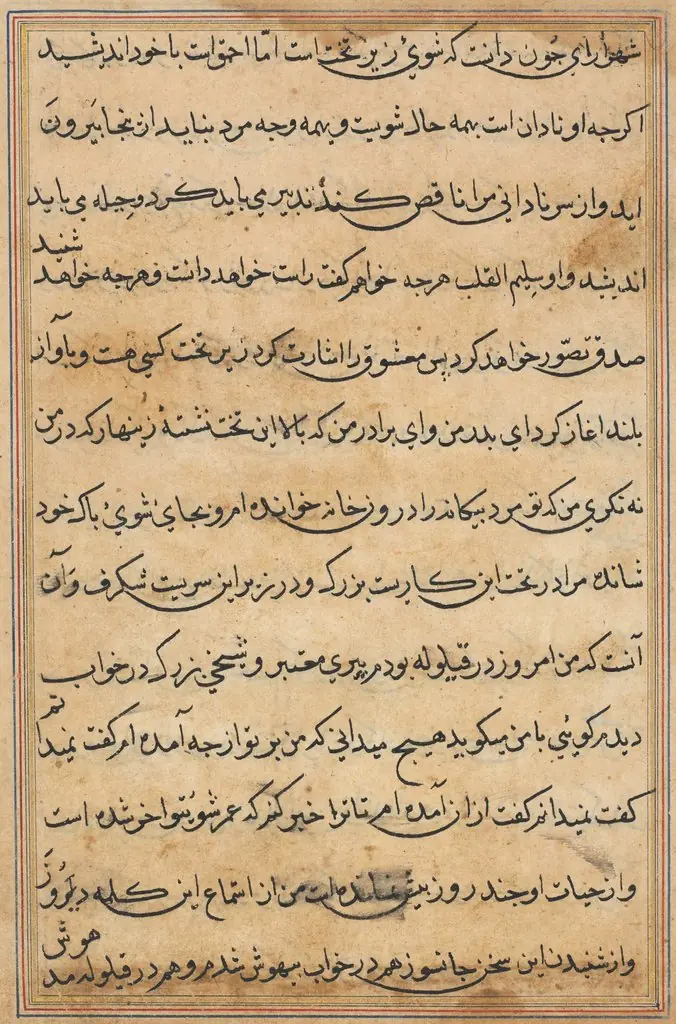 Page from Tales of a Parrot (Tuti-nama): text page
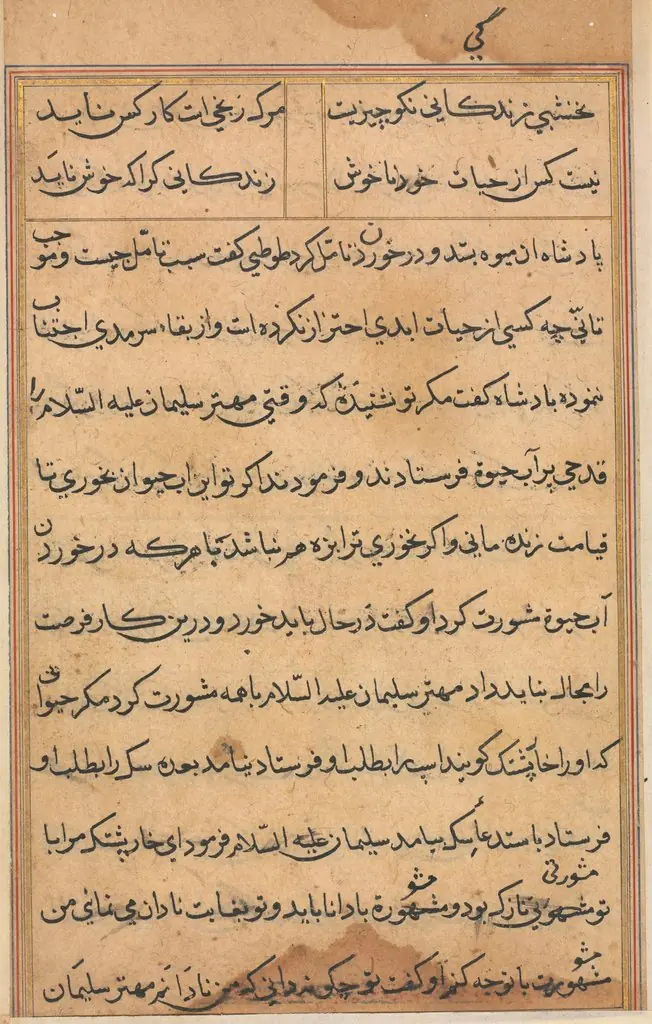 Page from Tales of a Parrot (Tuti-nama): text page
 Page from Tales of a Parrot (Tuti-nama): text page