Artwork
Page from Tales of a Parrot (Tuti-nama): text page
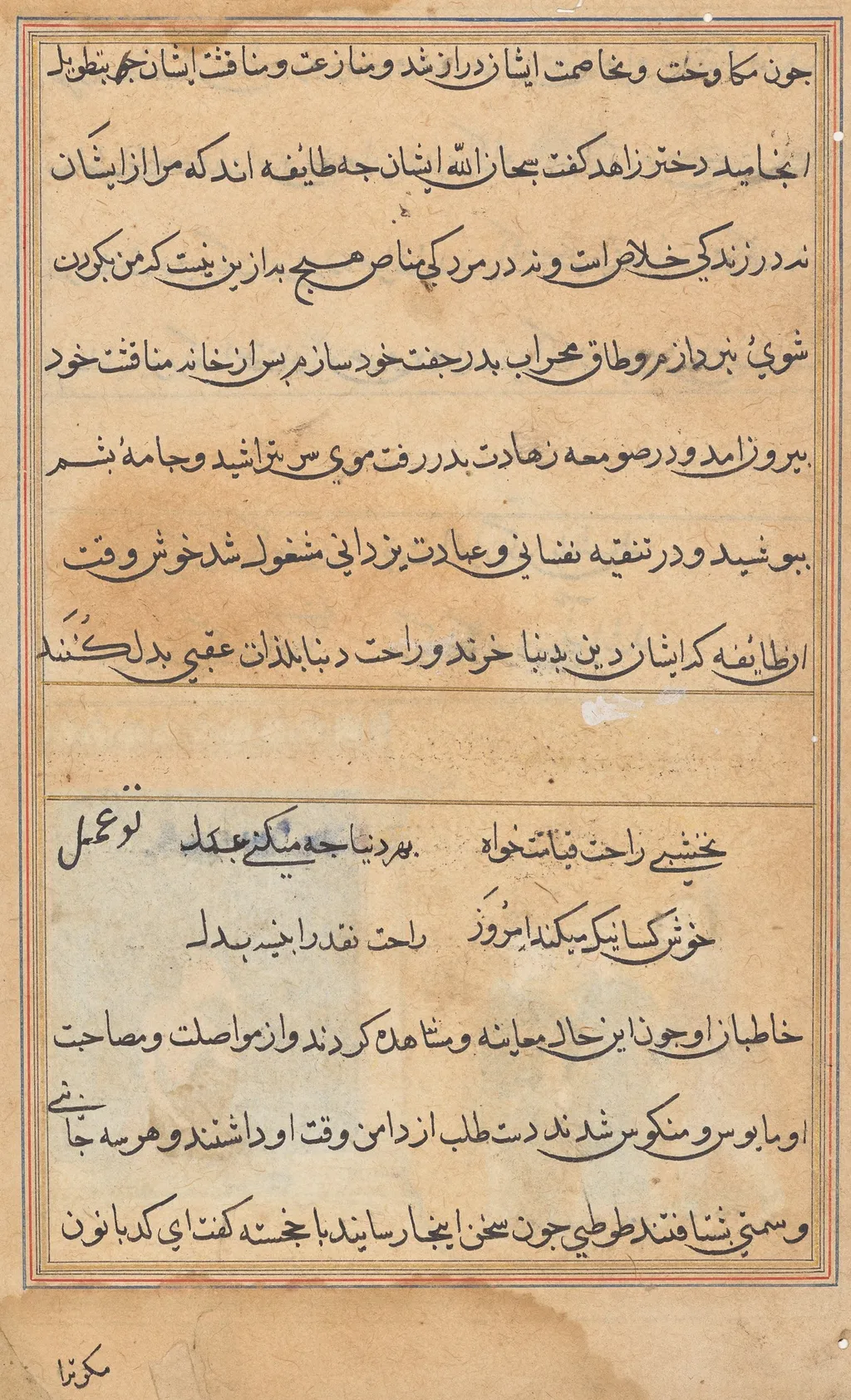
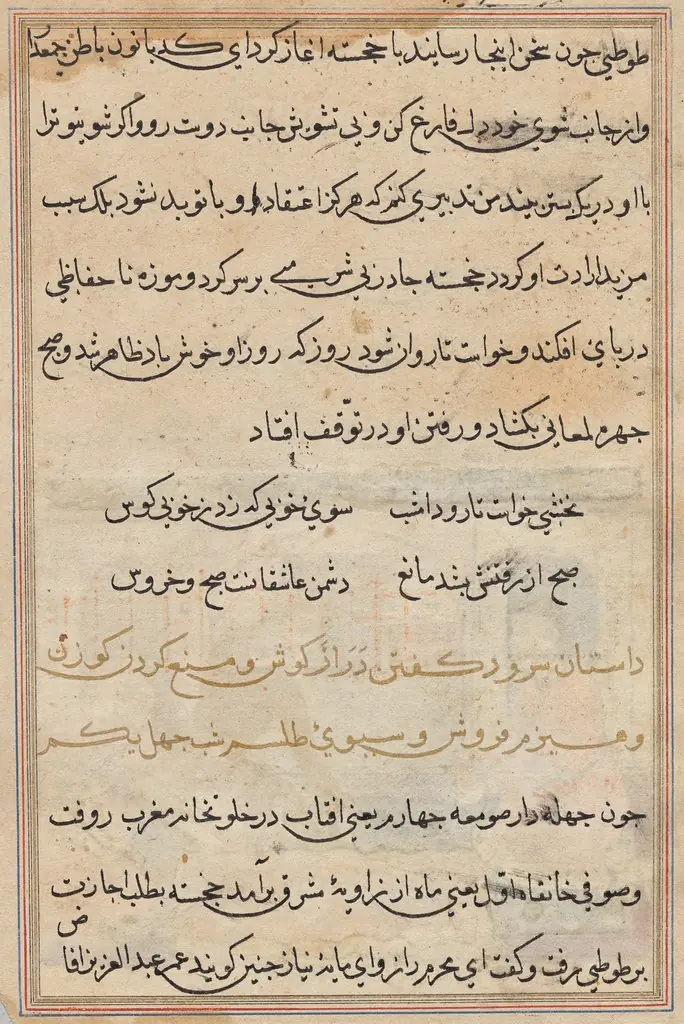
Page from Tales of a Parrot (Tuti-nama): text page is an unspecified painting. It dates from 1560 and is held in the collection of the Cleveland Museum of Art. The object is a painted page from the Persian manuscript known as Tales of a Parrot (Tuti‑nama).
About this work
History & Provenance
The sources do not provide further details about earlier ownership, commission, or the specific circumstances of its acquisition by the museum.
The page from the Tales of a Parrot (Tuti-nama) was created in 1560 within the Mughal Empire, a period when illustrated manuscripts flourished under imperial patronage. The work is classified as a painting and is attributed to an unknown artist, reflecting the collaborative nature of Mughal manuscript production in which individual painters often went unrecorded.
The page is now held in the collection of the Cleveland Museum of Art, where it is catalogued under the accession number 1962.279.147.b. The sources do not provide further details about earlier ownership, commission, or the specific circumstances of its acquisition by the museum.
The text page from the Tuti-nama (Tales of a Parrot) is held in the collection of the Cleveland Museum of Art. The institution assigns the work the accession number 1962.279.147.b. Created in 1560 within the Mughal Empire, the piece is classified as a painting. The available records do not list specific exhibitions for this individual folio.
Overview
The object is a painted page from the Persian manuscript known as Tales of a Parrot (Tuti‑nama). Executed in black ink on a lightly yellowed paper, the surface is entirely filled with a flowing, ornamental script that creates a continuous visual rhythm across the page.
Subject & Meaning
The text on the page belongs to the moralistic collection of stories in the Tuti‑nama, a work traditionally used for instruction and reflection. Its elaborate calligraphy indicates that the content was intended to be both aesthetically pleasing and intellectually engaging for its reader.
Technique & Style
The calligrapher employed a decorative, cursive hand, with lines that curve and interlink, producing a seamless visual flow. The use of black ink on a pale, slightly aged background highlights the intricacy of the script while preserving the manuscript’s delicate materiality.
Context
During the early 17th century, the Mughal empire fostered a synthesis of Persian literary traditions and Indian artistic practices. Manuscripts such as the Tuti‑nama were commissioned to demonstrate erudition and to reinforce moral teachings within elite circles.
Legacy
Works like this page illustrate the sophisticated calligraphic art that flourished under Jahangir’s patronage, influencing subsequent generations of manuscript production across the Indian subcontinent.
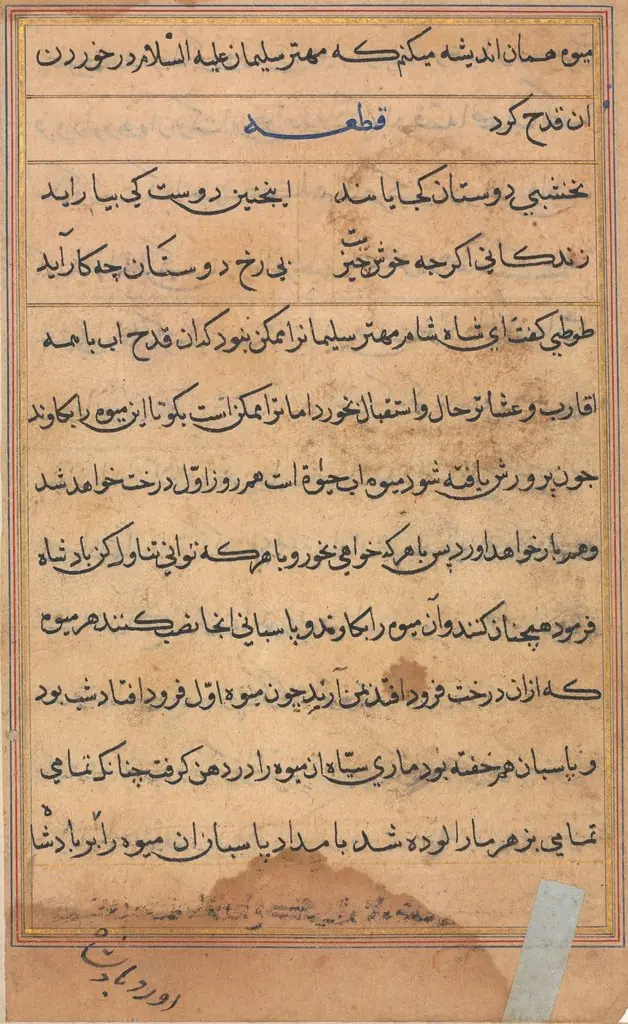
Artist & collection

- Page from Tales of a Parrot (Tuti-nama): text page
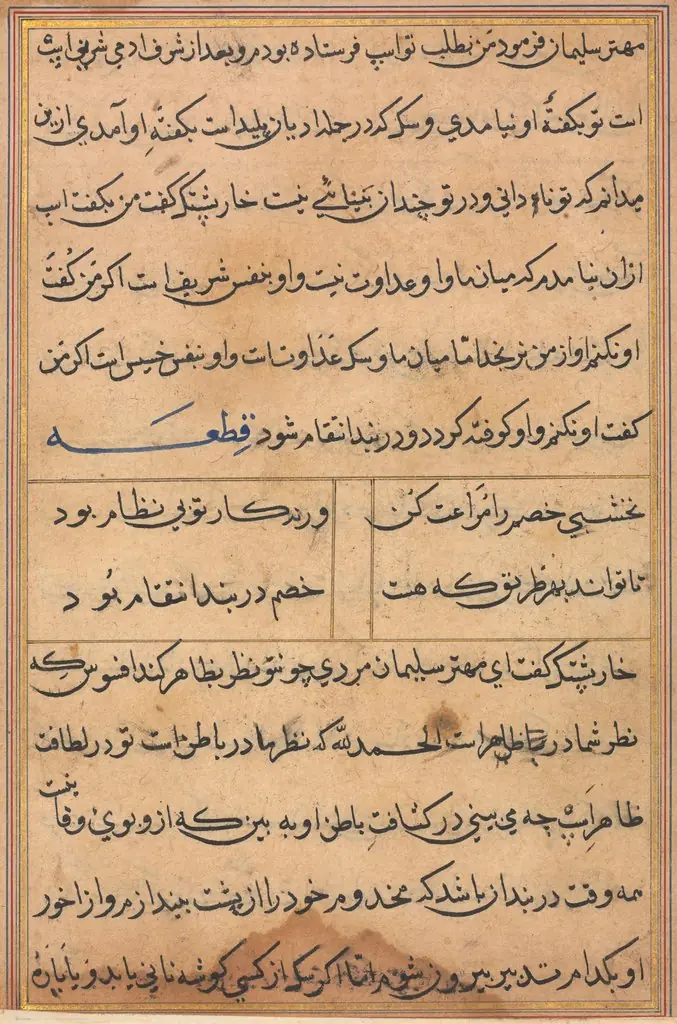 Page from Tales of a Parrot (Tuti-nama): text page
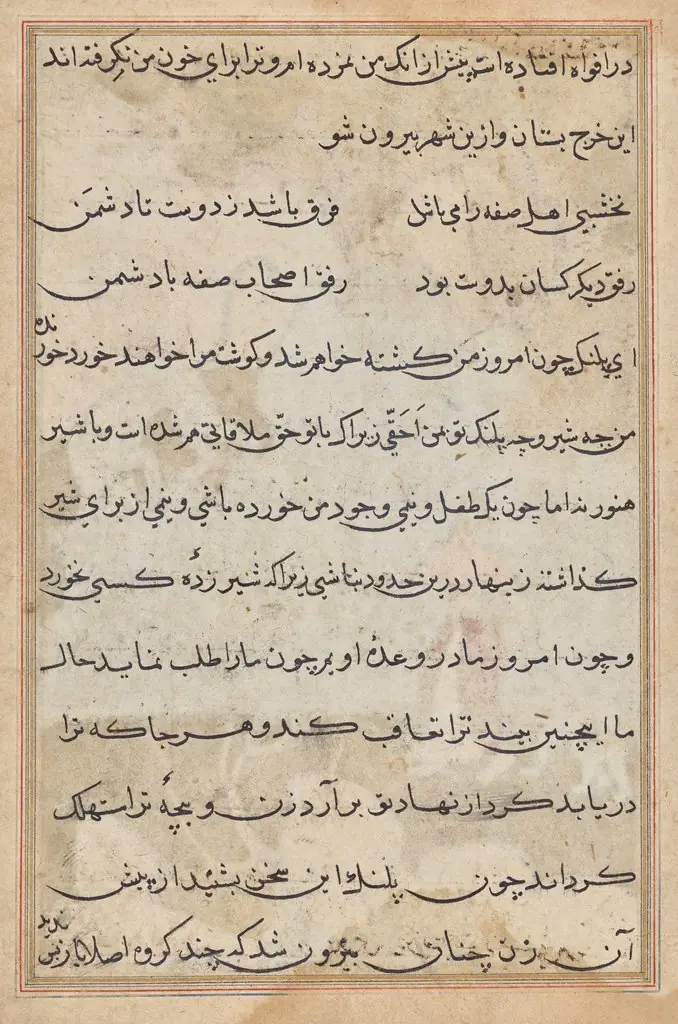 Page from Tales of a Parrot (Tuti-nama): text page
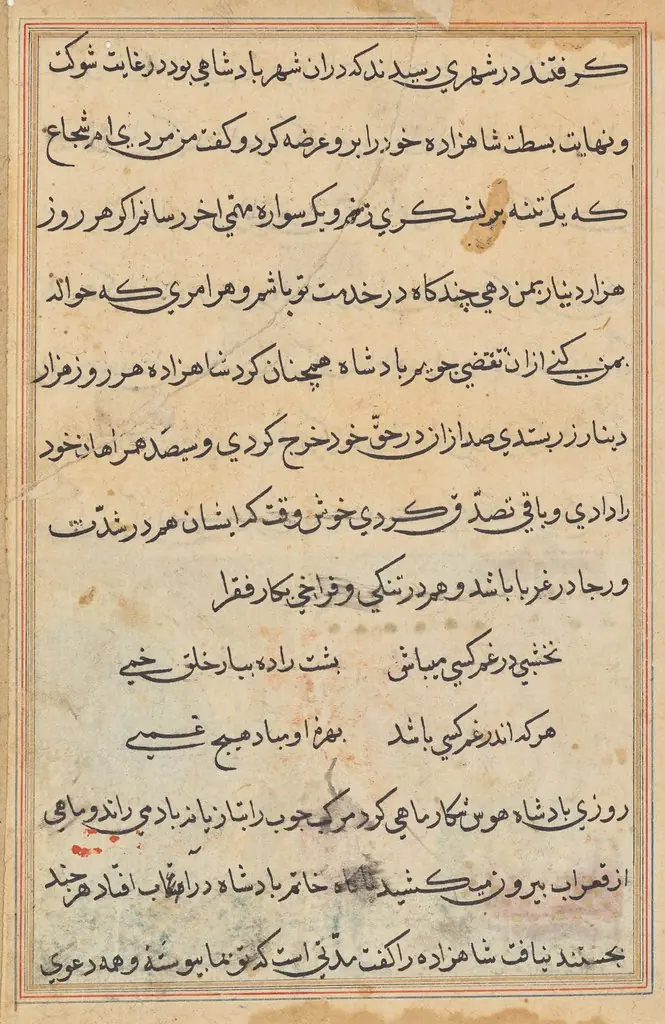 Page from Tales of a Parrot (Tuti-nama): text page
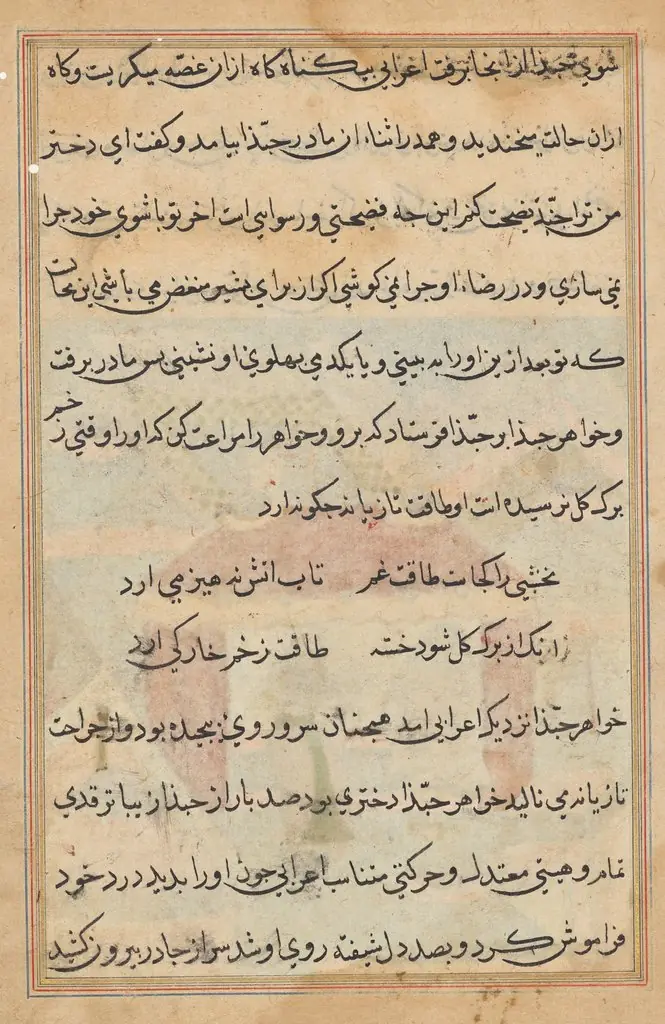 Page from Tales of a Parrot (Tuti-nama): text page
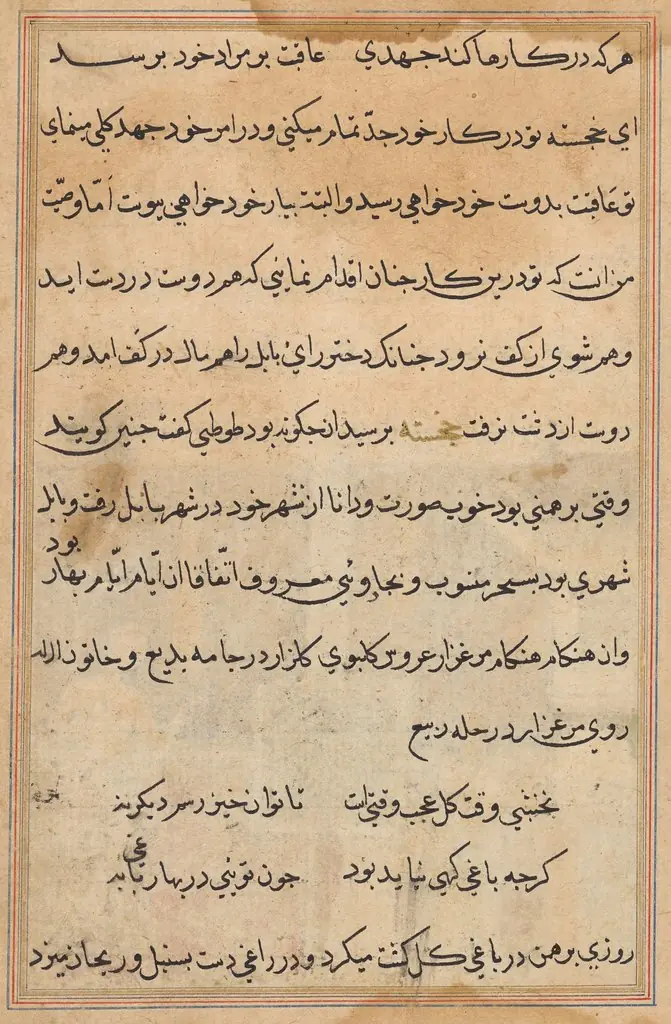 Page from Tales of a Parrot (Tuti-nama): text page
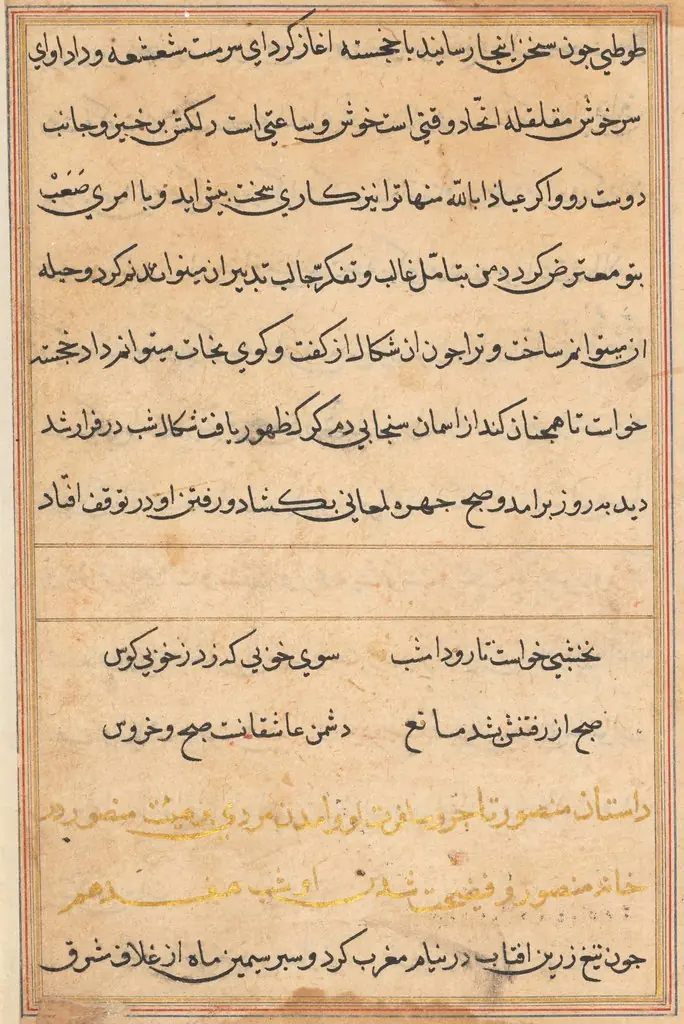 Page from Tales of a Parrot (Tuti-nama): text page
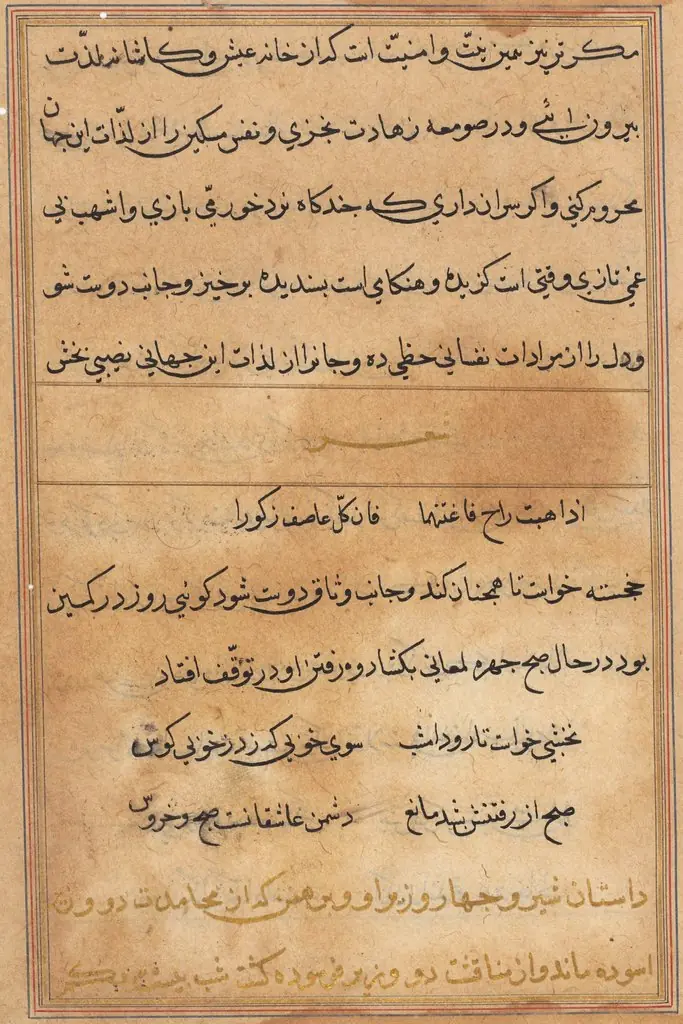 Page from Tales of a Parrot (Tuti-nama): text page
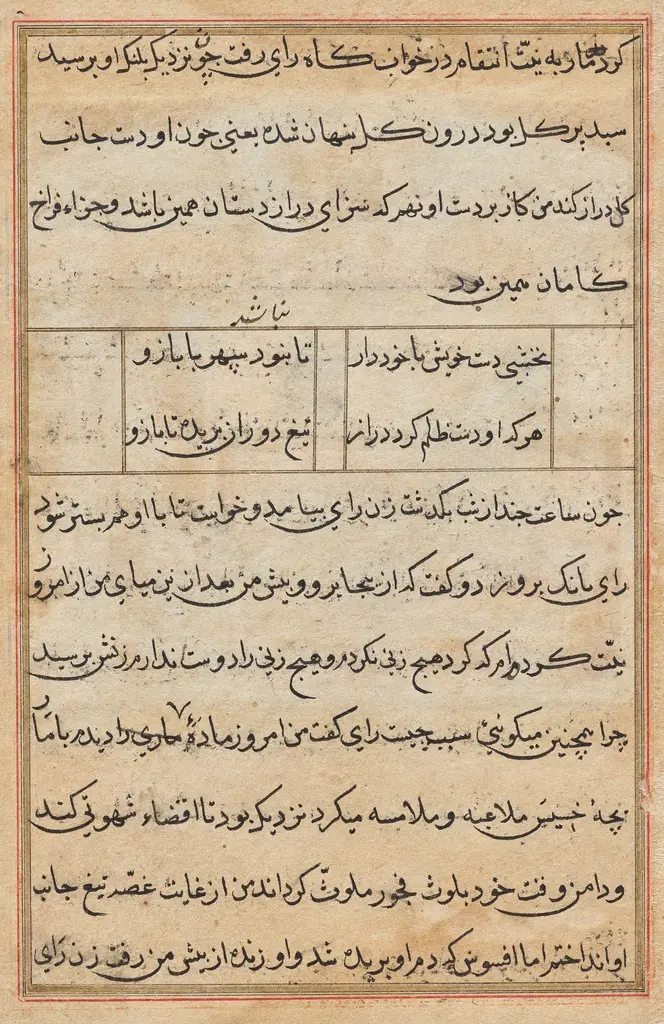 Page from Tales of a Parrot (Tuti-nama): text page
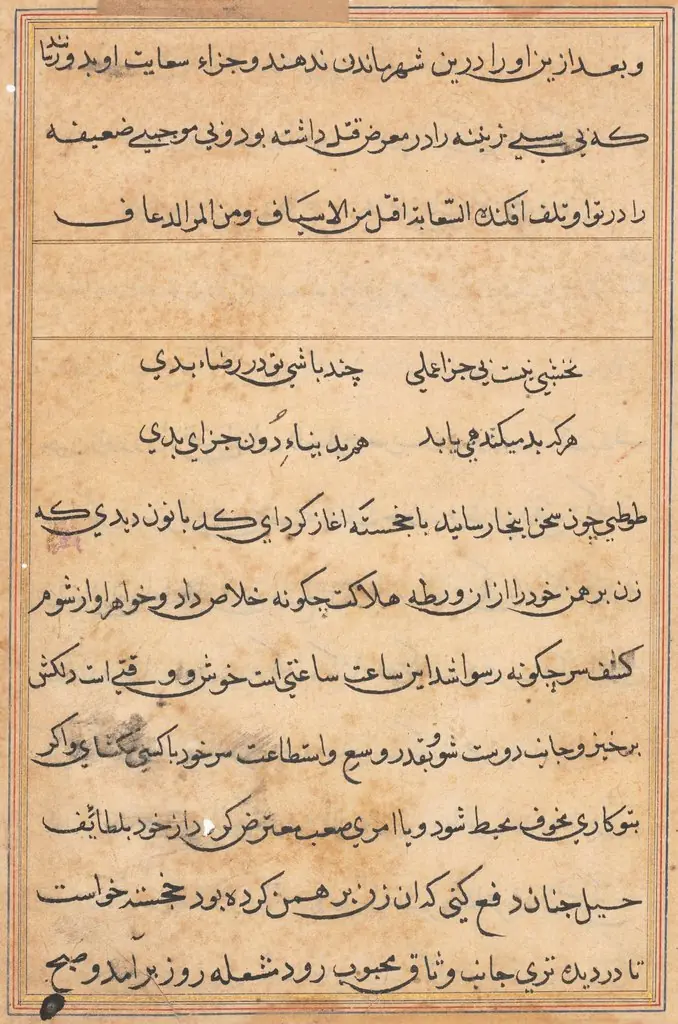 Page from Tales of a Parrot (Tuti-nama): text page
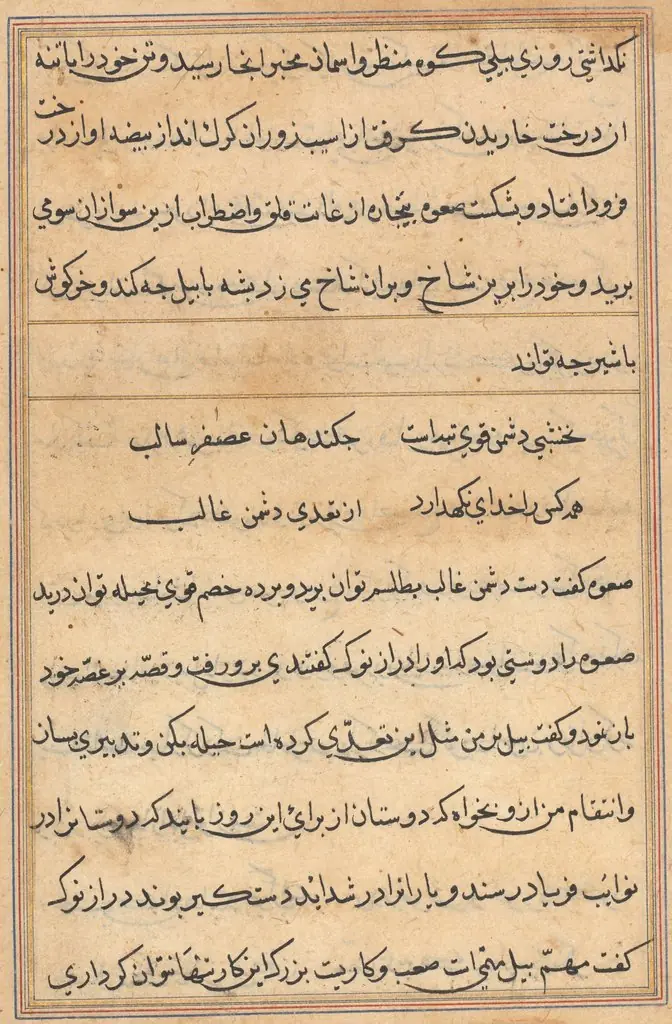 Page from Tales of a Parrot (Tuti-nama): text page
 Page from Tales of a Parrot (Tuti-nama): text page