Artwork
Page from Tales of a Parrot (Tuti-nama): text page
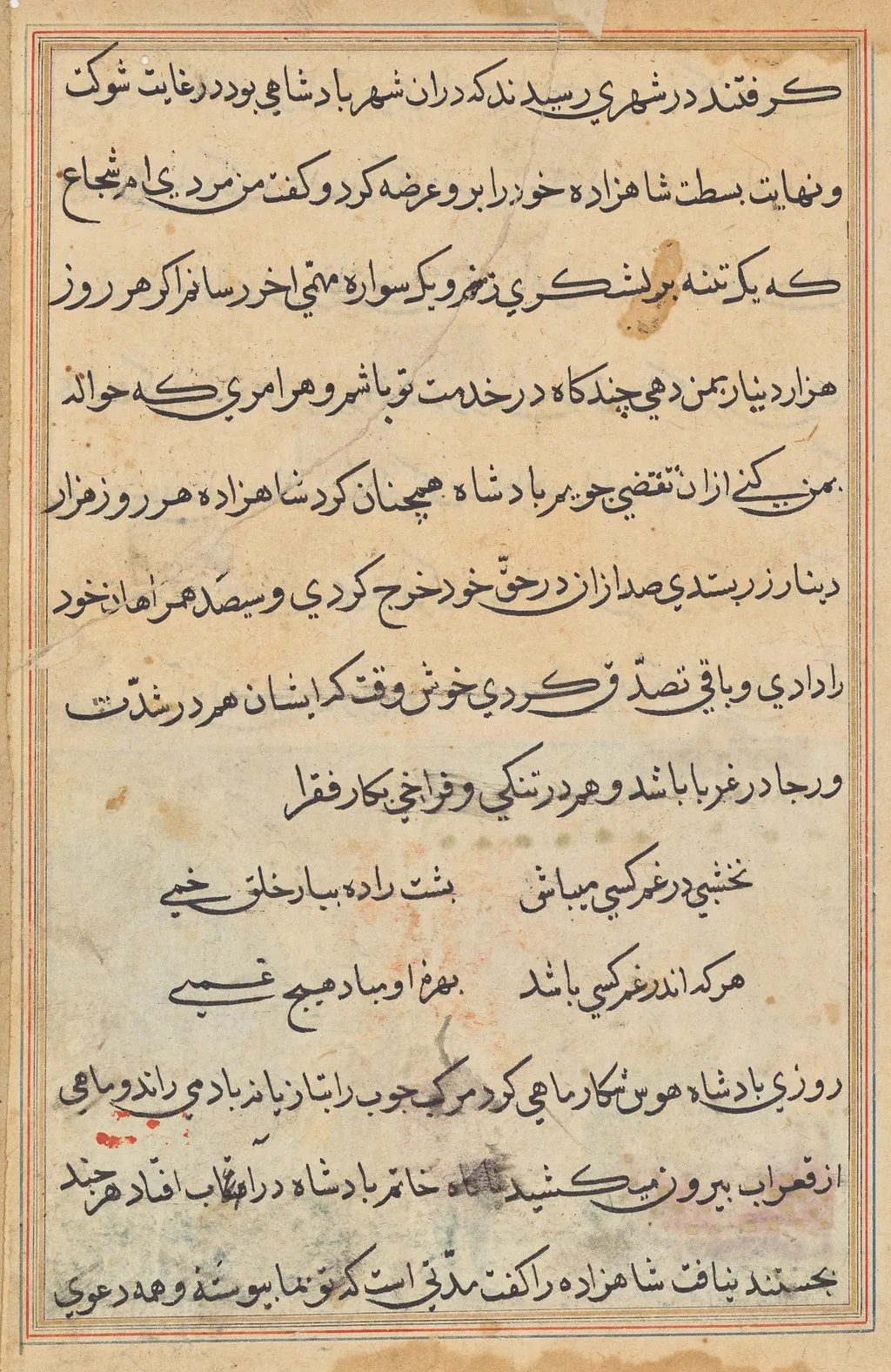
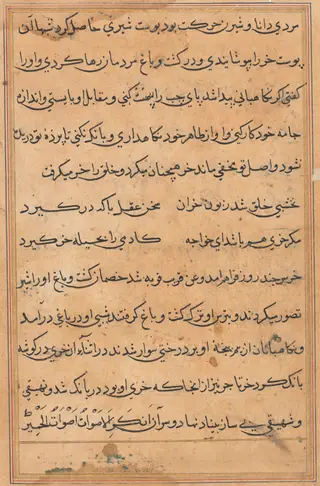
Page from Tales of a Parrot (Tuti-nama): text page is an unspecified painting. It dates from 1560 and is held in the collection of the Cleveland Museum of Art.
About this work
Subject & Meaning
Depicted as a miniature manuscript page, it belongs to a series recounting moral tales featuring a talking parrot that imparts wisdom to a young prince.
The text page originates from the Tuti-nama, a 16th-century Persian illustrated story collection composed in Mughal India. Depicted as a miniature manuscript page, it belongs to a series recounting moral tales featuring a talking parrot that imparts wisdom to a young prince. The subject reflects themes of divine guidance, moral instruction, and the interplay between human fate and spiritual insight, characteristic of Mughal artistic patronage emphasizing didactic storytelling through visual and textual harmony.
The miniature showcases intricate calligraphy and symbolic composition, reinforcing the narrative’s didactic purpose within Islamic artistic traditions. Its creation during the reign of Akbar underscores the Mughal court’s support for syncretic cultural production, blending Persian literary heritage with Indian artistic sensibilities.
The work is housed in the Cleveland Museum of Art, accession number 1962.279.135.a, affirming its significance as a representative example of Mughal manuscript painting.
Technique & Style
The page is a miniature painting executed in tempera and ink on paper, characteristic of Mughal manuscript illumination from the mid-sixteenth century. The composition features delicate linear drawing, restrained color washes, and a flattened pictorial space that emphasizes narrative clarity over naturalistic depth. The support is a single sheet of paper, handled as a codex leaf, and the surface shows slight wear along the edges consistent with archival handling.
Formal stylistic analysis notes the use of gold accents and intricate marginal patterning typical of Safavid-influenced Persianate book arts transmitted into the Indian subcontinent during the reign of Akbar.
The work belongs to the Tuti-nama manuscript tradition, a didactic text composed in Persian during the twelfth century and later translated and illustrated in Mughal India. The painting’s stylistic register aligns with other illustrated folios housed in the Cleveland Museum of Art collection, reflecting a synthesis of Persian compositional frameworks and emerging naturalistic details in the late sixteenth century.
History & Provenance
This text page from the Tales of a Parrot (Tuti-nama) was created in 1560 within the Mughal Empire. The work is attributed to an unknown artist and is classified as a painting. It is currently held in the collection of the Cleveland Museum of Art, where it is cataloged under the accession number 1962.279.135.a.
The specific circumstances regarding its initial commission or the precise chain of ownership prior to its acquisition by the museum are not detailed in the available records.
Context
This page originates from a Persian manuscript produced during the reign of Akbar, reflecting the Mughal Empire's synthesis of Persian literary traditions and Indian artistic sensibilities. The manuscript, known as the Tuti-nama, recounts a series of moral tales featuring a parrot, and this illuminated text page exemplifies the naturalistic detail and vibrant coloration characteristic of 16th-century Mughal book arts. The work was created in the Cleveland Museum of Art's collection, which holds one of the most complete surviving Tuti-nama manuscripts from around 1560.
Scholarship emphasizes the manuscript's role in bridging Persian narrative forms with indigenous Indian aesthetics, marking a pivotal moment in cross-cultural artistic exchange. Its production under imperial patronage underscores the political and cultural ambitions of the Mughal court in patronizing the arts as a means of consolidating power and identity.
Overview
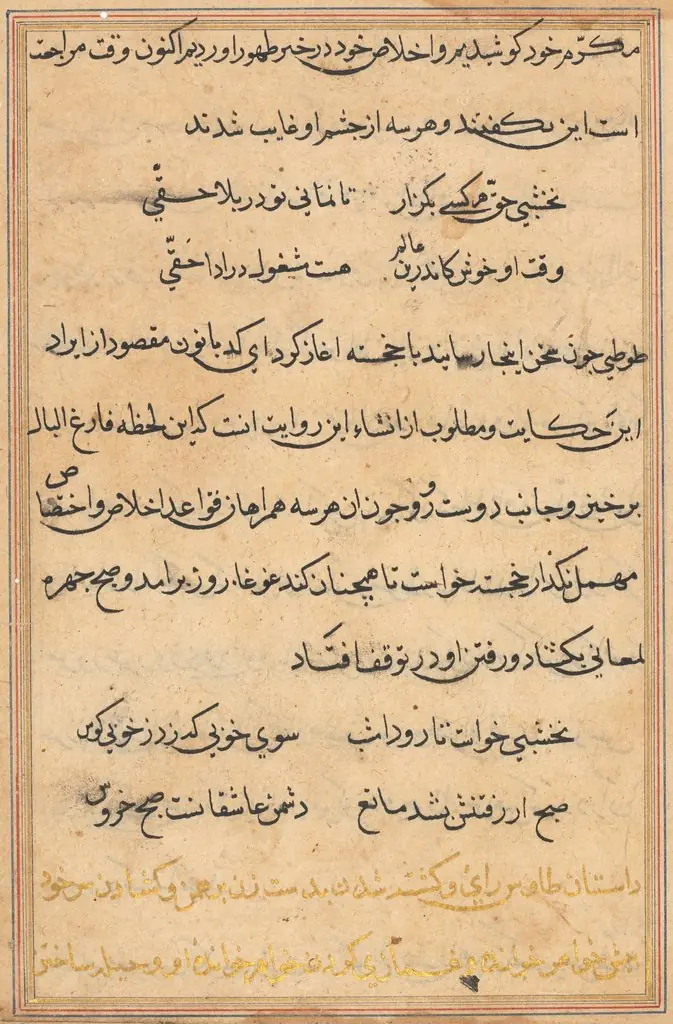
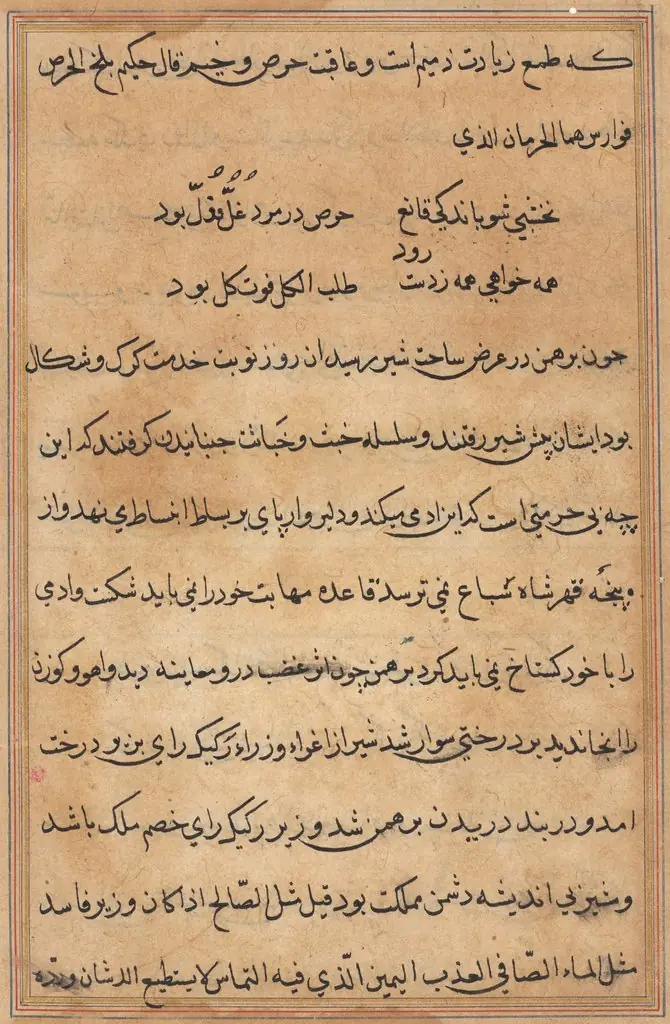
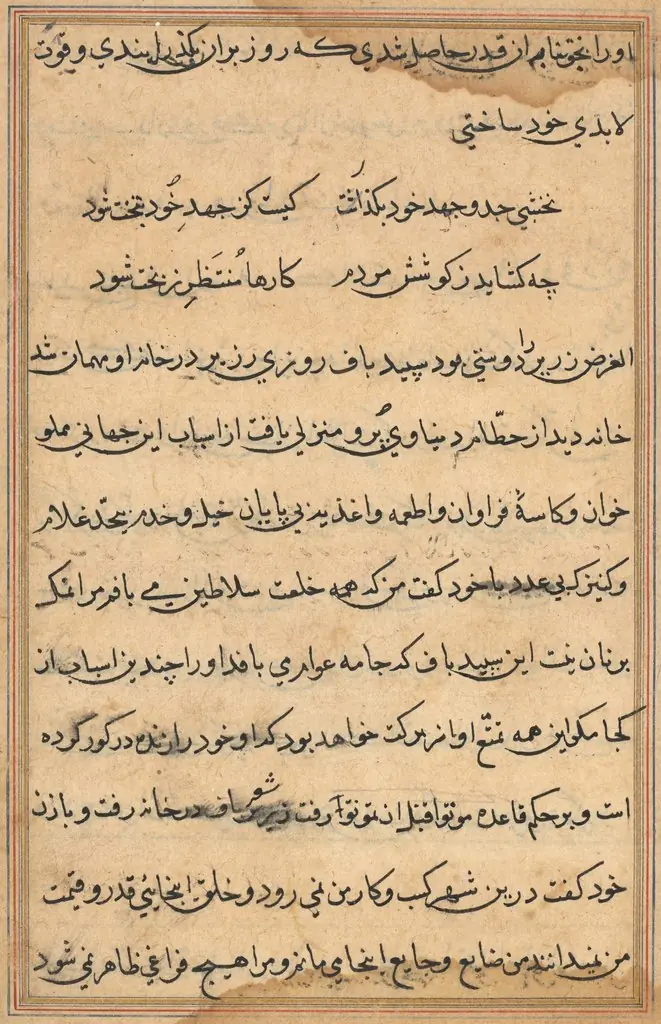
This artwork is a single page from the illustrated manuscript 'Tales of a Parrot' (Tuti-nama), featuring a text page dominated by flowing black script in neat lines, framed by a thin red border on aged, yellowed paper.
Legacy
The legacy of this page is tied to the overall significance of 'Tales of a Parrot' and Persian manuscript art, contributing to the cultural and literary heritage of the region, though its individual impact is not specified.
Artist & collection

- Page from Tales of a Parrot (Tuti-nama): text page
 Page from Tales of a Parrot (Tuti-nama): text page
 Page from Tales of a Parrot (Tuti-nama): text page
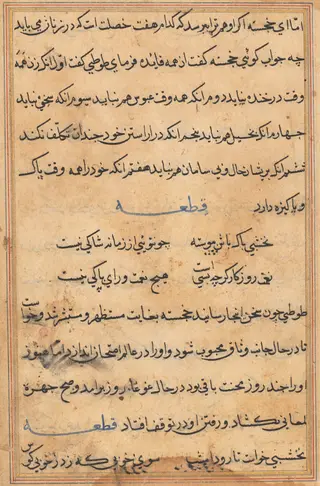 Page from Tales of a Parrot (Tuti-nama): text page
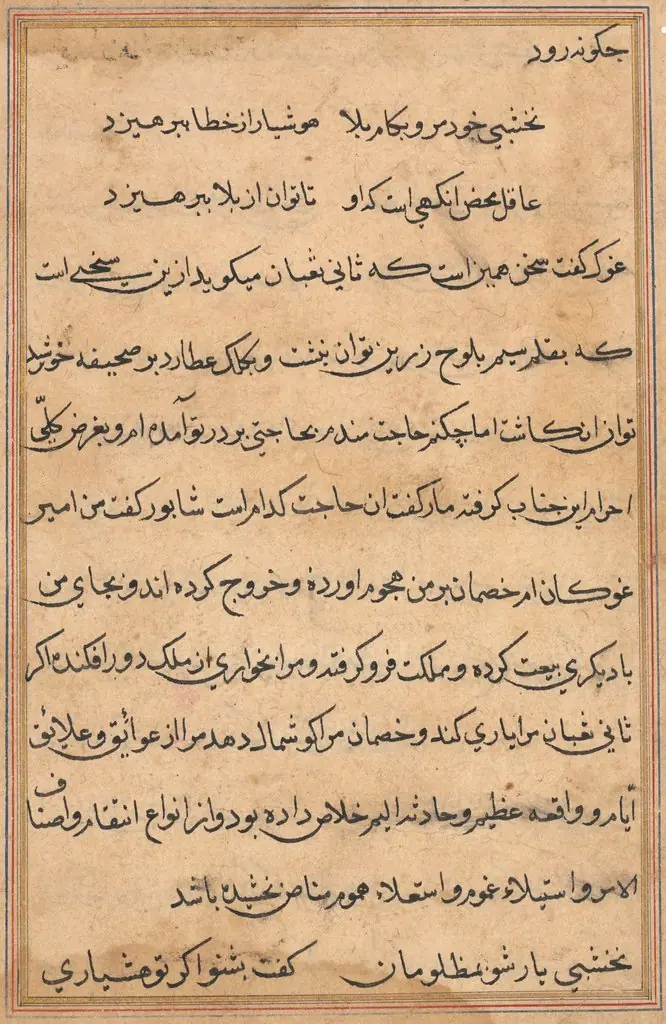 Page from Tales of a Parrot (Tuti-nama): text page
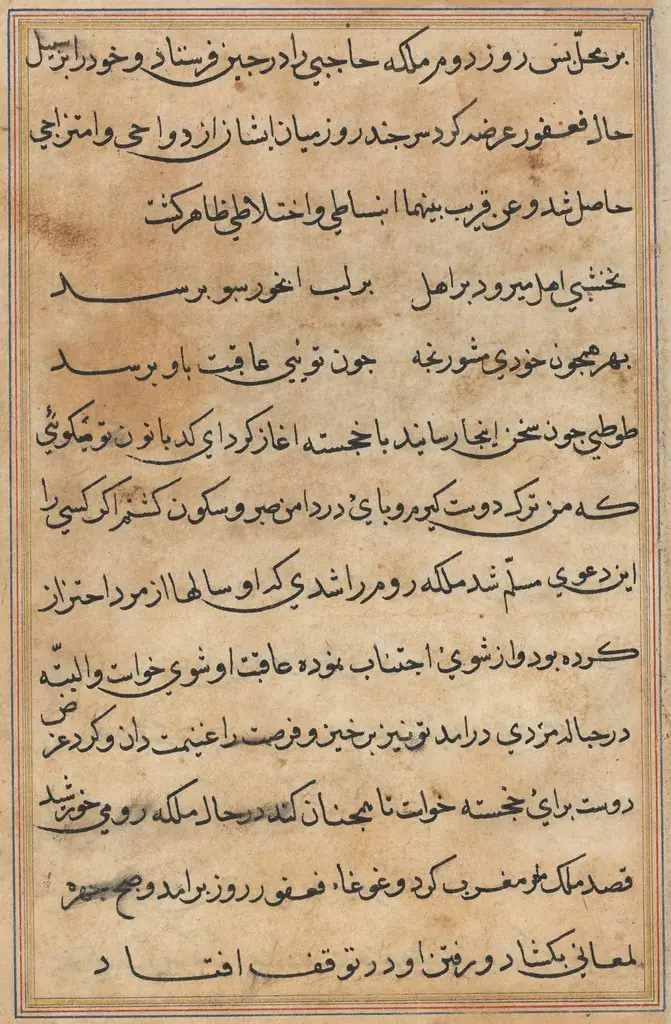 Page from Tales of a Parrot (Tuti-nama): text page
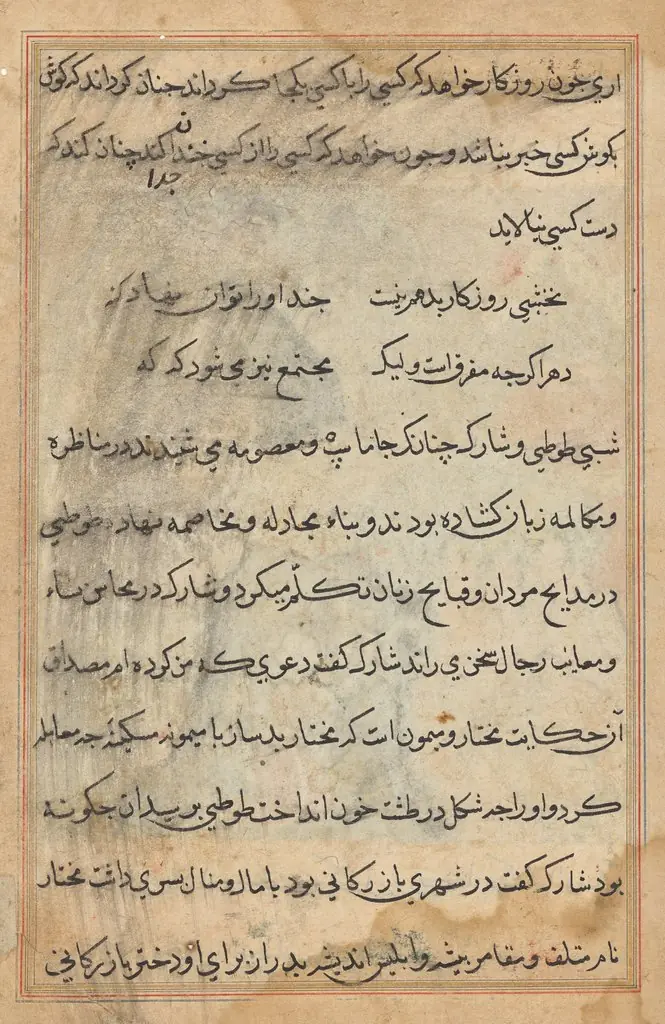 Text page from a Tuti-nama (Tales of a Parrot)
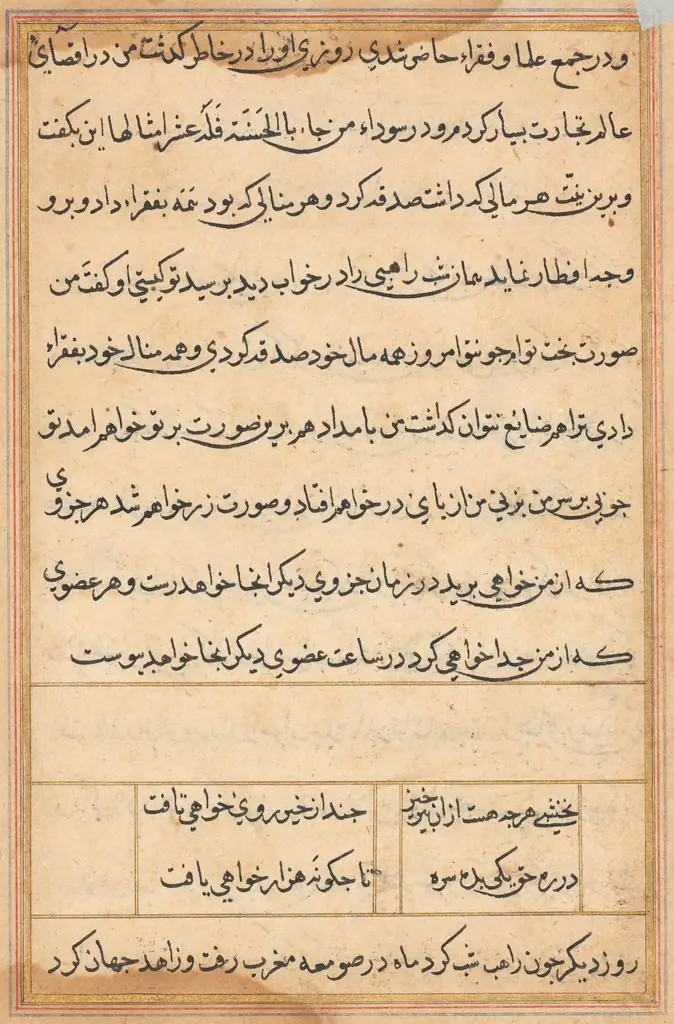 Page from Tales of a Parrot (Tuti-nama): text page
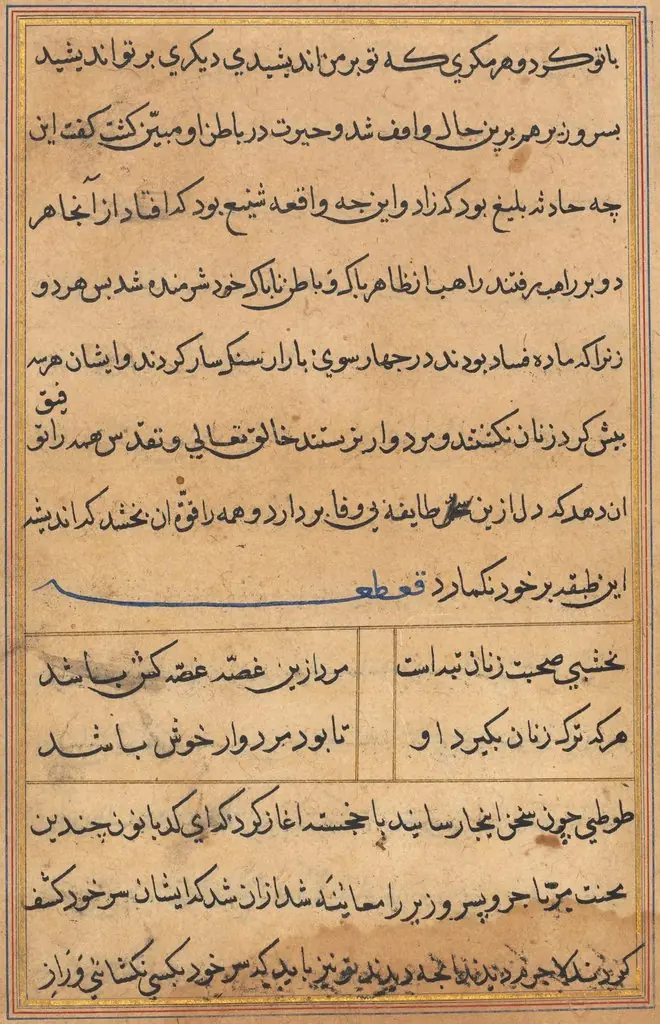 Page from Tales of a Parrot (Tuti-nama): text page
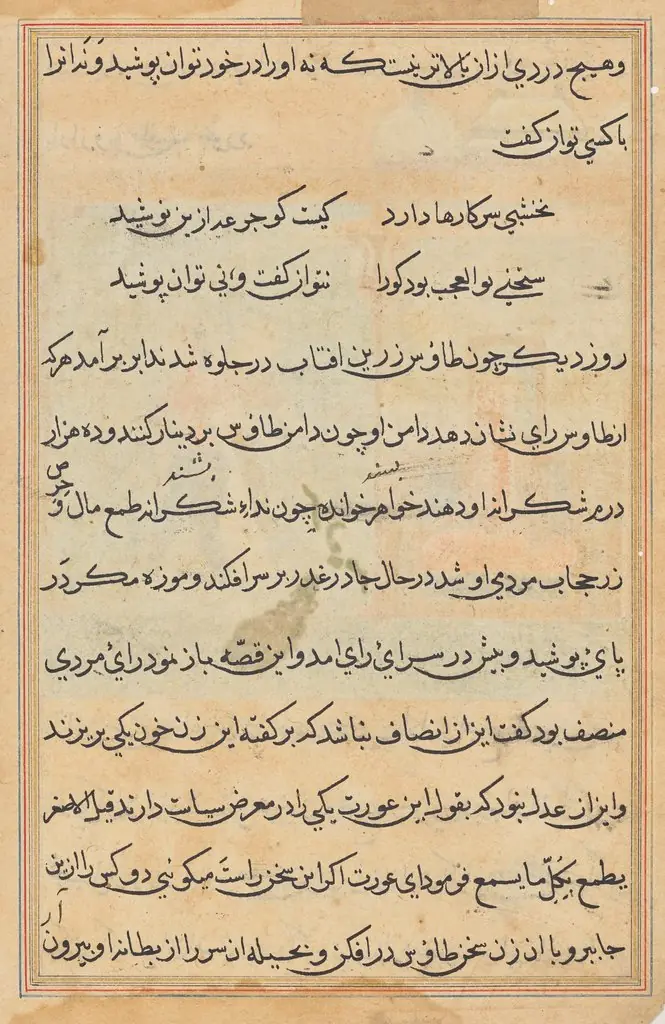 Page from Tales of a Parrot (Tuti-nama): text page
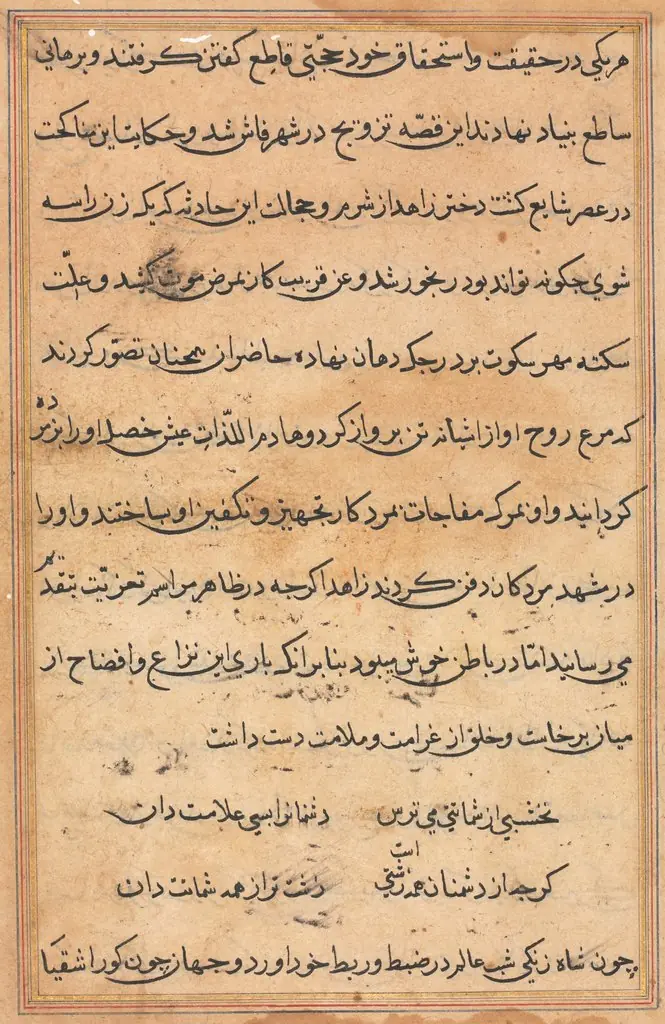 Page from Tales of a Parrot (Tuti-nama): text page
 Page from Tales of a Parrot (Tuti-nama): text page