Artwork
Page from Tales of a Parrot (Tuti-nama): text page
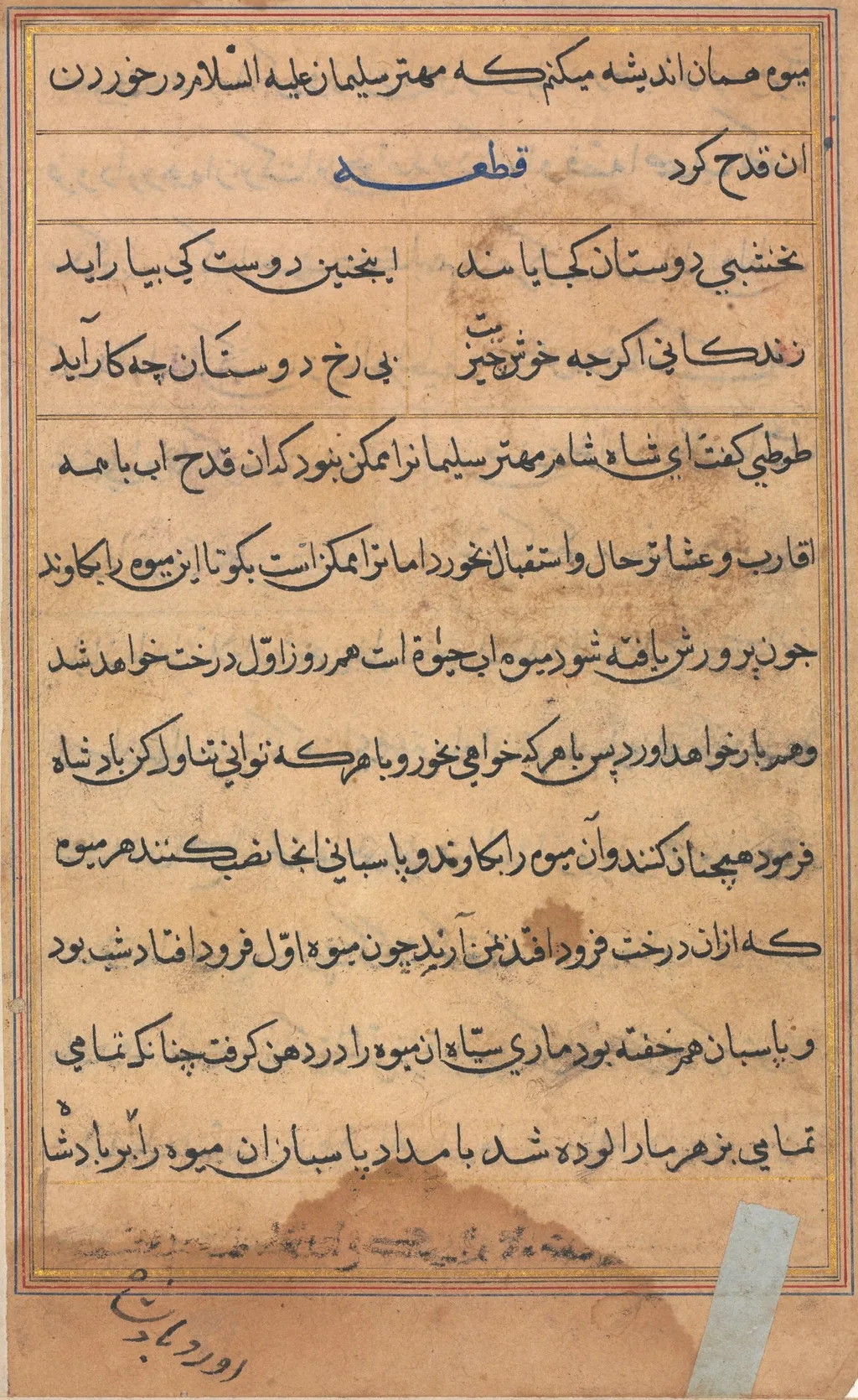
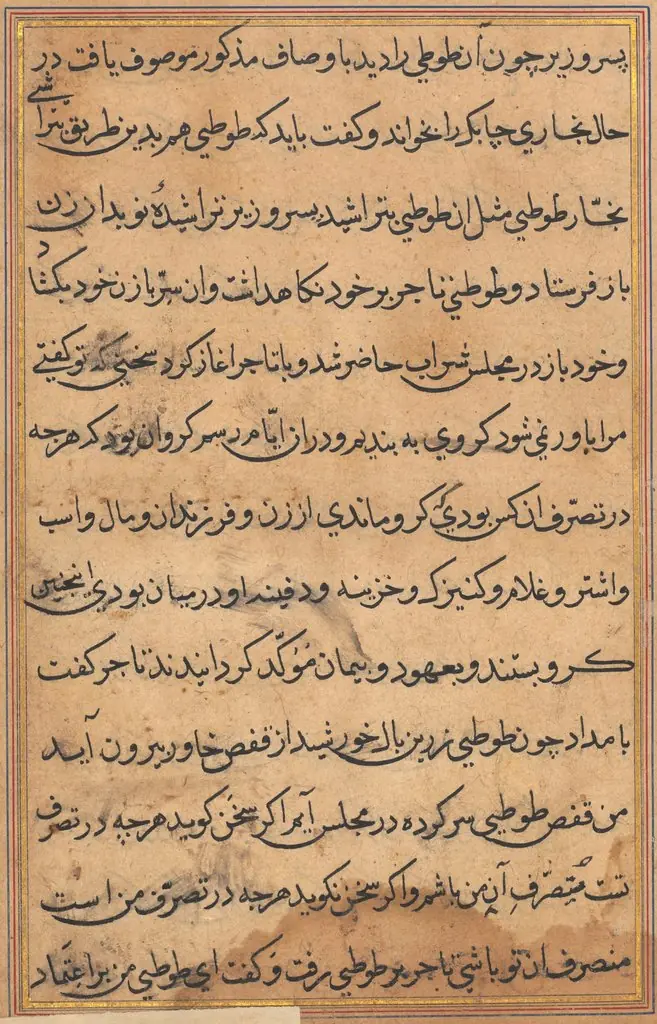
Page from Tales of a Parrot (Tuti-nama): text page is an unspecified painting. It dates from 1560 and is held in the collection of the Cleveland Museum of Art. The object is a single leaf from the illustrated manuscript Tales of a Parrot (Tuti‑nama).
About this work
History & Provenance
The text page from the Tales of a Parrot (Tuti-nama), created in 1560, is held in the collection of the Cleveland Museum of Art in Cleveland.
The text page from the Tales of a Parrot (Tuti-nama) is dated to circa 1560, aligning with the manuscript’s production period under Mughal patronage in the Indian subcontinent. The work entered the Cleveland Museum of Art in 1962 as part of an acquisition (accession number 1962.279.77.b), though the artist remains unattributed. The page’s inclusion in the Tuti-nama manuscript suggests it was commissioned as part of a larger courtly project, likely intended for elite audiences within the Mughal Empire.
The text page from the Tales of a Parrot (Tuti-nama), created in 1560, is held in the collection of the Cleveland Museum of Art in Cleveland. The work is identified within the museum's records under the accession number 1962.279.77.b. It was produced in the Mughal Empire and remains part of the institution's holdings.
No specific exhibition history is documented in the available sources for this particular page.
Context
The 1560 text page from the Tuti-nama exemplifies Mughal manuscript painting's narrative function within the broader corpus of Persianate illustrated literature, reflecting the courtly aesthetic patronage of Akbar's era and its transmission through European collections like the Cleveland Museum of Art.
Scholarly discourse situates this folio within the transmission of Persian narrative traditions into Indian artistic workshops, emphasizing its role in shaping regional visual storytelling conventions.
The work's attribution to an anonymous artist working within Mughal imperial workshops underscores the collaborative production model of 16th-century manuscript illumination, distinct from European easel painting practices.
Legacy
The manuscript page depicting a parrot from the Tuti-nama was created in 1560 in the Mughal Empire and is housed in the Cleveland Museum of Art. It forms part of a dispersed illustrated manuscript whose dispersed folios are held in several institutions including the Victoria and Albert Museum and the Chester Beatty Library. The work's compositional motifs and narrative framing have been cited as influential on later Persian and Ottoman book arts, particularly in the treatment of didactic animal fables. Its inclusion in major museum collections has contributed to scholarly attention on early modern transregional artistic exchange.
Overview
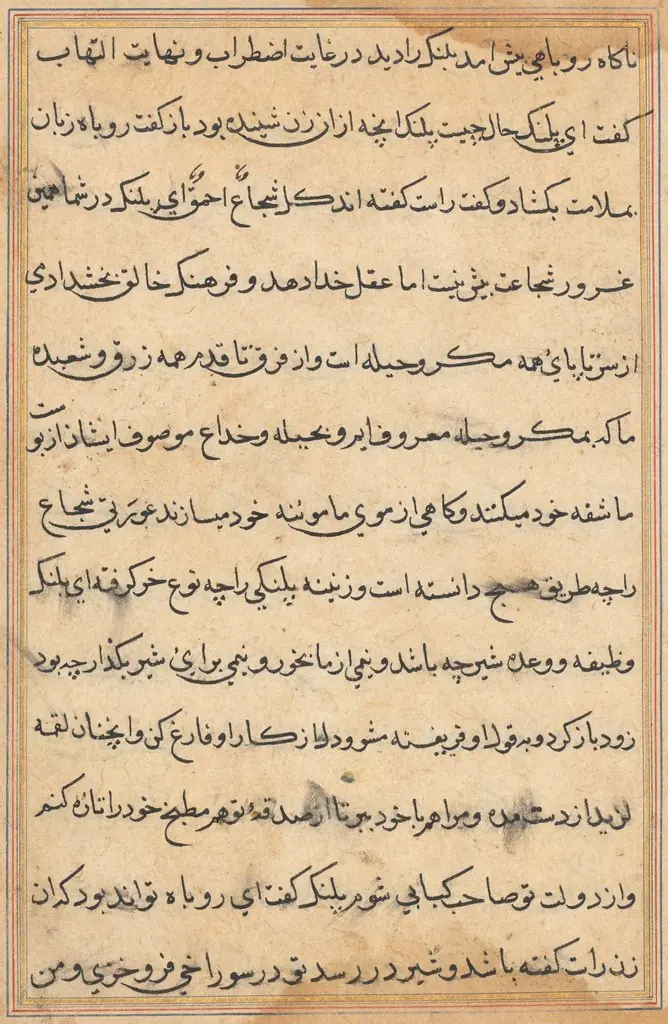
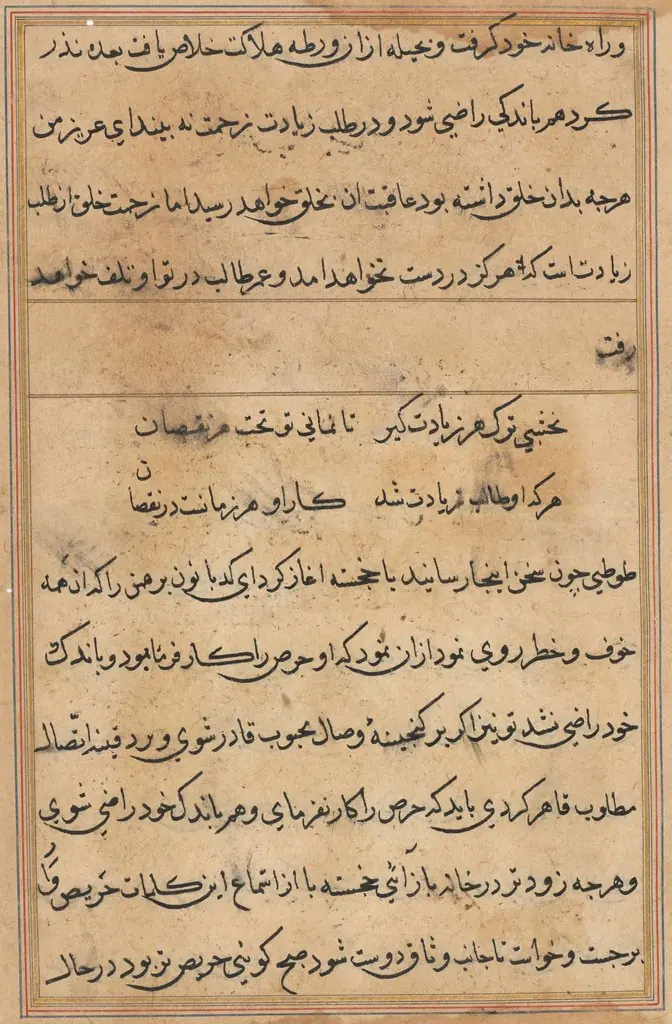
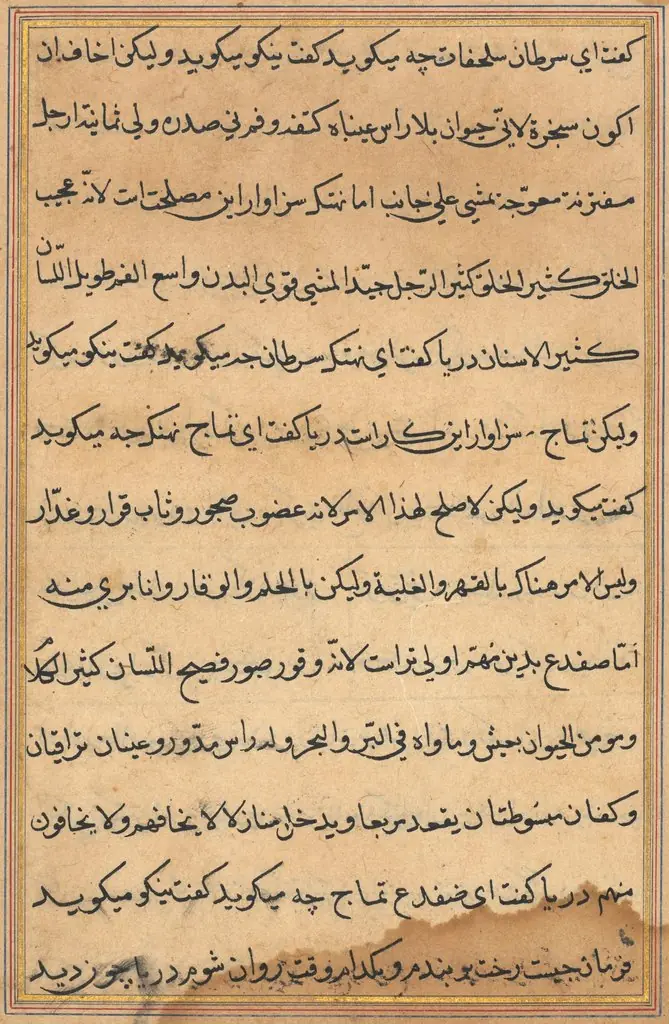
The object is a single leaf from the illustrated manuscript Tales of a Parrot (Tuti‑nama). It consists of a handwritten page in a graceful Persian cursive, occupying most of the surface within a thin red margin. The paper, now warm‑toned with subtle brown spotting, bears a small blue ink mark near the top and a brief line of text at the bottom that appears to be a signature or marginal note.
Subject & Meaning
The page contains narrative text from the Tales of a Parrot, a collection of moral and romantic stories traditionally presented in Persian courtly literature. Although the illustration itself is absent, the script conveys the literary content intended for an aristocratic audience, specifically addressing a patron named Prince Salim, whose name is referenced in the dedication.
Technique & Style
The calligraphy is executed in a flowing Nastaʿlīq script, noted for its elegant, slanted strokes and harmonious proportions. Ink is applied with a fine reed pen, producing uniform lines that contrast with the warm, slightly fibrous paper. A thin red border frames the text, a decorative element common in Safavid‑era manuscripts, while the isolated blue mark suggests a correction or annotation made by a later hand.
Artist & collection

- Page from Tales of a Parrot (Tuti-nama): text page
 Page from Tales of a Parrot (Tuti-nama): text page
 Page from Tales of a Parrot (Tuti-nama): text page
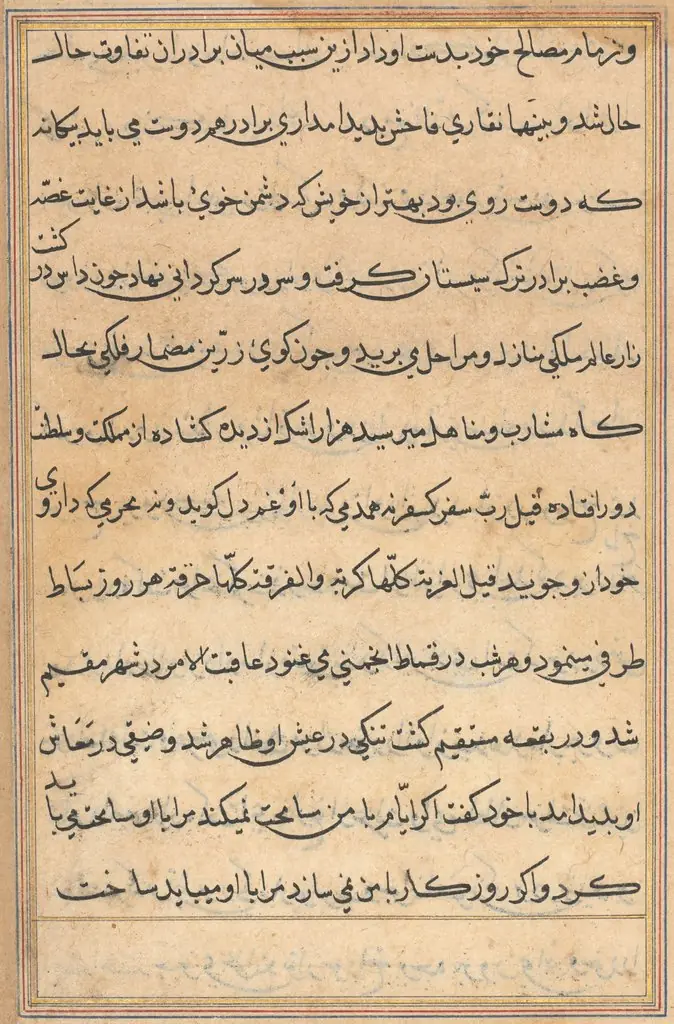 Page from Tales of a Parrot (Tuti-nama): text page
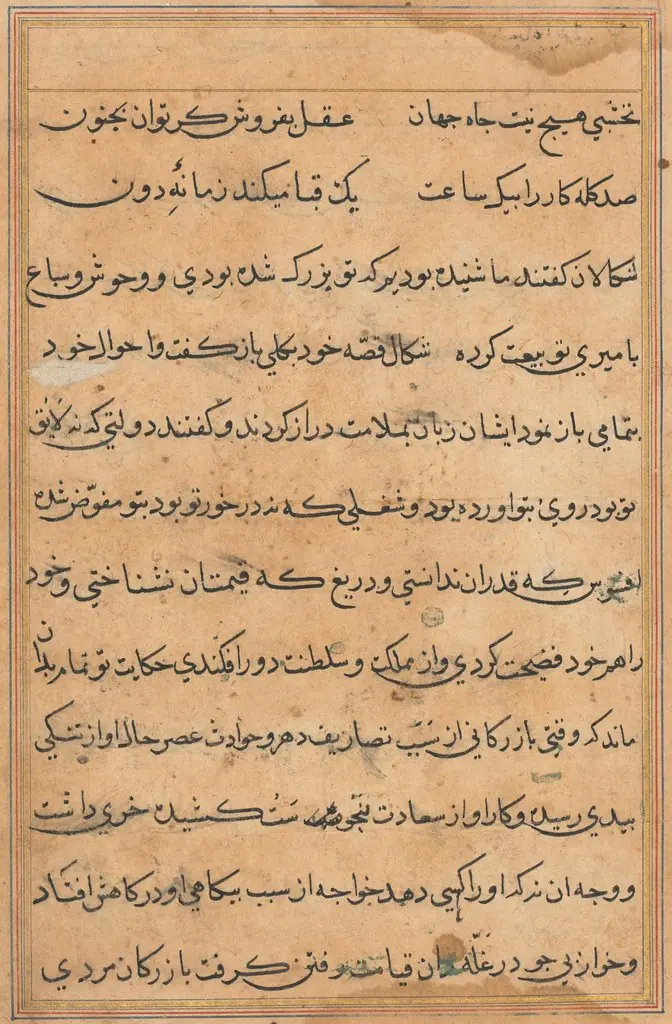 Page from Tales of a Parrot (Tuti-nama): text page
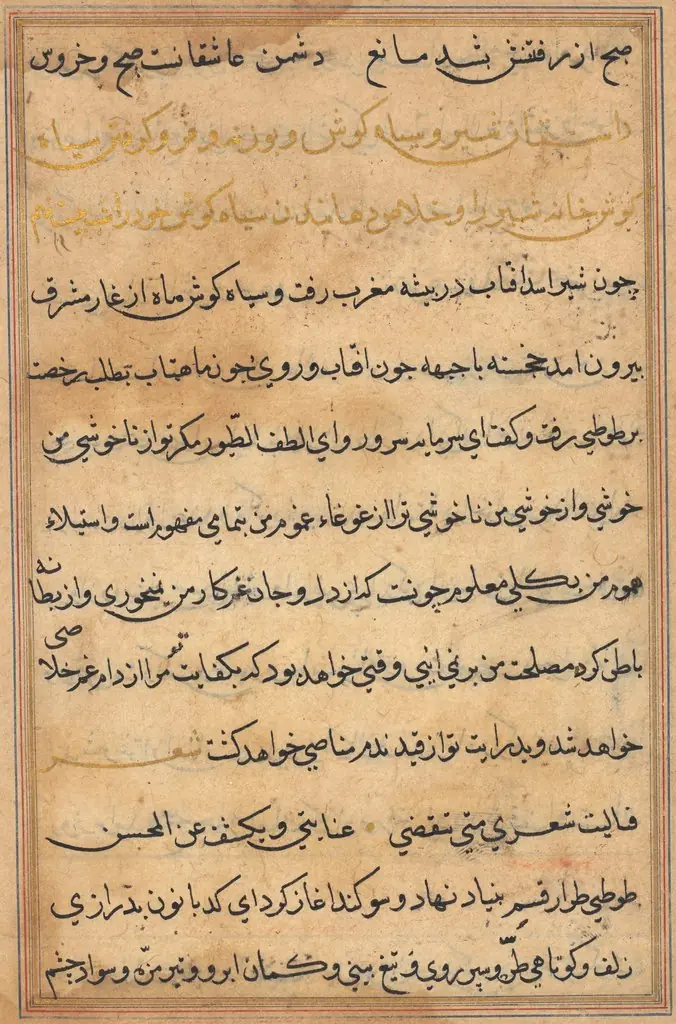 Page from Tales of a Parrot (Tuti-nama): text page
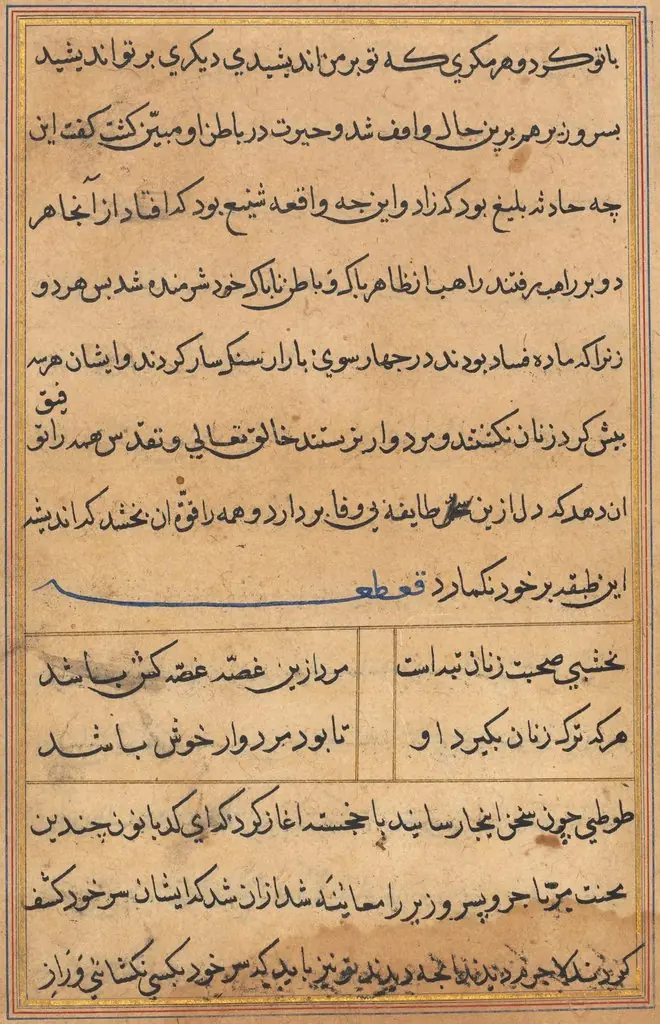 Page from Tales of a Parrot (Tuti-nama): text page
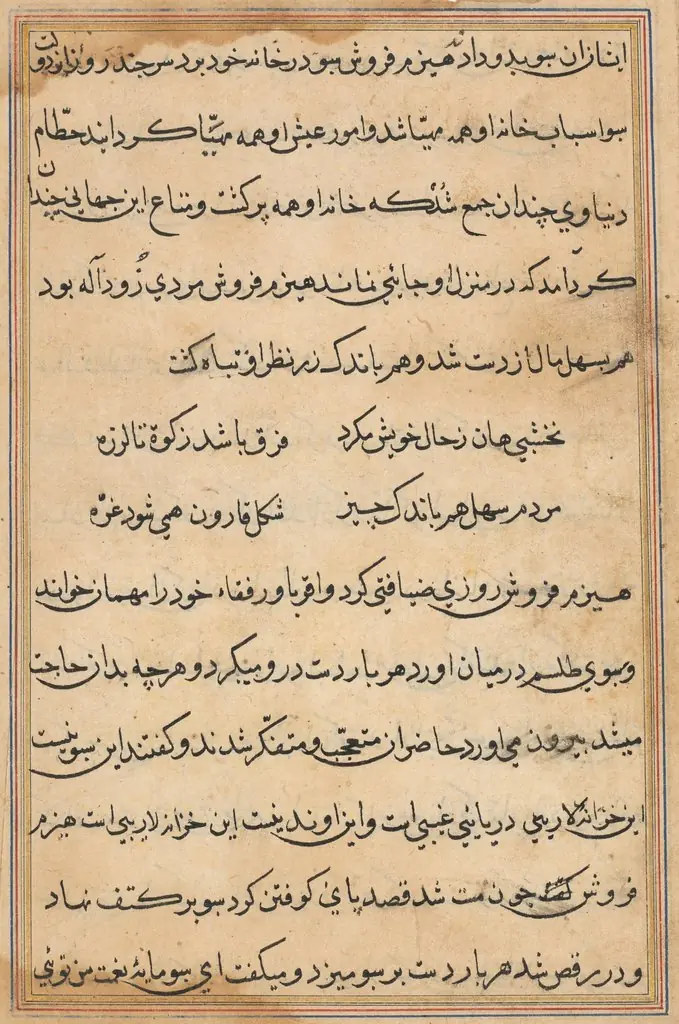 Page from Tales of a Parrot (Tuti-nama): text page
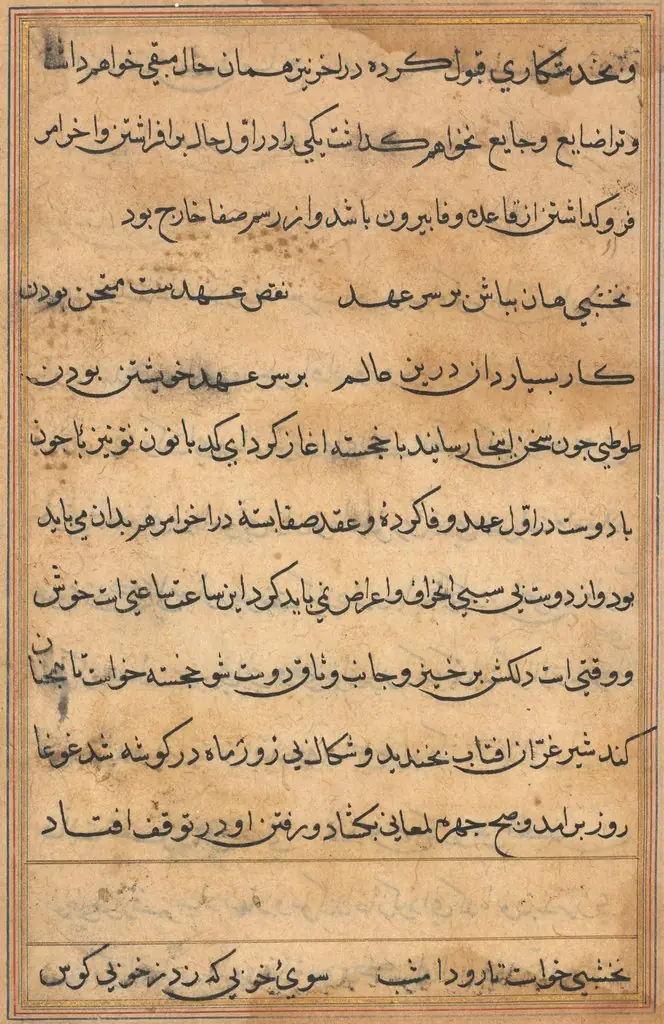 Page from Tales of a Parrot (Tuti-nama): text page
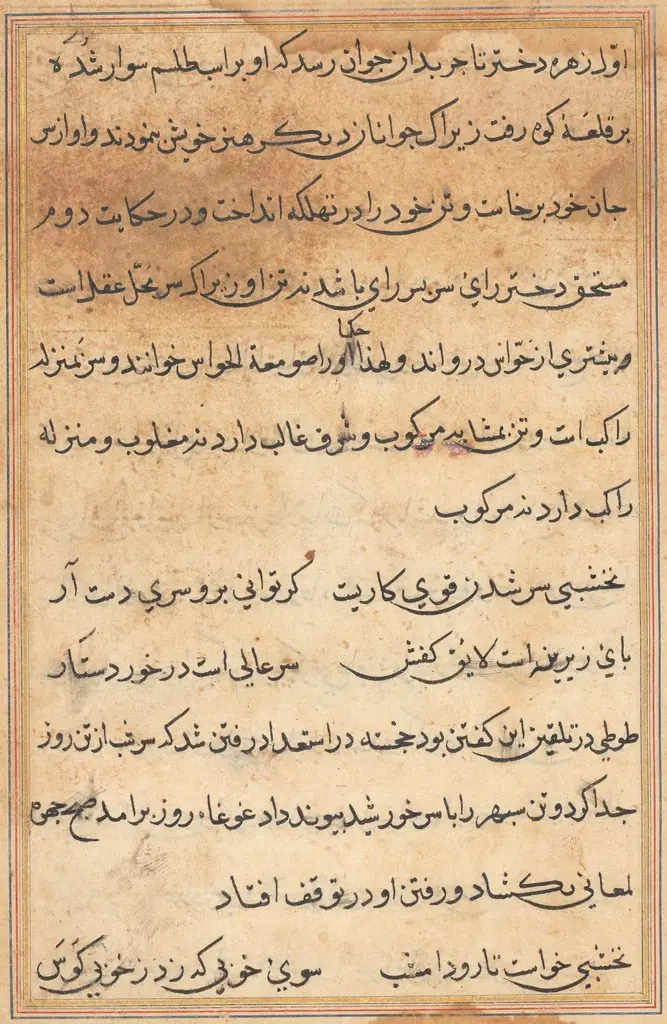 Page from Tales of a Parrot (Tuti-nama): text page
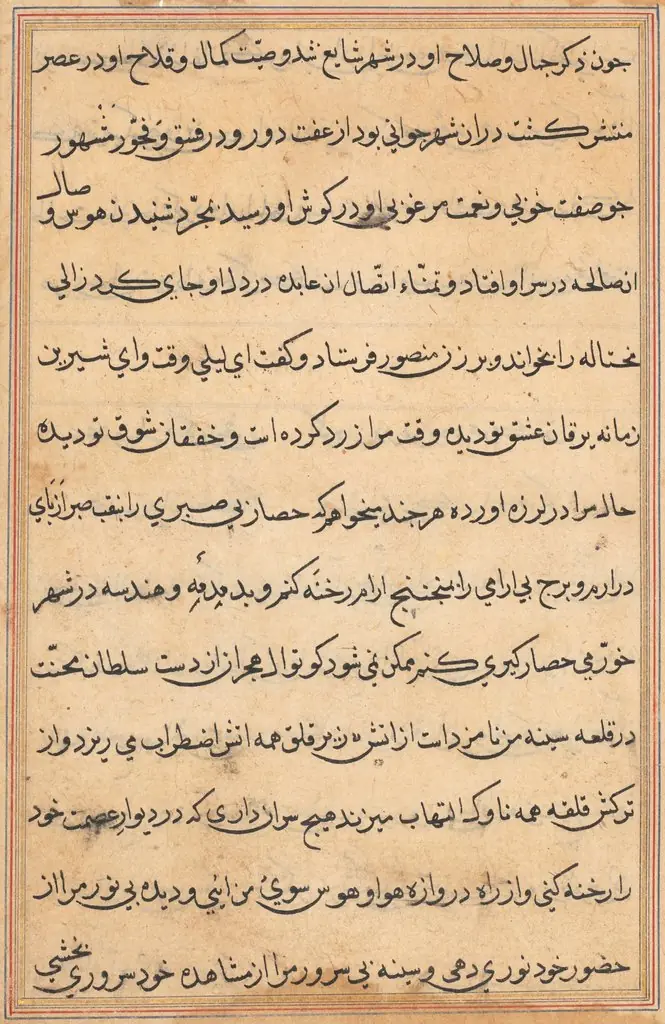 Page from Tales of a Parrot (Tuti-nama): text page
 Page from Tales of a Parrot (Tuti-nama): text page