Artwork
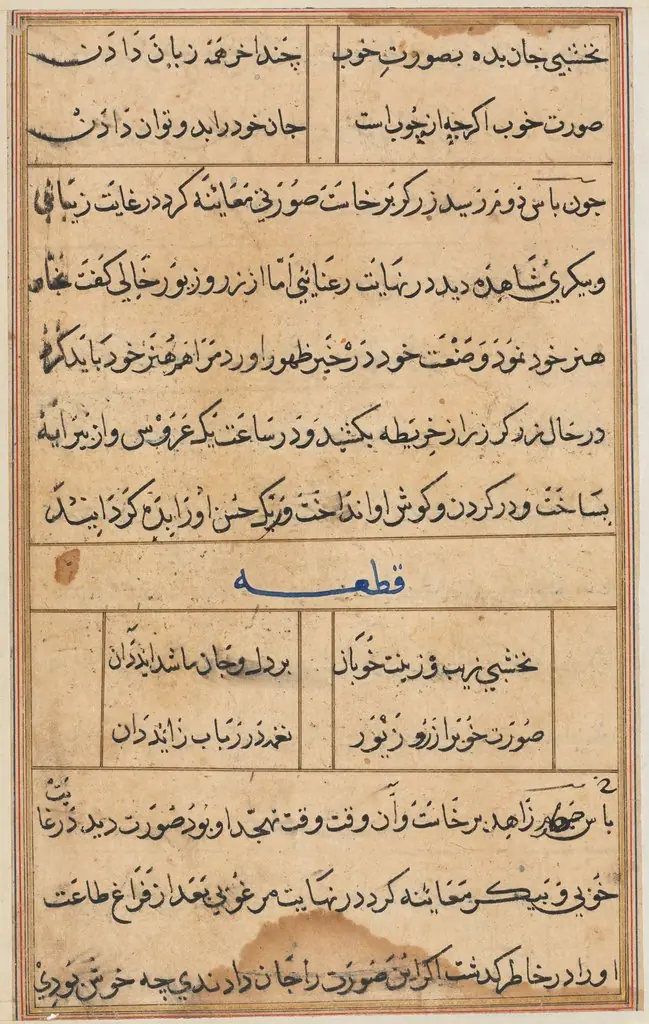
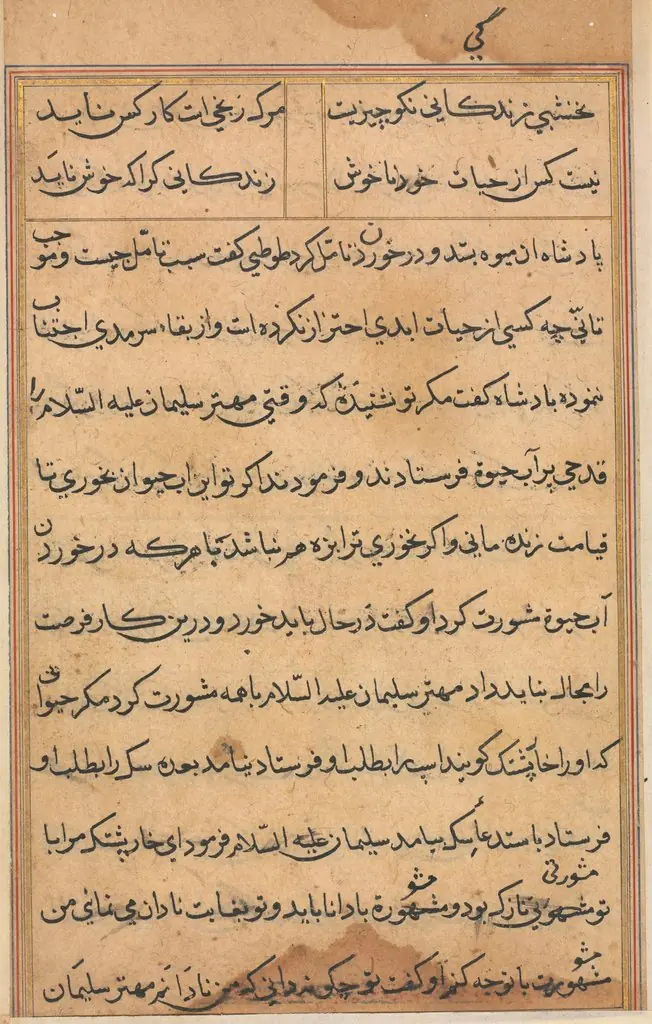
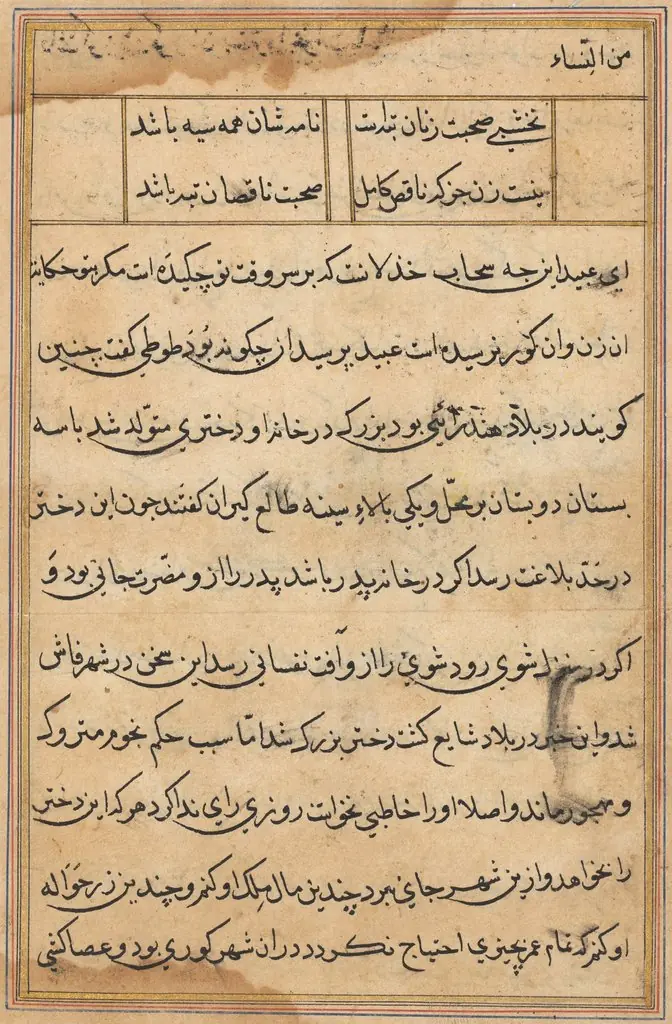
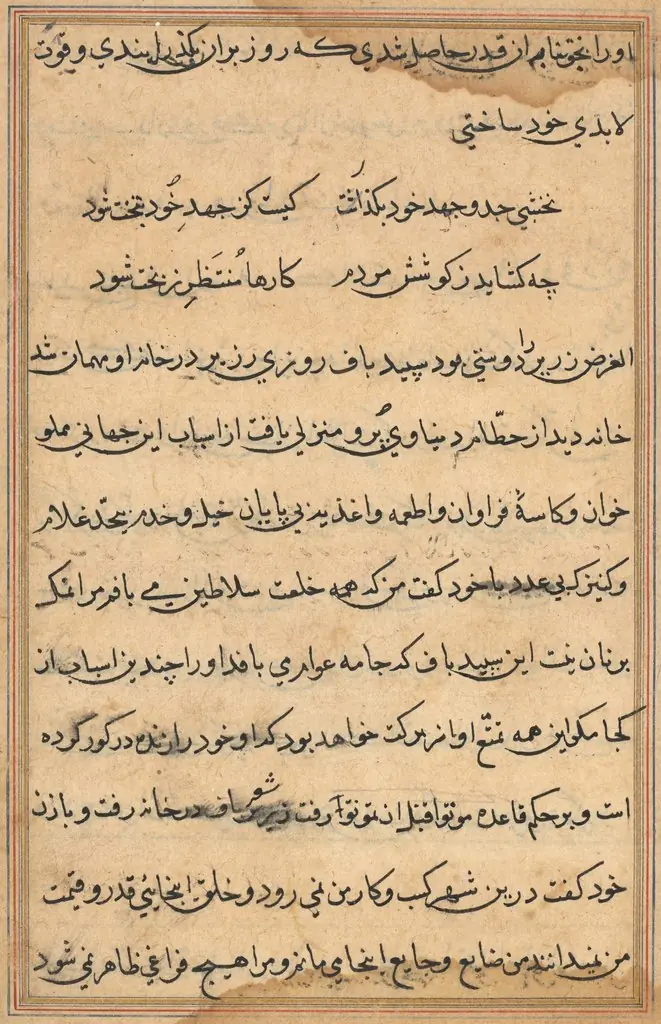
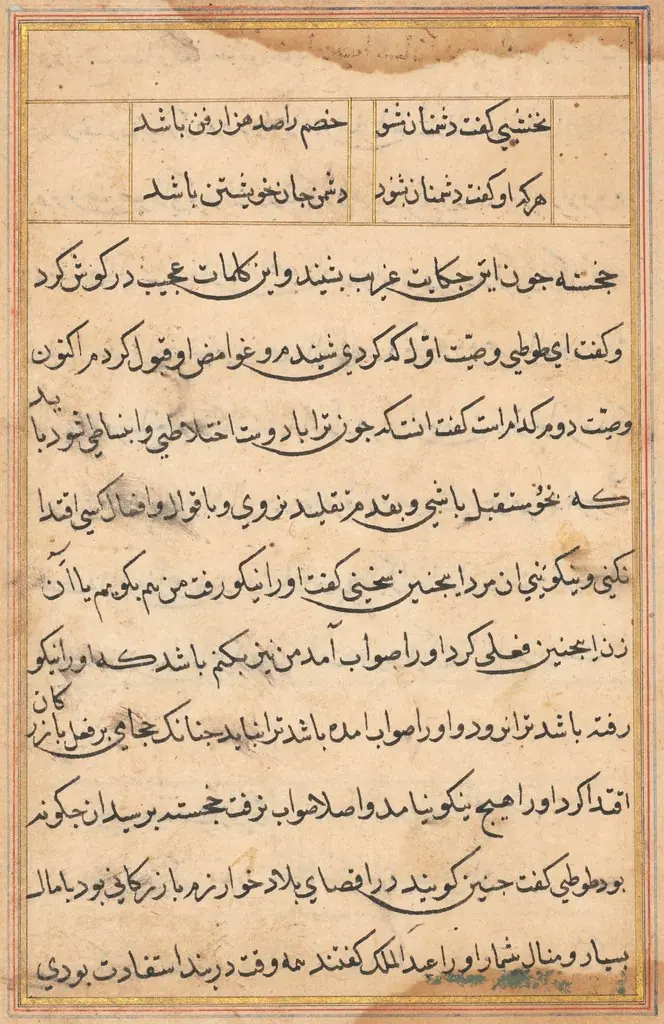
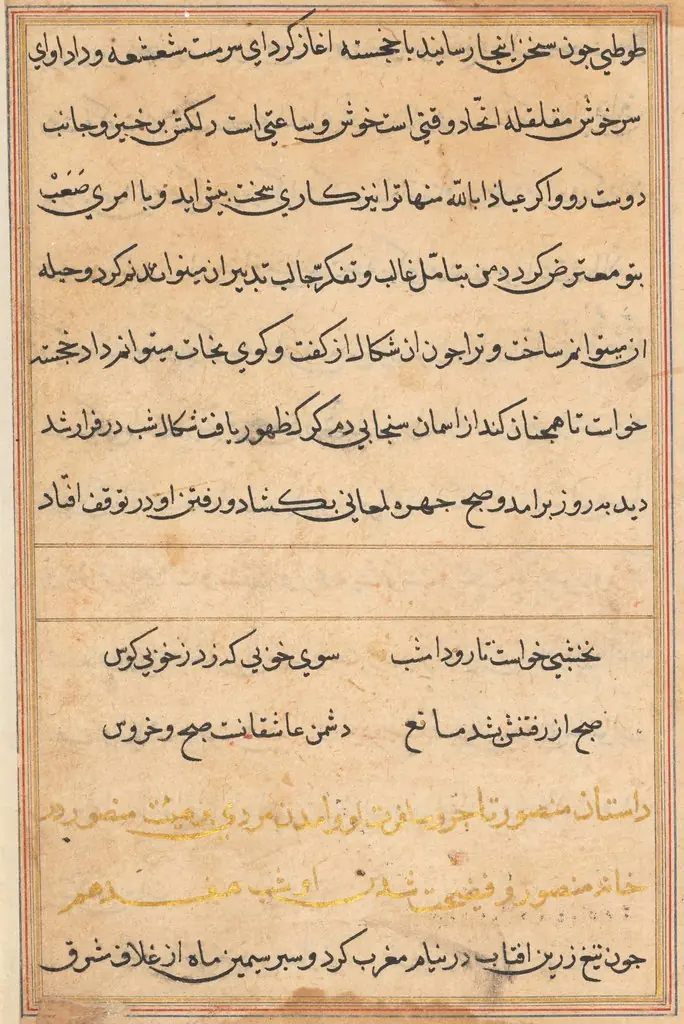
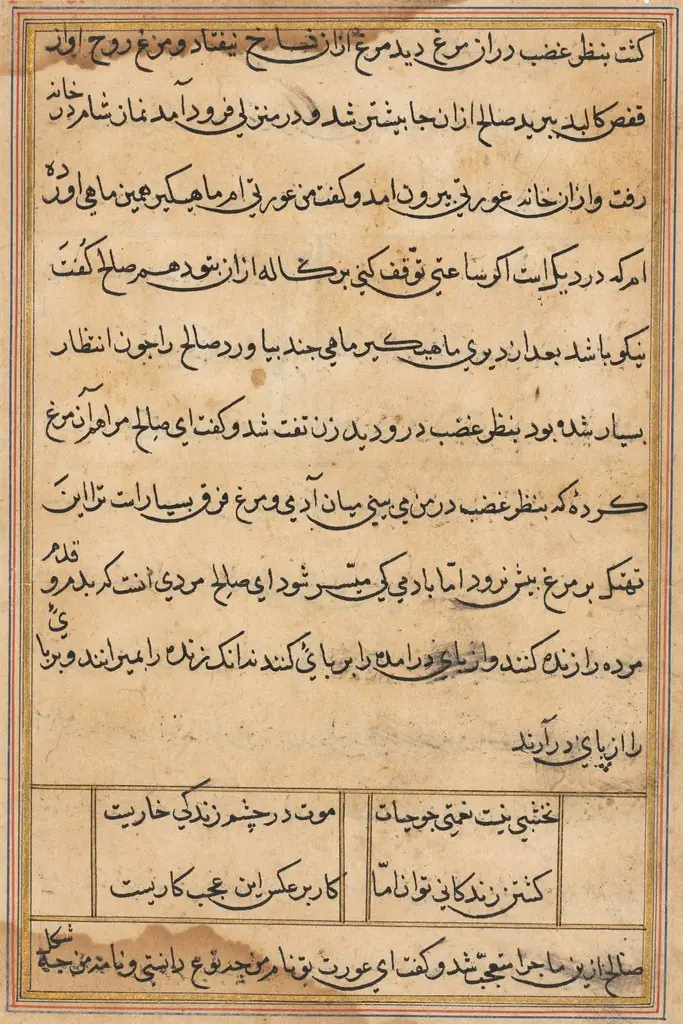
Page from Tales of a Parrot (Tuti-nama): text page
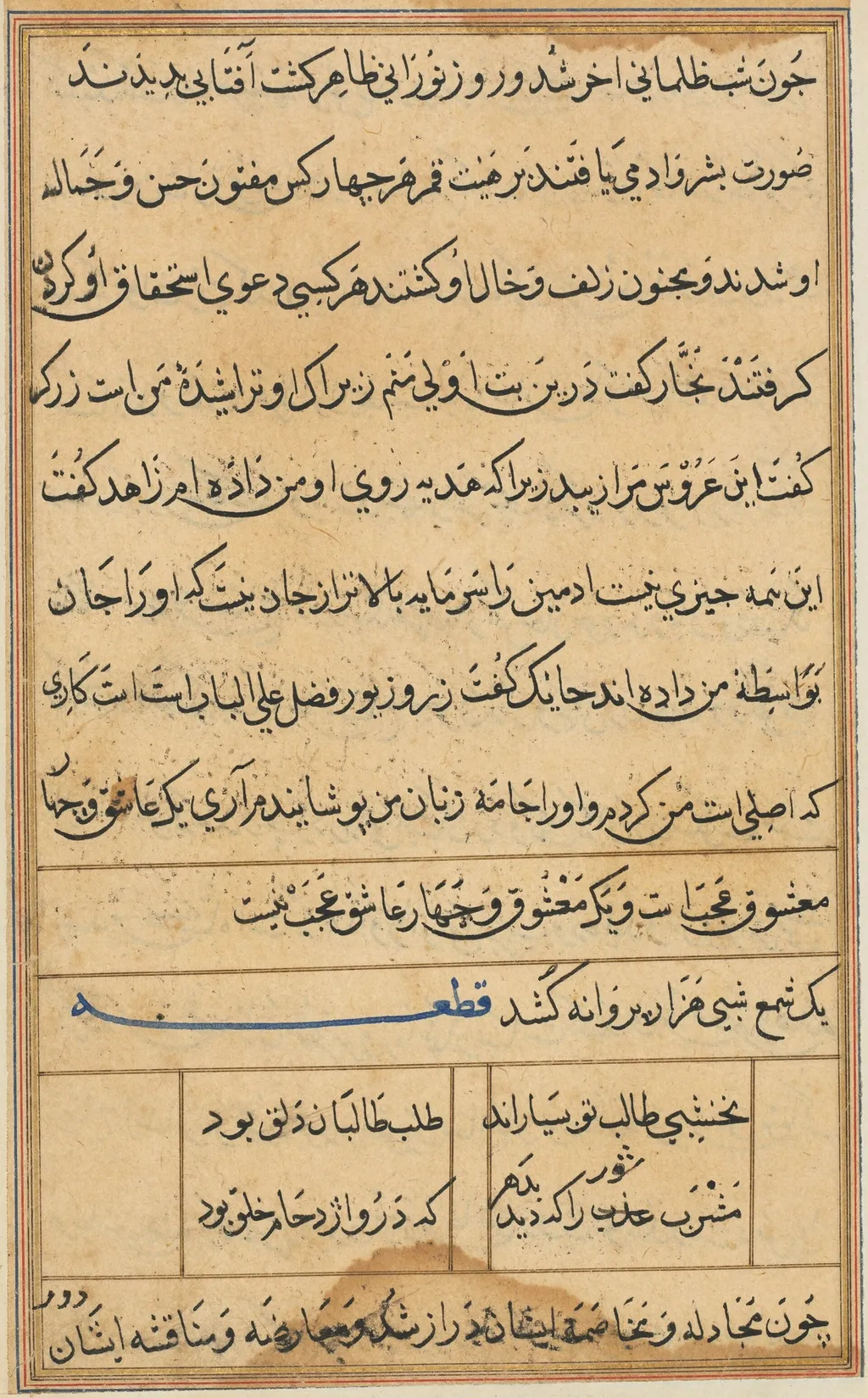
Page from Tales of a Parrot (Tuti-nama): text page is an unspecified painting. It dates from 1560 and is held in the collection of the Cleveland Museum of Art.
About this work
History & Provenance
The work eventually entered the collection of the Cleveland Museum of Art, where it is cataloged under the accession number 1962.
Created in 1560 within the Mughal Empire, this text page from the Tuti-nama (Tales of a Parrot) was produced by an artist whose specific identity remains unrecorded. The work eventually entered the collection of the Cleveland Museum of Art, where it is cataloged under the accession number 1962.279.40.a. While the exact circumstances of its original commission and the intermediate steps of its ownership history prior to museum acquisition are not detailed in the available records, its inception is firmly established in the mid-sixteenth century.
The painting is held by the Cleveland Museum of Art with accession number 1962.279.40.a. It was created in 1560 within the Mughal Empire and has been part of the museum's collection since at least 1962. The work was included in the exhibition "India: Art and Culture 1500-1900" at the museum in 1985.
Overview
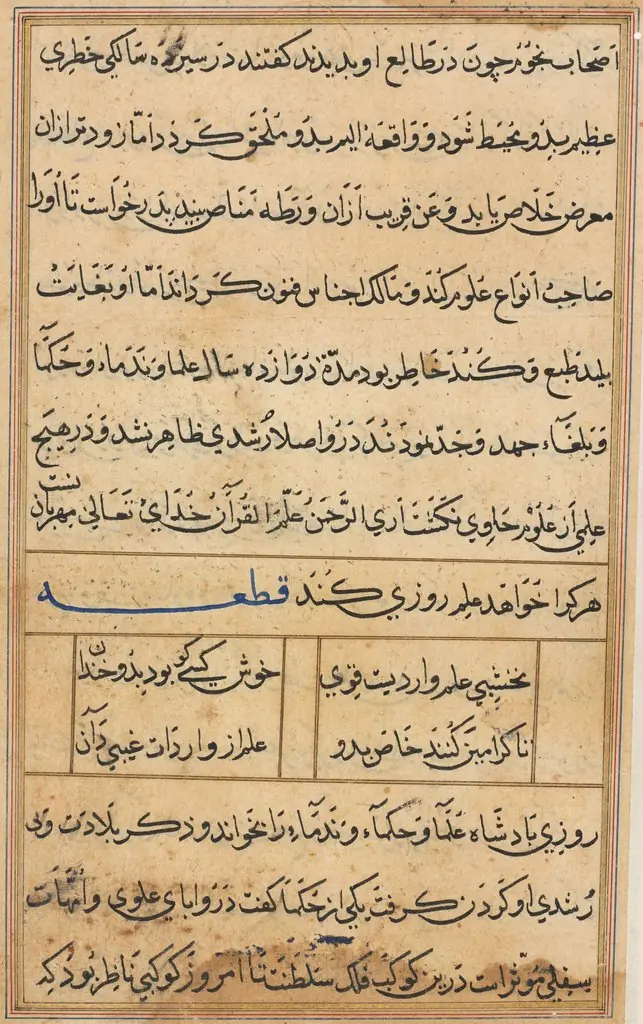
This illuminated manuscript page belongs to the Persian work Tales of a Parrot (Tuti‑nama), a narrative compiled for a young prince named Salim. The sheet measures roughly the size of a modern book page and is executed in ink on a light brown parchment, presenting the story in a compact, readable format.
Subject & Meaning
The text recounts episodes from the eponymous parrot’s adventures, a popular didactic theme in Persian literature. Highlighted words in blue ink draw attention to moral or narrative pivots, guiding the reader’s focus toward key concepts within the tale.
Technique & Style
The page is written in a smooth, cursive script rendered in black ink, with occasional blue highlights. The composition is organized into rectangular boxes, creating a clear visual hierarchy; larger sections at the bottom accommodate longer passages, while smaller boxes contain brief verses or annotations.
Context
Tales of a Parrot reflects a tradition of moral storytelling that flourished in Safavid Persia, where illustrated books served both educational and entertainment purposes for elite audiences. The use of colored ink for emphasis aligns with contemporary practices of visual rhetoric in manuscript culture.
Artist & collection

 Page from Tales of a Parrot (Tuti-nama): text page
 Page from Tales of a Parrot (Tuti-nama): text page
 Page from Tales of a Parrot (Tuti-nama): text page
 Page from Tales of a Parrot (Tuti-nama): text page
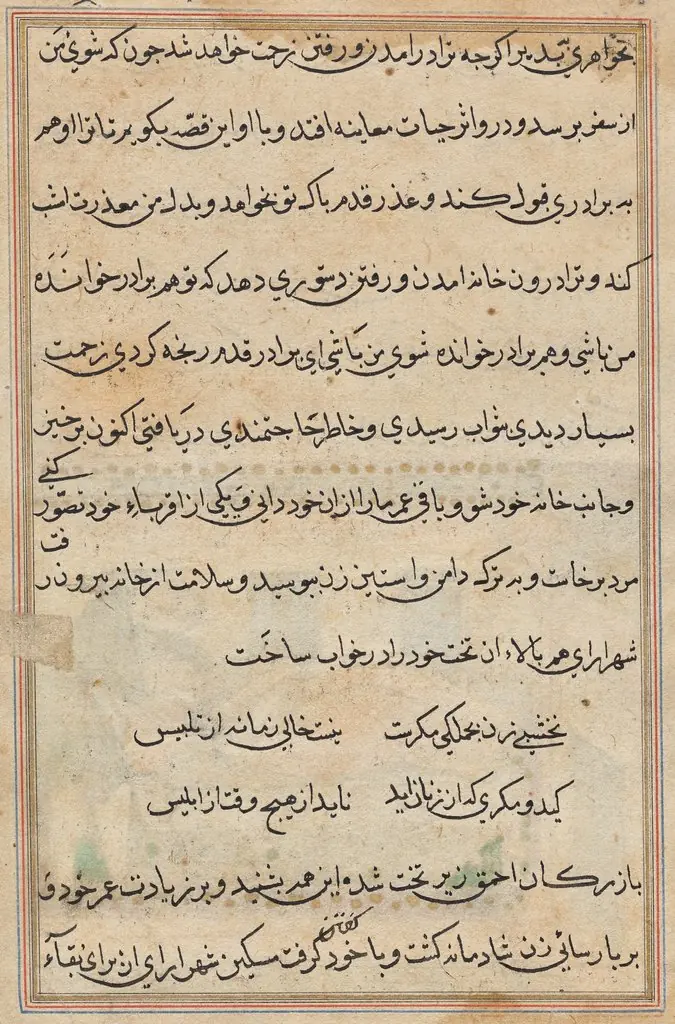 Page from Tales of a Parrot (Tuti-nama): text page
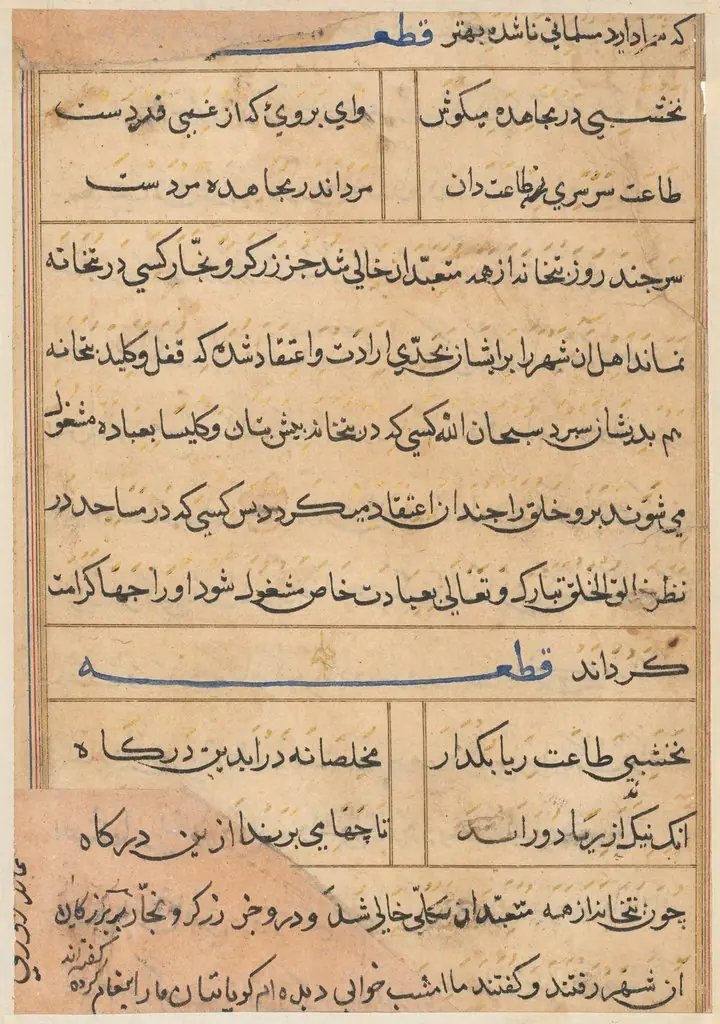 Page from Tales of a Parrot (Tuti-nama): text page
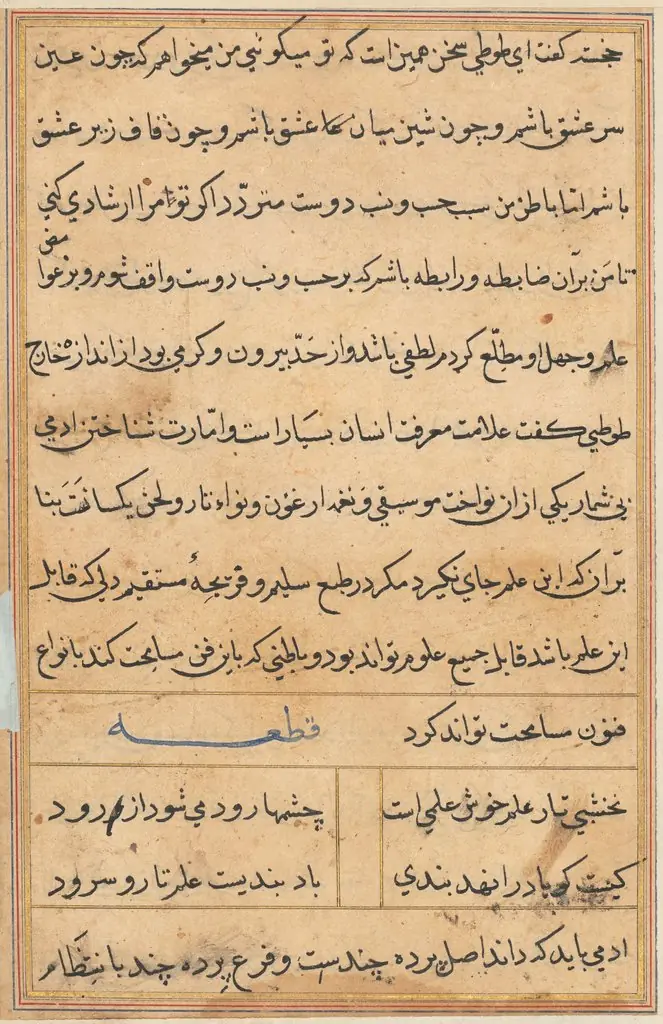 Page from Tales of a Parrot (Tuti-nama): text page
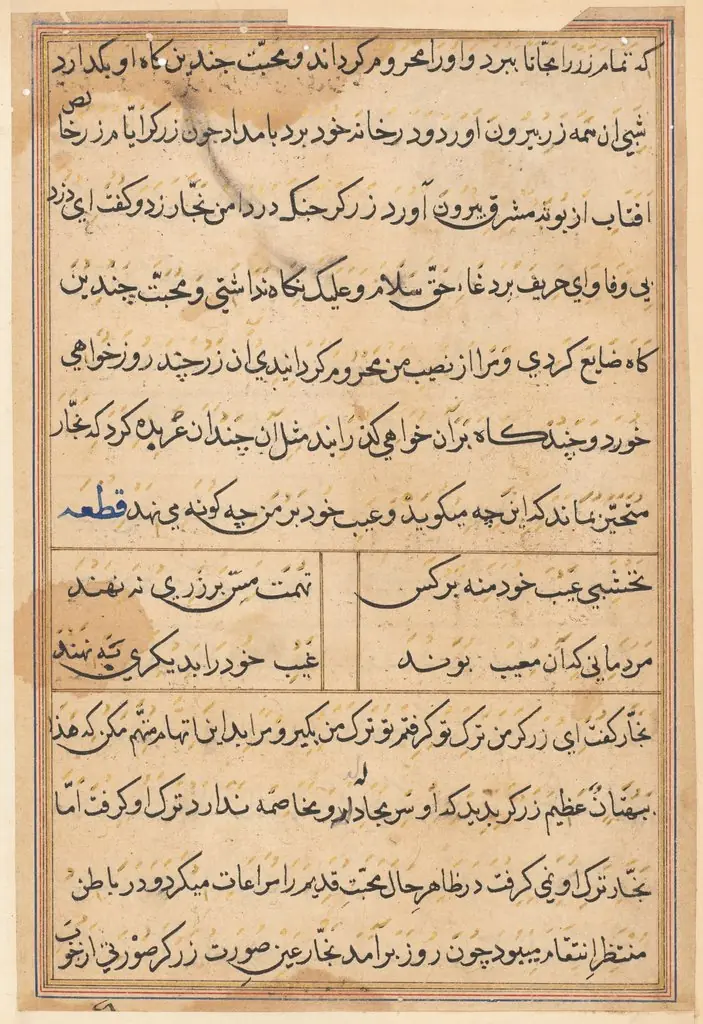 Page from Tales of a Parrot (Tuti-nama): text page
 Page from Tales of a Parrot (Tuti-nama): text page