Artwork
Page from Tales of a Parrot (Tuti-nama): text page
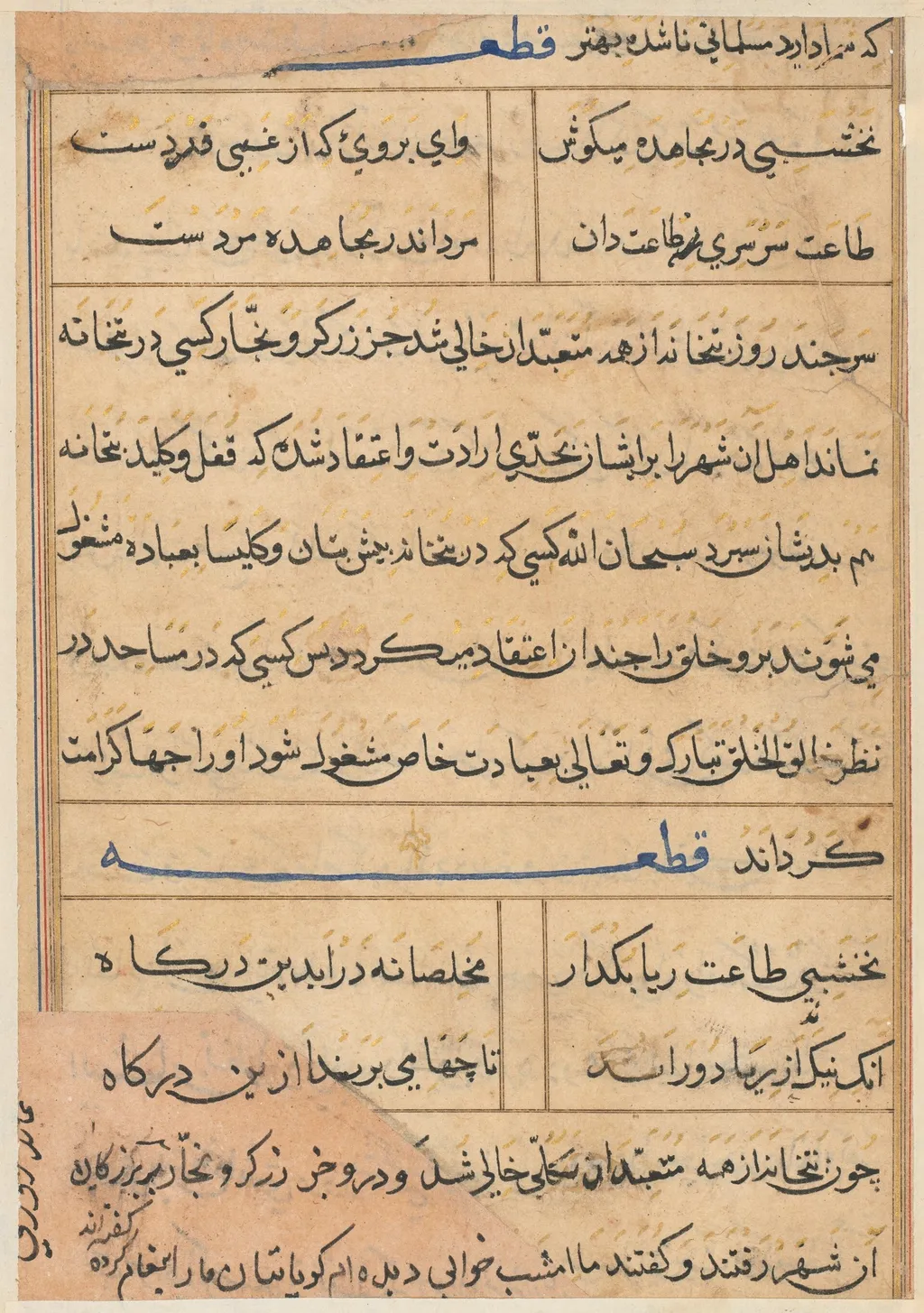
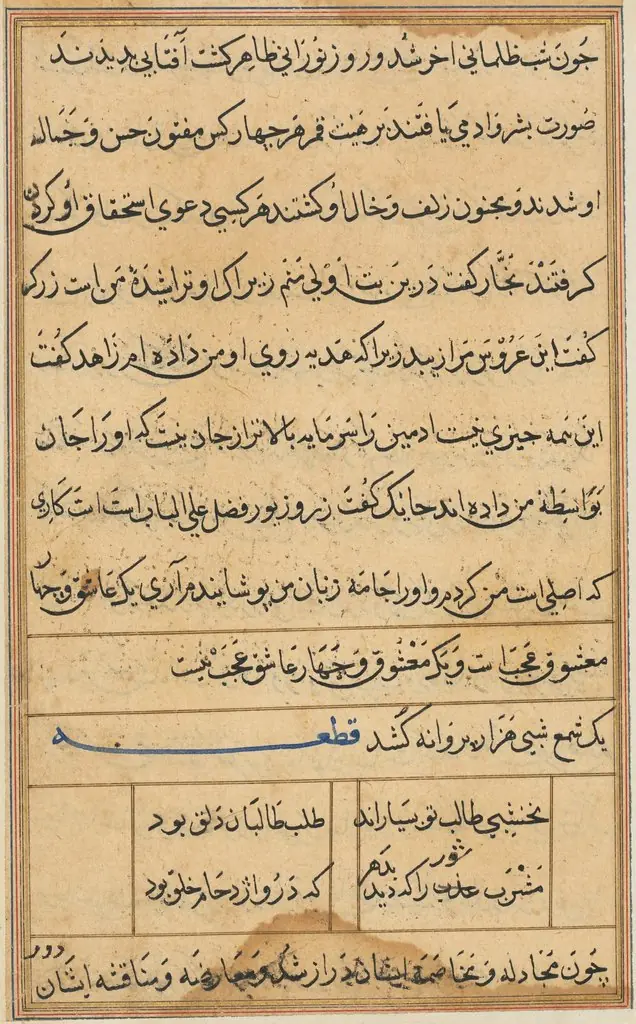
Page from Tales of a Parrot (Tuti-nama): text page is an unspecified painting. It dates from 1560 and is held in the collection of the Cleveland Museum of Art. This illuminated page originates from the Persian manuscript Tales of a Parrot (Tuti‑nama), a literary work commissioned for Prince Salim.
About this work
Subject & Meaning
The depicted scene illustrates a moral tale from the Tuti-nama, a Persian collection of animal fables, showing a parrot recounting a story to its owner. This subject functions as an allegorical lesson on wisdom and caution within Mughal artistic tradition. The work originates from the Mughal Empire and is housed in the Cleveland Museum of Art.
Technique & Style
Condition reports indicate stable pigment integrity overall, though the paper support shows expected aging effects without significant structural compromise.
The painting is executed on a paper support, typical of manuscript paintings from the Mughal period, with fine brushwork and delicate washes of color. The composition features a single text page from the Tuti-nama, rendered in a restrained palette of blues, reds, and gold leaf accents. The stylistic qualities reflect the Mughal court's synthesis of Persian miniature traditions with local Indian aesthetics, emphasizing linear clarity and subtle narrative detail.
The work was created in 1560 within the Mughal Empire and is currently housed in the Cleveland Museum of Art.
The medium is tempera and ink on paper, with handling evident in the slight foxing along the edges and minor wear consistent with centuries-old manuscript material. Formal elements include a balanced layout of Persianate script and miniature illustration, adhering to the narrative conventions of the Tuti-nama genre.
Condition reports indicate stable pigment integrity overall, though the paper support shows expected aging effects without significant structural compromise.
History & Provenance
Created in 1560 within the Mughal Empire, this text page originates from the Tuti-nama (Tales of a Parrot). The specific artist responsible for the work remains unidentified. The piece eventually entered the collection of the Cleveland Museum of Art, where it is cataloged under the accession number 1962.279.19.b. No further details regarding its original commission or intermediate ownership history prior to its museum acquisition are provided in the available records.
The painting belongs to the Cleveland Museum of Art, where it is accessioned as 1962.279.19.b. It was created in 1560 within the Mughal Empire and has not been recorded in any major exhibition history. The work is classified as a miniature from the Persian‑inspired Tuti‑nama manuscript tradition.
Context
The miniature originates from the Mughal imperial atelier during Akbar's reign, reflecting the cosmopolitan artistic environment of 16th-century India. Its presence in the Cleveland Museum of Art collection underscores its significance within the broader corpus of Persianate manuscript illumination transported to South Asia. Scholarship emphasizes its role in illustrating the Tuti-nama, a Persian narrative cycle that entered Indian artistic workshops through diplomatic and trade networks, demonstrating cross-cultural transmission of manuscript traditions.
The work's stylistic features align with contemporary Mughal manuscript production while retaining identifiable Safavid influences, situating it at the intersection of Safatid and Mughal artistic exchanges.
Overview
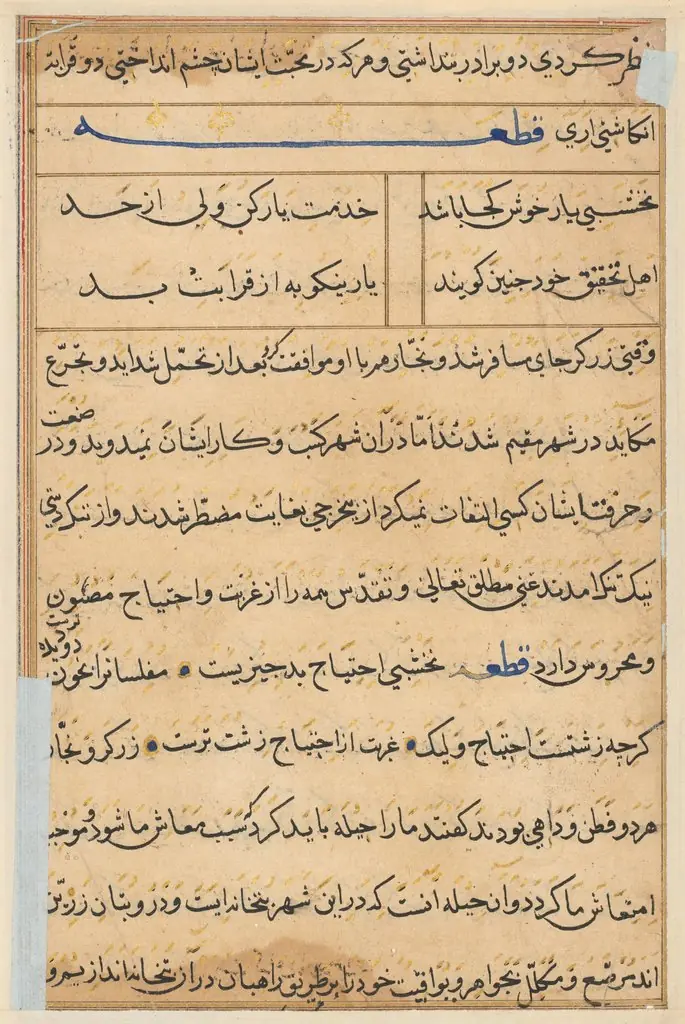
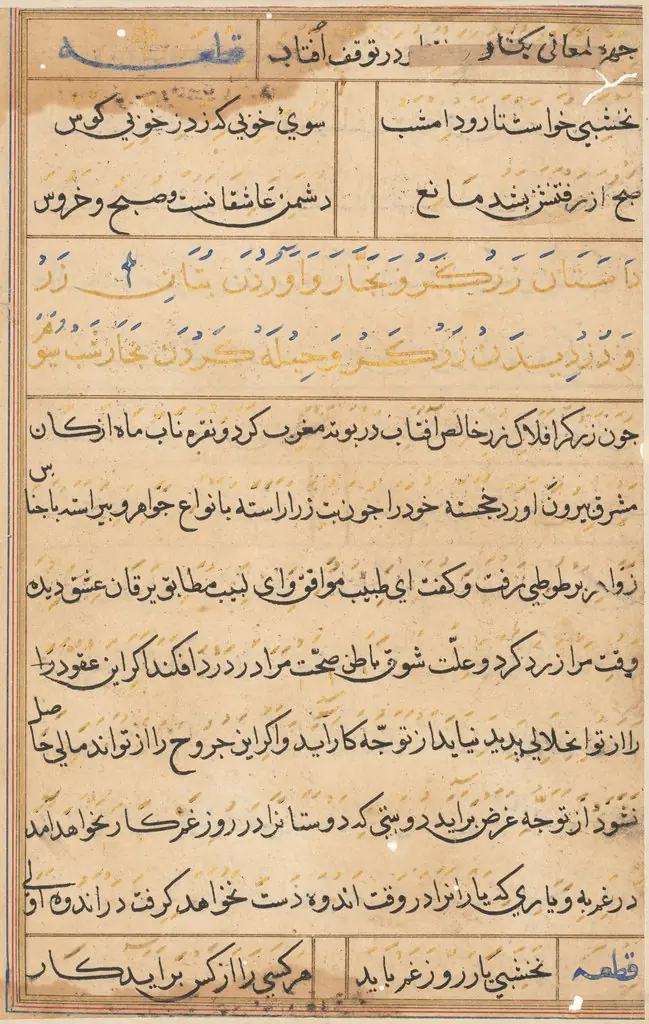
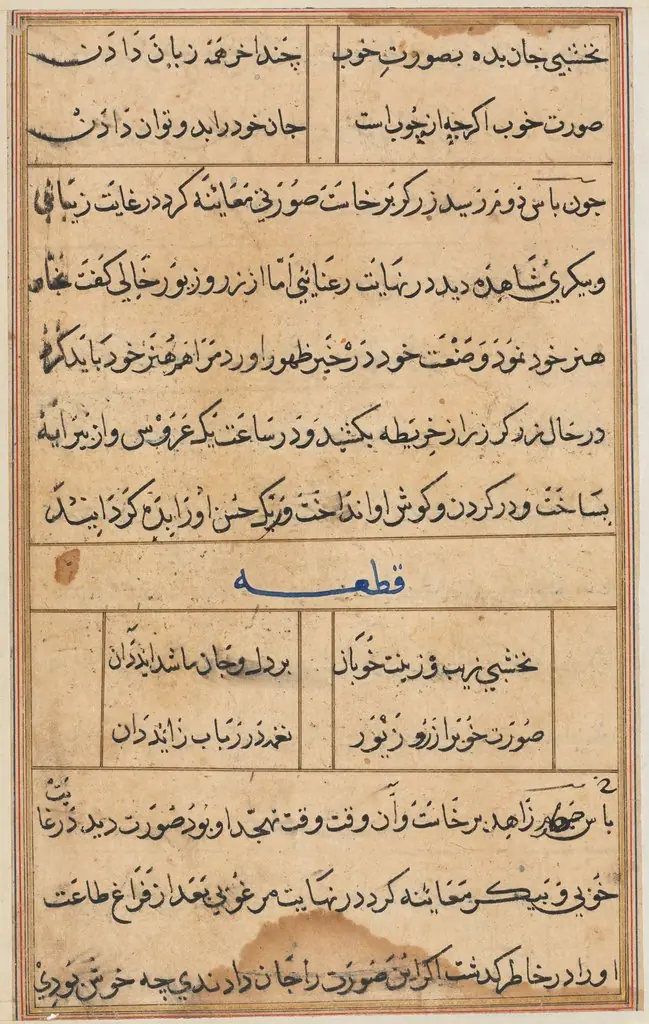
This illuminated page originates from the Persian manuscript Tales of a Parrot (Tuti‑nama), a literary work commissioned for Prince Salim. Executed on a slightly yellowed sheet of paper, the page features dense black calligraphy arranged within delicate blue borders, with occasional words rendered in blue ink for emphasis. The surface bears faint specks that suggest age and handling, underscoring its status as a historic document.
Artist & collection

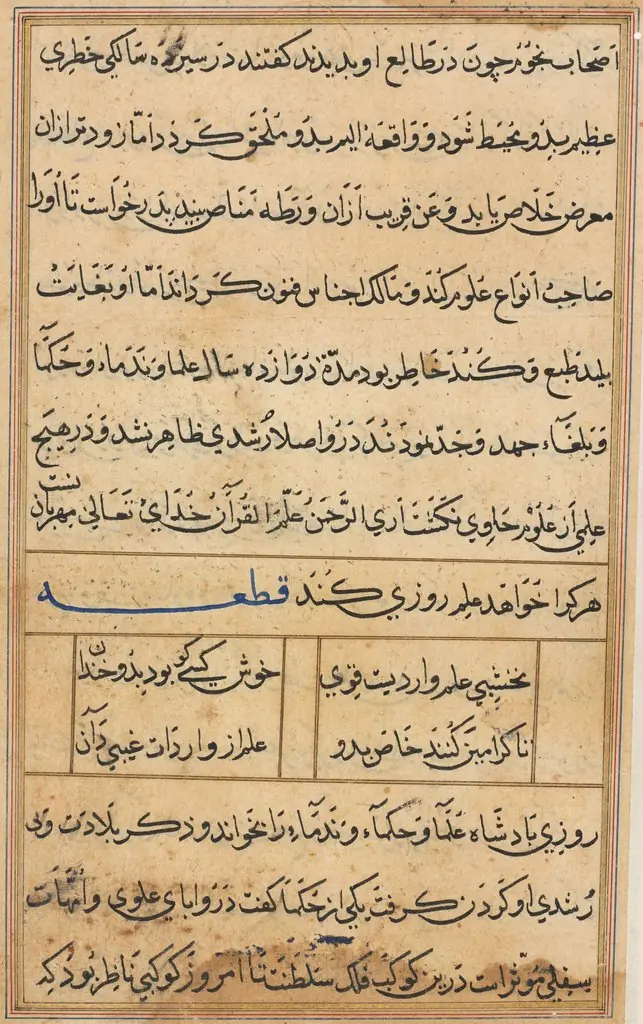 Page from Tales of a Parrot (Tuti-nama): text page
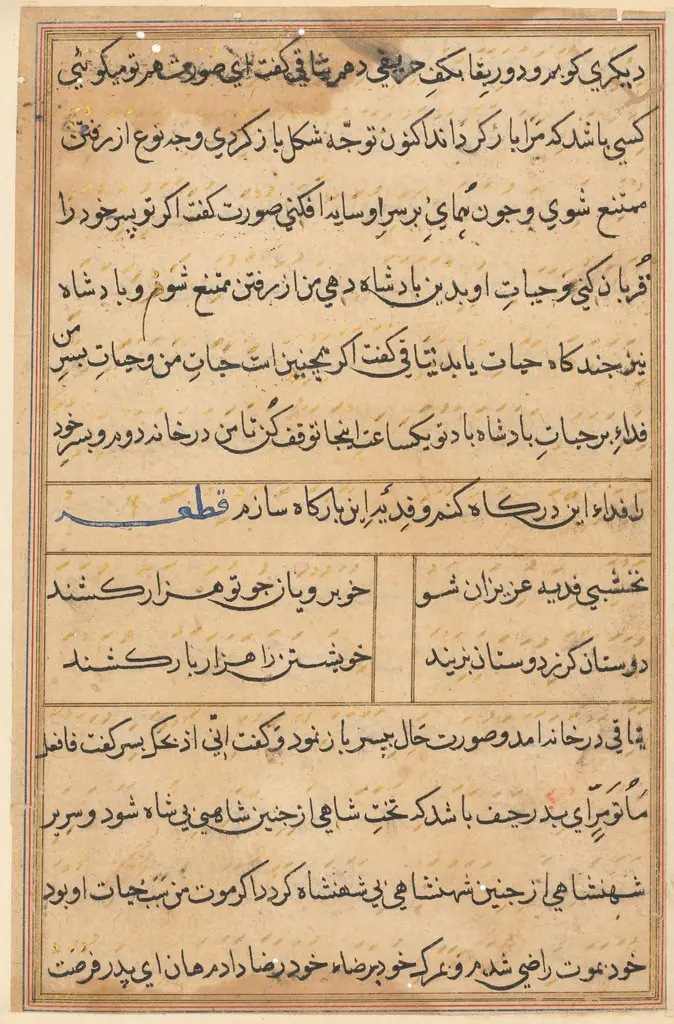 Page from Tales of a Parrot (Tuti-nama): text page
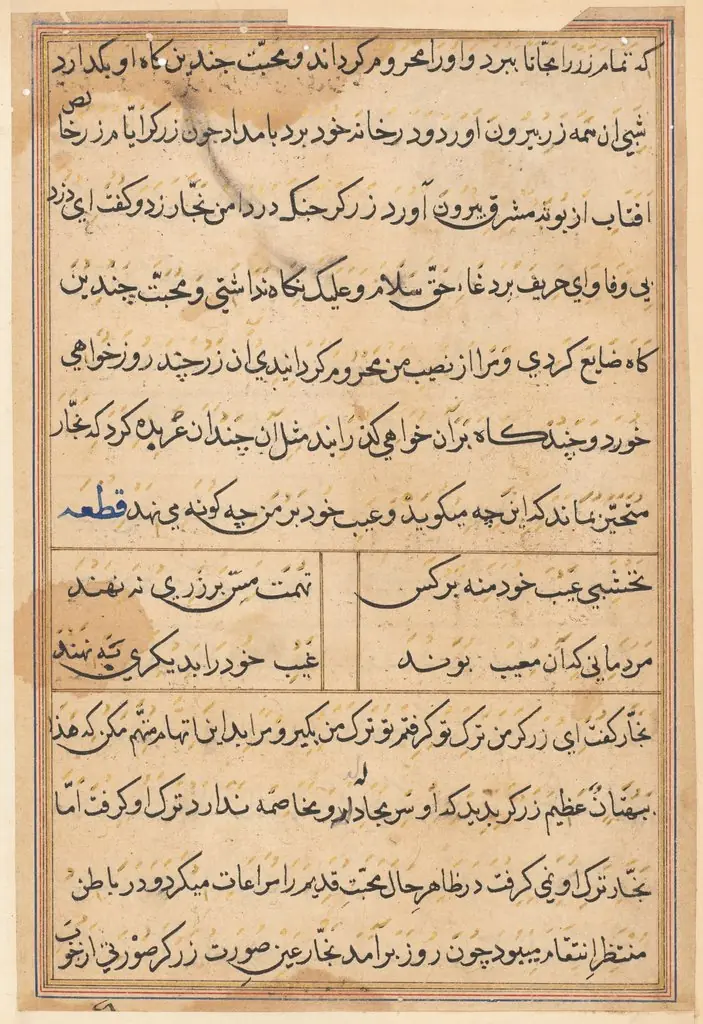 Page from Tales of a Parrot (Tuti-nama): text page
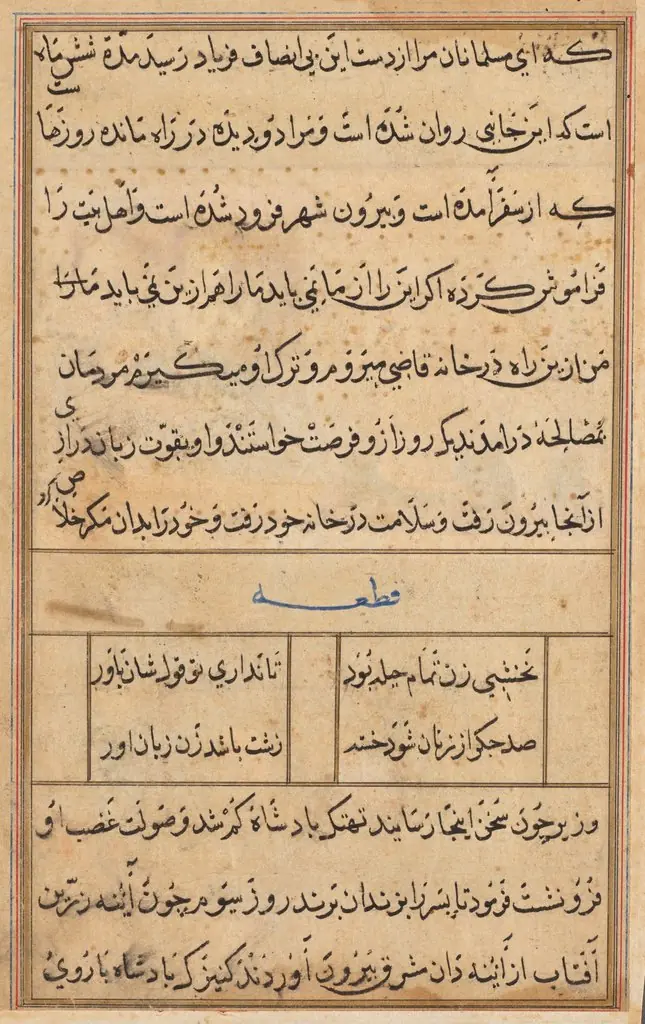 Page from Tales of a Parrot (Tuti-nama): text page
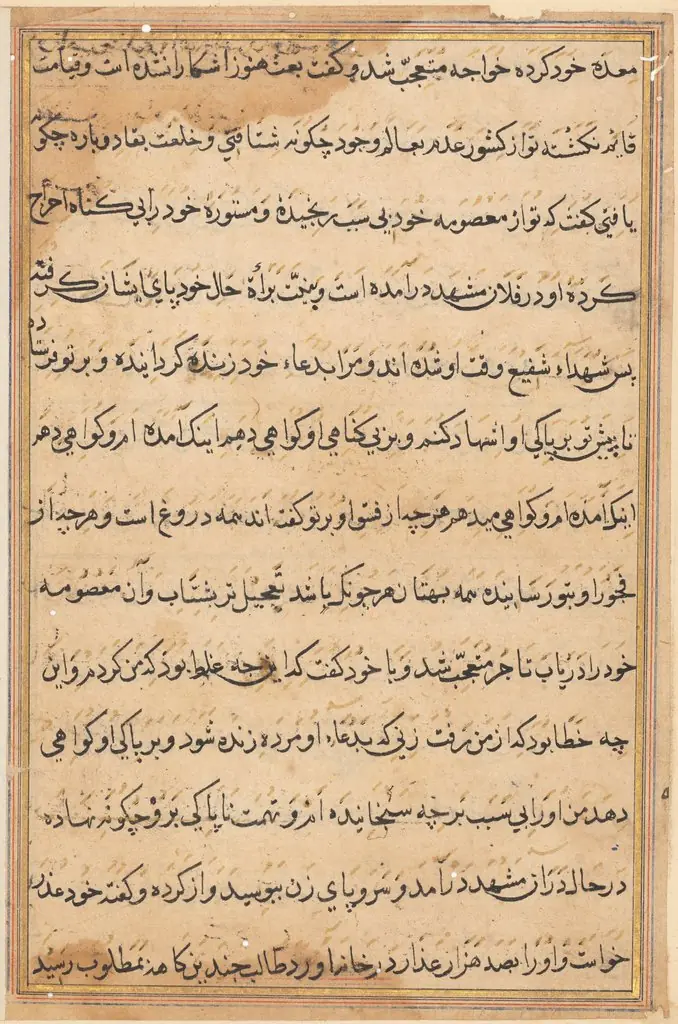 Page from Tales of a Parrot (Tuti-nama): text page
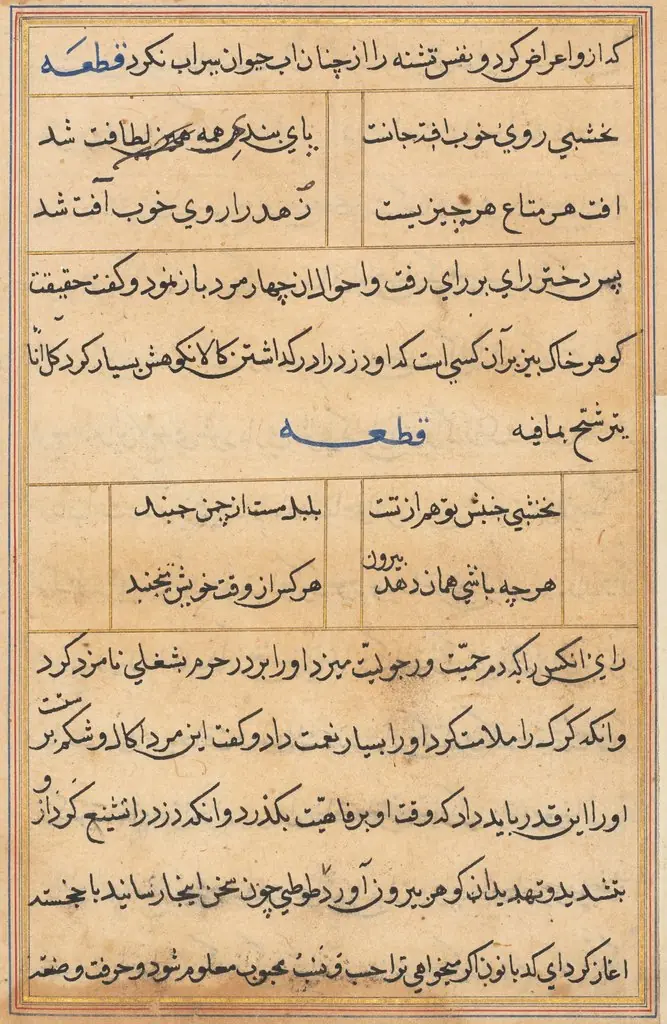 Page from Tales of a Parrot (Tuti-nama): text page
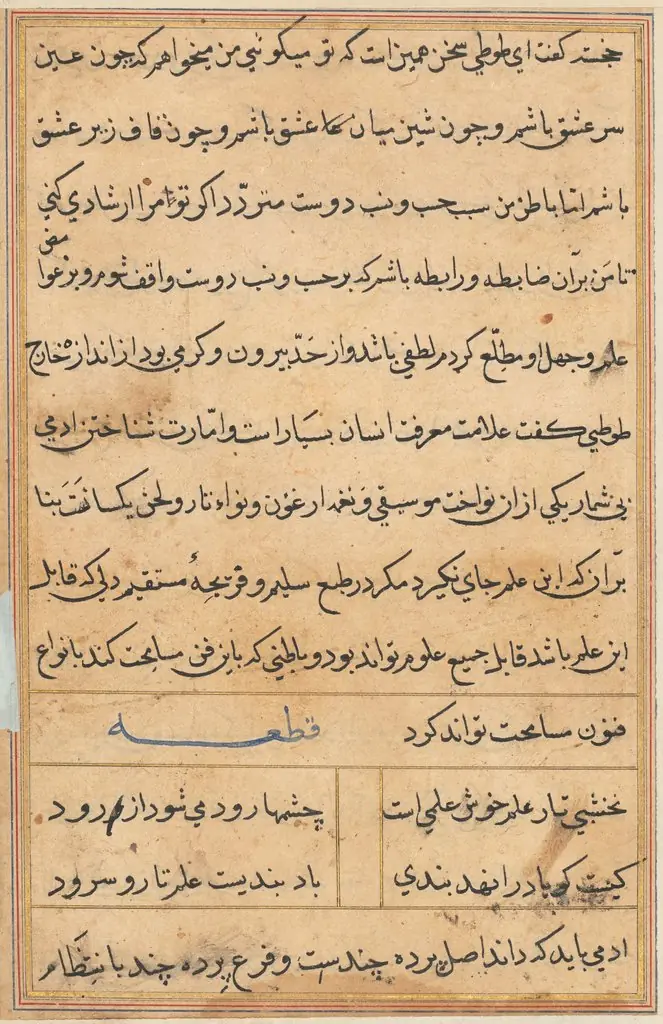 Page from Tales of a Parrot (Tuti-nama): text page
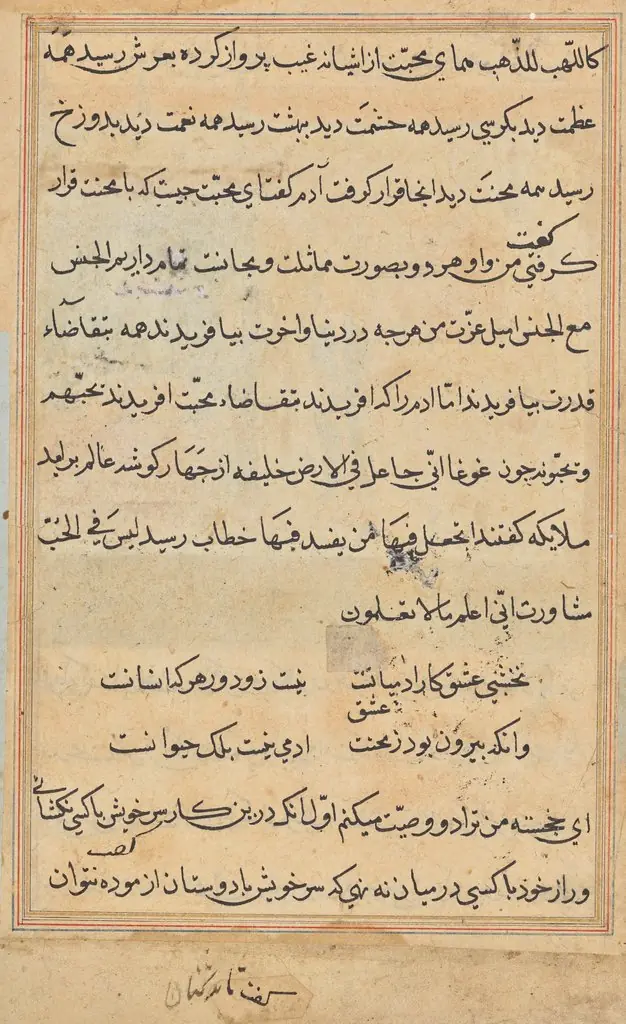 Page from Tales of a Parrot (Tuti-nama): text page
 Page from Tales of a Parrot (Tuti-nama): text page