Artwork
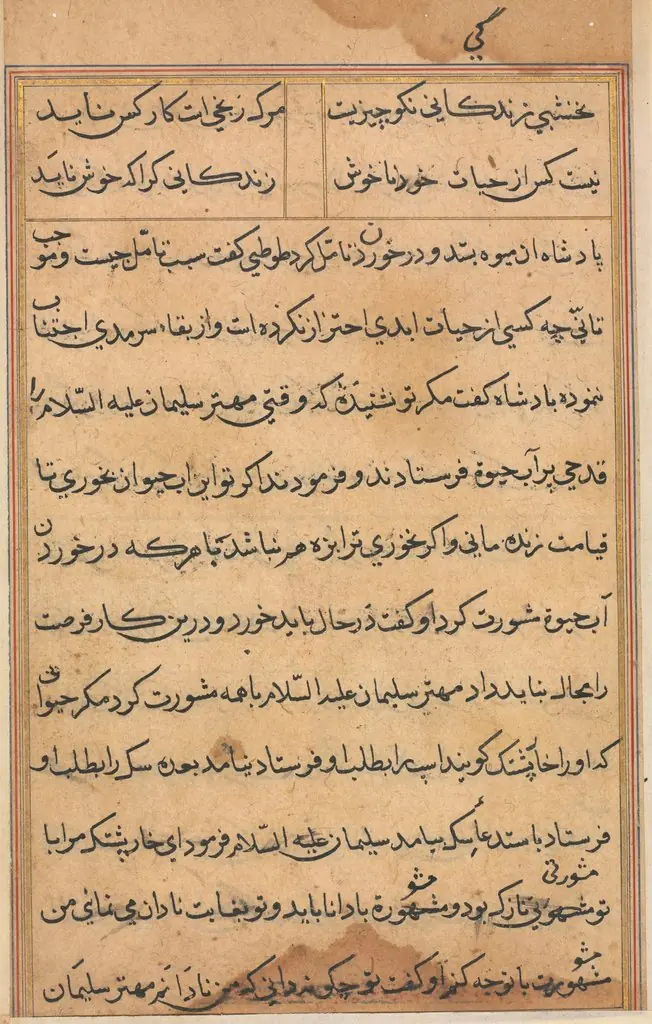
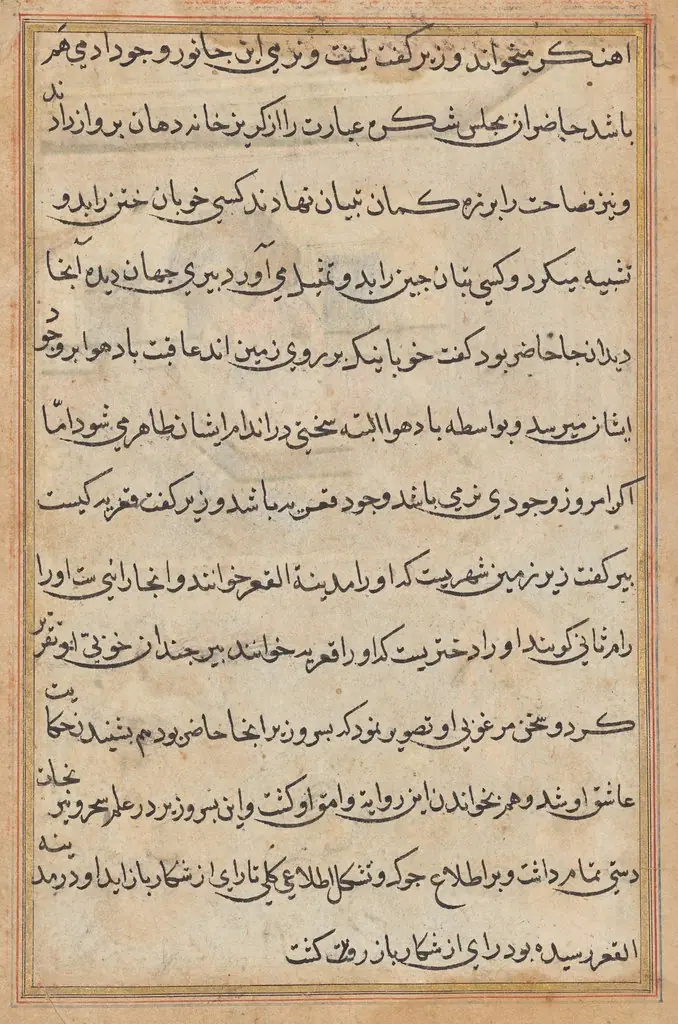
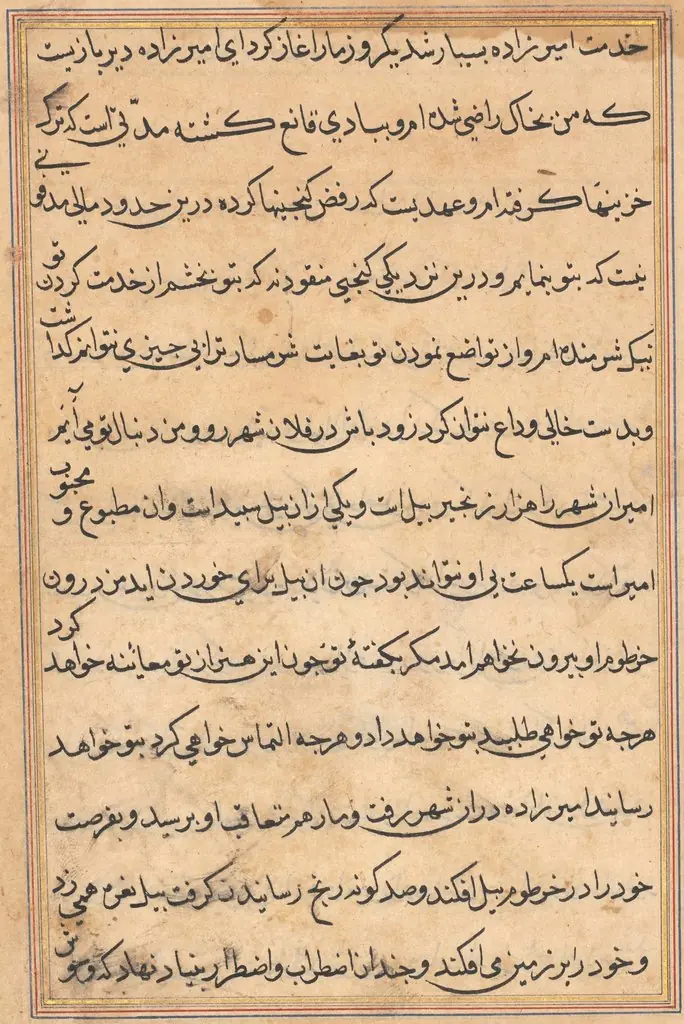
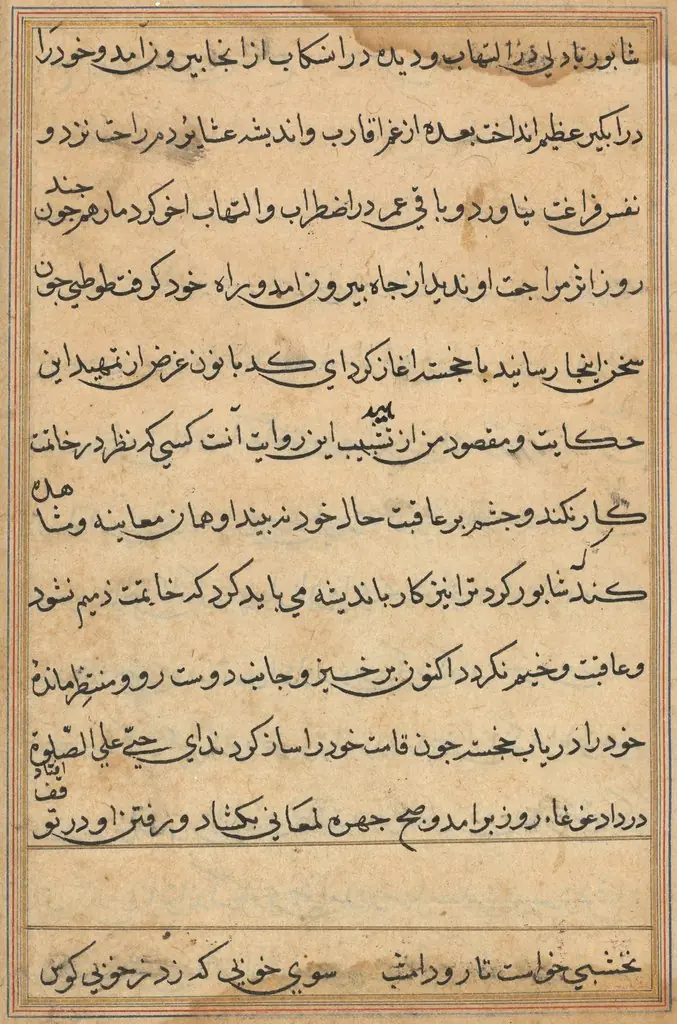
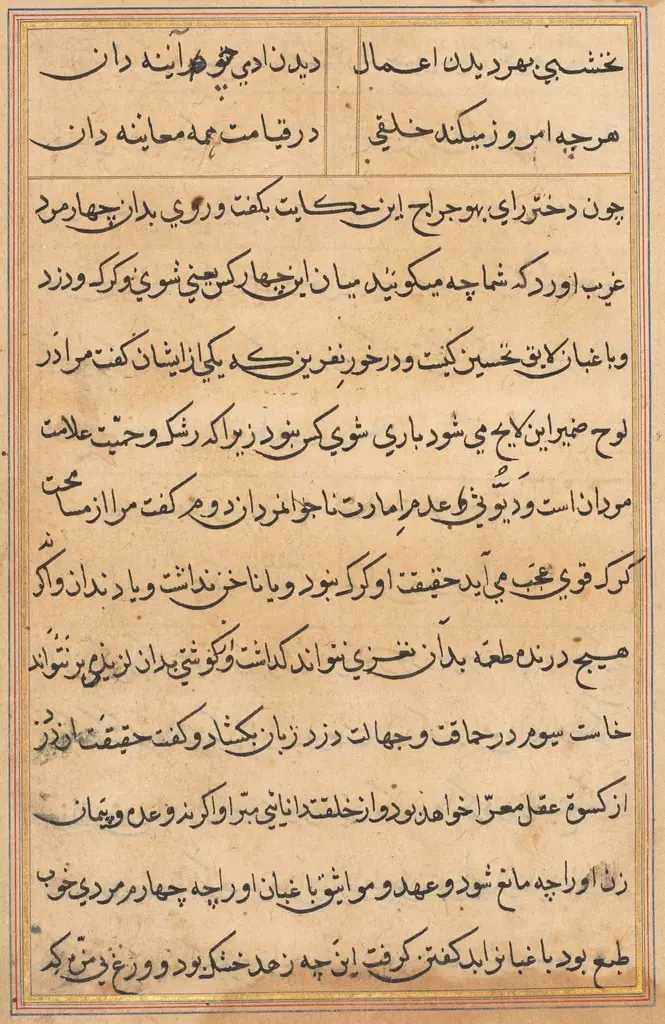
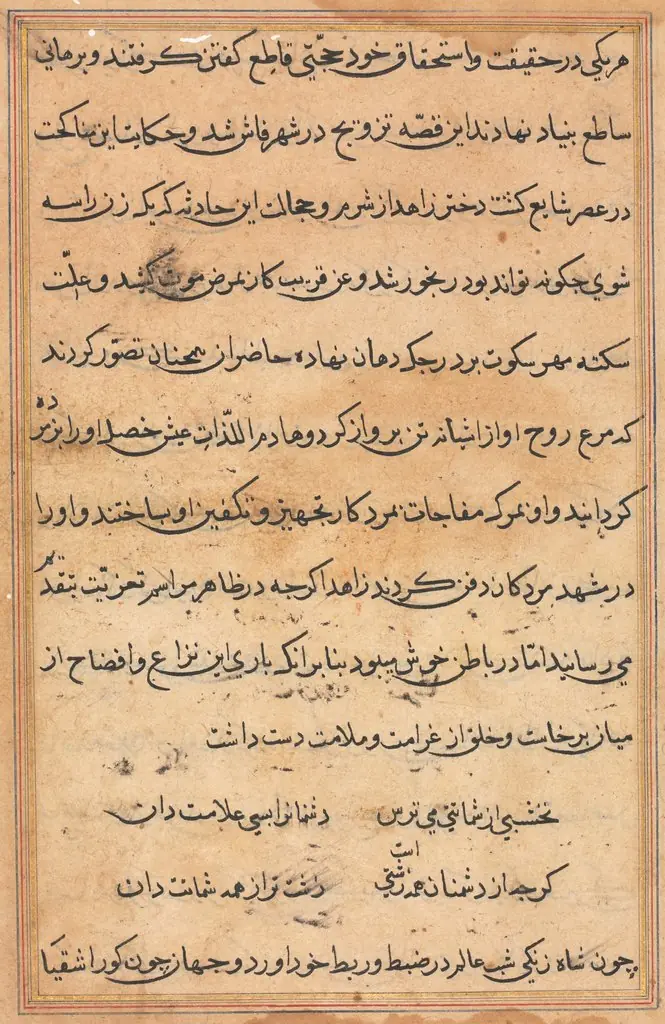
Page from Tales of a Parrot (Tuti-nama): text page
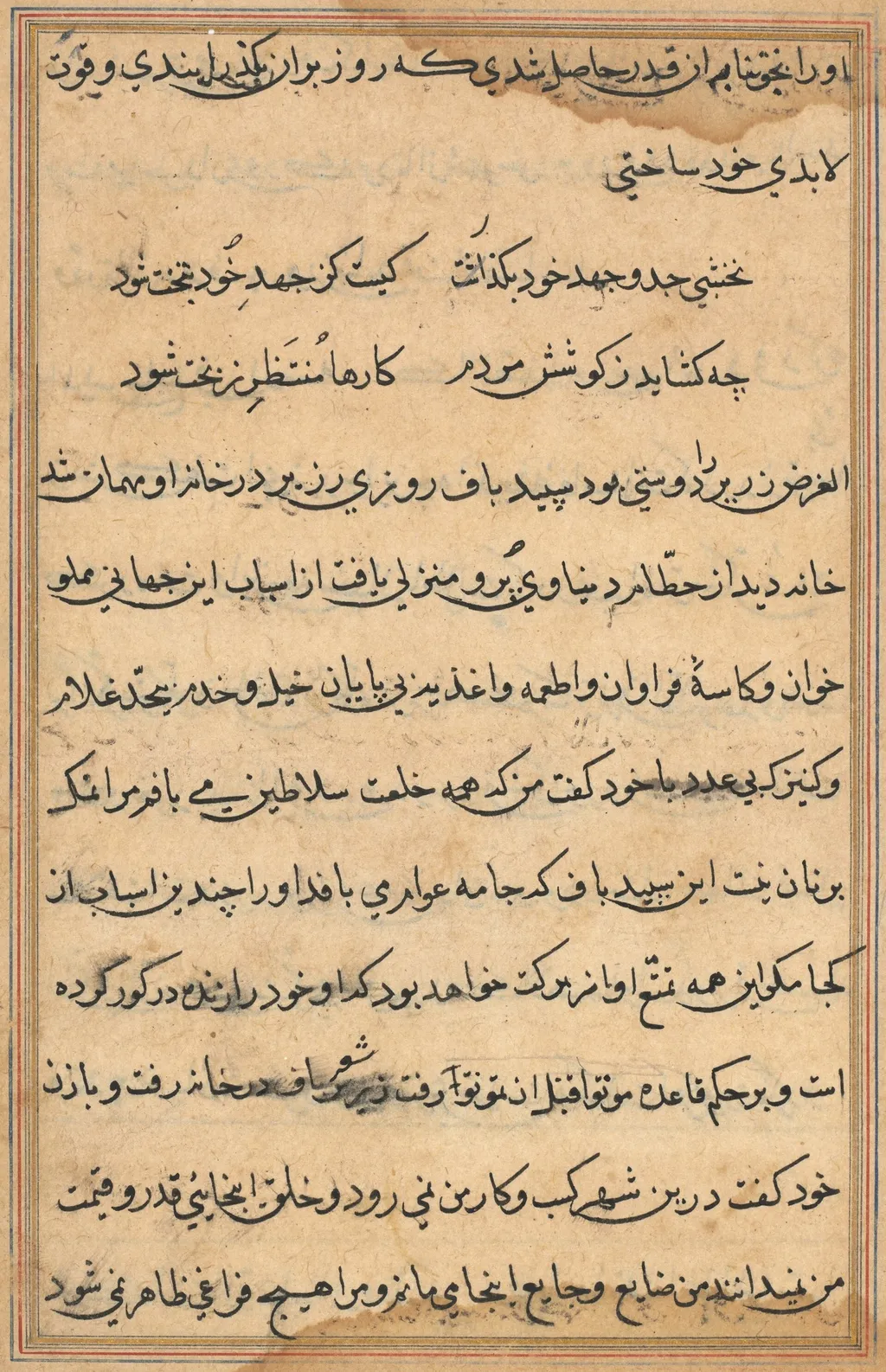
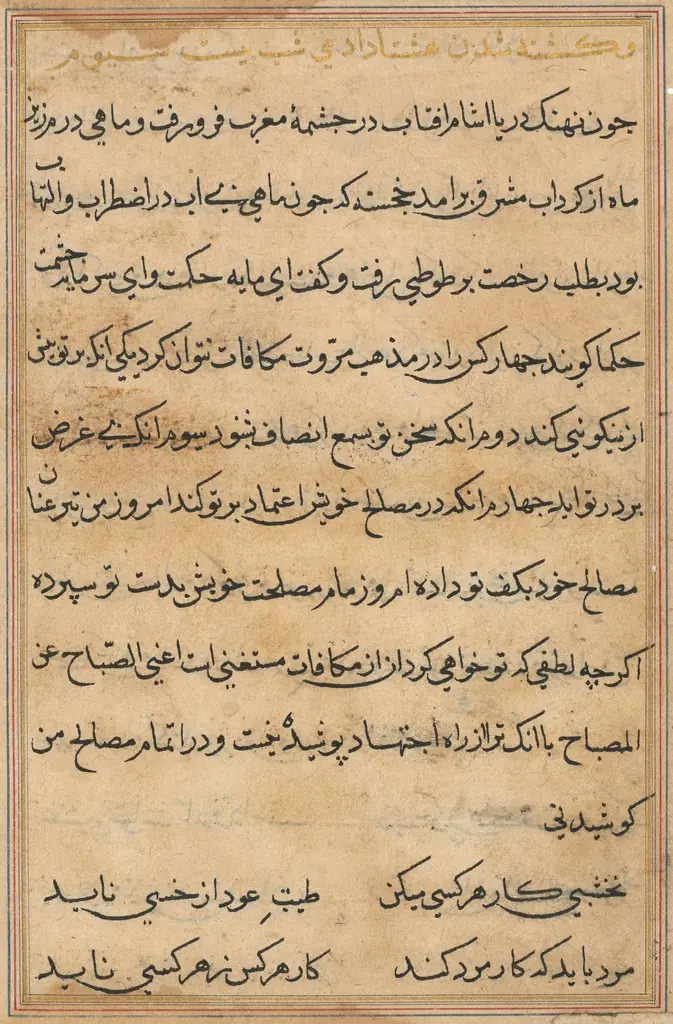
Page from Tales of a Parrot (Tuti-nama): text page is an unspecified painting. It dates from 1560 and is held in the collection of the Cleveland Museum of Art. The object is a painted page from the Persian manuscript Tuti‑nama (Tales of a Parrot).
About this work
History & Provenance
It entered the collection of the Cleveland Museum of Art in 1962, where it is currently held as part of their permanent holdings.
This text page from the Tales of a Parrot (Tuti-nama) was created in 1560 within the Mughal Empire. The work is attributed to an unknown artist and serves as an illuminated manuscript page from the larger narrative cycle. It entered the collection of the Cleveland Museum of Art in 1962, where it is currently held as part of their permanent holdings. The piece represents a specific moment in Mughal manuscript production during the mid-16th century.
The page is held by the Cleveland Museum of Art, where it forms part of the museum's collection of Mughal-period works. Its accession number is 1962.279.186.a, and it was produced in 1560 within the Mughal Empire. No exhibition history is documented in the available sources.
The page entered the Cleveland Museum of Art's holdings under the accession number 1962.279.186.a, a designation that situates it within a group of related folios acquired by the institution. Beyond its current location, no loans, displays, or prior exhibition appearances are recorded in the consulted material.
Context
The work belongs to a 16th-century Persian manuscript tradition produced under Mughal patronage, reflecting the cosmopolitan artistic exchange of the period. Its creation in 1560 aligns with stylistic developments seen in illustrated Persian texts, though the attribution remains anonymous. The piece is held in the collection of the Cleveland Museum of Art, where it is catalogued as part of the manuscript tradition of the Tuti-nama, a narrative cycle rendered in Persian miniature style.
Overview
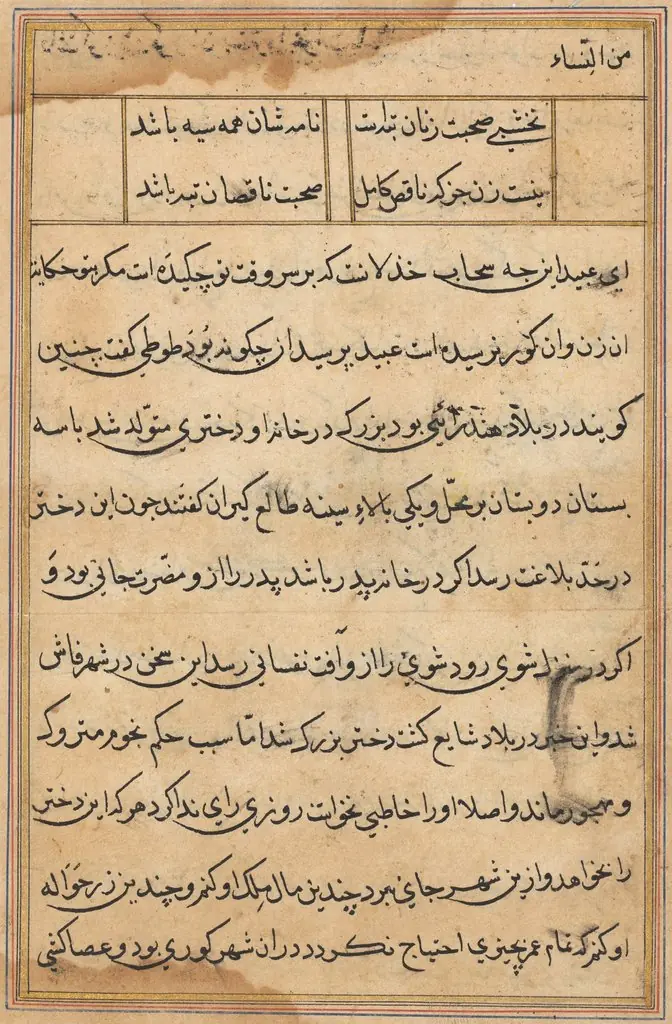
The object is a painted page from the Persian manuscript Tuti‑nama (Tales of a Parrot). Executed on paper, the surface is covered entirely with dense black calligraphy, bounded by a narrow red margin. The paper shows signs of age, including faint discolorations near the upper edge, indicating its historic origin.
Subject & Meaning
The script records a narrative intended for a princely audience, specifically addressed to Prince Salim. The content forms part of a larger literary work that uses the parrot’s voice to convey moral and romantic tales, reflecting the courtly taste for allegorical storytelling.
Technique & Style
The calligraphic hand is meticulous and fluid, with tightly packed lines that fill the page from margin to margin. The black ink is applied with a fine brush, while the thin red border was added to delineate the text area, a common decorative element in Safavid‑era manuscripts.
Legacy
Pages like this illustrate the sophisticated calligraphic practices of Persian manuscript production and serve as primary sources for scholars studying courtly literature, artistic patronage, and the transmission of Persian storytelling across centuries.
Artist & collection

 Page from Tales of a Parrot (Tuti-nama): text page
 Page from Tales of a Parrot (Tuti-nama): text page
 Page from Tales of a Parrot (Tuti-nama): text page
 Page from Tales of a Parrot (Tuti-nama): text page
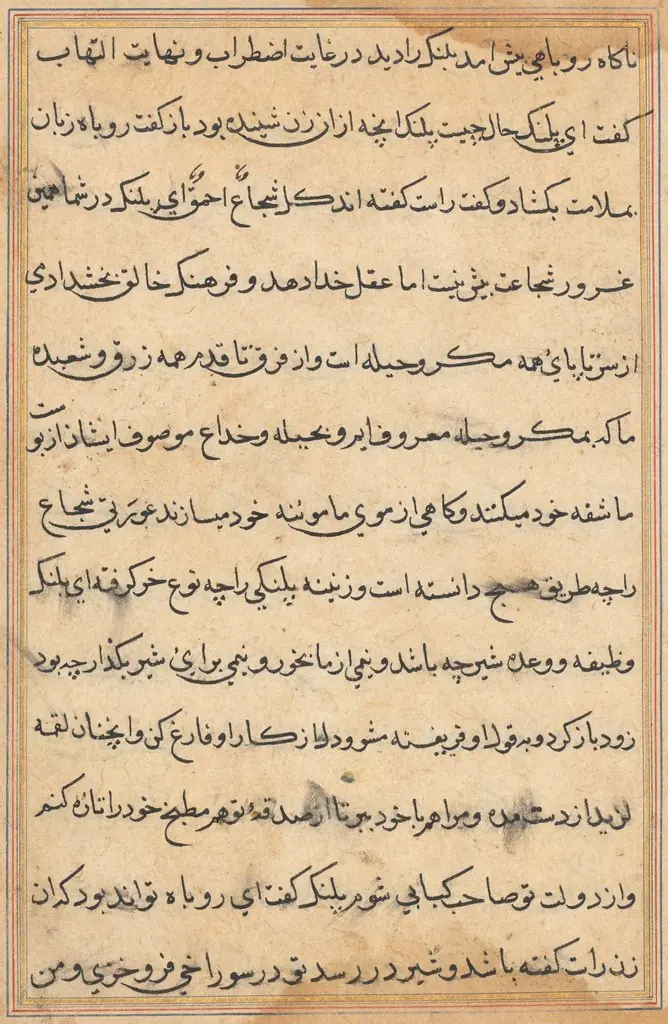 Page from Tales of a Parrot (Tuti-nama): text page
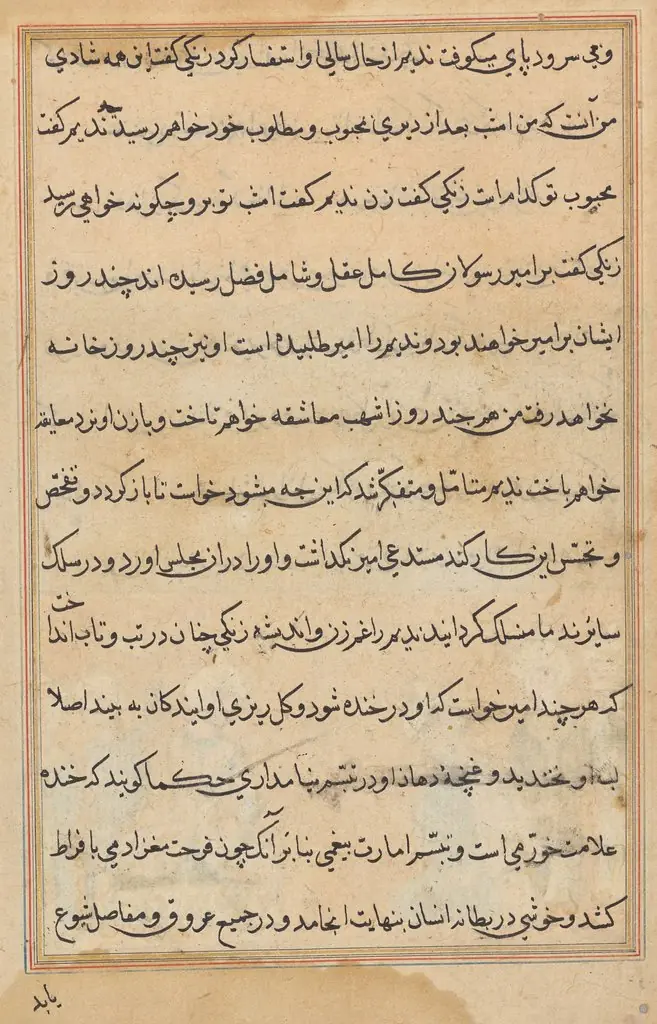 Page from Tales of a Parrot (Tuti-nama): text page
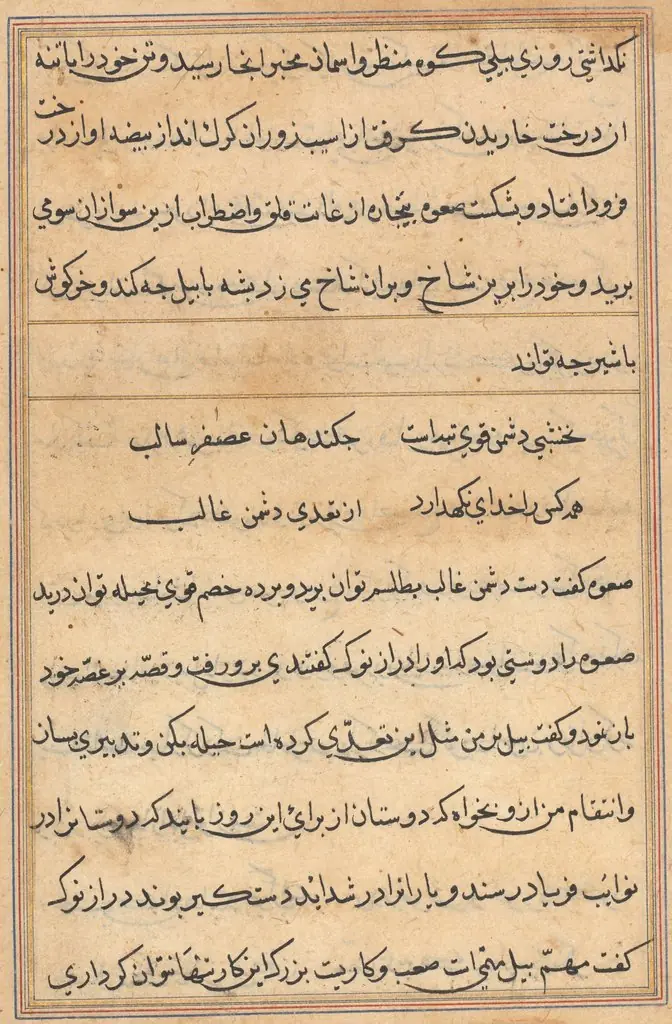 Page from Tales of a Parrot (Tuti-nama): text page
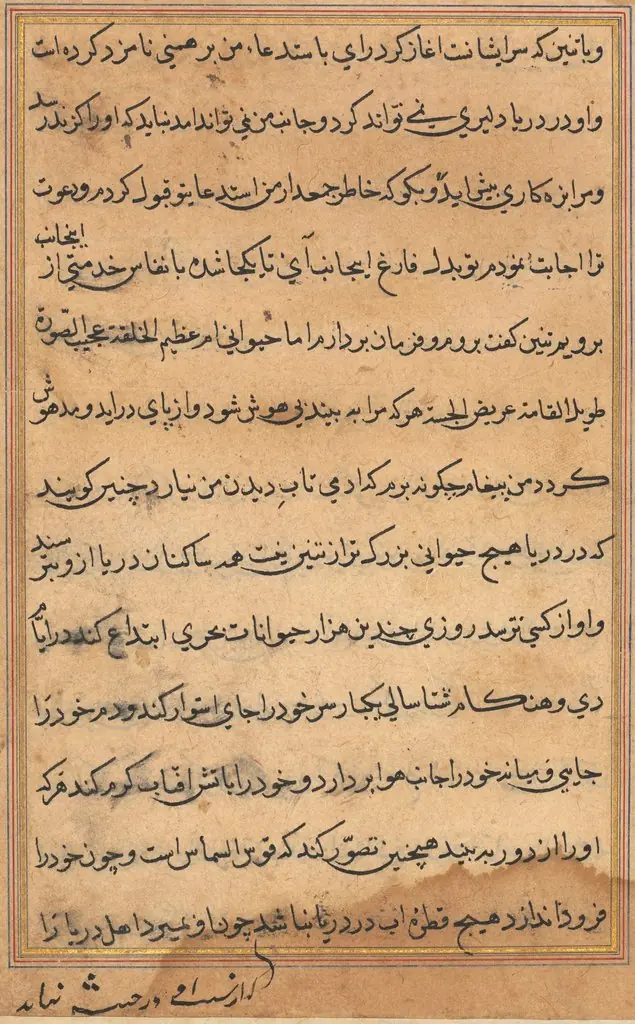 Page from Tales of a Parrot (Tuti-nama): text page
 Page from Tales of a Parrot (Tuti-nama): text page