Artwork
Page from Tales of a Parrot (Tuti-nama): text page
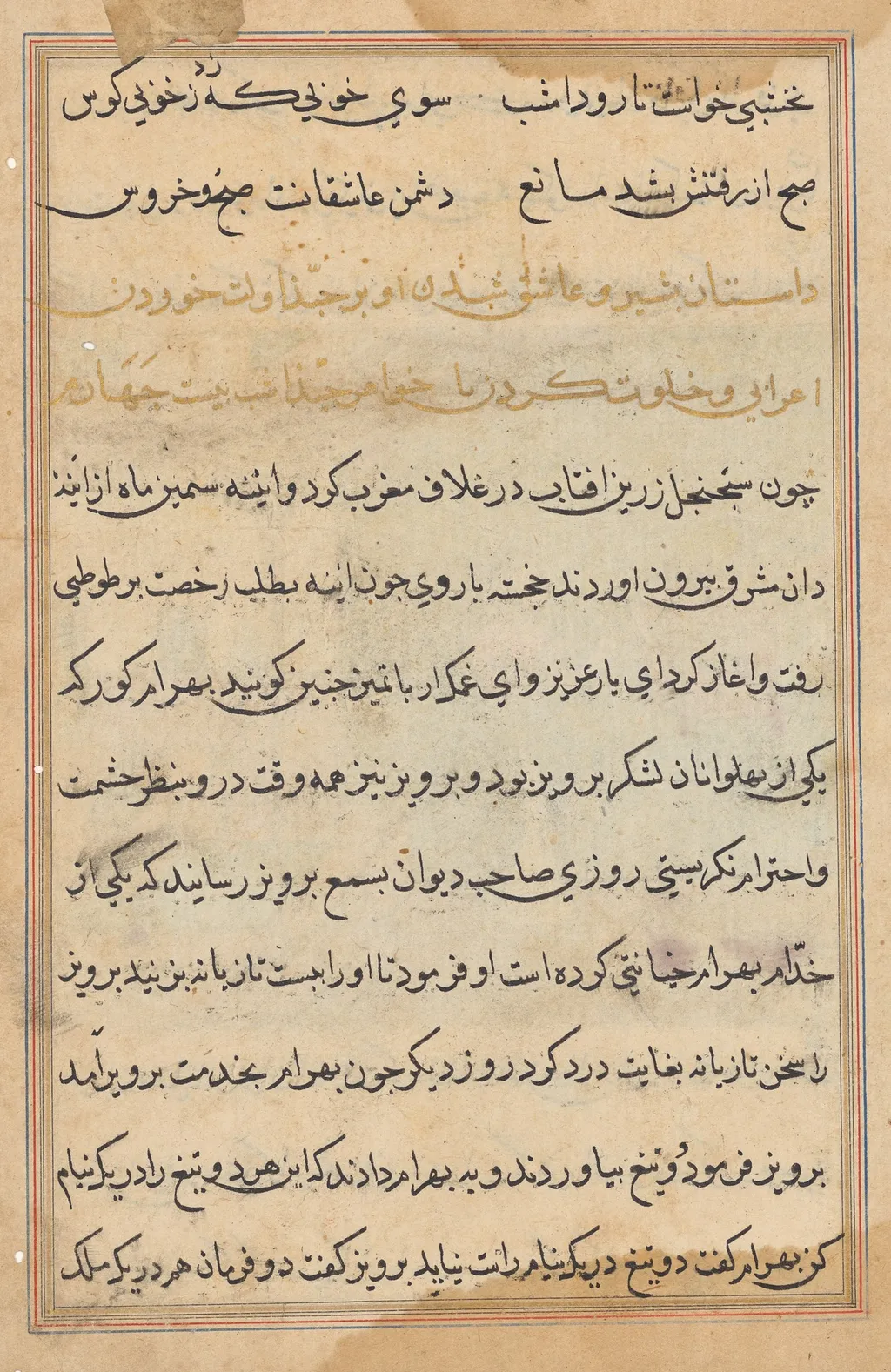
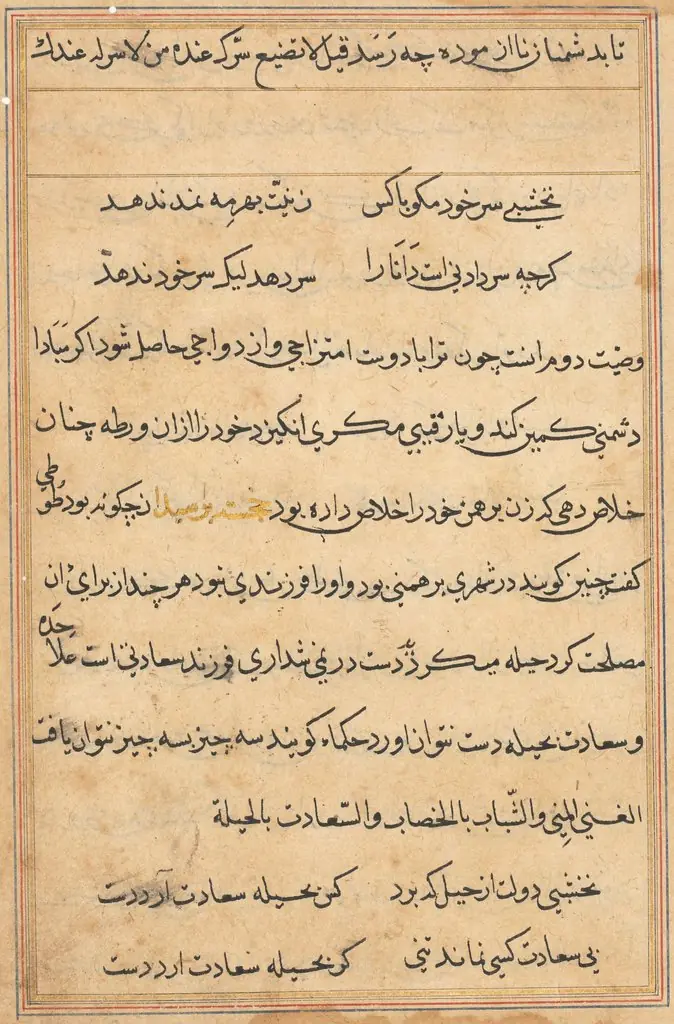
Page from Tales of a Parrot (Tuti-nama): text page is an unspecified painting. It dates from 1560 and is held in the collection of the Cleveland Museum of Art. This object is a single leaf from the medieval manuscript known as the Tales of a Parrot (Tuti‑nama).
About this work
History & Provenance
The work entered the Cleveland Museum of Art in 1962, where it is recorded under accession number 1962.
The text page from the Tales of a Parrot (Tuti-nama) was produced around 1560 in the Mughal Empire as part of the illustrated manuscript, cataloged as a painting by an unknown artist. Its early ownership and any commission are not documented in the available sources. The work entered the Cleveland Museum of Art in 1962, where it is recorded under accession number 1962.279.165.a and remains in the collection. The sources do not list specific exhibitions where the work has been displayed.
Overview
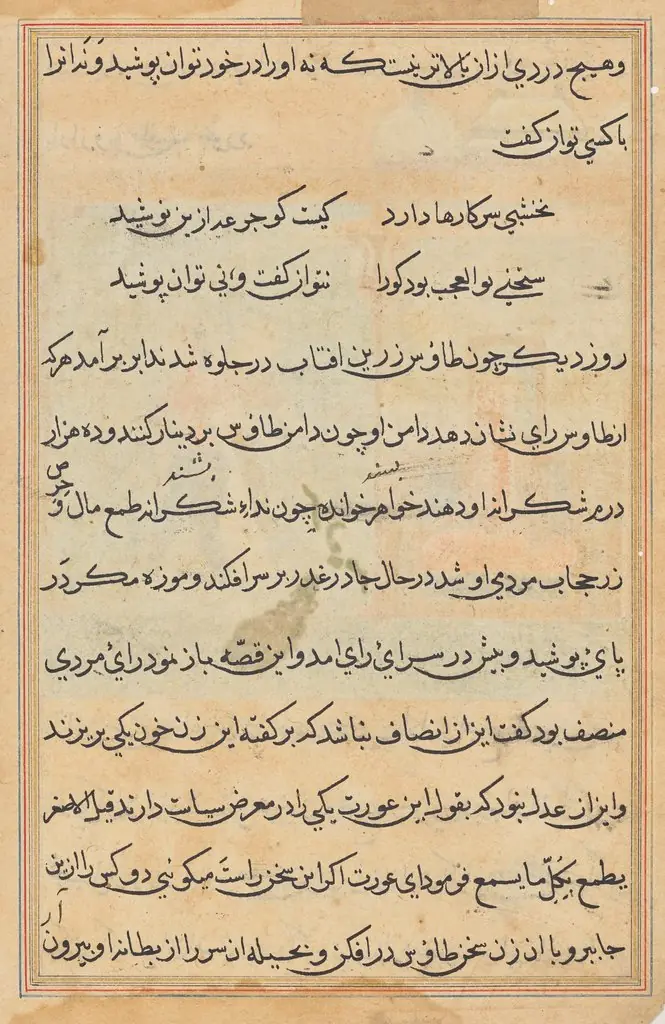
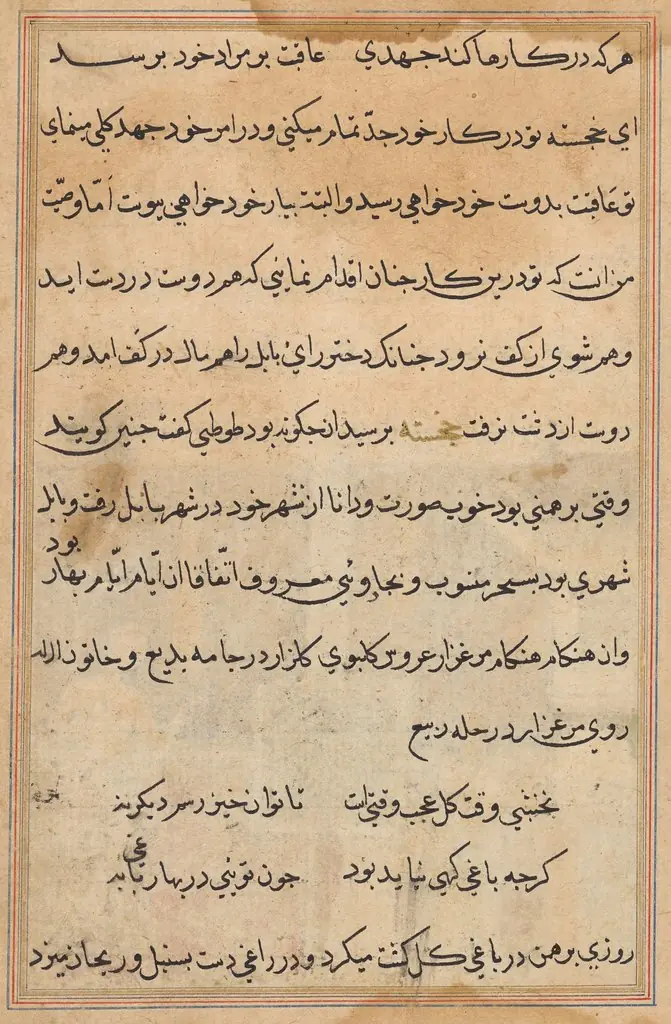
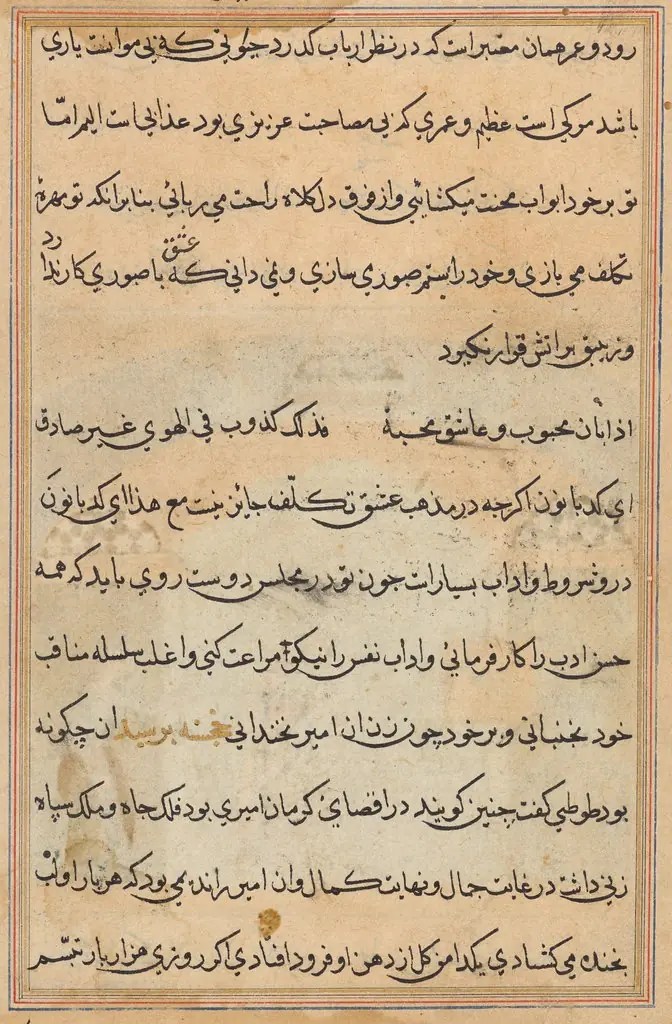
This object is a single leaf from the medieval manuscript known as the Tales of a Parrot (Tuti‑nama). The folio measures roughly a hand‑size page, its parchment dyed a light brown and edged with a narrow decorative border. Black ink forms the main body of the text, while selected words are accentuated with gold leaf, creating a subtle contrast that draws the eye.
Subject & Meaning
The written portion appears to be a narrative poem or story, typical of the Tuti‑nama tradition that blends moral instruction with entertainment. The content, though partially obscured by age, suggests a tale involving a parrot, a common motif used to convey ethical lessons through the bird’s speech and behavior.
Technique & Style
The scribe employed a fine-point reed pen for the black script, a standard tool in Persian‑influenced manuscript production. Gold highlights were applied with a thin leaf of metallic foil, then burnished to achieve a luminous sheen. Decorative motifs, floral vines and geometric patterns, frame the text, reflecting the intricate aesthetic of 14th‑century Persian illustrated books.
Context
Manuscripts such as the Tales of a Parrot were intended for elite patrons, serving both as literary entertainment and as objects of visual refinement. The integration of gold lettering within the text underscores the value placed on the narrative, while the ornamental border situates the work within a broader tradition of richly illustrated Persian literature.
Artist & collection

- Page from Tales of a Parrot (Tuti-nama): text page
 Page from Tales of a Parrot (Tuti-nama): text page
 Page from Tales of a Parrot (Tuti-nama): text page
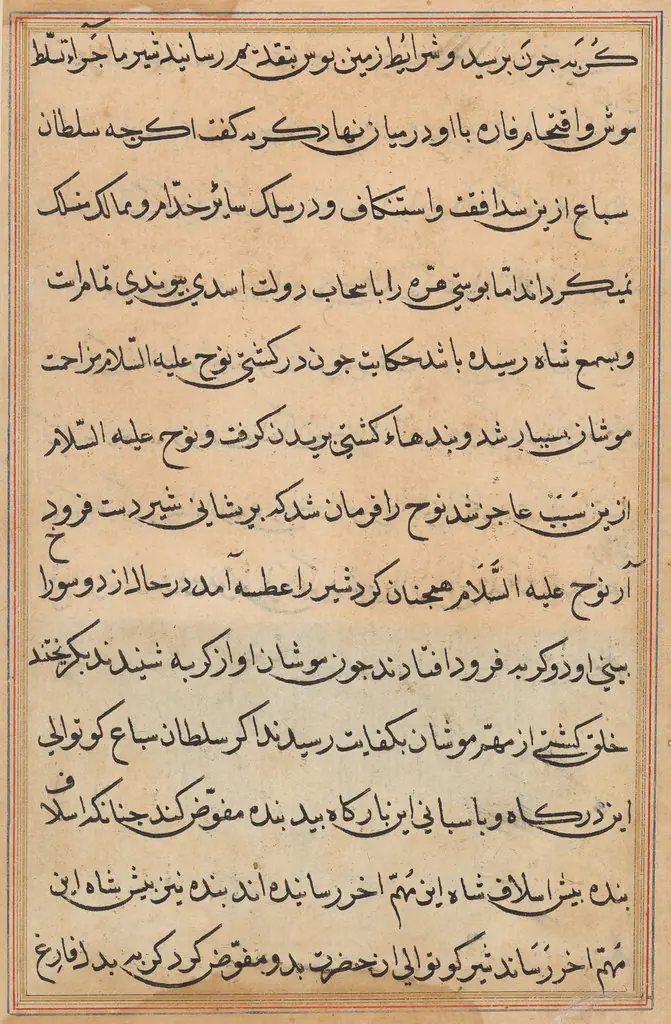 Page from Tales of a Parrot (Tuti-nama): text page
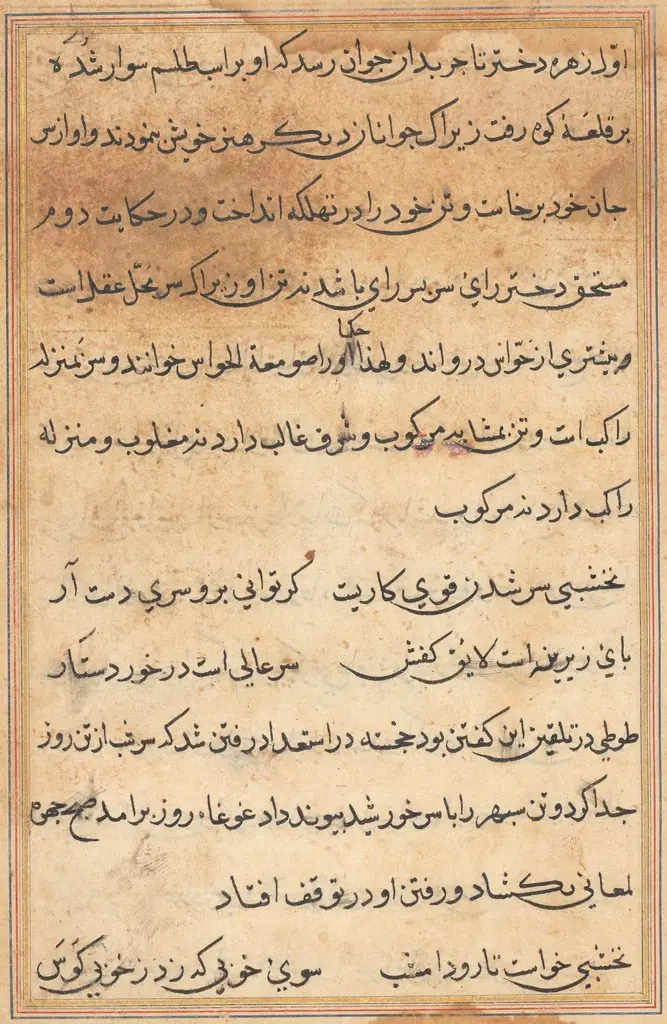 Page from Tales of a Parrot (Tuti-nama): text page
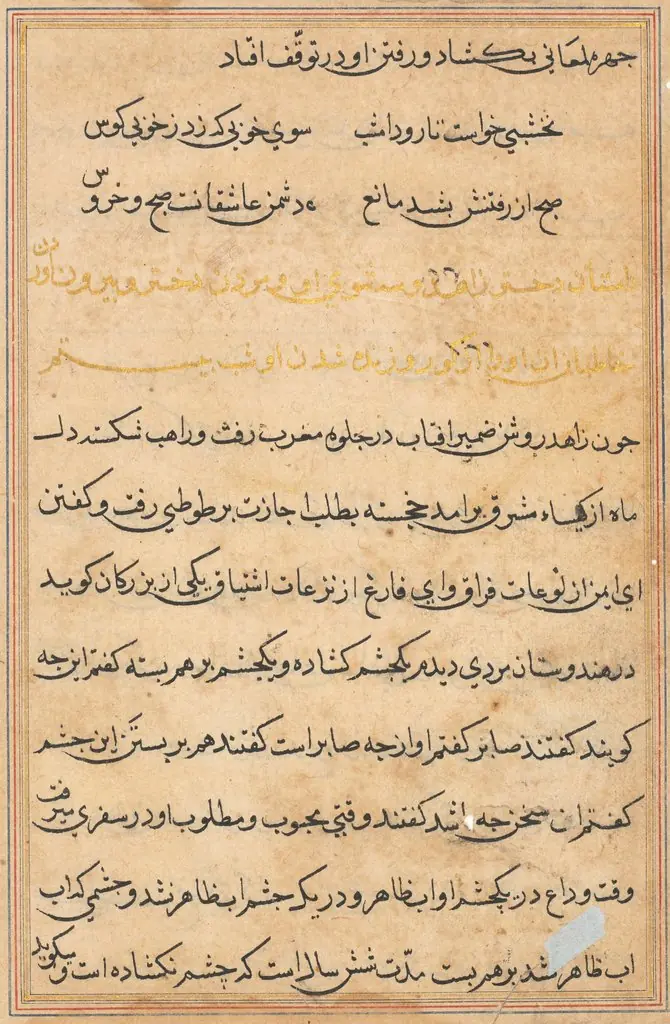 Page from Tales of a Parrot (Tuti-nama): text page
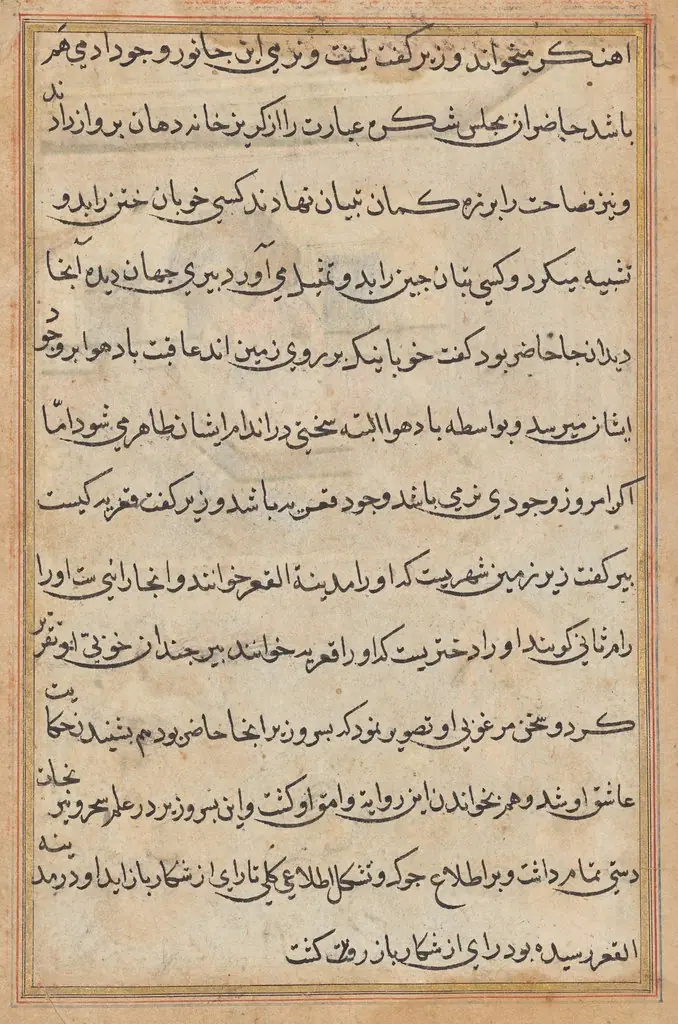 Page from Tales of a Parrot (Tuti-nama): text page
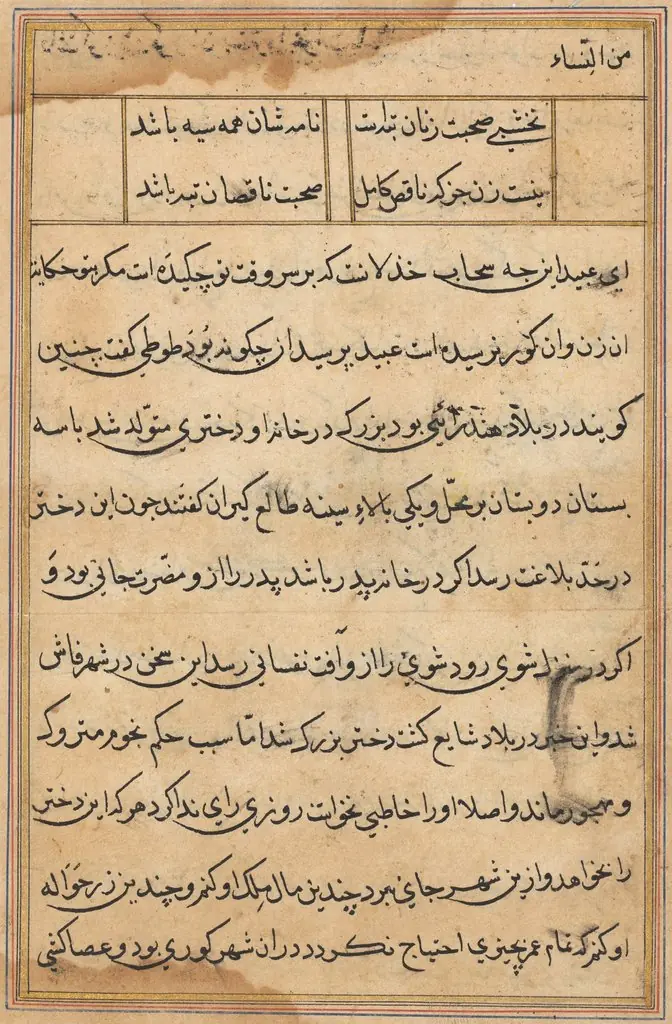 Page from Tales of a Parrot (Tuti-nama): text page
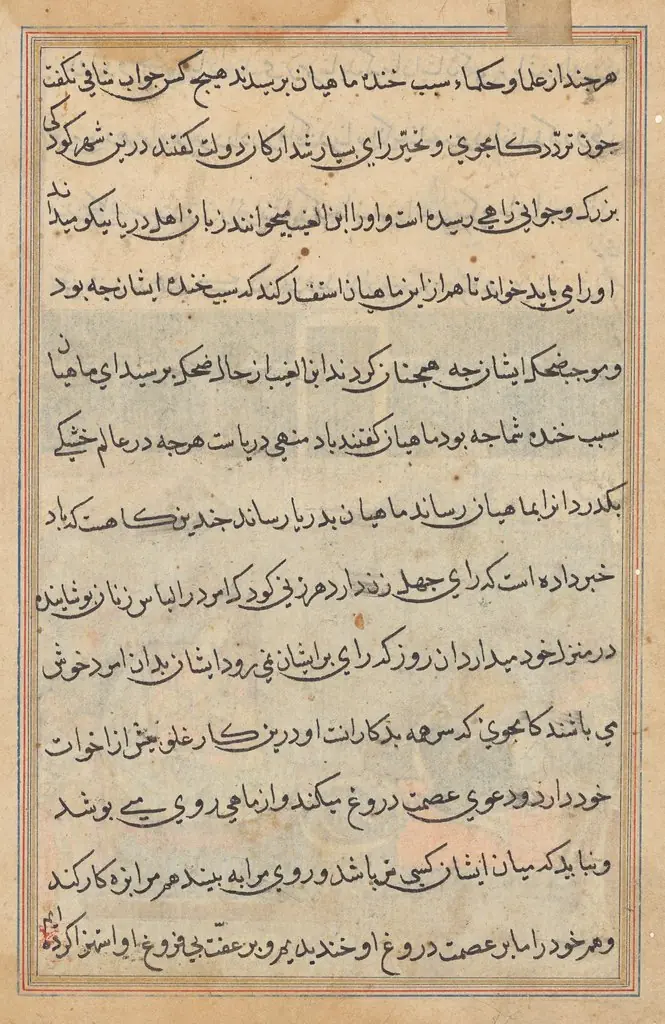 Page from Tales of a Parrot (Tuti-nama): text page
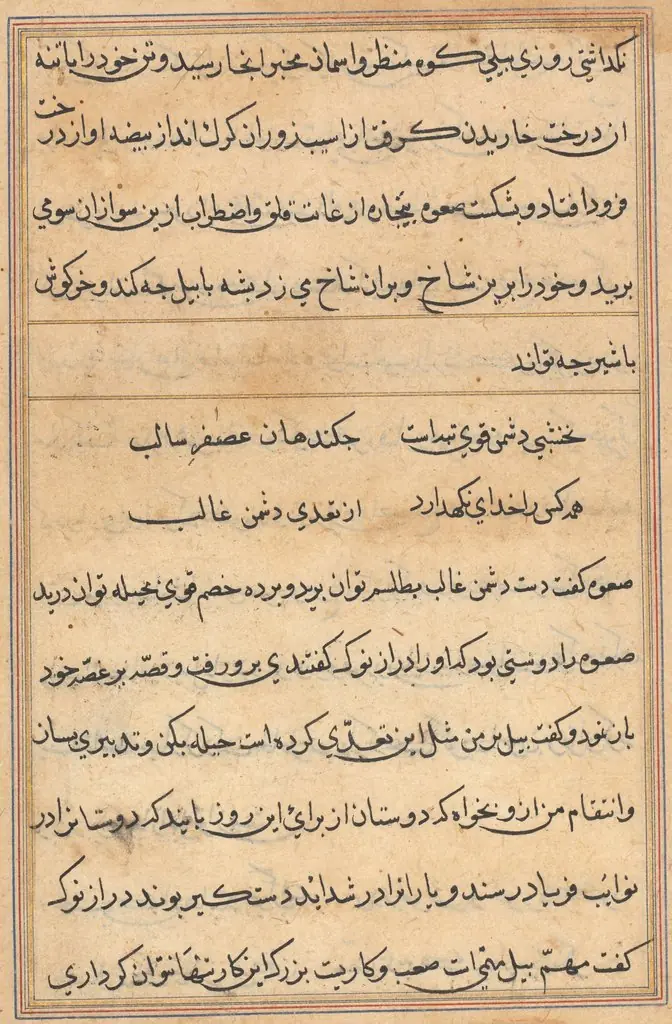 Page from Tales of a Parrot (Tuti-nama): text page
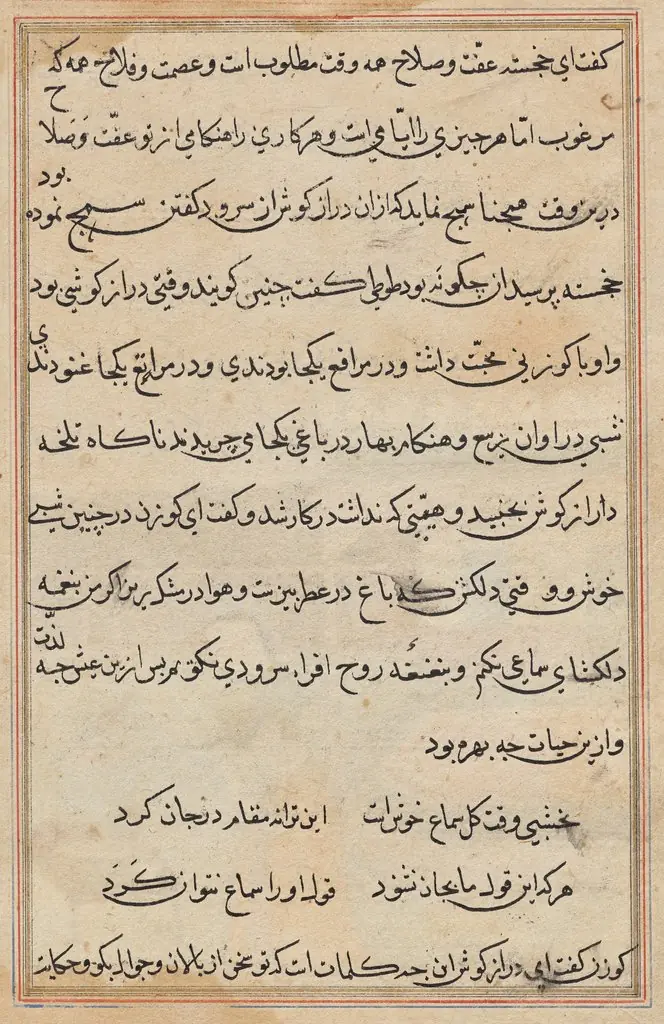 Page from Tales of a Parrot (Tuti-nama): text page
 Page from Tales of a Parrot (Tuti-nama): text page