Artwork
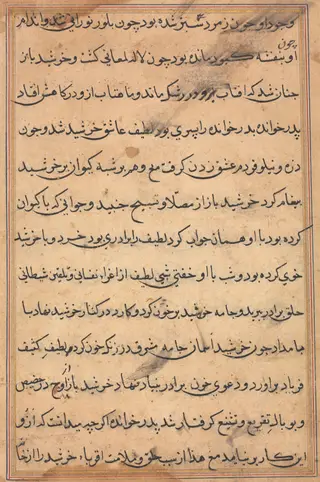
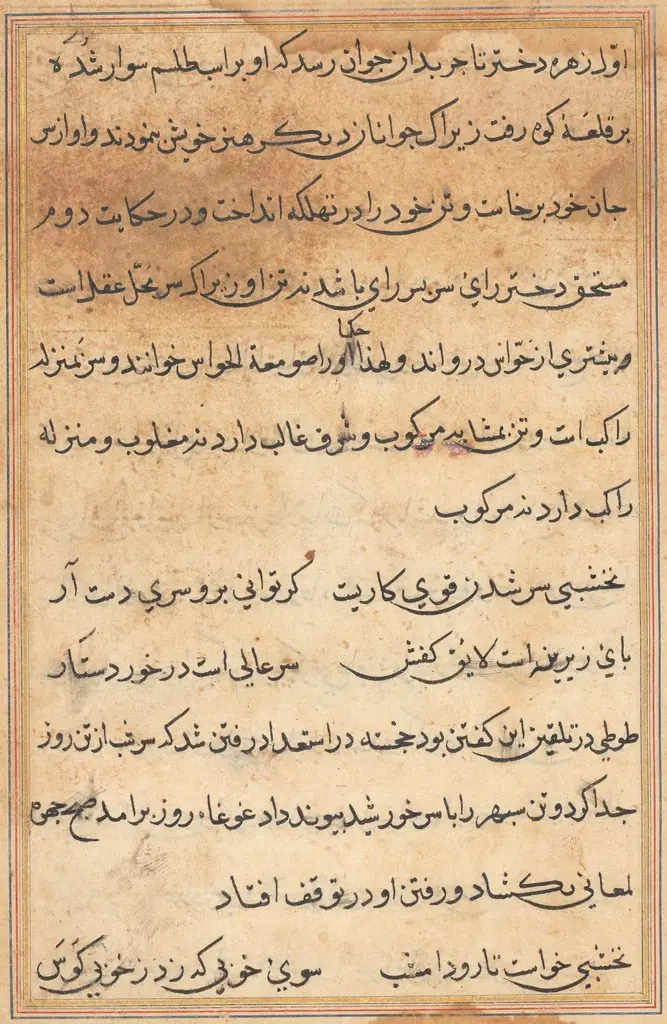
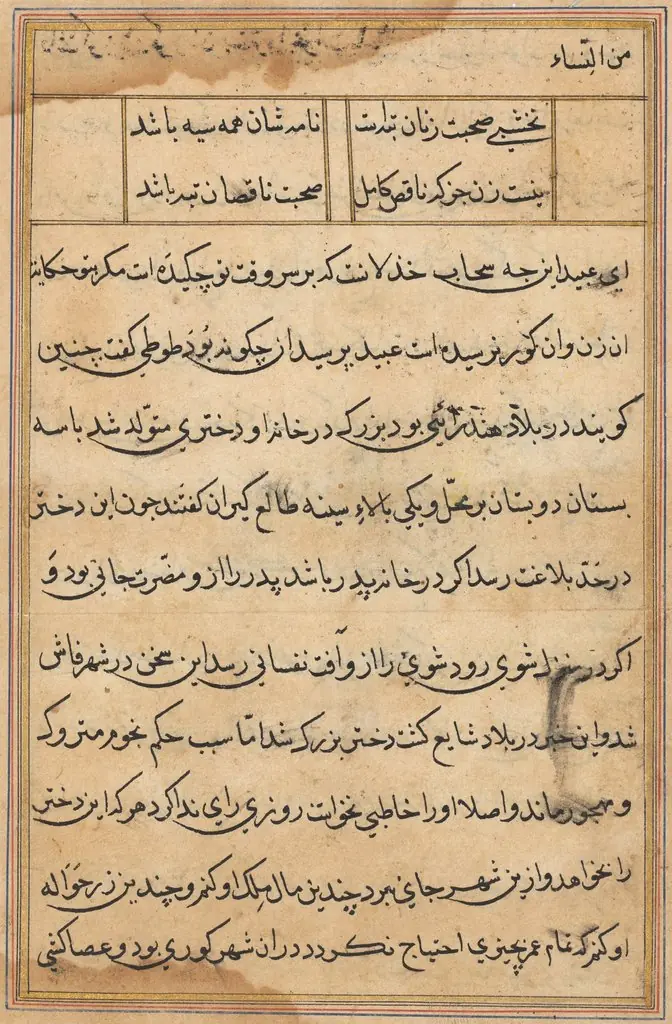
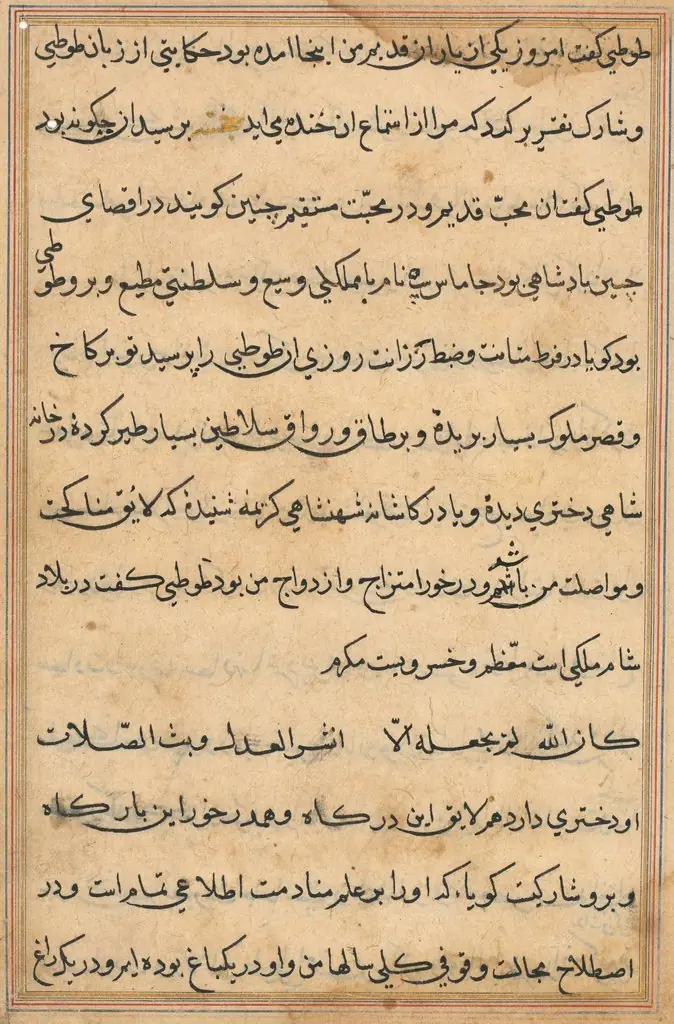
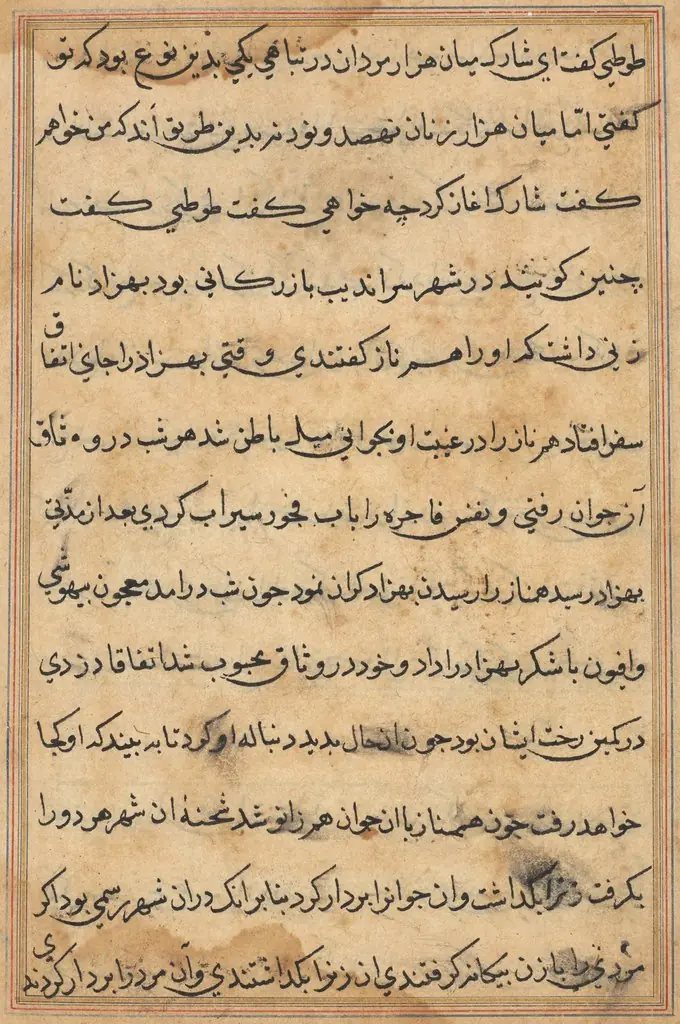
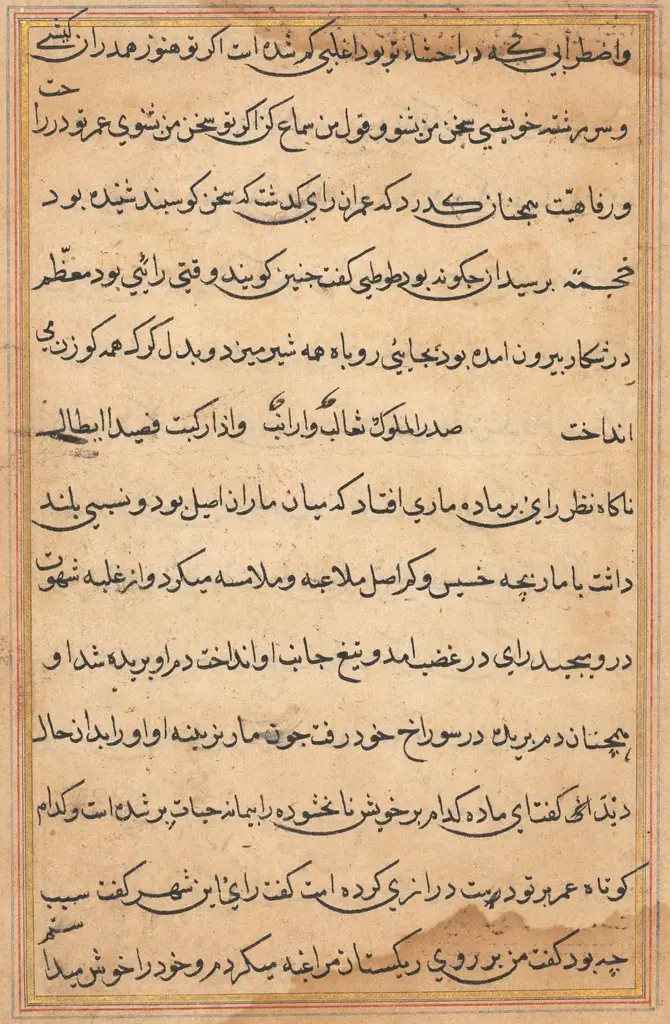
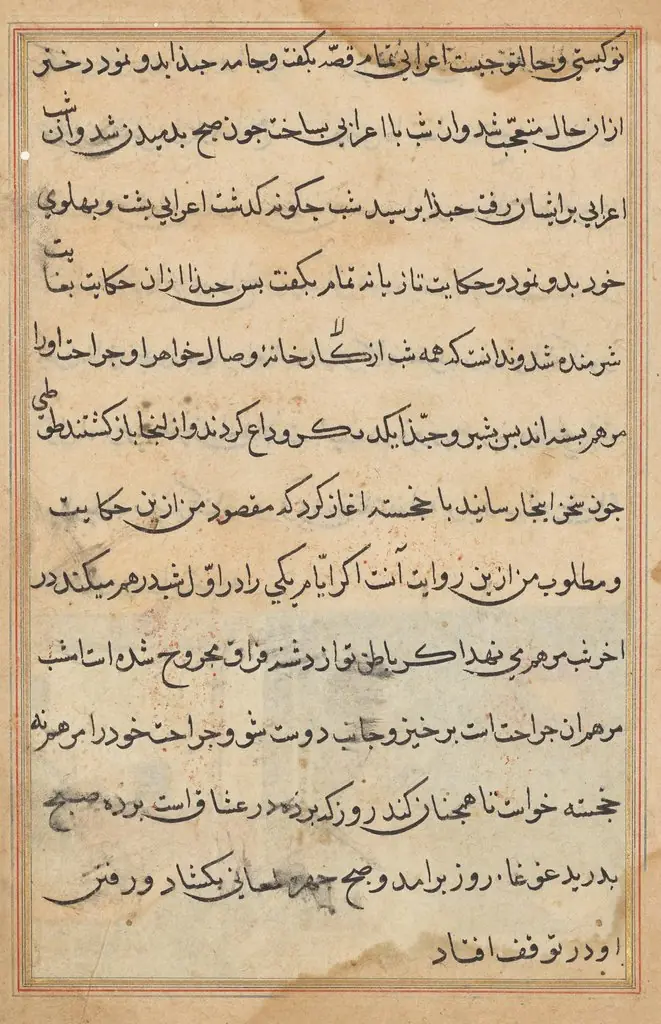
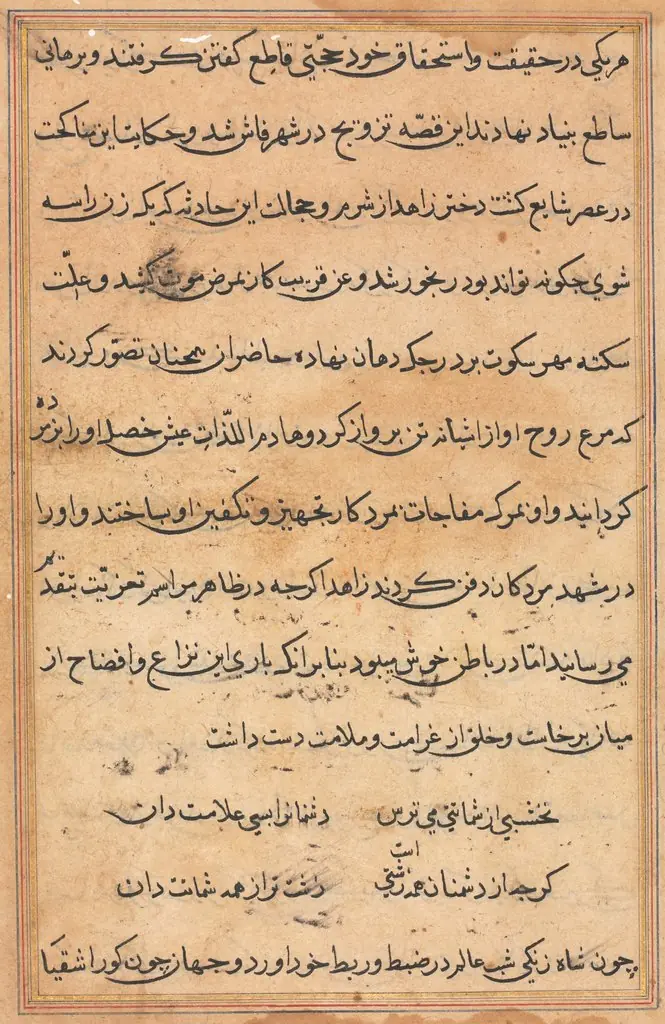
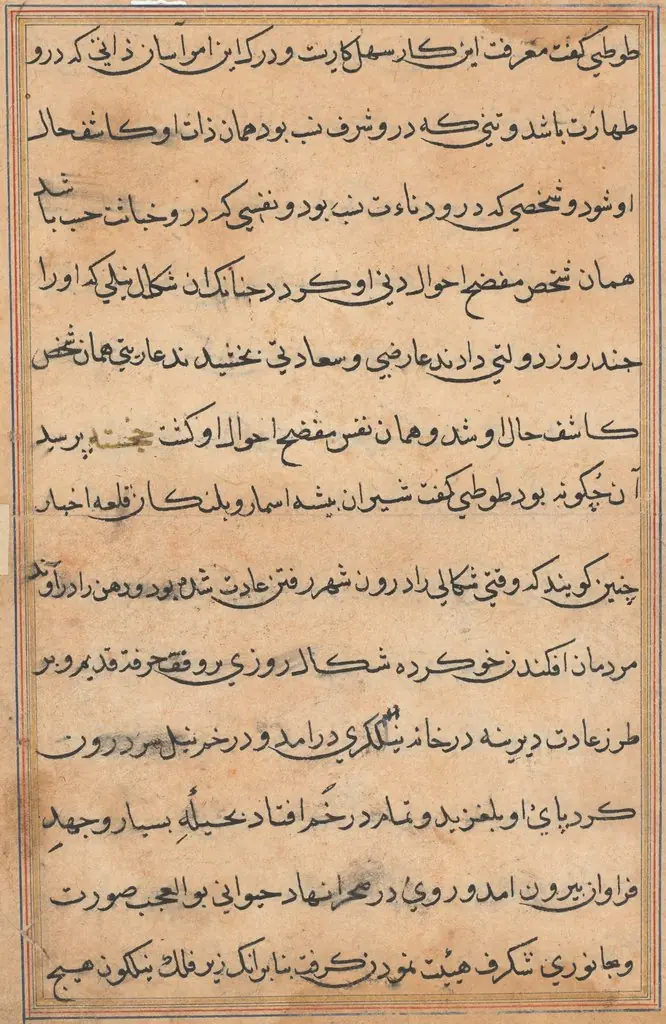
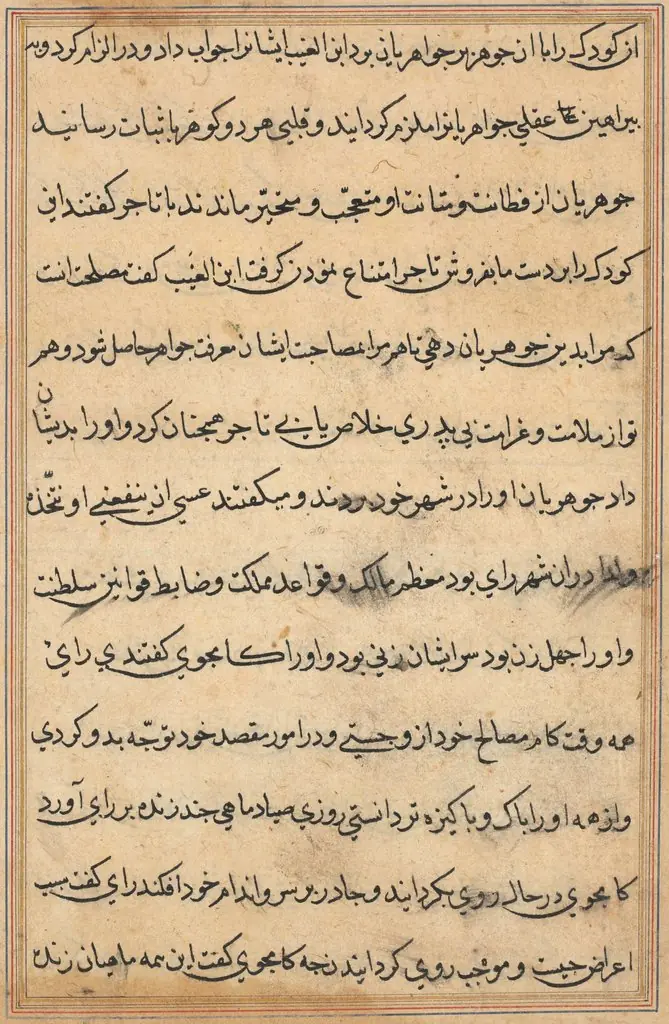
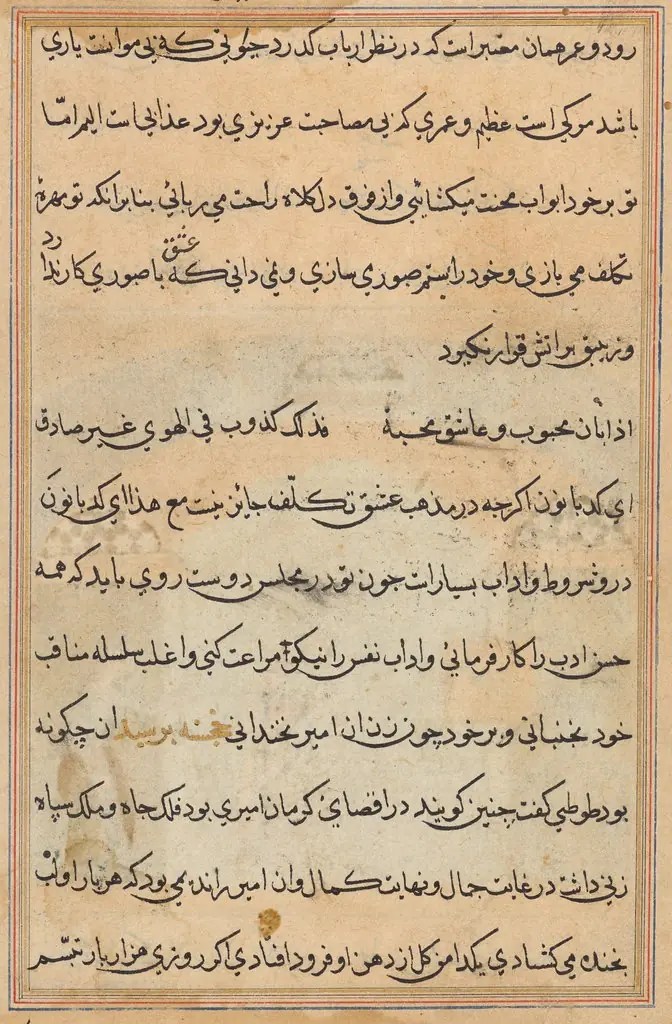
Page from Tales of a Parrot (Tuti-nama): text page
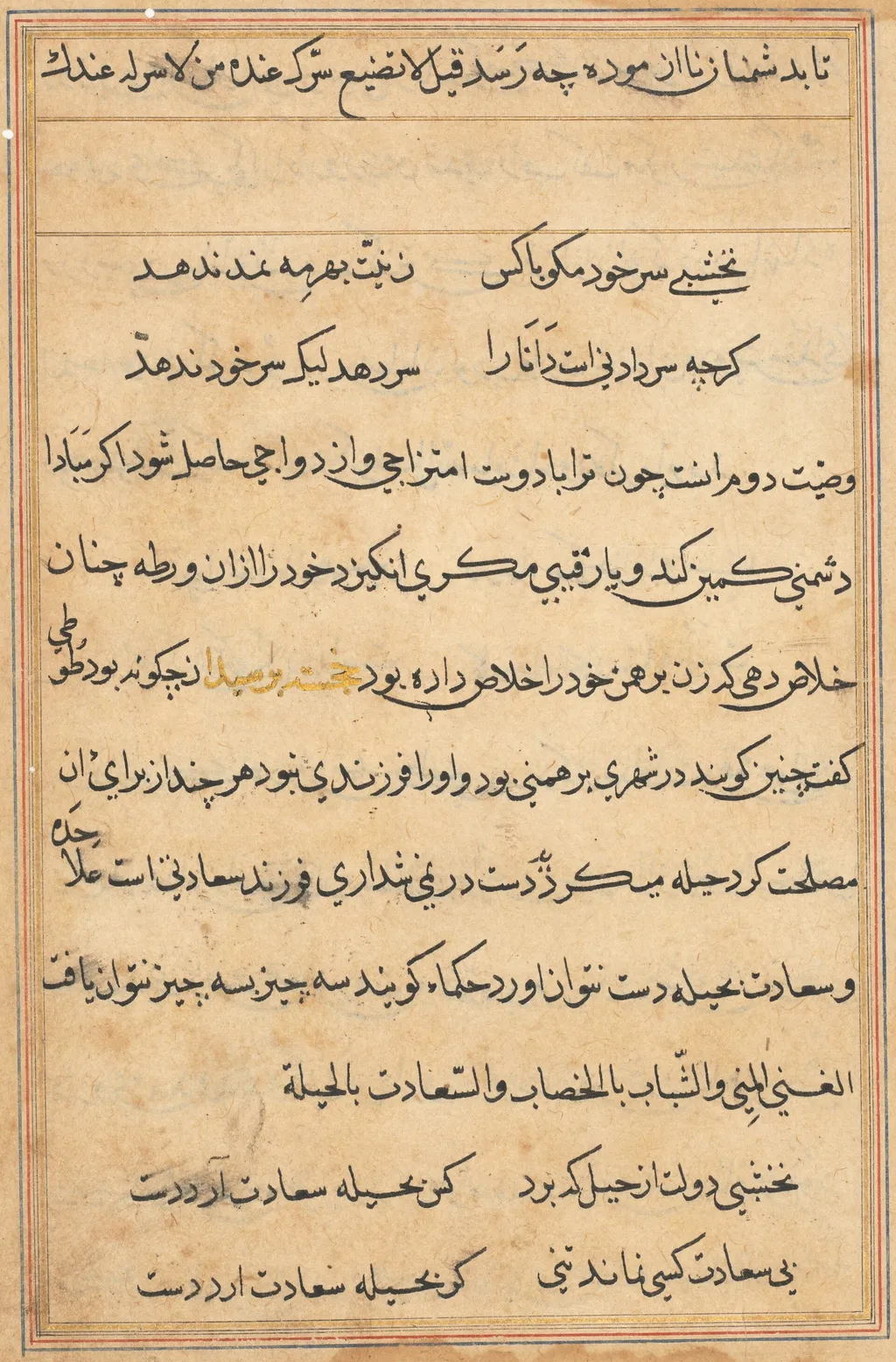
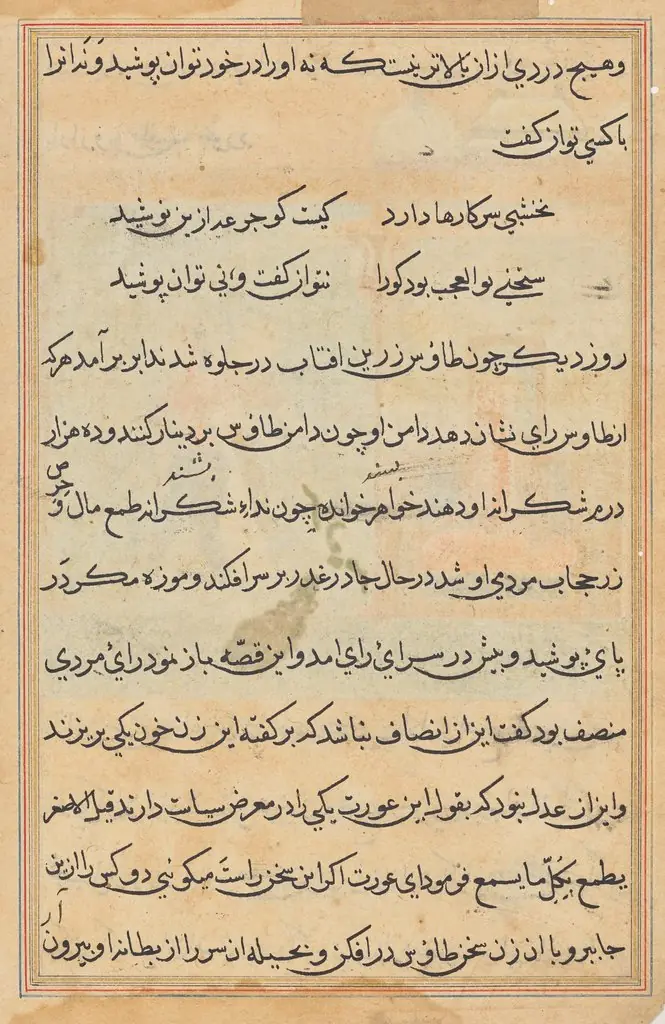
Page from Tales of a Parrot (Tuti-nama): text page is an unspecified painting. It dates from 1560 and is held in the collection of the Cleveland Museum of Art. This object is a single leaf from the illustrated manuscript known as Tales of a Parrot (Tuti‑nama).
About this work
Subject & Meaning
Its significance lies in this synthesis of Persian narrative and Indian manuscript production within the early Mughal artistic milieu.
This is a text folio from the Tuti-nama (Tales of a Parrot), a collection of Persian moral tales framed by the stories a parrot tells to detain a merchant's wife. Produced in Mughal India around 1560 under Akbar's patronage, the manuscript exemplifies the imperial workshop's adaptation of Persianate literary forms into an Indian courtly context. As a text page, the folio carries the narrative in script rather than illustration, forming part of the larger illustrated Cleveland Tuti-nama in which such text alternates with painted scenes.
Its significance lies in this synthesis of Persian narrative and Indian manuscript production within the early Mughal artistic milieu.
History & Provenance
The text page from the Tales of a Parrot (Tuti-nama) was created circa 1560 during the Mughal period in South Asia. It is attributed to an unknown artist and belongs to a manuscript associated with Akbar's patronage. The Cleveland Museum of Art holds the work, where it is catalogued under accession number 1962.279.139.a.
Overview
This object is a single leaf from the illustrated manuscript known as Tales of a Parrot (Tuti‑nama). The folio consists of a light‑brown, aged paper support bearing black ink text framed by thin, straight marginal lines. The page functions as both a literary and visual artifact, preserving the manuscript’s decorative script and layout.
Technique & Style
Ink was applied with a fine brush or pen, producing a dense, flowing hand characteristic of Persianate manuscript traditions. The marginal frames are executed with precise, linear strokes, contrasting with the decorative script and indicating a careful division between text and decorative space.
Context
Manuscript culture in the region prized the integration of text and ornamentation, with each page designed as a cohesive visual unit. The Tuti‑nama belongs to a genre of didactic literature that employed animal protagonists, such as a parrot, to convey moral lessons, reflecting broader pedagogical practices of the period.
Artist & collection

 Page from Tales of a Parrot (Tuti-nama): text page
 Page from Tales of a Parrot (Tuti-nama): text page
 Page from Tales of a Parrot (Tuti-nama): text page
 Page from Tales of a Parrot (Tuti-nama): text page
 Page from Tales of a Parrot (Tuti-nama): text page
 Page from Tales of a Parrot (Tuti-nama): text page
 Page from Tales of a Parrot (Tuti-nama): text page
 Page from Tales of a Parrot (Tuti-nama): text page
 Page from Tales of a Parrot (Tuti-nama): text page