Artwork
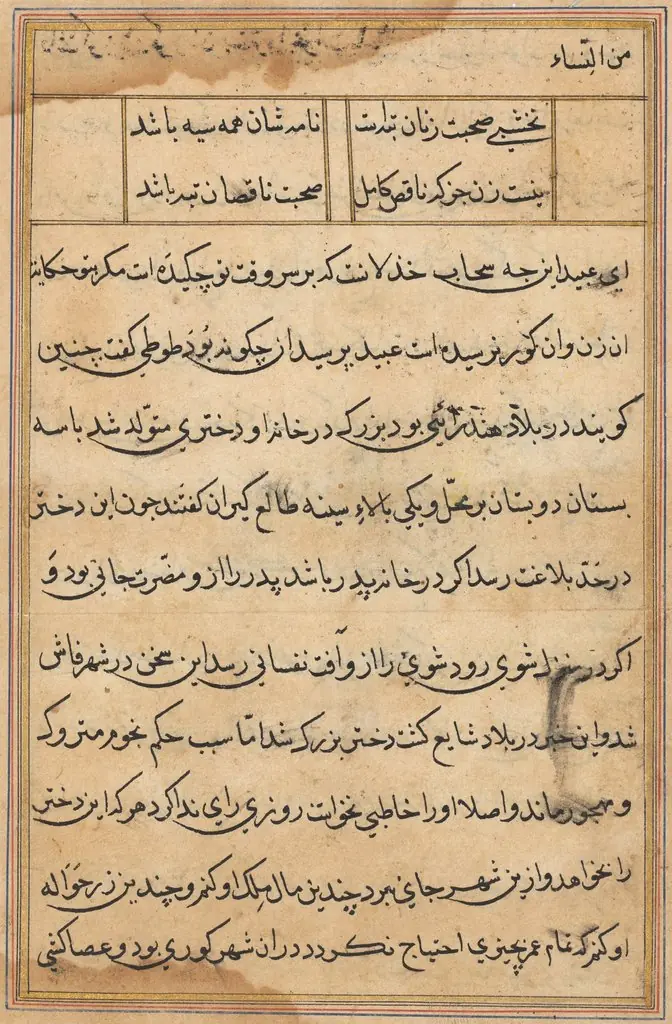
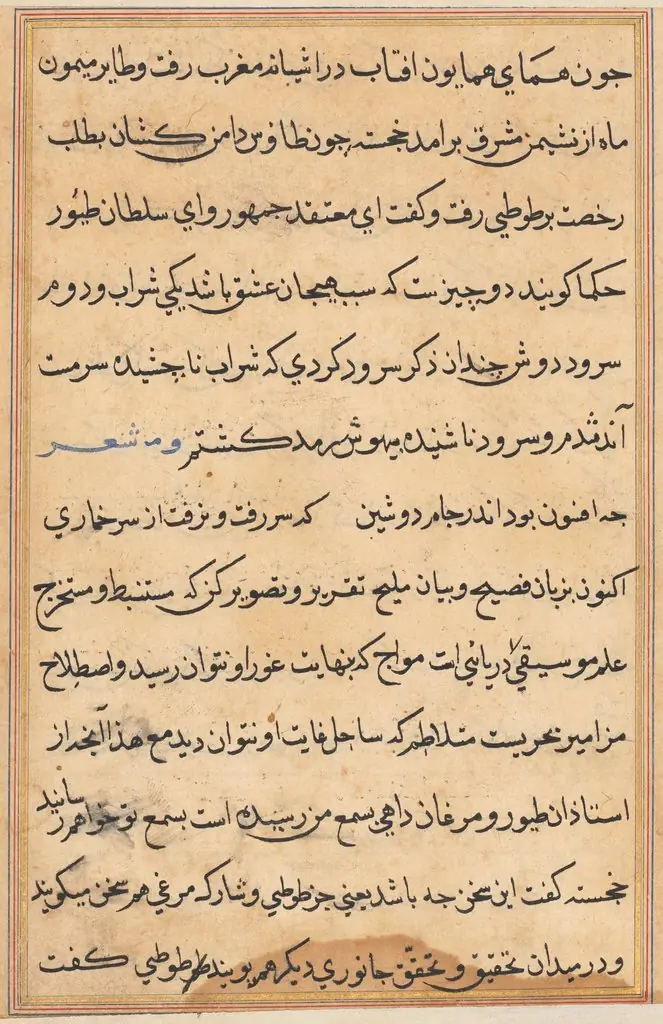
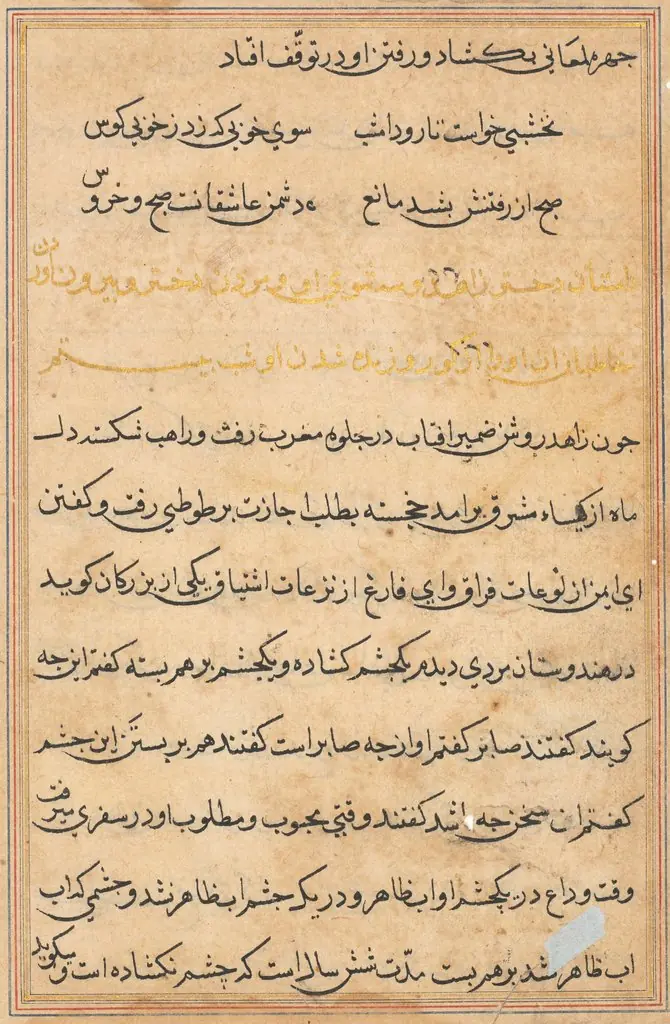
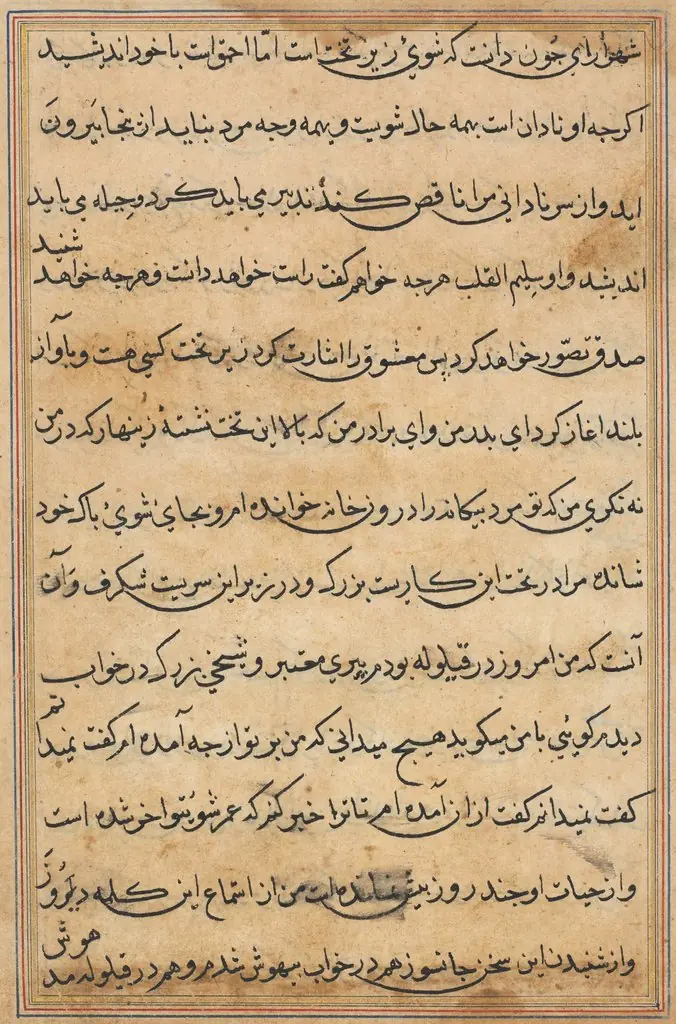
Page from Tales of a Parrot (Tuti-nama): text page
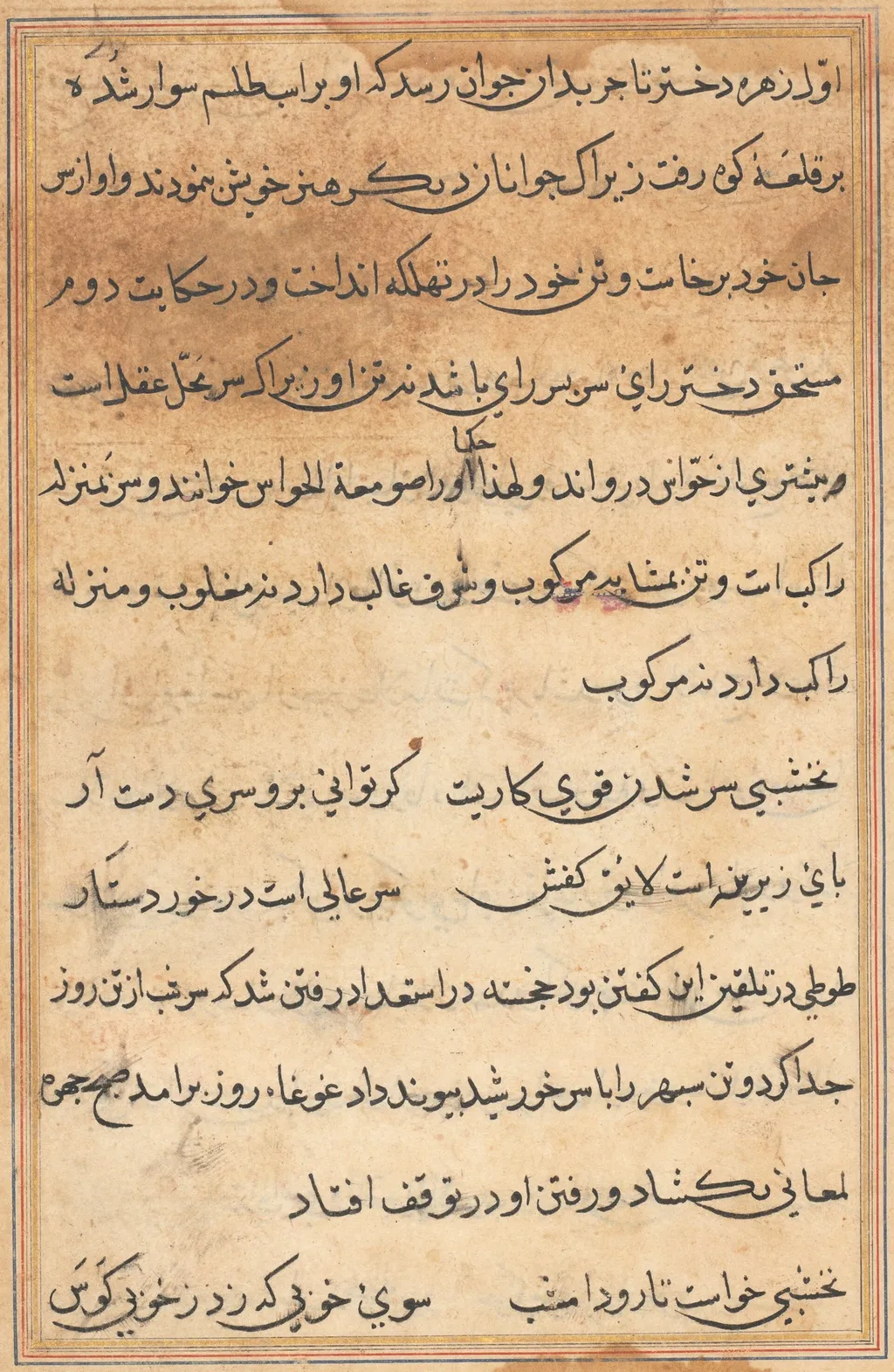
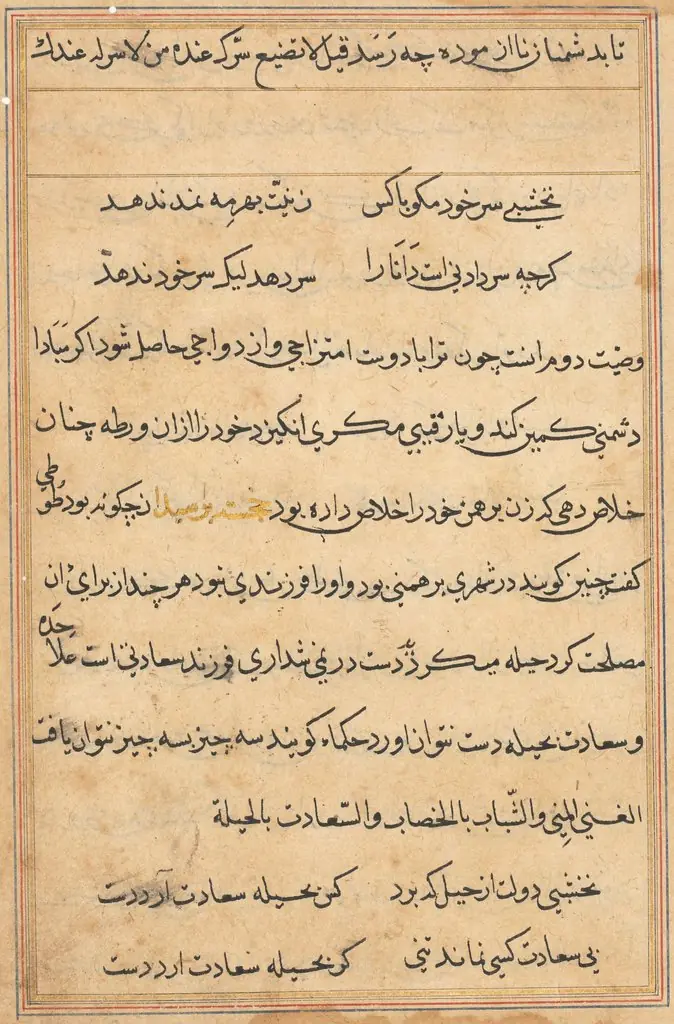
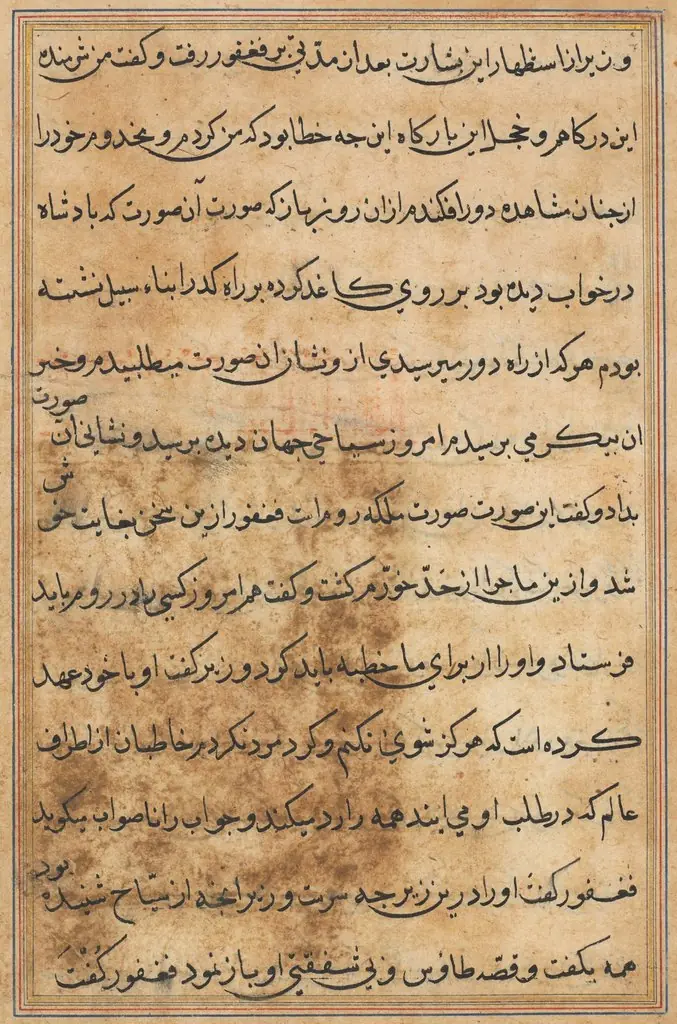
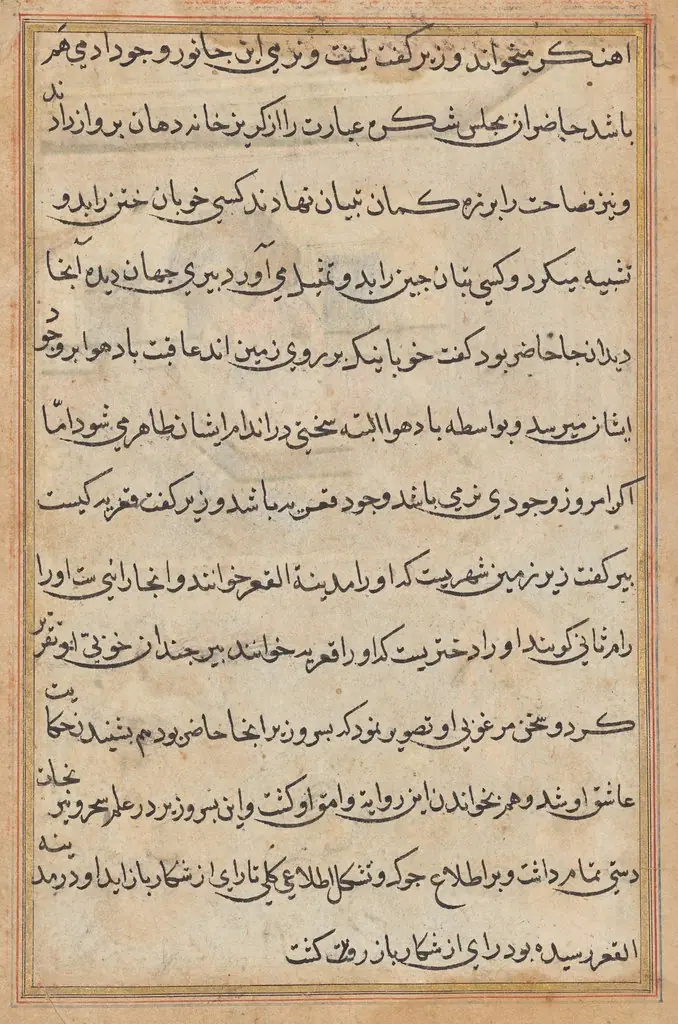
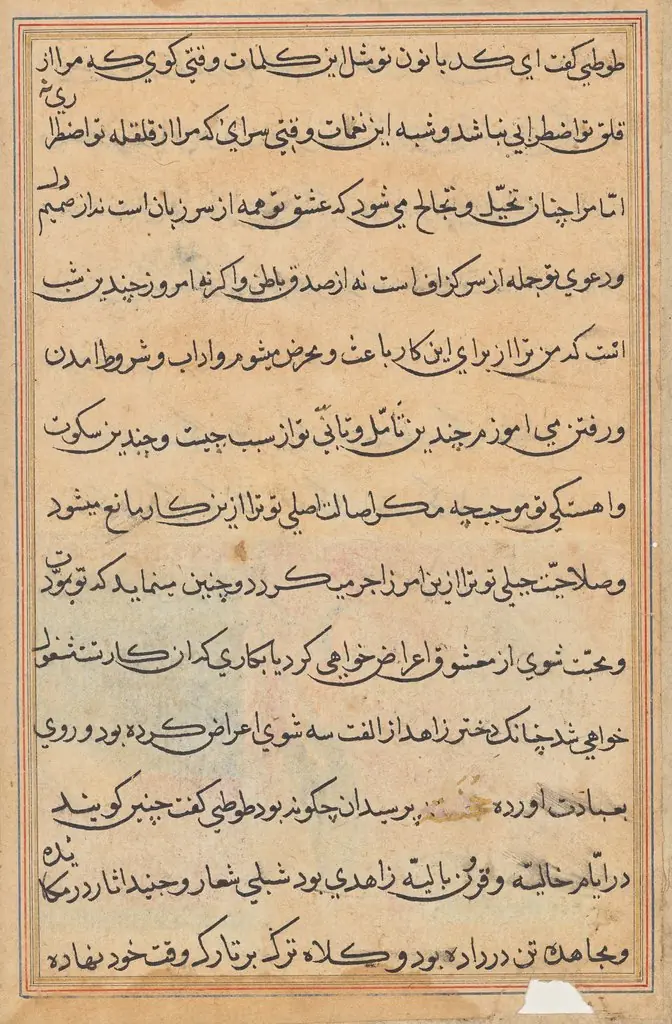
Page from Tales of a Parrot (Tuti-nama): text page is an unspecified painting. It dates from 1560 and is held in the collection of the Cleveland Museum of Art. The object is a single leaf from the Persian manuscript known as the Tales of a Parrot (Tuti‑nama).
About this work
History & Provenance
It currently resides in the collection of the Cleveland Museum of Art, where it is cataloged under the accession number 1962.
This text page from the Tales of a Parrot (Tuti-nama) was created in 1560 within the Mughal Empire. The work is attributed to an unknown artist. It currently resides in the collection of the Cleveland Museum of Art, where it is cataloged under the accession number 1962.279.230.a.
The work is held by the Cleveland Museum of Art, where it carries the accession number 1962.279.230.a. The Cleveland Museum of Art records its origin as the Mughal Empire and dates its creation to 1560.
No exhibition history is documented in the cited sources.
Context
Created in 1560 within the Mughal Empire, this text page from the Tales of a Parrot (Tuti-nama) represents an early phase of Mughal manuscript illumination. The work is attributed to an unknown artist, reflecting the collaborative nature of imperial workshops during this period. It is currently held in the collection of the Cleveland Museum of Art, where it serves as a significant example of mid-sixteenth-century Persian-influenced painting adapted for a Mughal audience.
As part of the Tuti-nama series, the page contributes to the broader scholarly understanding of how literary narratives were visually interpreted during the reign of Akbar.
Overview
The object is a single leaf from the Persian manuscript known as the Tales of a Parrot (Tuti‑nama). Rendered as a painted page, it features dense black calligraphic text set against a warm, yellowed paper background. A thin red line frames the margins, and minute specks of color interrupt the ink, suggesting either intentional decoration or later corrections.
Subject & Meaning
The page contains narrative prose from the Tuti‑nama, a collection of moral and romantic stories that circulated in the Islamic world from the 14th century onward. The dense script indicates a continuous passage, likely intended for private reading rather than public display, and reflects the manuscript’s role as a vehicle for ethical instruction and entertainment among elite audiences.
Technique & Style
The calligraphy is executed in a meticulous hand, each letter formed with consistent weight and fluid connections, characteristic of high‑quality Persian script such as Nastaʿlīq. The red border is painted with a fine brush, providing a subtle visual frame. Small colored specks, possibly pigment residues or ink corrections, add a faint, accidental texture to the otherwise monochrome surface.
Artist & collection

 Page from Tales of a Parrot (Tuti-nama): text page
 Page from Tales of a Parrot (Tuti-nama): text page
 Page from Tales of a Parrot (Tuti-nama): text page
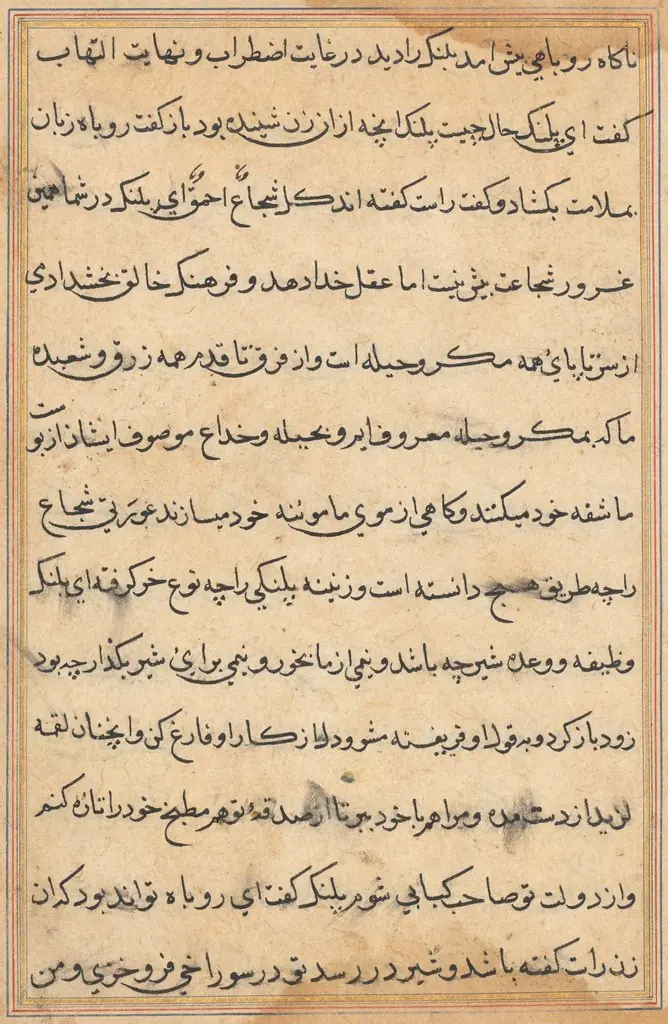 Page from Tales of a Parrot (Tuti-nama): text page
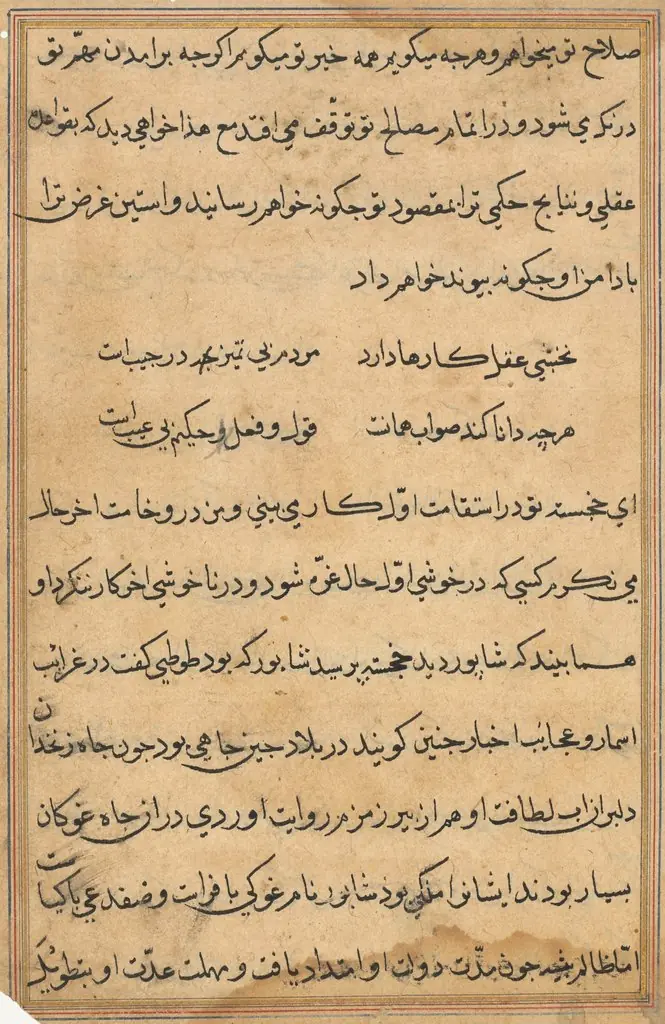 Page from Tales of a Parrot (Tuti-nama): text page
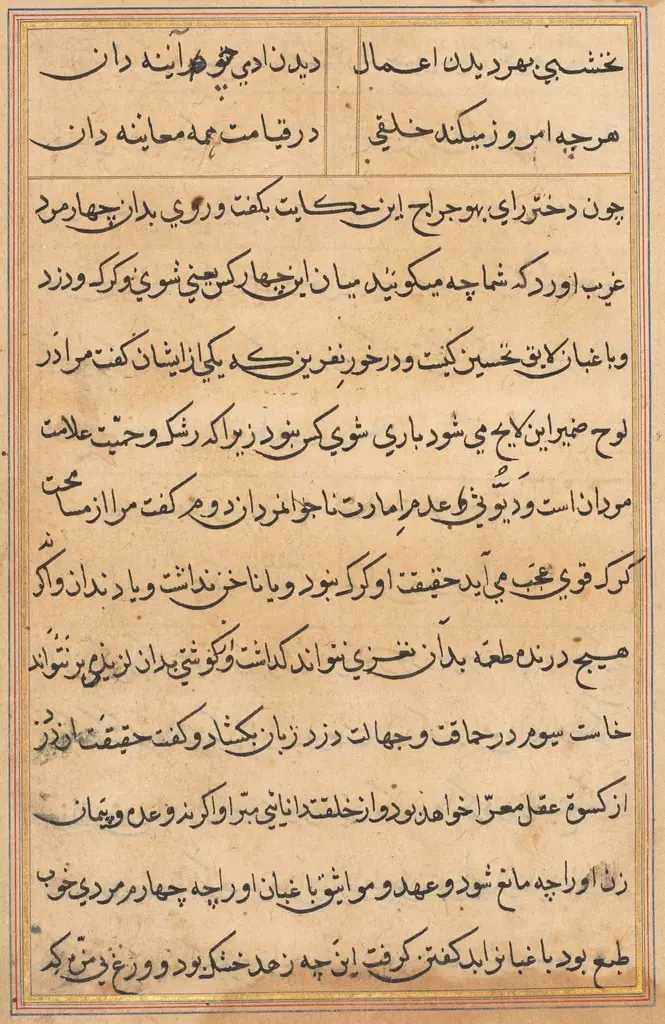 Page from Tales of a Parrot (Tuti-nama): text page
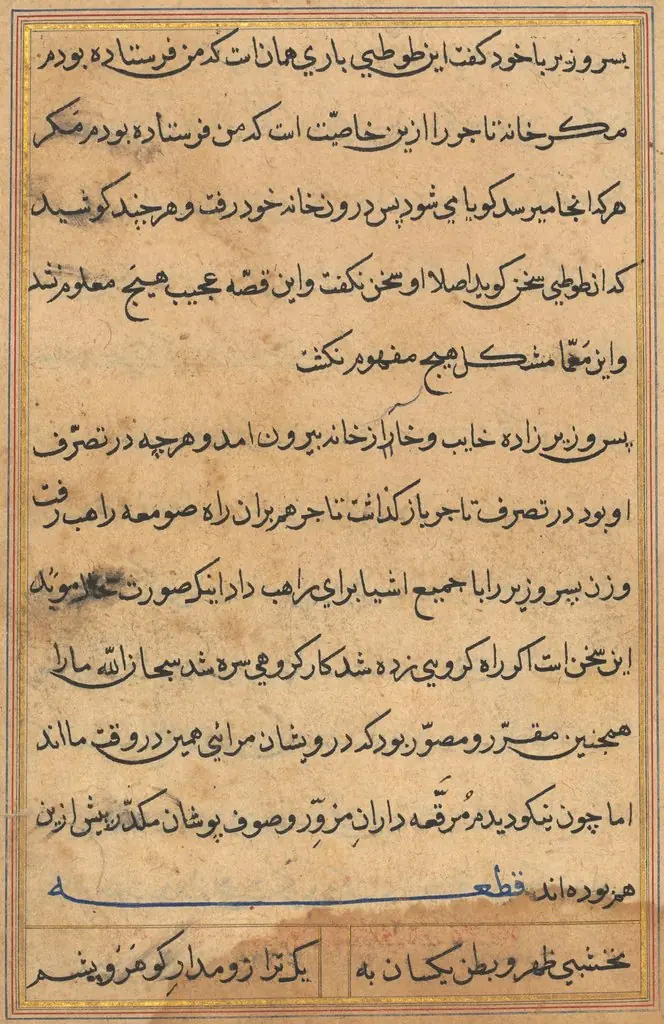 Page from Tales of a Parrot (Tuti-nama): text page
 Page from Tales of a Parrot (Tuti-nama): text page