Artwork
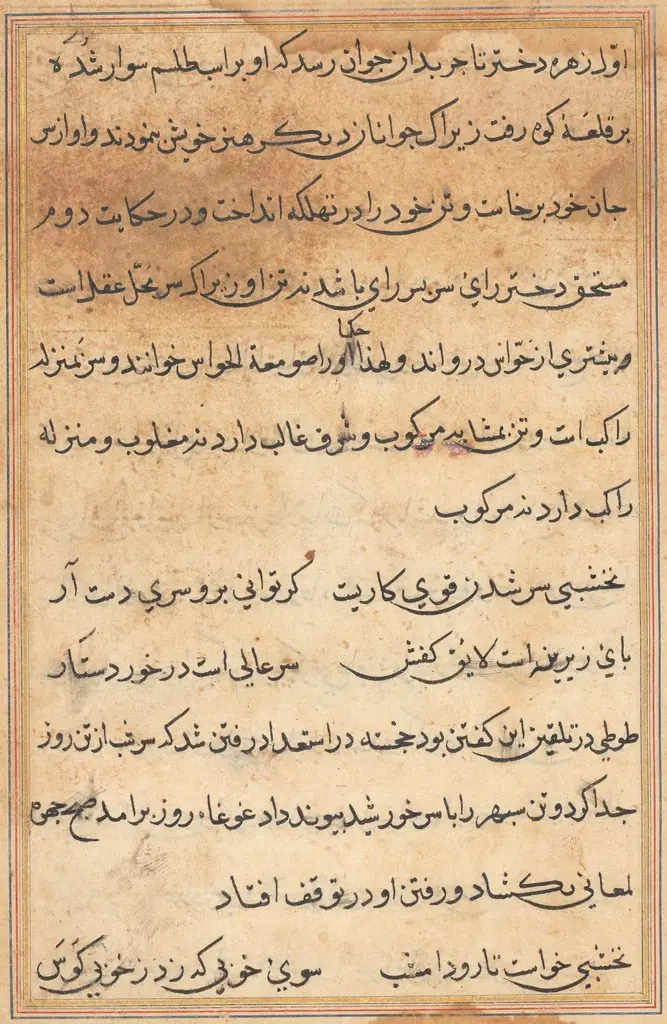
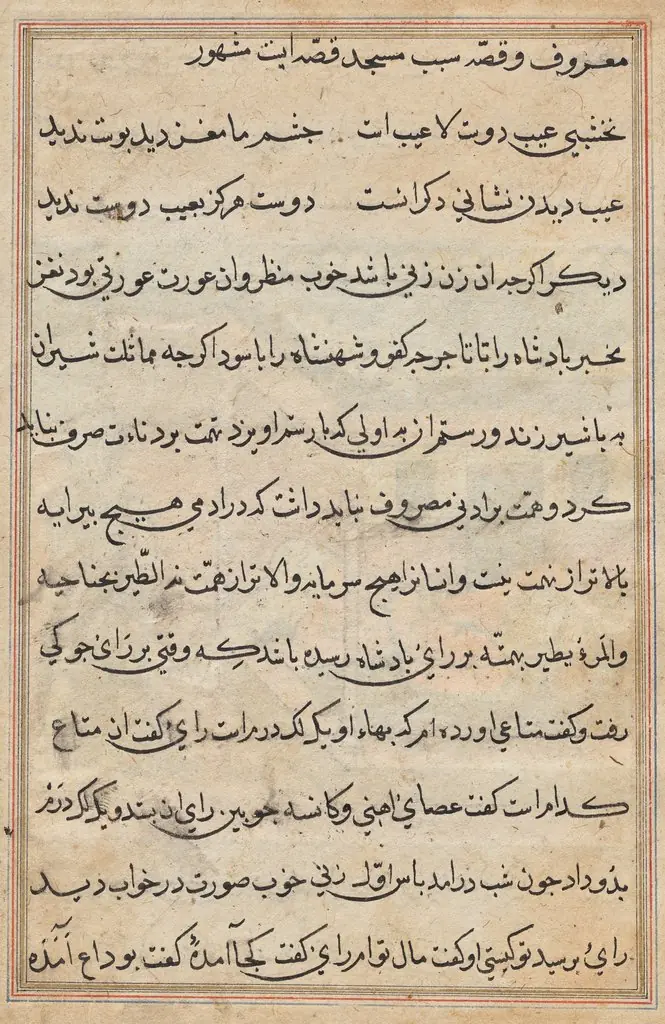
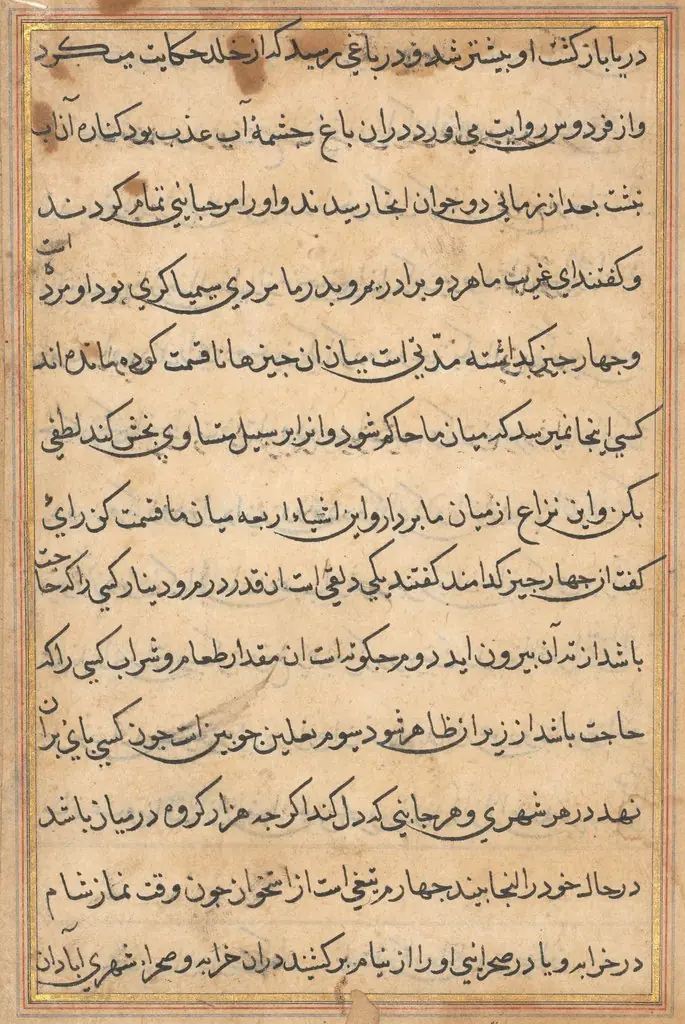
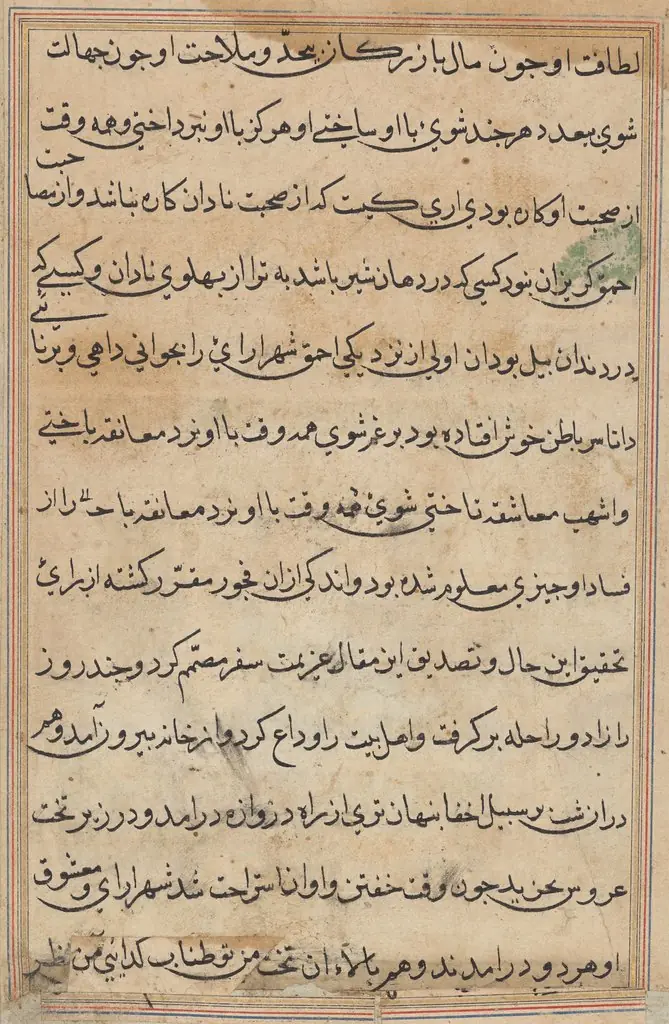
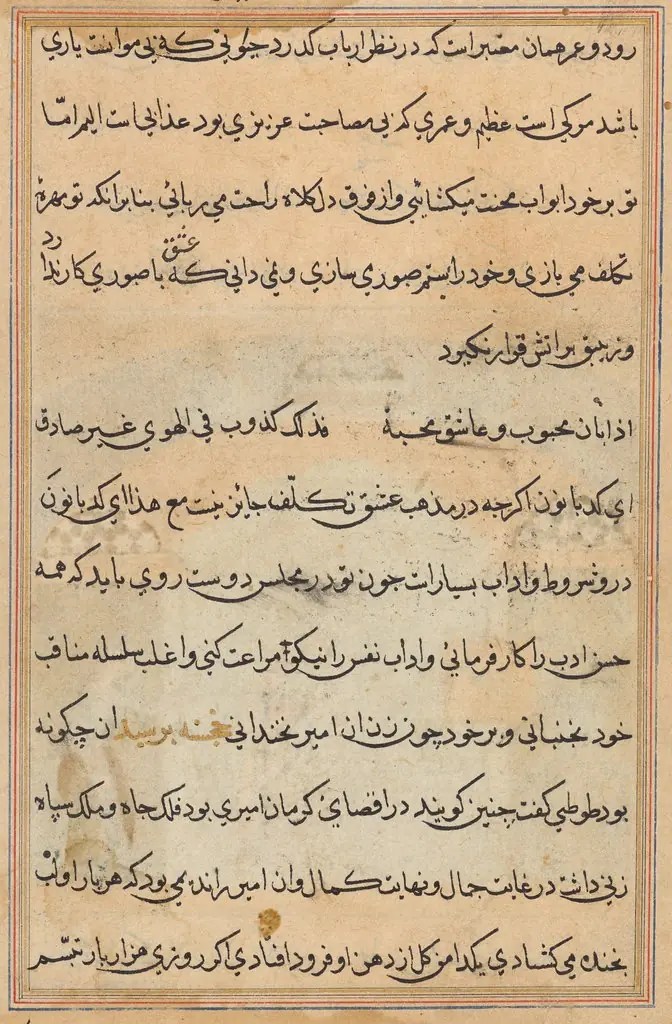
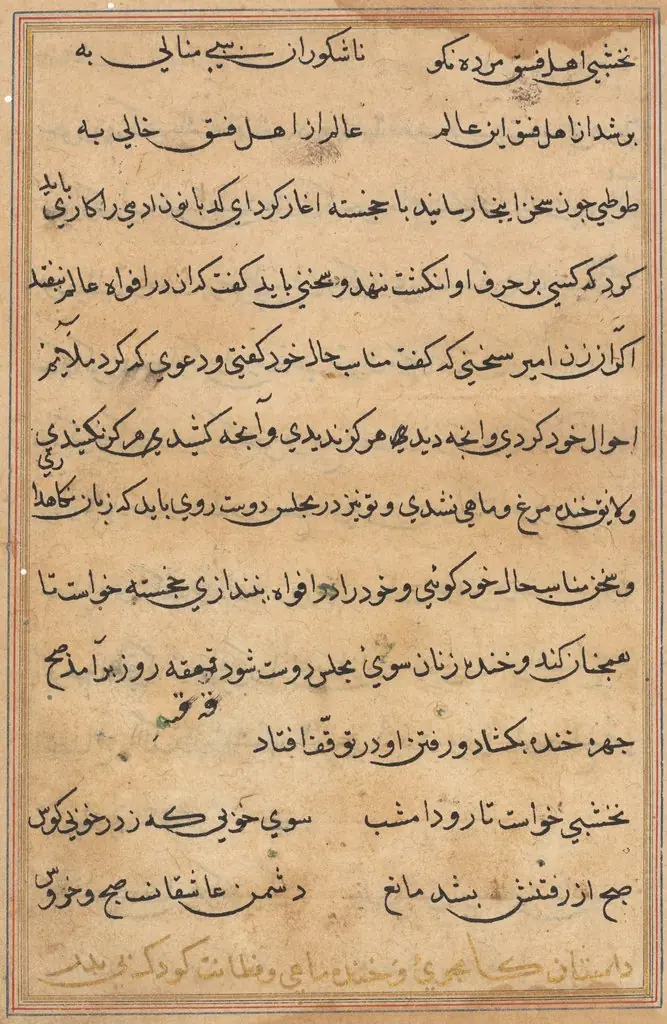
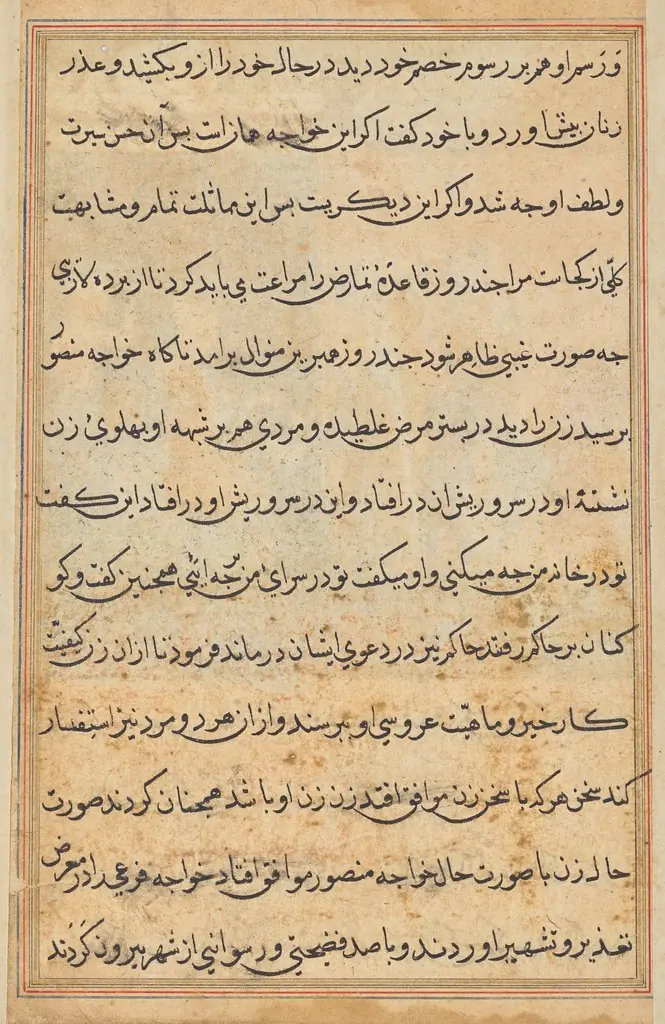
Page from Tales of a Parrot (Tuti-nama): text page
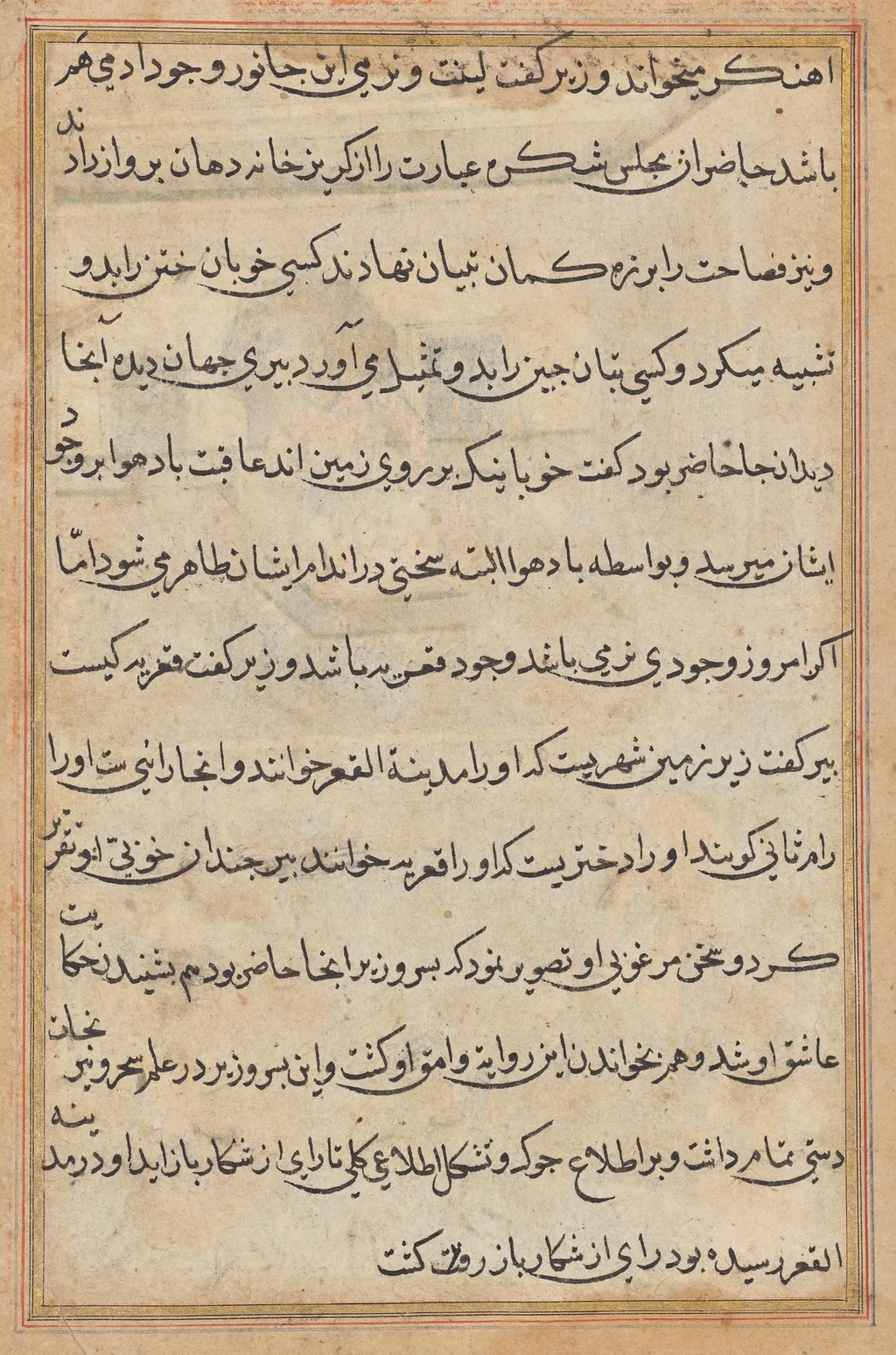
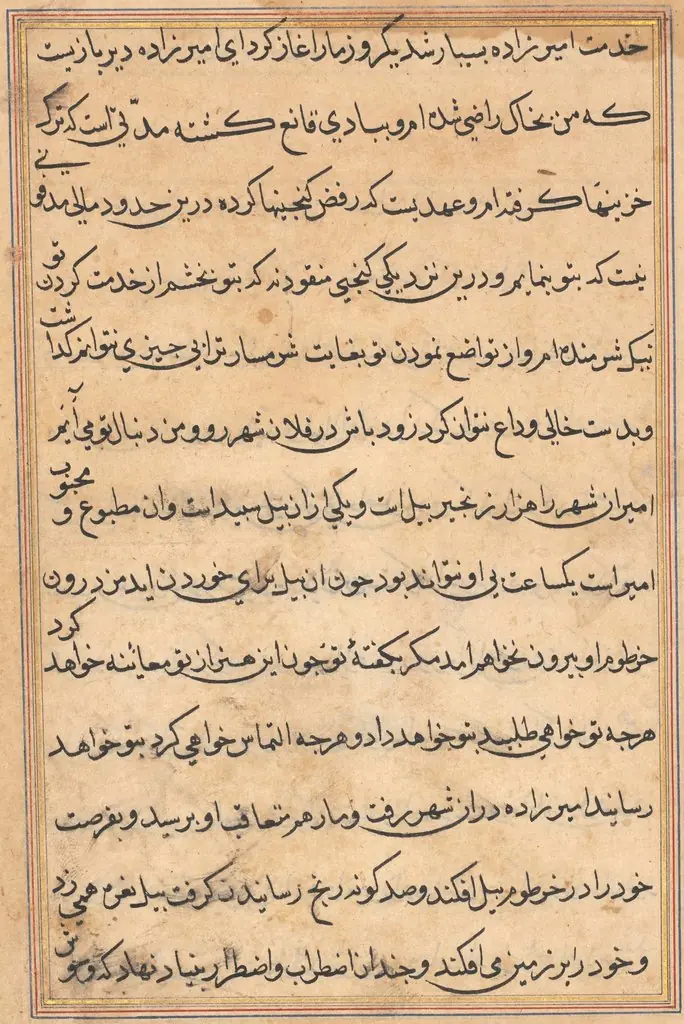
Page from Tales of a Parrot (Tuti-nama): text page is an unspecified painting. It dates from 1560 and is held in the collection of the Cleveland Museum of Art. This object is a single folio from the illustrated manuscript Tales of a Parrot (Tuti‑nama).
About this work
History & Provenance
The text page from the Tales of a Parrot (Tuti-nama) is held by the Cleveland Museum of Art, where it is catalogued as 1962.279.291.a.
The work entered the museum’s collection in 1962 as a gift of The Textile Arts Club of Cleveland.
Context
The work belongs to the Mughal painting tradition of 16th-century India, exemplifying manuscript illustration within the Tuti-nama narrative cycle.
The work belongs to the Mughal painting tradition of 16th-century India, exemplifying manuscript illustration within the Tuti-nama narrative cycle. Its creation in 1560 aligns with the reign of Akbar, when Persianate artistic conventions merged with local styles across the Mughal Empire. The piece is held in the Cleveland Museum of Art collection and reflects scholarly interest in early Indo-Persian manuscript production as a medium of cross-cultural storytelling.
Overview
This object is a single folio from the illustrated manuscript Tales of a Parrot (Tuti‑nama). The page consists solely of black calligraphic text, arranged in tight, parallel lines across a warm‑toned, slightly yellowed sheet of paper. A thin red border frames the script, and modest decorative motifs appear at the margins, indicating careful, deliberate presentation.
Subject & Meaning
The manuscript recounts a collection of moral and romantic stories narrated by a parrot, a popular literary genre in Mughal courts. This particular folio was prepared for Prince Salim, later Emperor Jahangir, suggesting the content was intended as both entertainment and moral instruction for a princely audience.
Technique & Style
The script is executed in a refined black ink, characteristic of Persianate calligraphy, with uniform strokes and precise spacing. The red border, applied with a fine brush, provides visual containment without detracting from the dense text. Small ornamental elements at the edges reflect the aesthetic conventions of Mughal manuscript decoration.
Artist & collection

 Page from Tales of a Parrot (Tuti-nama): text page
 Page from Tales of a Parrot (Tuti-nama): text page
 Page from Tales of a Parrot (Tuti-nama): text page
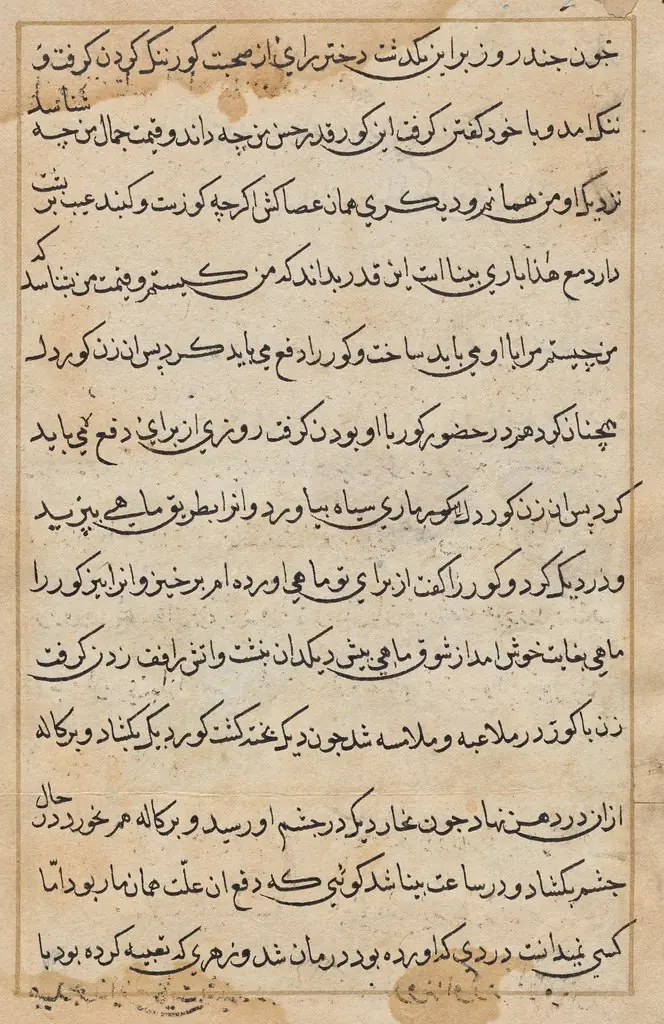 Page from Tales of a Parrot (Tuti-nama): text page
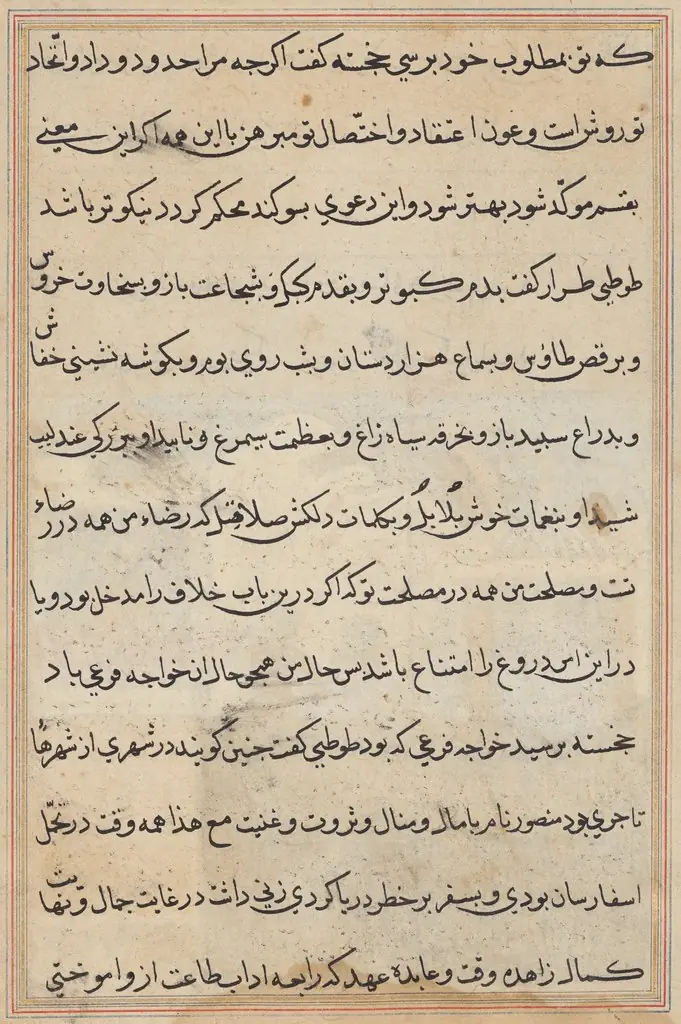 Page from Tales of a Parrot (Tuti-nama): text page
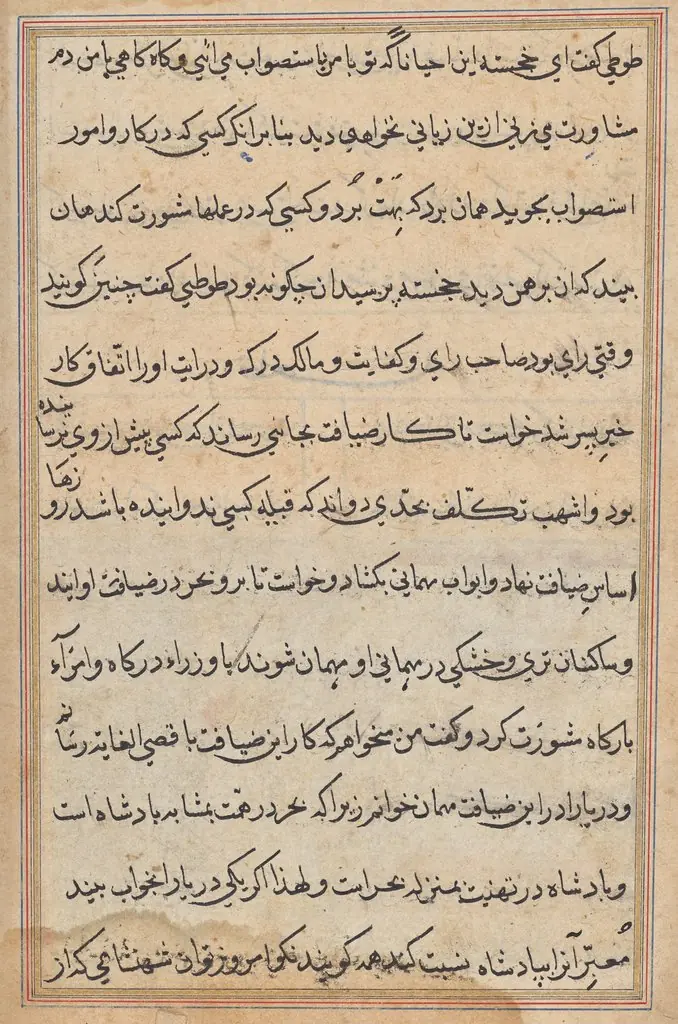 Page from Tales of a Parrot (Tuti-nama): text page
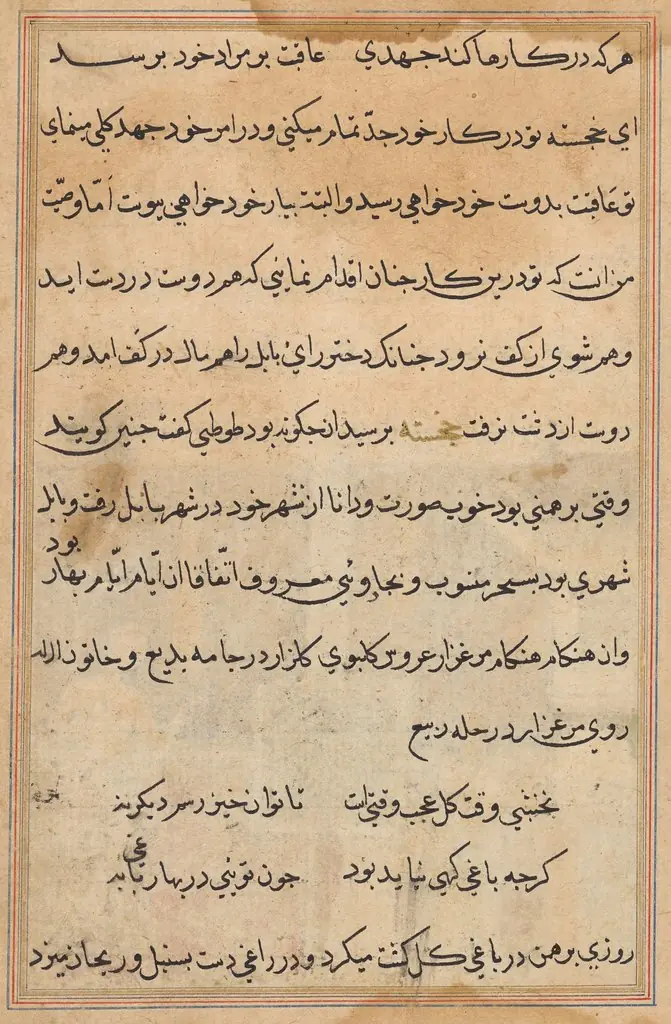 Page from Tales of a Parrot (Tuti-nama): text page
 Page from Tales of a Parrot (Tuti-nama): text page