Artwork
Paternoster Pendant with the Virgin and Child (obverse) and the Meeting of Joachim and Anna at the Golden Gate (reverse)
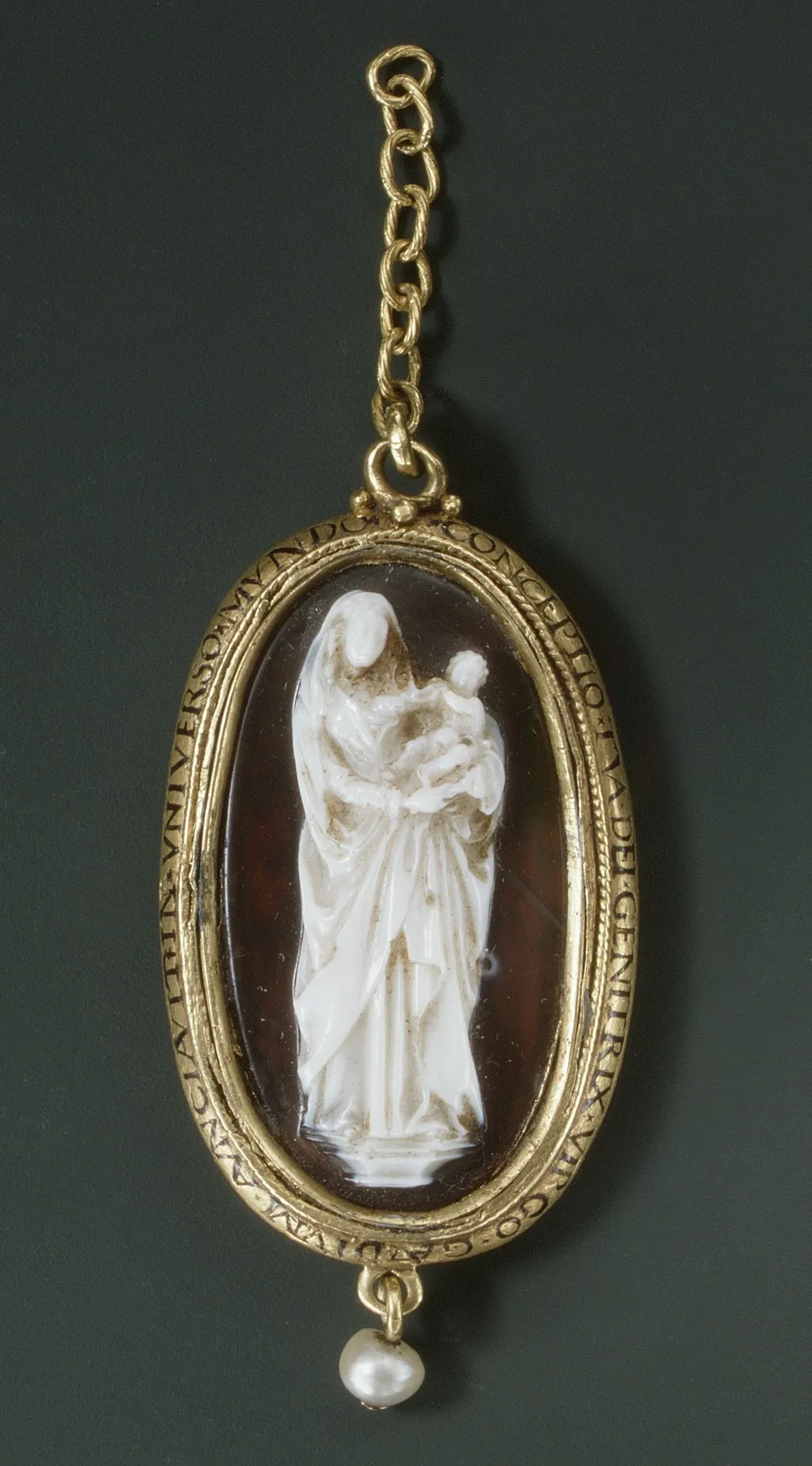
Paternoster Pendant with the Virgin and Child (obverse) and the Meeting of Joachim and Anna at the Golden Gate (reverse) is an unspecified painting. It dates from 1440 and is held in the collection of the Metropolitan Museum of Art. This oval pendant features intricate carvings on both its obverse and reverse sides.
About this work
Subject & Meaning
The reverse depicts the apocryphal meeting of Joachim and Anne at the Golden Gate, the moment when the parents of Mary learn of her forthcoming birth.
The pendant's obverse shows the Virgin Mary holding the Christ Child, a standard Marian image that evokes the Incarnation and serves as a focus for devotion to the Mother of God. The reverse depicts the apocryphal meeting of Joachim and Anne at the Golden Gate, the moment when the parents of Mary learn of her forthcoming birth. Together the two scenes reference Mary's holy lineage and the promise of salvation, making the paternoster a visual aid for meditating on the mysteries of the Rosary.
History & Provenance
The pendant dates to 1440 according to the corpus record and the work's Wikidata entry. It is classified as a religious object and is held in the collection of the Metropolitan Museum of Art as part of the Robert Lehman Collection, having been owned by Robert Lehman. The obverse depicts the Virgin and Child, the reverse the Meeting of Joachim and Anna at the Golden Gate.
No information about its original commission or earlier ownership prior to the Lehman collection is provided in the available sources, and no exhibition history is recorded.
Overview
This oval pendant features intricate carvings on both its obverse and reverse sides. Crafted from a white material, it serves as a devotional object, displaying two distinct biblical narratives. A decorative gold frame encircles the central relief, further embellished by an inscription and a pearl suspended from its base, indicating its function as a personal adornment.
Technique & Style
The carving exhibits fine detail, particularly in the rendering of drapery. Figures are depicted in long, flowing robes, with the stone skillfully shaped to create soft curves and deep folds, conveying a sense of movement and volume. The craftsmanship extends to the delicate gold frame, which is inscribed, and the small pearl, adding to the pendant's refined aesthetic and preciousness.
Artist & collection

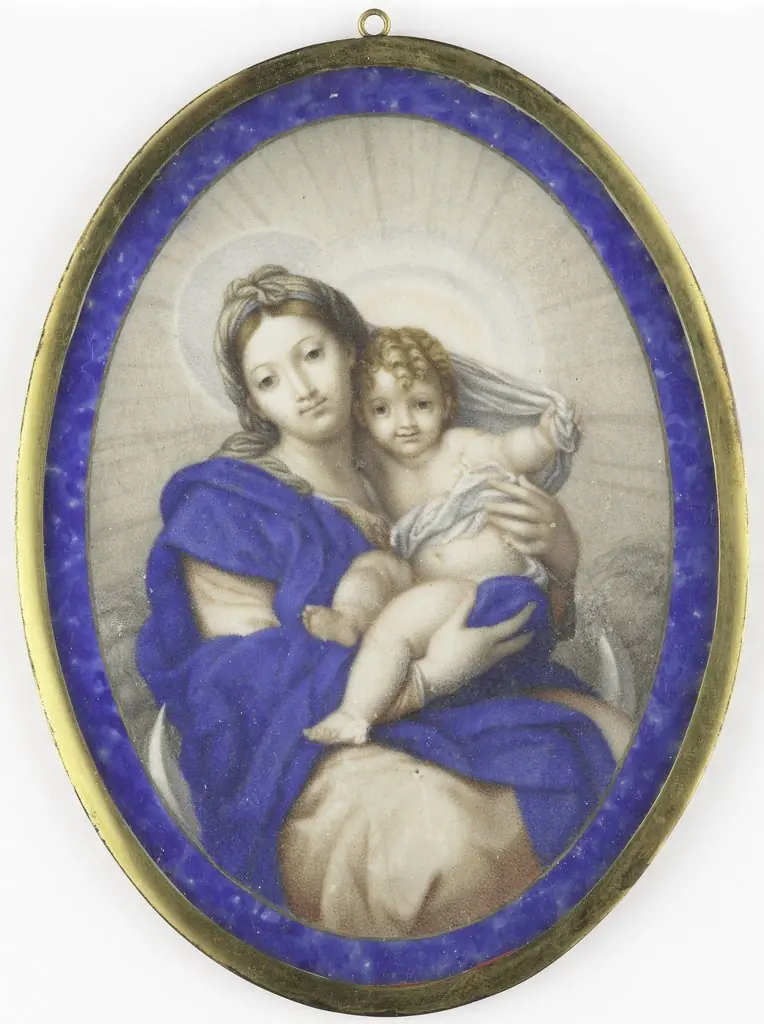
- Madonna op de maansikkel
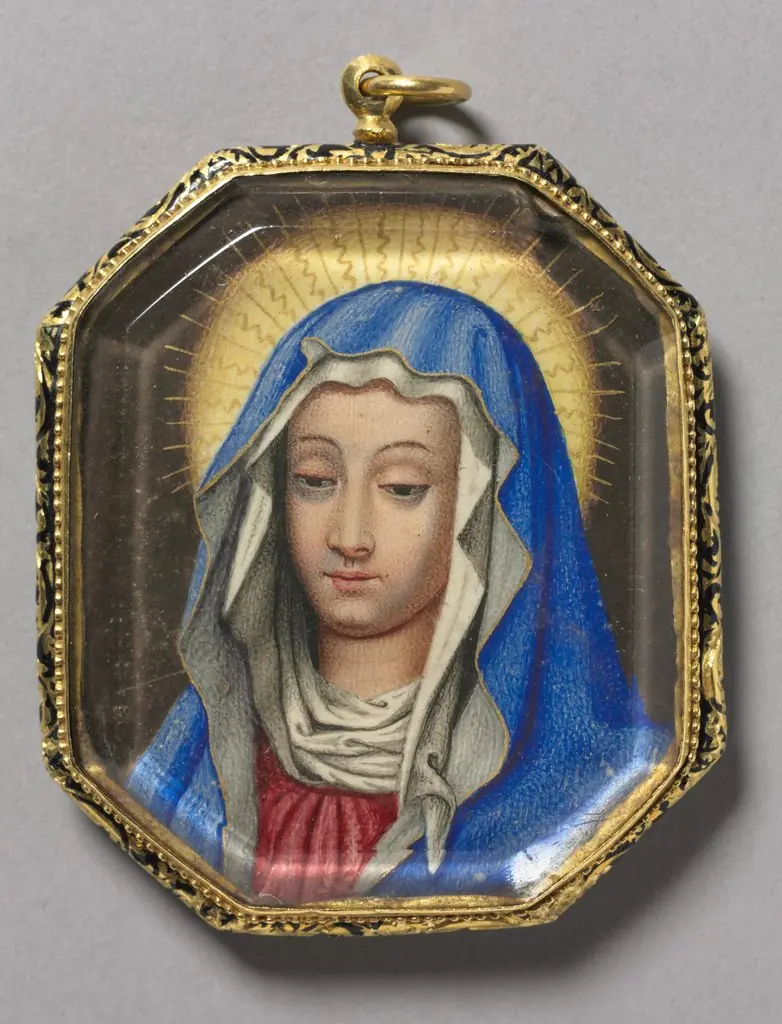 The Virgin (recto) and St. Francis with Christ Child (verso)
 The Virgin (recto) and St. Francis with Christ Child (verso)
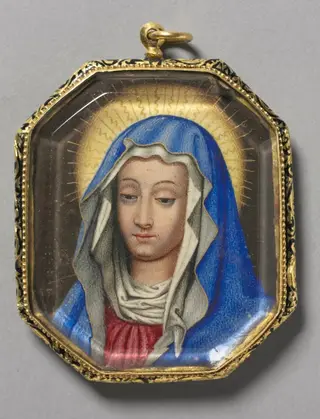 The Virgin (recto)
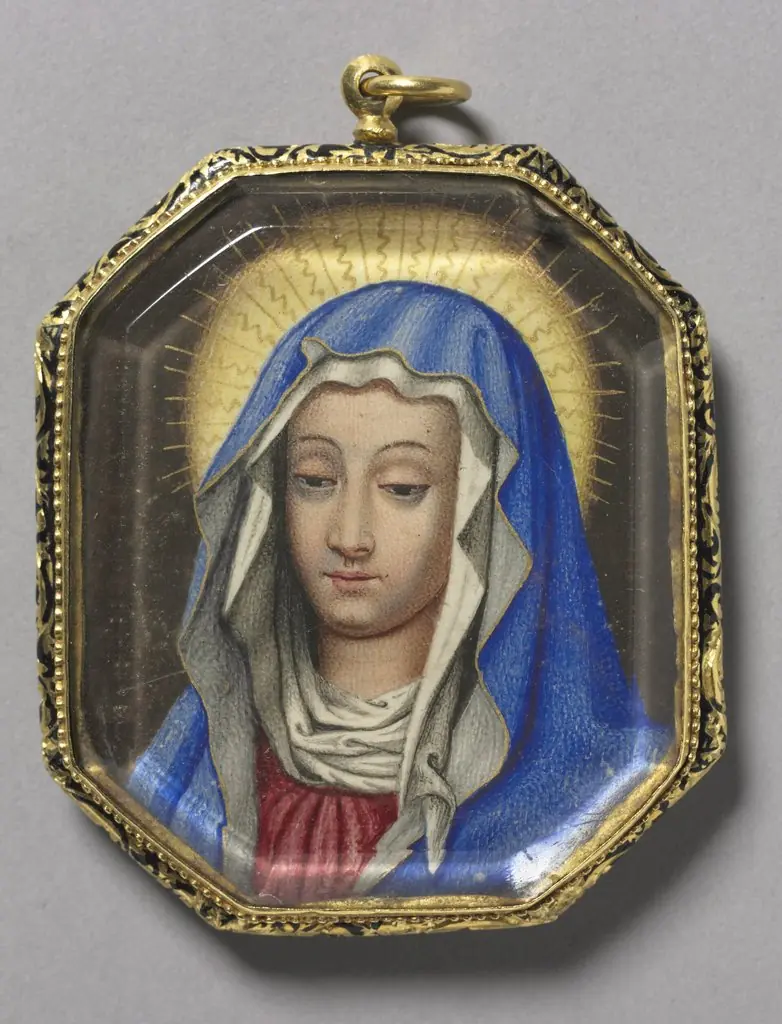 The Virgin (recto)
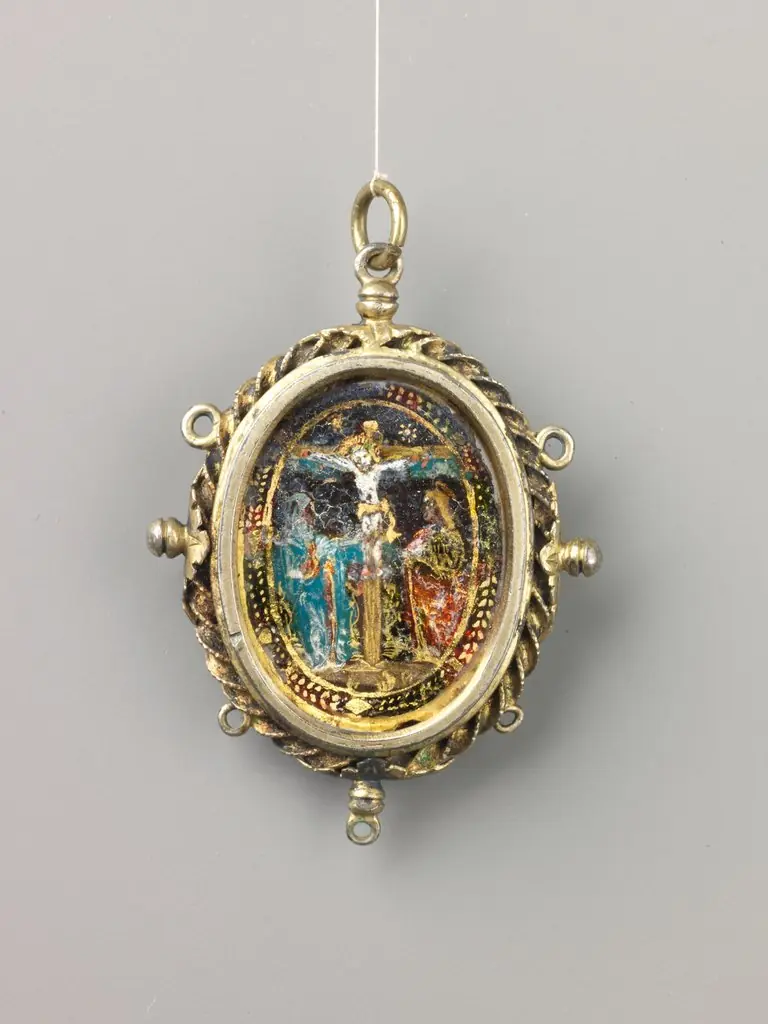 Devotional pendant
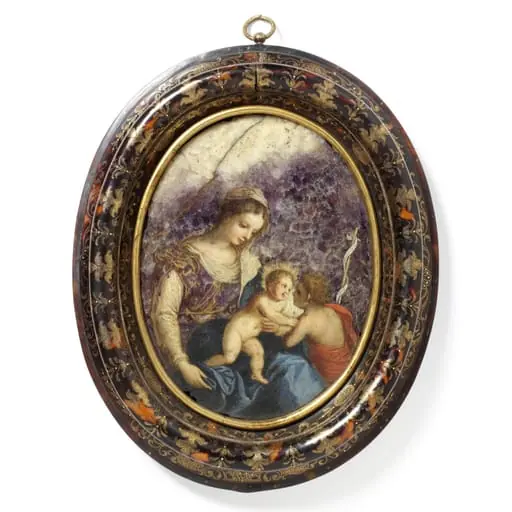 Virgin and Child
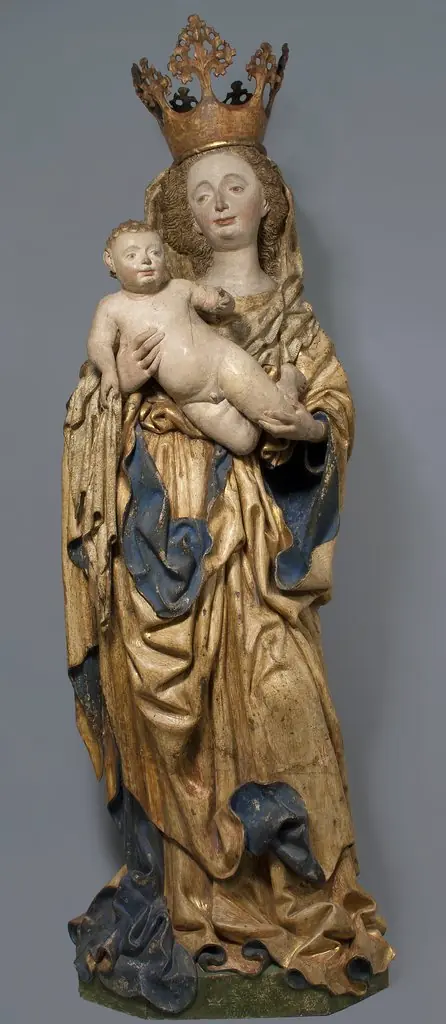 Standing Virgin and Child
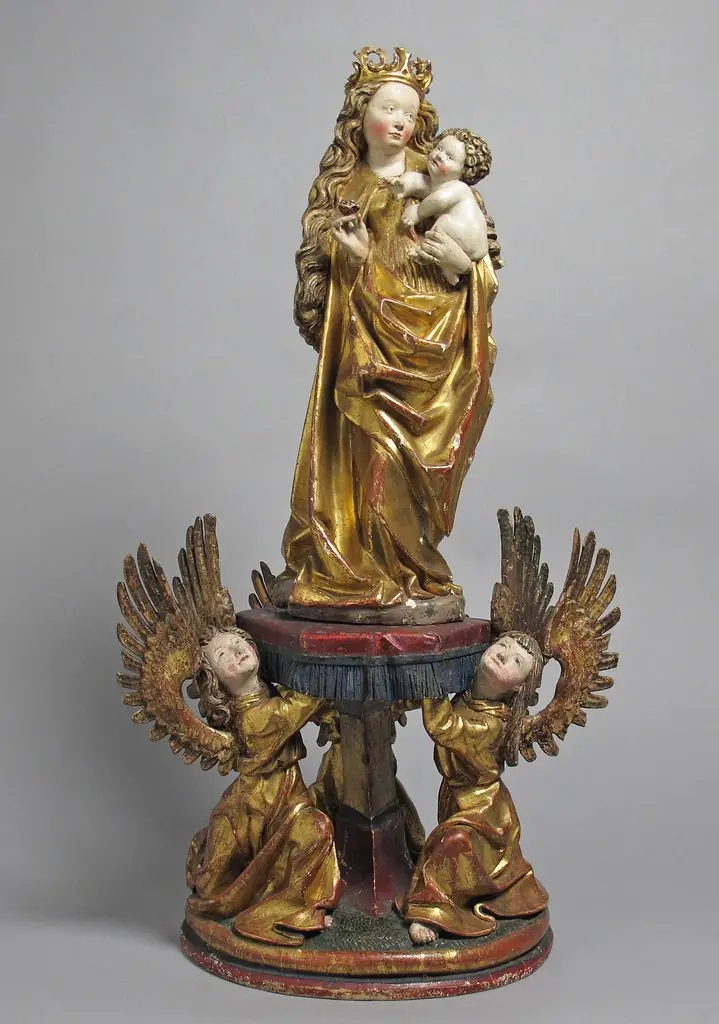 Virgin and Child Supported by Angels
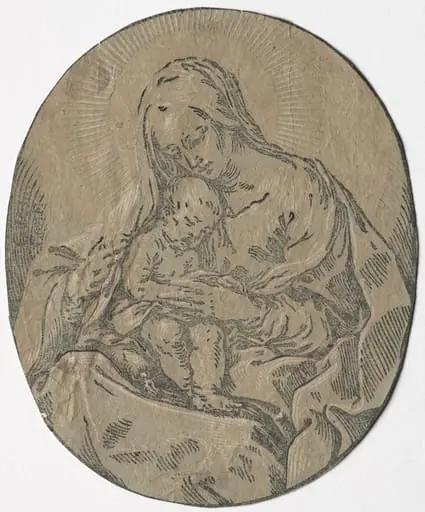 Madonna and Child
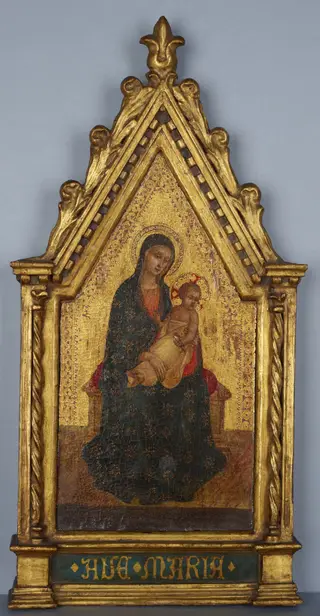 Madonna and Child Enthroned
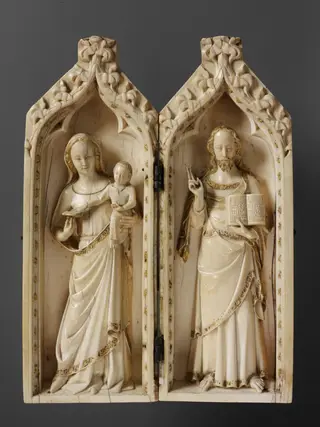 The Salting Diptych