Artwork
The Virgin (recto)
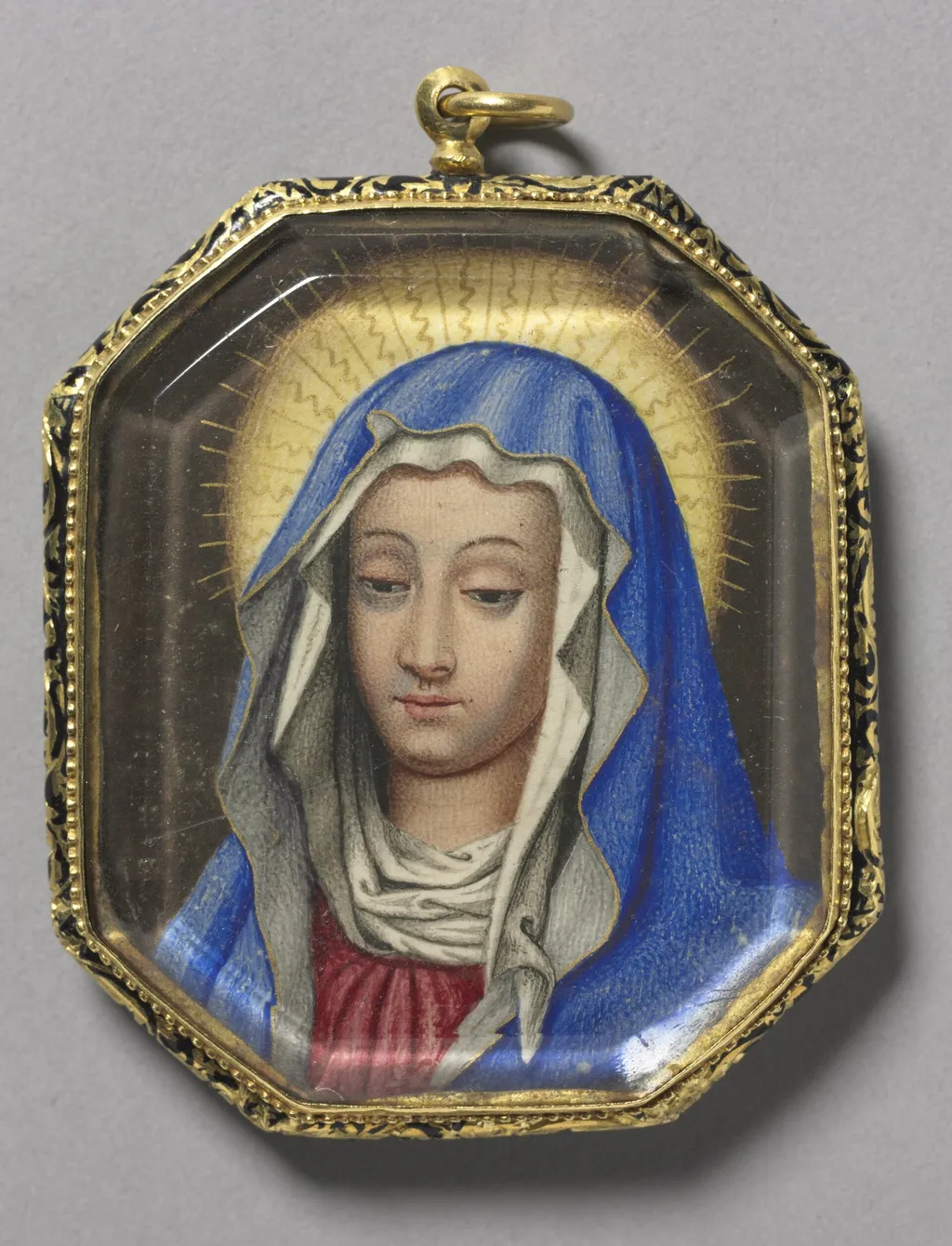
The Virgin (recto) is an unspecified painting. It dates from 1660 and is held in the collection of the Cleveland Museum of Art.
About this work
History & Provenance
It is held in the collection of the Cleveland Museum of Art in Cleveland, Ohio, where it is catalogued under the accession number 1981.
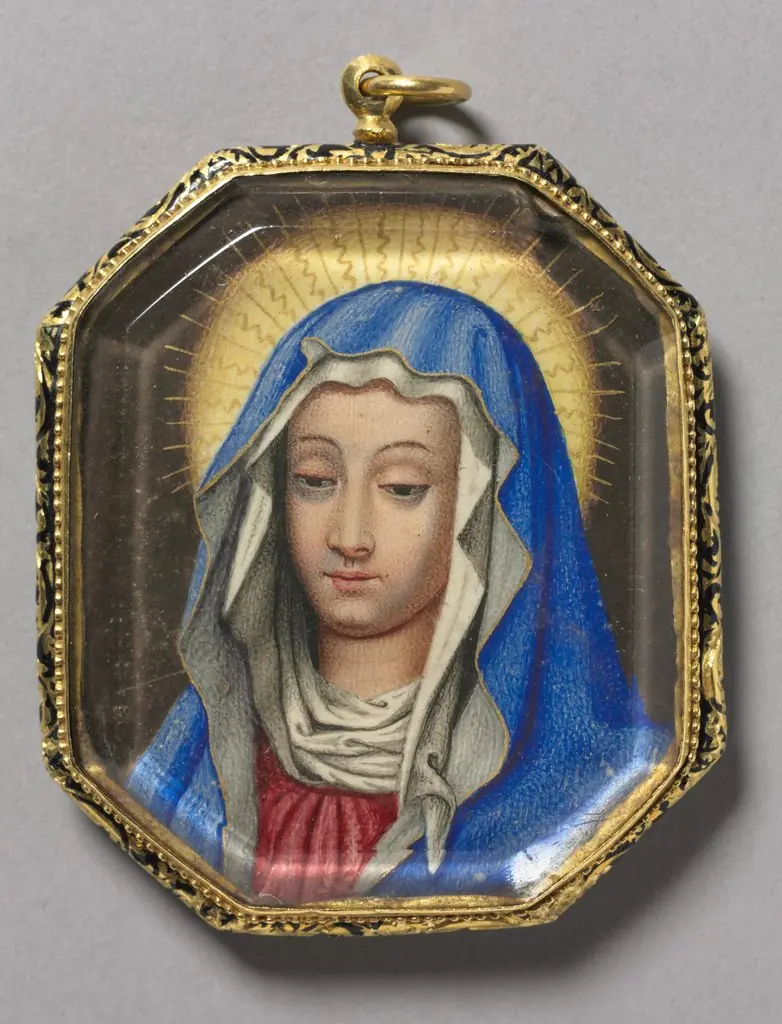
The artwork known as The Virgin (recto) is a portrait miniature dated to 1660, created by an unknown artist. It is held in the collection of the Cleveland Museum of Art in Cleveland, Ohio, where it is catalogued under the accession number 1981.226.a and classified as a painting within the genre of miniatures. The work entered the museum's collection in 1981, marking the first documented point in its known institutional history.
No specific details regarding the original commission, the identity of the initial patron, or the chain of ownership prior to its acquisition are provided in the available records, and no exhibition history is documented.
Overview
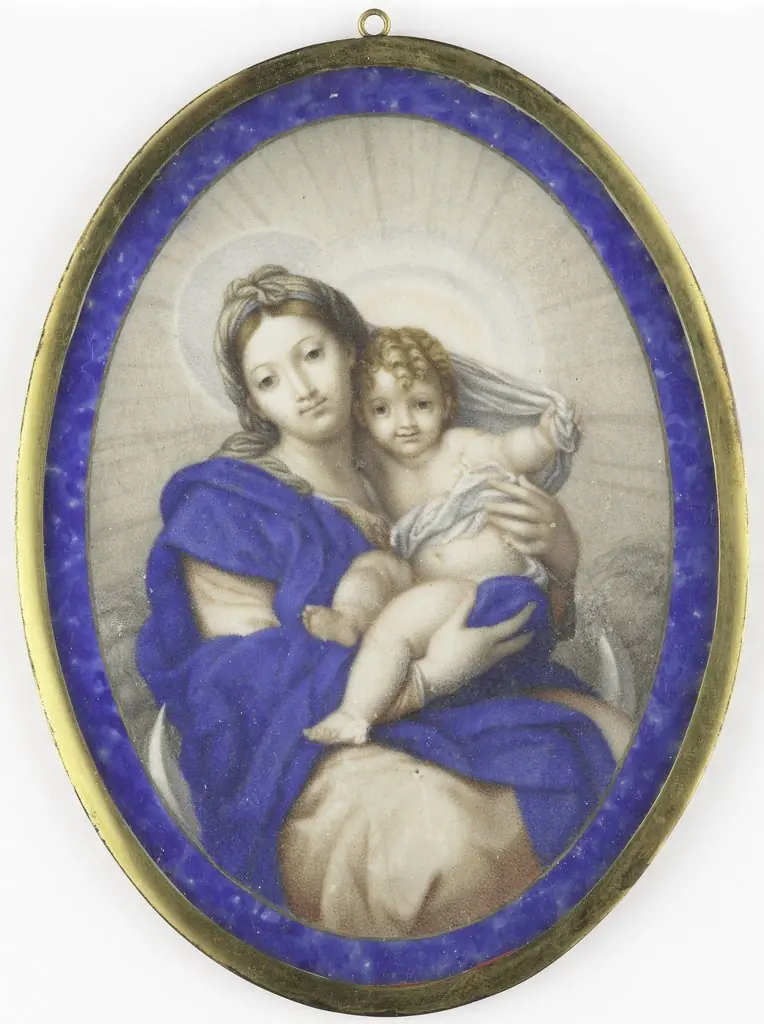
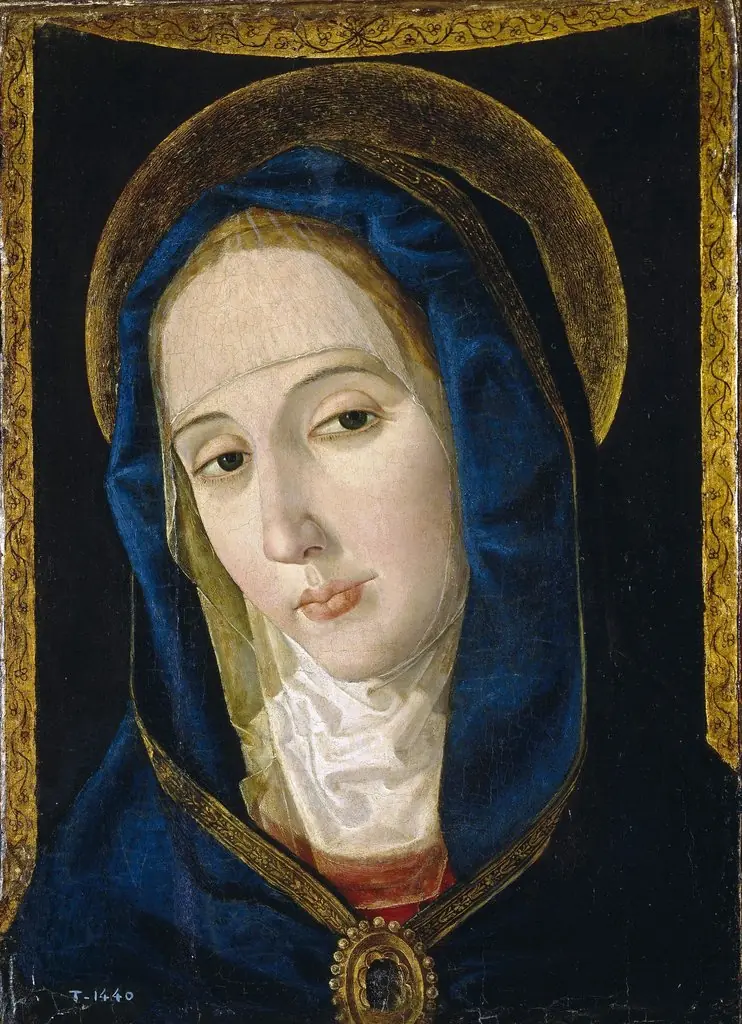
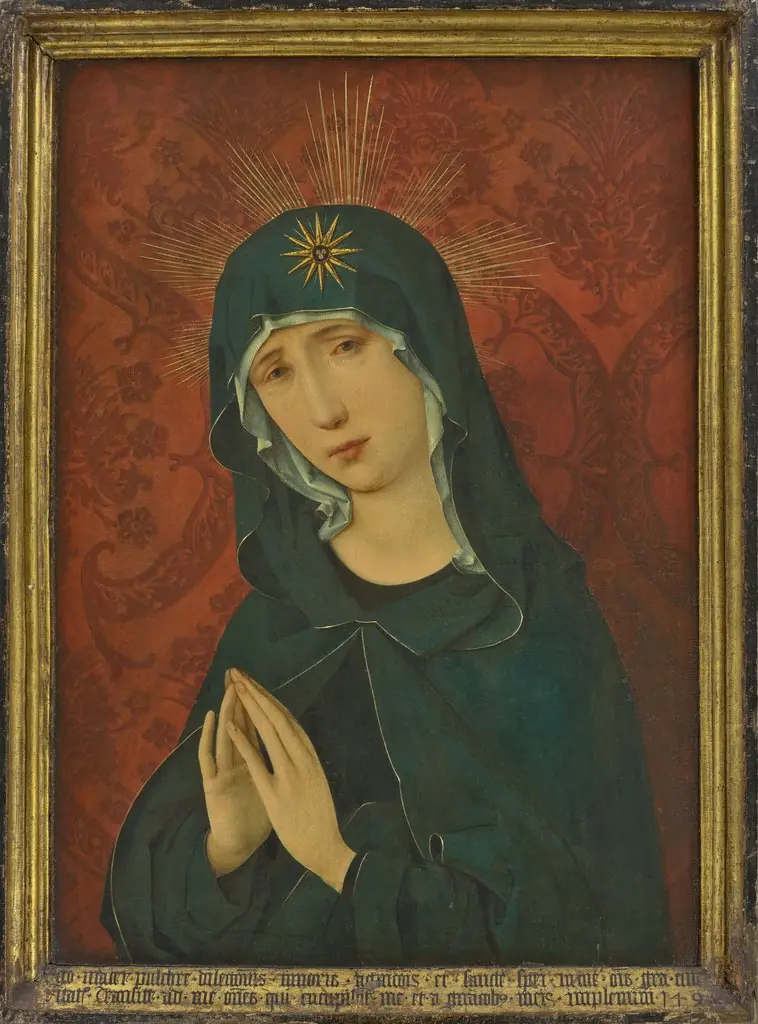
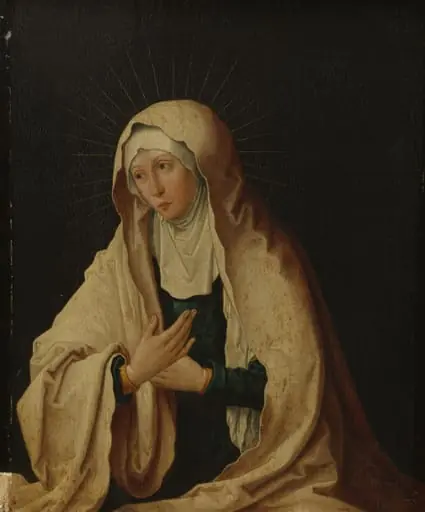
This small painting, titled "The Virgin (recto)," depicts a serene female figure. She is adorned with a blue head covering and a white veil, her dark hair visible beneath. Encased in an ornate gold frame, possibly designed for personal wear or intimate display, the artwork features a dark background from which subtle golden rays emanate, suggesting a divine light. Its compact size and devotional subject matter indicate its likely use in private worship.
Subject & Meaning
The central figure, identified as the Virgin Mary, is presented with a composed expression, conveying tranquility. Her modest attire, including a blue head covering and a white veil, aligns with traditional depictions of the Madonna. The painting's intimate scale and the subject's contemplative demeanor were intended to foster a direct, personal connection with the viewer, facilitating private prayer and spiritual reflection.
Technique & Style
The artist employs a focused use of light and shadow to give the figure depth and presence against the dark background. This contrast emphasizes the Virgin's face and drapery, particularly the vibrant blue of her head covering, which stands out against her skin tones. Faint golden lines radiating from behind her head create a subtle halo effect, enhancing the sacred aura of the depiction.
Context
Small-scale devotional paintings like "The Virgin (recto)" were common during periods when personal piety was highly valued. Their portability made them suitable for private chapels, homes, or even for carrying on one's person. The elaborate gold frame, complete with a loop, suggests it might have been suspended from a chain, allowing the owner to keep this sacred image close for constant meditation.
Artist & collection